 🔮 Paranormal Abilities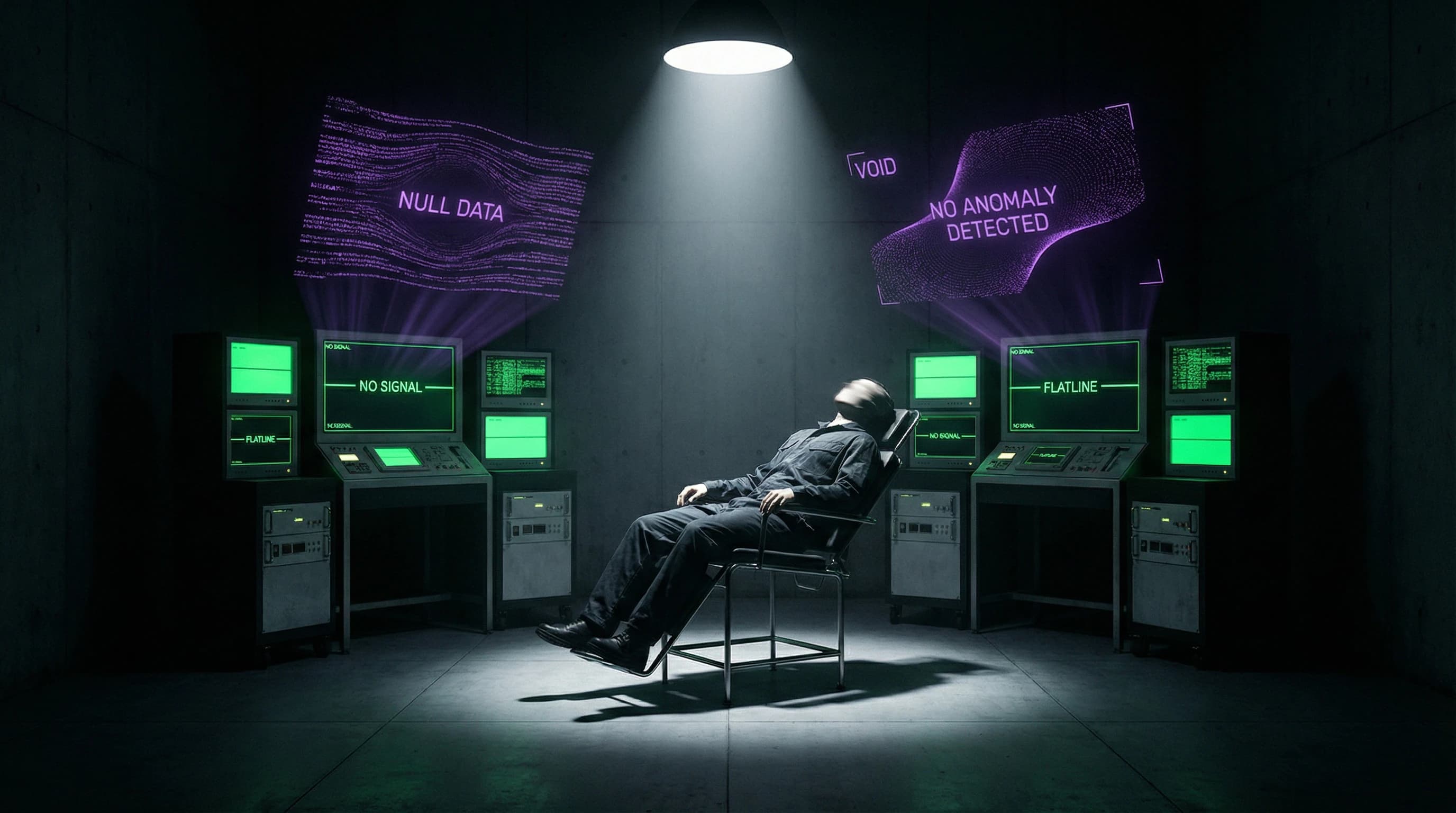
Paranormal Abilities: A Scientific Perspective on Psychic Phenomena and Psi Effectsλ
Investigation of telepathy, clairvoyance, telekinesis, and mediumship through controlled experiments, cognitive psychology, and critical thinking
Overview
Telepathy, clairvoyance, telekinesis — claimed abilities that have been tested for decades in laboratories, military programs, and public trials. The result 🧩: not a single experiment with controlled variables has confirmed the existence of psi phenomena — instead, cognitive biases, statistical artifacts, and deception techniques emerge. We examine the mechanisms that create the illusion of the paranormal: from the Barnum effect to survivorship bias, from cold reading to selective memory.
🛡️
Laplace Protocol: Extraordinary claims require extraordinary evidence. No paranormal ability has been confirmed under double-blind control conditions with independent replication of results.
Reference Protocol
Scientific Foundation
Evidence-based framework for critical analysis
Protocol: Evaluation
Test Yourself
Quizzes on this topic coming soon
Sector L1
Articles
Research materials, essays, and deep dives into critical thinking mechanisms.
🔮 Paranormal Abilities 🔮 Paranormal Abilities
 🔮 Paranormal Abilities
 🔮 Paranormal Abilities
 🔮 Paranormal Abilities
 🔮 Paranormal Abilities
 🔮 Paranormal Abilities
 🔮 Paranormal Abilities
 🔮 Paranormal Abilities
⚡
Deep Dive
What lies behind the term "paranormal abilities" — classification of phenomena
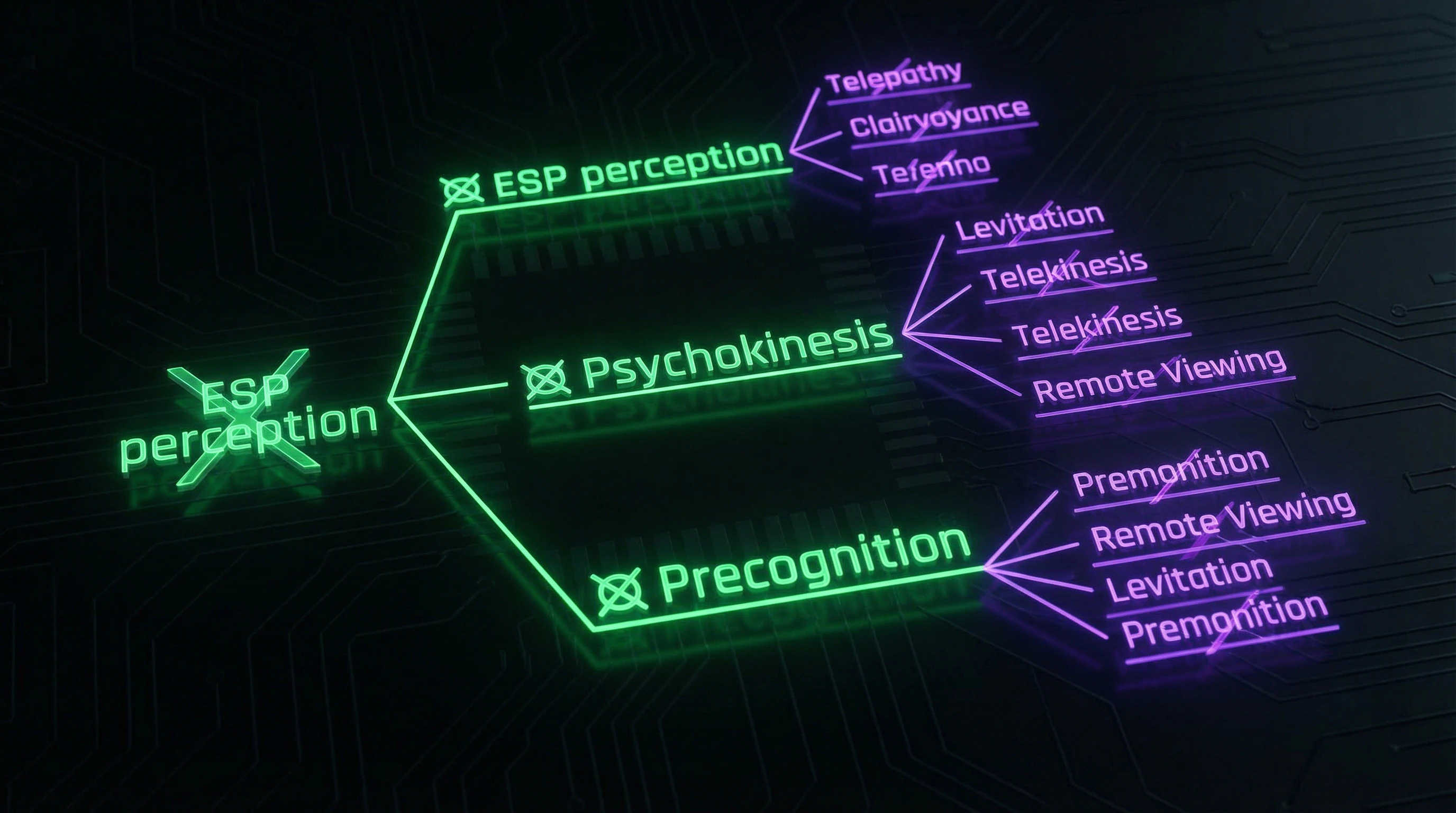
Paranormal abilities (psi phenomena) are claimed human capabilities that exceed normal physical and psychological limitations. The scientific community defines them as assertions not confirmed under controlled conditions, despite widespread belief in their existence.
The term encompasses a spectrum of claims: from perceiving hidden information to physically affecting matter through thought alone. Each category relies on specific mechanisms — sensory, cognitive, or physical — that can be systematically tested.
| Category | Claimed Mechanism | Control Results |
|---|---|---|
| Telepathy and clairvoyance | Direct thought transmission or perception of hidden information without sensory organs | Results at chance level when sensory cues are eliminated |
| Telekinesis (psychokinesis) | Moving or affecting physical objects through thought alone | All cases explained by tricks and deception |
| Mediumship | Communication with spirits of the deceased and transmission of their messages | Explained by cold reading techniques and exploitation of cognitive biases |
Telepathy and clairvoyance as forms of extrasensory perception
Telepathy is defined as the alleged ability to directly transmit thoughts between people without known sensory channels. Clairvoyance includes claims of perceiving remote or hidden information unavailable through ordinary senses, as well as foreseeing future events (precognition).
Controlled scientific tests consistently show results at chance level when sensory cues are eliminated.
A 2012 BBC study demonstrated that mediums failed to accurately describe the appearance and character of test subjects under controlled conditions, showing results no better than random guessing. This aligns with data from numerous other experiments conducted over recent decades.
Telekinesis and psychokinesis — claims of mental influence on matter
Telekinesis (psychokinesis) represents the claim of being able to move or affect physical objects solely through thought, without physical contact. Claims include bending metal objects, levitating objects, and affecting electronic devices.
- James Randi Educational Foundation — offered substantial cash prizes to anyone who could demonstrate paranormal abilities under controlled conditions. No one successfully claimed the prize.
- Professional magicians — have repeatedly reproduced all claimed telekinetic effects using ordinary illusionist methods.
- Investigations — have shown that all observed cases were explained by tricks and deception, not genuine paranormal phenomena.
Mediumship and communication with the deceased — psychological mechanisms
Mediumship includes claims of being able to communicate with spirits of the deceased and receive information from them. Practicing mediums use various techniques — from séances to individual "readings," claiming to transmit messages from clients' deceased relatives.
This area of paranormal claims is particularly emotionally charged due to its connection with grief and loss of loved ones. It is precisely this vulnerability that creates fertile ground for exploitation.
Successful medium "readings" are explained by cold reading techniques, hot reading (prior information gathering), and exploitation of clients' cognitive biases. The 2012 BBC test specifically controlled information leakage and showed a complete absence of mediums' ability to obtain accurate data about unfamiliar people.
Psychological research demonstrates that belief in mediumship correlates with the need for comfort and low levels of critical thinking.
Seven Decades of Scientific Research — From Military Programs to University Laboratories
The history of scientific investigation into paranormal abilities spans serious research programs by government agencies, military organizations, and academic institutions. Contrary to the myth of scientific "closed-mindedness," paranormal claims have been subjected to rigorous testing using strict experimental protocols.
The results form a consistent picture: no reproducible evidence of psi phenomena has been found.
Soviet Military Programs Studying Extrasensory Abilities
The Soviet Union conducted large-scale research into the potential military and intelligence applications of paranormal abilities. Programs included testing telepathy for submarine communication, remote viewing for espionage, and psychokinesis for affecting enemy equipment.
The potential military advantages justified the expenditure — if the abilities existed, military programs with their resources would have discovered them.
- Results of Soviet Programs
- All observed "abilities" were explained by tricks, deception, and methodological errors in experiments. Military experts concluded that paranormal research had no practical value for defense purposes.
- Why This Matters
- The conclusion is particularly compelling given the military's motivation to find any possible advantage. If government agencies with unlimited budgets found no psi phenomena, this is a powerful argument against their existence.
James Randi's Experiments and the Paranormal Challenge
The James Randi Educational Foundation offered a cash prize (reaching one million dollars) to anyone who could demonstrate paranormal abilities under controlled conditions. The protocol was developed jointly with the claimant to eliminate accusations of unfair testing conditions.
Over decades of the program's existence, thousands of people applied, but no one successfully passed even the preliminary tests.
The experiments revealed a systematic pattern: claimants demonstrated abilities under uncontrolled conditions but completely lost them when double-blind controls were introduced and sensory cues eliminated. Professional magicians who participated in protocol development easily identified the deception techniques being used.
Modern University Research on the Cognitive Basis of Belief
Harvard University and other academic institutions have conducted research on psychic claims using modern neuroscientific methods and rigorous statistical protocols. A 2016 study showed that skeptics outperform believers on logical reasoning tests.
Contemporary research has shifted focus from attempting to detect psi phenomena to studying the psychological mechanisms underlying belief in the paranormal.
- Neuroimaging studies reveal differences in brain activation patterns between skeptics and believers when evaluating paranormal claims.
- University programs document cognitive biases that sustain belief: confirmation bias, illusion of control, and the tendency to see meaningful connections in random events.
- These studies explain the persistence of paranormal beliefs despite the absence of scientific evidence.
How to Properly Test Paranormal Claims — Scientific Verification Protocol
Scientific methodology for testing paranormal abilities requires rigorous experimental protocols that eliminate alternative explanations and cognitive biases. The key distinction between anecdotal evidence and scientific proof lies in variable control, result reproducibility, and statistical significance.
A properly designed experiment must exclude the possibility of obtaining information through ordinary sensory channels, prevent data leakage, and ensure independent verification.
Double-Blind Control as the Gold Standard
Double-blind protocol requires that neither the subject nor the experimenter directly interacting with them knows the correct answers or target information until the test is complete. This eliminates unintentional transmission of cues through body language, tone of voice, or choice of question phrasing.
Pre-registration of hypotheses and success criteria prevents post-hoc interpretation of results in favor of paranormal explanations.
- Subject does not see target information and receives no feedback until test completion
- Experimenter conducting the test does not know the correct answers
- Results evaluator does not know which data corresponds to which subject
- Hypotheses and success criteria are fixed before the experiment begins
- Sample size and statistical methods are determined in advance
The 2012 BBC test used double-blind design: mediums did not meet subjects, and evaluators did not know which descriptions corresponded to which people. Results showed accuracy at chance level, demonstrating that the apparent accuracy of mediums under ordinary conditions is explained by sensory cues and cold reading.
Systematic analysis of paranormal research shows: the stricter the methodology, the weaker the effect, up to complete disappearance under optimal control.
Eliminating Sensory Cues and Information Leakage
Controlled experiments must physically isolate the subject from target information using shielding, distance, or temporal separation. Visual, auditory, and tactile cues must be completely eliminated, as people unconsciously transmit enormous amounts of information through microexpressions, posture, and breathing patterns.
Professional magicians and mentalists demonstrate how subtle signals can create the illusion of paranormal perception.
| Information Leakage Source | Mechanism | Control Method |
|---|---|---|
| Experimenter microexpressions | Facial muscles reveal reaction to correct answer | Complete separation of experimenter and subject |
| Tone of voice and speech patterns | Intonation changes when approaching target information | Computerized stimulus presentation |
| Prior information gathering | Hot reading — claimant learns about person before test | Verification of no prior contact |
| Patterns in stimulus selection | People guess non-random sequences | Computer-generated random targets |
Control groups using ordinary people without paranormal claims establish baseline chance guessing levels — claimants must significantly exceed this level.
Statistical Analysis and Replication Requirements
Adequate sample size is necessary for statistical power — single successful attempts are not proof with multiple trials due to the probability of random coincidence. Pre-calculation of required trial numbers prevents selective publication of results.
- Statistical Significance
- The probability that a result did not occur by chance. Must account for multiple comparisons and be corrected accordingly, otherwise random coincidences appear as patterns.
- Independent Replication
- Reproduction of results by other researchers in other laboratories — a critical requirement for accepting extraordinary claims. Paranormal research systematically fails this test.
- Meta-Analysis
- Aggregation of multiple studies shows: the effect disappears when accounting for publication bias and methodological quality, indicating the absence of a genuine phenomenon.
Positive results from paranormal research are not reproduced by independent groups while maintaining methodological rigor. This is the fundamental distinction between claims that withstand scientific scrutiny and those that crumble under control.
Psychological Mechanisms of Paranormal Belief: The Cognitive Architecture of Illusions
Cognitive Biases and Perceptual Heuristics
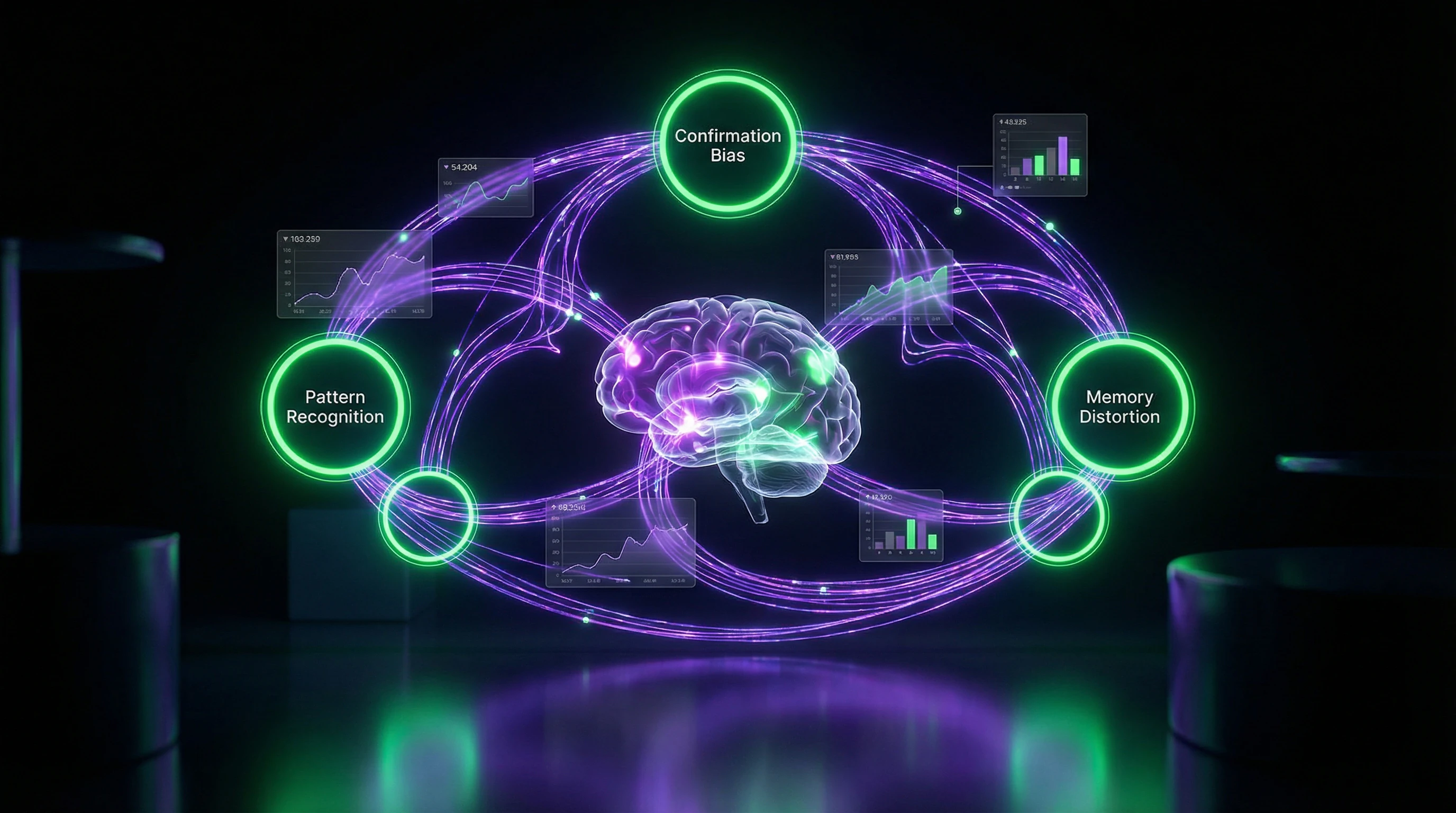
Belief in paranormal abilities correlates with specific patterns of cognitive information processing. A 2016 study showed that skeptics systematically outperform believers in logical reasoning and critical analysis tests—not due to differences in education or general intelligence, but because of specific cognitive styles.
Believers demonstrate heightened pattern sensitivity, leading to the perception of meaningful connections in random events—apophenia. The brain is evolutionarily tuned to detect agency and intentions even in inanimate processes, creating a cognitive predisposition toward belief in invisible forces.
- Availability heuristic: vivid stories about "fulfilled predictions" are remembered better than numerous failures.
- Illusion of control: paranormal explanations provide a sense of understanding in situations of uncertainty.
- Agency in chaos: the brain seeks intentions and causes even where none exist.
Confirmation Bias and Selective Memory
Confirmation bias is the most powerful mechanism sustaining paranormal beliefs. People actively seek, interpret, and remember information that confirms existing views while ignoring contradictory data.
In the context of psychic abilities, this manifests in remembering mediums' "hits" while forgetting numerous misses. A 2012 BBC experiment showed that even with objectively random prediction accuracy, participants rated mediums as accurate, focusing on rare coincidences.
Retrospective memory distortion is particularly pronounced in cases of "premonitions": after an event, people sincerely believe they foresaw it, though objective records show an absence of specific predictions before the fact.
Social reinforcement through story-sharing in believer communities creates an echo chamber where paranormal interpretations are normalized and skeptical explanations are rejected as "closed-mindedness."
Critical Thinking as a Protective Factor
Research demonstrates an inverse correlation between critical thinking skills and paranormal belief, independent of overall education level. The key factor is not the quantity of knowledge, but the ability to apply the scientific method: formulate falsifiable hypotheses, distinguish correlation from causation, understand statistical significance.
| Factor | Protective Effect | Paradox |
|---|---|---|
| Scientific literacy | Understanding experimental design and statistics reduces susceptibility to paranormal claims | Highly educated individuals may create sophisticated rationalizations using pseudoscientific terminology |
| Experience in illusionism | Knowledge of deception techniques and perception manipulation enables recognition of pseudo-paranormal demonstrations | Professional illusionists (James Randi) are particularly effective at debunking precisely because they understand the mechanisms |
People with developed critical analysis skills systematically demand more rigorous evidence and recognize logical fallacies in paranormal claims.
Common Myths and Their Systematic Refutation
The Myth of Numerous Confirmed Cases
"Confirmed case" in popular discourse means subjective testimony or personal conviction, not verification under controlled conditions. No case of paranormal abilities has passed rigorous scientific testing with independent replication.
The James Randi Foundation offered a substantial monetary reward for demonstration of paranormal abilities under controlled conditions—the prize was never claimed, despite hundreds of attempts.
Soviet and Russian military investigations of paranormal phenomena, often cited as evidence, reached the opposite conclusion: all investigated cases were explained by tricks and deception, not genuine abilities.
The gap between public perception of "proof" and scientific consensus reflects successful media popularization while simultaneously ignoring methodological standards of evidence.
The Myth of Scientific Closed-Mindedness and Bias
The narrative that scientists reject the paranormal due to dogmatism contradicts historical reality: paranormal claims have undergone serious study in universities, military laboratories, and independent institutes for decades.
The problem lies not in lack of research, but in the systematic absence of reproducible positive results when methodological rigor is maintained.
| Principle | Application |
|---|---|
| Proportionality of evidence | Extraordinary claims require extraordinary evidence |
| Universality of standard | This criterion applies to all scientific hypotheses, not specifically to the paranormal |
| Acceptance of counterintuitive discoveries | Scientists regularly accept quantum mechanics, dark matter, and other paradoxical phenomena when reproducible evidence exists |
The lack of acceptance of paranormal claims reflects insufficient evidence, not researcher bias.
The Myth of Impossibility of Scientific Testing of the Paranormal
The claim that paranormal abilities "don't work" in laboratory conditions or when observed by skeptics represents a logical trap, making claims unfalsifiable. If an ability disappears precisely when controls are applied to exclude deception, this indicates the absence of a genuine phenomenon.
The BBC experiment (2012) demonstrated that mediums cannot accurately describe the appearance and character of people under controlled conditions, showing results at chance level.
Clear protocols exist for testing paranormal claims: double-blind study design, elimination of sensory cues, statistical pre-registration of hypotheses, independent verification. These methods are successfully applied in psychology, medicine, and other sciences to study subtle effects.
Paranormal claims systematically fail these tests not due to methodological limitations, but due to the absence of a real effect that could be detected.
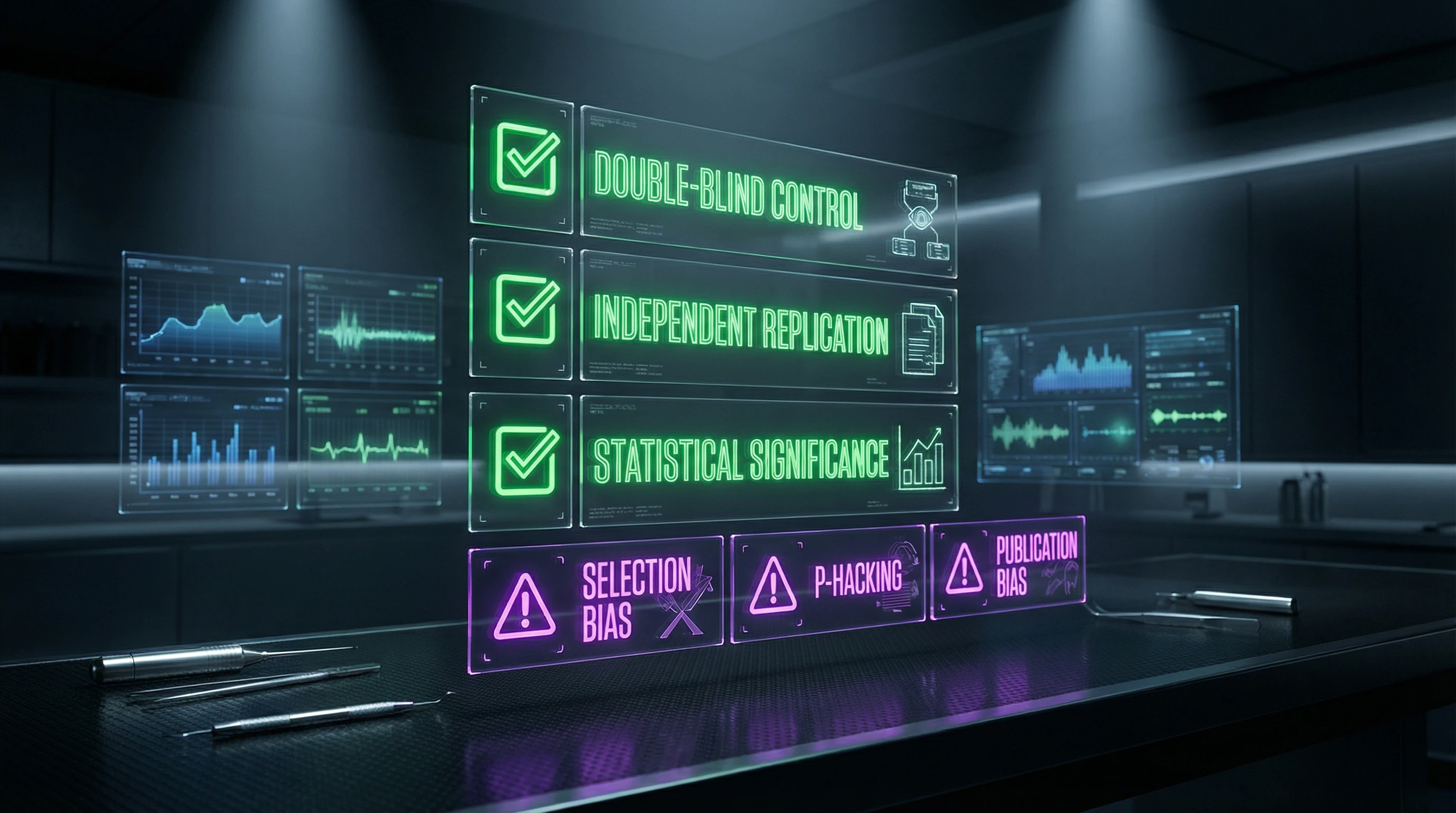
Practical Tools for Critical Evaluation of Paranormal Claims
Methodological Requirements Checklist for Research
Evaluation of paranormal claims requires strict methodological standards to minimize systematic errors. Double-blind design is mandatory: neither participants nor experimenters should know the target stimuli, to exclude unintentional information transmission through microexpressions, tone of voice, or question sequencing.
Elimination of all sensory channels is critical: visual, auditory, and tactile cues must be completely excluded through physical isolation or automated systems. Statistical pre-registration of hypotheses and analysis methods prevents p-hacking and post-hoc interpretation of random patterns.
- Independent replication by other research groups is the gold standard of confirmation.
- Adequate sample size must ensure statistical power, rather than being limited to a few "impressive" cases.
- Randomization of target stimuli and control of multiple comparisons through Bonferroni corrections prevent false-positive results.
- Protocols must include measures against cold reading: elimination of feedback, prevention of information leakage, control of preliminary data collection about subjects.
Red Flags of Pseudoscience and Manipulative Practices
Certain characteristics of paranormal claims serve as reliable indicators of pseudoscience. Reliance exclusively on anecdotal evidence without controlled studies is a primary red flag: personal stories cannot substitute for systematic verification.
Refusal to test under controlled conditions with explanations like "abilities don't work under pressure" or "skeptical energy interferes" makes claims unfalsifiable and therefore unscientific.
Vague or post-hoc interpretations of "predictions" allow any outcome to be fitted to a claim of success. Absence of statistical analysis or use of inadequate methods masks random results as significant effects.
Cherry-picking successful attempts while ignoring failures creates an illusion of ability, though overall accuracy remains at chance level. Use of specialized jargon ("quantum consciousness," "biofield," "torsion fields") lends an appearance of scientificity without real content.
Appeals to secret research or classified data that "cannot be disclosed" make claims untestable and should raise immediate suspicion.
Cold Reading Techniques and Their Recognition
Cold reading is a set of psychological techniques that create the illusion of paranormal knowledge through observation, deduction, and communication manipulation. The Barnum technique uses vague statements applicable to most people ("you sometimes doubt your decisions") that are perceived as specific and accurate.
| Technique | Mechanism | How to Recognize |
|---|---|---|
| Rainbow reading | Opposite characteristics simultaneously ("you're an extrovert, but sometimes need solitude") | Statement covers contradictory traits, guaranteeing partial hit |
| Fishing | Questions in statement form with observation of reactions to adjust direction | Information comes from client, not from "medium"; constant clarifying questions |
| Shotgunning | Rapid listing of general statements hoping for random hit | Multiple vague claims from which client selects relevant ones |
The BBC experiment showed that mediums use precisely these techniques, not genuine extrasensory perception. Using feedback from the client to refine subsequent statements creates an impression of accuracy, though information actually comes from the client themselves.
Professional illusionists, such as James Randi, have systematically demonstrated that all "paranormal" demonstrations can be reproduced through known techniques of deception and psychological manipulation.
Knowledge Access Protocol
FAQ
Frequently Asked Questions
Paranormal abilities are claimed human capabilities that exceed normal physical and psychological limitations. These include telepathy, clairvoyance, precognition, telekinesis, and mediumship. Scientific consensus indicates that none of these abilities have been confirmed under controlled conditions.
No, convincing scientific evidence does not exist. Numerous studies, including experiments by James Randi and Soviet military programs, have found no reproducible paranormal effects. All verified cases were explained by ordinary phenomena, tricks, or statistical errors.
Belief is linked to cognitive biases and psychological needs. Research shows that skeptics outperform believers on tests of logic and critical thinking. People tend to see patterns in random events and remember confirming instances while ignoring contradictory ones.
Mediums were unable to accurately describe the appearance and character of people under controlled conditions. Their results did not exceed chance-level guessing. The experiment demonstrated that without sensory cues, claimed abilities do not manifest.
Use double-blind controls, eliminate sensory cues, and apply statistical analysis. Require independent replication of results. Check whether cold reading techniques or other psychological manipulations are being used to create the illusion of paranormal abilities.
It was a monetary reward for demonstrating paranormal abilities under controlled conditions. Despite numerous attempts, no one successfully passed the test and claimed the prize. This remains one of the most well-known examples of scientific testing of psi phenomena.
Yes, but research showed negative results. Military experts found that claimed abilities were explained by tricks and deception rather than genuine paranormal phenomena. Programs were shut down due to lack of practical results.
It's a psychological technique for creating the illusion of extrasensory knowledge through observation, general statements, and reading reactions. Practitioners use body language, statistically probable assumptions, and feedback from clients. Recognizing these methods helps critically evaluate claims made by mediums and psychics.
Not due to bias, but due to lack of reproducible evidence. Thousands of studies have been conducted using rigorous scientific methods. None have produced results exceeding statistical chance under controlled conditions with independent verification.
Scientific data does not confirm the existence of such abilities, so their development is impossible. Courses and training programs for developing paranormal skills are based on subjective sensations and do not produce objectively verifiable results. Instead, develop critical thinking and scientific literacy.
It's the tendency to remember and assign significance to events that confirm beliefs while ignoring contradictory ones. A person remembers 'fulfilled predictions' while forgetting hundreds of incorrect ones. This cognitive mechanism creates an illusion of paranormal accuracy when objectively no correlation exists.
Absence of controlled experiments, non-reproducible results, appeals to anecdotes instead of data. Also characteristic are refusal of independent verification, use of scientific terminology without substance, and claims of scientific conspiracy. Real science welcomes testing and criticism.
A connection exists, but it's not direct. The key factor is critical thinking skills and scientific literacy, not formal education. Research shows that skeptics demonstrate better results in logic tests regardless of educational level.
This is a common excuse for failures in controlled tests, but it contradicts the scientific method. If a phenomenon is real, it must manifest statistically significantly with sufficient trials. 'Inconsistency' usually indicates randomness or psychological factors, not a real effect.
It's a methodology where neither the subject nor the experimenter knows the correct answers until the test is complete. This eliminates unintentional cues and bias. In paranormal research, results drop sharply to chance levels when such controls are introduced.
Some research is conducted, including work at Harvard, but with scientific rigor. Results consistently fail to confirm the existence of psi-phenomena. Most academic programs study the psychology of belief in the paranormal rather than the claimed abilities themselves, due to the absence of reproducible effects.