 🛸 Ufology and Contactees
Research into Unexplained Phenomena: From UFOs to Cryptidsλ
Critical analysis of paranormal phenomena, UFO sightings, and cryptozoology through the lens of scientific method and documented research
Overview
Paranormal phenomena occupy the intersection of archaic fears, mass mythology, and attempts at rational explanation. UFOs, cryptids, "contact with the other": each phenomenon relies on eyewitness testimony but rarely withstands controlled experimental verification. The task is to separate documented anomalies from anecdotes and understand 🧩 why the human brain so readily constructs patterns where none exist.
🛡️
Laplace Protocol: This section is based on limited sources, primarily from social media and entertainment content. The information presented does not reflect scientific consensus and requires critical evaluation. Reliable analysis demands government reports, peer-reviewed research, and documented data from qualified experts.
Reference Protocol
Scientific Foundation
Evidence-based framework for critical analysis
Navigation Matrix
Subsections
[cryptozoology]
Cryptozoology
The study of mysterious creatures — from Bigfoot to the chupacabra — balancing between scientific method and pseudoscience, drawing attention to unstudied species.
Explore
[paranormal-abilities]
Paranormal Abilities
Investigation of telepathy, clairvoyance, telekinesis, and mediumship through controlled experiments, cognitive psychology, and critical thinking
Explore
[ufology-contactees]
Ufology and Contactees
Critical analysis of the contactee phenomenon with extraterrestrial civilizations: psychological research, social patterns, and distinguishing scientific approach from mystifications
Explore
Protocol: Evaluation
Test Yourself
Quizzes on this topic coming soon
Sector L1
Articles
Research materials, essays, and deep dives into critical thinking mechanisms.
🛸 Ufology and Contactees 🔮 Paranormal Abilities
 🔮 Paranormal Abilities
 🔮 Paranormal Abilities
 🔮 Paranormal Abilities
 🔮 Paranormal Abilities
 🔮 Paranormal Abilities
 🛸 Ufology and Contactees
 🦕 Cryptozoology
 🛸 Ufology and Contactees
 🔮 Paranormal Abilities
 🔮 Paranormal Abilities
⚡
Deep Dive
Ufology and Unidentified Aerial Phenomena: From Conspiracy Theory to Scientific Analysis
Ufology has evolved from marginal theories to military acknowledgment of the reality of unidentified aerial phenomena. The shift from the term "UFO" to the neutral "UAP" (Unidentified Aerial Phenomena) reflects a commitment to scientific objectivity.
Most publicly available materials consist of anecdotal testimonies and entertainment content, lacking methodological rigor.
History of UFO Research: From Project Blue Book to the Present
Systematic investigation of sightings began in the United States with Project Blue Book (1952–1969), which documented thousands of observation cases. The historical context includes alternative theories, such as connections between Nazi Antarctic expeditions of 1939 and paranormal phenomena, however these claims belong to alternative history and lack documentary evidence.
A key figure in modern disclosure is James T. Lacatski, associated with the "Weaponized" podcast as of July 2024. The transition from classified military programs to public discussion reflects changing institutional attitudes toward the UAP phenomenon.
Government Programs and Declassified Documents
Critical evaluation of available materials reveals a complete absence of primary government documents. Credible coverage requires declassified Pentagon UAP reports, materials from the AATIP (Advanced Aerospace Threat Identification Program), Project Blue Book documents, and military pilot testimonies with corroborating radar data.
Existing sources are limited to Russian-language social networks, personal blogs, and groups devoted to fiction writing.
Modern Pentagon UAP Reports and Scientific Methodology
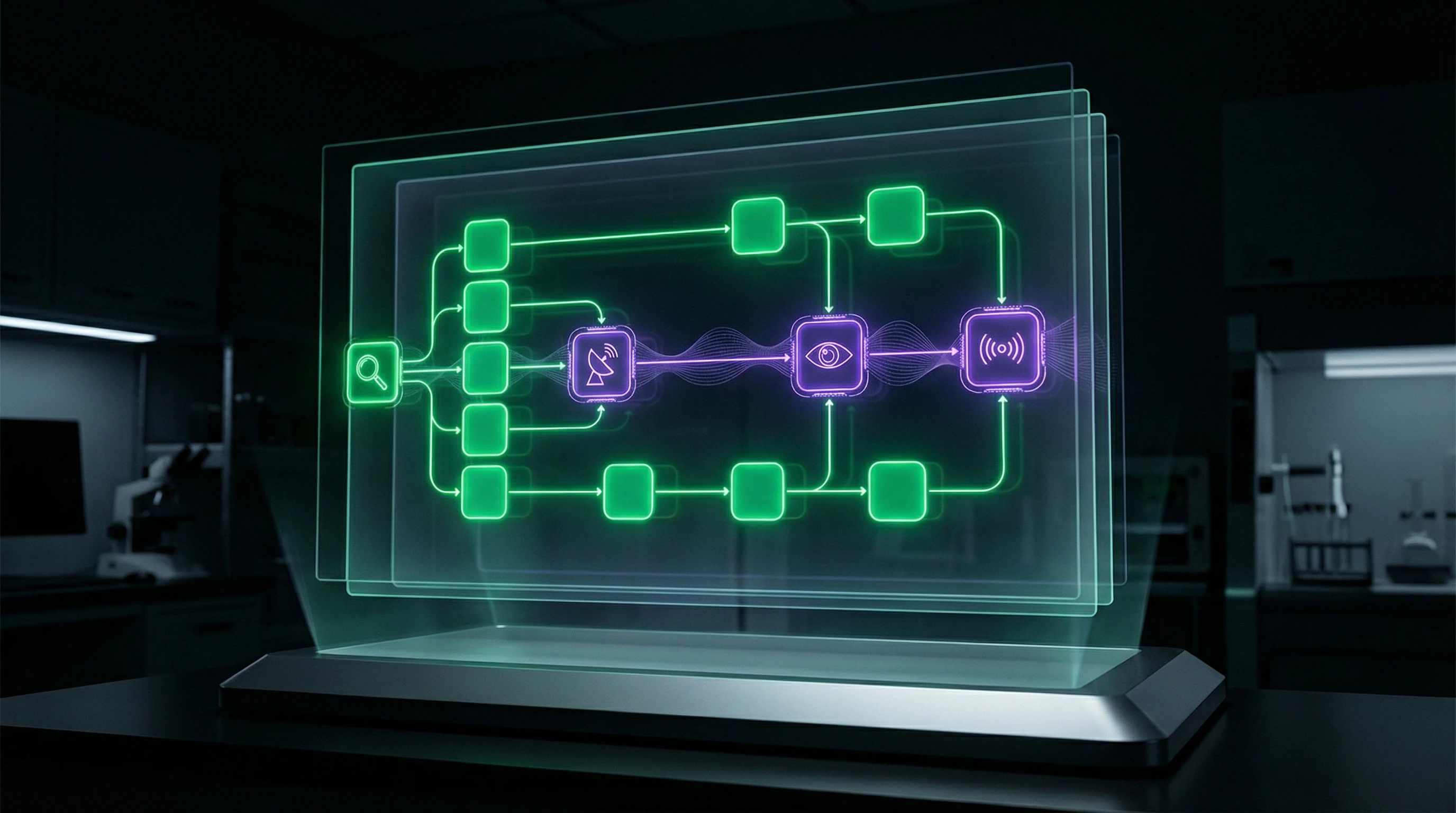
Legitimate research requires rigorous methodology: analysis of radar-visual cases with multiple witnesses, examination of physical traces, application of statistical methods, and control for cognitive biases.
- Required Components of Analysis
- Expert voices: astrophysicists, atmospheric phenomena specialists, military aviation experts, and psychologists studying perception.
Cryptozoology and Unknown Creatures: The Boundary Between Folklore and Zoology
Cryptozoology involves the search for animals whose existence is not confirmed by the scientific community but appears in eyewitness accounts and cultural traditions. Analyzed sources mention Bigfoot, the Jersey Devil, and Australian unknown creatures in an entertainment context without systematic research approach.
The critical distinction between cryptozoology and zoology lies in methodology: the latter requires physical specimens, reproducible observations, and expert verification.
Notable Cryptids in World Culture
Cryptids represent the intersection of folklore, popular culture, and potential zoological discoveries. Sources indicate the topic's popularity on social media and science fiction writer communities, highlighting the cultural significance of these figures.
None of the available materials contain documented field research, physical trace analysis, or expert biological assessments. Scientific credibility requires systematic expeditions, genetic analysis of alleged specimens, and publications in peer-reviewed zoological journals.
Methodology for Investigating Cryptozoological Evidence
Credible cryptozoological research must include data collection protocols, witness reliability assessment, analysis of photo and video materials for manipulation, and interdisciplinary collaboration with zoologists, ecologists, and anthropologists.
- Psychological research on eyewitness testimony reliability
- Statistical analysis of geographic distribution of sightings
- Control for confirmation bias
Analyzed sources demonstrate a complete absence of these standards, limited to forum discussions and anonymous publications.
Paranormal Phenomena and Alternative Dimensions: From Hypotheses to Testable Models
Paranormal phenomena are defined as events that fall outside the framework of conventional scientific explanations. One source proposes a theory that certain phenomena may originate from "another dimension" rather than extraterrestrial sources.
Such hypotheses require physical-mathematical justification and experimental verification, which are absent in the available materials.
Theories About Interdimensional Phenomena
The concept of alternative dimensions intersects with theoretical physics, including string theory and multidimensional spacetime models. Sources mention the idea that certain phenomena may be connected to "another dimension," suggesting a physical rather than metaphysical nature of the events.
For such theories to achieve scientific validity, mathematical models, testable predictions, and experimental protocols developed by theoretical physicists are necessary. The mention of Sumerian gods and the planet Nibiru in the context of fiction illustrates the blending of pseudoscience with popular culture.
Scientific Explanations for Unusual Observations
A legitimate scientific approach includes studying atmospheric and optical phenomena, psychological mechanisms of perception, neurobiological foundations of hallucinations, and sociocultural factors in belief formation.
| Level of Analysis | Components |
|---|---|
| Physical | Atmospheric phenomena, optical effects |
| Psychological | Perception, cognitive biases |
| Neurobiological | Hallucinations, perceptual disturbances |
| Sociocultural | Belief formation, group influence |
Available sources present entertainment podcasts, vintage UFO literature collecting, and forum discussions without methodological foundation. Creating credible content requires primary sources: government reports, scientific articles, work by accredited researchers, and documented cases with multiple witnesses and technical data.
Knowledge Access Protocol
FAQ
Frequently Asked Questions
Ufology is the study of unidentified flying objects (UFOs) and related phenomena. Researchers analyze eyewitness testimony, photo and video materials, as well as declassified government documents. However, most sources in this field lack scientific credibility and represent entertainment content or anecdotal evidence.
Yes, several countries have had classified UFO research programs, including the American Project Blue Book and the AATIP program. In the 2020s, the Pentagon released reports on unidentified aerial phenomena (UAP), confirming the existence of unexplained cases. These documents represent the most credible sources of information, unlike social media and forums.
Cryptozoology studies creatures whose existence is not confirmed by science—such as Bigfoot, chupacabra, or Australian cryptids. This field exists at the boundary between science and folklore, as it relies predominantly on eyewitness testimony without physical evidence. The scientific community does not recognize cryptozoology as a legitimate discipline due to its lack of methodology.
The interdimensional origin theory of UFOs is popular in alternative circles but lacks scientific evidence. Some researchers suggest that phenomena may be connected to parallel realities rather than extraterrestrial civilizations. However, this hypothesis remains speculative and is not supported by physical data or experiments.
Scientific approach requires testable hypotheses, repeatable experiments, and peer-reviewed publications. Pseudoscience relies on anecdotes, ignores contradictory data, and avoids critical examination. In paranormal research, most sources are forums and social media without methodology, making them unreliable for serious conclusions.
Cognitive biases, such as confirmation bias and the tendency to see patterns in random events, cause people to interpret ordinary phenomena as paranormal. Psychological research shows that the human brain is inclined to find explanations for the unusual, even when they are illogical. Social media amplifies these beliefs through echo chambers and viral content.
Record the exact time, location, weather conditions, and direction of the object's movement. Take photos or video at maximum resolution, if possible with reference to landmarks. Document testimony from other witnesses and report to specialized organizations that maintain databases of sightings for subsequent analysis.
Modern researchers employ radar data, infrared cameras, spectral analysis, and image recognition software. Military forces use multi-channel sensors to detect anomalous objects. However, most amateur materials from social media do not meet evidentiary standards due to low quality and lack of context.
Consult declassified government documents, Pentagon reports on UAP, and publications in peer-reviewed scientific journals. Avoid forums, anonymous social media posts, and entertainment podcasts as primary sources. Academic programs studying anomalous phenomena provide the most objective analysis of available data.
No, this is a conspiracy myth without historical evidence. The German Antarctic expedition of 1938-1939 was a cartographic mission unrelated to paranormal phenomena. Alternative history often mixes real events with fantastical elements, creating pseudo-historical narratives for entertainment content.
The ancient astronaut theory lacks archaeological evidence and contradicts scientific data on the development of ancient cultures. References to "gods from the heavens" are explained by mythological thinking, not actual contact. Pseudoscientific interpretations, such as theories about Planet Nibiru or Sumerian alien gods, ignore historical and cultural context.
Some universities conduct research in the psychology of perception, atmospheric physics, and sociology of paranormal beliefs. However, full-fledged academic programs in ufology or cryptozoology are virtually nonexistent. Serious research focuses on explaining phenomena through scientifically known mechanisms, not on confirming the supernatural.
Blurriness is often related to camera movement, low lighting, and limitations of mobile cameras when photographing distant objects. Psychologically, people tend to interpret blurry images in favor of their expectations. High-quality photos with clear details are extremely rare, which casts doubt on many claims of unusual object sightings.
Most "paranormal" phenomena have rational explanations through atmospheric optics, psychological effects, or misinterpretation of ordinary events. Science cannot explain what lacks reliable data or repeatable observations. The absence of an explanation does not prove the supernatural, but rather indicates insufficient information or research methodology.
Social media create echo chambers where unverified information spreads virally without critical evaluation. Algorithms amplify sensational content, while forum anonymity reduces accountability for accuracy. This turns social media into a primary source of myths and pseudoscientific theories, displacing academic sources from public discourse.
To date, there is not a single physical artifact or biological sample confirmed by the scientific community as extraterrestrial. All claimed "evidence" has either proven to be hoaxes or has terrestrial origins. Search for Extraterrestrial Intelligence (SETI) programs continue monitoring, but have not yet detected convincing signals from other civilizations.