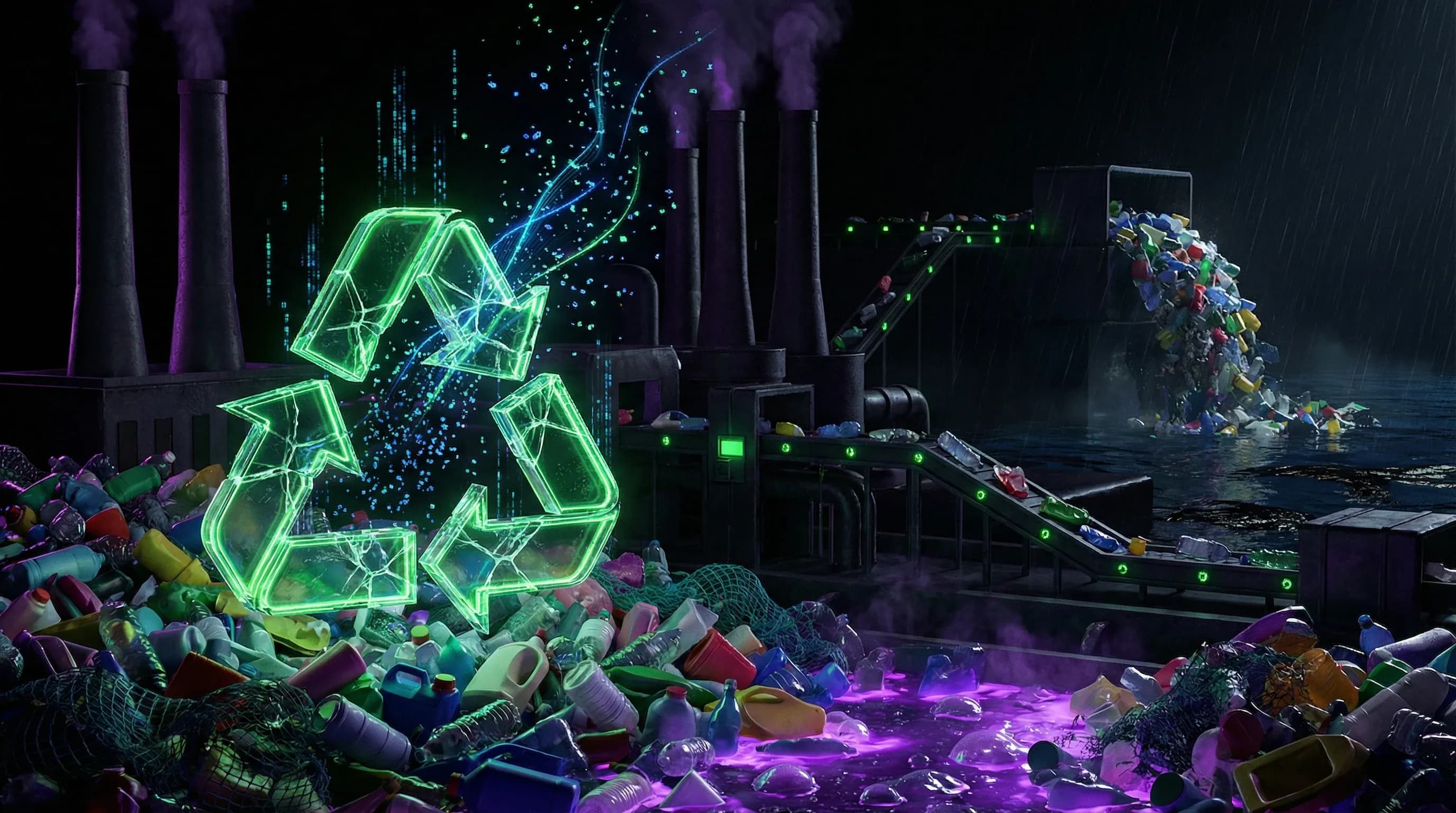
What exactly the plastic recycling myth promises—and why the 91% figure is not activist exaggeration
The plastic recycling myth consists of three interconnected claims: most plastic waste is technically recyclable, existing infrastructure can process a significant portion of this waste, and consumer choice and proper sorting are the primary factors in the system's success. More details in the Electromagnetism section.
All three claims are systematically refuted by data from the past two decades (S010).
Defining boundaries: what counts as "recycling" in official statistics
The term "plastic recycling" in industrial statistics includes mechanical recycling (shredding and remelting), chemical recycling (depolymerization), and energy recovery (incineration with energy recuperation).
Only the first two methods create new plastic material, while incineration is essentially resource destruction with incidental energy generation. Many national statistics include energy recovery in "recycling" metrics, artificially inflating success figures.
Global statistics: from production to landfill
Since the 1950s, humanity has produced over 8.3 billion tons of plastic (S010). Of this volume, only 9% has been recycled, 12% incinerated, and 79% has accumulated in landfills or the environment.
| Fate of plastic (since 1950s) | Share |
|---|---|
| Recycled | 9% |
| Incinerated | 12% |
| In landfills and environment | 79% |
Annual plastic production exceeds 400 million tons and continues to grow exponentially, while the recycling rate has remained consistently low for decades.
Technical categories of plastic and their actual recyclability
There are seven main plastic categories, marked with numbers 1 through 7 inside a triangle of arrows. Only categories 1 (PET) and 2 (HDPE) have relatively developed recycling infrastructure, but even for these, the actual recycling rate does not exceed 20–30% in developed countries.
- Categories 1–2 (PET, HDPE)
- Relatively developed infrastructure, but actual recycling at 20–30% in developed countries.
- Categories 3–7 (PVC, LDPE, PP, PS, mixed)
- Recycled in minimal volumes due to technical complexity and economic unfeasibility (S010).

Five Most Convincing Arguments Defending the Plastic Recycling System — and Why They Work at the Intuitive Level
Before examining evidence against the myth, we must honestly present the strongest arguments in its favor. This is not a straw man, but a steel-man version of the position — these are the arguments that convince millions of people to continue sorting waste and believing in the system. More details in the Systematic Reviews and Meta-Analyses section.
🔁 First Argument: The Technology Exists and Has Proven Viable
Mechanical recycling of PET bottles actually works and scales. Facilities exist that produce new bottles from recycled material, textile fibers from plastic waste, and construction materials from mixed plastics.
The technology is not theoretical — it's applied daily at thousands of facilities worldwide. This fact creates a powerful intuitive foundation: if it's technically possible, then the problem is only one of scaling.
- Mechanical recycling: bottles → new containers, fibers, construction materials
- Scale: thousands of facilities operating daily
- Psychological effect: technology exists = problem is solvable
🧱 Second Argument: The Alternative to Recycling Is Surrender to the Problem
Criticism of the recycling system is often perceived as a call to inaction. If we don't sort waste and develop recycling infrastructure, what remains? Only landfills and incineration.
Even imperfect action is better than abandoning the attempt — this argument appeals to moral intuition and creates a false dichotomy between believing in recycling and environmental nihilism.
📊 Third Argument: Statistics Are Improving, and the Trend Is Upward
In certain countries and regions, the recycling rate is indeed growing. Germany, South Korea, and some Scandinavian countries demonstrate plastic recycling rates of 40–50% (though counting methodologies vary).
This local success is extrapolated to the global system: if they could do it, then it's a matter of time and investment for the rest of the world. The trend creates a narrative of progress that is psychologically comfortable.
| Region | Claimed Recycling Rate | Psychological Effect |
|---|---|---|
| Germany, South Korea, Scandinavia | 40–50% | Local success → global extrapolation |
| Global level | ~9% | Gap between narrative and reality |
🧠 Fourth Argument: Personal Responsibility Matters and Shapes Culture
Even if the current system is inefficient, the act of sorting waste builds environmental consciousness, especially in children. This creates a cultural foundation for future improvements.
The argument shifts focus from outcome to process: what matters is not so much the current efficiency of recycling, but raising a generation that will demand systemic change. This transforms recycling into a symbolic act, protected from efficiency criticism.
⚙️ Fifth Argument: Industry Is Investing Billions in Technology Improvements
Major chemical corporations and plastic manufacturers are announcing massive investments in chemical recycling, biodegradable plastics, and closed-loop technologies. These investments are measured in billions of dollars and create an impression of serious intent.
If industry is committing such resources, then the problem is solvable, and current low rates are a temporary phase in the transition to a new technological paradigm. Investments become proof of future success, not current failure.
Systematic Evidence Review: What Meta-Analyses Show About the Real Impact of Plastic on Human Health
Parallel to the growth in plastic production, academic literature investigating its impact on human health is growing exponentially. Systematic reviews with meta-analyses represent the highest level of evidence in the hierarchy of scientific data, aggregating results from dozens and hundreds of primary studies (S011).
🧪 Umbrella Review Methodology: How to Aggregate Meta-Analyses
An umbrella review is a systematic review of systematic reviews, a third-level data aggregation method. In 2024, an umbrella review was published covering 52 systematic reviews with meta-analyses, containing data from 759 individual meta-analyses evaluating the association between plastic-associated chemicals and human health. More details in the Evolution and Genetics section.
The search was conducted in Epistemonikos and PubMed databases, including only studies where chemicals were measured directly in human biological samples (S011).
The umbrella review covered 52 systematic reviews, 759 meta-analyses, and data from thousands of primary studies — this is the maximum level of evidence aggregation available in modern science.
📊 Bisphenol A: Proven Associations with Metabolic and Reproductive Disorders
Bisphenol A (BPA) is one of the most studied plastic-associated chemicals. Meta-analyses demonstrate statistically significant associations between BPA levels in biological samples and the following conditions:
- Reduced anoclitoral distance in infants
- Type 2 diabetes in adults
- Insulin resistance in children and adults
- Polycystic ovary syndrome
- Obesity and hypertension in children and adults
- Cardiovascular disease
Critical point: other bisphenols (BPS, BPF), used as "safe" replacements for BPA, have not been evaluated in meta-analyses, despite structural similarity (S011).
🧬 Phthalates: Wide Spectrum of Impact from Reproduction to Cognitive Development
Phthalates are the only class of plasticizers for which sufficient data exists for meta-analysis. Proven associations span reproductive, metabolic, and neurocognitive systems:
| System/Process | Identified Associations |
|---|---|
| Reproduction | Spontaneous pregnancy loss, reduced anogenital distance in boys, decreased sperm quality, precocious puberty in girls, endometriosis |
| Metabolism | Insulin resistance in children and adults, type 2 diabetes in adults, reduced birth weight |
| Neurocognitive development | Negative impact on cognitive development and IQ loss, impaired fine motor skills and psychomotor development |
| Cardiovascular and respiratory systems | Elevated blood pressure in children, asthma in children and adults |
All these associations were identified in meta-analyses with sufficient data volume (S011).
🧾 Evidence Base Limitations: Which Chemicals and Effects Remain Unstudied
Despite the impressive volume of data, the umbrella review revealed critical gaps. Among all extracted publications, only a limited number of plastic-associated chemicals within each group were evaluated in relevant meta-analyses.
No meta-analyses exist evaluating polymers as such or microplastics. The current evidence base covers only a small fraction of the spectrum of chemicals used in plastic production and does not account for the effects of plastic particles themselves.
This means that even with hundreds of studies available, we have data on only a few dozen of the thousands of chemicals present in plastic products (S011).

Mechanism of Action: Why Correlation in Epidemiological Studies Doesn't Prove Causation — But Doesn't Disprove It Either
The critical question when interpreting epidemiological data: are the observed associations causal relationships or the result of confounders — third variables that simultaneously affect both exposure and outcome?
🔁 Hill's Criteria for Assessing Causality in Observational Studies
Bradford Hill's classic criteria (1965) for assessing causality include: strength of association, consistency of results across different populations, specificity of effect, temporal sequence, biological gradient (dose-response), biological plausibility, coherence with existing knowledge, experimental confirmation, analogy with known causal mechanisms. More details in the Reality Check section.
For plastic-associated chemicals, most of these criteria are met: associations are consistent across different populations, demonstrate a dose-response gradient, and are biologically plausible through endocrine disruption mechanisms (S011).
Consistency of effect across different populations and the presence of a biological mechanism strengthen causal interpretation, but don't guarantee it — the risk of systematic confounding remains.
🧬 Endocrine Disruption as a Biological Mechanism
Bisphenols and phthalates are endocrine disruptors — substances that mimic, block, or modify the action of natural hormones. BPA is structurally similar to estrogen and can bind to estrogen receptors, disrupting normal hormonal signaling.
Phthalates affect androgen synthesis and metabolism, which explains their impact on reproductive development. These mechanisms are confirmed in cell culture experiments and animal models, strengthening the causal interpretation of epidemiological associations (S011).
⚠️ The Confounder Problem: Socioeconomic Status and Lifestyle
The main alternative hypothesis is that exposure to plastic-associated chemicals correlates with socioeconomic status, diet, physical activity, and other lifestyle factors that independently affect health.
| Factor | Link to Plastic Exposure | Independent Health Impact |
|---|---|---|
| Low income | More packaged food, plastic utensils | Worse access to healthcare, nutrition |
| Diet (processed foods) | High phthalate exposure | Obesity, diabetes, inflammation |
| Physical activity | Low activity → more time indoors with plastic | Direct impact on metabolism and health |
Quality meta-analyses account for these confounders through statistical adjustment, but residual confounding cannot be completely excluded in observational studies (S011).
Conflicts of Interest and Uncertainties: Where Systematic Reviews Diverge and Why It Matters
Systematic reviews rarely reach identical conclusions. Methodology, selection criteria, statistical approaches, and funding create a range of results that often remains invisible to the reader. More details in the Cognitive Biases section.
This doesn't mean reviews are incorrect. It means uncertainty is built into the very structure of evidence.
💎 Declaration of Conflicts of Interest in the Umbrella Review
The authors of the 2024 umbrella review disclose: three of them work at Minderoo Foundation—an organization funding plastic pollution research (S011). This doesn't disqualify the results, but creates asymmetry: the organization has a clear position on plastic, which may influence the selection of studies and their interpretation.
Conflict of interest is not deception. It's a systematic shift of attention toward certain facts and away from others.
🔎 Laboratory Testing: Where It Ends
The review authors state directly: laboratory tests cannot predict plastic harm in humans (S011). To detect unforeseen effects, independent post-market research is needed—biomonitoring and epidemiology in real-world conditions.
The problem: long-term effects and combined exposure to multiple chemicals require decades of observation. By that time, new substances are already in circulation.
📊 Publication Bias: The Invisible Hand of Statistics
Studies with positive results are published more often than studies with null results (S001, S007). Meta-analyses amplify this: they aggregate already selected data.
- Egger's test and funnel plots help detect bias
- But eliminating it completely is impossible—it's a systemic problem of publication culture
- Result: associations in meta-analyses are often inflated
A quality meta-analysis acknowledges this. A poor one doesn't.
🗂️ Where Conclusions Diverge: A Map of Uncertainties
| Source of Divergence | How It Affects Conclusions | How to Check It |
|---|---|---|
| Study inclusion criteria | One review takes only RCTs, another—observational studies. Results can differ by 2–3 times | Read the Methods section. If criteria are vague—red flag |
| Statistical aggregation method | Fixed effects vs random effects yield different confidence intervals | Check if the method choice is justified. If not justified—bias |
| Author funding | Authors from organizations with a position on the issue may unconsciously select favorable studies | Find the Conflicts of Interest section. If empty—even worse |
| Publication language | English-only reviews miss studies from other countries with opposite results | Check which languages are included. If only English—potential bias |
Each divergence is not an error. It's a point where science meets choice.
🛡️ How to Read a Review Knowing About Conflicts
- Step 1: Find the Funding and Conflicts of Interest section
- If authors work at an organization with a position on the issue, this doesn't disqualify the review, but requires additional scrutiny when reading the methodology.
- Step 2: Check inclusion criteria
- If criteria are narrow (only RCTs, only last 5 years, only English language), the review may be systematic but not representative.
- Step 3: Find the Limitations section
- An honest review lists what it cannot say. If the section is empty or minimal—suspicion of overconfidence.
- Step 4: Compare with other reviews on the same topic
- If conclusions align—higher probability it's not a methodological artifact. If they diverge—need to understand why.
Systematic reviews are not truth. They're the best we can do with available data, given our limitations.
Reading them critically means understanding these limitations.
Cognitive Anatomy of the Myth: What Psychological Mechanisms Make the Recycling Illusion So Persistent
The plastic recycling myth isn't simply a lack of information. It's the result of systematic exploitation of cognitive vulnerabilities that make people susceptible to certain narratives regardless of facts. More details in the section Memory of Water.
🧩 Illusion of Control and Moral Licensing
The act of sorting waste creates an illusion of control over a global problem. Psychologically, this reduces anxiety and provides a sense of moral superiority.
Simultaneously, the moral licensing effect kicks in: people who sort waste feel entitled to consume more plastic because they're "compensating" through recycling. Research shows that the presence of recycling bins increases overall consumption of disposable goods (S010).
Waste sorting functions as a psychological shock absorber: it absorbs guilt but doesn't solve the problem. The system gains a loyal consumer who feels environmentally conscious while continuing to generate waste.
🕳️ Availability Bias and Substitution of Systemic Problems with Individual Ones
The recycling symbol on packaging and separate collection containers are constantly present in the visual field, creating availability bias: information about recycling is easily recalled, which leads to overestimating its effectiveness.
Simultaneously, the focus on individual responsibility (are you sorting correctly?) substitutes system-level questions: why is so much single-use plastic being produced? Why aren't alternative materials scaling? This is a classic tactic of shifting responsibility from producers to consumers (S010).
- Visibility of recycling symbol → overestimation of its effectiveness
- Focus on personal choice → ignoring production decisions
- Consumer responsibility → producer absolution
🧠 Halo Effect of "Green" Brands and Greenwashing
Companies actively promoting recycling programs and using "eco-friendly" packaging gain a halo effect: consumers perceive them as responsible across all parameters, even if their actual environmental impact remains high.
The term "greenwashing" describes the practice of creating an environmentally friendly image without substantial changes in production. The recycling symbol on packaging often means only theoretical recyclability, not actual infrastructure or economic viability (S010).
| Signal | What It Promises | What Actually Happens |
|---|---|---|
| Recycling symbol on packaging | Material will be recycled | Material can be recycled if infrastructure exists |
| "Eco-friendly" packaging | Company reduced environmental impact | Packaging changed, but production volume remained the same |
| Recycling program | Company is solving the waste problem | Company is creating an image of responsibility |
🔁 Cognitive Dissonance and Defense Mechanisms
When people learn about the low effectiveness of recycling, cognitive dissonance arises: a contradiction between behavior (sorting waste) and knowledge (it's ineffective).
Psychologically, it's easier to reject new information or rationalize behavior ("it's still better than doing nothing") than to change established habits or admit that years of effort were in vain. This creates a self-sustaining cycle: the more a person has invested in believing in recycling, the stronger the resistance to facts (S010).
- Rationalization
- Reinterpreting facts to match existing beliefs. Example: "The research is incomplete, recycling still helps".
- Denial
- Rejecting information as unreliable or biased. Example: "This is activist propaganda, not science".
- Avoidance
- Stopping the search for information on the topic. Example: a person stops reading articles about recycling to avoid confronting contradictions.
Environmental Claims Verification Protocol: Seven Questions That Dismantle Greenwashing in 60 Seconds
The following checklist allows systematic evaluation of recycling and environmental claims without specialized knowledge. Each question targets a specific vulnerability of typical greenwashing.
- Is a specific percentage of recycled material stated? Claims like "made from recycled materials" are meaningless without numbers. Demand precise data: what percentage? If it says "up to 30%" or "contains components," that's a red flag.
- Does recycling infrastructure exist in your region? A recycling symbol on packaging doesn't guarantee recycling. Check whether local facilities accept this type of plastic. For categories 3–7 (PVC, LDPE, PP, PS, mixed), infrastructure is often absent even in developed countries (S010).
- Does "biodegradable" plastic compost at home? Most require industrial composting at 50–60°C. Under normal conditions, they degrade for decades, just like regular plastic. Demand "home compostable" certification.
- Who funded the study confirming environmental benefits? If research was conducted by the manufacturer or their contractor, that's a conflict of interest. Independent third parties are the trust criterion.
- Is the product compared to an alternative or only to itself? A claim of "50% more eco-friendly" without specifying the baseline is manipulation. More eco-friendly than what exactly?
- Are lifecycle boundaries and excluded stages specified? LCA (life cycle assessment) often excludes production, transportation, or disposal. Full transparency requires listing all stages.
- Is there independent certification or just a marketing slogan? Certificates from recognized bodies (ISO, FSC, EU Ecolabel) are verifiable. Company's own logos are not.
Greenwashing works because it requires more effort from consumers to verify than to purchase. The protocol levels this asymmetry.
Each "no" or "unknown" answer is a signal for skepticism. Three or more red flags mean the environmental claim is more likely marketing than fact.
This approach works not only for plastic. Apply it to any sustainability claims: textiles, electronics, food products. The mechanism of greenwashing is universal—and so is the defense against it.