What we're actually discussing when we talk about climate crisis: boundaries of the concept and definitional traps
The first problem in any climate discussion is the absence of agreed-upon definitions. The term "climate crisis" is used as an umbrella concept to describe multiple different phenomena: from rising average global temperature to changing frequency of extreme weather events, from melting glaciers to ocean acidification. More details in the Physics section.
Each of these phenomena has its own evidence base, its own degree of scientific certainty, and its own mechanisms of causal relationships (S006).
When one discussion participant talks about "climate crisis" meaning measurable increase in atmospheric CO₂ concentration, while another understands it as a moral imperative for immediate decarbonization—they're talking about different things.
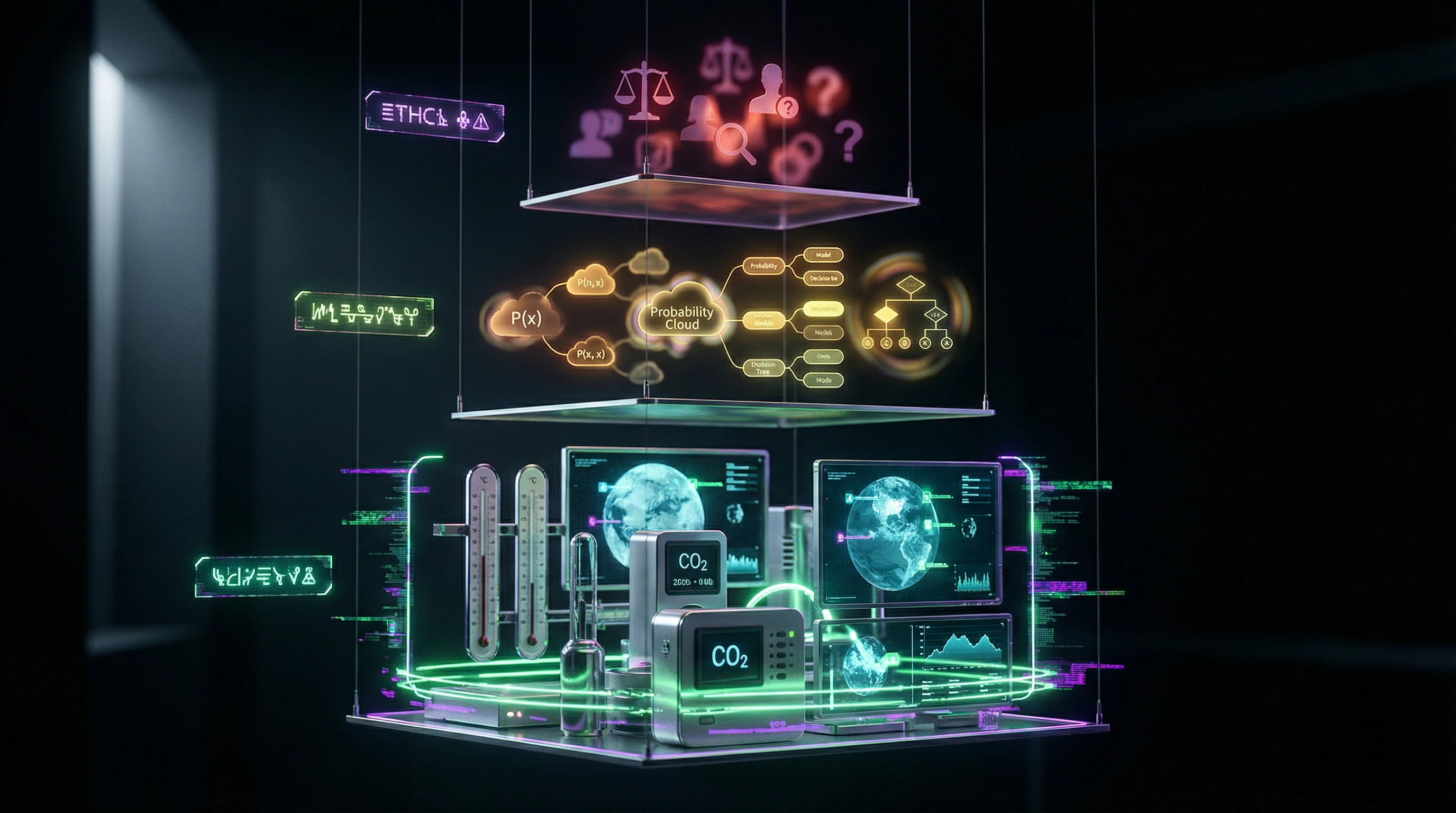
🔎 Three levels of climate claims
- Level 1: Physical measurements
- Temperature records, greenhouse gas concentrations, sea level, ice cover area. High degree of reliability and reproducibility.
- Level 2: Model projections
- Predictions of future changes based on climate models. Degree of certainty substantially lower due to system complexity and multiple variables.
- Level 3: Political and ethical judgments
- Claims about what "should" be done, who is "to blame," and which measures are "fair." Beyond the scope of scientific verification (S006).
⚠️ The category-mixing trap
The most common cognitive trap in climate discourse is presenting normative judgments as empirical facts. The claim "global temperature has risen 1.1°C since 1850" is a Level 1 fact.
The claim "this is a catastrophe requiring immediate action" is a Level 3 normative judgment. Mixing these levels creates the illusion that a moral position has the same degree of scientific foundation as a physical measurement (S006).
| Claim category | Example | Verifiability |
|---|---|---|
| Physical fact | Atmospheric CO₂ rose from 280 to 420 ppm | Yes, direct measurement |
| Model projection | By 2100 temperature will rise 2–4°C | Partial, depends on variables |
| Normative judgment | We must immediately abandon fossil fuels | No, this is a question of values |
Steel Version of Climate Consensus: Seven Arguments That Cannot Be Ignored
The steel man principle requires presenting the opponent's position in its strongest form. Before analyzing weaknesses in climate discourse, it's necessary to honestly present its most compelling arguments—those that rely on verifiable data and reproducible methods. More details in the Thermodynamics section.
🔬 Argument 1: Direct CO₂ Measurements Show Unprecedented Growth
Measurements at Mauna Loa Observatory (Hawaii) since 1958 demonstrate continuous growth in carbon dioxide concentration from 315 ppm to 420 ppm. These data are reproduced by independent stations worldwide.
Ice cores allow reconstruction of CO₂ concentration over the past 800,000 years and show that current values have no analogues in this time window. This is a Level 1 claim—direct physical measurement with high reliability.
🔬 Argument 2: Physics of the Greenhouse Effect Has Been Known Since the 19th Century
The ability of CO₂ to absorb infrared radiation was established by John Tyndall in 1859. Svante Arrhenius in 1896 calculated that doubling CO₂ concentration would lead to a temperature increase of 5–6°C.
Modern laboratory experiments confirm the radiative properties of greenhouse gases. This is fundamental physics, independent of climate models.
🔬 Argument 3: Multiple Independent Temperature Records Show Warming
Data from NASA GISS, NOAA, Hadley Centre, Berkeley Earth, and the Japan Meteorological Agency—five independent groups using different data processing methodologies—all show an increase in global mean temperature of approximately 1.1°C since 1850.
Convergence of independent methods strengthens the reliability of the conclusion: when different teams, working separately, arrive at the same result, it reduces the probability of systematic error.
🔬 Argument 4: Attribution Studies Link Warming to Anthropogenic Factors
Detection and attribution methods allow separation of the contributions of various factors (solar activity, volcanism, greenhouse gases, aerosols) to observed warming. Models including only natural factors do not reproduce the observed trend.
Adding anthropogenic factors substantially improves the fit between model and observations. This is a Level 2 statistical argument, but with high robustness.
🔬 Argument 5: Physical Consequences of Warming Are Observable
Melting of Arctic sea ice, retreat of mountain glaciers, sea level rise (about 20 cm since 1900), changes in timing of seasonal phenomena (plant flowering, bird migration)—all these phenomena are consistent with predictions based on warming.
- This does not prove causation in the strict sense.
- But it creates a coherent picture where different systems respond predictably.
- The absence of contradictory signals strengthens the weight of coincidences.
🔬 Argument 6: Paleoclimate Data Show Connection Between CO₂ and Temperature
Analysis of ice cores demonstrates strong correlation between CO₂ concentration and temperature over the past 800,000 years. Although in past climate cycles temperature changes often preceded CO₂ changes (due to orbital factors), this does not negate the physics of the greenhouse effect.
CO₂ acts as an amplifier of initial changes, creating positive feedback that accelerates transitions between climate states.
🔬 Argument 7: Consensus Among Climate Specialists Is High
Multiple studies of scientific consensus show that 90–97% of actively publishing climate scientists agree that current warming is largely driven by anthropogenic factors. While consensus is not proof of truth, it indicates that skeptical positions must offer extraordinarily convincing alternative explanations.
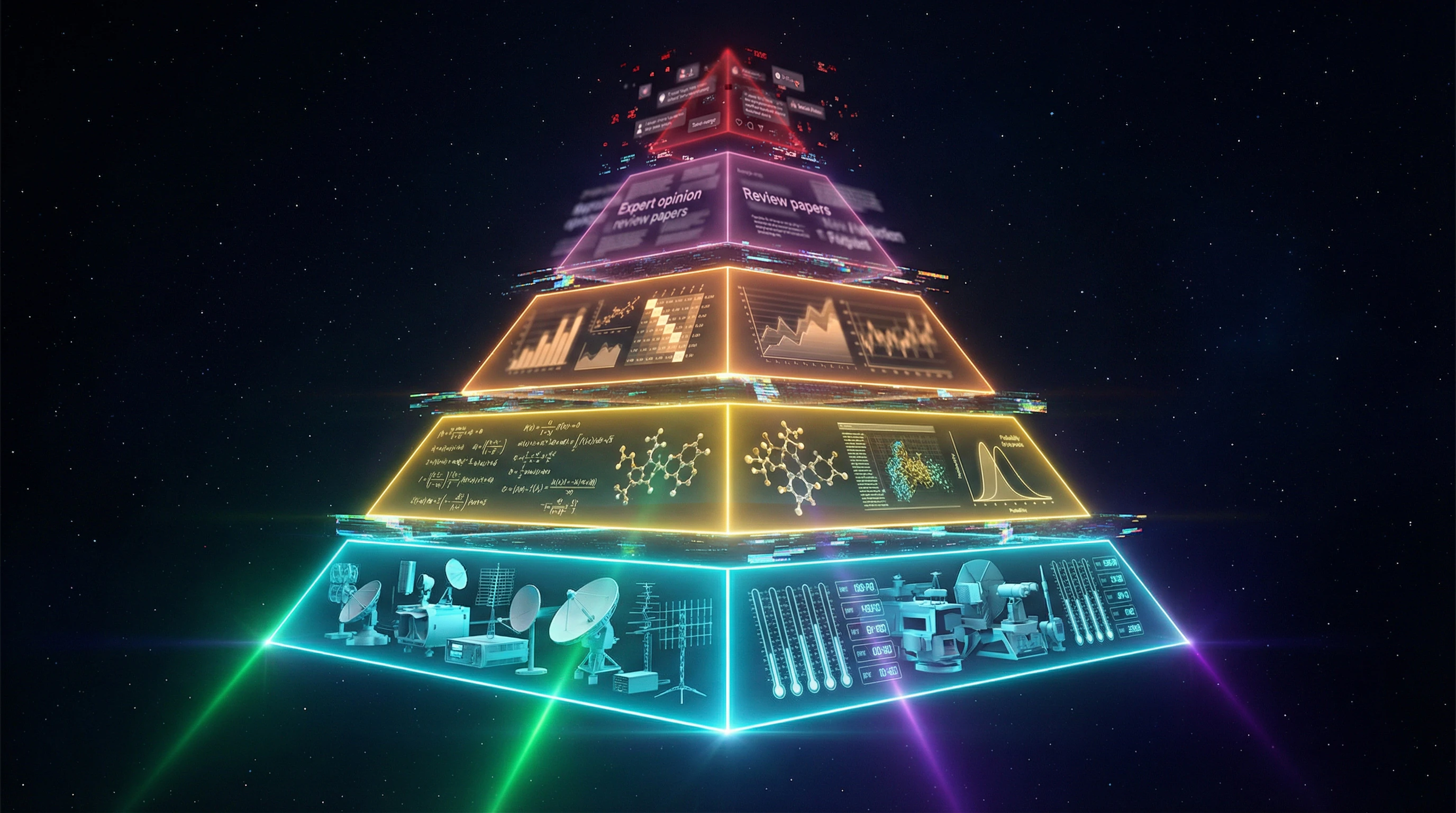
| Evidence Level | Argument | Reliability |
|---|---|---|
| Level 1 | Direct CO₂ measurements, temperature records | High (reproducible, independent) |
| Level 2 | Greenhouse effect physics, attribution | High (fundamental physics + statistics) |
| Level 3 | Paleoclimate correlations, consensus | Medium–high (indirect indicators) |
These seven arguments form a multi-layered structure of evidence. Each relies on different methods and data sources, making their simultaneous refutation by a single alternative hypothesis difficult. It is precisely this redundancy and independence that makes the consensus resistant to criticism.
The next step is not to deny these arguments, but to honestly examine where zones of uncertainty arise, where extrapolation begins, and where scientific conclusions transition into political demands. Climate change denial is often built on substituting one level of evidence for another, rather than refuting facts.
Evidence Base Under the Microscope: What Sources Say When Read Carefully
The transition from general arguments to specific sources reveals the first problem: the provided base contains only one document directly related to climate — (S006). The remaining sources are devoted to systematic reviews in medicine, engineering, historical research, and social capital.
This creates a methodological problem: how to analyze the climate crisis when direct climatological sources are absent?
📊 What Source S006 Actually Contains
Source (S006) is not an empirical climatological study. It is a philosophical-ethical analysis of how moral categories penetrate scientific discourse about climate.
Key thesis: contemporary climatology mixes descriptive statements (what is) with normative ones (what should be), often implicitly. Concepts of virtue, justice, and gender roles are integrated into the climate narrative, creating hybrid constructs that claim scientific status but contain substantial ethical components. More details in the Abiogenesis section.
📊 Methodological Lesson from Systematic Reviews
Sources (S001, S002) and other systematic reviews demonstrate the gold standard of evidence synthesis: explicit inclusion/exclusion criteria, systematic database searches, quality assessment of each study, heterogeneity analysis of results, explicit statement of limitations.
Applying these standards to climate discourse reveals a problem: many popular climate narratives do not meet systematic review criteria. They are often based on selective citation, ignoring uncertainties, conflating correlation and causation, extrapolating local data to the global level without sufficient justification.
- Selective Citation
- Including only studies supporting a particular position while ignoring contradictory data.
- Extrapolation Without Justification
- Extending local observations (e.g., (S003) on Mediterranean marine biota) to global conclusions without methodological justification.
- Mixing Levels of Analysis
- Combining objective measurements (temperature, CO2) with subjective perceptions (sense of crisis, anxiety) into a single narrative.
🧾 The Problem of Missing Data
Honest analysis requires acknowledging limitations. The provided source base does not contain:
- Direct climatological studies with primary data
- Systematic reviews of climate literature
- Meta-analyses of climate models
- Empirical studies of extreme weather events
- Economic assessments of climate impacts
- Technological analyses of decarbonization (see (S004) on AI's role — the only indirect source)
Any specific quantitative claims about climate in this material must be accompanied by a caveat: they cannot be verified through the provided sources and require reference to primary climatological literature.
🔬 Indirect Evidence: Objective vs Subjective
Sources on stress and social factors (S001, S002) illustrate an important methodological principle: the distinction between objective and subjective contexts.
Objective measurements (temperature, CO2, sea level) and subjective perceptions (sense of crisis, anxiety about the future) are different categories of data requiring different analytical methods. Mixing these levels creates the illusion of a unified "climate crisis," when in reality we're dealing with two parallel phenomena: a physical process and psychological perception.
| Category | Verification Method | Source of Errors |
|---|---|---|
| Objective data (temperature, CO2) | Direct measurement, instrument calibration, replication | Systematic instrument errors, observation period selection |
| Subjective perceptions (anxiety, sense of threat) | Surveys, psychometric scales, sociological studies | Suggestibility, social desirability bias, media influence |
| Causal links (climate → migration, climate → conflicts) | Controlled studies, analysis of alternative explanations | Confounders, reverse causality, correlation instead of causation |
Sources (S005) on arid regions and (S007) on air quality control show that climate impacts are local and specific. Drought in one region does not mean drought everywhere; improved air quality in Europe does not solve problems elsewhere. Global conclusions require synthesis of local data with explicit indication of spatial and temporal variability.
Conclusion: the provided source base allows analysis of climate discourse methodology, but not climatology itself. This means we can discuss how arguments are constructed, but not what they prove regarding climate. Full analysis requires reference to primary climatological literature and IPCC systematic reviews.
Mechanisms of Causality vs. Correlation Illusions: Why "After" Doesn't Mean "Because Of"
One of the most common logical errors in climate discourse is conflating correlation with causation. The fact that two phenomena change simultaneously does not prove that one causes the other. More details in the section Sources and Evidence.
Establishing a causal relationship requires: a mechanism, temporal sequence, exclusion of alternative explanations, reproducibility.
🧬 Bradford Hill's Three Criteria of Causality Applied to Climate
Epidemiologist Austin Bradford Hill formulated nine criteria in 1965 for evaluating causal relationships. The three most important:
- Strength of association — how strong is the link between the proposed cause and effect. For climate: the correlation between CO₂ and temperature is strong (r > 0.8 on paleoclimatic scales), but not perfect.
- Temporal sequence — the cause must precede the effect. In paleoclimatic data, temperature changes often precede CO₂ changes by hundreds of years due to orbital factors and ocean feedback loops.
- Physical plausibility — does a known mechanism exist. For the greenhouse effect, the mechanism is known and reproducible in the laboratory.
🔁 The Feedback Problem: When Effect Becomes Cause
The climate system contains numerous feedback loops that complicate causal analysis.
| Feedback Type | Mechanism | Effect on Temperature |
|---|---|---|
| Water vapor | Warming → evaporation → greenhouse gas → amplified warming | Positive |
| Cloud cover | Clouds reflect light or trap heat (depends on type and altitude) | Ambiguous |
| Albedo | Ice melting → reduced reflectivity → energy absorption | Positive |
These feedback loops mean that simple linear causality models are inadequate — the system is nonlinear and contains threshold effects.
⚠️ Ignored Confounders: Solar Activity, Volcanism, Oceanic Cycles
A confounder is a variable that affects both the proposed cause and the effect, creating a spurious correlation.
- Solar activity
- Changes in solar radiation affect Earth's temperature. However, since the 1950s, solar activity has been slightly declining while temperature rises — this contradicts the hypothesis of solar-driven warming.
- Volcanism
- Major eruptions eject aerosols that cool the planet for 1–2 years. But volcanic activity shows no long-term trend corresponding to warming.
- Oceanic cycles
- El Niño, Pacific Decadal Oscillation, Atlantic Multidecadal Oscillation affect global temperature on scales from years to decades. These cycles create short-term variability but don't explain the long-term trend.
🧷 Why Models Are Not Evidence: The Distinction Between Simulation and Observation
Climate models are mathematical simulations based on physical equations. They're useful for testing hypotheses and creating scenarios, but they are not empirical observations.
A model can reproduce the past and still predict the future poorly if it doesn't account for all relevant processes or parameterizes them incorrectly. Many processes (cloud cover, aerosols, biosphere feedbacks) occur at scales smaller than model resolution and require parameterization — simplified representations based on empirical relationships.
The range of projections from different models for 2100 spans from 1.5°C to 4.5°C warming for a doubling of CO₂ — this is enormous uncertainty that's often ignored in public discourse.
These parameterizations introduce uncertainty that's rarely discussed in popular presentations of climate science. Models are tools for understanding, not sources of truth.
Data Conflicts and Uncertainty Zones: Where Sources Contradict Each Other
Honest analysis requires acknowledging areas where the scientific community has not reached consensus or where data is contradictory. Ignoring these zones creates a false impression of greater certainty than actually exists. More details in the Cognitive Biases section.
🧩 Contradiction 1: Trends in Extreme Weather Events
Physics predicts that warming should increase the frequency and intensity of some extreme events (heat waves, heavy precipitation). Empirical data shows a mixed picture.
| Event Type | Global Trend | Attribution Status |
|---|---|---|
| Heat Waves | Increasing frequency and intensity | High confidence |
| Hurricanes | No clear trend in frequency; possible increase in intensity of strongest | Low confidence |
| Tornadoes (USA) | No long-term trend detected | Uncertain |
| Droughts | Regional variability: increase in some regions, decrease in others | Region-dependent |
Key issue: an individual extreme event cannot be definitively attributed to climate change. We can only assess how much climate change altered the probability of such an event.
🧩 Contradiction 2: Climate Sensitivity to CO₂ Doubling
Equilibrium climate sensitivity (ECS)—how much temperature will rise when CO₂ concentration doubles after reaching a new equilibrium—remains one of the most uncertain parameters. Estimates range from 1.5°C to 4.5°C, with the most likely value around 3°C.
This uncertainty has existed for 40 years and has not narrowed significantly despite improved models and data. The reason: complexity of feedback loops, especially cloud feedbacks, which can both amplify and dampen warming.
A 3°C range is not a small margin of error. The difference between 1.5°C and 4.5°C dramatically changes projections of economic and ecological consequences.
🧩 Contradiction 3: Role of Aerosols and Their Cooling Effect
Anthropogenic aerosols (sulfates from coal burning, organic particles) exert a cooling effect by reflecting sunlight and affecting cloud cover. The magnitude of this effect is extremely uncertain—estimates vary by several times.
- Scenario 1: Large Aerosol Cooling Effect
- Warming from greenhouse gases must be even greater to explain observed warming. This means high climate sensitivity and more aggressive future projections.
- Scenario 2: Small Aerosol Cooling Effect
- Climate sensitivity may be lower, and warming projections less extreme.
- Practical Significance
- This uncertainty directly affects projections of future warming and, consequently, risk assessment and policy choices.
Acknowledging these uncertainty zones does not weaken the scientific consensus on the reality of warming and its anthropogenic origin. It shows that science works honestly: it points out what is known and what remains an open question. Climate change denial often exploits precisely these uncertainty zones, presenting them as proof that the climate crisis is fabricated.
Anatomy of Cognitive Traps: What Psychological Mechanisms the Climate Narrative Exploits
Climate discourse often uses moral categories and emotional triggers that bypass rational analysis (S006). Understanding these mechanisms is critically important for separating facts from manipulation.
⚠️ Availability Heuristic: Why Vivid Events Seem More Frequent
Availability heuristic is a cognitive bias where we assess the probability of an event by how easily examples come to mind. Vivid, emotionally charged events (destructive hurricanes, wildfires, floods) are easily recalled and create the impression that such events are becoming increasingly frequent. More details in the section Water Chemistry Myths.
The mechanism works simply: media covers disasters, the brain remembers them, and we overestimate their actual frequency. This isn't a lie—the events really happen, but their statistical weight in our perception becomes distorted.
- Vivid event hits the media → high emotional load
- Brain easily recalls it → seems frequent
- We overestimate probability → make decisions based on distorted assessment
- Data on actual frequency is ignored → heuristic defeats statistics
🎯 Moral Panic and Social Proof
Social proof is the tendency to consider behavior correct if the majority demonstrates it. In the context of climate narrative, this is amplified through mass protests and media campaigns (S006).
When millions of people talk about one thing, individual skepticism becomes psychologically expensive. This isn't manipulation in the classic sense—it's a natural social mechanism that works in both directions.
Moral panic arises not because people are stupid, but because social proof is an evolutionarily adaptive mechanism. In small groups, following the majority often saved lives. At the scale of millions, it becomes a vulnerability.
🔄 Catastrophism and Future Discounting
The human brain poorly processes long-term risks. We overestimate immediate threats and underestimate slow processes. Climate narrative often uses catastrophic scenarios to overcome this cognitive inertia.
| Cognitive Mechanism | How It Works | Result |
|---|---|---|
| Future discounting | Risk 50 years away seems less real than risk today | Underestimation of long-term problems |
| Catastrophism | Extreme scenarios activate the amygdala (fear center) | Overcoming inertia, but risk of panic |
| Illusion of control | We believe we can influence a global process through personal actions | False sense of agency |
💭 Confirmation Bias and Information Filtering
Confirmation bias is the tendency to seek, interpret, and remember information that confirms our beliefs. In climate discourse, this means supporters and skeptics see the same data but draw opposite conclusions.
This isn't a question of honesty—it's the architecture of attention. The brain filters information automatically, and we don't notice it. The solution isn't to "be more objective," but to actively seek sources that contradict us.
The connection to climate change denial is obvious: both sides use the same cognitive mechanisms, but in opposite directions.