What is the "God Helmet" and why it became a symbol of neurotheology—defining the phenomenon, boundaries of applicability, and the history of the concept's emergence
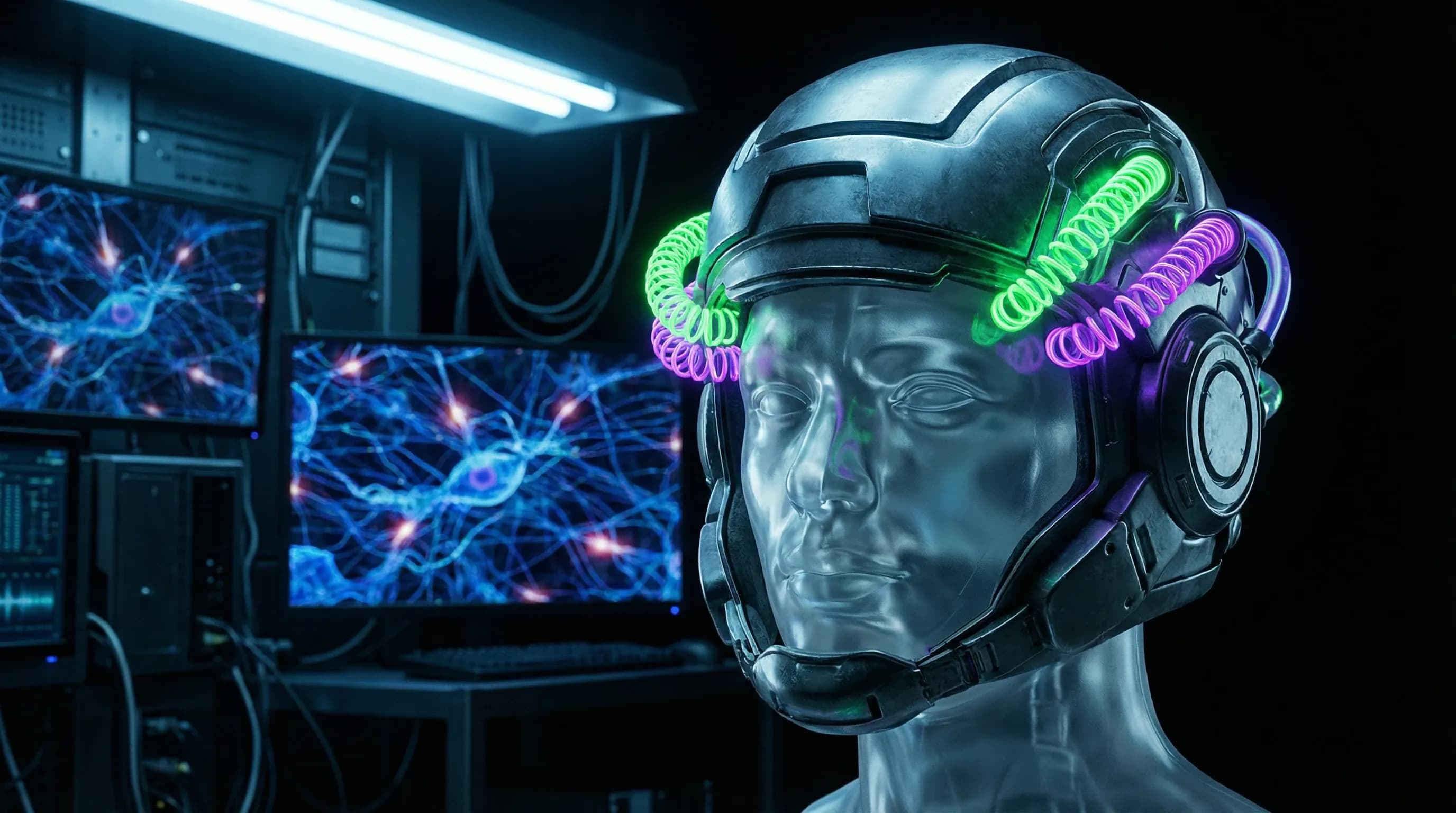
The "God Helmet" is a transcranial magnetic stimulation device developed by Michael Persinger at Laurentian University (Canada) in the early 1980s. Inside the modified helmet are electromagnetic solenoids generating weak alternating magnetic fields (approximately 1 microtesla) over the temporal lobes. More details in the Chemistry section.
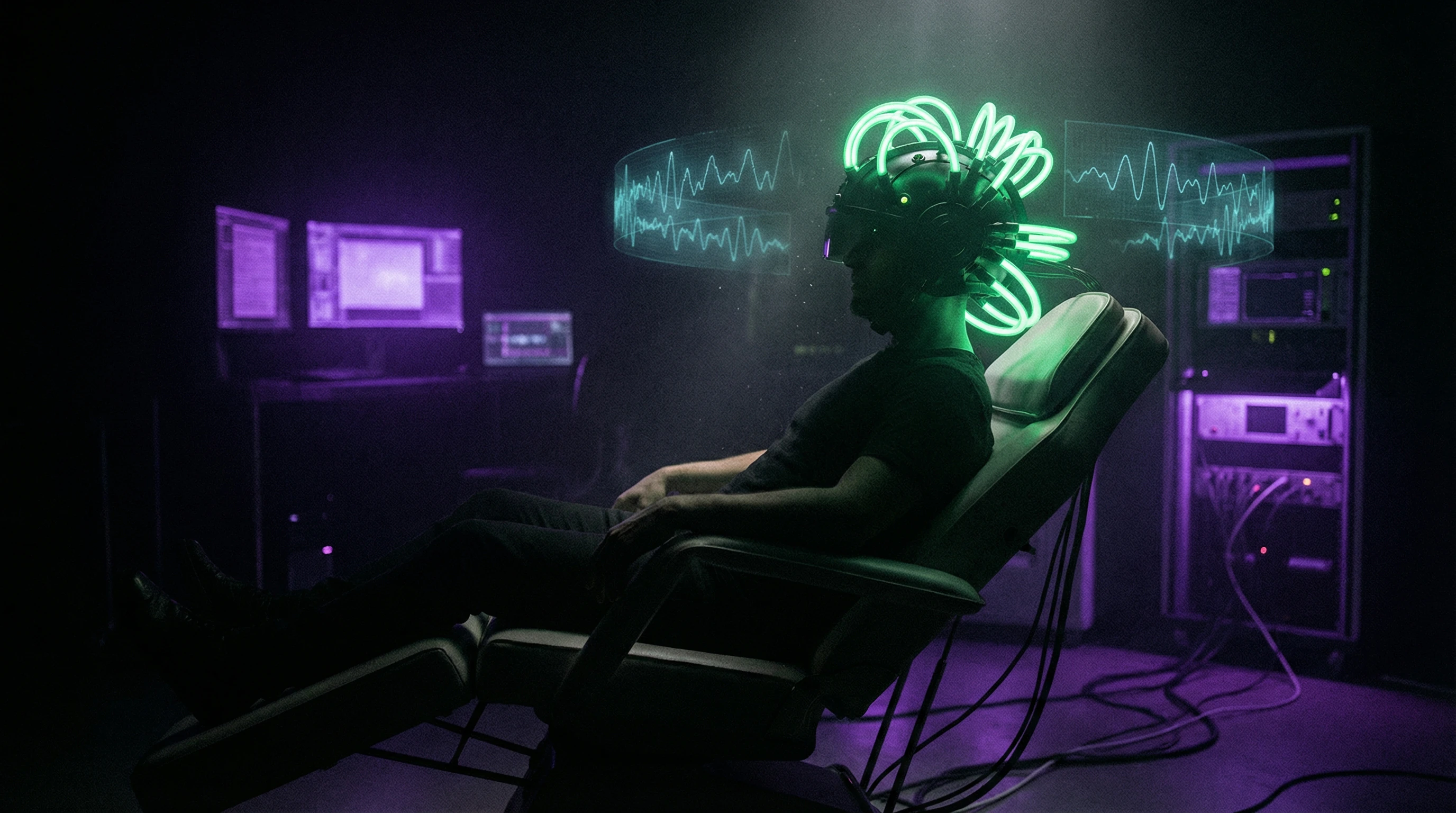
The stimulation protocol lasts 20–40 minutes in a darkened, acoustically isolated chamber (S006). Sensory deprivation amplifies the effect.
Neuroanatomical targeting: why the temporal lobes specifically
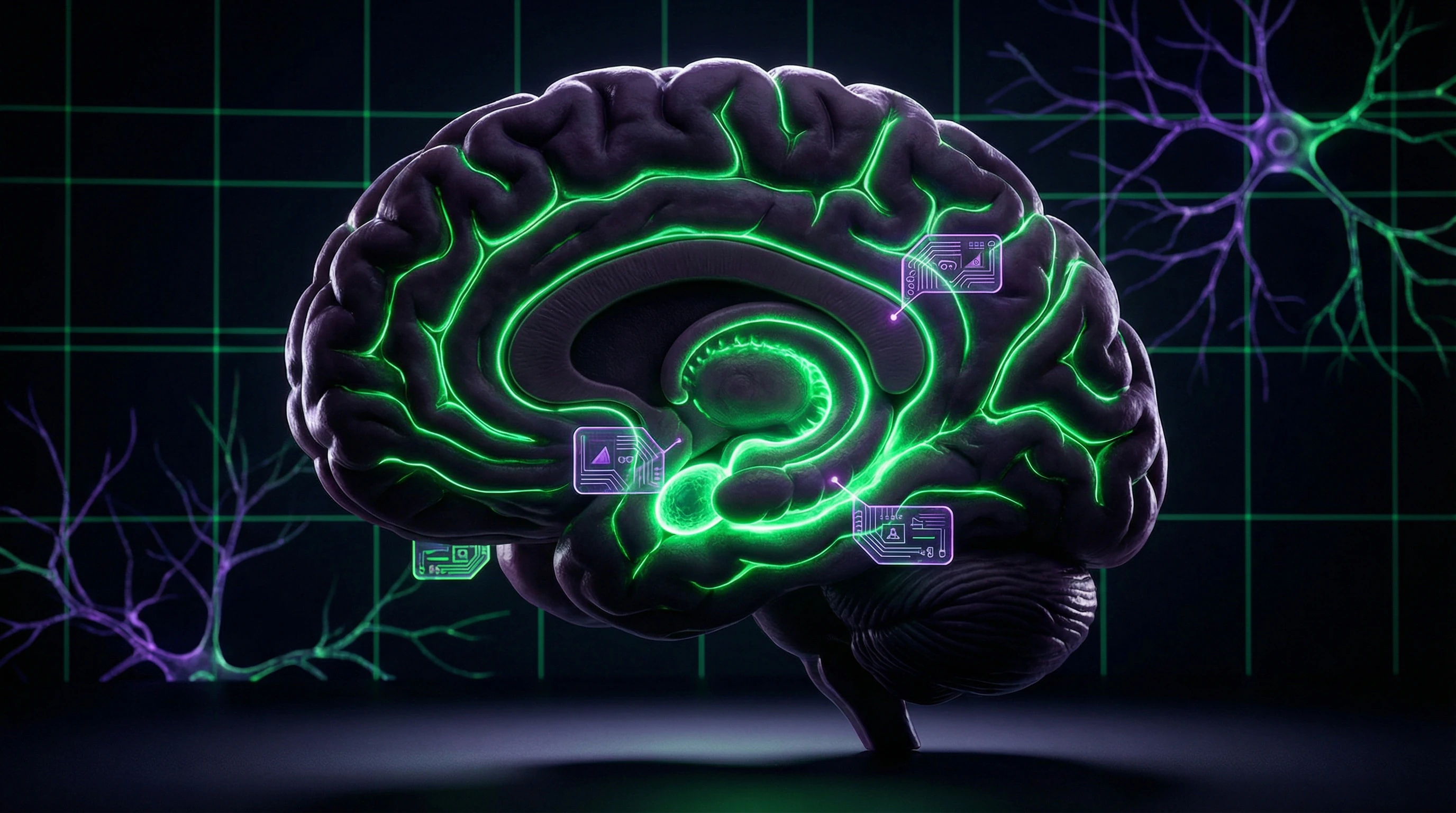
The temporal lobes, especially medial structures (hippocampus, amygdala, parahippocampal gyrus), process emotional memory, auditory information, and multisensory experience (S001).
- Clinical fact
- Epileptic discharges in the temporal lobes trigger complex hallucinations, sensations of déjà vu, intense emotions, and rarely, religious visions (S001). Persinger hypothesized that artificial stimulation could reproduce similar phenomena in healthy individuals.
Historical trajectory: from clinical observations to experimental neurotheology
The connection between temporal lobe epilepsy and religious experience has been discussed in neurology since the 19th century. A classic example is the presumed temporal lobe epilepsy of Fyodor Dostoevsky, who described his seizures as moments of "supreme harmony" and contact with the divine.
In the 1970s, neuropsychologist Norman Geschwind described "Geschwind syndrome"—behavioral traits in patients with temporal lobe epilepsy: hypergraphia, hyperreligiosity, altered sexuality. Persinger systematized these observations and proposed that transient electrical instability in the temporal lobes is a common mechanism for a broad spectrum of "anomalous" experiences: from religious revelations to UFO encounters (S006).
Boundaries of applicability: what the "God Helmet" can and cannot do
Three levels of claims are often conflated, generating methodological confusion.
| Level of claim | Status | Verification method |
|---|---|---|
| Weak TMS of temporal lobes induces subjective experiences | Empirical question | Experimental |
| These experiences are phenomenologically identical to spontaneous religious experiences | Requires qualitative analysis | Comparison with reports from mystics, meditators, near-death experiencers |
| Neurobiological explanation excludes transcendent nature of experience | Philosophical question | Beyond the scope of empirical science |
Persinger and his critics often conflated these levels (S006). This created the illusion that neurobiology had already answered questions it cannot resolve by definition.
Steelman Argumentation: Seven Strongest Arguments for the Neurobiological Nature of Religious Experience — and Why They Deserve Serious Consideration
Before examining the weaknesses of Persinger's hypothesis, it's necessary to present it in its most convincing form. The Steelman method requires formulating the opponent's arguments more strongly than they do themselves, to avoid attacking a straw man. More details in the Cosmology and Astronomy section.
🔬 Argument 1: Reproducibility of Phenomenology in Organic Temporal Lobe Lesions
Patients with temporal lobe epilepsy demonstrate statistically significant correlation between epileptic focus localization and type of experience. Right-sided foci are more frequently associated with visual hallucinations and a sense of "presence," left-sided with verbal hallucinations and auditory phenomena (S002).
If religious experience has a transcendent nature, why does its content so predictably depend on the anatomy of the lesion? This is a classic argument from structure-function correlation, widely used in cognitive neuroscience.
🧪 Argument 2: Pharmacological Modulation of Religious Experiences
Psychedelics (psilocybin, LSD, DMT) and dissociatives (ketamine) induce experiences phenomenologically indistinguishable from spontaneous mystical experiences described in religious traditions. These substances act on specific neurotransmitter systems (serotonergic, glutamatergic), indicating a neurochemical basis for such states.
If the transcendent can be "switched on" by a molecule binding to the 5-HT2A receptor, this calls into question its independence from the brain.
📊 Argument 3: Cross-Cultural Universality of Neuroanatomy with Content Variability
The structure of temporal lobes is universal for all Homo sapiens, but the content of religious visions is culturally specific: Christians see Christ and angels, Buddhists see bodhisattvas, Hindus see Krishna or Shiva.
This is consistent with a model where the brain generates a basic experience of "presence" or "unity," while cultural memory fills it with specific images. The transcendent hypothesis must explain why the divine appears to people in culturally-specific forms.
🧠 Argument 4: Gradual and Dose-Dependent Effects of Stimulation
In Persinger's experiments, the intensity of experiences correlated with magnetic stimulation parameters (frequency, amplitude, pattern). Weak stimulation produced only slight "tingling" or "presence," more intense stimulation produced elaborate hallucinations.
If religious experience is contact with the transcendent, why does it demonstrate dose-dependence characteristic of pharmacological and physical interventions?
🔁 Argument 5: Evolutionary Adaptiveness of the Religious Cognitive Module
Evolutionary psychology offers an explanation for why the brain tends to generate religious experiences: hyperactive agency detection (HADD — hyperactive agency detection device) was adaptive in the ancestral environment, where false-positive detection of a predator or enemy was less costly than false-negative.
Temporal lobes, integrating sensory information and emotional evaluation, may have evolved to "complete" incomplete patterns into agents. Religious experience is a byproduct of this mechanism.
⚙️ Argument 6: Predictive Power of the Neurobiological Model
If religious experience has a neurobiological basis, we can predict that its probability increases under conditions destabilizing the temporal lobes: sensory deprivation, hypoxia, hypoglycemia, prolonged wakefulness, rhythmic stimulation (drums, dancing).
Ethnographic data confirm this: virtually all shamanic traditions use these techniques to induce altered states of consciousness (S003).
- Sensory deprivation (dark caves, monastic cells)
- Hypoxia (high-altitude sanctuaries, breath-holding)
- Hypoglycemia (fasting, starvation)
- Rhythmic stimulation (drums, mantras, dancing)
- Prolonged wakefulness (night vigils, meditation)
🧬 Argument 7: Absence of Mechanism for Transcendent Impact on the Brain
The dualistic hypothesis (the transcendent affects the brain) faces the problem of causal closure of the physical world: if a non-physical entity influences neurons, it must violate the laws of conservation of energy and momentum.
Modern neuroscience does not detect "gaps" in causal chains where non-physical intervention would be required. This does not prove the absence of the transcendent, but makes it causally superfluous by Occam's razor.
Evidence Base: What Persinger's Experiments Showed, What Replications Found, and Where the Line Between Data and Interpretation Lies
Persinger's original studies (1980s–2000s) reported high rates of "anomalous experiences": 40% to 80% of participants noted a sensed presence, alterations in body perception, emotional shifts, or visual phenomena. Methodological quality raised questions: small samples, absence of double-blind controls, subjective assessment methods. More details in the Chemistry section.
📊 Granqvist Replication: Suggestion Effect or Real Stimulation?
In 2005, Pehr Granqvist conducted a replication with double-blind placebo control: neither subjects nor experimenters knew whether magnetic stimulation was active. The frequency of "anomalous experiences" did not differ between real stimulation and placebo groups (S006). Experiences correlated with suggestibility and prior expectations.
Granqvist concluded: the "God Helmet" effects are artifacts of suggestion, not direct magnetic field influence.
🧾 Persinger's Counterarguments: Stimulation Parameters Matter
Persinger objected that Granqvist used a simplified protocol that did not reproduce the complex magnetic field patterns of the original experiments. Not only amplitude and frequency are critical, but also the specific temporal structure—"burst-firing patterns" mimicking natural neuronal activity.
Persinger pointed to individual differences in magnetic field sensitivity, linked to genetic variants and baseline temporal lobe activity. However, these counterarguments are not supported by new double-blind studies with sufficient statistical power.
🔎 Meta-Analysis and Systematic Reviews: What the Aggregate Data Says
Systematic reviews show a heterogeneous picture. The weak magnetic fields in the "God Helmet" (microtesla) are at the lower threshold of neuronal sensitivity—significantly weaker than clinical TMS (tesla). Physical calculations show such fields are unlikely to directly depolarize neurons, but may influence ion channels or synchronization of neuronal ensembles under certain conditions.
| Parameter | "God Helmet" | Clinical TMS | Conclusion |
|---|---|---|---|
| Field Strength | Microtesla (10⁻⁶) | Tesla (1–2) | 10⁶-fold difference |
| Mechanism of Action | Hypothetically—ion channel synchronization | Direct neuronal depolarization | No convincing evidence for "Helmet" (S006) |
| Controlled Replications | Not confirmed | Well documented | Asymmetry in evidence base |
🧪 Alternative Explanations: Sensory Deprivation and Contextual Factors
Persinger's protocol included not only magnetic stimulation but also sensory deprivation: darkened chamber, acoustic isolation, prolonged immobility. Sensory deprivation itself induces hallucinations, body schema alterations, and emotional shifts—a phenomenon documented since the 1950s.
Studies of "haunted houses" showed that infrasound, low-frequency electromagnetic fields, and other environmental factors produce sensed presence and anxiety (S006). Mechanisms remain unclear, but the effect is reproducible without magnetic stimulation.
🧬 Neuroimaging: What Happens in the Brain During Religious Experiences
Modern studies (fMRI, PET) show that spontaneous religious experiences (prayer, meditation, ecstasy) are associated with temporal lobe activation, but also involve parietal lobes (right superior parietal lobule—body schema), prefrontal cortex (attention, self-awareness), and limbic system (emotional coloring) (S001).
The activation pattern is more complex than Persinger's simplified model and varies depending on experience type: feelings of unity differ from agent encounters in topography and activation dynamics.
- The Line Between Data and Interpretation
- Fact: weak magnetic fields can influence neuronal activity under certain conditions. Interpretation: this explains religious experiences. Gap: mechanism not established, replications contradictory, alternative explanations (suggestion, sensory deprivation) not ruled out.
- Why Consensus Remains Elusive
- Persinger worked with small samples and subjective measures. Granqvist used more rigorous controls, but his results are interpreted either as refutation or as evidence for the need to optimize parameters. Neuroimaging shows correlation, not causation. Each side can select data supporting its position.
Mechanism or Correlation: Why Temporal Lobe Activation Isn't Necessarily the Cause of Religious Experience — and What Alternative Models Exist
The correlation between temporal lobe activity and religious experiences doesn't prove causality. Several competing interpretations of this connection exist, each with its own logic and blind spots. For more details, see the Sources and Evidence section.
🔁 Model 1: Temporal Lobes as Experience Generator
Persinger's position: specific temporal lobe activity is sufficient to produce religious experience. Magnetic stimulation or epileptic discharge triggers a cascade of neural events that are subjectively experienced as "presence," "unity," or "transcendence."
The model predicts that artificial stimulation should reproduce the phenomenology regardless of context and subject expectations. This is the strongest version of reductionism: mysticism = neurophysiology.
🧩 Model 2: Temporal Lobes as Interpretation Modulator
Temporal lobes don't generate the content of experience but modulate the interpretation of nonspecific changes in consciousness. Sensory deprivation, hypoxia, or other factors create "raw" altered experience — depersonalization, body schema changes, emotional shifts.
The temporal lobes, integrating memory and emotion, "complete" it into a culturally specific narrative. This model explains why vision content depends on cultural context: one person sees the Virgin Mary, another sees aliens, a third sees ancestral spirits.
The difference between models 1 and 2: the first says "the brain creates experience," the second — "the brain interprets experience." The first requires specificity, the second — only modulation.
⚙️ Model 3: Temporal Lobes as Correlate, Not Cause
Temporal lobe activation is an epiphenomenon accompanying religious experience but not causing it. Analogy: visual cortex activation correlates with visual perception but doesn't "create" the external world.
Dualists argue that transcendent influence on consciousness is reflected in brain activity but not reducible to it. This model is unfalsifiable within neuroscience — it's a philosophical, not scientific, hypothesis.
🧪 Confounders: What Distorts Results
| Factor | Distortion Mechanism | How to Control |
|---|---|---|
| Expectation effect | Subjects aware of experiment purpose experience suggestion | Double-blind design, placebo control |
| Personality traits | High suggestibility, absorption correlate with "anomalous experiences" independent of stimulation | Screening with absorption and suggestibility scales |
| Cultural context | Subjects from religious families interpret sensations in religious terms | Sample stratification by religiosity |
| Assessment methods | Subjective reports depend on question wording (S006) | Standardized instruments, open-ended questions |
Each confounder can explain part of Persinger's results without invoking a specific mechanism. Together they create a methodological corridor within which any interpretation remains speculative.
The problem is compounded: experiments with (S001), (S002), (S003) show that TMS of temporal lobes affects semantic processing and contextual integration, but that's not the same as generating mystical experiences. Neuroscience can explain how the brain processes information, but not why this processing is subjectively felt as "sacred."
Conflicts and Uncertainties: Where Sources Diverge, What Questions Remain Open, and Why Consensus Is Unattainable
The literature on the "God Helmet" demonstrates a deep divide between Persinger's supporters and critics. Disagreements concern not only interpretation but also basic facts. For more details, see the section on Logical Fallacies.
🔎 Disagreement 1: Reality of Magnetic Stimulation Effects
Persinger and his supporters claim that weak magnetic fields genuinely affect neural activity when parameters are properly selected. Critics (Granqvist et al.) argue that effects are indistinguishable from placebo under rigorous control.
Persinger's original experiments did not publish detailed stimulation protocols, making precise replication difficult. Persinger claimed that critics used simplified protocols, but did not provide sufficient data to verify this assertion.
Result: a methodological impasse where each side accuses the other of improper experimental implementation (S006).
📊 Disagreement 2: Role of Suggestion and Context
Granqvist demonstrated that subject expectations and experimenter behavior (even nonverbal) strongly influence experience reports. Persinger countered that his protocol minimized contact with subjects and created no specific expectations.
However, the very fact of participating in an experiment with the "God Helmet," widely covered in media, could create implicit expectations. Methodologically separating the contributions of stimulation and suggestion is extremely difficult.
🧬 Disagreement 3: Interpretation of Neuroimaging Data
fMRI studies show temporal lobe activation during religious experiences, but also activation of many other regions (S001). Reductionists interpret this as evidence of neurobiological sufficiency.
| Position | Data Interpretation | Logical Vulnerability |
|---|---|---|
| Reductionism | Brain activation = cause of experience | Correlation does not prove causality |
| Dualism | Brain is interface for transcendent | Both models compatible with same data |
Neuroscience lacks tools to resolve this dispute, as both interpretations are compatible with the facts.
⚙️ Open Question: Individual Differences in Sensitivity
Even in Persinger's original experiments, not all subjects reported "anomalous experiences." What determines sensitivity?
- Genetic variants
- Affect receptor density or neuronal excitability — preliminary data exists, but systematic research is insufficient.
- Baseline temporal lobe activity
- Individual patterns of spontaneous activity may predetermine response to stimulation.
- Personality traits
- Openness to experience, dissociative tendencies, religiosity — all correlate with susceptibility, but causal relationships are unclear.
Systematic data is insufficient. Each factor could be either cause or consequence.