The Serotonin Hypothesis of OCD: What Exactly Is Claimed and Why It Became Psychiatry's Mainstream
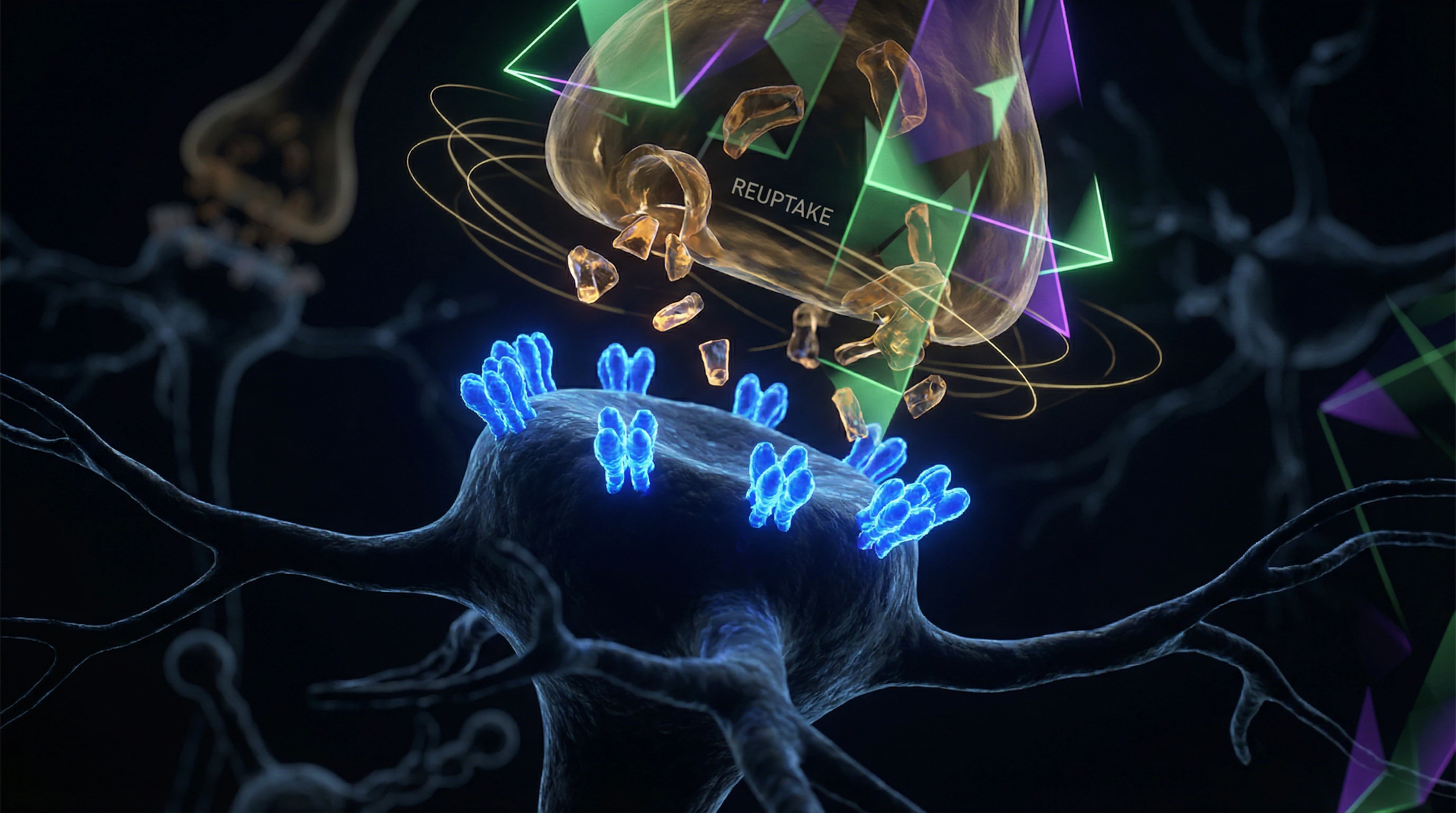
The serotonin theory of OCD asserts that obsessive thoughts and rituals arise from insufficient activity of the serotonin system in the brain. According to this model, low serotonin levels in the synaptic cleft or dysfunction of serotonin receptors lead to impaired regulation of anxiety and impulse control (S001).
The hypothesis became dominant in the 1980s after the discovery that clomipramine—a tricyclic antidepressant with potent serotonergic action—was effective for OCD. This observation was interpreted as direct proof of serotonin deficiency. More details in the Scientific Databases section.
Three Pillars of the Serotonin Model
- Pharmacological Specificity
- Drugs that block serotonin reuptake (SSRIs and clomipramine) show efficacy in OCD, whereas noradrenergic antidepressants without a serotonergic component work significantly worse (S004).
- Neuroimaging Data
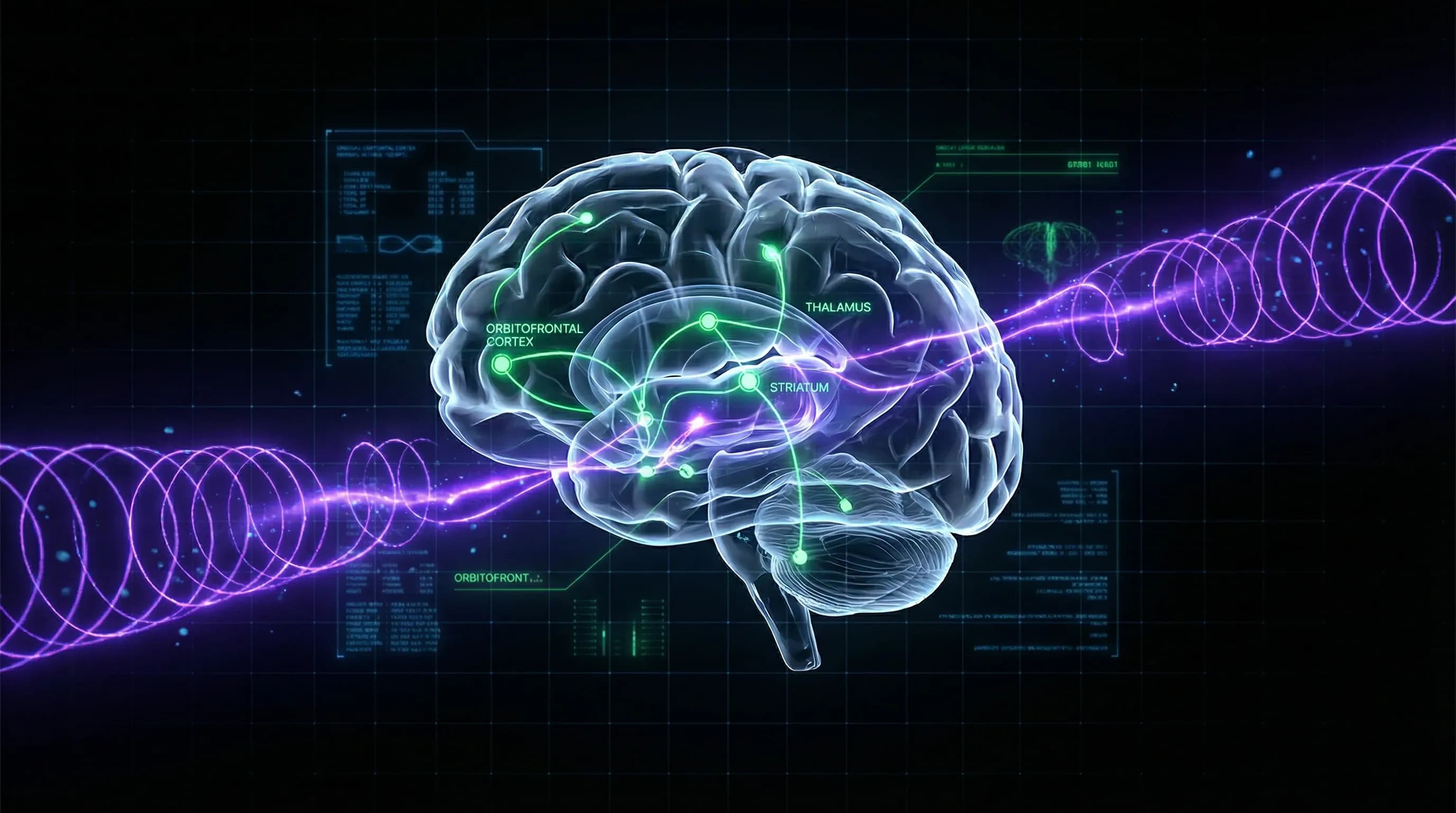
- Changes in activity of the orbitofrontal cortex, anterior cingulate cortex, and basal ganglia in OCD patients—regions rich in serotonin projections (S006). The correlation between dysfunction in these areas and OCD symptoms reinforced the notion of serotonin as a key regulator.
- Evolutionary Logic
- Serotonin participates in regulating anxiety, aggression, and social behavior across numerous species. OCD was presumed to result from imbalance in ancient neurotransmitter systems controlling threat and uncertainty responses (S001).
Why the Model Became Mainstream
The serotonin theory offered elegant simplicity: one molecule, one deficiency, one solution. This made it ideal for patient communication, physician training, and pharmaceutical marketing.
SSRIs were positioned as "targeted therapy" correcting a specific biochemical defect. This reduced stigma around mental disorders and increased patient compliance.
The model also fit the reductionist paradigm of biological psychiatry in the 1980s-90s, which sought simple neurochemical explanations for complex mental phenomena. The success of SSRIs in treating depression created expectations that similar logic would work for other disorders, including OCD.
Steelman Arguments: Five Strongest Evidence Points for the Serotonin Theory of OCD
🔬 Argument One: Selective Efficacy of Serotonergic Medications
The most compelling evidence for the serotonin hypothesis is the specificity of pharmacological response. Meta-analyses show that SSRIs and clomipramine significantly outperform placebo in treating OCD, whereas antidepressants without a serotonergic component (such as desipramine) demonstrate minimal efficacy (S004).
In children and adolescents with OCD, SSRIs show an effect size of approximately 0.5–0.7 compared to placebo—a clinically significant result (S004). The effect develops gradually over 8–12 weeks, consistent with the timeline of adaptive changes in serotonin neurotransmission.
| Drug Class | Serotonergic Component | Efficacy in OCD |
|---|---|---|
| SSRIs, clomipramine | Yes | Significantly above placebo |
| Desipramine and analogues | No | Minimal |
🧪 Argument Two: Dose-Dependence and Correlation with Serotonergic Activity
Clinical response to SSRIs in OCD requires higher doses than in depression—often 1.5–2 times higher than standard antidepressant dosages. This is interpreted as evidence that correcting serotonin deficiency in OCD requires more intensive pharmacological intervention (S001).
Patients with more pronounced response to SSRIs demonstrate greater changes in orbitofrontal cortex and basal ganglia activity according to functional neuroimaging data, which correlates with presumed normalization of serotonergic modulation in these regions (S006).
📊 Argument Three: Neuroimaging Correlates of Serotonergic Dysfunction
PET studies with serotonin receptor radioligands reveal changes in density and affinity of 5-HT receptors in key regions of cortico-striato-thalamo-cortical circuits in patients with OCD (S006). These findings suggest structural or functional abnormalities of the serotonin system underlying symptoms.
Functional MRI shows that successful SSRI treatment is associated with normalization of hyperactivity in the orbitofrontal cortex and anterior cingulate cortex—regions receiving dense serotonergic innervation from raphe nuclei in the brainstem.
🧬 Argument Four: Genetic Associations with the Serotonin System
Studies of genetic polymorphisms have identified associations between variants of serotonin system genes (serotonin transporter SLC6A4, 5-HT2A receptors) and risk of developing OCD, though effects of individual variants are small (S008). Genetically determined variations in serotonin neurotransmission may contribute to vulnerability to the disorder.
- SLC6A4 Polymorphism
- Variant of the serotonin transporter gene; associated with changes in serotonin transport into the synaptic cleft.
- 5-HT2A Polymorphism
- Variant of the serotonin receptor gene; affects sensitivity of postsynaptic structures to serotonin.
🔁 Argument Five: Evolutionary Conservation of Serotonergic Regulation of Anxiety
Serotonin regulates anxious and ritualized behavior across a wide spectrum of species—from invertebrates to primates. This evolutionary conservation suggests that the serotonin system plays a fundamental role in controlling repetitive behavioral patterns and responses to uncertainty (S001).
Such universality makes the serotonin system a plausible candidate for the role of key mediator in OCD—a disorder fundamentally characterized by dysregulation of ritualized behavior and intolerance of uncertainty. More details in the Cosmology and Astronomy section.
Evidence Base: What Modern Research Shows About Serotonin's Actual Role in OCD
📊 Limited Effectiveness: 40-60% Responders and the Placebo Problem
SSRIs help only 40–60% of patients with OCD, with full remission achieved in less than a third (S004). If OCD were the result of simple serotonin deficiency, effectiveness should be higher.
The effect size of SSRIs in OCD (0.5–0.7) means that a significant portion of improvement is related to nonspecific factors—placebo, natural symptom fluctuation, therapeutic alliance (S004). Cognitive-behavioral therapy with exposure shows comparable or superior effectiveness.
If a medication works no better than psychotherapy without pharmacology, this indicates that the mechanism of action is circuit modulation, not deficit replenishment.
🧪 Absence of Direct Evidence for Serotonin Deficiency
Despite decades of research, there is no reliable evidence that patients with OCD have reduced serotonin levels in the brain. Measurements of metabolites in cerebrospinal fluid yield contradictory results, and postmortem studies reveal no consistent changes in serotonin neurons or receptors (S001).
The serotonin hypothesis of OCD is based on reverse logic: drugs that affect serotonin work, therefore the problem is serotonin. Aspirin relieves headaches, but this doesn't mean headaches are caused by aspirin deficiency (S002).
- Direct measurement of serotonin in the living human brain is technically impossible.
- Indirect markers (metabolites in cerebrospinal fluid) do not reliably correlate with OCD symptoms.
- Drug effectiveness does not prove that the original problem is a deficiency of that substance.
🧬 Alternative CRH-HCN Theory: Corticotropin-Releasing Hormone and Ion Channels
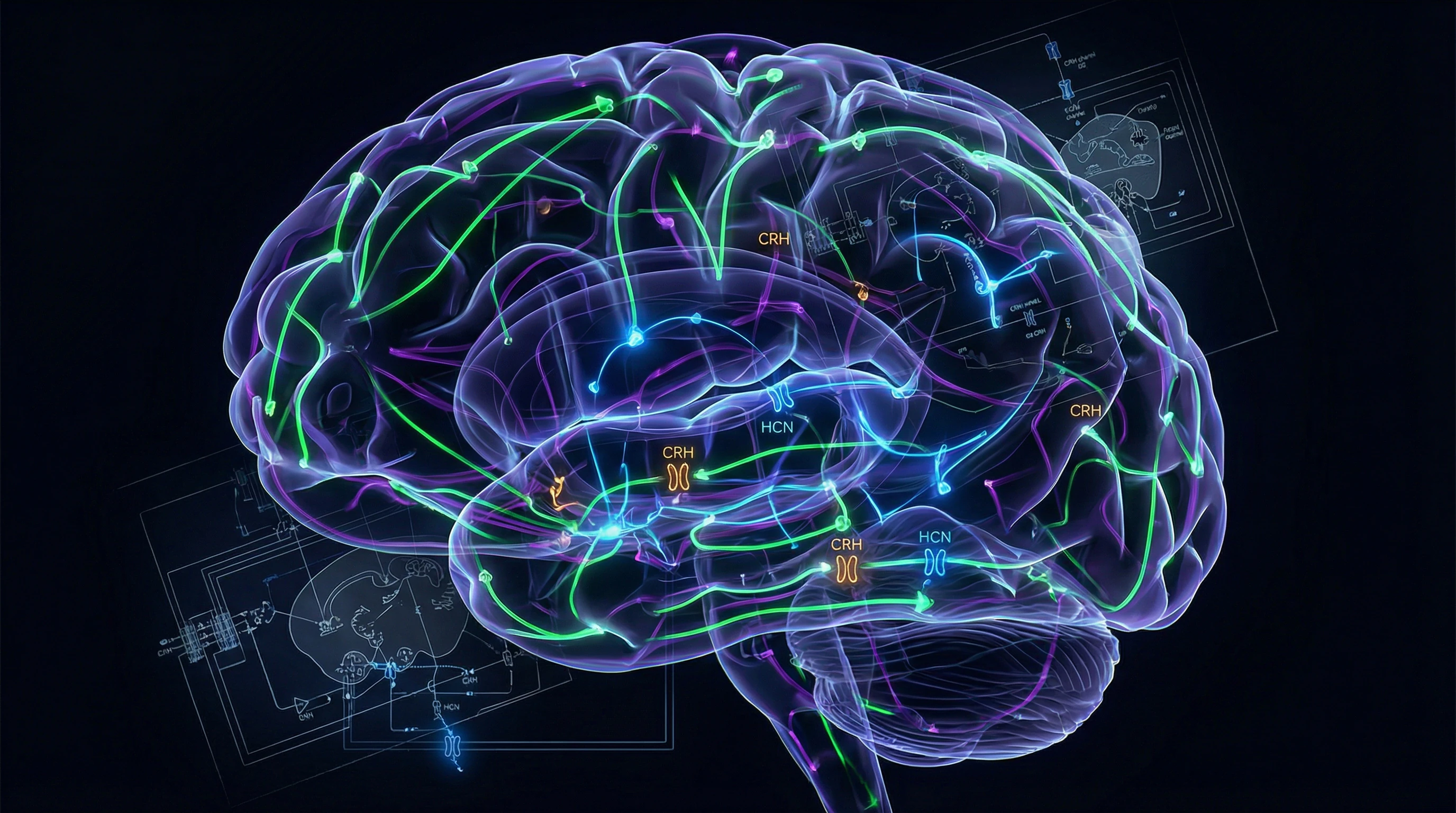
Recent theoretical work has proposed a different model of OCD based on dysregulation of the corticotropin-releasing hormone (CRH) system and hyperpolarization-activated cyclic nucleotide-gated (HCN) ion channels (S002). Chronic stress leads to excessive activation of the CRH system, which alters neuronal excitability in cortico-striato-thalamo-cortical circuits.
The CRH-HCN theory explains the high comorbidity of OCD with anxiety disorders and PTSD, the role of stressful life events in provoking symptoms, and the effectiveness of stress-reducing interventions (S002). Serotonin is viewed as one of many modulators, not the primary cause.
| Aspect | Serotonin Model | CRH-HCN Model |
|---|---|---|
| Primary cause | Serotonin deficiency | Stress system dysregulation |
| Role of stress | Secondary | Central |
| Comorbidity with anxiety | Coincidental | Expected (common mechanism) |
| SSRI mechanism of action | Deficit replenishment | Circuit excitability modulation |
🧠 SSRI Mechanism of Action: Circuit Modulation, Not Deficit Replenishment
The modern understanding of how SSRIs work in OCD differs from the simple "deficit replenishment" model. Serotonin acts as a neuromodulator, influencing the excitability and plasticity of neural circuits (S006).
SSRIs alter the balance of activity in cortico-striato-thalamo-cortical loops, reducing hyperactivity of the orbitofrontal cortex and normalizing basal ganglia function. This effect is achieved through adaptive changes in receptor expression, synaptic plasticity, and neurogenesis that develop over weeks (S006).
The same changes in neural circuit activity are achieved through cognitive-behavioral therapy without pharmacology. This demonstrates that the serotonergic pathway is one way to modulate dysfunctional circuits, not a correction of the primary defect.
📊 Neuroimaging Data: Circuits Matter More Than Molecules
Invasive neurotherapeutic interventions for treatment-resistant OCD—deep brain stimulation (DBS) and stereotactic ablation—target specific nodes of cortico-striato-thalamo-cortical circuits and show effectiveness in 40–70% of patients who did not respond to SSRIs (S002). These interventions work through direct modulation of neuronal activity, bypassing neurotransmitter systems.
Gamma knife capsulotomy, which destroys fibers of the anterior limb of the internal capsule, demonstrates long-term effectiveness in patients with intractable OCD. The success of these procedures shows that the key pathology in OCD is neural circuit dysfunction, which can be corrected through changes in their structure or activity, independent of the serotonin system. More details in the Evolution and Genetics section.
- Why this matters for understanding OCD
- If molecular deficiency were the primary cause, direct destruction or stimulation of circuits should not be so effective. Their success indicates that the pathology lies in the organization and function of circuits, not in chemistry.
- Where the thinking trap lies
- It's easy to assume that if a drug works, it corrects the primary defect. In reality, the drug may simply compensate for dysfunction through another mechanism—like a detour when a road is destroyed.
Mechanisms and Causality: Why Correlation Between Serotonin and OCD Doesn't Prove Causation
🔁 The Reverse Causality Problem: Does OCD Alter the Serotonin System?
Even if patients with OCD show changes in the serotonin system, this doesn't prove these changes cause the disorder. Chronic stress, anxiety, and repetitive compulsive behavior can themselves alter serotonin neurotransmission through neuroplasticity mechanisms (S002).
Animal model studies show that chronic stress and repetitive behavior lead to adaptive changes in serotonin neurons of the raphe nuclei, altered receptor density, and changes in serotonin sensitivity. This means observed changes may be consequences rather than causes of OCD (S002).
The correlation between serotonin and OCD may reflect not the cause of the disorder, but the brain's adaptive response to chronic behavioral and perceptual disorganization.
🧩 Confounders: Comorbidity, Treatment, and Individual Differences
Most patients with OCD have comorbid disorders—depression, generalized anxiety disorder, social phobia, Tourette syndrome (S003). Many of these conditions are also associated with changes in the serotonin system, making it impossible to determine which changes are specific to OCD and which reflect general vulnerability or comorbid pathology.
Tourette syndrome, which is comorbid with OCD in 30–50% of patients, is linked to dopamine system dysfunction but also shows partial response to serotonergic medications (S003). This demonstrates that serotonin modulation may affect symptoms through indirect mechanisms unrelated to the primary pathology.
| Comorbid Disorder | Primary System | SSRI Response | Conclusion |
|---|---|---|---|
| Depression | Serotonin | Good | Serotonin changes may be common across multiple disorders |
| Tourette Syndrome | Dopamine | Partial | SSRIs work through indirect mechanisms, not through the primary defect |
| Generalized Anxiety Disorder | GABA, Serotonin | Good | Impossible to separate OCD-specific changes from general ones |
🔬 OCD Heterogeneity: Different Subtypes, Different Mechanisms
OCD is a clinically heterogeneous disorder with various symptomatic subtypes: contamination obsessions and cleaning rituals, symmetry and ordering, aggressive and sexual obsessions, religious obsessions (S007). Research shows that different subtypes may have distinct neurobiological foundations and respond differently to treatment.
Patients with sexual obsessions demonstrate specific activation patterns in neuroimaging studies and may respond more poorly to standard SSRIs compared to patients with contamination obsessions (S007). This suggests that a single serotonin model cannot explain the full diversity of OCD clinical manifestations.
The prefrontal cortex and its connections to the limbic system differ depending on OCD subtype, indicating multiple neural network mechanisms rather than a single neurotransmitter defect.🧬 Machine Learning and Biomarkers: Searching for Objective Predictors
Contemporary research uses machine learning algorithms (such as XGBoost) to identify OCD biomarkers based on large datasets of neuroimaging, genetics, and clinical data (S008). These approaches reveal complex patterns involving multiple variables—brain structural features, connectivity, genetic variants—that cannot be reduced to simple serotonin measures.
- Cortico-striato-thalamo-cortical circuits
- Neural network structures that integrate information from the cortex, striatum, and thalamus. In OCD, the balance between direct and indirect pathways is disrupted, leading to hyperactivity in behavioral control and intrusive thoughts.
- Why this matters more than serotonin
- Serotonin modulates these circuits but is not their primary defect. Changes in network architecture and connectivity precede and determine how serotonin will act.
- Clinical conclusion
- OCD biomarkers are not neurotransmitter levels, but activation patterns and structural features of networks that can be used to predict treatment response.
Preliminary results show that the most informative OCD biomarkers are related to characteristics of cortico-striato-thalamo-cortical circuits rather than individual neurotransmitter systems (S008). This confirms that OCD is a disorder of neural networks, not a deficiency of a single molecule.
Cognitive Anatomy of the Myth: What Psychological Mechanisms Make the Serotonin Theory So Convincing
🧩 Essentialism and the Drive for Simple Explanations of Complex Phenomena
The human mind is prone to essentialist thinking—searching for a single "essence" or "cause" of complex phenomena. The serotonin theory of OCD satisfies this cognitive need by offering a simple, material explanation: "the problem is a chemical imbalance." More details in the section Psychology of Belief.
This reduces cognitive load and creates an illusion of understanding (S001). The idea that OCD results from complex interactions of genetics, development, stress, learning, and neural circuits is cognitively more demanding and less satisfying than a simple deficit model.
Essentialism in medicine is not an error but an adaptation: the brain conserves resources by choosing an explanation that can be held in working memory and communicated to another person in 30 seconds.
🕳️ Medicalization and Stigma Reduction Through Biological Explanation
The serotonin theory serves an important social function: it medicalizes OCD, presenting it as a "real illness" with a biological basis rather than a character weakness or moral defect. This reduces stigma and increases patients' willingness to seek help.
However, this strategy has a downside: it can create a false sense that pharmacological treatment is the only "real" way to correct a "biological problem," devaluing psychotherapeutic interventions. Data show that CBT is as effective as SSRIs and often has more sustained long-term effects (S004).
| Persuasion Mechanism | Why It Works | Cognitive Trap |
|---|---|---|
| Biological explanation | Reduces moral responsibility, increases treatment legitimacy | Ignores that biology and psychology are different levels of describing the same process |
| Materiality (molecule, not idea) | Tangible, visible under microscope, seems more "real" | Psychological processes are equally real but require different measurement methods |
| Medication effect | Visible improvement confirms the theory | Correlation between drug and improvement doesn't prove mechanism of action |
🧠 Availability and Representativeness: The Logic of "If the Drug Works, the Problem Must Be What It Acts On"
The availability heuristic causes us to overestimate the significance of easily recalled information. The fact that SSRIs help many patients with OCD is readily available and frequently mentioned, creating an impression of well-confirmed theory.
Meanwhile, information that 40–60% of patients don't respond to SSRIs is less visible (S004). The representativeness heuristic leads to the erroneous conclusion: "the drug affects serotonin and helps with OCD, therefore OCD is caused by serotonin problems."
This logic ignores the possibility that the drug works through indirect mechanisms—for example, by enhancing plasticity of neural circuits that are then retrained through behavior and experience.
💊 Commercial Interests and Pharmaceutical Industry Marketing
Pharmaceutical companies had a direct financial interest in promoting the serotonin theory of depression and OCD, as it created a market for SSRIs. Marketing campaigns of the 1990s and 2000s actively promoted the idea of "chemical imbalance," which is easy to understand and justifies pharmacological treatment (S001).
Although direct-to-consumer advertising of prescription drugs is prohibited in many countries, educational materials sponsored by pharmaceutical companies and medical conferences continue to reproduce the simplified version of the serotonin theory. Physicians educated in this paradigm pass it on to patients as established fact.
- Financial incentive: SSRIs are a multi-billion dollar market, the theory justifies expanding indications
- Information asymmetry: patients and doctors receive information from industry-sponsored sources
- Institutional inertia: the theory is embedded in textbooks, treatment protocols, specialist training
- Social proof: if everyone says the same thing, it seems true
🔄 Confirmation and Selective Attention
Confirmation bias causes us to seek, interpret, and remember information that confirms existing beliefs. A physician who believes in the serotonin theory will notice patients helped by SSRIs and forget those who weren't helped.
A patient told they have a "serotonin deficiency" will interpret their symptoms as confirmation of this diagnosis and may attribute improvement to the drug, even if it's related to placebo effect, lifestyle changes, or the natural course of illness.
Selective attention is not lazy thinking but economical thinking: the brain cannot process all information, so it filters through the grid of existing categories.
🎯 Narrative and Causality: Why Story Is More Convincing Than Data
The human brain evolved to process narratives, not statistics. The story "you have low serotonin, therefore you suffer from OCD, therefore you need a drug that increases serotonin" is a coherent causal chain that activates brain areas associated with understanding and memory.
The alternative explanation—"OCD arises from interactions of genetic predisposition, early stressful events, learning through fear associations, and dysfunction in circuits connecting the prefrontal cortex with the amygdala and striatum"—is less narrative and requires holding multiple variables in memory.
- Narrative bias
- The brain prefers simple cause-and-effect chains to complex systems models, even if the latter are more accurate. This is not an error but a feature of evolutionary adaptation to social environments where quickly understanding others' intentions is necessary.
- Why this is dangerous in medicine
- A convincing narrative can displace critical thinking. A physician who believes the story may not notice that the patient isn't improving, or may attribute lack of effect to insufficient dosage rather than incorrectness of the theory itself.
The connection to psychology of belief shows that beliefs, once formed, become part of identity and are defended more actively than neutral information. A physician who taught the serotonin theory for 20 years may experience cognitive dissonance when confronted with contradictory data.
🧬 Reductionism as a Cognitive Tool and Its Limits
Reductionism—the strategy of explaining complex phenomena through simpler components—has been a powerful tool in science. The serotonin theory is a reductionist explanation: OCD is reduced to a molecular deficit.
However, reductionism has limits. When you explain OCD only through serotonin, you lose information about how cognitive processes (attention, memory, threat interpretation) interact with neurobiology. It's like explaining a chess game only through electron movement in the brain—technically correct but useless.
Reductionism works when levels of analysis are independent. But psychology and neurobiology are different descriptions of the same process, so reducing one to the other loses essential information.
Understanding the role of the prefrontal cortex in cognitive control shows that OCD is not simply a molecular deficit but a dysfunction in a system that integrates sensory information, emotional signals, and behavioral choices. Serotonin is one component of this system, but not its cause.