Rejection sensitivity is the tendency to anxiously expect, readily perceive, and intensely react to signs of social rejection. Despite active research in psychology, the neurobiological mechanisms underlying this phenomenon remain insufficiently understood. Available data point to connections with social pain systems, dopaminergic regulation, and early attachment experiences, but direct neuroimaging studies are scarce. This article examines what is known about the neurobiology of rejection sensitivity, where knowledge gaps exist, and how to distinguish scientifically grounded conclusions from speculation.
👁️ Imagine: you send a message to someone who matters to you, and you don't receive a response for an hour. For some, this is simply a fact—the person is busy. For others, it's the beginning of an internal catastrophe: "I said something wrong," "They're ignoring me," "Nobody wants me around." This difference in reaction to potential rejection isn't just a personality quirk—it's a measurable psychological phenomenon with neurobiological roots. 🖤 Rejection sensitivity forms at the intersection of genetics, early experience, and the functioning of brain systems responsible for social pain and threat anticipation. But how deeply do we truly understand its neurobiology—and where do facts end and speculation begin?
What is Rejection Sensitivity: From Psychological Construct to the Search for Neural Correlates
Rejection sensitivity (RS) is a cognitive-affective disposition characterized by a tendency to anxiously expect, readily perceive, and intensely react to signs of social rejection (S009). People with high RS demonstrate hypersensitivity to signals of possible rejection, interpret ambiguous social situations as rejecting, and respond to them with strong negative emotions and maladaptive behavior.
The concept was developed within social psychology and was initially studied as a predictor of behavior in interpersonal relationships (S011). It is not a clinical diagnosis, but rather a continuous characteristic that varies from low to high across different individuals.
🔎 Operationalizing the Phenomenon: How We Measure What Happens in the Mind
Specialized instruments have been developed to measure RS, such as the Children's Rejection Sensitivity Questionnaire (CRSQ) (S012). These methods assess both the cognitive component (expectation of rejection) and the affective component (intensity of emotional reaction).
The measurability of RS depends on how precisely we can operationalize subjective experience. Questionnaires capture self-reports, but not direct neurobiological processes—this is the first gap between the psychological construct and its presumed brain correlates.
🧩 Boundaries of the Construct: How RS Differs from Social Anxiety and Other Phenomena
Rejection sensitivity overlaps with, but is not identical to, social anxiety, avoidant personality disorder, or borderline personality disorder (S009). RS focuses specifically on the expectation of and reaction to rejection, whereas social anxiety is broader and includes fear of negative evaluation in general.
- RS (rejection sensitivity)
- Expectation of rejection + intense reaction to its signs. Specific to social exclusion.
- Social anxiety
- Fear of negative evaluation in general. Broader than just rejection—includes shame, embarrassment, criticism.
- Borderline personality disorder
- May include high RS as a component, but also identity instability, impulsivity, and other symptoms (S009).
⚠️ The Problem of Neurobiological Reduction: Can Complex Behavior Be Reduced to Brain Activity
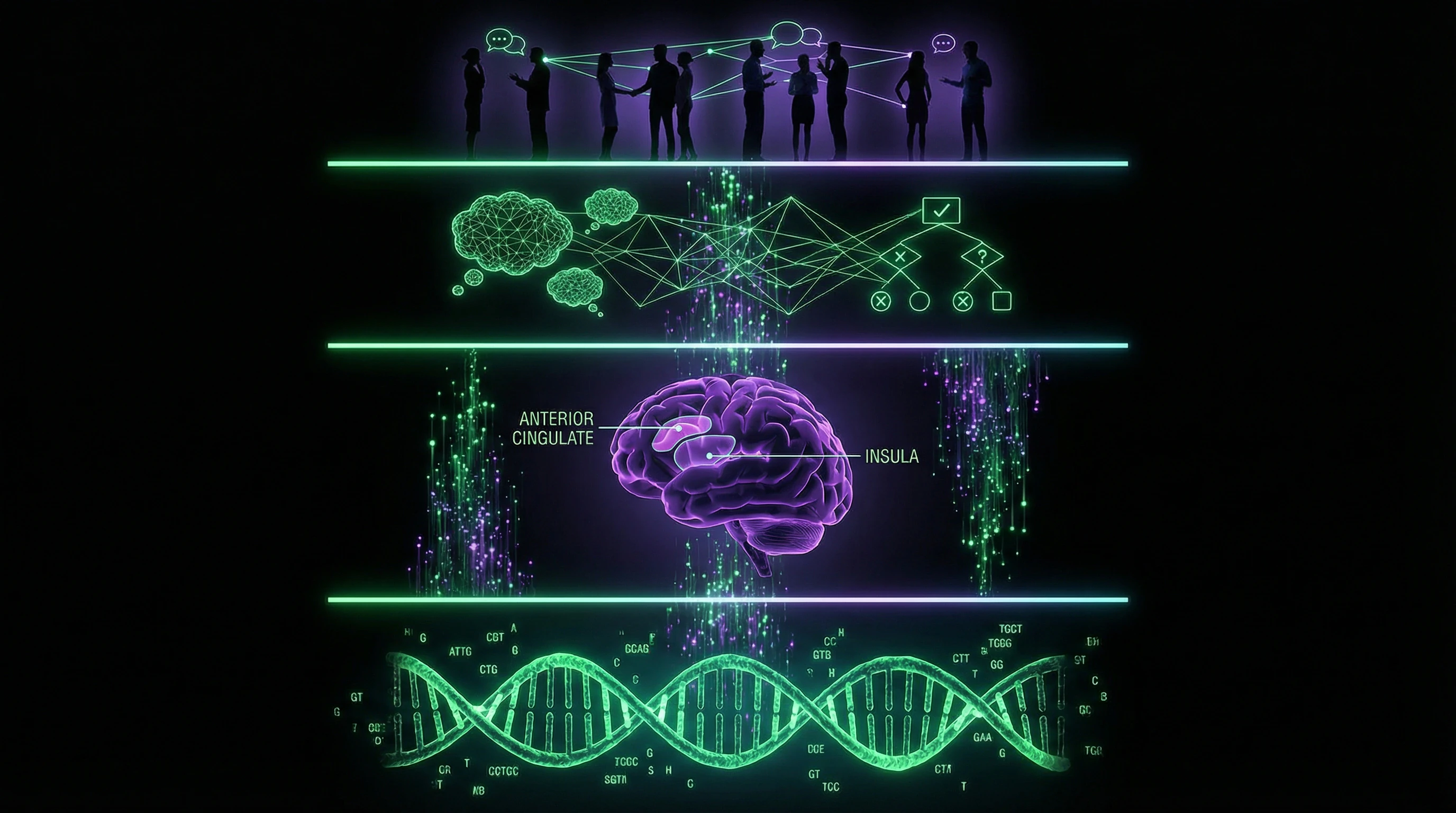
The attempt to find neurobiological foundations of RS confronts a fundamental problem: psychological constructs do not have direct one-to-one correspondence with specific brain structures or neurochemical systems. RS is a pattern of behavior and experience that forms at multiple levels: from genetic variations to social learning.
Neurobiology can explain some mechanisms underlying components of RS (for example, processing social pain or anticipating threats), but cannot fully "explain" the phenomenon in its entirety (S009). This distinction between explaining mechanisms and reducing the whole phenomenon to its parts is critical for understanding what neurobiology can and cannot say about RS.
- RS forms at the levels of genetics, development, social learning, and current context simultaneously.
- Neurobiological data describe correlates, not causes of behavior.
- The same neurobiological pattern can underlie different psychological phenomena.
- The reverse is also true: one psychological phenomenon can be realized through different neurobiological pathways.
The connection between attachment styles and neurobiology shows how early experience reprograms the brain, but this does not mean that RS is entirely determined by neurobiology. Similarly, mechanisms of long-term relationships demonstrate brain plasticity in response to social context.
Steelman Arguments: Five Strongest Foundations for the Neurobiological Hypothesis of Rejection Sensitivity
Before critically analyzing the evidence, it's necessary to present the most compelling arguments supporting the idea that rejection sensitivity has neurobiological roots. These arguments are based on indirect data from adjacent fields of neuroscience. More details in the Scientific Foundation section.
🧠 First Argument: The Social Pain System as an Evolutionary Substrate for RS
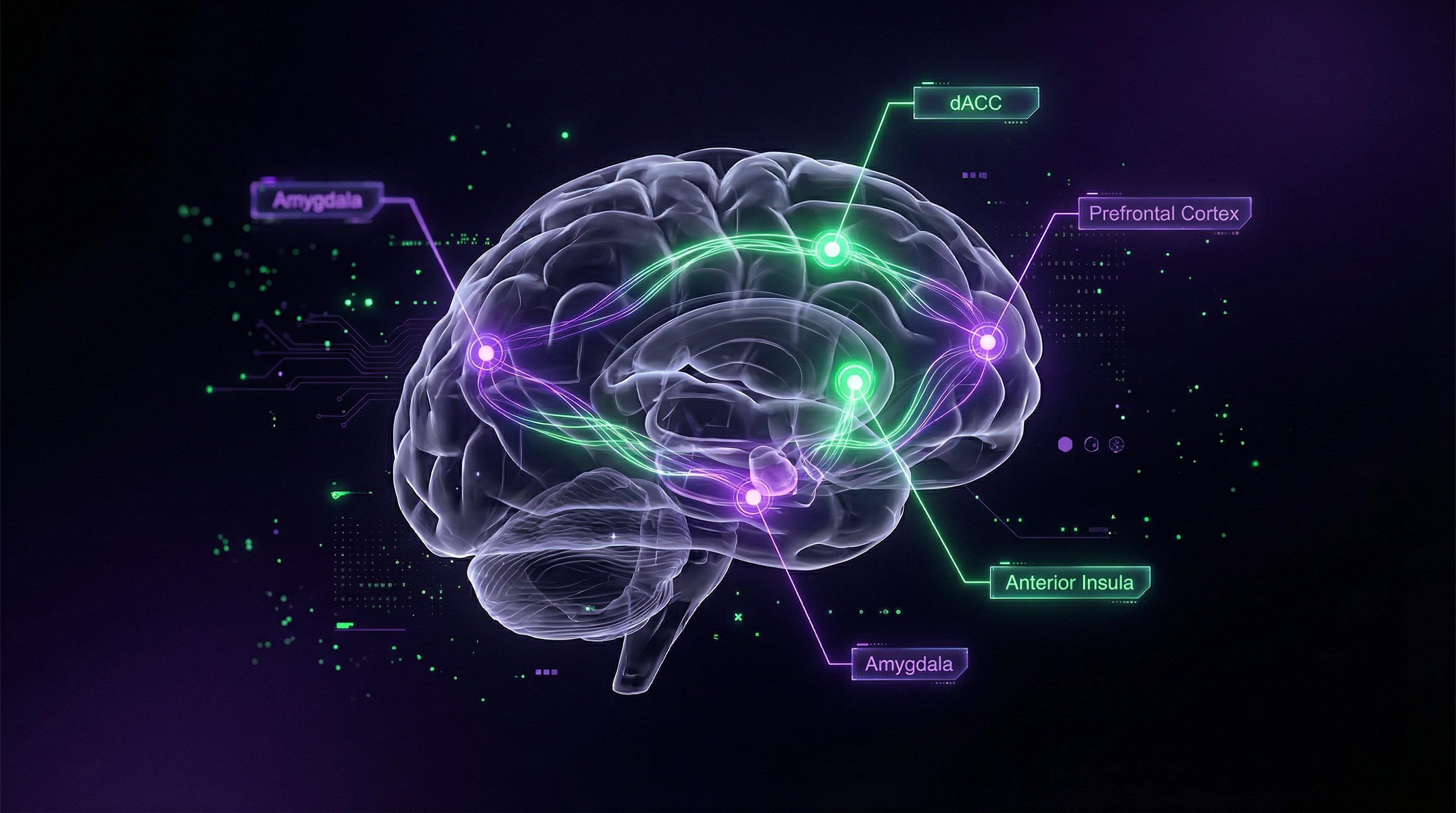
Social rejection activates the same brain regions as physical pain—the dorsal anterior cingulate cortex (dACC) and anterior insula (S007). This "social pain system" evolved to motivate social animals to maintain group connections critical for survival.
If this system operates with heightened sensitivity in certain individuals, this explains why they react more acutely to signs of rejection (S007). The mechanism is universal; only the activation thresholds differ.
| System Component | Function | Connection to RS |
|---|---|---|
| dACC | Conflict and pain detection | Hyperactivity → acute response to rejection |
| Anterior insula | Interoception, emotional awareness | Enhanced processing of social threat |
| Amygdala | Threat detector | Bias toward interpreting rejection |
🧬 Second Argument: Genetic Variations in Dopaminergic and Opioid Systems
The dopaminergic system processes reward and anticipation of social outcomes; the opioid system regulates social pain and pleasure from connections (S007). Genetic variations in DRD2, DRD4, and OPRM1 genes influence individual differences in rejection sensitivity.
Direct research linking these genes to RS is limited, but indirect data from studies of social pain and attachment support the hypothesis (S007).
🔁 Third Argument: Neuroplasticity and the Influence of Early Experience on RS Formation
Early experiences of rejection, unstable attachment, or trauma alter the development of brain systems involved in processing social threats (S007). Chronic childhood stress affects the amygdala, prefrontal cortex, and hippocampus—structures critical for emotion regulation and evaluation of social situations.
Neurobiological vulnerability is shaped not by genes alone, but by their interaction with early environment. Brain plasticity means trauma leaves a mark, but not a sentence.
⚙️ Fourth Argument: Dysfunction in the Threat Anticipation System and Amygdala Hyperactivity
The amygdala detects threats and generates emotional responses of fear and anxiety (S007). People with high anxiety often show amygdala hyperactivity in response to potentially threatening stimuli.
If this hyperactivity extends to social stimuli, people with high RS interpret ambiguous social cues as rejecting (S007). This isn't a perceptual error—it's a shift in sensitivity threshold.
- Amygdala Hyperactivity
- Enhanced response to potential threats, including social signals of uncertainty or neutrality.
- Interpretive Bias
- Tendency to read rejection in ambivalent situations—not hallucination, but a shift in probabilistic assessment.
- Behavioral Outcome
- Avoidance, appeasement, or aggression as attempts to control perceived threat.
🧷 Fifth Argument: Impaired Prefrontal Cortex Regulation and Difficulty Reappraising Social Situations
The ventromedial and dorsolateral prefrontal cortex participate in cognitive emotion regulation, situation reappraisal, and suppression of automatic responses (S007). If this system operates less effectively, people with high RS experience difficulty reappraising ambiguous social situations in a less threatening light.
Result: intense emotional reactions to perceived rejection remain without cognitive counterbalance (S007). This isn't weakness of will—it's an imbalance between the threat detection system and its regulatory system.
All five arguments point to one pattern: hypersensitivity to social cues + weakened ability to reappraise them = RS as a neurobiological phenotype, not merely a psychological construct.
Evidence Base: What We Actually Know About the Neurobiology of RS — and How Reliable It Is
Direct neuroimaging studies specifically examining rejection sensitivity as a construct are extremely scarce. Most data comes from extrapolation of research on social pain, social anxiety, attachment, and emotional regulation. For more details, see the Physics section.
🧪 Social Pain Research: Indirect Evidence of dACC and Insula Activation
Classic studies of social rejection (the Cyberball paradigm, where participants are virtually excluded from a game) show activation of the dorsal anterior cingulate cortex and anterior insula — regions associated with processing physical pain (S001).
Social rejection "hurts" in a literal neurobiological sense — but these studies examine acute rejection responses in all people, not individual differences in rejection sensitivity.
🔬 Genetic Research: Associations with Polymorphisms, but No Direct Link to RS
Studies of genetic variations in dopaminergic and opioid systems show their connection to social behavior and sensitivity to social pain (S001). Variations in the OPRM1 gene (encoding the μ-opioid receptor) are associated with differences in sensitivity to social rejection in some studies.
However, these studies did not measure RS as a specific construct, and effect sizes are typically small, indicating the polygenic nature of the phenomenon (S001).
| Study Type | What They Find | Limitation |
|---|---|---|
| Social pain (Cyberball) | dACC, insula activation | Acute response, not individual differences |
| Genetic polymorphisms | OPRM1 link to social pain | Small effect sizes, polygenicity |
| Anxiety | Amygdala hyperactivity, weak prefrontal control | Hypothesis requiring direct testing in RS |
📊 Neuroimaging Studies of Anxiety: Amygdala Hyperactivity and Reduced Prefrontal Control
People with generalized anxiety disorder and social anxiety demonstrate amygdala hyperactivity in response to threatening stimuli and reduced activity in prefrontal regions responsible for emotion regulation (S002).
Since high RS often co-occurs with anxiety, similar neurobiological patterns in RS can be hypothesized. This remains a hypothesis requiring direct testing.
🧾 Attachment and Early Experience Research: Impact on Brain Development
Longitudinal studies show that early experiences of insecure attachment, neglect, or trauma are associated with changes in the structure and functioning of brain systems involved in processing emotions and social information (S003).
- Structural Changes
- Alterations in amygdala, hippocampus, and prefrontal cortex volume
- Functional Changes
- Disruptions in functional connectivity patterns between these regions
- Interpretation
- Supports the idea of neurodevelopmental roots of RS, but does not prove direct causation
These data suggest that early experience can reshape the neurobiological foundations of social sensitivity, but the mechanism remains unclear.
Mechanisms or Correlations: Why Neurobiological Data Don't Prove Causality
Critical analysis of available data requires distinguishing between correlation and causality. Even if we find that certain brain patterns correlate with high RS, this doesn't mean these patterns "cause" RS. More details in the Climate and Geology section.
🔁 The Problem of Causal Direction: Does the Brain Shape Behavior or Does Behavior Change the Brain
Neuroplasticity means the brain constantly changes in response to experience. If a person with high RS consistently experiences intense emotional reactions to perceived rejection, this itself can alter the activity and structure of corresponding brain systems (S001).
Thus, observed neurobiological patterns may be not the cause but the consequence of RS. Establishing causality requires longitudinal studies tracking neurobiological changes before and after the development of high RS.
Correlation between brain activity and behavior is not proof that the brain causes the behavior. It may be reverse causation: behavior rewrites the brain.
🧩 Confounders: Associated Factors That May Explain the Connection
High RS often co-occurs with other psychological characteristics: anxiety, depression, low self-esteem, neuroticism (S003). Many of these characteristics are also associated with certain neurobiological patterns.
Without careful control of these confounders, it's impossible to determine which neurobiological features are specific to RS and which reflect general vulnerability to psychopathology (S005).
| Associated Factor | Neurobiological Correlate | Interpretation Problem |
|---|---|---|
| Anxiety | Amygdala hyperactivity | May be a cause of RS or an independent factor |
| Depression | Prefrontal cortex dysfunction | May amplify perception of rejection |
| Neuroticism | Heightened reactivity to threats | General vulnerability factor, not specific to RS |
⚙️ Heterogeneity of the Phenomenon: Different Pathways to the Same Behavioral Pattern
High RS can develop through different pathways in different people. For some, it may be primarily linked to genetic factors and hyperactivity of the social pain system; for others, to early traumatic experience and impaired emotional regulation (see neurobiology of attachment styles).
For still others, to cognitive distortions formed through social learning (S001). The search for a single neurobiological mechanism may be doomed to failure due to this heterogeneity.
- Genetic predisposition → social pain system hyperactivity → high RS
- Early trauma → impaired emotional regulation → high RS
- Social learning → cognitive distortions → high RS
- Combination of factors → different neurobiological profiles with identical behavior
Conflicts and Uncertainties: Where Sources Diverge and Why It Matters
Analysis of available sources reveals substantial gaps and contradictions in understanding the neurobiology of RS. For more details, see the section on Logical Fallacies.
🕳️ Absence of Direct Neuroimaging Studies of RS as a Construct
The most significant problem is the absence of studies that directly measure RS (for example, using validated questionnaires) and correlate these measurements with neuroimaging data. Most available data represents extrapolation from studies of related phenomena (S001).
Many claims about the neurobiology of RS remain speculative because we are measuring not the phenomenon itself, but its neighbors.
🧩 Inconsistency in Definitions and Operationalization of RS
Different researchers use different definitions and measurement methods for RS, which complicates comparison of results and construction of a unified theory (S001). Some focus on the cognitive component (expectation of rejection), others on the affective component (intensity of reaction), and still others on the behavioral component (avoidance or aggression in response to rejection).
| Component | Research Focus | Problem for Synthesis |
|---|---|---|
| Cognitive | Expectation of rejection | Does not align with affective data |
| Affective | Intensity of reaction | Does not align with behavioral patterns |
| Behavioral | Avoidance or aggression | Does not align with cognitive models |
📊 Small Sample Sizes and Reproducibility Issues
Many neuroimaging studies in social neuroscience are conducted on samples of 20–50 participants, which reduces statistical power and increases the risk of false-positive results (S002). The reproducibility crisis in neuroscience means that many early findings may not be confirmed in larger and methodologically rigorous studies.
This does not mean the data are false—it means we do not know which findings are reliable until we replicate them in larger samples with pre-registered hypotheses.
Cognitive Anatomy of the Phenomenon: Which Mental Traps Make Neurobiological Explanations of RS So Appealing
Neurobiological explanations of psychological phenomena possess special persuasiveness for general audiences, even when the evidence base is weak. Understanding the cognitive mechanisms that make these explanations attractive helps critically evaluate information. More details in the Mental Errors section.
⚠️ The Seduction of Neuroreductionism: "if it's in the brain, it means it's real and objective"
People tend to perceive neurobiological explanations as more scientific and objective than psychological or social ones (S009). This cognitive bias, known as "the seduction of neuroreductionism," causes us to overestimate the explanatory power of neurobiological data.
The statement "high RS is associated with hyperactivity of the amygdala" sounds more convincing than "high RS is associated with early experiences of unstable attachment," although both may be equally (un)proven (S009).
🧩 The Illusion of Understanding Through Localization: "we found a brain region, so we understood the mechanism"
Discovering that a particular brain region activates during a particular psychological process does not explain how exactly that process works (S007). The statement "social rejection activates dACC" does not reveal why some people react to rejection more strongly than others.
Localization of activity is description, not explanation. A brain map does not equal understanding of its operation.
Questions remain open: what exact computations does dACC perform, and how is this activity related to the subjective experience of pain (S007).
🔁 The Naturalistic Fallacy: "if it's biological, it means it's fixed and inevitable"
Neurobiological explanations can create the impression that high RS is a fixed biological characteristic that cannot be changed (S009). This is erroneous for two reasons.
- Neuroplasticity means that the brain changes throughout life in response to experience and interventions.
- Even if RS has biological roots, this does not mean that behavioral and cognitive strategies cannot help people cope with it better (S009).
Biological origin is not synonymous with immutability. The brain adapts to new conditions and practices.
Verification Protocol: Seven Questions for Evaluating Neurobiological Claims About Rejection Sensitivity
A systematic approach is necessary for critically evaluating information about the neurobiology of RS. The following protocol helps distinguish substantiated claims from speculation. For more details, see the section Occultism and Hermeticism.
✅ Question 1: Was RS directly measured in the study, or is this an extrapolation from related phenomena?
Check whether researchers used validated instruments to measure RS (such as the Rejection Sensitivity Questionnaire, CRSQ) or whether they studied a different phenomenon (social anxiety, reaction to social rejection in general) and extrapolated results to RS (S001). Extrapolation is not necessarily incorrect, but it is less reliable than direct measurement.
✅ Question 2: What was the study's sample size, and has there been any attempt to replicate the findings?
Neuroimaging studies with samples of fewer than 50 participants have low statistical power and high risk of false-positive results (S003). Look for meta-analyses or large studies with pre-registered protocols. If a result comes from a single small study and has not been replicated, approach it with caution.
✅ Question 3: Were confounders such as anxiety, depression, and other comorbid characteristics controlled for?
RS often correlates with depression, social anxiety, and other psychological states (S005). If a study did not control for these variables, it is impossible to determine what exactly activates the brain: RS itself or a comorbid condition.
| Verification Criterion | Reliable Study | Speculative Claim |
|---|---|---|
| Direct RS measurement | Uses CRSQ or similar instrument | Studies social anxiety, calls it RS |
| Sample size | N ≥ 100 or meta-analysis | N < 50, single study |
| Confounder control | Statistically controls for depression, anxiety | Does not mention comorbid variables |
| Replication | Result obtained in different laboratories | Single study, not replicated |
✅ Question 4: Does the language indicate correlation or causation?
If the text says "RS is associated with amygdala activation"—that's correlation. If it says "RS causes amygdala activation"—that's causation, which requires experimental proof (S002). Neuroimaging shows temporal coincidence, but not mechanism.
✅ Question 5: Are there alternative explanations for the observed brain activity?
Anterior cingulate cortex activation may reflect not RS-specific conflict processing, but a general mechanism for error detection or uncertainty (S002). Before accepting an explanation, verify whether competing hypotheses have been ruled out.
✅ Question 6: Do laboratory conditions apply to real life?
Studies often use virtual reality or computer tasks to simulate rejection (S004). Such conditions are controlled but may not reflect the emotional intensity of real social rejection. Check whether authors discuss limitations of ecological validity.
✅ Question 7: Who funded the study, and is there a conflict of interest?
Pharmaceutical company funding does not automatically discredit a study, but it requires additional scrutiny. Check the "Conflict of Interest" section and methodology.
Neurobiological explanations of RS are appealing because they promise objectivity and biological legitimacy. But appeal is not a guarantee of truth. Systematic verification using these seven questions protects against cognitive traps that make neuroscientific narratives particularly convincing.
Counter-Position Analysis
⚖️ Critical Counterpoint
The claim about insufficient study of the neurobiology of rejection sensitivity is valid, but requires clarifications. Here are the main objections against excessive skepticism.
Hidden Data in Closed Databases and Other Languages
The absence of research in accessible English-language databases does not mean their absence in general. Neuroimaging data may be located in closed corporate databases, national archives, or published in other languages inaccessible to standard searches. This is a methodological limitation, not proof of the phenomenon's absence.
Extrapolation from Social Pain Research is Justified
If the Cyberball paradigm consistently activates the anterior cingulate cortex and insula in all subjects, it is logical to assume enhanced activation in people with high rejection sensitivity. The absence of direct verification does not invalidate the hypothesis—this is a normal path for constructing a scientific assumption.
Psychometrics is Sufficient for Clinical Practice
The RSQ and CRSQ scales demonstrate reliable predictive validity in clinical work. Requiring mandatory confirmation through fMRI may be reductionism—psychological constructs do not need a neurobiological marker for practical applicability.
Underestimation of Qualitative Methods
A focus solely on quantitative neurobiology ignores phenomenological and qualitative research, which reveals the mechanisms of rejection sensitivity through subjective experience. This is no less valid a source of knowledge.
Skepticism May Become an Obstacle to New Data
Future research may quickly fill current gaps in neurobiology. Excessive skepticism now may create a cognitive barrier to accepting new data when it emerges.
FAQ
Frequently Asked Questions

Author of the Cognitive Immunology Hub project. Researches mechanisms of disinformation, pseudoscience, and cognitive biases. All materials are based on peer-reviewed sources.