
Limerence as a Clinical Phenomenon: What Lies Behind the Romantic Facade of Obsessive Attraction
Limerence is neither a metaphor nor poetic exaggeration. It's a specific psychological state with clear diagnostic criteria: intrusive thoughts about the object of attraction (occupying 85–100% of waking hours), acute emotional dependence on reciprocation, physiological symptoms (tachycardia, tremor, insomnia), fear of rejection, distorted idealization. More details in the Evolution and Genetics section.
Dorothy Tennov described this state after analyzing over 500 interviews, distinguishing it from the spectrum of romantic experiences as a separate category—not a pathology, but not the norm of healthy attachment either (S003).
⚠️ Why Culture Confuses Obsession with Depth of Feeling
Contemporary romantic narratives—from Hollywood films to popular song lyrics—systematically present limerence as the ideal of love. "I can't breathe without you," "you're the meaning of my life," "I'd die without your love"—these phrases describe not attachment, but symptoms of dependency.
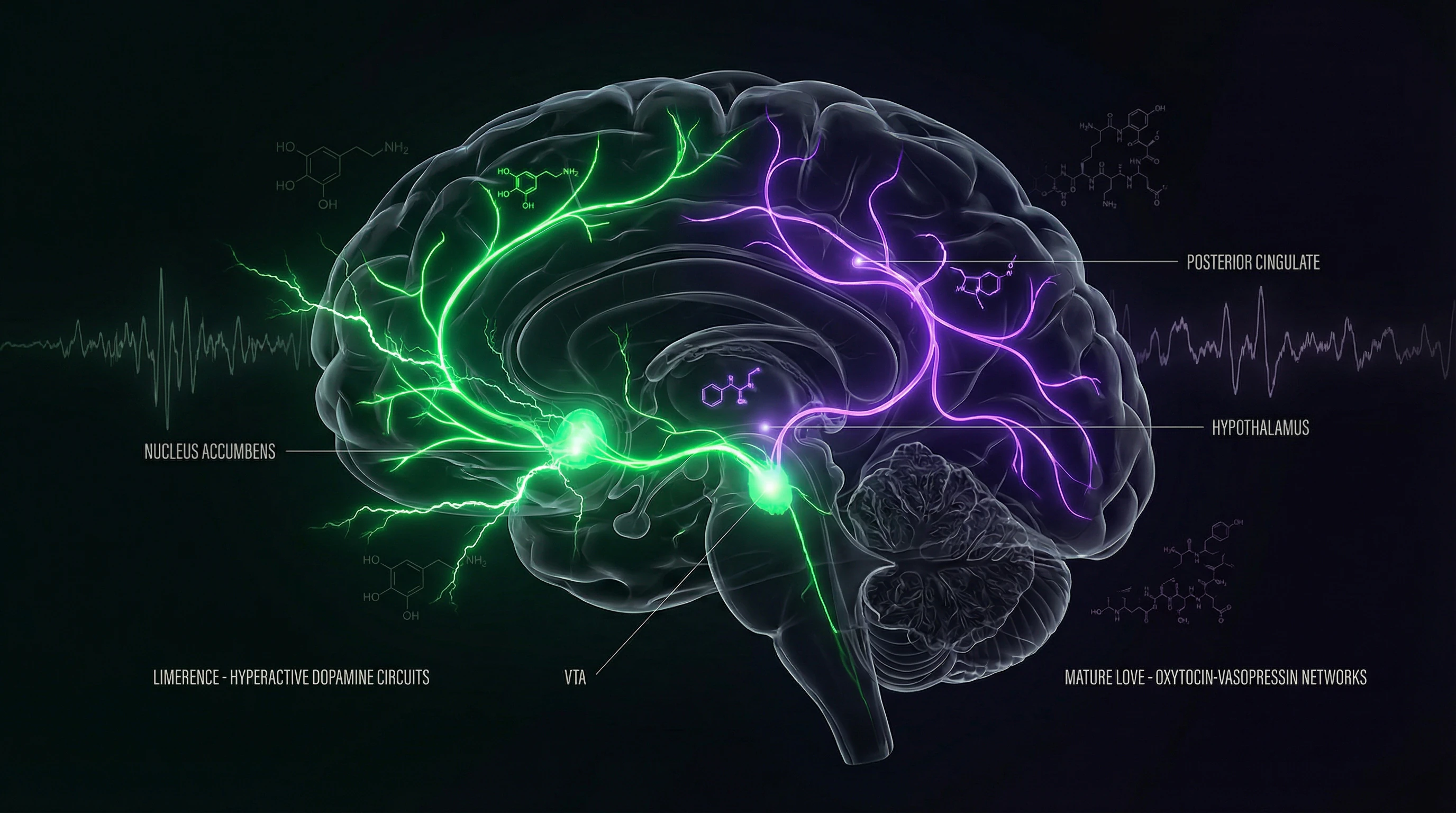
Cultural normalization of obsessive attraction creates a cognitive trap: people interpret intensity of experience as an indicator of "real" feeling, though neurobiology shows the opposite—stable long-term love is characterized by decreased dopaminergic activity and transition to oxytocin-vasopressin systems (S001).
🧩 Three Components of Limerence: Obsession, Dependency, Distortion
- Intrusive Thinking
- Thoughts about the object arise involuntarily, interrupt work processes, dominate consciousness. This is not a choice, but an obsessive pattern of neural network activation.
- Emotional Dependence on Reciprocity
- Mood, self-esteem, and functionality are directly determined by signs of attention or their absence. The person becomes hostage to external signals.
- Cognitive Distortion
- Selective attention to positive signals, ignoring incompatibility, projection of ideal qualities. The real partner is replaced by fantasy.
This triad distinguishes limerence from healthy infatuation, where realistic assessment of the partner is present and autonomy of emotional regulation is maintained.
🔎 The Boundary Between Infatuation and Clinical Obsession
| Criterion | Healthy Infatuation | Limerence |
|---|---|---|
| Functionality | Intense, but doesn't destroy work and social connections | Dysfunction: 40–60% productivity decline, social isolation |
| Self-Care | Maintains attention to sleep, nutrition, health | Neglect of basic needs, risky behavior for the sake of contact |
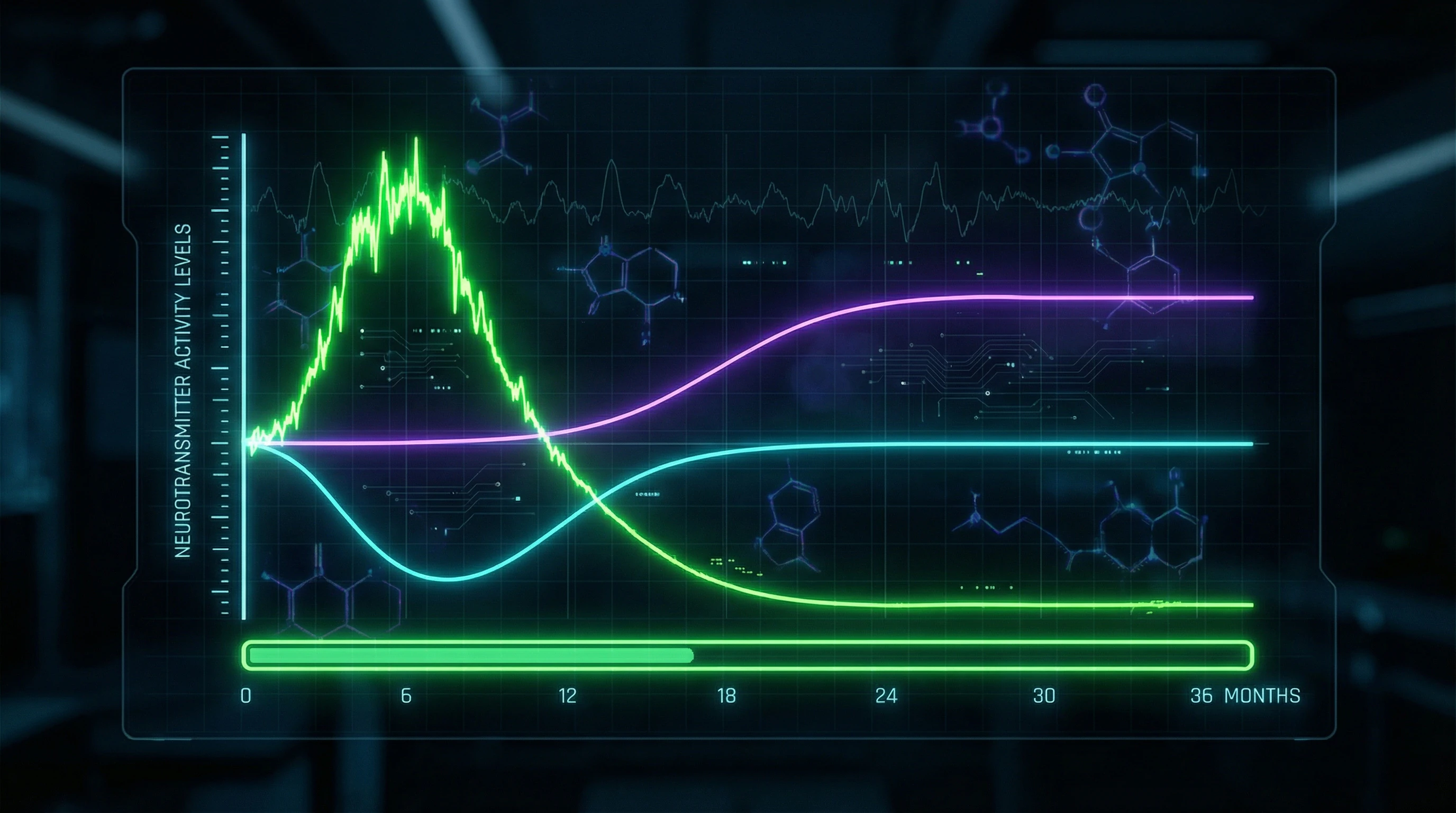
| Temporal Dynamics | Transforms into attachment within 12–24 months | Can last years without transition, especially with intermittent reinforcement |
| Response to Rejection | Pain, but recovery and adaptation | Acute maladaptation, risk of self-destructive behavior |
Intermittent signs of attention intensify dependency on the principle of gambling—unpredictable reinforcement creates the most persistent behavioral pattern. This is a mechanism that manipulators and social media algorithms use intentionally.
The Steelman Case for Limerence: Seven Arguments Defending Obsessive Attraction as an Adaptive Mechanism
Before examining pathological aspects, it's necessary to consider evolutionary and psychological arguments in favor of limerence as a functional state. A steelman is the strongest possible version of an opposing position that must be refuted to prove one's point. More details in the Quantum Mechanics section.
🧬 Argument One: Evolutionary Adaptation for Pair Formation
Limerence may have evolved as a mechanism ensuring formation of stable pairs during the critical period of conception and early pregnancy. Intense focus on a partner, ignoring alternatives, willingness to self-sacrifice—all increase the probability of jointly raising offspring.
Intrusive thoughts prevent distraction by other potential partners, emotional dependence motivates staying together, idealization reduces the likelihood of breakup over minor conflicts. From this perspective, limerence is not a bug but a feature of reproductive strategy.
- Focus on one partner blocks the search for alternatives
- Emotional attachment maintains the pair through critical periods
- Idealization protects against breakup due to superficial incompatibilities
🔁 Argument Two: Neurochemical Motivation for Overcoming Social Barriers
Forming a new pair requires breaking existing social bonds, overcoming fear of rejection, accepting risks. The dopamine surge during limerence creates motivational impulse sufficient to overcome these barriers.
Without intense neurochemical reinforcement, many people would not dare to pursue closeness due to social anxiety or fear of vulnerability.
Limerence temporarily suppresses the amygdala (fear center) and activates reward systems, making risk psychologically acceptable.
⚙️ Argument Three: Cognitive Focus as a Resource for Deep Partner Knowledge
Intrusive thoughts about a partner can be interpreted as a mechanism for deep study: analyzing behavioral patterns, predicting reactions, building a mental model of another person. This intensive cognitive work creates the foundation for long-term compatibility.
The better partners understand each other in early stages, the higher the probability of successful relationships. Limerence as a period of "research obsession" may be adaptive.
🧪 Argument Four: Emotional Intensity as a Test for Stress-Response Compatibility
Limerence creates an emotional roller coaster—euphoria with reciprocation, despair with uncertainty. This can be viewed as a stress test: if a couple can navigate these extreme states together, they demonstrate compatibility in managing emotional crises.
Partners who have passed through the limerent phase and maintained their relationship may be better prepared for future stressors (illness, financial crises, loss of loved ones).
🔬 Argument Five: Idealization as a Protective Mechanism Against Premature Breakup
Cognitive bias in favor of a partner (ignoring flaws, exaggerating virtues) may prevent breakup due to superficial incompatibilities that aren't critical for long-term relationships. If people evaluated partners absolutely realistically from day one, many relationships would terminate over minor irritants before deep attachment could form.
Idealization provides time for real intimacy to develop, which can later survive disappointment in flaws.
📊 Argument Six: Social Signaling Through Demonstration of Commitment
Public demonstration of limerent behavior (constant talk about partner, sacrifices for the relationship, ignoring alternatives) signals to social surroundings the seriousness of intentions. This reduces the likelihood of third-party interference, strengthens social recognition of the couple, creates reputational costs for breakup.
Limerence as a "costly signal" may be an adaptive strategy in the context of social competition for partners.
🧷 Argument Seven: Neuroplasticity and Formation of Long-Term Bonds
Intense neurochemical activity during limerence may facilitate formation of stable neural connections associating the partner with reward (S001). These connections become the foundation for long-term attachment even after the dopamine phase fades.
Without initial intensity, neuroplastic changes may be insufficient for forming deep attachment. The transition from limerence to long-term attachment requires this neurochemical "push" in early stages.
- Adaptive Function of Limerence
- A temporary state that initiates pair formation and creates the neurobiological foundation for long-term attachment.
- Critical Period
- The first months of a relationship, when neuroplastic changes are most active and when the couple is most vulnerable to breakup.
- Transition to Attachment
- Gradual fading of dopamine activity and activation of oxytocin systems that support long-term relationships.
The Neurobiology of Exposure: What fMRI Studies Reveal About the Brains of the In-Love and the Addicted
Functional magnetic resonance imaging allows us to observe brain activity in real time. Studies of romantic love and limerence reveal both similarities and critical differences in activation patterns. More details in the Chemistry section.
🧪 Dopamine Reward Pathways: The Common Denominator of Love and Addiction
Long-term intense romantic love (couples in relationships averaging 21 years) activates dopaminergic regions: the ventral tegmental area and caudate nucleus (S001). These same regions activate with cocaine, gambling, and social media likes.
The critical difference lies in the activation pattern. In healthy long-term love, reward activity is accompanied by activation of the posterior cingulate cortex and regions associated with attachment and social cognition. In limerence, isolated activation of reward systems dominates without compensatory mechanisms (S001).
Dopamine isn't a marker of love. It's a marker of the brain's attention to an object. The question is: what's happening around that attention?
🧬 The Oxytocin-Vasopressin Transition: Marker of the Transformation from Attraction to Attachment
Long-term love involves not only dopamine but also oxytocin-vasopressin systems associated with social bonding, trust, and empathy. Studies have found activation of the globus pallidus—a region rich in oxytocin and vasopressin receptors—in couples with long-term relationships (S001).
This activation is absent in early stages of limerence. This explains why obsessive attraction doesn't automatically transform into stable attachment: a neurochemical transition is required that doesn't occur in all couples.
| Parameter | Long-term Love | Limerence |
|---|---|---|
| Dopamine Activity | Moderate, with compensatory mechanisms | High, isolated |
| Oxytocin-Vasopressin | Active, stable | Minimal or absent |
| Prefrontal Cortex | Recovers within 12–18 months | Suppressed long-term |
| Amygdala | Moderate activity, rapid regulation | Hyperactivity, impaired regulation |
📊 Prefrontal Cortex Suppression: Why People in Love Make Irrational Decisions
Both romantic love and limerence are associated with deactivation of the dorsolateral prefrontal cortex—the region of critical thinking, planning, and impulse control. This explains why people in love ignore red flags, make financially risky decisions, and disregard consequences.
The difference lies in degree and duration. In limerence, suppression is more pronounced and persistent; in healthy love, prefrontal activity gradually recovers within 12–18 months.
🔁 Amygdala and Fear of Rejection: The Neural Substrate of Emotional Dependency
Limerence is characterized by amygdala hyperactivity in response to threat of rejection or uncertainty. This creates chronic anxiety that is temporarily relieved by signs of attention from the object of attraction—a classic addiction pattern.
In healthy attachment, the amygdala activates moderately and is quickly regulated by the prefrontal cortex. In limerence, regulation is impaired, creating a cycle: anxiety → relief → anxiety.
- Uncertainty in the relationship → amygdala in threat mode
- Sign of attention from partner → temporary relief
- Absence of contact → return of anxiety
- Cycle repeats, reinforcing dependency
The connection between attachment styles and neurobiology shows that early interaction patterns program precisely this amygdala reactivity. Limerence is often not random, but a consequence of insecure attachment encoded in neural networks.
Digital Exploitation of Limerence: How Dating Algorithms Turn the Search for Love into a Dependency Loop
Modern dating platforms are architecturally designed to exploit the neurobiological mechanisms of limerence. They transform users into sources of data and revenue through the creation of artificial dependency. Learn more in the Cognitive Biases section.
🧩 Variable Reinforcement: Why Swiping Works Like Slot Machines
Tinder, Bumble, and similar apps use a variable reinforcement schedule—the same mechanism that makes slot machines maximally addictive. Users don't know when the next swipe will lead to a match, creating a dopamine cycle of anticipation-reward.
Unpredictable rewards trigger stronger activation of reward systems than predictable ones (S001). Platforms deliberately control match frequency through algorithms to maintain users in a state of optimal frustration—enough rewards to continue, but not enough to feel satisfied.
🔁 Gamification of Intimacy: Achievements, Streaks, and Attractiveness Metrics
Dating apps implement game mechanics: match counters, daily activity "streaks," attractiveness ratings (explicit or hidden through display algorithms). This transforms partner search from a social process into a game with quantitative success metrics.
Algorithms and interfaces create an environment where "screens, interfaces, algorithms, data protocols" program the trajectories of encounters, limerence, and erotic pleasure (S003). Users optimize profiles not for authentic self-expression, but to maximize metrics, creating a cycle of performative identity.
📊 Illusion of Abundance and the Paradox of Choice
Platforms create an illusion of infinite choice, which activates FOMO (fear of missing out) and prevents the formation of deep attachment. Each potential partner is evaluated against thousands of alternatives, raising standards to unrealistic levels.
This reduces willingness to invest in specific relationships and keeps users in a state of chronic searching—exactly what platforms need for audience retention and monetization through subscriptions and advertising.
- Retention Mechanism
- Infinite choice → FOMO → refusal to commit → constant return to app
- Side Effect
- Unrealistic partner expectations; decreased satisfaction with real relationships
- For the Platform
- Maximum time in app; justification for premium subscriptions ("find your perfect match")
🧠 Design for Interruption: Notifications as Dopamine Spike Triggers
Push notifications about new matches, messages, or likes are designed to interrupt current activity and create an immediate dopamine response. Unpredictable notifications trigger stronger activation of reward systems than checking the app on one's own initiative (S001).
Platforms optimize notification timing and frequency through A/B testing to maximize user return to the app. This creates a conditioned reflex: notification sound → reward anticipation → automatic app opening.
The connection to the neurobiology of attachment styles shows that such triggers are especially effective for people with anxious attachment styles, who are already predisposed to seeking validation and fearing rejection.
Cognitive Anatomy of Deception: Five Psychological Traps That Mask Addiction as Love
Limerence exploits systematic cognitive biases that make it difficult to recognize from within the experience. Understanding these mechanisms is the first step toward distinguishing obsessive attraction from healthy attachment. Learn more in the Logical Fallacies section.
🕳️ Trap One: Intensity as a Proxy for Depth
The human brain uses an intensity heuristic: the stronger the emotion, the more significant its cause appears. Limerence creates extreme emotional states (euphoria when reciprocated, despair when ignored) that are interpreted as proof of "true love."
This is a cognitive error: intensity reflects neurochemical activity, not relationship quality or partner compatibility (S001). Healthy love may be less dramatic but more stable and functional.
🧩 Trap Two: Suffering as Investment
The more emotional resources invested in limerent relationships (sleepless nights, anxiety, sacrifices for contact), the stronger the motivation to justify these investments by interpreting them as proof of deep feeling.
Past investments should not determine future decisions, but psychologically people tend to continue dysfunctional relationships to avoid acknowledging the "futility" of their suffering.
⚠️ Trap Three: Intermittent Reinforcement as Proof of "Special" Connection
Irregular signs of attention from the limerent object (a reply after prolonged silence, an unexpected compliment, a rare meeting) create stronger dependency than constant attention. This exploits the principle of variable reinforcement: unpredictable rewards activate dopamine pathways more powerfully than predictable ones.
People interpret this intensity as proof of "special chemistry" or a "fated" connection, when it's simply the neurobiological effect of unpredictability.
🔁 Trap Four: Idealization Through Selective Attention
Limerence activates confirmation bias: attention focuses on information confirming the idealized image of the partner while ignoring contradictory data. Random kindness is interpreted as deep empathy, shared interests are exaggerated, incompatibilities are minimized.
This creates a distorted mental model of the partner that doesn't correspond to reality and collapses under prolonged close contact.
🧷 Trap Five: Cultural Validation Through Romantic Narratives
Contemporary culture provides ready-made interpretive frameworks for limerence: "love at first sight," "soulmates," "can't live without you." These narratives legitimize dysfunctional behavior by presenting it as a romantic ideal.
- Cultural scripts normalize obsessive attraction as romance
- Digital platforms amplify these narratives through gamification and algorithmic reinforcement (S006)
- Cultural validation makes critical self-assessment difficult
- Breaking from cultural scripts requires reevaluation of identity and choice
The connection between attachment styles and neurobiology shows that limerence is often rooted in early patterns, but this doesn't make it immutable. Awareness of these five traps allows separation of neurochemical signals from actual compatibility.
60-Second Verification Protocol: Seven Questions That Distinguish Attachment from Obsession
The checklist below separates limerence from healthy infatuation in one minute of honest answers. More details in the Deepfake Detection section.
- Functionality. Are productivity, sleep, and appetite maintained? Limerence blocks basic functions (S003).
- Attention control. Can you redirect thoughts to other things, or does the object of attachment occupy 80%+ of consciousness?
- Reality vs. fantasy. Do you see the person as they are, or project an idealized image?
- Pain and reward. Does the relationship bring more suffering than joy? Addiction feeds on the pain-relief cycle.
- Autonomy. Do you make decisions independently, or coordinate every choice with the object of attachment?
- Social isolation. Is your social circle narrowing? Limerence displaces other people (S004).
- Reversibility. Can you imagine life without this person, or does it seem impossible?
If 5+ answers indicate dysfunction — you're facing limerence, not love. Healthy attachment expands life; obsession constricts it.
Limerence is reversible through contact cessation and neural network restructuring. The first 72 hours are critical: absence of triggers allows the brain to begin deactivating dopamine loops (S001).
Healthy love requires reality testing. If you don't know what state you're in — ask someone who has known you for a long time and has no stake in your choice.