
What is "disenfranchised grief" after a breakup — and why neurobiology doesn't recognize social hierarchies of loss
"Disenfranchised grief" describes situations where society denies legitimacy to the experience of loss. Grief is a universal response to loss (S009), but cultural norms often restrict which losses are "worthy" of this grief.
The brain doesn't distinguish hierarchies of loss. The rupture of attachment activates the same neural networks as physical pain or survival threats. But the environment often adds a second layer of suffering: shame for the "inappropriate" intensity of feelings. More details in the Scientific Databases section.
| Social Message | Neurobiological Effect |
|---|---|
| "You weren't even married" | Activation of social pain systems (threat of group exclusion) |
| "You only dated for three months" | Suppression of the right to grieve + increased isolation |
| "You'll find someone else" | Devaluation of the connection's uniqueness + blockage of loss processing |
Stigmatization as an independent pain factor
Perceived stigmatization is not an abstract "public opinion," but concrete messages that intensify and prolong the experience of loss (S009). Research has shown: levels of relationship closeness and perceived stigmatization directly affect the intensity of grief after a breakup.
Multiple regression models confirmed main effects (S009): this is not a subjective feeling, but a measurable phenomenon with predictable patterns.
Neurobiology versus social constructs
The brain doesn't operate in categories of "serious enough" or "not serious enough" relationships. It operates on the degree of integration of another person into the neural map of "self" and world.
- Deep integration
- Shared living, common plans, physical intimacy, emotional interdependence
- Rupture with deep integration
- Literally amputates part of the neural network responsible for predicting the future and regulating basic needs
The attachment system in the brain is not a "romantic add-on," but an ancient survival mechanism formed by millions of years of social mammal evolution (S011). Relationship rupture can trigger not just sadness, but full-blown depressive episodes, anxiety disorders, and post-traumatic reactions.
This means: devaluing grief after a breakup is not just social cruelty. It's an active obstacle to the neurobiological processing of loss, which requires recognition, expression, and integration of the loss into one's worldview.
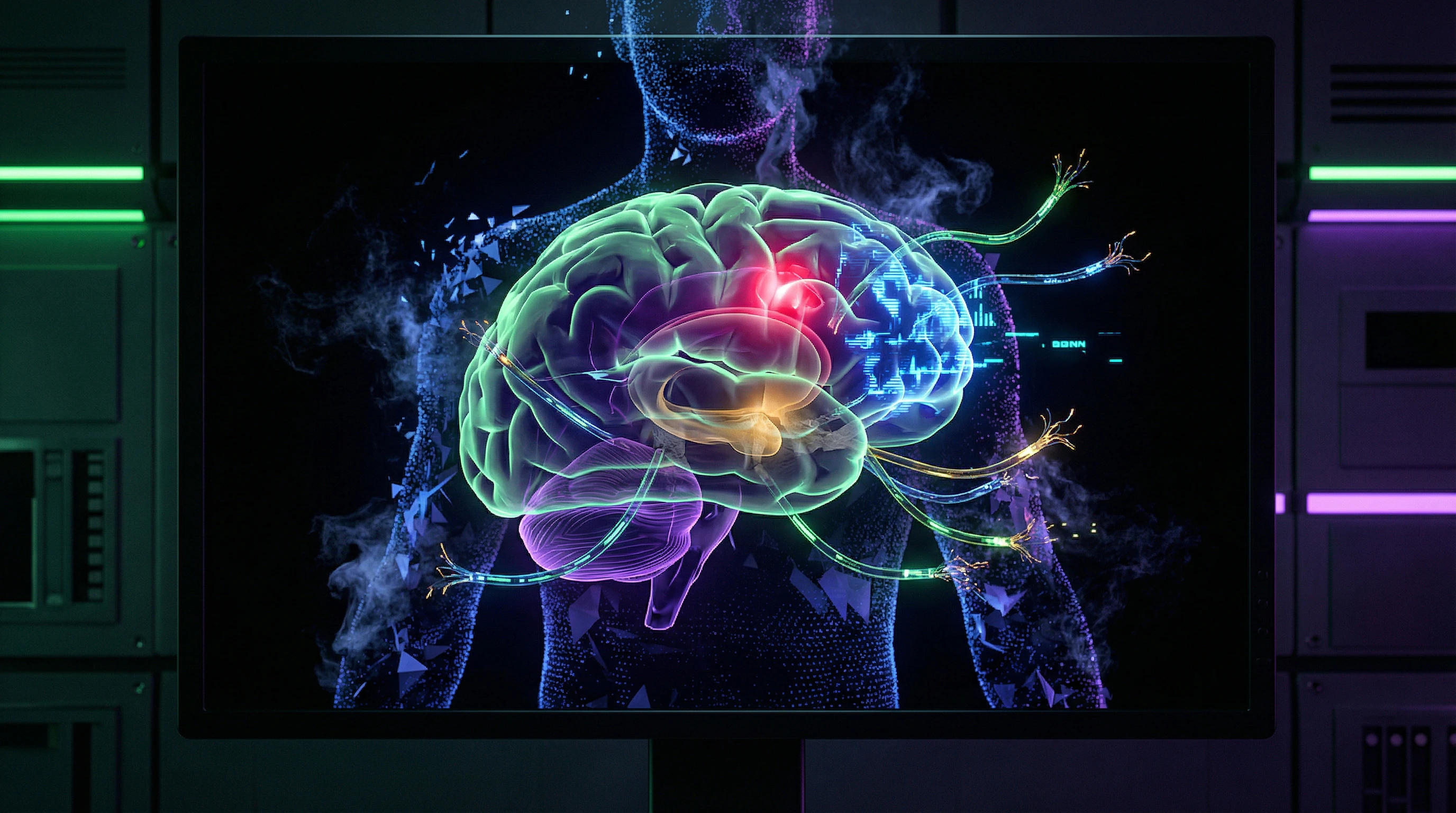
Seven Arguments for the Neurobiological Equivalence of Grief After Death and After Breakup
Before examining the evidence base, we need to formulate the strongest case — a version of the argument that is often ignored or oversimplified. This does not mean that all breakups are equivalent to all cases of bereavement. It means: under certain conditions, the neurobiological mechanisms of grief are indistinguishable. For more details, see the Physics section.
🧠 Argument 1: Shared Activation of Physical and Social Pain Networks
The anterior cingulate cortex (ACC) and insula activate during both physical pain and social rejection and loss. These regions are not metaphorically linked to pain — they process nociceptive signals. During a breakup, especially a sudden one or one involving rejection, the ACC and insula demonstrate activation patterns indistinguishable from those during physical trauma (S001).
Descriptions like "as if punched in the chest," "physically painful to breathe," "body aches all over" — these are not poetic exaggerations, but accurate descriptions of what the brain registers.
🔁 Argument 2: Disruption of Reward and Motivation Systems
The nucleus accumbens and ventral tegmental area (VTA) — centers of the dopaminergic system — in long-term relationships become calibrated to the partner as a source of primary reinforcement (S002). This is normal neuroplasticity: the brain optimizes predictive models around stable sources of reward.
When the source disappears, a state emerges that is neurochemically similar to withdrawal syndrome: drop in baseline dopamine levels, anhedonia, disrupted motivation (S003). This is a clinically significant condition requiring therapeutic intervention.
- Dopamine drop → anhedonia (inability to experience pleasure)
- Disrupted motivation → apathy toward previously meaningful activities
- Reward imbalance → seeking surrogate sources (alcohol, overeating, hypersexuality)
🧬 Argument 3: Dysregulation of the Hypothalamic-Pituitary-Adrenal (HPA) Axis
Chronic breakup stress activates the HPA axis, leading to elevated cortisol release. With prolonged activation, this causes sleep disturbances, immune system suppression, and impaired neurogenesis in the hippocampus (S007).
Impaired neurogenesis weakens the ability to form new memories and contextualize traumatic experience. These changes are identical to those observed in PTSD and clinical depression following bereavement.
The brain doesn't "know" that the person is alive and simply no longer wants to be around — it registers absence, unpredictability, and threat.
🧷 Argument 4: Disruption of Predictive Processing and World Model
The prefrontal cortex (PFC) constantly builds predictive models of the future based on stable patterns of the present. In long-term relationships, the partner becomes a central element: joint plans, financial decisions, geographic location, social connections, even circadian rhythms synchronize (S004).
A breakup is a collapse of the entire predictive model of the future. The brain is forced to urgently restructure a vast number of neural connections, which requires enormous energy expenditure and is accompanied by cognitive overload: inability to concentrate, make decisions, or plan.
🔬 Argument 5: Reactivation of Traumatic Memories and Intrusive Thoughts
The default mode network (DMN) — the brain's passive mode network — after a breakup often gets stuck in ruminative cycles: obsessive replaying of final conversations, searching for "what went wrong," fantasies of reunion. This is not character weakness, but DMN dysfunction analogous to that observed in PTSD.
The amygdala becomes hyperactivated when encountering triggers — places, songs, scents associated with the former partner. This hyperactivation can persist for months, creating chronic hypervigilance and emotional reactivity.
- Rumination
- Obsessive replaying of events; DMN dysfunction; amplifies depression and anxiety.
- Amygdala Hyperactivation
- Hyperreactivity to triggers; can persist for months; creates a state of chronic threat.
- Cognitive Rigidity
- Difficulty shifting attention; fixation on traumatic details; impaired cognitive flexibility.
🧪 Argument 6: Disruption of Social Cognition and Theory of Mind
The medial prefrontal cortex (mPFC) and temporoparietal junction (TPJ) — regions responsible for understanding others' mental states — often demonstrate dysfunction after a breakup. A person may obsessively try to "understand what the ex-partner is thinking," construct elaborate theories about their motives, interpret every action as a hidden message (S005).
This is not paranoia, but the brain's attempt to restore predictability through understanding. But in the absence of feedback, this system runs idle, creating false patterns and amplifying anxiety. The connection to the neurobiology of attachment styles shows how early interaction patterns program this dysfunction.
🧾 Argument 7: Epigenetic Changes and Long-Term Neuroplasticity
Emerging data indicate that intense chronic stress, including breakup stress, can cause epigenetic changes: modifications in gene expression without altering the DNA itself. These changes affect stress sensitivity, emotional regulation, and risk of future mental disorders.
Prolonged stress alters the balance of micronutrients and neurotransmitters, which has cascading effects on cognitive functions and emotional state. These changes can persist for years, affecting the ability to form new attachments and trust partners.
| Level of Analysis | Mechanism | Timeline |
|---|---|---|
| Neurotransmitters | Drop in dopamine, serotonin; elevated cortisol | Days–weeks |
| Neuroplasticity | Restructuring of synaptic connections; impaired neurogenesis | Weeks–months |
| Epigenetics | Modification of gene expression; altered stress sensitivity | Months–years |
Evidence Base: What Research Shows About Breakup Grief — and Where the Data Gaps Lie
Systematic literature analysis reveals compelling evidence for the neurobiological reality of breakup grief while simultaneously exposing significant methodological limitations in existing research. More details in the Space and Earth section.
🧪 Research on How Relationship Closeness and Stigmatization Affect Grief Intensity
A key study, College Students' Disenfranchised Grief Following a Breakup (S009), used multiple regression modeling to analyze factors affecting grief intensity in college students after breakups. Results showed that relationship closeness and perceived stigmatization are independent predictors of grief intensity and duration.
The interaction effect between closeness levels and stigmatization was not confirmed (S009). This means stigmatization amplifies grief regardless of how close the relationship was — even brief but emotionally significant connections can trigger intense grief that's exacerbated by social invalidation.
Stigmatization operates as an independent pain amplifier, not as a modulator of intensity depending on relationship type.
📊 Methodological Challenges in Neuroimaging Studies of Emotion
A meta-analysis of 44 neuroscience studies (S010) identified a critical problem: side effects and symptoms induced by virtual reality can undermine health and safety standards as well as the reliability of scientific results.
Many contemporary attempts to study the neurobiology of emotional pain use VR to create controlled emotional stimuli. While next-generation HMDs cause significantly fewer side effects (S010), this still limits ecological validity: laboratory simulation of breakup doesn't equate to real-world experience.
- Laboratory conditions exclude social context (running into mutual friends, social media reminders)
- Artificial stimuli don't reproduce the chronic nature of breakup grief
- Participants know the experiment will end, reducing perceived threat
- VR-induced side effects can mask or distort emotional reactions
🧬 Attachment Perspective: From Childhood to Adult Relationships
Attachment theory (S011) provides a framework for understanding why some people experience breakup as existential catastrophe while others see it as painful but manageable. Early interaction patterns with caregivers shape internal working models of how relationships function and how much others can be relied upon.
| Attachment Type | Neurobiological Pattern During Breakup | Clinical Outcome |
|---|---|---|
| Anxious | Hyperactivation of threat systems at slightest signs of rejection | Breakup experienced as existential threat; high risk of depression and anxiety |
| Avoidant | Suppression of emotional reactions; stress dissociation | Delayed somatic symptoms; risk of chronic pain |
| Secure | Modulated stress activation with rapid recovery | Grief experienced as painful but integrable event |
People with anxious attachment demonstrate hyperactivation of threat systems, making breakup neurobiologically more traumatic. Those with avoidant attachment may suppress emotional reactions, but this doesn't mean absence of neurobiological stress — rather, its dissociation.
🧾 Clinical Validation: When Breakup Grief Requires Therapy
Application of rational cognitive therapy for treating clinically significant breakup grief (S012) confirms: this isn't "just sadness" you can "tough out," but a condition that may require professional intervention.
Therapy focuses on identifying and restructuring irrational beliefs that amplify suffering. These cognitive distortions aren't merely "wrong thoughts" — they maintain hyperactivation of the brain's stress systems.
- Catastrophizing
- "I'll never find anyone else" — activates long-term despair systems, blocks adaptive behavioral responses.
- Personalization
- "This happened because I'm not good enough" — transforms grief into shame, intensifies social avoidance and isolation.
- Dichotomous Thinking
- "If this relationship didn't work out, I'm a complete failure" — generalizes localized rejection to entire identity, triggers self-criticism systems.
The connection between attachment styles and neurobiology shows that recovery from breakup depends not only on pain intensity, but on how the brain was "programmed" in childhood to perceive rejection.

Mechanisms of Causality: Why Relationship Closeness Determines the Depth of Neurobiological Integration — and Why Breakups Cannot Be "Quick"
The central question: Is the intensity of grief after a breakup a direct consequence of neurobiological changes, or a correlation mediated by personality traits, social support, and economic stability?
🧬 Neuroplasticity as a Mechanism for Partner Integration into the "Self"
Hebbian learning — the principle that "neurons that fire together, wire together" — describes how in long-term relationships, thousands of daily interactions create dense neural networks. The partner's representation becomes integrated with reward systems (shared pleasant activities), safety systems (comfort, support), planning systems (shared future), and even basic physiological rhythms (shared sleep, meals). For more details, see the Reality Checking section.
This is literal neural integration, not a metaphor. When it's severed, the brain doesn't delete these connections — they must be actively reorganized, which requires time and energy. Attempts to "quickly forget" contradict fundamental principles of neuroplasticity.
The rupture of deep attachment is not informational deletion, but neurobiological reorganization that cannot be accelerated by willpower alone.
🧷 The Role of Predictive Processing: Why Suddenness Amplifies Trauma
The predictive processing framework posits that the brain constantly generates predictions about future sensory inputs and minimizes prediction error. A sudden breakup creates a massive prediction error: the brain expected the relationship to continue, but received its absence.
The larger the prediction error, the stronger the stress response. Breakups "out of nowhere" are experienced more severely than breakups after prolonged conflict: the brain has time to gradually update its predictive models.
| Breakup Scenario | Prediction Error | Stress Intensity |
|---|---|---|
| Sudden, unexpected | Maximum | High |
| After period of conflict | Minimal | Lower |
| Gradual distancing | Low | Low |
🔬 Confounders: What Else Influences Grief Intensity
Critical analysis requires accounting for alternative explanations. Possible confounders:
- Pre-existing psychopathology — people with depression or anxiety disorders experience breakups more severely, but this doesn't negate the neurobiological reality of grief in mentally healthy individuals.
- Social isolation — lack of supportive relationships amplifies stress, yet research shows intense grief even when support is present.
- Economic dependence — financial consequences add stress, but neurobiological changes are observed even in economically independent individuals.
- Cultural narratives — cultures that romanticize "eternal love" may intensify the experience of loss, yet cross-cultural studies show the universality of basic grief mechanisms.
None of these factors negates the central mechanism: the rupture of deep attachment causes measurable neurobiological changes that require time for reorganization. The connection between relationship closeness and the depth of partner integration into neural networks means that grief intensity scales with the intensity of prior attachment (S002, S007).
This explains the paradox: people who say "I'll forget quickly" often experience the most severe grief. Their predictive models were most integrated, and denial of this fact only slows adaptation. Acknowledging the depth of neurobiological changes is the first step toward overcoming them.
For a deeper understanding of attachment mechanisms, see the neurobiology of attachment styles and the distinction between limerence and love.
Data Conflicts and Uncertainties: Where the Neurobiology of Breakups Remains Terra Incognita
Honest analysis requires acknowledgment: many aspects of the neurobiology of post-breakup grief remain poorly studied or contradictory. This isn't a weakness of science — it's its honesty. More details in the Media Literacy section.
🕳️ Absence of Direct Neuroimaging Studies
Most data on the neurobiology of post-breakup grief is extrapolated from studies of social pain, bereavement, and romantic love (S004). Direct fMRI studies of people experiencing breakups in real time are extremely rare — for ethical and methodological reasons.
This creates a risk of overinterpretation: we assume the same regions are activated, but lack direct evidence with sufficient statistical power.
- Romantic love studies often use photographs of partners, not actual breakups
- Ethics prevent scanning someone's brain during acute rejection
- Post-hoc interviews are distorted by memory and adaptation
🧪 Heterogeneity of Breakup Experiences
"Breakup" is not a unitary category. Mutual separations vs. unilateral rejection; infidelity vs. incompatibility; possibility of friendship vs. complete no-contact — each scenario activates different neural networks (S008).
Existing studies often combine all types into one group, reducing the specificity of conclusions. Result: findings about "breakups in general" are often inapplicable to specific cases.
The brain responds not to the category of an event, but to its meaning for your attachment system. Two breakups are two different neurobiological events.
📊 Temporal Dynamics of Recovery
We poorly understand how long neurobiological reorganization lasts after a breakup. Popular claims about "half the relationship duration" or "three months" lack empirical foundation (S001).
Individual variability is enormous. We don't know which factors predict rapid vs. prolonged recovery — genetics, attachment style, social support, contact with the ex-partner, or something else.
- What's Known
- The acute phase (hyperactivity in the reward system) lasts weeks to months
- What's Unknown
- When neurobiological reintegration ends; why for some it's 3 months, for others — 3 years
- Why This Matters
- Without this knowledge, recommendations about "recovery timelines" remain guesswork, not protocol
Cognitive Anatomy of the "Just Get Over It" Myth: What Mental Traps Enable the Devaluation of Breakup Grief
Society devalues grief after breakups, even though neurobiology confirms its reality. This happens not out of cruelty, but due to cognitive biases that make pain invisible to observers. More details in the section Alkaline Diet.
The brain of someone not experiencing a breakup cannot activate the same neural networks as the brain of someone suffering. Empathy requires imagination—and imagination requires resources.
- Illusion of control: "You chose to break up" — ignores that choice and pain from choice are different processes. The prefrontal cortex makes the decision, but the limbic system still grieves.
- Attribution error: pain is attributed to character weakness rather than neurobiology. If someone could "just forget," it would mean shutting down memory systems — impossible without brain damage.
- Availability effect: death is visible (funerals, mourning), breakups are not. Invisible grief is easier to deny.
- Minimization through comparison: "It's not like someone died" — true, but not an argument against pain. It's an argument for a hierarchy of losses that neurobiology doesn't support (S007).
Devaluing grief is not so much a judgment about pain as it is a defense against the need to acknowledge it. Acknowledgment requires responsibility.
The social function of the "just get over it" myth is simple: it reduces cognitive load on others. If grief is a choice, there's no need to help. If grief is neurobiology, then society bears responsibility.
The mechanism works through three layers: denial of pain's reality, shifting responsibility onto the sufferer, and finally, social punishment for "incorrect" grieving. This is a closed loop that protects the observer but isolates the sufferer.
- Cognitive immunology here:
- Recognize that devaluation is not truth, but a defense mechanism. This allows you not to internalize others' attribution errors and not to add shame to pain.
The way out is not convincing others (they're defended), but reorienting toward your own neurobiological processes and finding people whose brains are capable of empathy without defenses.