Skip to content
Navigation
🏠Overview
Knowledge
🔬Scientific Foundation
🧠Critical Thinking
🤖AI and Technology
Debunking
🔮Esotericism and Occultism
🛐Religions
🧪Pseudoscience
💊Pseudomedicine
🕵️Conspiracy Theories
Tools
🧠Cognitive Biases
✅Fact Checks
❓Test Yourself
📄Articles
📚Hubs
Account
📈Statistics
🏆Achievements
⚙️Profile
Deymond Laplasa
  • Home
  • Articles
  • Hubs
  • About
  • Search
  • Profile

Knowledge

  • Scientific Base
  • Critical Thinking
  • AI & Technology

Debunking

  • Esoterica
  • Religions
  • Pseudoscience
  • Pseudomedicine
  • Conspiracy Theories

Tools

  • Fact-Checks
  • Test Yourself
  • Cognitive Biases
  • Articles
  • Hubs

About

  • About Us
  • Fact-Checking Methodology
  • Privacy Policy
  • Terms of Service

Account

  • Profile
  • Achievements
  • Settings

© 2026 Deymond Laplasa. All rights reserved.

Cognitive immunology. Critical thinking. Defense against disinformation.

  1. Home
  2. /Scientific Foundation
  3. /Systematic Reviews and Meta-Analyses
  4. /Neuroscience
  5. /The Neurobiology of Attachment Styles: H...
📁 Neuroscience
⚠️Ambiguous / Hypothesis

The Neurobiology of Attachment Styles: How Childhood Experience Reprograms the Brain for Life — and Whether It Can Be Changed

Attachment styles are not just a psychological metaphor, but a neurobiological reality: repeated interactions with parents in the first years of life form stable patterns of brain activation that determine relationships in adulthood. Research shows that anxious and avoidant attachment are associated with differences in the functioning of the prefrontal cortex, amygdala, and emotional regulation systems. However, critics point to the theory's cultural limitations, overestimation of the mother's role, and underestimation of temperament. This article examines the neurobiological mechanisms of attachment, reveals the boundaries of the evidence base, and provides a self-assessment protocol: how to recognize your style and understand where biology ends and myth begins.

🔄
UPD: February 9, 2026
📅
Published: February 6, 2026
⏱️
Reading time: 12 min

Neural Analysis

Neural Analysis
  • Topic: Neurobiological foundations of attachment styles and their influence on adult social behavior
  • Epistemic status: Moderate confidence — attachment theory has extensive empirical foundation, but neurobiological mechanisms are studied fragmentarily; cultural universality is contested
  • Evidence level: Mixed — observational studies, neuroimaging (fMRI), laboratory procedures (Strange Situation), but few RCTs and meta-analyses on neurobiology
  • Verdict: Attachment styles are a real phenomenon with neurobiological correlates (differences in mPFC activation, amygdala, threat assessment systems). However, the theory overestimates the role of a single parent, underestimates temperament and cultural context. The neurobiological picture is incomplete: there is no unified narrative explaining pattern consolidation at the brain level.
  • Key anomaly: Bowlby's theory is based on a flawed analogy with gorillas and chimpanzees, ignoring cooperative breeding in primates and human hunter-gatherers; the Strange Situation procedure reflects situational context rather than stable child traits
  • 30-second check: Ask yourself: "Is my attachment style the same with all close people or does it change depending on the partner?" If it changes — this indicates situational variability, not a rigid neurobiological program
Level1
XP0
🖤
When an infant cries and the mother doesn't come — what happens in their brain isn't just emotional drama, but neurobiological programming that will shape their relationships thirty years later. Attachment styles aren't a metaphor from pop psychology, but stable patterns of prefrontal cortex activation, amygdala response, and emotional regulation systems formed by repeated interactions with parents during critical periods of brain development. But how well does this elegant theory match reality — and can you reprogram the brain if childhood is already over?

📌What Attachment Styles Mean in Neuroscience — and Why They're Not Just a Psychological Typology

Attachment theory was developed by psychiatrist John Bowlby in the mid-20th century and described how infants form emotional bonds with primary caregivers to ensure survival and healthy social development (S011). Bowlby proposed that infants need to form close relationships with at least one primary caregiver, especially between six months and two years of age, when caregivers are sensitive, responsive, and consistently available.

Attachment is not an abstract psychological typology, but specific neural mechanisms that form in childhood and remain active throughout life.

🧠 From Behavioral Patterns to Neural Networks

Modern neuroscience shows that selective, enduring emotional bonds between infants and caregivers are not merely behavior, but fundamental neural processes linked to pregnancy, childbirth, lactation, and infant brain development (S009). For infants, the set-goal of the attachment behavioral system is to maintain proximity to attachment figures, typically parents (S011).

As children mature, they use these figures as a secure base for exploring the world and return to them for comfort. Critically: repeated interactions with caregivers and their responses to the child's attempts to seek proximity induce the formation of differential cognitive schemas for representing self, others, and behavior in interpersonal relationships (S010).

🔬 Four Core Styles: From Secure Attachment to Disorganization

Mary Ainsworth developed the "Strange Situation" laboratory procedure, which identified four attachment patterns: secure, avoidant, anxious, and disorganized (S011). Secure attachment forms when caregivers are sensitive and responsive. Insecure style emerges if attachment figures are repeatedly perceived as unresponsive or inconsistent in moments of need and stress (S010).

Attachment Style Formation Mechanism Neurobiological Outcome
Secure Sensitive, responsive caregivers Adaptive cognitive schemas, healthy self-regulation
Avoidant Systematic rejection of proximity needs Suppression of attachment signals, emotional distancing
Anxious Inconsistent caregiver responses Hyperactivation of attachment system, low self-esteem
Disorganized Early adversity, contradictory caregiver behavior Mixed, confused behavioral patterns

Avoidant attachment develops when infants learn to suppress proximity needs due to systematic rejection. Anxious attachment is characterized by perceived inability to cope with threats autonomously, prompting intensified attempts to seek support despite caregiver inconsistency (S010).

Repeated experiences of rejection lead to heightened feelings of helplessness and vulnerability, doubts about self-worth — this forms a negative internal model of self and low self-esteem. Disorganized attachment characterizes infants with mixed, confused behavior toward attachment figures, especially in high-stress situations, often experienced as part of early adversity (S009).

Internal Working Model
A cognitive schema formed from repeated interactions with caregivers. Determines expectations about others' availability, one's own worth, and ability to cope with stress. This model remains relatively stable into adulthood and influences partner selection, communication style, and responses to conflict.
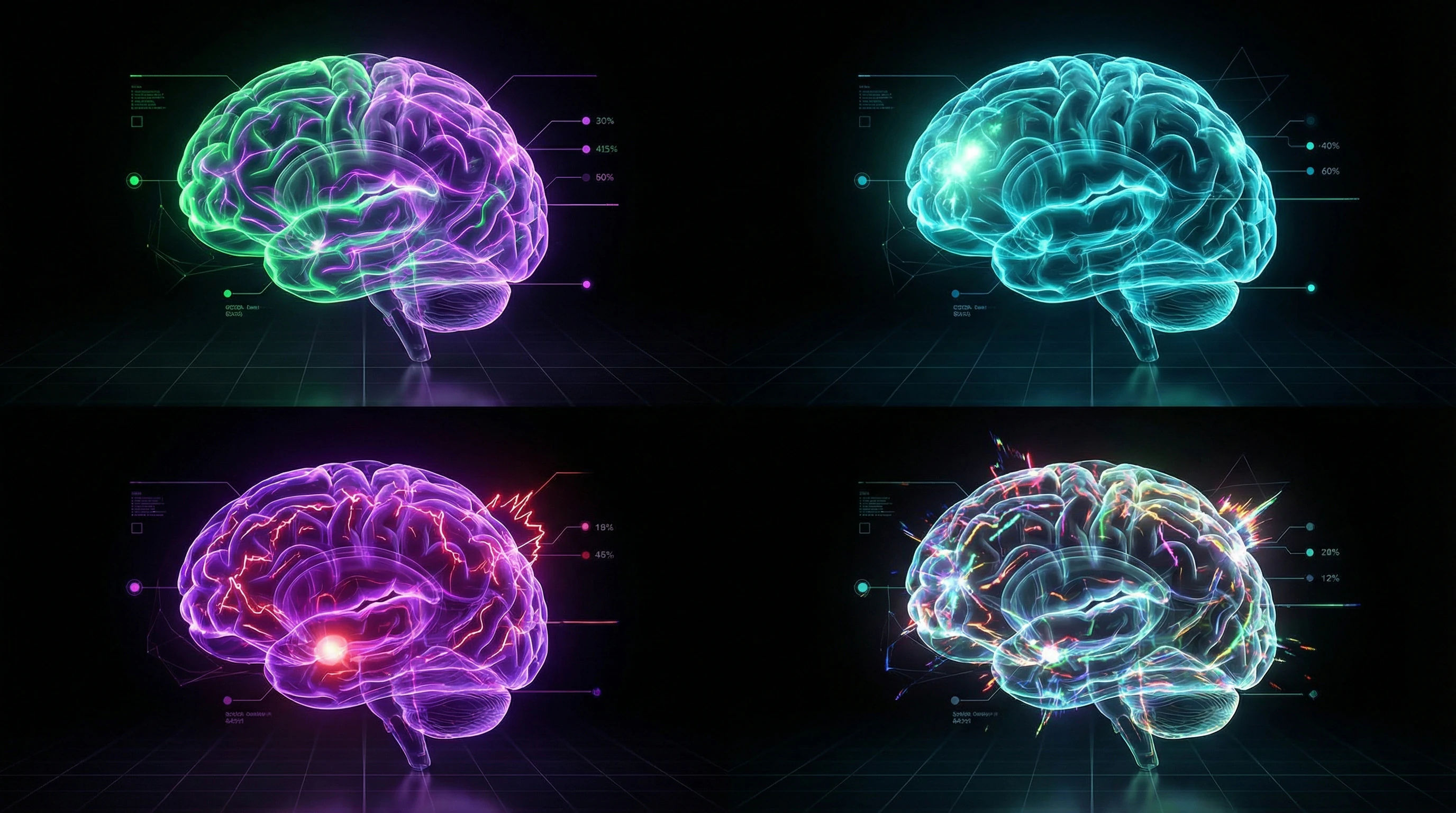
Neurobiological patterns of four attachment styles with visualization of brain structure activity
Visualization of differences in prefrontal cortex, amygdala, and emotional regulation system activation in secure, avoidant, anxious, and disorganized attachment

🔥Five Most Compelling Arguments for the Neurobiological Reality of Attachment Styles

🧬 Argument One: Evolutionary Adaptiveness of Attachment Behavior

Bowlby argued that attachment behavior was a product of human evolution, citing evidence that primate infants also form attachments (S011). Proximity-seeking is an extension of the "fight or flight" mechanism, directed not only at distancing from threat but also at seeking a "safe haven" in the attachment figure (S009).

This dual function—danger avoidance and protection-seeking—has obvious adaptive value for the survival of helpless mammalian infants. The mechanism is built into the nervous system, not learned. More details in the Scientific Databases section.

🧪 Argument Two: Reproducibility of Patterns Under Laboratory Conditions

Ainsworth's "Strange Situation" procedure allows systematic observation and classification of attachment behavior under standardized conditions (S011). The methodology has been replicated in numerous studies and cultures, demonstrating the universality of basic patterns.

Critics point to cultural limitations, but the very possibility of systematic classification of infant behavior in stressful separation and reunion situations indicates the existence of stable behavioral patterns, not methodological artifacts.

  1. Standardized separation and reunion procedure
  2. Classification of behavior into 3–4 categories
  3. Replication of results across different populations
  4. Predictability of infant responses

🔬 Argument Three: Differences in Neural Activation Between Attachment Styles

Neuroimaging data show that affective evaluation is reduced in avoidantly attached individuals but elevated in anxiously attached individuals (S010). These basic mechanisms are modulated by voluntary processes of cognitive control involving the medial prefrontal cortex (mPFC), superior temporal sulcus (STS), and temporoparietal junction (TPJ).

Differences in brain activation patterns provide neurobiological justification for behavioral differences between attachment styles—this is not merely a description of behavior, but its neural correlate.

🧠 Argument Four: Formation of Internal Working Models Through Repetition

Repeated interactions with attachment figures induce the formation of differential cognitive schemas—internal working models—for representing self and others (S010). These models function as neural templates, automatically activated in social situations.

Brain neuroplasticity during critical developmental periods means that repeated interaction patterns literally shape the structure and function of neural networks responsible for social cognition and emotional regulation. This is not a metaphor—it is physical reformatting of synaptic connections.

📊 Argument Five: Predictive Validity for Adult Relationships

In the 1980s, attachment theory was extended to adult relationships, making it applicable beyond early childhood (S011). Research shows correlations between attachment styles measured in childhood and patterns of romantic relationships in adulthood.

While these correlations are not perfect and subject to multiple influences, the very fact of predictive validity across decades of life suggests that early attachment patterns leave a lasting neurobiological trace. This is not coincidence—it is evidence of long-term reformatting of the nervous system.

The connection between childhood attachment and adult relationships is revealed in the neurobiology of breakups and mechanisms of long-term relationships, where the same neural systems are activated at critical moments.

🔬Evidence Base: What Brain Research Actually Shows About Different Attachment Styles

🧪 Neuroimaging of Affective Evaluation: The Amygdala and Emotional Reactivity

Neuroimaging studies have revealed differences in amygdala activation — a key structure for processing emotionally significant stimuli — among people with different attachment styles. (S010) shows: affective evaluation is reduced in avoidantly attached individuals, but heightened in anxiously attached individuals.

People with anxious attachment demonstrate amygdala hyperactivation in response to social threats or rejection cues. Avoidantly attached individuals show suppressed reactivity — consistent with their strategy of emotional distancing. More details in the Space and Earth section.

Attachment Style Amygdala Activation Social Cue Interpretation
Secure Modulated, appropriate Flexible, contextual
Anxious Hyperactivation Threat-biased
Avoidant Suppressed Minimization of emotional significance

These automatic mechanisms are modulated by more complex cognitive control processes involving the medial prefrontal cortex, superior temporal sulcus, and temporoparietal junction (S010). The balance between automatic emotional reactivity and voluntary cognitive regulation explains why people with different attachment styles interpret the same social situations differently.

🧠 Prefrontal Cortex and Cognitive Control: Data Still Limited, But Promising

Data on cognitive control suggest possible enhancement of mental state representations associated with attachment insecurity, particularly anxiety (S010). People with insecure attachment demonstrate increased activity in brain regions associated with mentalization — the ability to represent others' mental states.

The paradox: this heightened activity reflects not improved social competence, but hyperactive, anxious scanning of the social environment for rejection threats.

Research on the neurobiological foundations of attachment orientations remains sparse (S010). There is a lack of a cohesive biological narrative that explains the psychological forces shaping attachment behavior at the neurobiological level (S009).

📊 Emotional Regulation Systems: How the Brain Learns to Cope with Stress

Insecure attachment style emerges when attachment figures are repeatedly perceived as unresponsive or inconsistent in their reactions during times of need and stress (S010). These repeated experiences shape the neural systems responsible for stress and emotion regulation.

Secure Attachment
The infant learns that stress can be regulated through turning to the caregiver. Effective neural pathways form for coping with stress through social support.
Avoidant Attachment
The infant learns to suppress emotional responses and rely on self-soothing. Result: chronic emotion suppression and reduced ability to seek help.
Anxious Attachment
The infant develops hyperactivated stress systems that constantly scan the environment for threats and amplify distress signals in attempts to obtain inconsistent support.

🔁 Critical Developmental Period: When These Patterns Actually Form

Secure attachments form when caregivers are sensitive and responsive in social interactions and consistently available, especially between six months and two years of age (S011). This period coincides with critical phases of brain development when neuroplasticity is maximal.

Attachment characteristics are closely linked to fundamental aspects of mammalian life — pregnancy, birth, lactation, and infant brain development (S009). This suggests that attachment systems evolved in close connection with other biological systems ensuring offspring survival and development.

Neuroplasticity doesn't disappear after the critical period. The brain retains capacity for change throughout life, though changes become more difficult and require more intensive interventions.

This opens possibilities for reformatting attachment patterns in adulthood, though the mechanisms of such reformatting require further study.

Neural pathways of stress regulation in secure and insecure attachment
Comparison of hypothalamic-pituitary-adrenal axis activation and prefrontal regulatory systems when encountering stressors in people with different attachment styles

🧬Mechanisms of Causality: What Exactly in Childhood Experience Reprograms the Brain — and How to Separate Cause from Correlation

🔁 From Repetition to Consolidation: How Stable Neural Patterns Form

The key mechanism in forming attachment styles is repetition. Repeated interactions with attachment figures induce the formation of differential cognitive schemas (S010). Neurobiologically: each interaction activates specific neural pathways, repeated activation leads to their strengthening through long-term potentiation and structural changes in synaptic connections.

Three basic scenarios:

  • Responsive caregiver → stress → seeking help → relief → security (consolidation of trust pathway)
  • Inconsistent caregiver → stress → uncertainty → amplified distress signals → temporary relief → anxiety (unstable loop)
  • Rejecting caregiver → stress → emotion suppression → self-soothing → avoidance of closeness (consolidation of detachment pathway)

⚙️ The Role of Temperament: Innate Differences versus Environmental Influences

A critical issue in attachment theory is the role of innate temperament. Critics point to the limitations of discrete attachment patterns and the influence of temperament on behavior formation (S011). Some infants are born with more reactive nervous systems, higher baseline anxiety levels, and lower capacity for self-regulation.

These innate differences influence bidirectionally: the infant's behavior (making them more or less "difficult" for the caregiver) and the infant's own interpretation of caregiver behavior. More details in the Physics and Meta-Analysis section.

Scenario Temperament Caregiver Likely Outcome
Compatibility High-reactive Sensitive Secure attachment
Mismatch High-reactive Inconsistent Anxious attachment
Masking Low-reactive Rejecting Avoidant attachment (may appear as "independence")

Current understanding suggests gene-environment interaction: temperament creates predisposition, quality of care determines realization. However, separating the contributions of temperament and experience in real-world conditions is extremely difficult — this limits causal conclusions.

🧪 The Problem of Causal Direction: What Comes First — Child Behavior or Parental Response

Michael Lamb and colleagues (mid-1980s) demonstrated: diagnoses of secure or insecure attachment in procedures like the "Strange Situation" primarily reflect what was happening in the social environment during the procedure, external to both child and caregiver (S011). This challenges the interpretation of attachment styles as stable internal characteristics.

Observed behavioral patterns may reflect not the child's "internal working model" but the current state of the relationship and assessment context. A child demonstrates different patterns with different caregivers or in different situations.

This doesn't refute attachment theory, but requires nuanced understanding: stability of attachment patterns is context-dependent, not absolute. Causality may be cyclical: child behavior shapes caregiver response, which in turn shapes child behavior.

🔬 Confounders: Culture, Socioeconomic Status, and Evolutionary Assumptions

Bowlby did not distinguish between species with cooperative breeding — readily passing newborns between adults (marmosets, tamarins) — and species with jealous one-on-one rearing (gorillas, chimpanzees) (S011). He assumed that one-on-one attachment behavior was adaptive in all primates, including human hunter-gatherers.

Without ethnographic evidence, Bowlby portrayed the evolutionary environment as one where the infant was always in immediate proximity to the mother — a picture he mistakenly applied to contemporary hunter-gatherer societies (S011). This cultural limitation means: attachment patterns observed in Western middle-class societies may not be universal or optimal for all cultural contexts.

Confounder 1: Cultural caregiving models
In some cultures, infants are raised by multiple caregivers (alloparenting), which may create different attachment patterns than the dyadic models of Western psychology.
Confounder 2: Socioeconomic stress
Poverty, housing instability, lack of healthcare access affect caregiver behavior independent of their intentions or personality traits.
Confounder 3: Trauma and historical context
A caregiver who has experienced violence or discrimination may demonstrate patterns interpreted as "insecure attachment" but which are adaptive responses to real threats.

Separating cause from correlation requires not only longitudinal studies but also recognition that neurobiological mechanisms operate within social and economic systems that themselves shape caregiving possibilities.

⚠️Conflicts in the Evidence: Where Sources Diverge and Why It Matters for Understanding Reality

🧩 Discrete Categories vs. Continuum: How Many Attachment Styles Actually Exist

Researchers disagree on whether adult attachment styles are three to five separate types or points on a single spectrum of emotional security (S010). This isn't just a terminological dispute—the answer determines how we diagnose and treat.

If attachment is discrete, it makes sense to develop specific protocols for each type. If it's a continuum, the work reduces to strengthening security regardless of category. Current data doesn't resolve this conflict, reflecting a broader problem in psychology: are psychological constructs categorical or dimensional? More in the Epistemology section.

Model Logic Practical Implication
Discrete categories Three to five distinct types Diagnose type → specific intervention
Continuum Spectrum of security Measure degree → universal strengthening

🔎 Stability vs. Changeability: How Fixed Are Attachment Styles

Attachment theory posits that early patterns form stable internal working models for life. Reality is more complex: people change attachment styles in response to significant relationships, therapy, or critical events.

If styles change, how "hardwired" are they in neural architecture? Most likely, early experience creates predisposition, not rigid determination. Neuroplasticity allows rewriting even deep patterns, but requires significant effort and favorable conditions.

Early experience isn't a life sentence—it's a default setting. The brain can relearn, but it doesn't happen automatically.

📊 Universality vs. Cultural Specificity: Does the Theory Work Beyond WEIRD Populations

Most attachment research is conducted on Western, Educated, Industrialized, Rich, and Democratic (WEIRD) populations, predominantly white middle-class families (S011). Critics point out: the theory may be an artifact of cultural context, not a universal developmental law.

In collectivist cultures, attachment to mother may be less central than attachment to extended family or community. Styles classified as "anxious" in the West may be adaptive in other contexts. This doesn't mean the theory is wrong, but points to its cultural conditioning.

WEIRD bias
Most psychological research relies on narrow demographics, which can distort representations of "normality" and universality.
Context-dependent adaptiveness
An attachment style maladaptive in one culture may be functional in another—depending on social structures and economic conditions.

🧠 Neurobiological Reductionism vs. Social Constructivism

The fundamental conflict: is attachment a biological fact (encoded in synapses and neurotransmitters) or a social construction (a category we created to describe relationships)?

Neurobiological studies show real differences in brain activation (S001), but this doesn't prove causality. Perhaps social experience shapes the brain, not the other way around. Or both processes are reciprocal: brain and society constantly influence each other. Current methods can't separate these influences.

A neurobiological signal is description, not explanation. Finding a difference in the brain doesn't mean finding the cause of behavior.

⚡ Why These Conflicts Matter

When sources diverge, it's not a failure of science—it's its honesty. Conflicts point to the boundaries of current knowledge and to places where new methods or data are needed.

  • If you're choosing therapy based on attachment theory, know: its universality isn't proven, and mechanisms of change remain contested.
  • If you're reading a study, check: what population was it conducted on and can the conclusion extend to you.
  • If you hear a categorical claim about attachment being "hardwired," remember: that's simplification, not fact.

Reality is more complex than any theory. Good science doesn't hide this complexity—it maps it.

⚔️

Counter-Position Analysis

Critical Review

⚖️ Critical Counterpoint

The neurobiological approach to attachment provides a powerful tool for understanding behavior, but contains methodological and conceptual blind spots. Here is where the article's argumentation may be vulnerable.

Correlation Instead of Causality in Neurobiology

The article emphasizes neurobiological correlates of attachment styles, but correlation does not equal causality. Differences in brain activation may be a consequence of behavioral patterns, not their cause. Neuroplasticity suggests constant brain changes under the influence of experience, which calls into question the idea of rigidly programmed styles.

Situationality Instead of Stable Traits

Research by Michael Lamb has shown that attachment diagnoses reflect situational context rather than stable characteristics of the child. Attachment style can change radically depending on the partner, life circumstances, and even time of day. The notion of one's style as a fixed characteristic may be an oversimplification that masks the flexibility of adaptive behavior.

Western-Centricity of Theory and Methods

Attachment theory and the Strange Situation procedure were developed in a Western context and may not reflect parenting norms in collectivist cultures, where multiple caregivers are the norm. It is possible that neurobiological mechanisms of attachment in non-Western cultures work differently, and we simply don't know this, relying predominantly on Western sources.

Absence of Neurobiological Data on Therapeutic Changes

The article claims that attachment styles can be changed, but acknowledges the absence of convincing neurobiological data on changes during therapy. This means that claims about changeability are based more on psychological observations than on evidence of brain restructuring. Perhaps therapy only teaches compensatory strategies without changing deep neural patterns.

Underestimation of Genetic Factors

Twin studies show that heritability of personality traits associated with attachment (anxiety, avoidance) can reach 30–50%. This means that a significant portion of variability in attachment styles may be determined by genes, not only by experience of interaction with caregivers. Attachment theory may overestimate the role of environment in shaping behavior.

Knowledge Access Protocol

FAQ

Frequently Asked Questions

Attachment styles are stable patterns of emotional and behavioral responses in close relationships, formed in early childhood based on interactions with primary caregivers. Attachment theory, developed by John Bowlby, posits that infants are evolutionarily programmed to form close bonds with at least one primary caregiver for survival and healthy socio-emotional development (S011). Repeated caregiver responses to a child's attempts to seek proximity and support shape internal working models—cognitive schemas for representing self and others—which then influence relationship behavior in adulthood (S010). When caregivers are sensitive, responsive, and consistently available (especially between 6 months and 2 years of age), secure attachment forms. When caregivers are unresponsive, inconsistent, or rejecting, insecure attachment develops—either anxious or avoidant (S011, S010).
There are four main types: secure, avoidant, anxious, and disorganized attachment. Secure attachment is characterized by comfort with intimacy, trust in partners, and effective emotional regulation. Avoidant attachment manifests as discomfort with closeness, suppression of emotions, and a preference for autonomy. Anxious attachment is associated with heightened need for proximity, fear of rejection, and intensification of attempts to obtain support despite partner inconsistency (S010). Disorganized attachment is characterized by mixed, confused, or wary behavior toward caregivers, especially in stressful situations, and often arises from early trauma (S009). Mary Ainsworth developed the Strange Situation laboratory procedure to identify these patterns in infants (S011). However, some researchers propose viewing attachment styles not as discrete categories but as a continuum of emotional security (S010).
Attachment styles correlate with differences in activation of key brain networks responsible for emotional appraisal and cognitive control. Neuroimaging data show that people with avoidant attachment have reduced affective evaluation, while those with anxious attachment show enhanced affective evaluation (S010). Basic mechanisms of affective evaluation are modulated by more complex cognitive control processes, including mental state attribution and emotion regulation, involving the medial prefrontal cortex (mPFC), superior temporal sulcus (STS), and temporoparietal junction (TPJ) (S010). Although data on cognitive control remain limited, they suggest possible enhancement of mental state representations associated with insecure attachment, particularly anxious attachment (S010). It's important to understand that the neurobiological foundations of attachment are fragmentarily studied: there is still no cohesive biological narrative explaining the psychological forces shaping attachment behavior and the consolidation of patterns at the neurobiological level (S009).
No, that's an oversimplification. While early experience is critically important, attachment styles are not absolutely fixed. Attachment theory was extended to adult relationships in the 1980s, making it applicable beyond early childhood (S011). Repeated interactions with caregivers form cognitive schemas that influence relationship behavior later in life (S010), but these schemas can be modified through new significant relationships, therapy, or changing life circumstances. Research by Michael Lamb and colleagues in the mid-1980s showed that diagnoses of secure or insecure attachment obtained through procedures like the Strange Situation primarily reflect what was happening in the social environment during the procedure, not just the child's internal characteristics (S011). This points to the situational nature and plasticity of attachment. Additionally, critics note the role of temperament in shaping attachment behavior, which also suggests variability (S011).
Yes, change is possible, but it requires conscious work and often professional support. Since attachment styles are based on internal working models formed in childhood, their modification involves rethinking representations of self and others (S010). Attachment-based therapy approaches aim to create corrective emotional experiences within safe therapeutic relationships. New significant relationships with securely attached partners can also facilitate change. Brain neuroplasticity allows for the formation of new neural pathways related to emotional regulation and social interaction, though this requires time and repetition. It's important to understand that change doesn't mean complete erasure of old patterns—rather, the development of new, more adaptive relationship strategies. Data on neurobiological changes with attachment therapy remain limited, indicating the need for further research (S009, S010).
Avoidant attachment manifests as discomfort with closeness, suppression of emotions, and preference for autonomy. People with avoidant style tend to distance themselves from partners in stressful situations, minimize expression of needs, and avoid dependence on others (S010). Neurobiologically, this is associated with reduced affective evaluation—lower emotional reactivity to social stimuli (S010). Repeated experiences of caregiver rejection in childhood lead to formation of a negative internal model of others (they are unreliable) and a compensatory strategy of self-sufficiency. In relationships, this can manifest as emotional coldness, difficulty expressing vulnerability, and conflict avoidance through withdrawal or detachment. Partners of avoidant individuals often feel rejected or emotionally deprived. It's important to understand that avoidance is a defensive mechanism formed to minimize the pain of rejection, not a conscious desire to cause harm.
Anxious attachment is characterized by heightened need for closeness, fear of rejection, and intensification of attempts to obtain support despite partner inconsistency. People with anxious style tend toward hyperactivation of the attachment system—amplified seeking of proximity and reassurance (S010). Neurobiologically, this is associated with enhanced affective evaluation—heightened emotional reactivity to social threats (S010). Repeated experiences of inconsistent caregiver responses in childhood form a negative internal model of self (I'm not good enough) and a positive model of others (they can help, but I need to try harder). This leads to increased feelings of helplessness, vulnerability, and doubts about self-worth (S010). In relationships, this can manifest as clinginess, jealousy, constant need for love confirmation, and fear of abandonment. Partners of anxious individuals may feel smothered or emotionally exhausted. Anxious attachment is not weakness, but an adaptive strategy formed under conditions of unpredictable caregiver availability.
Disorganized attachment is the most problematic style, characterized by mixed, confused, or wary behavior toward caregivers, especially in stressful situations. It often arises from early trauma, abuse, or extremely unpredictable caregiver behavior (S009). The child faces a paradoxical situation: the source of safety (parent) is simultaneously a source of threat. This leads to absence of a consistent stress regulation strategy and formation of chaotic behavioral patterns. In adulthood, disorganized attachment is associated with increased risk of mental disorders, difficulties in emotion regulation, relationship problems, and tendency toward dissociative reactions. The neurobiological mechanisms of disorganized attachment are the least studied, but disrupted integration between threat and attachment systems is suspected. This is the most difficult style to treat therapeutically, requiring specialized approaches that account for traumatic experience.
The universality of attachment theory is contested. Bowlby based his theory on evolutionary biology, arguing that attachment behavior is adaptive for all primates that socialize in an individualistic manner, like gorillas and chimpanzees (S011). However, he mistakenly failed to distinguish between cooperatively breeding species (marmosets, tamarins), where newborns are readily passed from adult to adult, and species with jealously individualistic rearing (S011). Bowlby assumed that the evolutionary environment of early human adaptation was one where the infant was always in immediate proximity to the mother, "carried on her back," and mistakenly believed this also represented modern hunter-gatherer societies (S011). Ethnographic data show that in many cultures, child-rearing is collective, involving multiple caregivers, not just the mother. Critics point out that the theory overemphasizes the role of one primary caregiver and underestimates cultural diversity in caregiving practices. The Strange Situation procedure may also be culturally specific, reflecting Western behavioral norms.
The role of temperament is one of the key questions challenging attachment theory. Critics note that the theory underestimates innate individual differences in emotional reactivity, self-regulation, and social orientation (S011). Temperament consists of biologically based patterns of behavior and emotional responses manifest from birth. Some infants are naturally more anxious, irritable, or conversely calm and easily soothed. These differences can influence how a child responds to caregivers and how caregivers respond to the child, creating a feedback loop. Research shows that temperament can moderate the influence of parental behavior on attachment formation: for example, highly reactive children may be more vulnerable to inconsistent parenting. However, attachment theory maintains that the quality of interaction with caregivers remains the key factor shaping internal working models. The question of the relationship between temperament and experience in forming attachment remains open and requires further research integrating genetics, neurobiology, and observational data.
Proximity-seeking behavior is an innate behavioral system directed toward maintaining or achieving closeness to attachment figures, typically parents. For infants and toddlers, the "set-goal" of this hypothetical behavioral system is to remain near caregivers (S011). Attachment theory posits that infants are evolutionarily programmed to form close bonds with at least one primary caregiver to ensure survival (S011). Evidence shows that proximity-seeking can be viewed as an extension of fight-or-flight behavior, aimed not only at distancing from threat but also at moving toward a "safe haven" in the form of an attachment figure (S009). This is an adaptive mechanism: in the evolutionary environment, infants who stayed close to caregivers had greater chances of survival, avoiding predators and other dangers. As children mature, they use attachment figures as a "secure base" for exploring the world and returning for comfort (S011). However, critics point out that Bowlby overestimated the necessity of constant proximity to one caregiver, ignoring cooperative child-rearing models in humans (S011).
The simplest way is to complete a validated questionnaire such as the Experiences in Close Relationships (ECR) or Attachment Style Questionnaire (ASQ). These instruments assess two primary dimensions: anxiety (fear of rejection, need for closeness) and avoidance (discomfort with intimacy, preference for autonomy). High anxiety + low avoidance = anxious attachment; low anxiety + high avoidance = avoidant attachment; both low = secure attachment; both high = disorganized/fearful attachment. However, it's important to understand the limitations of self-diagnosis: attachment styles can vary depending on partner and context (S011), and questionnaires reflect self-perception, which may be distorted by defense mechanisms. For more accurate assessment, consultation with a psychologist specializing in attachment theory is recommended. Quick self-check: ask yourself how you react to stress in relationships—do you seek closeness (anxious), distance yourself (avoidant), or can you openly discuss the issue (secure)? If reactions are chaotic and unpredictable, disorganized attachment is possible.
Deymond Laplasa
Deymond Laplasa
Cognitive Security Researcher

Author of the Cognitive Immunology Hub project. Researches mechanisms of disinformation, pseudoscience, and cognitive biases. All materials are based on peer-reviewed sources.

★★★★★
Author Profile
Deymond Laplasa
Deymond Laplasa
Cognitive Security Researcher

Author of the Cognitive Immunology Hub project. Researches mechanisms of disinformation, pseudoscience, and cognitive biases. All materials are based on peer-reviewed sources.

★★★★★
Author Profile
// SOURCES
[01] Developmental Interpersonal Neurobiology, Attachment Style and Mindsight[02] Attachment as Related to Mother-Infant Interaction[03] Postpartum depression: Etiology, treatment and consequences for maternal care[04] A Multilevel Perspective on the Development of Borderline Personality Disorder[05] ATTACHMENT THEORY AND PSYCHOANALYSIS: <i>A RAPPROCHEMENT</i>[06] On the role of oxytocin in borderline personality disorder[07] Mislocalization of syntaxin‐1 and impaired neurite growth observed in a human <scp>iPSC</scp> model for <i><scp>STXBP</scp>1</i>‐related epileptic encephalopathy[08] Functional Neuroimaging of Adult-to-Adult Romantic Attachment Separation, Rejection, and Loss: A Systematic Review

💬Comments(0)

💭

No comments yet