What exactly Lamarck claimed—and why his idea seemed logical before genetics emerged
Classical Lamarckism is a theory according to which organisms can pass to offspring traits acquired during life under environmental influence or through use of organs. A giraffe reaches for high branches—the neck lengthens—the lengthened neck is inherited. More details in the section Theory of Relativity.
In the early 19th century, when hereditary mechanisms were unknown, this idea looked like reasonable extrapolation: offspring do resemble parents, environment does change organisms, why wouldn't changes become fixed?
Lamarckism is intuitively appealing because it matches our experience of learning and adaptation. We see how training changes the body, how stress changes behavior, and the brain automatically extrapolates: "If I changed, my children will inherit this change."
⚠️ Why Lamarckism was rejected: Weismann's experiments and the triumph of Mendelian genetics
August Weismann in the 1880s cut off mouse tails for 22 generations—tails in offspring didn't shorten. This was a blow to the idea of inheriting mutilations, but not a definitive refutation.
The real collapse came with the rediscovery of Mendel's laws in 1900 and the formation of chromosomal theory of heredity. It became clear: discrete factors (genes) are inherited, localized in chromosomes of germ cells, and somatic changes don't affect these factors.
- Central dogma of molecular biology
- DNA → RNA → protein. Information flows in one direction, there's no feedback from proteins to DNA. This cemented the principle: acquired traits are not inherited.
🧩 Cognitive trap: teleological thinking
This is an example of attributing purpose and direction to processes that are actually blind. Evolution doesn't "strive" to adapt organisms, it selects random mutations.
But randomness is uncomfortable for narrative, while directed change is understandable and comforting. Hence the popularity of beautiful stories about the past that often turn out to be science fiction.
What is epigenetics — and why it doesn't bring back Lamarckism but adds a new layer of heredity
Epigenetics studies heritable changes in gene expression that are not linked to changes in DNA sequence (S001). The term was introduced by Conrad Waddington in 1942, though ideas about "supra-genetic" regulation were already proposed by Nikolai Koltsov in the 1920s (S003).
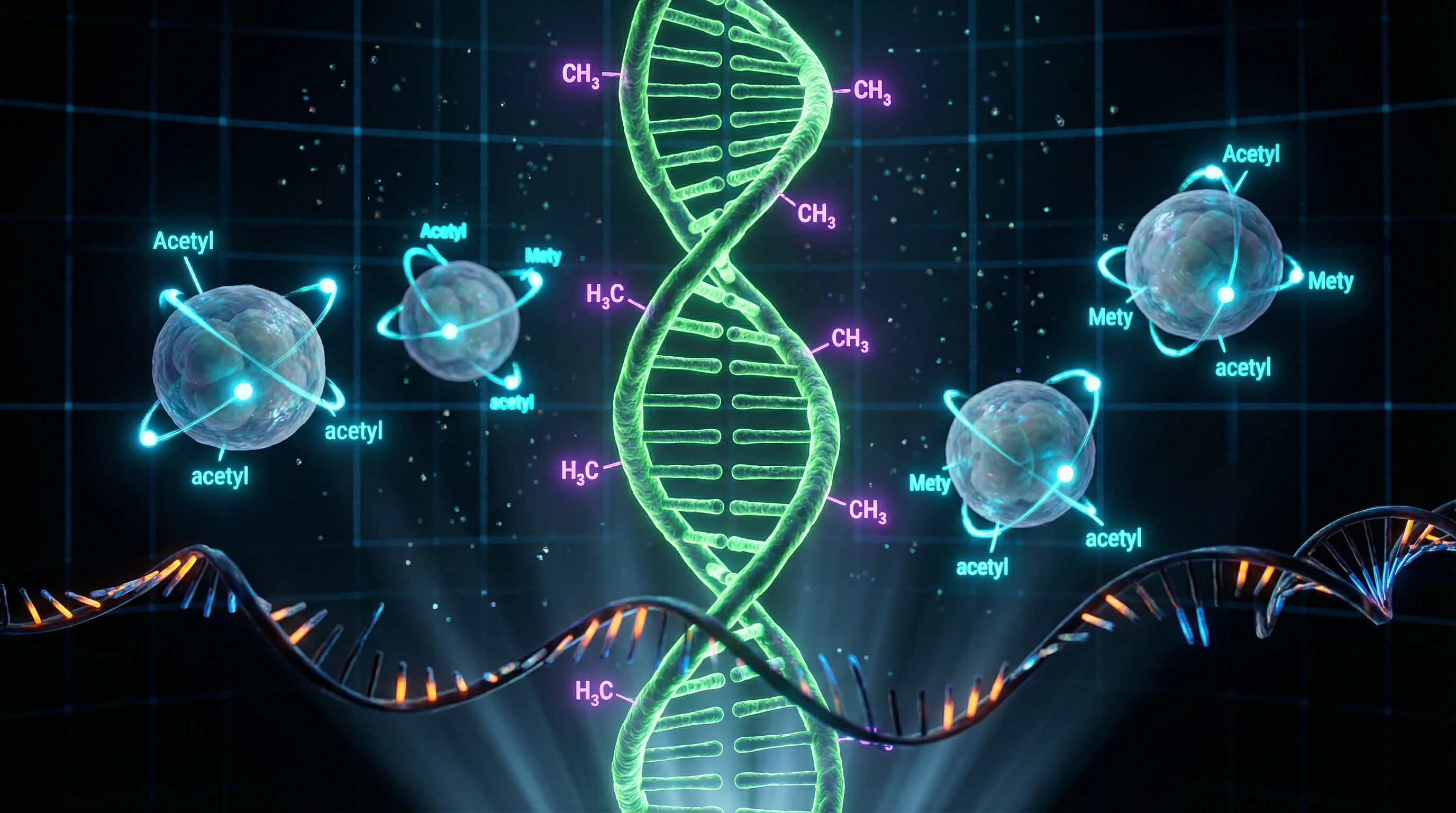
Three key mechanisms: DNA methylation (attachment of methyl groups to cytosine, usually suppressing transcription), histone modifications (proteins around which DNA is wrapped — acetylation, methylation, phosphorylation alter gene accessibility), non-coding RNAs (microRNAs, long non-coding RNAs that regulate translation and mRNA stability) (S001, S005).
| Mechanism | What happens | Stability across generations |
|---|---|---|
| DNA methylation | Methyl groups block gene promoters | Partial (imprinted genes, rare exceptions) |
| Histone modifications | DNA packaging changes gene access | Low (erased during reprogramming) |
| Small RNAs | Block translation or degrade mRNA | Moderate (detected in gametes, experimental data) |
🧬 DNA methylation: a chemical "silencer" on genes that sometimes passes through meiosis
Cytosine methylation in CpG dinucleotides is the most studied epigenetic mechanism. Methyl groups are attached by DNA methyltransferase enzymes (DNMT), methylated promoters are usually inactive. More details in the Thermodynamics section.
Most epigenetic marks are erased in germ cells and during early embryogenesis — this is epigenetic reprogramming, which provides a "clean slate" for the new organism (S001).
But there are exceptions. Imprinted genes (about 100 in humans) retain methylation because it determines which copy of the gene — maternal or paternal — will be active. And rare data suggest that environmentally induced methylation can partially persist across generations (S005).
🔁 Histone modifications and chromatin remodeling: how DNA packaging regulates gene access
DNA in the nucleus is wrapped around histones, forming nucleosomes. Tightly packed chromatin (heterochromatin) is transcriptionally inactive, loose chromatin (euchromatin) is active.
- Histone acetylation usually activates genes — acetyl groups neutralize the positive charge of histones, weakening their bond with DNA
- Methylation can activate or suppress depending on position
- These marks are dynamic, changing in response to stress, nutrition, toxins, and affecting phenotype without altering genotype (S001, S005)
🧾 Small RNAs: mediators between environment and genome, capable of transmission through gametes
MicroRNAs (miRNA) and other small non-coding RNAs bind to mRNA and block translation or cause degradation. They regulate gene expression post-transcriptionally.
Critical fact: small RNAs have been detected in sperm and egg cells. Experimental data (mainly in model organisms — nematodes, mice) show that RNAs altered in response to stress or diet can be transmitted to offspring and affect their phenotype (S001, S003). This is one of the most intriguing candidates for the mechanism of transgenerational epigenetic inheritance.
- Epigenetic reprogramming
- Erasure of most epigenetic marks in germ cells and early embryogenesis. Ensures offspring independence from parental epigenetic state — this is the boundary between epigenetics and Lamarckism.
- Imprinting
- Retention of methylation on specific genes depending on parental origin. The only known mechanism where an epigenetic mark is stable across generations by biological design.
- Transgenerational inheritance
- Transmission of epigenetic changes to offspring. In humans — rare and weakly documented; in model organisms — reproducible, but usually fades within 2–3 generations.
Steelman Arguments: Five Strongest Cases for Epigenetic Inheritance of Acquired Traits
Before examining limitations, we must honestly present the most compelling evidence that environment can influence heredity through epigenetic mechanisms. This doesn't mean Lamarckism is "vindicated," but it shows the picture is more complex than "genes determine everything." More details in the Electromagnetism section.
🔬 Dutch Hunger Winter 1944-45: Epidemiological Data on Transgenerational Effects of Famine
During the German blockade of the Netherlands in winter 1944-45, the population experienced acute famine (400-800 kcal/day). Children conceived or in utero during this period had increased risk of obesity, type 2 diabetes, and cardiovascular disease in adulthood.
Effects were also observed in their children (grandchildren of starved mothers), even though they experienced no malnutrition. Mechanism: altered methylation of metabolism-related genes (e.g., IGF2, insulin-like growth factor 2) is suspected. This is a classic example of "fetal programming"—environment during a critical developmental period leaves an epigenetic "scar" that affects health decades later and possibly transmits further.
Environment during critical developmental periods can leave an epigenetic imprint visible not only in an individual's life, but in their descendants' health.
🧬 Mouse Experiments: Inheritance of Stress-Associated Odor Response
Dias and Ressler study (2014): mice were trained to fear the scent of acetophenone by pairing it with electric shock. Offspring of these mice (F1 and F2) showed heightened sensitivity to this odor, even if they never encountered it and received no training.
Offspring had enlarged olfactory bulb regions responsible for acetophenone detection, and altered methylation of the Olfr151 receptor gene in fathers' sperm (S003). This directly indicates that an acquired association (odor-fear) can transmit through epigenetic changes in germ cells.
- Critical Note
- Effect is small, reproducibility is questionable, mechanism not fully clear. This doesn't mean the result is false, but requires caution when extrapolating to humans.
📊 Plant Studies: Epigenetic Variation as an Adaptation Tool
In plants, epigenetic inheritance is better studied than in animals because they lack strict separation between germline and somatic lineages—meristems (tissues giving rise to gametes) form late, and somatic epigenetic changes can enter them.
Classic example: epialleles in flax (Linum usitatissimum), where methylation affects plant height, seed size, stress resistance, and these traits inherit stably across multiple generations without DNA sequence changes (S005). This is used in breeding: epigenetic variation can be a source of "hidden" heritability that can be exploited to create new varieties.
🧠 Data on Inheritance of Behavioral and Psychiatric Phenotypes After Stress
Rodent studies show that chronic stress, social isolation, maternal deprivation in parents can lead to behavioral changes in offspring: increased anxiety, depression-like behavior, impaired social interaction.
Mechanisms include altered methylation of glucocorticoid receptor genes (NR3C1), BDNF (brain-derived neurotrophic factor), hypothalamic-pituitary-adrenal axis genes (S004). In humans there's correlational data: children of Holocaust or genocide survivors have elevated risk of PTSD and affective disorders, and show epigenetic changes in stress-response genes.
Here it's critically important to separate biological inheritance from social transmission of trauma (upbringing, cultural memory). Correlation of epigenetic marks with psychiatric phenotypes doesn't prove marks are the cause rather than consequence or byproduct.
🔁 Reversibility of Epigenetic Marks: Evidence of Their Functional Role
If epigenetic changes are merely side effects, their reversibility shouldn't affect phenotype. But experiments show otherwise: administration of DNA methyltransferase or histone deacetylase inhibitors can reverse phenotypic effects caused by parental stress or diet (S001).
This means epigenetic marks don't just correlate with changes, but are causally linked to them. Some epigenetic marks can be "reset" by dietary interventions (e.g., adding methyl group donors—folate, choline), opening possibilities for epigenetic therapy.
| Argument | Evidence Strength | Main Limitation |
|---|---|---|
| Hunger Winter 1944-45 | High (population data) | Cannot exclude social factors and postnatal effects |
| Mice + odor + stress | Medium (controlled experiment) | Small effect, reproducibility questionable |
| Plants (flax) | High (stable inheritance) | Plant biology differs from animals; no strict lineage separation |
| Behavior after stress | Medium (correlational data) | Difficult to separate biology from social transmission |
| Mark reversibility | High (causal relationship) | Shown in lab conditions; extrapolation to humans requires caution |
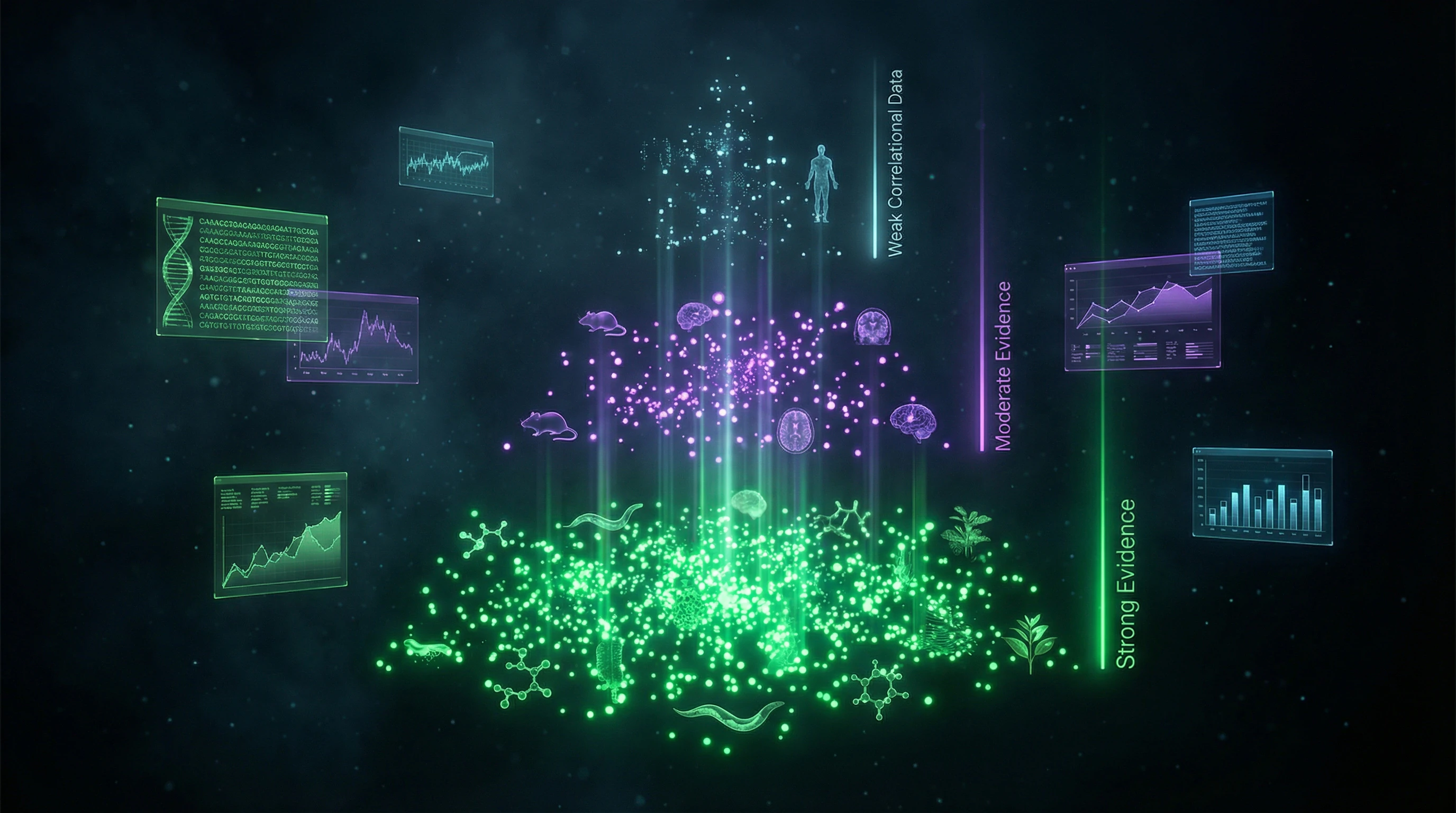
Evidence Base: What Systematic Reviews and Meta-Analyses Show — and Where Hard Data Ends
Moving from individual experiments to systematic review, the picture becomes less clear-cut. Most convincing data comes from model organisms (C. elegans nematodes, fruit flies, mice, plants), where epigenetic inheritance has been documented across multiple generations. More details in the Sources and Evidence section.
In humans, data is primarily correlational and epidemiological, making it difficult to establish causal relationships (S001).
📊 Transgenerational Inheritance in Model Organisms: Strong Data, Limited Extrapolation to Humans
In C. elegans, epigenetic inheritance of small RNAs can last up to 14 generations under constant selection and 3–5 generations without selection. In fruit flies, cases of inherited changes in gene expression through histone modifications have been described lasting 2–3 generations.
In mice, most effects are limited to F1–F2 (first–second generation offspring), rarely reaching F3 (S003). In mammals, epigenetic reprogramming in germ cells and early embryos is much more stringent than in invertebrates and plants, limiting transgenerational transmission (S001, S005).
| Organism | Inheritance Duration | Mechanism | Data Reliability |
|---|---|---|---|
| C. elegans | 14 generations (with selection); 3–5 (without) | Small RNAs | High (controlled conditions) |
| Fruit fly | 2–3 generations | Histone modifications | High |
| Mouse | F1–F2, rarely F3 | DNA methylation, RNA | Moderate (reprogramming) |
| Human | 1–2 generations (presumed) | Unclear | Low (correlations, confounders) |
🧬 Human Data: Correlations, Confounders, and the Causality Problem
Human studies face a fundamental methodological problem: controlled experiments are impossible. We cannot deliberately subject people to starvation or stress to study effects on offspring.
Transgenerational effects may be explained not by epigenetics, but by shared environment, social factors, genetic variants that weren't accounted for. Children of trauma survivors grow up in families with particular memory cultures, parenting styles, socioeconomic status — all confounders.
Epigenetic marks found in accessible tissues (blood, saliva) may not reflect brain or germ cell states. This is a critical gap: we're measuring the wrong thing.
🔬 The Reproducibility Problem: Replication Crisis in Epigenetic Research
Many high-profile epigenetics results haven't been reproduced by independent labs. The Dias–Ressler experiment on inherited fear of odor sparked skepticism: small effect size, questionable statistical power, unclear mechanism (S004).
Human studies often have small samples, multiple comparisons without correction, publication bias (negative results go unpublished).
- Small samples (n < 100) without prior power calculation
- Multiple comparisons without Bonferroni or FDR correction
- Publication bias: negative results stay in file drawers
- Lack of pre-registration of study protocols
- Inability to blind coding when working with epigenetic data
Systematic reviews indicate that for most claims about transgenerational epigenetic inheritance in humans, the evidence base is weak (GRADE evidence level 3–4) (S005).
The boundary between fact and myth runs here: model organisms show that epigenetic inheritance is possible. Human data shows it's probable, but not proven. These aren't the same thing.
Mechanisms and Boundaries: Why Epigenetic Inheritance Is Not "Lamarckism 2.0" but a Limited Phenomenon with Strict Constraints
Lamarck proposed directed and cumulative inheritance of any changes caused by exercise or environment. Epigenetics shows something different: what is inherited is not the changes themselves, but marks that influence gene expression. More details in the section Logical Fallacies.
Epigenetic inheritance is limited in time (usually 1–3 generations), reversible, non-cumulative, and does not create new genetic information (S001, S005).
🧬 Epigenetic Reprogramming: Why Most Marks Are Erased
In germ cells, global DNA demethylation occurs—erasing nearly all epigenetic marks. After fertilization, a second wave of reprogramming begins in the zygote and early embryo.
This is an evolutionarily conserved mechanism that ensures totipotency and prevents transmission of accumulated "junk" marks from somatic cells (S001). Only imprinted genes and some retrotransposons are protected from erasure.
- Transgenerational Transmission
- An epigenetic mark must either escape erasure (rare) or be restored in the next generation (requires a specific signal).
- Evolutionary Purpose
- The reprogramming mechanism prevents error accumulation and allows the embryo to start development with a "clean slate."
🔁 F1, F2, F3: Distinguishing Between Exposure and Inheritance
If a pregnant mouse (F0) is subjected to stress, three generations are simultaneously exposed to stress: the mouse itself, its embryo (F1), and the germ cells in the embryo that give rise to F2.
Effects in F1 and F2 may result from direct environmental exposure rather than epigenetic inheritance. Only effects in F3 (for females) or F2 (for males) are considered truly transgenerational (S003).
| Generation | Environmental Exposure | Inheritance Status |
|---|---|---|
| F0 (parent) | Direct | Not inheritance |
| F1 (offspring) | Direct (in utero) | May be direct exposure |
| F2 | No direct | Possibly epigenetic (males) |
| F3 | No direct | Truly transgenerational (females) |
Most mouse studies do not extend to F3, which calls into question the interpretation of results as genuine epigenetic inheritance.
⚙️ Epigenetics Does Not Create New Information
Epigenetic mechanisms do not change DNA sequence, do not create new genes, and do not explain the evolution of complex adaptations. They function as switches and regulators for genes already present in the genome.
If an organism lacks a gene encoding a specific protein, no amount of methylation will create that protein. Epigenetics explains differences between identical twins but not the origin of new traits in evolution (S001, S005).
Evolution requires mutations—random DNA changes selected by natural selection. Epigenetics complements but does not replace genetics.
- Epigenetics: modulates expression of existing genes
- Genetics: creates new information through mutations
- Natural selection: preserves adaptive changes
Cognitive Anatomy of the Myth: Which Thinking Errors Transform Epigenetics into "Scientific" Justification for Lamarckism
Epigenetics has become a victim of its own success: the term has escaped the boundaries of science and transformed into a cultural meme used to justify all sorts of ideas—from "inherited ancestral trauma" to "water memory." Let's examine the cognitive mechanisms that make this transformation possible. More details in the section Everyone Has Parasites.
🧩 Thesis Substitution: From "Some Epigenetic Marks Sometimes Transfer" to "Your Ancestors' Experiences Are Written in Your Genes"
Scientific statement: "Under certain conditions, some epigenetic modifications can partially persist through 1–2 generations and influence offspring phenotype" (S003, S004). Popular version: "Your grandparents' traumas are written in your DNA and determine your destiny."
This is classic thesis substitution: a limited, conditional, probabilistic phenomenon is transformed into an absolute, deterministic claim. Qualifications, conditions, and boundaries of applicability disappear.
The mechanism works simply: the listener hears "epigenetic inheritance" and the brain automatically fills in the gaps using ready-made narratives about "memory" and "recording." The word "inheritance" sounds like "information transfer," though in reality we're talking about preservation of chemical marks that erase within a few generations.
🎯 Scale Error: From Rare Phenomenon to Universal Law
Epigenetic inheritance of acquired traits is a rare phenomenon with strict limitations. It requires specific conditions: a particular type of stress, a particular developmental window, a particular organism. But in popular interpretation, this becomes a universal law: "everything you experience is passed to your children."
- Scientific fact: epigenetic marks can persist 1–2 generations under laboratory conditions
- Popular myth: any experience automatically transfers to descendants through epigenetics
- Cognitive error: generalizing from a specific case to a universal rule
This works because the brain seeks patterns and loves simple, scalable explanations. If epigenetics works in one case, why wouldn't it work in all cases?
🪞 Mirror of Desire: Epigenetics as Scientific Justification for Lamarckism
Lamarckism never died in culture—it just waited for a scientific costume. The idea that experience can be inherited is intuitively appealing: it provides a sense of control, meaning, justice. If I suffer, it's not just random—it matters for my children. If I work on myself, it will pass to my descendants.
Epigenetics provided exactly what was needed: scientific language for an ancient idea. Now you can talk about "genetic memory" and sound like a scientist, not a mystic.
This isn't a conspiracy—it's a natural process. People seek explanations that align with their values and experience. Epigenetics fits perfectly: it sounds scientific but leaves room for meaning and responsibility.
📊 Correlation Error: "If Epigenetics Exists, It Must Explain My Experience"
When someone hears about epigenetic inheritance, they often apply it to their own life: "I'm anxious—so my parents must have passed me epigenetic marks of anxiety." This is a logical error: the existence of a mechanism doesn't mean it explains a specific case.
- Error: Epigenetics exists → it explains my anxiety
- Reality: Anxiety can result from genetics, environment, learning, trauma, neurochemistry. Epigenetics is one possible factor, but not the only one and often not the primary one.
- Error: I resemble my parent → this is epigenetic inheritance
- Reality: Similarity can result from genes, imitation, shared environment, cultural transmission. Epigenetics requires specific conditions and is verified experimentally, not through observation.
This is especially dangerous in the context of mental health and trauma. The idea of "inherited trauma" can be comforting (my pain has a history), but it can also be paralyzing (I'm doomed to my ancestors' trauma) and distracts from the real mechanisms of pattern transmission—social, behavioral, cultural.
🔄 Circular Logic: Science Confirms Myth, Myth Confirms Science
When the popular version of epigenetics becomes widespread enough, it begins to influence how people interpret scientific data. A study shows that stress affects epigenetic marks—this gets interpreted as "proof of trauma inheritance." But these aren't the same thing.
Science shows the mechanism. Culture adds meaning. Then the cultural meaning returns to science as "obvious interpretation," and the cycle closes.
This creates an illusion of consensus: if everyone talks about epigenetic inheritance of trauma, it must be proven. In reality, it's just repetition of one interpretation that became a cultural meme. How to distinguish? Check: is there a mechanism? Is there a boundary? Are there alternative explanations?
Epigenetics is real science with real limitations. But its popular version is Lamarckism in a scientific costume, and the cognitive mechanisms that feed it operate regardless of how good the science itself is. Protection from the myth lies not in denying epigenetics, but in understanding the difference between mechanism and narrative, between fact and interpretation, between a beautiful story and a testable claim.