Abiogenesis: How Life Emerged from Non-Living Matterλ
Scientific theory about the natural origin of life from simple chemical compounds over 3.5 billion years ago through gradual chemical evolution
Overview
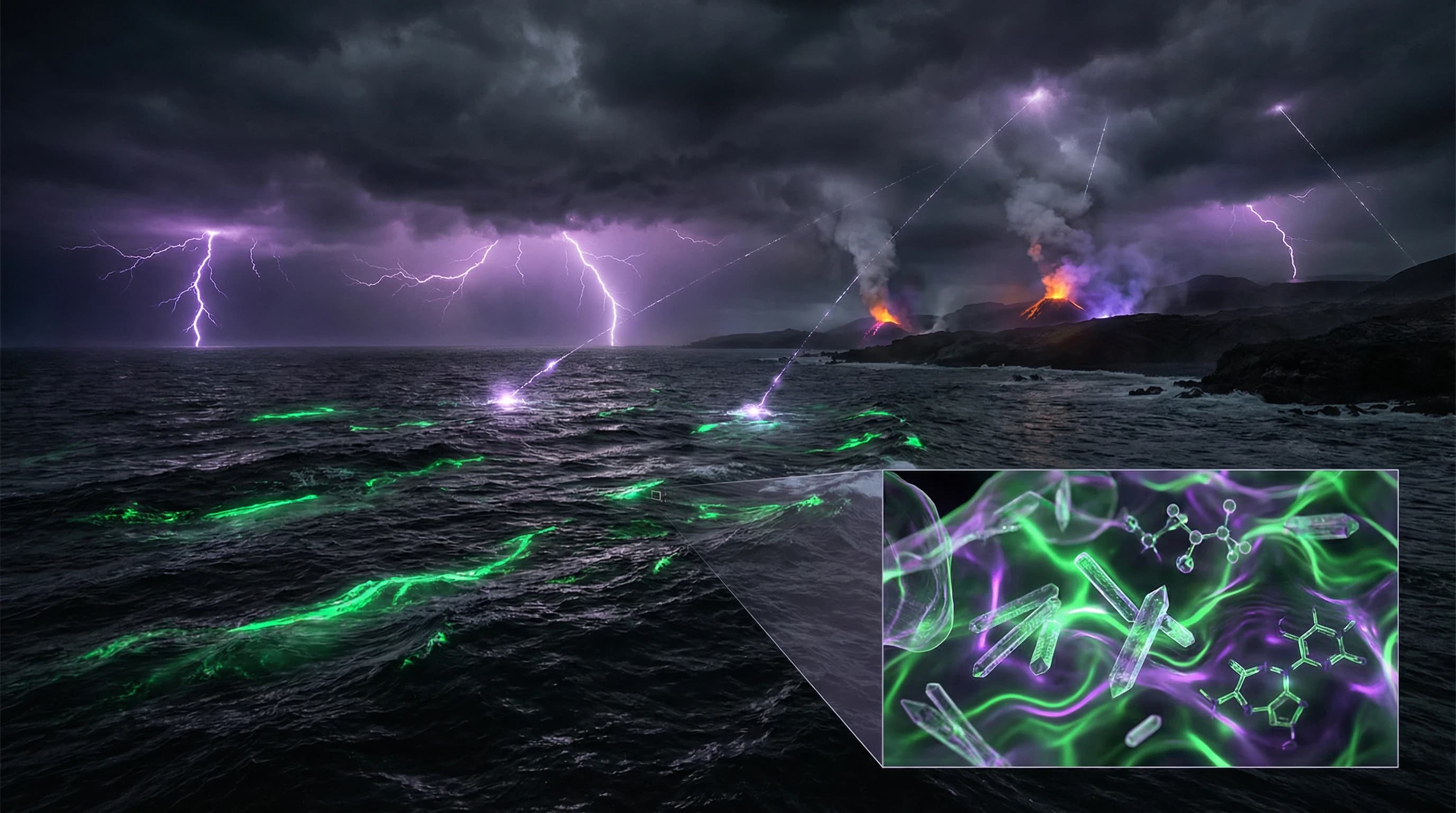
Abiogenesis — the transition from chemistry to biology: 🧬 simple molecules (amino acids, nucleotides) self-organize into replicators, then into cells. The process took hundreds of millions of years on early Earth, where volcanoes, lightning, and ultraviolet radiation created a "chemical reactor." This isn't spontaneous generation of mice from rags, but stepwise molecular evolution — from the RNA world to the first prokaryotes.
🛡️
Laplace Protocol: We verify the scientific validity of abiogenesis theory through analysis of experimental data (Miller-Urey experiment), geological evidence from early Earth, and laboratory demonstrations of key chemical stages in the transition from inorganic compounds to organic molecules.
Reference Protocol
Scientific Foundation
Evidence-based framework for critical analysis
Protocol: Evaluation
Test Yourself
Quizzes on this topic coming soon
⚡
Deep Dive
Abiogenesis: How Huxley's Term Changed Our Understanding of Life's Origins on Earth
Abiogenesis — the scientific theory of life arising from non-living matter approximately 3.5+ billion years ago. It's a natural process of gradual formation of organic molecules and simple life forms through chemical evolution.
The term derives from Greek roots: a- (without) + bio (life) + genesis (origin). It fundamentally differs from biogenesis (life from life) and the discredited concept of spontaneous generation.
Etymology and Origin of the Term in 1870
English biologist Thomas Henry Huxley (1825–1895) proposed the term "abiogenesis" in 1870. Known as "Darwin's Bulldog" for his defense of evolutionary theory, Huxley sought to create scientific terminology that clearly separated natural processes from religious and metaphysical explanations.
- Alternative Names
- "Origin of life" and "biopoesis," however "abiogenesis" remains most prevalent in scientific literature.
Evolution of Scientific Understanding from Huxley to Present
Since Huxley introduced the term, understanding of abiogenesis has undergone significant evolution thanks to advances in molecular biology, geochemistry, and astrobiology.
In the 19th century the concept was predominantly philosophical, but by the mid-20th century experiments provided empirical evidence for the possibility of synthesizing organic molecules from inorganic precursors.
Modern science views abiogenesis as a hypothesis with substantial evidentiary foundation, representing the basis for understanding biological evolution and remaining an active area of current research.
Three Critical Distinctions: Why Abiogenesis Is Neither Spontaneous Generation Nor Biogenesis
One of the most common cognitive biases is conflating abiogenesis with spontaneous generation, a concept disproven in the 19th century. The critical distinction: abiogenesis describes gradual chemical evolution over millions of years through natural processes, whereas spontaneous generation proposed rapid, spontaneous appearance of complex life forms from non-living matter.
This fundamental misunderstanding leads to erroneous rejection of a scientifically grounded theory based on a discredited idea.
| Concept | Timescale | Mechanism | Status |
|---|---|---|---|
| Spontaneous Generation | Days–weeks | Spontaneous appearance of complex organisms | Disproven (Pasteur, 1859) |
| Abiogenesis | Millions of years | Gradual chemical evolution with intermediate stages | Scientific hypothesis |
| Biogenesis | Ongoing process | Life from pre-existing life | Established principle |
Spontaneous Generation: The Disproven Concept of Rapid Life Emergence
The theory of spontaneous generation claimed that complex organisms (flies, mice, microorganisms) arise spontaneously from non-living matter over short periods. Experiments by Francesco Redi (1668), Lazzaro Spallanzani (1768), and Louis Pasteur (1859) demonstrated that observed cases of "spontaneous generation" resulted from contamination by existing microorganisms, not true de novo emergence of life.
Abiogenesis is fundamentally different: it describes a process that took millions of years and involved multiple intermediate stages of chemical complexity.
Biogenesis and Abiogenesis: Sequential, Non-Contradictory Processes
Biogenesis — the principle that life arises only from pre-existing life — describes modern biological reproduction processes. Abiogenesis explains the initial emergence of life from non-living chemical precursors.
These concepts are sequential, not contradictory: abiogenesis preceded biogenesis as a one-time event in Earth's history, after which biogenesis became the dominant mechanism of life reproduction. The temporal separation is critical — abiogenesis occurred over 3.5 billion years ago and represents the first step, after which biological evolution became possible.
Five-Stage Chemical Evolution: From Elements to Self-Replicating Systems
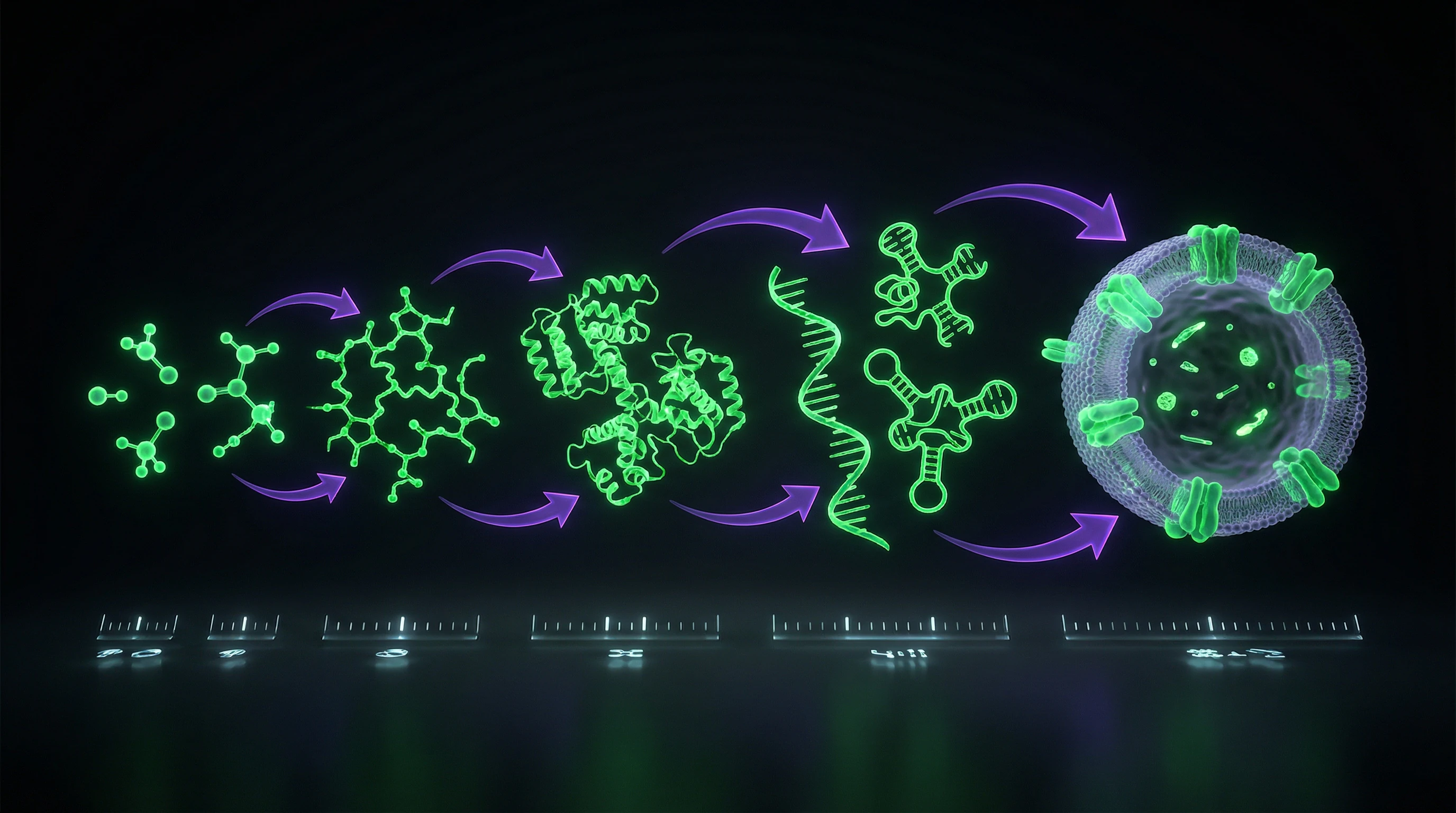
Abiogenesis is a multi-stage process that began over 3.5 billion years ago. Simple chemical elements combined into compounds, then into organic molecules, which through long-term chemical evolution formed self-replicating systems and, finally, the first primitive organisms.
Each stage required specific environmental conditions and millions of years to unfold.
Stages 1–3: From Inorganic Elements to Organic Molecules
The first stage involved the combination of basic elements (hydrogen, carbon, nitrogen, oxygen, phosphorus, sulfur) into simple compounds under early Earth conditions.
The second stage saw the formation of organic molecules: amino acids, nucleotides, lipids. The Miller-Urey experiment demonstrated the synthesis of amino acids from inorganic precursors under conditions simulating the early atmosphere.
- The third stage involved long-term chemical processes without enzymatic participation
- Organic molecules increased in complexity through condensation and polymerization reactions
- Self-organization into protocellular structures occurred
Stages 4–5: Protolife and Self-Reproducing Organisms
The fourth stage marked the emergence of protolife through the formation of self-replicating systems. The RNA world hypothesis proposes that RNA simultaneously catalyzed chemical reactions and stored genetic information.
The transition from chemical to biological evolution occurred when the first primitive organisms with lipid membranes, capable of metabolism and reproduction, emerged.
The fifth stage saw the appearance of the first organisms with membranes and metabolism. Research on protocells, lipid membranes, and replication mechanisms continues to provide experimental evidence for the feasibility of these transitions.
Experimental Evidence and Key Research — From Laboratory to Understanding the Origin of Life
The scientific community possesses an extensive database of experimental evidence confirming the possibility of abiogenesis through gradual chemical evolution. Laboratory studies demonstrate the reproducibility of key stages in the formation of organic molecules from inorganic precursors.
Experiments show: under certain conditions mimicking early Earth, complex organic compounds form without the participation of biological enzymes. This distinguishes abiogenesis from the discredited concept of spontaneous generation.
Chemical evolution from simple elements to complex self-replicating systems is not a hypothesis, but a reproducible laboratory fact.
The Miller-Urey Experiment and Amino Acid Synthesis
The classic Miller-Urey experiment is fundamental proof of organic molecule synthesis under early Earth conditions. Researchers recreated the presumed atmosphere of the ancient planet and demonstrated the formation of amino acids — the building blocks of proteins — from simple inorganic compounds under the influence of electrical discharges.
The experiment refutes the myth of the impossibility of natural emergence of complex organic molecules. Subsequent research expanded the list of synthesized compounds: nucleotide bases, lipids necessary for the formation of cell membranes.
| Condition | Result |
|---|---|
| Electrical discharges in atmosphere | Amino acid synthesis |
| Ultraviolet radiation | Nucleotide base formation |
| Hydrothermal vents | Lipid and organic polymer synthesis |
The RNA World Hypothesis and Protocells
The RNA world hypothesis proposes a mechanism for the transition from chemical to biological evolution through the formation of self-replicating molecules. RNA possesses the unique ability to simultaneously store genetic information and catalyze chemical reactions.
Experimental research on protocells demonstrates the spontaneous formation of lipid membranes, creating isolated compartments for chemical reactions. These structures are capable of primitive metabolism and growth.
Protocells are not living organisms, but neither are they merely chemical systems. They represent a transitional link where physicochemical processes begin to acquire properties we call "life."
[FIG_02: Timeline of experimental evidence for abiogenesis — from the Miller-Urey experiment (1953) to modern protocell and RNA catalysis research (2020+), indicating key synthesized molecules at each stage]
Geological and Cosmic Evidence — Early Earth Conditions and Extraterrestrial Organic Compounds
Abiogenesis requires analysis of early Earth's geological conditions (3.5+ billion years ago): high volcanic activity, intense UV radiation, absence of oxygen, presence of liquid water. These conditions facilitated chemical evolution.
The discovery of organic compounds in meteorites and comets demonstrates that prebiotic chemistry is widespread throughout the Universe. This refutes the myth of life's improbable emergence — the necessary processes are natural consequences of physicochemical laws.
Early Earth conditions 3.5+ billion years ago
The atmosphere contained methane, ammonia, water vapor, and hydrogen, but virtually no free oxygen — this prevented oxidation of organic compounds. Volcanic activity and lightning provided energy for reactions, while liquid water created an environment for molecular concentration.
- Deep-sea hydrothermal vents — stable energy and chemical gradients
- Tidal zones — wet-dry cycles promoting polymerization
- Shallow pools — molecular concentration, UV energy, evaporation
Organic compounds in meteorites and comets
Carbonaceous chondrites contain amino acids, nucleotide bases, and other organic compounds identical to terrestrial ones. These molecules form in space without involvement of living organisms.
| Source | Detected Compounds | Significance for Abiogenesis |
|---|---|---|
| Carbonaceous chondrites | Amino acids, nucleotide bases, hydrocarbons | Proves naturalness of prebiotic chemistry |
| Comets | Complex organic molecules | Possibility of delivery to early Earth |
Chemical evolution is not a unique terrestrial phenomenon, but a natural process occurring throughout the Universe given suitable conditions.
Cosmic impacts could have delivered life's building blocks to early Earth, supplementing local synthesis. This evidence demonstrates that life is not an improbable accident, but a lawful result of physicochemical principles.
Open Questions and Contemporary Research — Frontiers of Knowledge and Directions for Future Discoveries
Despite significant progress, fundamental questions about abiogenesis remain without definitive answers: the precise location where life originated, detailed chemical pathways for the formation of the first self-replicating systems, and mechanisms of transition from chemical evolution to biological evolution.
Contemporary research employs an interdisciplinary approach, combining geochemistry, molecular biology, astronomy, and synthetic biology to recreate early Earth conditions and test various hypotheses.
Open questions do not weaken the scientific validity of abiogenesis theory, but rather define directions for deepening our understanding of the natural processes underlying the origin of life.
Precise location of life's origin: hydrothermal vents, tidal zones, or other environments
The scientific community considers several competing hypotheses regarding the specific location where the first living systems emerged. Deep-sea hydrothermal vents offer stable energy, mineral catalysts, and protection from ultraviolet radiation.
| Environment | Advantages | Mechanism |
|---|---|---|
| Hydrothermal vents | Energy, catalysts, UV protection | Chemical gradients, mineral surfaces |
| Tidal zones | Molecular concentration, wet-dry cycles | Polymerization during evaporation |
| Clay minerals | Catalytic properties | Organization and matrix for organic molecules |
Each hypothesis has experimental support, and the definitive answer may involve a combination of different environments at various stages of chemical evolution.
Transition from chemistry to biology: replication mechanisms and emergence of metabolism
The most challenging question remains understanding the precise mechanisms through which non-living chemical systems acquired the properties of living organisms — replication, metabolism, and evolutionary adaptation.
- RNA World hypothesis: self-replicating ribozymes (catalytic RNA) may have preceded the modern DNA-RNA-protein system, but the transition to more complex systems requires additional explanation.
- Protometabolism: simple chemical cycles could have evolved into the complex metabolic pathways of modern cells.
- Synthetic biology: recreating minimal living systems in the laboratory may shed light on the necessary and sufficient conditions for the emergence of life.
These investigations continue to narrow the gap between chemistry and biology, providing increasingly detailed understanding of the natural processes underlying the origin of life.
[FIG_03: Diagram of open questions in abiogenesis — visualization of three main research directions (location, chemical pathways, transition to biology) indicating the level of scientific certainty and active experimental approaches for each direction]
Knowledge Access Protocol
FAQ
Frequently Asked Questions
Abiogenesis is the scientific theory explaining how life arose from non-living matter approximately 3.5+ billion years ago. The process involved the gradual formation of organic molecules from simple chemical elements through millions of years of chemical evolution. This is the fundamental basis for understanding the origin of all biological life on Earth.
Abiogenesis is gradual chemical evolution over millions of years, while spontaneous generation is a disproven idea about the rapid appearance of complex life from non-living matter. The key difference lies in timeframes and complexity: abiogenesis involves slow, stepwise chemical processes. Spontaneous generation was scientifically refuted by Pasteur's experiments in the 19th century.
No, abiogenesis and biogenesis describe different time periods and do not contradict each other. Abiogenesis explains the initial origin of life (a one-time event), while biogenesis describes the reproduction of existing life. These are sequential, not competing processes in the history of life's development.
Abiogenesis includes five key stages: formation of simple chemical compounds, creation of organic molecules, long-term chemical evolution without enzymes, emergence of self-replicating systems, and the appearance of the first primitive organisms. Each stage took millions of years and required specific environmental conditions. The process progressed gradually from simple to complex.
The 1953 Miller-Urey experiment demonstrated that amino acids can form from inorganic substances under early Earth conditions. The scientists recreated the ancient planet's atmosphere and produced organic compounds through electrical discharges. This became the first experimental confirmation of the possibility of chemical evolution.
Yes, multiple lines of evidence exist: laboratory synthesis of organic molecules, geological data about early Earth, discovery of organic compounds in meteorites and comets. Experiments reproduce key stages of chemical evolution under controlled conditions. Abiogenesis is the most scientifically supported explanation for the origin of life.
Abiogenesis occurred over 3.5 billion years ago on early Earth. It was a lengthy process that took millions of years before the first simple organisms appeared. The exact date when the process began remains a subject of scientific research.
Under modern conditions, abiogenesis is extremely unlikely because existing organisms would quickly consume any forming organic molecules. Early Earth had unique conditions: absence of oxygen, intense UV radiation, and a specific atmospheric chemical composition. Today, the principle of biogenesis applies—life only comes from life.
The RNA world hypothesis proposes that RNA was the first self-replicating molecule, preceding DNA and proteins. RNA can simultaneously store genetic information and catalyze chemical reactions. This explains the transition from chemical evolution to biological life.
The most likely locations are hydrothermal vents on the ocean floor, shallow warm ponds, or clay surfaces. These environments provided the necessary energy, concentration of chemical substances, and protection from UV radiation. The exact location remains an open question in modern science.
This is a common myth: in science, 'theory' means a well-substantiated explanation with experimental support, not a guess. Abiogenesis is supported by chemical experiments, geological data, and reproducible results. It is the most scientifically valid explanation for the origin of life available.
This is a myth: life emerged gradually through numerous intermediate stages over millions of years. The process involved slow increases in chemical complexity from simple molecules to self-replicating systems. Sudden appearance of complex organisms contradicts all scientific evidence.
In the early stages of abiogenesis, enzymes were absent—chemical reactions occurred without biological catalysts. The first self-replicating molecules (likely RNA) possessed catalytic properties without complex protein enzymes. Modern enzymes appeared later, after the emergence of the first primitive organisms.
Yes, organic compounds have been detected in meteorites, comets, and interstellar clouds. This confirms that organic chemistry is a universal process, not limited to Earth. These findings support abiogenesis theory and the possibility of panspermia.
The term was proposed by English biologist Thomas Henry Huxley in 1870. The word derives from Greek roots: a- (without), bio (life), and genesis (origin). Huxley used it to describe the natural emergence of life from non-living matter.
The exact mechanism of transition from self-replicating molecules to the first cells with metabolism remains an open question. Scientists are investigating the formation of protocells, membranes, and replication mechanisms. This is an active area of contemporary research with multiple competing hypotheses.