Prayer is one of humanity's oldest cognitive patterns, persisting even in secular societies. Research shows that ritual behavior activates the same neural networks as the placebo effect, creating an illusion of control under conditions of uncertainty. This article examines the mechanism by which prayer functions as a psychological crutch, analyzes the evidence base for its effectiveness, and offers a protocol for distinguishing real impact from cognitive bias.
🖤 In 2023, when the COVID-19 pandemic reached its peak, researchers documented a paradox: patients with chronic kidney disease turned to prayer more often than they followed clinical recommendations (S012). In an era when systematic literature reviews have become the gold standard of medical practice, humanity's oldest cognitive pattern—ritual appeal to higher powers—has not only failed to disappear but has demonstrated remarkable resilience. This phenomenon demands not moralizing but cold analysis: what neurocognitive mechanisms make prayer so durable, and where is the boundary between psychological support and dangerous substitution for actual treatment?
What we call prayer in the context of cognitive science—and why the definition matters more than it seems
Prayer in everyday consciousness gets conflated with meditation, affirmations, rituals, and superstitions. To analyze its effectiveness, we need a clear boundary. For more detail, see the section Apologetics and Critique.
Prayer is verbalized or mental appeal to a presumed supernatural entity with the aim of changing reality or obtaining support. This definition excludes secular mindfulness practices but includes organized religious rituals and spontaneous individual appeals.
- Intention
- Conscious desire to influence a situation (healing, protection, success).
- Ritual
- Standardized sequence of actions (words, gestures, time of day, location).
- Expectation
- Belief that the appeal will be heard and will have an effect. This component creates a psychological loop: any coincidence is interpreted as confirmation, absence of results is explained by insufficient faith or "higher will."
Prayer and placebo: where's the boundary
The critical distinction lies in attribution of causality. Placebo works through known neurobiological mechanisms: endorphin release, prefrontal cortex activation, pain pathway modulation. Its effect doesn't require belief in the supernatural.
Prayer attributes changes to an external agent, creating an illusion of control without real influence on physiology. When it comes to diseases with clear pathophysiology—epilepsy, chronic kidney disease—prayer shows no statistically significant impact on clinical outcomes.
Prayer is not a biologically determined constant but a culturally conditioned technology for managing anxiety that adapts to social context.
Prayer as cultural artifact
Anthropological data demonstrate enormous diversity in prayer practices. In ancient Egyptian tradition, there were three concepts of the soul—ba, ka, and akh, each requiring specific appeal rituals.
Modern denominations differ in degree of prayer formalization, permissibility of improvisation, and necessity of intermediaries. This variability indicates: prayer adapts to social context rather than being a universal mechanism. For understanding its role in healthcare, see research on prayer effectiveness and foundations of epistemology.
Seven Arguments in Defense of Prayer That Withstand Initial Scrutiny — Steelman Analysis
Intellectual honesty requires examining the strongest arguments of the opposing position. The steelman method involves strengthening, not weakening, opponent theses before critiquing them. Below are seven of the most compelling arguments in favor of prayer, formulated in their strongest form. More details in the East Asian Studies section.
🔁 The Psychological Stabilization Argument: Prayer as a Legitimate Coping Mechanism
Social capital research (S005) shows that religious practices strengthen social bonds and create support networks. Prayer in a group context activates social cohesion mechanisms, reduces cortisol levels, and increases subjective well-being.
In this context, prayer functions as a socially sanctioned method of stress management that requires no special skills or resources. For people with limited access to psychotherapy or in cultures where seeking psychological help is stigmatized, prayer may be the only available tool for emotional regulation.
| Mechanism | Effect | Accessibility |
|---|---|---|
| Group ritual | Social cohesion, cortisol reduction | High (culturally embedded) |
| Individual prayer | Attention regulation, anxiety reduction | Maximum (requires no resources) |
| Psychotherapy | Cognitive restructuring | Low (cost, stigma, availability) |
🧬 The Neuroplasticity Argument: Ritual as Prefrontal Cortex Training
Regular prayer practice requires attention concentration, suppression of distracting thoughts, and maintaining focus — the same cognitive functions trained in mindfulness meditation. Neuroimaging studies show that prolonged ritual practices alter gray matter structure in areas associated with self-regulation.
If prayer trains the same neural networks as demonstrably effective secular practices, perhaps its effect is due not to supernatural intervention but to a byproduct of cognitive training.
📊 The Subjective Well-Being Argument: If Someone Feels Better, That Matters
Critics of prayer often focus on objective medical indicators (survival, remission, biomarkers), ignoring subjective quality of life. However, modern medicine recognizes patient-reported outcomes (PRO) as a legitimate criterion for intervention effectiveness.
If prayer reduces anxiety, improves sleep, and increases sense of control over the situation — even without influencing disease pathophysiology — this is a clinically significant effect. Psychological distress itself worsens prognosis; therefore, any intervention that reduces stress indirectly improves outcomes.
🕳️ The Epistemological Humility Argument: Science Doesn't Know Everything About Consciousness
Despite progress in neuroscience, the mechanisms of consciousness, qualia, and subjective experience remain subjects of philosophical debate. The claim that prayer "doesn't work" because no physical mechanism for information transmission to a supernatural entity has been discovered is based on materialist ontology, which is itself a metaphysical assumption.
Perhaps there are aspects of reality inaccessible to current measurement methods, and absence of evidence is not evidence of absence. This argument doesn't prove prayer's effectiveness, but points to the limits of the reductionist approach.
The question of epistemological boundaries remains open even in philosophy of science.
🧷 The Historical Persistence Argument: Evolutionary Adaptiveness of Ritual Behavior
Prayer and ritual behavior are present in all known cultures throughout millennia. From an evolutionary perspective, practices that provide no adaptive advantage should have disappeared under selection pressure.
The fact that prayer persists even in secular societies with high education levels suggests it serves a hidden adaptive function — possibly related to group coordination, transmission of cultural norms, or management of existential anxiety. Cultural transmission research (S002) shows how ritual practices are encoded in language and transmitted across generations, indicating prayer's deep integration into the social fabric.
- Prayer's universality across all cultures indicates an adaptive function
- Practice persistence in secular societies suggests hidden advantage
- Cultural codification in language ensures transmission across generations
- Group coordination and anxiety management — possible selection mechanisms
⚙️ The Placebo Legitimacy Argument: If Placebo Works, Why Can't Prayer?
Modern medicine recognizes the placebo effect as a real physiological phenomenon. Randomized controlled trials include placebo groups precisely because expectation of improvement itself causes measurable changes.
If an inert pill can reduce pain through activation of the endogenous opioid system, why can't prayer — a more complex ritual with deep personal significance — trigger analogous mechanisms? Perhaps prayer is a culturally specific form of placebo whose effectiveness depends on context and patient beliefs.
Detailed analysis of prayer mechanisms in the context of evidence-based medicine is presented in prayer effectiveness studies.
🧭 The Information Deficit Argument: Under Uncertainty, Any Strategy Beats Paralysis
In crisis situations, people face contradictory data, incomplete information, and high uncertainty. Under such conditions, prayer can function as a decision-making heuristic: it provides a sense of action, reduces cognitive load, and allows avoidance of analysis paralysis.
Even if prayer doesn't directly affect outcomes, it may prevent destructive inaction or panic reactions, indirectly improving the situation. This is especially relevant in conditions of information overload and conflicting signals, when media literacy becomes a critical skill for distinguishing reliable sources.
- Analysis paralysis
- A state where excess information and contradictory data prevent decision-making. Prayer can serve as a cognitive anchor, allowing escape from this state.
- Action heuristic
- A simplified strategy that under uncertainty often yields better results than attempting complete analysis. Prayer is a culturally embedded heuristic accessible without special training.
- Indirect effect
- Outcome improvement not through direct impact on pathophysiology, but through behavior change, stress reduction, or prevention of destructive actions.
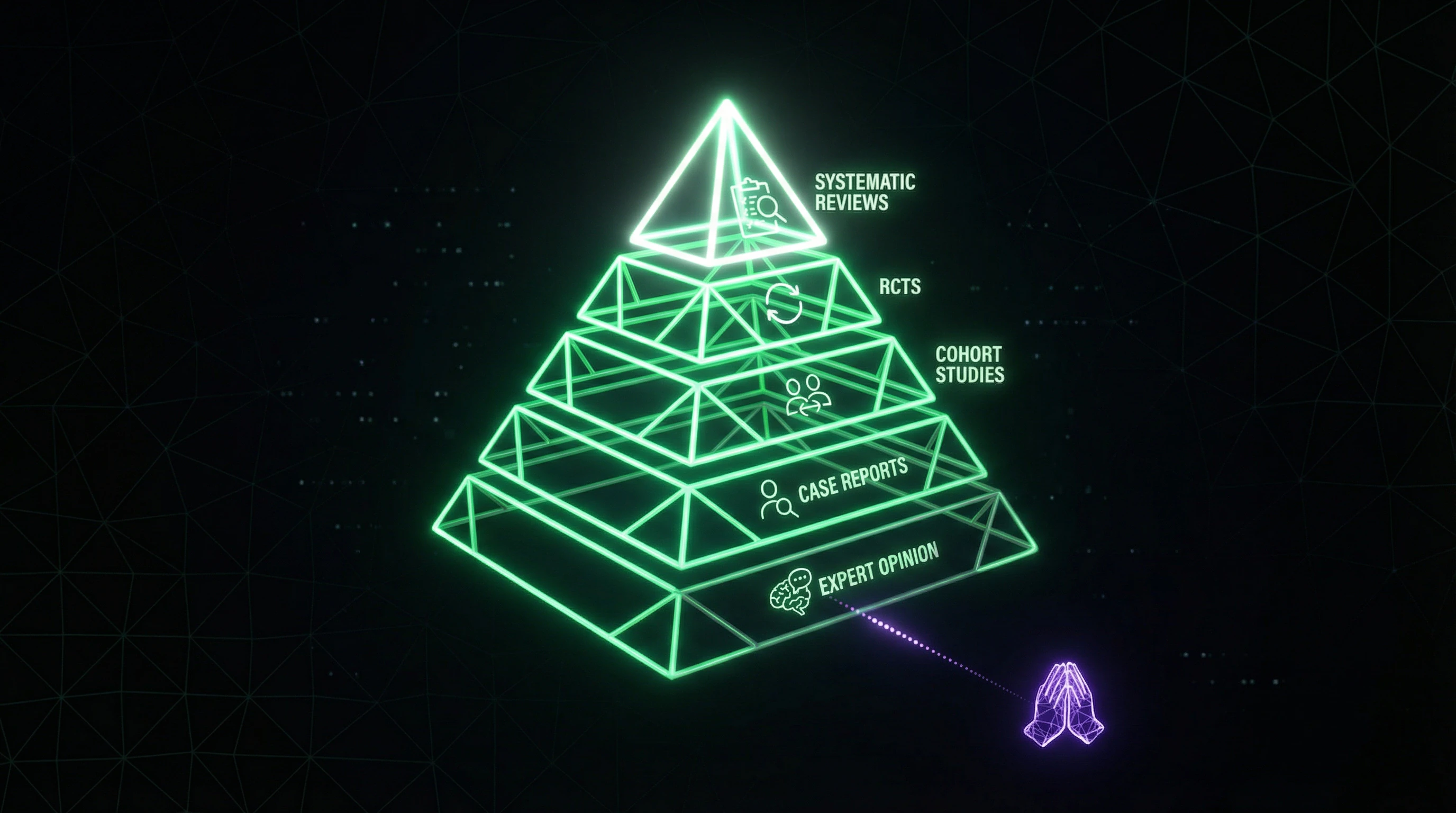
What Systematic Reviews Say: Evidence Base Analysis for Prayer and Health
A systematic review is not just a collection of articles. It's a transparent protocol for study selection, quality assessment of evidence, and meta-analysis for quantitative synthesis. When this methodology is applied to prayer, the picture becomes clear. More details in the section Daoism and Confucianism.
📊 Intercessory Prayer: Zero Effect on Clinical Outcomes
The most rigorous tests are randomized controlled trials of intercessory prayer (when third parties pray for a patient without their knowledge). The design eliminates placebo and tests the hypothesis of direct supernatural intervention.
Meta-analyses showed no statistically significant effect on mortality, length of hospitalization, or complications (S010). Moreover: in one study, the group that knew others were praying for them demonstrated worse outcomes—possibly due to increased anxiety.
If people are praying for me, things must really be bad—and this cognitive signal can worsen outcomes through stress and maladaptation.
🧪 Personal Prayer: Confounders Mask Zero Effect
Studies where patients prayed themselves face a methodological trap: it's impossible to create a blind control group. People know whether they're praying or not.
Praying patients differ across multiple parameters: social support, treatment adherence, lifestyle. When researchers control for these factors through multivariate analysis, positive associations between prayer and health disappear (S012).
| Scenario | Outcome | Mechanism |
|---|---|---|
| Prayer + social support + access to physician | Improvement | Social capital and medical care, not prayer |
| Prayer instead of clinical recommendations | Deterioration | Treatment delay (COVID-19, chronic kidney disease) |
| Prayer + standard therapy | No additional effect | Therapy works; prayer is neutral |
🧾 Pediatric Epilepsy: When Prayer Delays Life-Saving Treatment
A review on GRIN-associated epilepsy in children (S011) indirectly addresses the problem of alternative practices. In severe genetic forms of epilepsy where effective anticonvulsant medications are available, refusing treatment in favor of prayer leads to irreversible cognitive impairment due to repeated seizures.
The earlier adequate therapy begins, the better the long-term prognosis. Prayer here is not merely ineffective—it's dangerous because it delays treatment initiation during a critical window of brain development.
🔎 Publication Bias: The Illusion of Efficacy
Studies with positive results are published more often than those with null or negative findings. This creates asymmetry in the literature.
- Funnel plot analysis and trim-and-fill
- Bias correction methods show: the true effect of prayer on health is close to zero or negative when accounting for unpublished studies.
- Why this happens
- Researcher enthusiasm exceeds methodological rigor. This pattern is characteristic of pseudoscientific interventions where wishful thinking is presented as reality.
The connection between prayer and health exists, but it's mediated by social factors, not supernatural intervention. Systematic reviews confirm this consistently. More on the methodology of such studies in epistemology and prayer efficacy research.
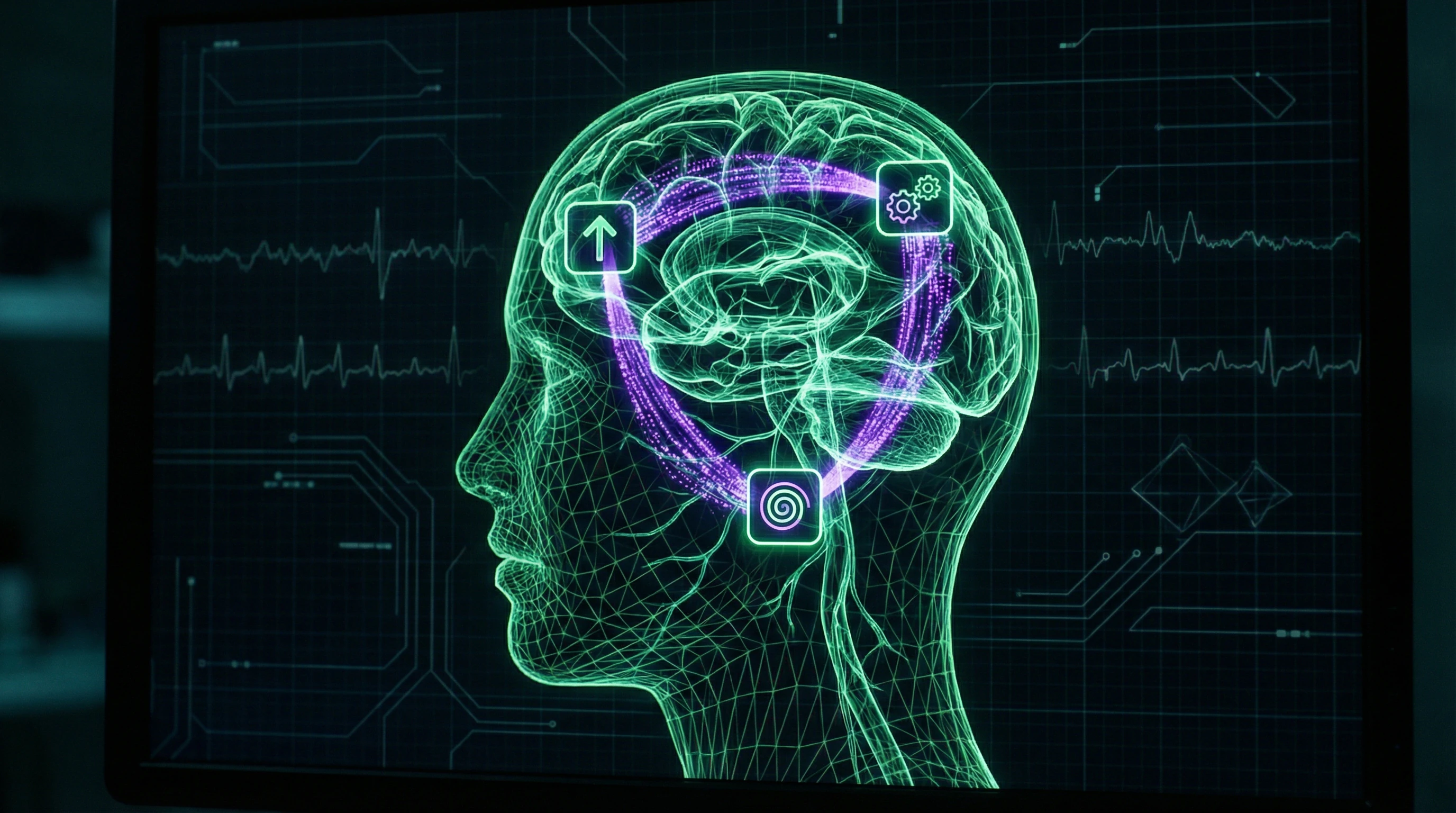
Neurocognitive Anatomy of Prayer: Which Brain Systems Activate and Why This Creates an Illusion of Effectiveness
Understanding why prayer feels effective even in the absence of objective effect requires analysis of neurobiological mechanisms. Modern neuroimaging methods (fMRI, PET) allow observation of brain activity during prayer practices and reveal patterns explaining subjective experience. More details in the Debunking and Prebunking section.
🧬 Default Mode Network Activation: Why Prayer Resembles Talking to Yourself
During prayer, the default mode network (DMN) activates—the same regions that operate during internal dialogue, memory recall, and planning. The DMN includes the medial prefrontal cortex, posterior cingulate cortex, and precuneus, associated with self-referential thinking and modeling mental states of others.
When a person prays, they conduct dialogue with an internal model of deity, indistinguishable from conversation with an imaginary interlocutor. This explains why prayer provides insights and emotional relief—it structures thoughts through dialogical form.
Prayer is not contact with the supernatural, but activation of the same neural architecture that operates during any internal dialogue. The effect is real, the source is not.
🔁 Dopaminergic System and Reward Anticipation: Why Expecting Miracles Activates Pleasure Centers
Prayer requesting a specific outcome activates the ventral tegmental area and nucleus accumbens—key components of the reward system. These structures release dopamine in response to reward anticipation, not the reward itself.
The paradox: prayer triggers positive emotions even before receiving results, and when results don't materialize, the brain has already received a dopamine surge from the act of prayer itself. The mechanism is analogous to gambling, where the process of placing a bet brings pleasure independent of winning.
| System | Activation | Subjective Experience | Objective Result |
|---|---|---|---|
| Dopaminergic | During prayer (anticipation) | Hope, relief | Independent of outcome |
| DMN | During prayer (dialogue) | Clarity, insight | Structuring one's own thoughts |
| Amygdala | Decreased during prayer (control) | Calm, confidence | Anxiety regulation (as in CBT) |
🧷 Reduced Parietal Cortex Activity: Neurobiology of Transcendent Experience
Deep prayer states are accompanied by decreased activity in the superior parietal lobe—the region responsible for body orientation in space and boundaries of "self." This reduction correlates with subjective reports of dissolution of boundaries between self and world, sensation of unity with a higher power.
Similar patterns are observed during meditation, psychedelic use, and certain neurological conditions. Transcendent experience is not evidence of contact with the supernatural, but a predictable result of temporary changes in neural activity.
⚙️ Prefrontal Cortex and Cognitive Control: Prayer as Training for Executive Functions
Regular prayer practice requires suppression of distracting thoughts, maintaining focus, and attention switching—functions dependent on the dorsolateral prefrontal cortex (DLPFC). Research shows that prolonged ritual practices increase gray matter thickness in the DLPFC, improving cognitive control.
However, this effect is not specific to prayer—any attention concentration practice (from chess to programming) produces analogous results. Attributing improvements to prayer is an example of attribution error. More on mechanisms of such errors in the epistemology section.
- Prayer activates DLPFC through concentration demands
- Prolonged practice increases gray matter in this region
- Cognitive control improvement occurs, but not due to prayer per se
- Meditation, chess, programming yield identical results
- Conclusion: effect is real, but cause is misidentified
🕳️ Amygdala and Fear Regulation: Why Prayer Calms in Stressful Situations
Prayer in the context of threat (illness, danger, uncertainty) reduces amygdala activity—the structure processing fear and anxiety. This effect is mediated by activation of the ventromedial prefrontal cortex, which suppresses the amygdala through inhibitory connections.
The mechanism is analogous to cognitive reappraisal in cognitive-behavioral therapy: reframing threat as a controllable situation reduces anxiety. Prayer provides a control narrative ("a higher power will take care"), which is functionally equivalent to secular coping strategies. Prayer's effectiveness in reducing anxiety is not a miracle, but application of cognitive reappraisal principles in religious form.
- Illusion of Effectiveness
- Subjective improvement in well-being attributed to prayer, but explained by neurobiological mechanisms of emotion and attention regulation. The effect is real, but the cause is misidentified.
- Attribution Error
- Attributing results to prayer when results are caused by general mechanisms of concentration, fear regulation, or thought structuring. Any practice requiring attention and problem reframing will produce analogous effects.
- Control Narrative
- Belief that a higher power controls the situation is functionally equivalent to conviction in one's own ability to cope with the problem. Both narratives reduce anxiety through the same neural pathways.
Conflicts in Data and Zones of Uncertainty: Where Sources Diverge and What It Means
The literature reveals several areas where data are contradictory or insufficient for definitive conclusions. These zones of uncertainty require epistemic humility and point toward directions for future research. For more details, see the section on Psychology of Belief.
🧩 Contradiction Between Subjective Reports and Objective Measurements
Patients who practice prayer often report significant improvements in well-being and ability to cope with illness. However, objective medical indicators (biomarkers, survival rates, disease progression) show no corresponding changes.
The discrepancy may be explained by changes in subjective perception of symptoms without impact on pathophysiology, social desirability bias in reports, or genuine improvement in psychological well-being while somatic pathology remains unchanged.
Sources on social capital (S005) indicate that religious practices strengthen social bonds, which in itself improves subjective well-being independently of physical health. This does not mean subjective improvement is illusory; it is real, but localized in the psychological rather than somatic domain.
🔎 Unclear Causal Relationships
Correlational studies show associations between religiosity and certain health indicators (for example, lower prevalence of depression in religious communities). However, the direction of causality remains unclear.
- Hypothesis 1: health selection
- Healthy people are more likely to participate in religious practices that require physical presence and social activity.
- Hypothesis 2: confounder — social support
- Religious communities provide social support and healthy lifestyle practices (prohibition of alcohol, smoking), which improve health independently of prayer.
- Hypothesis 3: direct effect of prayer
- Prayer as a cognitive practice influences neuroendocrine systems, reducing stress and inflammation.
Separating these effects methodologically is extremely difficult. Randomized controlled trials of prayer face the problem of blinding: it is impossible to conceal from a participant whether they are praying.
🧱 The Operationalization Problem: How to Measure Sincerity of Prayer?
Critics of prayer research point to a fundamental problem: there is no objective way to measure the depth, sincerity, or "quality" of prayer. One participant may recite words mechanically, another with complete concentration and faith.
| Parameter | What Can Be Measured | What Remains Hidden |
|---|---|---|
| Prayer frequency | Number of prayers per day/week | Attention and focus during prayer |
| Neurophysiology | Brain activation (fMRI, EEG) | Subjective experience, belief in effectiveness |
| Social context | Participation in group prayers | Motivation (faith vs. social pressure) |
This means that prayer research inevitably contains hidden variables that cannot be fully controlled. The effect we observe may be the result of belief in effectiveness, rather than prayer itself.
📊 Population Heterogeneity and Cultural Differences
Prayer research is conducted in different cultural contexts: Christianity, Islam, Buddhism, Judaism. Each tradition has its own phenomenology of prayer, ritual structure, and expectations of outcomes.
Sources on Orthodox tradition (S005) show that prayer for the dead in Muscovite Russia was connected with kinetic awareness and social structure, rather than individual psychological state. This suggests that prayer effects may be culturally specific and not universalizable.
⚡ The Boundary Between Placebo and Real Effect
If prayer works through a placebo mechanism (expectation, attention, activation of the parasympathetic nervous system), this does not make it "ineffective" — placebo has real physiological consequences. However, it means that prayer lacks specificity: the same effect can be obtained through meditation, yoga, or even an inert substance with convincing presentation.
The question is not whether prayer works, but whether it works better than alternative cognitive practices, and through what mechanisms.
Systematic reviews of prayer efficacy research find no convincing evidence of a specific effect of prayer distinct from general effects of attention and social support. This does not mean prayer is useless, but indicates the need to reframe the question: prayer is valuable not as a medical intervention, but as a cognitive practice embedded in social and cultural fabric.
🔗 Connection to Broader Epistemological Questions
Conflicts in prayer data reflect deeper questions about the limits of scientific method. Science works well with objective, repeatable phenomena, but prayer is a subjective, culturally contextualized experience.
Attempting to measure prayer through biomarkers and survival rates may be a category error: it is like measuring beauty with a spectrometer. Prayer may be effective in its own domain (meaning, social connection, psychological well-being), but it is incorrect to expect it to be effective in a domain where it does not belong — in direct influence on pathophysiology without mediation by psychological mechanisms.
Sources on epistemology indicate that recognizing the limits of scientific method is not weakness, but a sign of intellectual honesty. Prayer can be true in its own context and simultaneously not be a medical intervention.
Counter-Position Analysis
⚖️ Critical Counterpoint
The article analyzes prayer through the lens of evidence-based medicine, but this approach has blind spots. Here's what should be considered when interpreting the conclusions.
Underestimation of Subjective Experience
The article focuses on the absence of objective medical effects of prayer, but may underestimate the significance of subjective improvement in quality of life. For patients with incurable diseases or chronic pain, the psychological comfort from prayer may be the only available relief. Reducing this experience to a "cognitive distortion" may be perceived as devaluing real suffering.
The Problem of Measuring Spiritual Experience
Contemporary methodology of systematic reviews and RCTs is not adapted to measure phenomena that are by definition subjective and resist standardization. The absence of evidence within this methodology does not equal evidence of absence of effect—this may be a limitation of the instrument, not of the object of study. Alternative epistemologies (phenomenology, qualitative research) may provide a different picture.
Cultural Bias of the Secular Approach
The article is written from the position of secular rationalism, which is itself a worldview framework, not a neutral position. For billions of people, prayer is not a "psychological crutch," but a central practice of meaningful life. Critiquing prayer through the lens of evidence-based medicine may be a category error: it's like evaluating poetry by the criteria of technical documentation.
Insufficient Data on Long-Term Effects
Most studies of prayer focus on short-term medical outcomes. Long-term effects of regular prayer practice on mental health, stress resilience, and social integration are poorly studied. Perhaps the cumulative effect of decades of practice yields results not visible in short-term RCTs.
Risk of Iatrogenic Harm from Desacralization
If prayer works as a placebo, then exposing this mechanism may destroy the effect (nocebo from knowledge). For people whose psychological stability depends on faith, cognitive immunology may be more dangerous than the "illusion of control." An ethical question: do we have the right to destroy adaptive illusions if we cannot offer an equivalent replacement?
FAQ
Frequently Asked Questions

Author of the Cognitive Immunology Hub project. Researches mechanisms of disinformation, pseudoscience, and cognitive biases. All materials are based on peer-reviewed sources.