Three Models of Interaction: From Warfare to Parallel Universes — What Historians and Sociologists Actually Describe
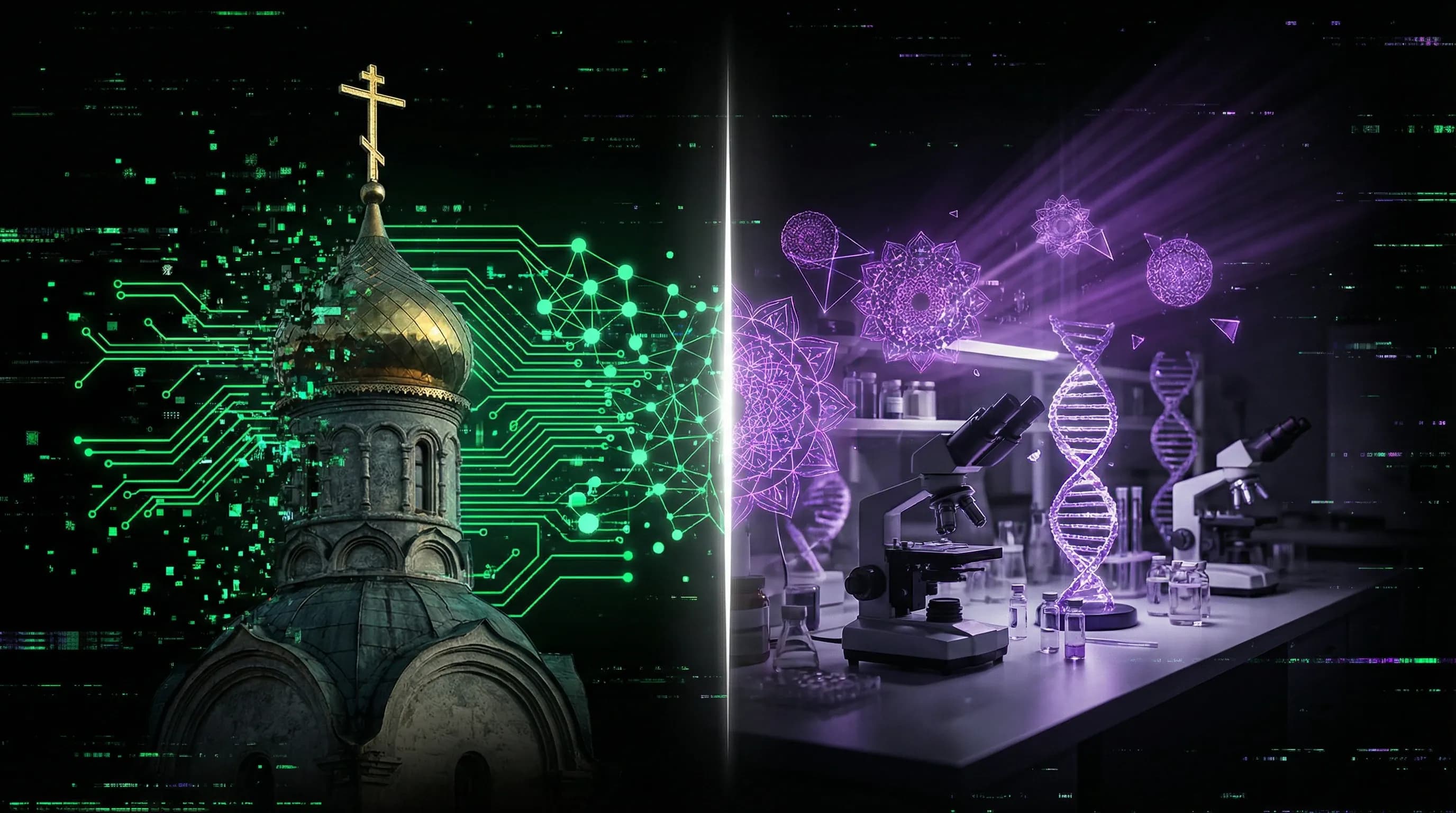
The relationship between religious institutions and the scientific method is traditionally described through three models: the conflict model (warfare model), the integration model (dialogue/integration model), and the model of non-overlapping magisteria (NOMA). None fully describes reality. More details in the Shinto section.
| Model | Core Thesis | Critical Weakness |
|---|---|---|
| Conflict | Religion and science in permanent warfare | Relies on exceptions, ignores political context |
| Integration | Productive interaction and mutual enrichment | Asymmetric collaboration; religion doesn't change dogmas |
| NOMA | Non-overlapping domains: science answers "how?", religion answers "why?" | Religious claims are often empirical; boundary is blurred |
⚠️ The Conflict Model: Why It's So Popular Despite Historical Inaccuracy
The conflict model, popularized in the 19th century by John Draper and Andrew White, asserts permanent warfare between religion and science. It relies on Galileo's trial (1633), the burning of Giordano Bruno (1600), and opposition to Darwin's theory of evolution.
Contemporary historians of science point out: these cases were exceptions rather than the rule, often driven by political rather than purely religious context (S006).
The popularity of the conflict model is explained not by accuracy, but by rhetorical utility: it's simple, fits the Enlightenment narrative of progress, and serves both sides — atheists criticize religion, fundamentalists mobilize against "godless science."
🧩 The Dialogue Model: When Theologians and Physicists Find Common Ground
The integration model assumes productive interaction. Examples: monasteries as centers of knowledge preservation, priest-scientists (Gregor Mendel, Georges Lemaître), the Templeton Foundation funding research at the intersection of science and religion (S001).
Critics note the asymmetry: science provides methods and data, religion integrates them without changing fundamental dogmas. The American case of evangelical institutions demonstrates this dynamic — willingness for "moral collaboration" only where it doesn't threaten institutional authority.
- Dialogue vs. integration
- Dialogue implies mutual influence; integration often means one-sided appropriation. Religion rarely changes position under pressure from data — rather, it reinterprets them.
🔁 NOMA and Parallel Worlds: Elegant Solution or Intellectual Capitulation
The model of non-overlapping magisteria (NOMA), proposed by paleontologist Stephen Jay Gould, asserts: science answers "how?", religion answers "why?" and "what ought to be?". Conflict arises only when one side encroaches on the other's territory.
The model is attractive for its diplomatic appeal, but has serious problems.
- Many religious claims are empirical: miracles, prayer efficacy (prayer studies), historicity of sacred texts — all subject to scientific verification.
- Science inevitably touches ethical questions (bioethics, ecology, artificial intelligence), which religion considers its prerogative.
- The boundary between "facts" and "values" is not as clear as NOMA assumes (S002).
NOMA works only if both sides agree not to overlap. In practice, religious systems constantly make empirical claims, and science constantly generates normative questions.
Steel Man: Seven Strongest Arguments for Fundamental Conflict Between Faith and Scientific Method
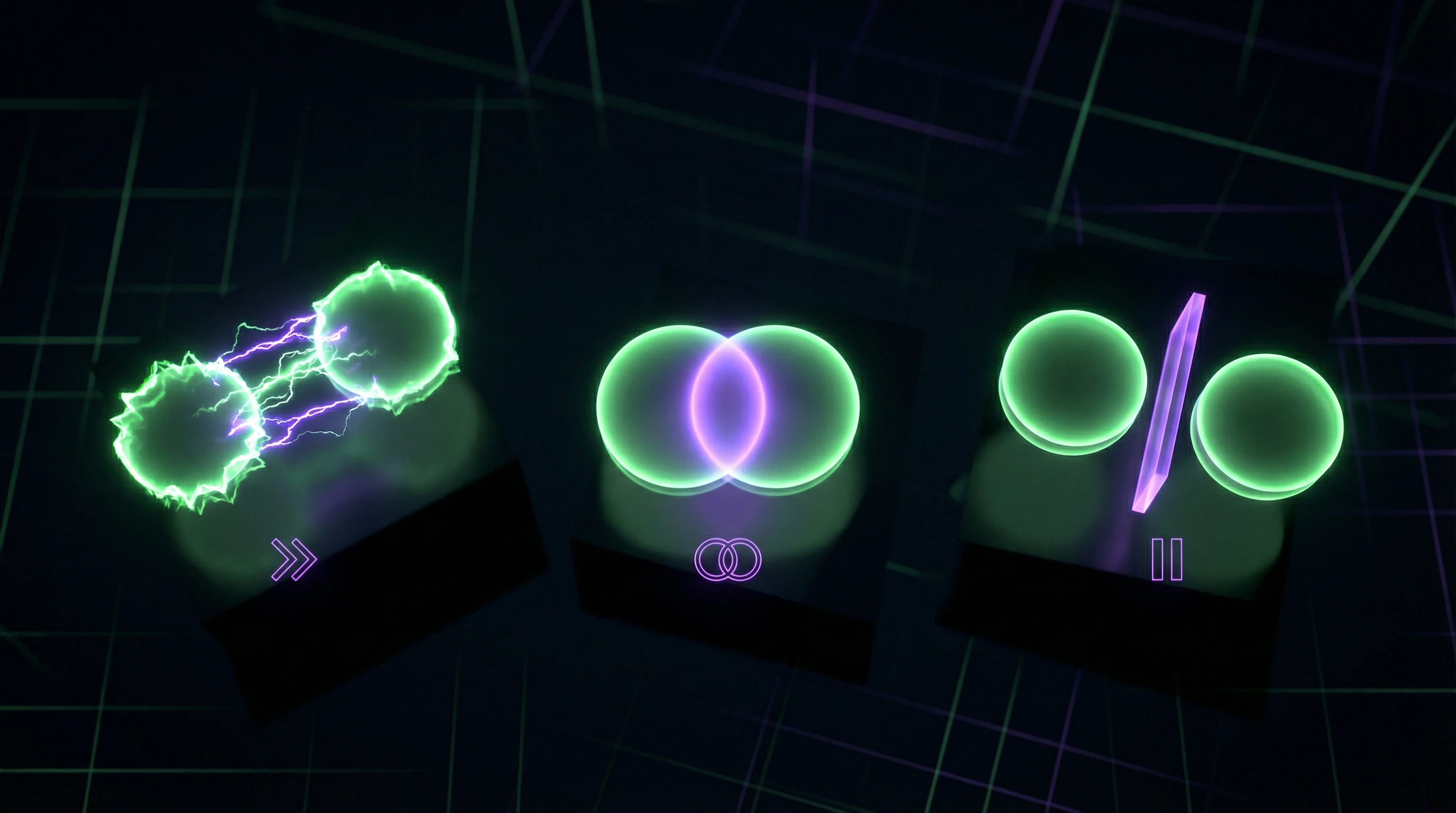
Before examining the evidence, we must present the strongest version of the conflict position — not a caricature, but an intellectually honest one. This is the "steel man" principle, opposite of the "straw man." More details in the section New Religious Movements.
🧱 Epistemological Incompatibility: Faith Versus Testability
Science is based on empirical testability, falsifiability, and methodological naturalism — the assumption that natural phenomena have natural causes. Religion relies on revelation, the authority of sacred texts, and tradition, which by definition are not subject to empirical verification.
When a religious person says "I know God exists," they use the word "know" in a fundamentally different sense than a scientist saying "I know the electron has a negative charge." The first knowledge is based on personal experience and faith, the second on reproducible experiments and mathematical models.
Attempts to reconcile these two types of knowledge often lead to dilution of scientific standards or reduction of religion to metaphor.
⚠️ Historical Pattern: Religion as Brake on Progress
While individual cases of conflict may be exaggerated, the overall pattern is clear: religious institutions have systematically opposed scientific discoveries that threatened their cosmology or social power (S006). Heliocentrism, geological time, evolution, neuroscience of consciousness — each of these ideas met religious resistance.
Even when the church ultimately accepted scientific data, it happened with delays of decades or centuries, and only under pressure of irrefutable evidence. The Catholic Church officially rehabilitated Galileo only in 1992, 359 years after his trial.
The pattern of "resistance, then retreat" is difficult to reconcile with the idea of harmonious coexistence.
🧠 Cognitive Conflict: Faith as Antithesis of Critical Thinking
Scientific thinking requires skepticism, willingness to change one's mind when new data appears, comfort with uncertainty. Religious faith, especially in its institutional forms, cultivates opposite qualities: confidence in absolute truths, submission to authority, discomfort with doubt.
Research shows correlation between religiosity and lower scientific literacy scores (S002). Religious upbringing often includes explicit or implicit messages: "some questions shouldn't be asked," "doubt is sin," "there are truths above reason."
These attitudes directly contradict the scientific ethos, where doubt is the primary tool of knowledge.
📊 Institutional Interests: Church as Competitor for Educational Space
Religious organizations compete for influence in education, healthcare, and social policy. When the church gains veto power over biology textbook content or blocks stem cell research, this is direct collision of institutional interests.
| Sphere of Influence | Conflict Mechanism | Result |
|---|---|---|
| Education | Lobbying for religious subjects instead of natural sciences | Reduction of time for scientific disciplines |
| Medicine | Blocking research that contradicts doctrines | Slowing development of treatments |
| Policy | Using moral authority to influence laws | Restriction of scientific freedoms |
The church defends not "truth," but its social niche and influence.
🕳️ Moral Authority: Religion as Obstacle to Ethical Progress
Religious institutions claim the role of moral authority, but historically they have often been on the wrong side of ethical questions: slavery, women's rights, LGBTQ+ rights, corporal punishment of children. In each case, secular ethics based on principles of wellbeing and autonomy outpaced religious morality.
Religious ethics is often based on deontological principles ("this is forbidden because God said so"), which are not amenable to rational discussion. This creates problems in pluralistic society, where common ethical grounds must be found.
Science offers a naturalistic foundation for morality that doesn't require appeal to the supernatural and can be discussed and revised.
🔁 Psychological Function: Religion as Comfort Against Truth
Religious beliefs often serve the function of psychological comfort: promise of afterlife, meaning in suffering, illusion of control through prayer. These functions are valuable for individual wellbeing, but they conflict with the scientific pursuit of truth regardless of its emotional appeal.
Science requires willingness to accept unpleasant truths: finitude of existence, absence of cosmic meaning, randomness of evolution. This readiness for harsh truth is incompatible with religious consolation.
- Religious Explanation
- Suffering has meaning, God controls events, death is transition to a better world
- Scientific Explanation
- Suffering is result of physical processes, events obey laws of nature, death is end of consciousness
- Conflict
- The first is motivated by desire, the second by evidence
⚙️ Sociological Pattern: Secularization as Consequence of Scientific Education
In most developed countries, there is correlation between level of education (especially scientific) and decline in religiosity (S001). Scandinavian countries with high levels of scientific literacy are among the most secular.
While correlation doesn't prove causation, this pattern is consistent with the hypothesis of fundamental incompatibility: as people absorb scientific ways of thinking, religious explanations become less convincing. Exceptions (e.g., religious scientists) may be explained by cognitive compartmentalization — the ability to hold contradictory beliefs in different "mental compartments."
The overall trend remains: education and religiosity move in opposite directions.
These seven arguments constitute the strongest version of the conflict position. They don't disprove the possibility of personal reconciliation of faith and science, but they point to deep structural contradictions at the level of methodology, history, cognitive styles, institutional interests, and sociological trends. The next section will show how historical data and empirical research test this hypothesis.
Evidence Base: What Historical Data, Sociological Surveys, and the Russian Orthodox Church Case Show
Systematic analysis of available data reveals three levels of conflict: institutional (struggle for influence), methodological (incompatibility of truth criteria), and epistemological (different modes of knowledge production). More details in the Islam section.
📊 Russian Context: The Orthodox Church Between Cooperation and Conflict
A study in the journal "Polis. Political Studies" analyzes the Orthodox Church's relationship with Russian society through the lens of institutional interests (S012). Russia is a unique case: a strong scientific tradition (legacy of Soviet science) plus growing church influence after 1991.
The picture is ambivalent. The Church actively participates in social projects without conflicting with science: helping the homeless, addiction rehabilitation, family support. Simultaneously, it systematically blocks scientific initiatives: sex education in schools, teaching evolution without "alternatives," reproductive technology research (S012).
Conflict is determined not by the compatibility of knowledge systems, but by specific institutional interests. The Church cooperates where it strengthens its social role, and conflicts where science threatens its monopoly on moral authority or cosmological explanations.
🔬 Methodological Parallels: Demarcation Criteria Across Disciplines
Available sources don't directly address church and science, but provide methodological insights. Studies raise questions about disciplinary boundaries: is linguoconceptology a separate science or a synonym (S001)? Is Russian elitology science or ideology (S008)?
These questions are structurally analogous to the church-science problem. In each case, it's about demarcation criteria: what distinguishes science from non-science, which methods are legitimate, who defines boundaries. The linguoconceptology study shows that boundaries are often blurred and depend on institutional factors, not just epistemological principles (S001).
- Ideological Criterion
- If a discipline systematically produces conclusions supporting a particular political or social agenda, its scientific status is questionable. Religious "research" (theology, apologetics) systematically arrives at conclusions supporting existing dogmas.
- Reproducibility Criterion
- Scientific knowledge is based on reproducible observations. Religious claims about miracles or salvation are by definition not reproducible.
- Falsifiability Criterion
- A scientific hypothesis must be falsifiable. Religious dogmas are protected from criticism through appeals to faith, revelation, or mystery.
🧾 Systematic Reviews as Standard: Why Religious Claims Don't Pass Them
Systematic review is a methodology that minimizes bias through transparent selection criteria, systematic search, and objective quality assessment of evidence (S009), (S010), (S011).
Applying this methodology to religious claims reveals a fundamental problem: religious texts and traditions don't meet systematic review criteria. They're not based on reproducible observations, don't undergo peer review in the scientific sense, cannot be falsified.
| Criterion | Scientific Research | Religious Claim |
|---|---|---|
| Operational Definition | Variables clearly defined and measurable | "Grace," "salvation," "soul" — without operational definitions |
| Reproducibility | Results must be reproduced by independent researchers | Miracles are by definition unique and non-reproducible |
| Confounder Control | Alternative explanations systematically excluded | Any outcome interpreted as confirmation of faith |
| Publication Transparency | Negative results published and accounted for | Negative results ignored or reinterpreted |
🧬 Quality of Evidence: Medical Science Standards and Their Absence in Religion
A systematic review of quality of life for people born prematurely demonstrates strict medical science standards (S011). Researchers assess the quality of each study, account for sample size, control confounders, use validated measurement instruments.
Applying similar standards to religious claims about prayer, miracles, or moral superiority of believers, we encounter systematic problems. Prayer studies show either no effect or methodological defects: lack of blinding, small samples, publication bias. Claims about miracles cannot be verified, as they by definition violate natural laws. Data on moral behavior of believers versus non-believers show no systematic differences, and in some cases (crime rates) show inverse correlation.
Religious claims never lose. Any result — positive or negative — is reinterpreted as confirmation of faith. This is not science, but a hermetically sealed system protected from criticism.
Key conclusion: the conflict between church and science is not the result of misunderstanding or lack of dialogue. It's a conflict between two incompatible modes of knowledge production. Science requires reproducibility, falsifiability, transparency. Religion requires faith, revelation, authority. Where these requirements align (social assistance, charity), cooperation is possible. Where they diverge (cosmology, morality, medicine), conflict is inevitable.
Mechanisms and Causality: Why Conflict Is Inevitable at the Institutional Level, Even If Possible at the Personal Level
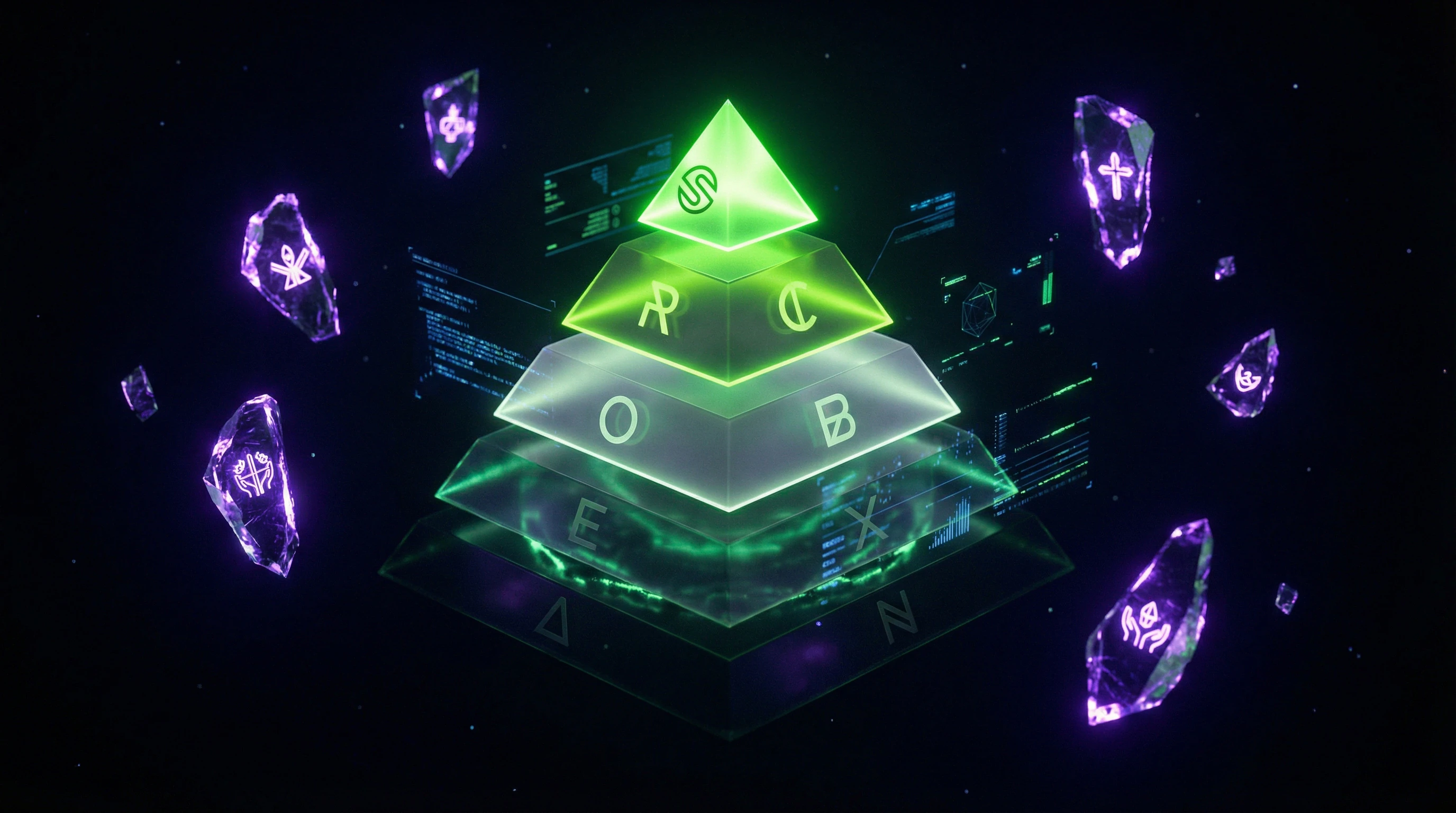
Personal and institutional levels are different games. Religious scientists exist, but this doesn't refute structural conflict: individuals cope through cognitive compartmentalization, keeping contradictory beliefs in different contexts. More details in the Logical Fallacies section.
⚙️ Institutional Logic: The Church as an Organization with Self-Preservation Interests
Religious institutions, like any organizations, protect self-preservation interests: congregation size, financial resources (donations, government funding), social influence (education, healthcare, politics), cultural legitimacy.
Science threatens these interests directly. Scientific education correlates with secularization—shrinking congregations. Scientific explanations compete with religious ones in areas where the church held a monopoly: origin of the world, nature of humanity, meaning of life. Scientific ethics (well-being, autonomy) compete with religious morality (divine commandments).
Conflict of interests—not conflict of ideas. The church protects its resources and influence, using political pressure to restrict scientific education in "sensitive" areas.
🔁 Cognitive Compartmentalization: How Religious Scientists Cope with Contradictions
Religious scientists are often cited as proof of compatibility between faith and science. In reality, they use cognitive compartmentalization—activating different belief systems in different contexts.
In the lab, they demand reproducible evidence; in church, they accept claims about resurrection without it. This isn't intellectual dishonesty—it's a normal cognitive strategy everyone uses. But it doesn't resolve logical incompatibility: double standards are applied, not harmonious integration.
| Context | Standard of Evidence | Type of Beliefs |
|---|---|---|
| Laboratory | Reproducibility, falsifiability | Scientific |
| Church | Authority, tradition, revelation | Religious |
| Daily Life | Social consensus, intuition | Mixed |
🧩 Evolutionary Psychology of Religion: Why Religious Beliefs Are So Persistent
Religious beliefs persist not because they're true, but because they rely on adaptive cognitive mechanisms. Hyperactive agency detection (seeing intentions where there are none), teleological thinking (seeking purpose in natural phenomena), mind-body dualism (sensing consciousness as separate from physics)—all were adaptive in the evolutionary environment.
Better to mistakenly attribute rustling in bushes to a predator than miss a real threat. But in the modern world, these mechanisms produce systematic cognitive illusions, including religious beliefs. This explains religion's prevalence despite lack of empirical evidence: it's built into the architecture of human thinking.
- Hyperactive agency detection → we see intentions in nature → attribute them to gods
- Teleological thinking → we seek purpose in phenomena → find "divine plan"
- Mind-body dualism → we intuitively separate consciousness from physics → believe in immortal soul
- Social learning → we absorb group beliefs → reinforce through rituals
Conflict between church and science at the institutional level is inevitable because they protect different interests and use different criteria for truth. At the personal level, compartmentalization is possible, but it masks rather than resolves the fundamental contradiction. Understanding these mechanisms is the first step toward honest conversation about where cooperation is genuinely possible and where it's an illusion.