 🔬 Religion and Science
Religion and Scienceλ
Everything about Religion and Science: Complete guide, facts, and myth-busting.
Overview
Welcome to the Religion and Science section. Here we've gathered comprehensive information: from history and theory to practical application and criticism.
Reference Protocol
Scientific Foundation
Evidence-based framework for critical analysis
Protocol: Evaluation
Test Yourself
Quizzes on this topic coming soon
Sector L1
Articles
Research materials, essays, and deep dives into critical thinking mechanisms.
🔬 Religion and Science 🔬 Religion and Science
 🔬 Religion and Science
 🔬 Religion and Science
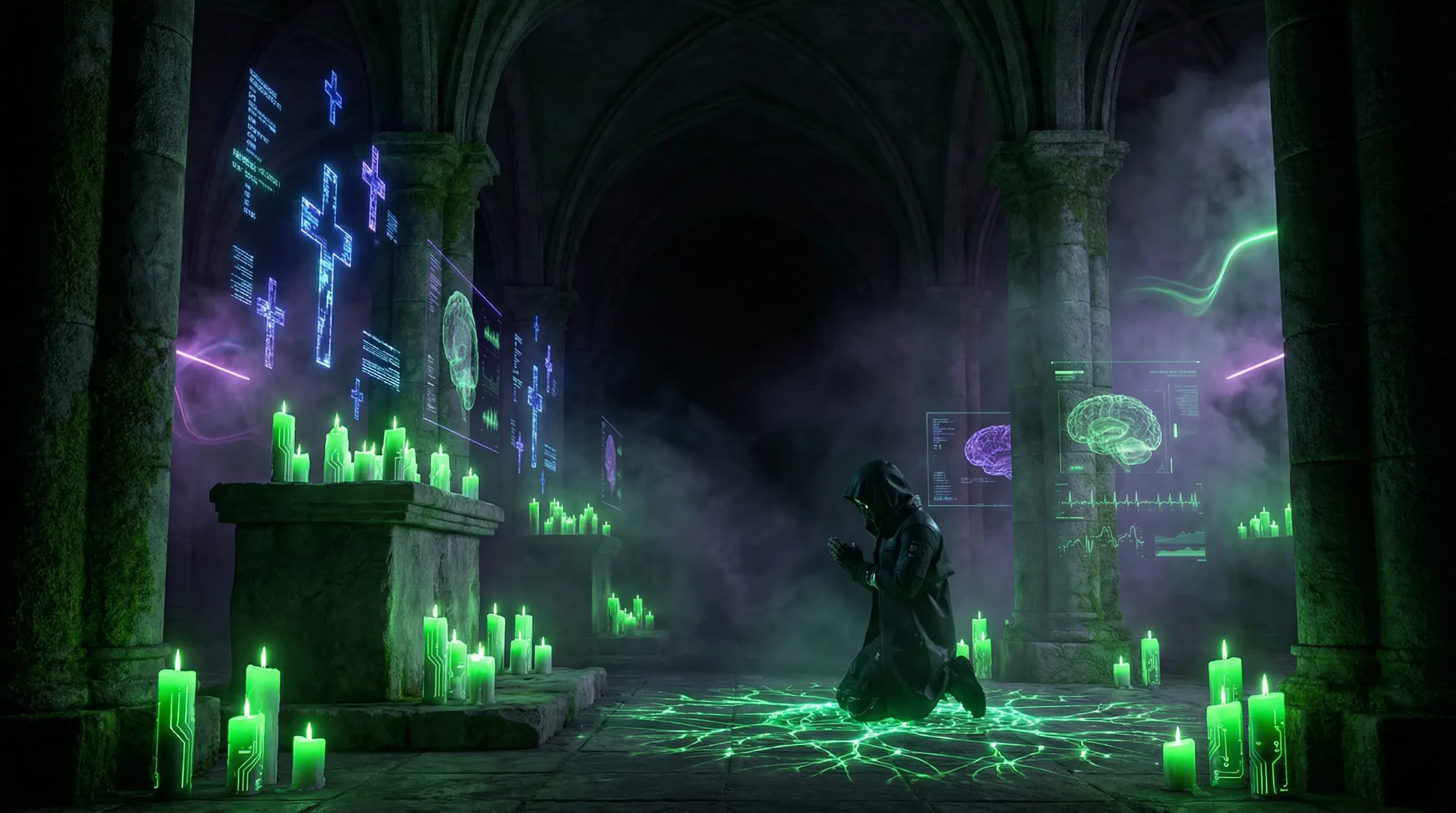 🔬 Religion and Science
⚡
Deep Dive
Religion and Science: The Mechanics of Conflict and Coexistence
The question of how religion and science interact is not a philosophical debate—it's a practical problem of cognitive immunology. Both systems claim to explain reality, use different validation methods, and compete for authority in society.
Conflict arises not because one system is "more correct" than the other, but because they answer different questions—yet people often confuse their domains of competence.
Three Models of Interaction
| Model | Mechanics | Cognitive Trap |
|---|---|---|
| Conflict | Religion and science fight for a monopoly on truth. Each denies the legitimacy of the other. | Binary thinking: if science is right about one thing, it's right about everything. If religion is wrong about facts, it's wrong about meaning. |
| Separation | Religion answers questions of "why" and "how to live." Science answers questions of "how things work." They don't overlap. | Illusion of purity: in practice, both systems invade each other's territory (religion into biology, science into ethics). |
| Integration | Religious ideas are reformulated in scientific terms or vice versa. Search for common language. | Blurred boundaries: each approach loses its specificity, resulting in pseudoscientific mysticism or cold reductionism. |
Each model contains a kernel of truth and a kernel of danger. The choice of model depends on context and goals.
Historical Points of Tension
- Geocentrism vs heliocentrism
- Religious cosmology collided with astronomical observations. The trap: people took this as proof that religion was "wrong," when in reality it was a paradigm shift in science. Religious systems adapted.
- Evolution vs creationism
- Biology proposed a mechanism for the origin of species without divine intervention. The trap: both sides often confuse the scientific question (how organisms evolved) with the philosophical question (is there meaning in the universe). These are different levels of analysis.
- Neurobiology of consciousness vs the soul
- Science maps the brain, religion speaks of an immaterial essence. The trap: assuming that if we find the neural correlate of consciousness, this disproves the idea of a soul. In reality, these are simply different languages describing the same phenomenon.
Cognitive Mechanisms of Conflict
People rarely argue about facts. They argue about whom to trust and which source of authority to recognize.
- Authority of sacred text vs authority of expert consensus
- Intuitive knowledge (revelation, experience) vs systematic knowledge (method, reproducibility)
- Personal faith in meaning vs personal faith in objectivity
- Social identity (I'm a believer / I'm a scientist) vs critical thinking
Conflict often masquerades as a dispute about facts, but it's actually a dispute about the legitimacy of knowledge sources.
Opposing Viewpoints
Position 1: Science will displace religion. As scientific knowledge develops, religion will become unnecessary. People will abandon irrational beliefs.
Problem: 150 years of scientific progress haven't led to religion's disappearance. Instead, differentiation occurred—people use both knowledge sources in different contexts. This indicates that religion performs functions science cannot fulfill (meaning-making, social cohesion, ritual practice).
Position 2: Religion and science are incompatible. They're based on opposite principles (faith vs proof) and cannot coexist in one consciousness.
Problem: most scientists throughout history were religious people. Modern research shows that religiosity and scientific literacy don't correlate as strongly as this position assumes. People are capable of holding incompatible systems in their heads if they're kept in different cognitive compartments.
Position 3: Religion and science complement each other. They answer different questions and can peacefully coexist.
Problem: in practice, boundaries blur. Religion makes scientific claims (about the age of the earth, about human origins). Science makes philosophical claims (about the meaning of life, about the nature of consciousness). Separation only works if both sides respect boundaries, which rarely happens.
Practical Navigation
Rather than choosing between religion and science, it's more useful to develop cognitive flexibility — the ability to switch between different meaning-making systems depending on context.
- Identify what question you're seeking to answer: "how does it work" (science), "what's it for" (philosophy), "how to live" (ethics/religion)?
- Choose the tool that matches the question. Don't seek scientific proof of life's meaning and don't seek spiritual explanations of gravity.
- Check whether one system is encroaching on another's domain. If a religious text makes a scientific claim, evaluate it by scientific criteria.
- Beware of hybrids: pseudoscientific mysticism (science + magic) and anti-scientific religion (religion that denies verifiable facts).
The conflict between religion and science is not a conflict between truth and falsehood. It's a conflict between different ways of organizing knowledge, each useful in its own domain.
Knowledge Access Protocol
FAQ
Frequently Asked Questions
Religion and science are systems of knowledge and practice that study the fundamental questions of existence, reality, and human experience through different methodological approaches—faith and revelation versus empirical observation and experimentation.
The primary purposes include understanding the world and our place in it, self-discovery, addressing existential questions, and solving concrete problems related to meaning, ethics, and the nature of reality.
The history of this field traces back to ancient civilizations where philosophical inquiry about the divine and natural world began to diverge into separate traditions, eventually developing into distinct but sometimes overlapping domains of human understanding.
Key terms include: empiricism, faith, methodology, epistemology, metaphysics, naturalism, supernatural, evidence-based reasoning, revelation, and the relationship between observable phenomena and transcendent claims.
The main distinction lies in methodology and object of study—science relies on testable hypotheses and empirical evidence about the natural world, while religion addresses questions of meaning, purpose, and the transcendent through faith traditions and spiritual practice.
Begin with foundational literature that explores both historical development and contemporary dialogue, understanding basic principles of scientific methodology and major religious philosophical frameworks, and examining case studies where the two domains intersect.
It depends on the depth of engagement. Basic concepts and historical overview are accessible to everyone, while advanced philosophical and theological nuances require sustained study and critical thinking skills.
You'll need access to academic literature from both scientific and religious studies, critical thinking frameworks, historical context, and an open yet rigorous approach to examining claims from multiple perspectives.
The mechanism is based on comparative analysis of how different knowledge systems address similar questions, examining areas of compatibility and conflict, and understanding the distinct but sometimes complementary roles each plays in human understanding.
From several weeks to grasp basic concepts to a lifetime of deeper exploration—the dialogue between religion and science continues to evolve with new discoveries and theological developments.
Many myths exist. It's important to separate facts from fiction.
The main risks are associated with...
The scientific community approaches this...
Yes, if used incorrectly or if safety protocols are ignored.
People with...
Look for peer-reviewed sources and expert opinions.
Among the authorities, we can highlight...
We recommend starting with...
Yes, interest in the topic is growing due to...
The practice can change perception and...