 ⚖️ Apologetics and Critique
Protection of Faith Against Critical Text Analysisλ
An examination of the methodological differences between apologetics, which defends religious beliefs, and critical scholarship, which studies texts without predetermined conclusions
Overview
Apologetics defends faith through arguments, critical scholarship studies texts as historical artifacts. The former begins with a conclusion ("the text is true") and seeks confirmation, the latter 🧩 tests hypotheses without guaranteed outcomes. Within apologetics, three schools debate method: presuppositionalists demand faith as a starting point, classical apologists appeal to logic, evidentialists — to archaeology and manuscripts.
🛡️
Laplace Protocol: Distinguishing apologetics from criticism requires understanding their different goals — defending faith versus understanding texts. Both approaches depend on worldview presuppositions, but critical scholarship makes them explicit and subjects them to testing.
Reference Protocol
Scientific Foundation
Evidence-based framework for critical analysis
Protocol: Evaluation
Test Yourself
Quizzes on this topic coming soon
Sector L1
Articles
Research materials, essays, and deep dives into critical thinking mechanisms.
⚖️ Apologetics and Critique ⚖️ Apologetics and Critique
 ⚖️ Apologetics and Critique
 ⚖️ Apologetics and Critique
 ⚖️ Apologetics and Critique
 ⚖️ Apologetics and Critique
 ⚖️ Apologetics and Critique
 ⚖️ Apologetics and Critique
 ⚖️ Apologetics and Critique
⚡
Deep Dive
The Methodological Fork: Why Apologetics and Criticism View the Same Facts Differently
Apologetics is the systematic defense of religious beliefs through rational arguments. But it does more: it actively participates in creating what is considered orthodox belief.
The apologist is not interested in neutral investigation, but in demonstrating the truth of specific claims. The outcome of argumentation is predetermined—this is a dual function: simultaneously responding to criticism and constructing new theological systems.
| Apologetics | Critical Scholarship |
|---|---|
| Goal: defend the faith | Goal: understand phenomena |
| Outcome known in advance | Outcome open to revision |
| Presuppositions hidden in defense logic | Presuppositions explicit and testable |
Principles of Critical Scholarship: Methodological Neutrality as an Ideal
Critical scholarship uses historical, textual, and empirical methods without presupposing the truth of the claims being studied. Methodological neutrality does not mean anti-religiousness—religious truth claims are investigated as historical and cultural phenomena.
The difference is not whether presuppositions exist (they exist everywhere), but whether they are made explicit and subject to critical examination.
Apologetics and criticism view the same facts differently because they work with different questions. The apologist asks: "How do I defend this belief?" The critic asks: "How did this belief arise and how does it function?"
- The first question
- presupposes an answer built into the very logic of defense.
- The second question
- is open to data and may lead to conclusions that contradict initial expectations.

War of Methods: Why Apologists Argue with Each Other More Than with Critics
Van Til's Presuppositionalism: Rejecting Neutral Ground
Cornelius Van Til developed the presuppositionalist approach: Christian presuppositions are the starting point of any reasoning, and no common neutral ground exists with unbelievers. Any attempt to prove Christianity from supposedly neutral rational foundations already betrays the Christian worldview.
Presuppositionalists insist: all people have basic worldview commitments. The task of apologetics is to show the internal inconsistency of non-Christian worldviews. But a paradox emerges: how do you convince someone if you refuse common criteria of persuasiveness.
Classical Approach: Seeking Rational Bridges
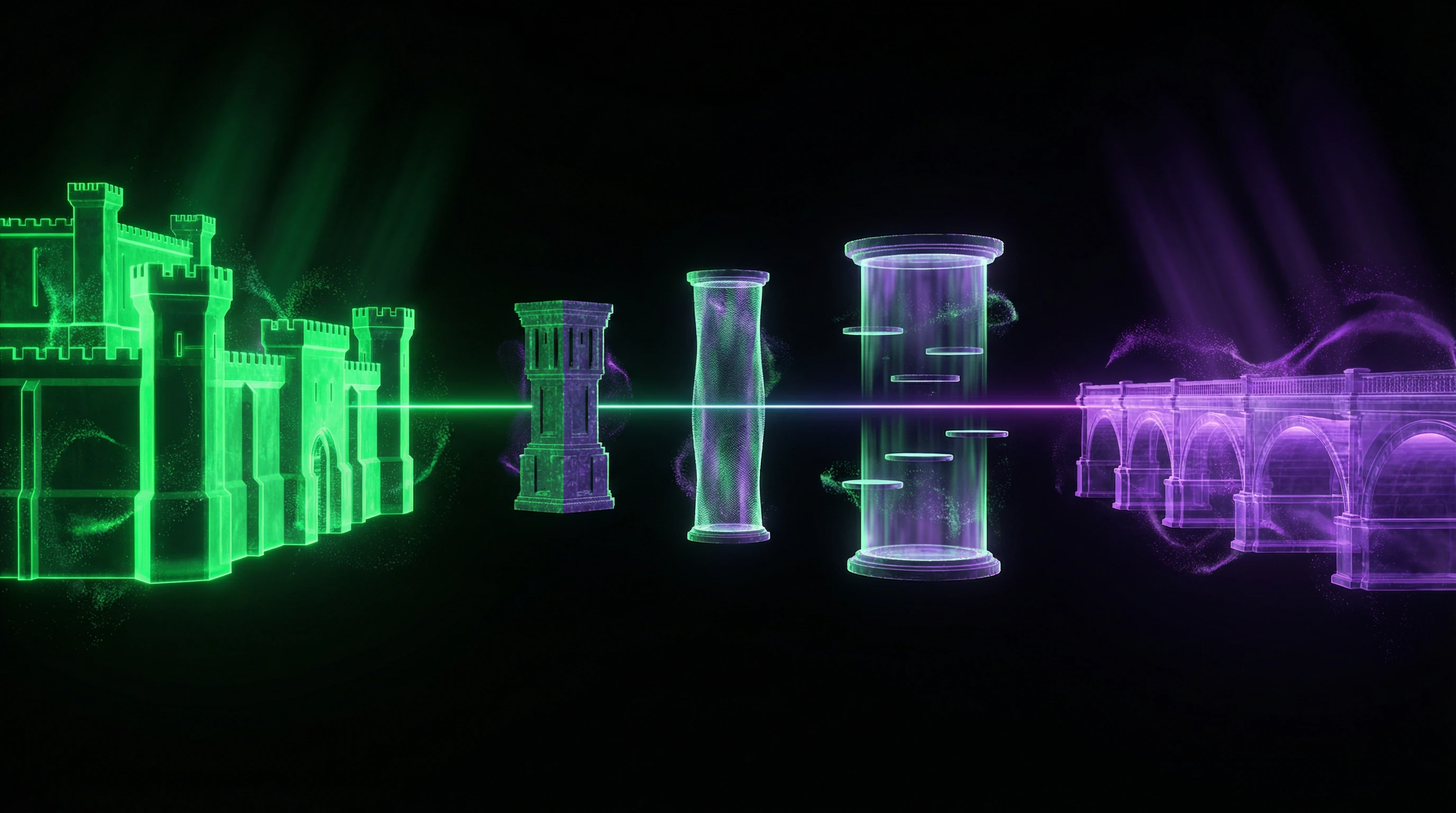
Classical apologetics seeks common ground through natural theology, evidence, and reason—before presenting specifically Christian claims. The presupposition: there exist universal rational principles and empirical data accessible to all regardless of religious beliefs.
- Cosmological arguments—justifying theism through causality and the origin of the world.
- Teleological arguments—justifying through order and purpose in nature.
- Moral arguments—justifying through the existence of moral law.
After this—transition to historical evidence for Christianity. Within the apologetic community there is no clear consensus on the "best" method; the choice depends on context and audience.
The Meta-Apologetic Problem: Which Defense Method Is Correct
Disputes between apologetic schools have spawned meta-apologetics—second-order reflection on the methods themselves, evaluating the effectiveness of approaches. This internal polemic is often sharper than dialogue with critics, because it touches on fundamental questions about the nature of faith, reason, and their relationship.
All apologetic arguments depend on the underlying worldview commitments and presuppositions at their foundation. The idea of "neutral" apologetics remains problematic regardless of the chosen method.
Apologetics as a Genre: Does a Distinct Form of Defensive Discourse Exist
Ancient Debates: Jewish, Christian, and Pagan Polemics
In antiquity, interactions among Jewish, Christian, and pagan thinkers generated extensive polemical literature. Early Christian apologists—Justin Martyr, Tertullian—defended Christianity against charges of atheism and immorality, employing the rhetorical techniques of their time.
Their texts demonstrate genre diversity: philosophical treatises, forensic speeches, dialogues. This complicates classifying apologetics as a unified genre.
- Philosophical treatise — logical justification of doctrine
- Forensic speech — refutation of specific charges
- Dialogue — demonstration of positional superiority through conversation
Contemporary Definitions: Methodology or Rhetorical Strategy
Contemporary scholars debate: is apologetics a distinct genre, a particular methodology, or simply a rhetorical strategy? The only broad consensus: apologetics and critical scholarship operate with different objectives.
Apologetics is defined not by formal characteristics, but by functional purpose—defending particular convictions against criticism.
An open question: can apologetics and criticism coexist in a single scholar's work while maintaining methodological clarity?
| Position | Mechanism | Risk |
|---|---|---|
| Incompatible positions | Apologetics and criticism mutually exclude each other | Analytical flexibility becomes impossible |
| Different tools | Both approaches applied consciously in different contexts | Requires methodological discipline |
The answer depends on whether they are viewed as incompatible positions or as different analytical tools.
The Role of Presuppositions: How Worldview Determines Method
Worldview Commitments in Apologetics
Apologetic arguments inevitably depend on foundational worldview commitments. The concept of "neutral" apologetics is a myth.
Cornelius Van Til's presuppositionalism radicalizes this idea: Christian presuppositions must be the starting point of all reasoning; no common "neutral ground" with unbelievers exists. Classical apologetics takes a different path—seeking common ground through natural theology and rational proofs, then proceeding to specifically Christian claims.
The fundamental difference in understanding the role of presuppositions generates meta-apologetic debates about which method most effectively defends the faith.
The Problem of Neutrality in Critical Scholarship
Critical scholarship positions itself as methodologically neutral regarding religious convictions. It examines texts using historical-critical methods without prior acceptance of their truth claims.
But all scholarly work involves interpretive frameworks and presuppositions. The distinction lies in how explicitly these presuppositions are articulated and subjected to critical examination.
| Apologetics | Critical Scholarship |
|---|---|
| Presuppositions explicit and declared | Presuppositions often implicit |
| Method selection subordinated to defending position | Method selection subordinated to methodological standard |
| Reflection on presuppositions—part of argumentation | Reflection on presuppositions—rare |
The choice of methodology, criteria of evidence, and interpretive strategies always reflects particular philosophical and epistemological commitments. The myth of complete objectivity in critical methods collapses upon acknowledging one's own presuppositions.
This does not imply methodological equivalence between critical scholarship and apologetics. It demands greater reflexivity regarding one's own presuppositions in both domains.
Apologetics and the Creation of Orthodoxy: Defense or Construction?
Constructing Doctrine Through Apologetic Discourse
Apologetic discourse doesn't merely defend orthodoxy—it creates it. When apologists formulate defenses of doctrines against criticism, they simultaneously clarify, systematize, and transform those very doctrines.
Early Christian literature demonstrates this particularly clearly: apologetic texts against pagan and Jewish opponents crystallized Christian identity and theological boundaries.
| Function of Apologetics | Mechanism | Result |
|---|---|---|
| Clarification | Apologist explicitly formulates position instead of implicit belief | Doctrine becomes articulated |
| Systematization | Disparate beliefs organized into coherent system | Philosophical architecture emerges |
| Transformation | Adaptation to new objections changes the doctrine itself | Tradition evolves under pressure |
Apologetics performs not only a defensive but also a constructive function—creating philosophical and theological systems in the process of responding to objections.
Defending Tradition and the Boundaries of Interpretation
Apologetics establishes boundaries of permissible interpretation within a tradition, determining which readings of texts and which theological positions are considered legitimate. This creates tension between the conservative function (preserving tradition) and the innovative role (adapting to new challenges).
Critics point out: establishing boundaries obstructs honest intellectual inquiry by predetermining acceptable conclusions. Defenders respond: every intellectual tradition has basic commitments; apologetics simply makes them explicit rather than concealing them under the guise of neutrality.
The trap is double: the apologist can either ossify into dogmatism or blur boundaries so much that the tradition becomes unrecognizable. Both extremes undermine intellectual honesty.
At the meta-level, this means apologetics is not a neutral tool of defense but an active participant in shaping what counts as orthodoxy. The question isn't whether apologetics defends tradition, but which version of tradition it constructs and who benefits from this.
Practical Application: Navigating Between Defense and Critique
Analyzing Apologetic Literature
When working with apologetic texts, it is critically important to identify the method employed (presuppositionalist, classical, evidentialist) and the underlying assumptions on which it rests.
Distinguish between defensive arguments that respond to specific objections and constructive projects that build comprehensive philosophical or theological systems.
- Check for circularity: does the argument assume what it attempts to prove.
- Identify standards of evidence—what counts as sufficient proof.
- Ensure these standards are applied consistently to all claims.
Evaluating Critical Scholarship
Critical scholarship requires identification of methodological commitments: which historical-critical methods are applied and what philosophical assumptions they incorporate.
The distinction between methodological agnosticism and philosophical naturalism is critically important for fair evaluation of critical work. The former is a temporary suspension of judgment about the supernatural for research purposes. The latter is an a priori denial of the possibility of the supernatural, a hidden assumption masquerading as method.
Assess how explicitly the scholar articulates their own interpretive framework and acknowledges the limitations of their approach.
- Consistency of Criteria
- Are the same standards applied to religious and non-religious sources, or do the criteria shift depending on the desired conclusion.
- Methodological Agnosticism
- The researcher temporarily suspends judgment about the supernatural or has already decided the question before beginning analysis.
- Philosophical Naturalism
- A hidden assumption that excludes supernatural explanation not for methodological but for ontological reasons.
At the meta-level, both positions—apologetic and critical—build their conclusions on a foundation of prior commitments. The reader's task: not to choose the "correct" side, but to see the mechanism by which each side operates.

Knowledge Access Protocol
FAQ
Frequently Asked Questions
Apologetics is the systematic defense of religious beliefs using rational arguments and evidence. Critical scholarship investigates texts and traditions through historical-critical methods without predetermined conclusions about their truth. The main difference lies in objectives: apologetics defends faith, while scholarship pursues objective understanding.
Three primary approaches exist: presuppositionalism (starts from Christian presuppositions), classical apologetics (seeks common ground through natural theology), and evidentiialism (relies on historical evidence). Each method has strengths depending on audience and context. No single "correct" method exists.
Yes, some scholars engage in both activities, but it's important to separate methodologies. Apologetics defends specific beliefs, while scholarship investigates without predetermined conclusions. The key lies in methodological honesty and understanding the differences between these approaches.
No, this is a common myth. Critical scholarship is methodologically neutral—it uses historical and textual methods without a priori rejection of religious truths. Many believing scholars successfully apply critical methods while maintaining their faith.
This is an apologetic approach asserting that Christian presuppositions must be the starting point of all reasoning. Van Til rejected the idea of "neutral ground" with unbelievers, believing that true knowledge is impossible without a Christian worldview. This method stands in opposition to classical apologetics.
Apologetics doesn't merely defend existing orthodoxy but actively participates in its creation and definition. Through apologetic discourse, understanding of what constitutes orthodox teaching is formed. The defense of faith simultaneously constructs doctrine itself.
This question remains debated among scholars. Apologetic texts existed in antiquity (Christian, Jewish, pagan), but no consensus exists on clear genre boundaries. Contemporary researchers continue to debate whether apologetics is a genre or methodology.
Check for logical consistency, factual accuracy, and honesty in representing alternative positions. Quality apologetics acknowledges difficult questions and avoids logical fallacies. Pay attention to whether the author considers contemporary scholarly data and criticism.
No, this is a myth—any research includes certain presuppositions and worldview commitments. However, critical scholarship strives for maximum methodological transparency and openness to revising conclusions. Acknowledging one's own presuppositions is a sign of mature scholarship.
This is second-order reflection—analysis of apologetic methods themselves and their effectiveness. Meta-apologetics evaluates which approaches work best in different contexts and examines the presuppositions of various apologetic strategies. It's a discussion about how to properly defend faith.
No, that's an oversimplification—apologetics also includes positive construction of philosophical and theological systems. It doesn't merely respond to objections but constructively develops religious worldviews. Defense and construction in apologetics are inseparably linked.
Internal debates reflect different understandings of epistemology and the relationship between faith and reason. Presuppositionalists and classical apologists diverge on whether neutral ground with non-believers is possible. These disputes demonstrate that no single apologetic approach exists.
Quality apologetics uses honest argumentation, acknowledges complexities, and respects opponents. Propaganda manipulates facts, ignores counterarguments, and appeals to emotions instead of reason. The key criterion is intellectual honesty and willingness to engage in dialogue.
Classical apologetics considers common ground necessary; presuppositionalism rejects its possibility. Practice shows that some basic logical principles and experience of reality can serve as starting points. The question remains philosophically contested.
Typical problems include: straw man arguments (distorting the opponent's position), circular reasoning, and ignoring counterevidence. Appeals to authority instead of arguments and false dichotomies are also widespread. Critical thinking helps identify these errors.
The effectiveness of apologetics depends on many factors: the interlocutor's openness, argument quality, and context. Research shows rational arguments rarely work in isolation—personal relationships and existential searching matter. Apologetics can clear intellectual obstacles but doesn't guarantee belief change.