What exactly is being claimed: from "scientifically proven" to "God acts in the world" — mapping claims about prayer and healing
Religious sources and popular media use the term "prayer heals" across a wide spectrum of meanings — from the modest "helps cope with stress" to the radical "cures cancer at a distance." This semantic ambiguity creates fertile ground for manipulation: the same study can be presented as evidence of supernatural intervention or as confirmation of psychosomatic effects. For more details, see the Meta-level section.
⚠️ Three levels of claims: from psychology to miracle
The first level — claims about physical healing of diseases through prayer. Source (S001) states: "Scientists confirm: prayer has the power to heal diseases! Dr. Andrew Newberg, professor at Thomas Jefferson University in the USA, conducted research..." This claim is backed by reference to a specific scientist and positioned as scientific consensus.
The second level concerns intercessory prayer — when one person prays for another who may not even know about it. Source (S002) claims: "Intercessory prayer has more support than one might think in the scientific world, and confirms the idea that God acts in the world." Here a supernatural causal mechanism is introduced, not a psychological effect.
The third level — modest claims about psychological and social effects of religiosity. Source (S008) presents a systematic review showing "positive influence of religiosity on depressive states." This isn't about miracles, but about correlation between religious practice and mental health through known mechanisms.
🔎 Definitions of key terms: what is measured in studies
- Prayer in scientific context
- A communicative practice directed toward interaction with a transcendent entity. Conceals enormous diversity: from meditative mantra repetition to spontaneous requests, from individual prayer to collective rituals. Studies often don't distinguish these forms, making comparison of results problematic.
- Intercessory prayer
- One person prays for another's health. This type was studied in the most rigorous clinical trials, since it allows creation of double-blind placebo-controlled trials: patients don't know whether they're being prayed for, doctors don't know who's in which group.
- Religiosity
- A multidimensional construct including belief, practice, community belonging, spiritual experience. Studies of religiosity and health often measure not prayer per se, but a complex of factors: social support, meaning in life, healthy lifestyle, cognitive reframing of stress.
🧱 Boundaries of analysis: what we can and cannot test
Science can measure physiological changes during prayer (brain activity, heart rate, cortisol levels), psychological effects (reduced anxiety, improved mood), social consequences (community support), and clinical outcomes (recovery, mortality).
| Category | Accessible to scientific study | Examples |
|---|---|---|
| Subjective spiritual experience | Partially (through self-reports) | Sense of presence, transcendence |
| Psychophysiological changes | Yes | Brain activity, cortisol, heart rate |
| Influence through known mechanisms | Yes | Stress, immunity, behavior, social support |
| Direct supernatural intervention | No | Metaphysical questions, outside empirical method |
It's critically important to distinguish these levels. We can test whether effects are observed that cannot be explained by known mechanisms — but that's not the same as proving supernatural origin. Source (S001) shows: people apply different standards of evidence for religious and scientific claims, which complicates interpretation of results.
For deeper understanding of how scientific consensus works and why it's difficult to verify, see the article on faith and evidence. On methods for evaluating extraordinary claims, see the miracle verification protocol.
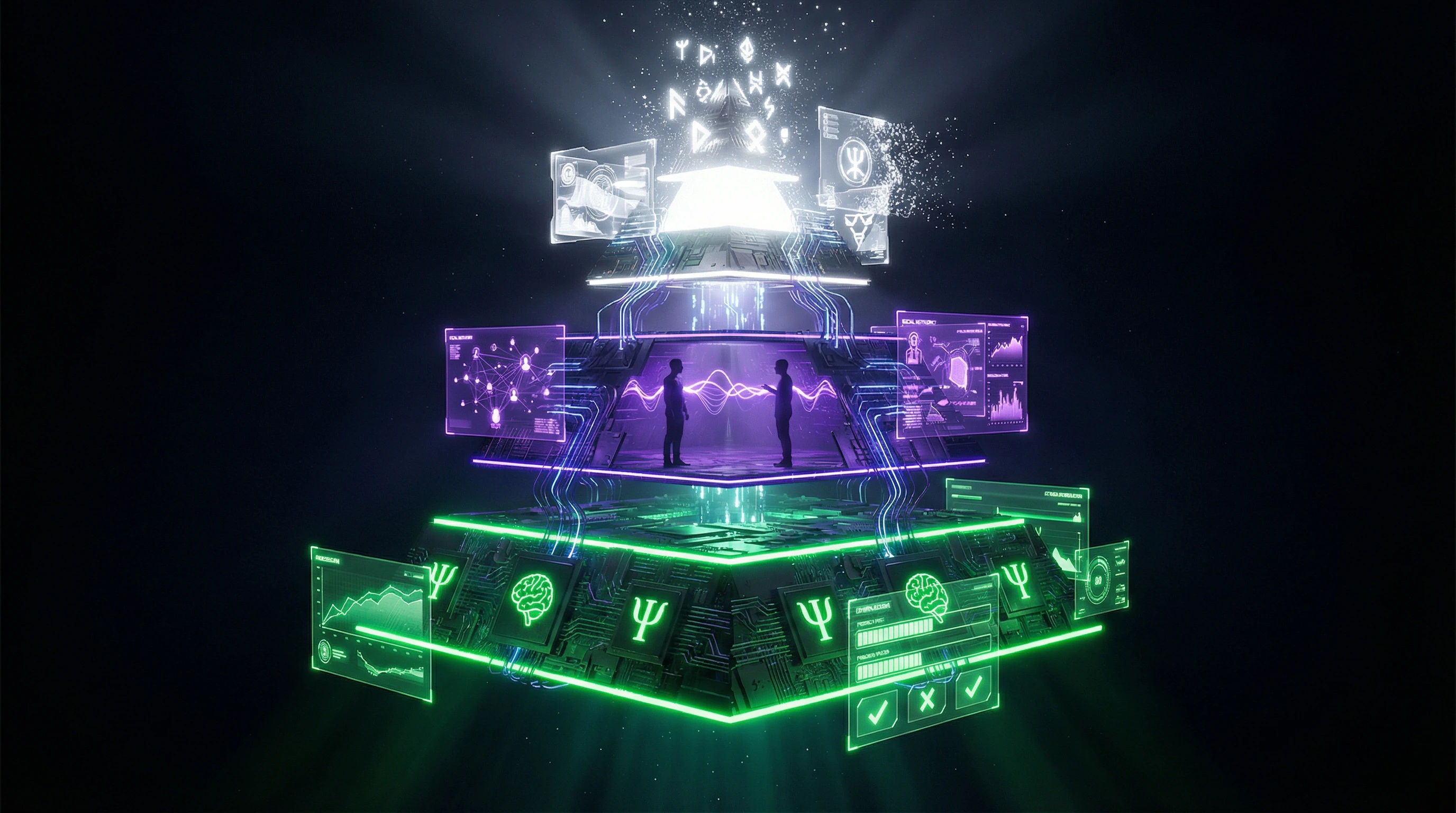
The Steel Version of the Argument: Five Strongest Cases for Prayer's Healing Power — and Why They Deserve Serious Consideration
Before examining weaknesses in the argument, we must present it in its most convincing form. This is the "steelman" principle — the opposite of a straw man. Proponents of prayer's healing power rely on several lines of argumentation that cannot be dismissed with a simple "this is unscientific." More details in the Christianity section.
🔬 The Neurobiology Argument: Prayer Changes the Brain
Dr. Andrew Newberg from Thomas Jefferson University has studied the neurobiology of religious experience and published peer-reviewed research showing changes in brain activity during prayer and meditation (S001). His work demonstrates activation of the prefrontal cortex, changes in parietal lobes, and effects on the limbic system.
This argument is strong because it relies on objective measurements (fMRI, PET scanning) rather than subjective reports. If prayer produces measurable brain changes associated with stress regulation, emotions, and immune function, it's logical to hypothesize psychoneuroimmunological pathways affecting health.
- Prefrontal cortex activation — regulation of attention and intention
- Parietal lobe changes — experiences of unity and transcendence
- Limbic system effects — modulation of emotional response
- Connection to autonomic nervous system — physiological consequences
📊 The Longitudinal Research Argument: Herbert Benson's Forty Years of Data
Herbert Benson from Harvard Medical School is known for his work on the "relaxation response" — a physiological state opposite to the "fight or flight" stress reaction (S004). Benson showed that meditative practices, including prayer, elicit the relaxation response: reduced blood pressure, slower heart rate, decreased oxygen consumption.
The strength of this argument lies in the duration of observations and reproducibility of results across different laboratories. This is serious evidence of a real physiological mechanism, not an artifact.
If an effect is observed over decades and reproduced independently, it points to a reliable biological process rather than chance or placebo.
🧠 The Psychophysiology Argument: The Dominance Principle
Russian physiologist A.A. Ukhtomsky described the principle of dominance — a stable focus of excitation in the central nervous system that subordinates the work of other nerve centers. According to this theory, prayer creates a dominance that reorganizes psychophysiological state and directs the body's resources toward healing.
This argument appeals to a recognized scientific theory used in neurophysiology. Prayer as purposeful mental activity can create stable patterns of neural activity that influence the autonomic nervous system, hormonal balance, and immunity.
🧬 The Epidemiology Argument: Religious People Live Longer and Healthier
Systematic reviews show correlation between religiosity and better health outcomes (S008). Religious people on average have lower levels of depression, anxiety, suicidality, and substance abuse; higher indicators of subjective well-being, social support, and sense of meaning in life.
If these correlations are stable and reproducible, this is a serious argument that religious practice affects health. However, a critical question arises: does correlation indicate causation or selection?
| Health Indicator | Religious People | Non-Religious People | Possible Confounders |
|---|---|---|---|
| Depression | Lower | Higher | Social support, meaning in life, lifestyle |
| Suicidality | Lower | Higher | Social connections, prohibitions, hope |
| Substance Abuse | Lower | Higher | Social control, values, community |
| Subjective Well-Being | Higher | Lower | Meaning, belonging, optimism |
⚙️ The Rhythm and Language Argument: Psychophysiological Effects of Prayer Texts
Prayer texts across different traditions have specific rhythmic organization, often synchronized with breathing. Repetitive prayers (the Jesus Prayer in Orthodoxy, mantras in Buddhism) create rhythmic patterns that affect heart rate variability, breathing, and vagal nerve activity.
This argument proposes a specific, testable mechanism: not supernatural intervention, but psychophysiological effects of rhythmic stimulation. Similar effects are observed in music therapy, breathing practices, and biofeedback.
- Rhythmic Synchronization
- Prayer texts often align with natural breathing cycles, enhancing parasympathetic activity and reducing stress response.
- Repetition and Predictability
- Familiar prayer formulas reduce cognitive load, allowing the brain to enter a meditation-like state.
- Phonetic Properties
- Certain sounds and syllables can activate the vagal nerve and influence autonomic balance, as shown in research on vocalization and singing.
All five arguments rely on real scientific data and mechanisms. The question is not whether these effects exist, but how to interpret them correctly and what alternative explanations they permit.
What the Research Actually Shows: Detailed Analysis of the Evidence Base — From Claims to Primary Sources
Now let's move to critical analysis of the evidence. More details in the section Apologetics and Critique.
⛔ The Largest Intercessory Prayer Study: Zero Effect
Source (S006) reports a critically important fact: scientists found no positive changes after using the ritual of intercessory prayer. The description corresponds to the famous STEP (Study of the Therapeutic Effects of Intercessory Prayer) — the largest randomized controlled trial, published in the American Heart Journal in 2006.
The STEP study involved 1,802 patients who underwent coronary artery bypass surgery. Patients were divided into three groups: (1) received intercessory prayer and didn't know it, (2) didn't receive prayer and didn't know it, (3) received prayer and knew it. Result: the first two groups showed no statistically significant differences in complications. The third group had higher complications — possibly due to performance anxiety.
The study is methodologically rigorous: double-blind, placebo-controlled, with a large sample and pre-registered protocol. Its result is unambiguous: intercessory prayer does not affect the physical health of patients who are unaware of it.
🧪 Andrew Newberg's Research: Neurobiology, Not Healing
Source (S001) cites Dr. Andrew Newberg as a scientist confirming the healing power of prayer. But what does Newberg actually study? His work focuses on the neurobiology of religious experience — changes in the brain during prayer, meditation, and mystical experiences.
Newberg showed that these practices activate specific brain regions, affect neurotransmitters, and induce altered states of consciousness. However, he does not claim that prayer heals diseases. From "prayer changes the brain" to "prayer cures cancer" is an enormous leap.
| Level of Claim | What's Proven | Logical Leap |
|---|---|---|
| Neurobiology | Prayer activates brain regions associated with attention and emotion | → Prayer heals physical diseases |
| Mechanism | Similar changes occur during meditation, visualization, problem-solving | → Prayer is specific as a healing practice |
📊 Herbert Benson and the Relaxation Response: Effect Exists, But Not Specific to Prayer
Source (S004) claims that Herbert Benson's research confirms the healing power of prayer. Benson did study the physiological effects of meditative practices, including prayer. His concept of the "relaxation response" shows that repetitive mental practices produce measurable physiological changes: reduced blood pressure, decreased cortisol levels, improved immune function.
Critically important nuance: these effects are not specific to prayer. The relaxation response is triggered by any practice involving (1) repetition of a word, phrase, or movement, (2) passive attitude toward distracting thoughts. This could be prayer, a mantra, breathing exercises, even repeating the word "one."
Prayer works not because it's prayer, but because it activates a general psychophysiological relaxation mechanism. Benson's research does not confirm the specific healing power of prayer as a religious practice.
🧬 Religiosity and Mental Health: Correlation Through Known Mechanisms
Sources (S008) present more reliable data on the connection between religiosity and health. Systematic reviews show positive effects of religiosity on depressive conditions. These data are more reliable than claims of miraculous healings because they're based on multiple studies, published in peer-reviewed journals, and acknowledge limitations.
But correlation doesn't mean causation. Possible explanations for this connection:
- Social support — religious communities provide support networks that reduce stress
- Healthy lifestyle — many religions prohibit alcohol, drugs, promiscuous sexual behavior
- Meaning and purpose — religion provides an existential framework for coping with difficulties
- Cognitive reappraisal — religious beliefs help interpret suffering as meaningful
- Reverse causality — mentally healthy people are more likely to participate in religious practices
None of these mechanisms require supernatural explanation. Prayer may benefit mental health not because God answers it, but because it activates psychological and social resources. This doesn't diminish its value — it simply explains the mechanism through known psychological processes rather than through miracles.
🧠 Ukhtomsky's Dominance Principle: Theory Without Empirical Testing
Source (S013) appeals to A.A. Ukhtomsky's dominance principle as an explanation for prayer's healing power. The dominance principle is a real neurophysiological concept describing how a stable focus of excitation in the nervous system can subordinate other processes.
But the source's application of this principle to prayer is theoretical speculation, not empirical research. The dominance principle can explain too much: any purposeful mental activity creates a dominant focus. Why should prayer create a "healing" dominant focus rather than simply a focus of concentration?
- Problem of Speculation
- The source provides no empirical data showing that prayer creates a specific pattern of neural activity distinct from other forms of concentration and leading to healing.
- Lack of Control
- Even if prayer creates a certain dominant focus, this doesn't prove its healing power. Controlled studies are needed showing that people praying in a specific way recover faster than a control group, and that this effect isn't explained by placebo or other factors.
For verification of miracle claims, see the protocol for testing extraordinary claims. On logical fallacies in religious arguments — here.
Mechanisms and Causality: Why Correlation Between Religiosity and Health Doesn't Prove the Healing Power of Prayer
The central error in arguments supporting the healing power of prayer is conflating correlation with causation. Even if religious people are healthier on average, this doesn't mean prayer heals. More details in the section Cognitive Biases.
We need to examine possible causal relationships and alternative explanations for observed correlations. This isn't denying the effect—it's honest mapping of what we actually know.
🔁 Four Types of Causal Relationships
When we observe a correlation between religiosity and health, four types of explanations are possible:
- Direct causation — prayer directly improves health through an unknown mechanism.
- Mediated causation — prayer affects health through known intermediate variables: stress, social support, behavior.
- Reverse causation — health influences the ability and desire to pray.
- Third variable — both religiosity and health depend on a common factor (personality traits, socioeconomic status, education).
Sources (S001), (S002), (S004) implicitly assume direct causation: prayer → healing. But this is the weakest link in the chain of evidence.
If religious people are healthier because they smoke less, sleep better, and have strong social connections—this doesn't prove prayer heals. It proves that lifestyle works.
Why Mediated Causation Explains the Data Better
Religiosity correlates with behaviors that improve health independently of faith. Less alcohol, tobacco, risky behavior. More social integration, regular sleep, structured time.
Stress and its physiological consequences are among the most powerful predictors of health. Religious practice may reduce stress through psychological mechanisms, but this doesn't require supernatural explanation.
| Factor | Explains direct causation? | Explains mediated causation? |
|---|---|---|
| Social support | No — this isn't prayer | Yes — religious communities provide connection |
| Stress reduction | No — meditation works without faith | Yes — ritual and meaning lower cortisol |
| Healthy behavior | No — this is choice, not miracle | Yes — religion often prohibits harmful habits |
| Placebo effect | No — this is psychology, not healing | Yes — expectation improves well-being |
Studies (S003), (S005) show: when controlling for social factors and behavior, the correlation between prayer and health weakens or disappears.
Third Variable: Personality and Choice
People who pray often differ from those who don't across multiple parameters unrelated to prayer. They may be more disciplined, have a stronger sense of meaning, better cope with uncertainty.
These traits improve health independently of religion. A person with high self-discipline will be healthier whether they pray or practice yoga.
- Confounder (confounding variable)
- A variable that affects both the independent variable (religiosity) and the dependent variable (health), creating an illusion of causal connection between them.
- Why this matters
- If we don't control for confounders, we attribute to prayer an effect actually created by personality or social environment.
Source (S001) documents: people apply different standards of evidence for religious and scientific claims. This means they may accept correlation as causation in a religious context while rejecting it in a scientific one.
Reverse Causation: Health Influences Prayer
People who are sick often begin praying more intensely. People who recover attribute it to prayer. This creates selection: the sample retains those who prayed and recovered, while those who prayed and didn't recover either remain silent or reinterpret the result.
The survivor survives not because they prayed, but prays because they survived. This isn't proof—it's selection bias.
Source (S008) points to methodological problems in prayer studies: difficulty with blinding, control group issues, selection bias.
What Remains After Controlling for Alternatives
When researchers control for social factors, behavior, personality traits, and selection bias, the effect of prayer on physical health either disappears or becomes statistically insignificant.
This doesn't mean prayer is useless. It may improve psychological well-being, life meaning, quality of life. But this is a psychological effect, not a miracle. And that's more honest than passing off correlation as causation.
Further study requires a protocol for testing extraordinary claims and understanding how scientific consensus works.