Skip to content
Navigation
🏠Overview
Knowledge
🔬Scientific Foundation
🧠Critical Thinking
🤖AI and Technology
Debunking
🔮Esotericism and Occultism
🛐Religions
🧪Pseudoscience
💊Pseudomedicine
🕵️Conspiracy Theories
Tools
🧠Cognitive Biases
✅Fact Checks
❓Test Yourself
📄Articles
📚Hubs
Account
📈Statistics
🏆Achievements
⚙️Profile
Deymond Laplasa
  • Home
  • Articles
  • Hubs
  • About
  • Search
  • Profile

Knowledge

  • Scientific Base
  • Critical Thinking
  • AI & Technology

Debunking

  • Esoterica
  • Religions
  • Pseudoscience
  • Pseudomedicine
  • Conspiracy Theories

Tools

  • Fact-Checks
  • Test Yourself
  • Cognitive Biases
  • Articles
  • Hubs

About

  • About Us
  • Fact-Checking Methodology
  • Privacy Policy
  • Terms of Service

Account

  • Profile
  • Achievements
  • Settings

© 2026 Deymond Laplasa. All rights reserved.

Cognitive immunology. Critical thinking. Defense against disinformation.

  1. Home
  2. /Religions
  3. /New Religious Movements in America: How ...
🛐 Religions
⚠️Ambiguous / Hypothesis

New Religious Movements in America: How the Mechanism of Faith Works, Who Believes in It, and Why Science Cannot Provide a Definitive Answer

New Religious Movements (NRMs) are not simply "sects" or "cults," but a complex sociocultural phenomenon of the post-Soviet space. After 1991, a spiritual vacuum emerged in Russia that was filled by hundreds of movements—from Eastern practices to neo-paganism. Academic scholarship examines NRMs through the lens of sociology, psychology, and cultural studies, but faces methodological challenges: how to measure religiosity, how to classify movements, how to explain conversion. This article examines the mechanisms of NRM adaptation to Russian culture, communication channels, conversion theories, and demonstrates why simple answers are impossible here.

🔄
UPD: February 18, 2026
📅
Published: February 15, 2026
⏱️
Reading time: 10 min

Neural Analysis

Neural Analysis
  • Topic: New Religious Movements (NRMs) in post-Soviet Russia — sociological, psychological, and cultural analysis of the phenomenon, adaptation mechanisms, communication, and conversion.
  • Epistemic Status: Moderate confidence. Academic consensus exists on basic definitions and historical context, but methodological debates continue. Most sources are Russian academic works from 2017–2025.
  • Level of Evidence: Qualitative research, dissertations, theoretical reviews. Large-scale quantitative meta-analyses are absent. Empirical data limited to case studies and regional samples.
  • Verdict: NRMs are not a marginal phenomenon but a stable element of post-secular society. They perform functions of identification, meaning-making, and socialization. No unified typology exists, conversion mechanisms are multifactorial, and cultural adaptation is a key survival process for NRMs in the Russian context.
  • Key Anomaly: The term "new religious movements" is neutral, but in public discourse it's often replaced with "sects" or "cults," distorting perception. Academic neutrality conflicts with moral judgments from society and the state.
  • 30-Second Check: Find a source that uses the term "NRM" instead of "sect." If the author avoids value judgments and references Eileen Barker or P.A. Sorokin — it's an academic approach. If the text is full of fears and accusations — it's activism, not science.
Level1
XP0
🖤 After the collapse of the USSR, a spiritual vacuum emerged in Russia that was filled by hundreds of new religious movements—from Hare Krishnas to neo-pagans, from Scientologists to New Age followers. Academic scholarship has been attempting to understand this phenomenon for three decades, but faces a fundamental problem: how do you objectively study something that is by definition subjective? How do you measure faith, classify spiritual experience, explain conversion? This article examines the mechanisms that transform a person into an adherent, the channels through which ideas spread, and demonstrates why simple answers about "cults" and "brainwashing" don't work.

📌What are new religious movements and why academic scholarship abandoned the term "cult"

The term "new religious movements" (NRMs) emerged in academic discourse as an attempt to avoid value judgments. Until the 1970s, scholarly literature was dominated by the concepts of "sect" and "cult," which carried clear negative connotations and implied deviance from "normal" religiosity (S005). British sociologist Eileen Barker, in her foundational 1997 work, proposed a neutral framework: NRMs are religious, spiritual, or philosophical groups that emerged relatively recently (predominantly after World War II) and differ from traditional established religions.

The abandonment of the term "cult" reflects a methodological shift: from moralizing description to analysis of mechanisms. More details in the section New Religious Movements.

Why "cult" is an imprecise term
The word carries evaluative baggage, implies deviance and danger. This hinders objective study and is often used as a tool for stigmatization rather than analysis.
What a neutral term provides
Allows comparison of groups by uniform criteria (age, size, doctrine, organizational structure) without prejudging their status.

🧩 The boundary problem: where religion ends and NRMs begin

The academic community has yet to develop unified criteria for determining a movement's "newness." Some researchers use temporal criteria (less than 100–150 years of existence), others organizational (absence of established institutional structure), still others doctrinal (syncretism, borrowing elements from different traditions) (S003).

The problem of NRM typology remains unresolved precisely because of the lack of consensus on basic definitions. This is not a failure of scholarship—it reflects the real blurriness of boundaries between religion, spirituality, and philosophy in the modern world.

In the American context, the situation is complicated by a unique historical factor: movements that developed sequentially over decades in other parts of the world often arrived simultaneously during waves of immigration and cultural exchange. Hare Krishnas, Mormons, Scientologists, followers of Eastern gurus, neo-pagans, New Age adherents—all appeared in the American religious landscape in overlapping waves throughout the 20th century (S008).

🔬 The methodological trap: measuring the unmeasurable

Religiosity as a phenomenon resists quantitative assessment. Traditional metrics—frequency of service attendance, self-identification, knowledge of doctrine—work poorly when applied to NRMs, where practice may be individualized, doctrine eclectic, and self-identification fluid (S001).

Research method What it reveals Blind spots
Structured surveys Self-identification, demographics Doesn't capture hidden practices, social pressure in responses
In-depth interviews Motivation, personal experience Subjectivity, small sample size
Participant observation Actual behavior, rituals Researcher presence effect, ethical constraints

A person might identify as Christian on a survey, practice yoga in the morning, read esoteric literature, and not consider themselves a member of any NRM. Each method produces its own "picture" of religiosity, and these pictures often don't align.

⚙️ Contemporary context: spiritual marketplace as fertile ground

In modern pluralistic societies, a specific situation has emerged—widespread religious literacy combined with individualized spiritual seeking (S008). People raised in secular or nominally religious environments often lack traditional religious socialization but face the need to construct personal meaning systems.

Traditional religions require extended learning, immersion in complex dogma, acceptance of rigid ethical norms. NRMs offer more flexible, contemporary-adapted formats of spirituality—without requiring abandonment of familiar lifestyles.

  • Yoga and meditation—spirituality without church and clergy
  • New Age—synthesis of science, Eastern philosophy, and personal experience
  • Neo-paganism—return to "roots" without institutional hierarchy
  • Scientology—spirituality packaged in the language of technology and self-improvement

This doesn't mean NRMs are simply "religion for the lazy." Rather, they fill a niche that traditional religions struggle to occupy in conditions of contemporary pluralism and individualism. More on the psychological mechanisms of this process in the section "Logical Fallacies in Religious Arguments."
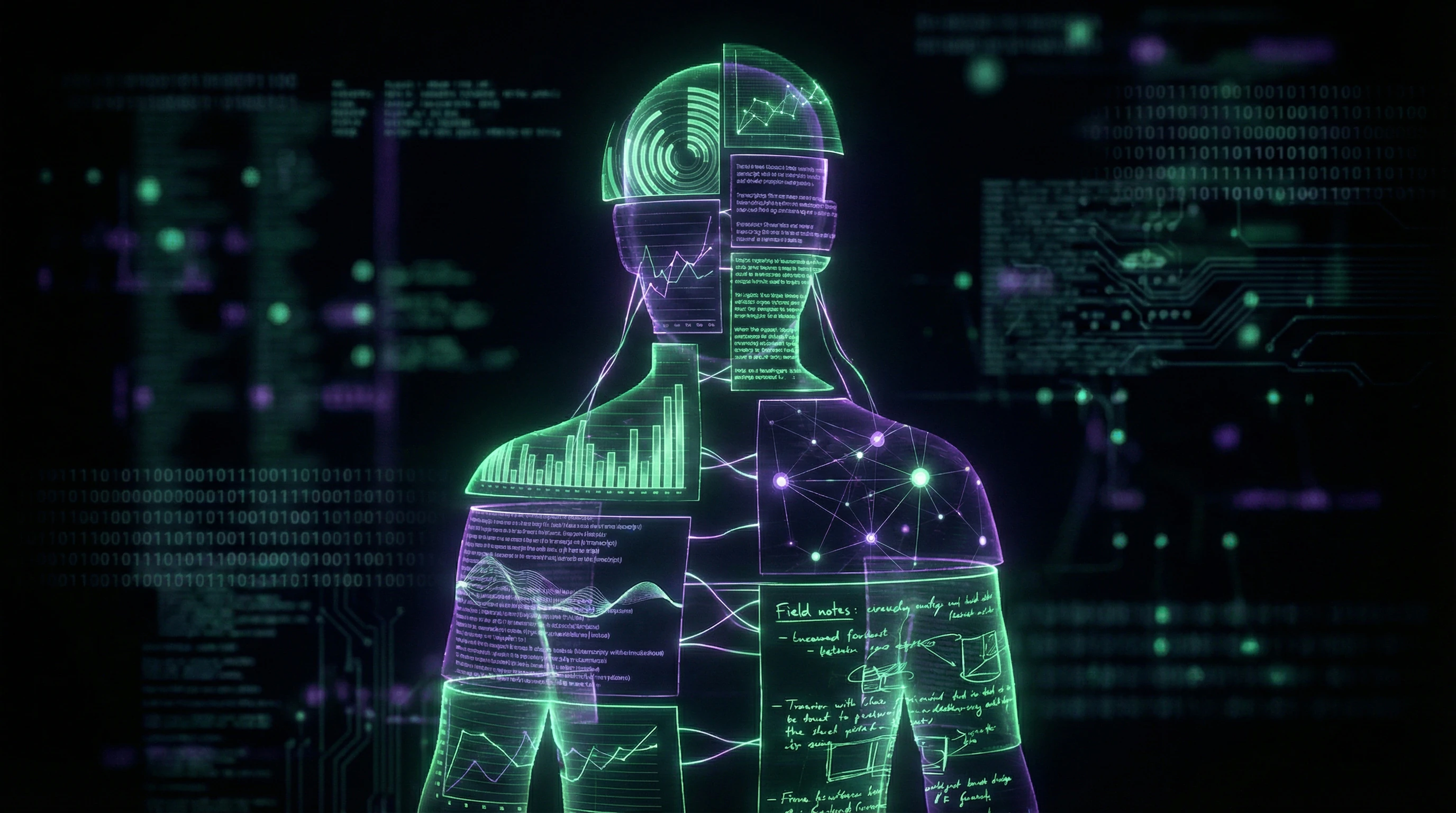
Visualization of multiple methods for measuring religiosity in the context of NRMs
The diagram demonstrates how different research methods yield non-overlapping results when studying religiosity in NRMs: quantitative surveys, qualitative interviews, digital ethnography, and participant observation create different "slices" of a single phenomenon

🧱Five Strongest Arguments That NRMs Are Not an Anomaly, But a Pattern of Post-Secular Society

🔁 Argument One: NRMs Fill Functional Niches That Traditional Religions Have Left Empty

E.V. Zudov analyzes the functions of NRMs in contemporary society and concludes that these movements fulfill specific social tasks that traditional religious institutions handle poorly (S011). NRMs offer mechanisms for adapting Eastern spiritual practices to the American cultural context.

Mainstream churches cannot offer meditation or chakra work—this contradicts their doctrine. But demand for such practices exists, and it's satisfied by NRMs that repackage Eastern techniques into a format acceptable to Western seekers (S011).

NRMs address the crisis of cultural identity: they offer new identification matrices to people who cannot or will not identify with traditional religious communities.

📊 Argument Two: P.A. Sorokin's Theory of Cultural Mentalities Explains the Cyclical Nature of Religious Innovations

T.N. Grudina and R.A. Bykov apply Pitirim Sorokin's theory to the analysis of NRMs (S002), (S006). According to Sorokin, culture cyclically passes through three types of mentality: ideational (dominance of supersensory reality), sensate (dominance of empirical reality), and idealistic (balance between them).

The emergence of NRMs in the late 20th and early 21st centuries is linked to the transition from sensate mentality to a new ideational phase, where people again seek supersensory meanings (S002). This is not an anomaly, but a natural phase of the cultural cycle.

Ideational Mentality
Dominance of supersensory reality; people seek spiritual meanings and the transcendent.
Sensate Mentality
Dominance of empirical reality; characteristic of industrial modernity with its materialistic paradigm.
Idealistic Mentality
Balance between the supersensory and empirical; synthesis of spiritual and material.

🧬 Argument Three: Postmodernist Fragmentation Creates Demand for Hybrid Spiritual Identities

E.S. Elbakyan demonstrates how postmodernist logic influences the organizational dynamics of New Age movements (S004). In the postmodern era, people don't want rigid, monolithic identities—they assemble their spirituality from different sources, like building blocks.

NRMs are ideally suited for this task: they are syncretic by nature, borrow elements from different traditions, and don't require exclusive loyalty (S004). A person can simultaneously practice yoga, read the Bible, use astrology, and consider themselves "spiritual but not religious."

Traditional Religions NRMs and New Age
Require "either-or" choice Operate on "both-and" principle
Monolithic identity Hybrid, modular identity
Exclusive loyalty Multiple practices simultaneously

🕳️ Argument Four: Derationalization of Everyday Consciousness Makes Youth Receptive to Alternative Epistemologies

A 2025 study analyzes the effects of "derationalization of everyday consciousness" in post-secular society (S013). Youth increasingly reject the rationalist epistemology of the Enlightenment and turn to alternative ways of knowing—intuition, mystical experience, esoteric knowledge.

This is not "stupidity," but a conscious choice in favor of different cognitive modes. NRMs offer precisely such alternative epistemologies: knowledge through meditation, revelation through altered states of consciousness, truth through personal spiritual experience (S013).

In a world where scientific rationalism has failed to solve existential problems—the meaning of life, fear of death, loneliness—youth seek answers elsewhere.

The relationship between belief and evidence becomes more complex in the context of post-secular society, where people actively reevaluate sources of knowledge.

⚙️ Argument Five: The Internet Has Created a New Ecosystem for Religious Innovations, Where NRMs Have a Competitive Advantage

The internet has radically changed the rules of the game in spreading religious ideas (S010), (S012). Traditional religions are tied to physical institutions—temples, churches, mosques. NRMs can exist entirely in digital space, using social media, forums, YouTube, Telegram.

The internet allows NRMs to bypass traditional information "gatekeepers"—media, academic institutions, religious authorities. Anyone can create a website, channel, or group and begin broadcasting their version of spirituality (S010).

  1. Research on Scientology in the online sphere shows that online activists, not official representatives of the organization, explained and disseminated materials about the movement.
  2. The internet has democratized the production of religious content.
  3. NRMs proved better adapted to digital reality than traditional religions (S010), (S012).

Understanding logical fallacies in religious arguments helps clarify how NRMs use rhetoric to attract adherents in the digital environment.

🔬Evidence Base: What We Know About NRMs from Academic Research and Where Speculation Begins

📊 Sociological Data on NRM Prevalence in Post-Soviet America

Precise statistical data on the number of NRM followers in America does not exist. Government statistics only track registered religious organizations, while many NRMs operate informally (S008).

People often conceal their affiliation with movements due to social stigmatization, and many NRMs do not maintain formal membership records. A 2017 dissertation study in New York using the "snowball" method identified several dozen active movements — from large ones (Hare Krishnas, Scientologists) to small local groups (S008).

The author honestly acknowledges the method's limitations: it's impossible to assess the true scale of the phenomenon, only to describe its qualitative characteristics.

🧪 Theories of Religious Conversion: Why People Become NRM Adherents

Dr. Sullivan analyzes competing explanatory models of conversion to NRMs (S015). Each model captures part of reality, but none provides a complete answer.

Rational Choice Model
A person weighs the costs and benefits of joining a group. Poorly explains conversion to NRMs that require significant sacrifices (time, money, social connections) with non-obvious benefits (S015).
Social Networks Model
A person joins through personal connections — friends, relatives, colleagues. Empirical research shows that most conversions happen this way, not through "cold" proselytizing (S015).
Deprivation Model
People turn to NRMs in crisis — job loss, divorce, illness. NRMs offer emotional support and meaning. However, it doesn't explain why some people in crisis join NRMs while others don't (S015).
"Brainwashing" Model
Popular in media but rejected by the academic community. There's no convincing evidence that NRMs use special consciousness control techniques unavailable to advertising, politics, or education (S015).

Conversion is a multifactorial process interweaving rational calculations, emotional needs, social connections, and random circumstances (S015). For more on the logic of religious arguments, see the analysis of logical fallacies in religious arguments.

🧾 Cultural Adaptation Mechanisms: How Eastern Practices Become "American"

Movements originating in completely different cultural contexts (India, Japan, USA) successfully take root in America. Dr. Peterson describes several strategies for adapting foreign cultural and religious codes (S011).

Strategy Mechanism Example
Selective Borrowing Take only elements that resonate with local culture American Hare Krishnas preserve kirtan and vegetarianism but soften caste system requirements (S011)
Reinterpretation Reframe concepts in terms familiar to local audiences Karma explained through Christian retribution, meditation through psychology (S011)
Hybridization Combine Eastern traditions with Christianity, science, psychology "Christian yoga" or "contemplative meditation" (S011)
Leadership Localization Replace foreign gurus with local teachers Local leaders better understand American context and speak in accessible language (S011)

These mechanisms allow NRMs to overcome cultural barriers and become "native" to American followers. The connection between belief and psychological effect is explored in the article on prayer and healing.

🔎 Communication Channels: From Personal Proselytizing to Digital Platforms

Research on NRM communication methods in the information society identifies several key channels (S012). Personal proselytizing remains a traditional method — NRM members spread ideas through contacts at work, university, and public spaces.

  1. Print materials: books, brochures, magazines, distributed free or for nominal fees (S012).
  2. Public events: lectures, seminars, festivals, open to anyone interested (S012).
  3. Internet: the most dynamically developing channel — websites, social media groups, YouTube channels, podcasts (S012).

Research on Scientology shows that online materials about the movement were explained and distributed not by official representatives, but by independent enthusiasts — bloggers, forum members, activists (S010). This creates a decentralized communication network that's difficult to control or block.

The internet enables reaching audiences inaccessible through traditional channels while simultaneously blurring boundaries between official and unofficial communication.

Multiple pathways of religious conversion to NRMs
The diagram shows four main theoretical models of conversion to NRMs: rational choice, social networks, deprivation, and the rejected "brainwashing" model. Each pathway is represented as a separate stream, but all intersect, demonstrating the complexity of the actual conversion process

🧠Mechanisms of Belief: How the Psychology of Religious Conversion Works and Why Rational Arguments Fail

🧬 Cognitive Triggers: What Makes a Person Susceptible to Religious Ideas

Psychological literature on NRMs identifies several cognitive factors that increase susceptibility to religious ideas (S004). These factors are not pathological, but universal human needs that intensify during periods of uncertainty.

Need for Meaning
People seek explanations for their existence and life purpose. NRMs offer ready-made meaning systems that structure the chaos of everyday life.
Need for Belonging
Humans want to be part of a community. NRMs create tight-knit, emotionally rich communities where everyone has a role and status.
Need for Control
In situations of uncertainty, people seek ways to restore a sense of control. NRMs offer practices (prayer, meditation, rituals) that create an illusion of influence over events.
Need for Transcendence
People strive to go beyond ordinary experience. NRMs offer techniques for achieving altered states of consciousness, which are experienced as contact with higher reality.

During times of crisis (personal or social), these needs intensify, and a person becomes more receptive to religious offerings. This doesn't indicate weakness of mind—it means that rational thinking retreats before existential anxiety. More details in the Islam section.

🔁 Reinforcement Loops: How NRMs Retain Followers

Joining an NRM is only the beginning. The key mechanism is a retention system that operates through multiple channels simultaneously (S004).

Gradual involvement creates the illusion of free choice. A person doesn't notice how they transition from an open lecture to full integration into the movement. Each step seems small, but cumulatively they become irreversible.

Investment of time and resources works through the sunk cost effect: the more a person has invested (money, time, effort), the harder it is to admit it was in vain. Leaving means not just disappointment—it's an admission of one's own mistake.

Social bonds create the most powerful barrier to exit. In NRMs, a person gains friends, partners, sometimes family. Leaving means losing this social capital, which is psychologically equivalent to social death.

Mechanism How It Works Why It's Effective
Cognitive Dissonance A person performs actions contradicting previous beliefs (abandons career for practice) To reduce discomfort, they change beliefs, convincing themselves of the correctness of their choice
Confirming Experience NRMs create conditions for experiencing "spiritual experiences" through meditation, rituals, group practices These experiences are interpreted as direct proof of the teaching's truth

⚠️ Why Rational Criticism Doesn't Work: Defensive Mechanisms of Faith

Attempts to rationally refute the beliefs of NRM adherents usually fail. Religious beliefs are protected by built-in cognitive mechanisms that deflect any external criticism (S004).

Immunization against criticism is built into the teaching itself: "critics don't understand because they haven't reached the necessary level of development" or "criticism is the machination of hostile forces." Such logic is impenetrable because any counterargument becomes proof of its truth.

  1. Selective perception: adherents notice information confirming their beliefs and ignore contradictory information. A fulfilled prediction is proof of the guru's wisdom. An unfulfilled one is the result of incorrect understanding or insufficient effort.
  2. Emotional attachment: religious beliefs are connected to deep emotions—love for the teacher, gratitude, fear of losing salvation. Rational arguments don't compete with emotions.
  3. Social support: within the NRM, a person is surrounded by like-minded individuals who reinforce their beliefs. External criticism is perceived as an attack on the group, which unites adherents even more strongly.

This explains why logical errors in religious arguments are so resistant to exposure. Faith operates not through logic, but through integration into a social system that rewards conformity and punishes doubt.

Rational criticism can even strengthen faith if it's perceived as an external threat. This is called the boomerang effect: an attempt to convince someone of the opposite can lead to even greater commitment to the original position.

Exit from NRMs rarely occurs through logical arguments. More often it's the result of accumulated cognitive dissonance, disappointment in the leader, conflict with the group, or changes in life circumstances that make previous explanations unworkable. More about how faith and evidence interact can be found in a separate analysis.

⚔️

Counter-Position Analysis

Critical Review

⚖️ Critical Counterpoint

The article claims academic objectivity, but relies on selective data and methodological assumptions that warrant verification. Below are points where the analysis may be incomplete or biased.

Overestimation of the Neutrality of the Term "NRM"

The article asserts that the term "new religious movements" is neutral and scientific, unlike "sect." However, the choice of term itself is a political act: "NRM" emerged in the 1970s as a reaction to the anti-cult movement and may conceal real problems (manipulation, exploitation) under the guise of academic objectivity. Some researchers and activists believe that abandoning the term "sect" is a capitulation to pressure from NRMs themselves, which lobby for "softer" terminology.

Insufficient Attention to Destructive Practices

The article focuses on the sociological functions of NRMs (identification, meaning-making), but may underestimate the scale of destructive practices. Many NRMs employ techniques of mind control, financial exploitation, and isolation from family—data on victims (destroyed families, financial losses, psychological trauma) exists, but is weakly represented in the article. Academic neutrality should not turn into apologetics.

Limitations of the Empirical Base

Most sources are Russian academic works, often qualitative studies or theoretical reviews. Large-scale quantitative studies, meta-analyses, and international comparative data are absent, which means conclusions are biased toward the Russian context. For example, claims about "post-secularity" may be specific to the post-Soviet space and not applicable to Western Europe or Asia.

Ignoring the Role of State and Power

The article mentions stigmatization of NRMs, but does not deeply analyze how state policy (laws on "undesirable organizations," privileges of the Orthodox Church) shapes the NRM landscape. NRMs in Russia are not merely a sociocultural phenomenon, but the result of political struggle for religious monopoly. Academic analysis that ignores power risks being naive.

Data Obsolescence

Sources cover 2017–2025, but the religious landscape is rapidly changing: the COVID-19 pandemic, the war in Ukraine, increased state control over the internet—all of this could have radically altered NRM dynamics. Many NRMs may have gone underground or migrated to foreign online platforms, making them less visible to researchers and potentially not reflected in the article.

Knowledge Access Protocol

FAQ

Frequently Asked Questions

New Religious Movements (NRMs) are religious, spiritual, or philosophical groups that emerged relatively recently (typically after World War II) and differ from traditional established religions. In the American context, NRMs are movements that gained prominence during periods of spiritual seeking, particularly from the 1960s counterculture onward, when traditional religious authority declined and a spiritual marketplace emerged. NRMs include Eastern traditions (Buddhism, Hare Krishna), neopaganism, New Age, Scientology, and others. Academic scholarship uses the term "NRM" as neutral, unlike evaluative terms such as "sect" or "cult." The key characteristic is alternative spiritual practices and beliefs, often adapted to local culture (S001, S005, S011).
After the cultural upheavals of the 1960s and 1970s, decades of declining traditional religious authority created a spiritual vacuum that NRMs quickly filled. Academic consensus (S001, S002, S008) points to several factors: collapse of institutional religious monopoly, identity crisis, search for meaning amid social-economic transformation, globalization and access to previously unfamiliar spiritual traditions. NRMs offered alternative meaning systems, community, and self-discovery practices. Youth proved especially receptive due to "derationalization of everyday consciousness" in postsecular society (S013). This is not a temporary phenomenon—NRMs have become a stable element of the religious landscape.
NRMs differ from traditional religions in time of emergence, institutional structure, and cultural status. Traditional religions (Christianity, Islam, Buddhism, Judaism) have centuries of history, established institutions, state recognition, and cultural legitimacy. NRMs are new formations, often without centralized hierarchy, with flexible practices and syncretic doctrines. They adapt "foreign cultural and religious codes" (e.g., Eastern traditions) to Western contexts (S011). NRMs also use modern communication channels—internet, social media—to spread ideas (S010, S012). Important: the boundary between "traditional" and "new" is conditional and depends on historical context.
No, this is a misconception and conflation of terms. The term "cult" is evaluative and stigmatizing, while "NRM" is a neutral academic term. Academic sources (S001–S015) approach NRMs as a sociological phenomenon requiring objective study, not moral judgments. NRMs are diverse: some movements have destructive practices, but most perform legitimate social functions—identification, meaning-making, socialization (S011). The problem is that public discourse and media often use the term "cult" for all NRMs, distorting perception. Scientific approach requires distinguishing specific practices (manipulation, isolation, financial exploitation) from the mere fact of NRM affiliation.
NRMs adapt through mechanisms of cultural hybridization and reinterpretation. Sources (S002, S006, S011) point to application of cultural mentalities theory: NRMs integrate "foreign cultural and religious codes" (e.g., Eastern traditions—Buddhism, Hinduism) into Western contexts, translating them into understandable language. This includes using Christian symbolism, appealing to Western spirituality, adapting rituals to local expectations. For example, Hare Krishna devotees in America might emphasize community service and vegetarianism, resonating with progressive values. The internet plays a key role: online actors explain and transmit NRM materials, making them accessible and comprehensible (S010). Without adaptation, NRMs don't survive—cultural compatibility is critical.
The internet is the primary channel. Sources (S010, S012) show that NRMs actively use online platforms for spreading ideas, recruitment, and education. These include websites, forums, social media, YouTube, Telegram. Online actors don't just advertise movements, but "explain and transmit materials"—creating educational content, answering questions, forming communities (S010). Example: Scientology spread through internet activists who translated and commented on texts. Offline channels matter too: personal contacts, seminars, books, but the internet provides scale and anonymity. This is a two-way process: NRMs adapt content for audiences, and audiences choose what to consume.
Religious conversion is a complex multifactorial process, not a simple rational choice. Source (S015) points to multiple conversion theories: psychological (search for meaning, identity crisis), social (group influence, social networks), cultural (cultural identity crisis, S011). Conversion doesn't reduce to "brainwashing"—it's an active process where individuals seek answers to existential questions. Youth are especially receptive due to "derationalization of consciousness" in postsecular society (S013)—when rational explanations don't satisfy, people turn to spiritual practices. Important: conversion doesn't always mean radical break—often it's gradual identity transformation (S014).
No, there is no single universally accepted typology of NRMs. Sources (S003, S011) directly indicate the "problem of typologization"—NRMs are so diverse that any classification is conditional. Attempts to divide NRMs by origin (Eastern, Western, syncretic), by doctrine (monotheistic, polytheistic, pantheistic), by organization (centralized, networked, individualistic) encounter borderline cases. For example, is New Age a movement or an umbrella term for dozens of practices? Academic debate continues. Practical conclusion: classification is useful for analysis, but not for rigid boundaries. Each NRM requires individual consideration.
Traditional sociology of religion methods don't work for NRMs. Sources (S001, S002, S006) emphasize "diversity of sociological measurement methods" and the need for methodological innovations. The problem: NRMs often lack formal membership, regular rituals, or unified doctrine. How do you measure religiosity of someone who practices yoga, reads esoteric literature, but doesn't consider themselves a movement member? Researchers use qualitative methods—interviews, participant observation, online community analysis. Quantitative surveys give distorted pictures, as people may hide affiliation due to stigma. Conclusion: studying NRMs requires flexible, context-dependent methods.
NRMs are tools for constructing identity in postsecular society. Source (S014) indicates that religious identity is not a fixed given, but a "construct formed by certain actors using various mechanisms." NRMs offer alternative self-definition narratives: instead of "I'm a Christian American"—"I'm a practicing Buddhist" or "I'm a New Age follower." This is especially important for youth experiencing identity crisis amid globalization and cultural fragmentation (S013). NRMs provide language for self-description, community of like-minded individuals, and self-discovery practices. Identity through NRMs is not escape from reality, but active meaning construction.
The attitude is ambivalent and often hostile. While sources (S001–S015) focus on academic analysis, the context shows: the U.S. state and society tend to stigmatize NRMs. The term "cult" dominates public discourse, media often demonize NRMs, and legislation (e.g., laws on "extremist organizations") can be used against them. Mainstream Christian denominations have privileged status, creating inequality. Academic scholarship attempts to maintain neutrality but faces pressure. Important: stigmatization hinders objective study and pushes NRMs underground, which increases secrecy and potential risks.
No, NRMs are a persistent element of post-secular society, not a transitional anomaly. Sources (S001–S015), covering the period 2017–2025, show continuing academic interest and empirical research. NRMs have not disappeared with economic normalization or the strengthening of traditional religions—they have evolved, adapted, and found niches. Post-secular society is characterized by religious pluralism, where NRMs coexist with traditional religions and secular worldviews. Globalization, the internet, and individualization are factors sustaining NRMs. Conclusion: NRMs are not a bug but a feature of the contemporary religious landscape.
NRMs perform several key social functions. Source (S011) identifies: 1) Identity formation—providing alternative narratives of self-definition amid cultural identity crises. 2) Meaning-making—answering existential questions that secular culture does not address. 3) Socialization—creating communities where people find support and belonging. 4) Cultural code adaptation—integrating "foreign" (e.g., Eastern) traditions into local contexts, enriching cultural diversity. 5) Psychological support—meditation practices and rituals that help cope with stress. These functions are legitimate and important, even if specific NRMs may have problematic practices.
The internet has radically transformed NRM dissemination mechanisms, making them global, accessible, and decentralized. Sources (S010, S012) show: online platforms allow NRMs to bypass traditional barriers (geography, censorship, institutional control). Online actors don't just advertise but "explain and transmit materials"—creating educational content, adapting doctrines, forming virtual communities (S010). The internet provides anonymity, reducing stigma and allowing people to explore NRMs without social pressure. The internet also accelerates cultural hybridization—ideas from different traditions mix, creating new syncretic forms. Downside: the internet amplifies echo chambers and complicates critical evaluation.
Post-secular society is a condition where religion returns to public discourse after periods of secularization, characterized by religious pluralism and diversity. In the post-Cold War context (S013), this means that after decades of state-enforced secularism, religion has become visible again, but not as a monopoly of one tradition—rather as multiple competing worldviews: mainstream Christianity, other faiths, NRMs, secular humanism. NRMs are an organic part of this landscape. Post-secularity does not mean a return to traditional religiosity—it's a new configuration where people freely choose and combine spiritual practices. Youth are especially active in this process, experimenting with identities (S013).
Deymond Laplasa
Deymond Laplasa
Cognitive Security Researcher

Author of the Cognitive Immunology Hub project. Researches mechanisms of disinformation, pseudoscience, and cognitive biases. All materials are based on peer-reviewed sources.

★★★★★
Author Profile
Deymond Laplasa
Deymond Laplasa
Cognitive Security Researcher

Author of the Cognitive Immunology Hub project. Researches mechanisms of disinformation, pseudoscience, and cognitive biases. All materials are based on peer-reviewed sources.

★★★★★
Author Profile
// SOURCES
[01] Influence of New Religious Movements from Russian Federation on the Religious Landscape of the Republic of Belarus[02] “Economic man” in cross-cultural perspective: Behavioral experiments in 15 small-scale societies[03] New religious movements in changing Russia[04] New Religious Movements and the Study of Folklore: The Russian Case[05] Subcultures and New Religious Movements in Russia and East-Central Europe[06] New Religious Movements and the Problem of Extremism in Modern Russia[07] New Religious Movements in Post-communist Russia and East-Central Europe - A threat to stability and national identity?[08] The Oxford Handbook of Russian Religious Thought

💬Comments(0)

💭

No comments yet