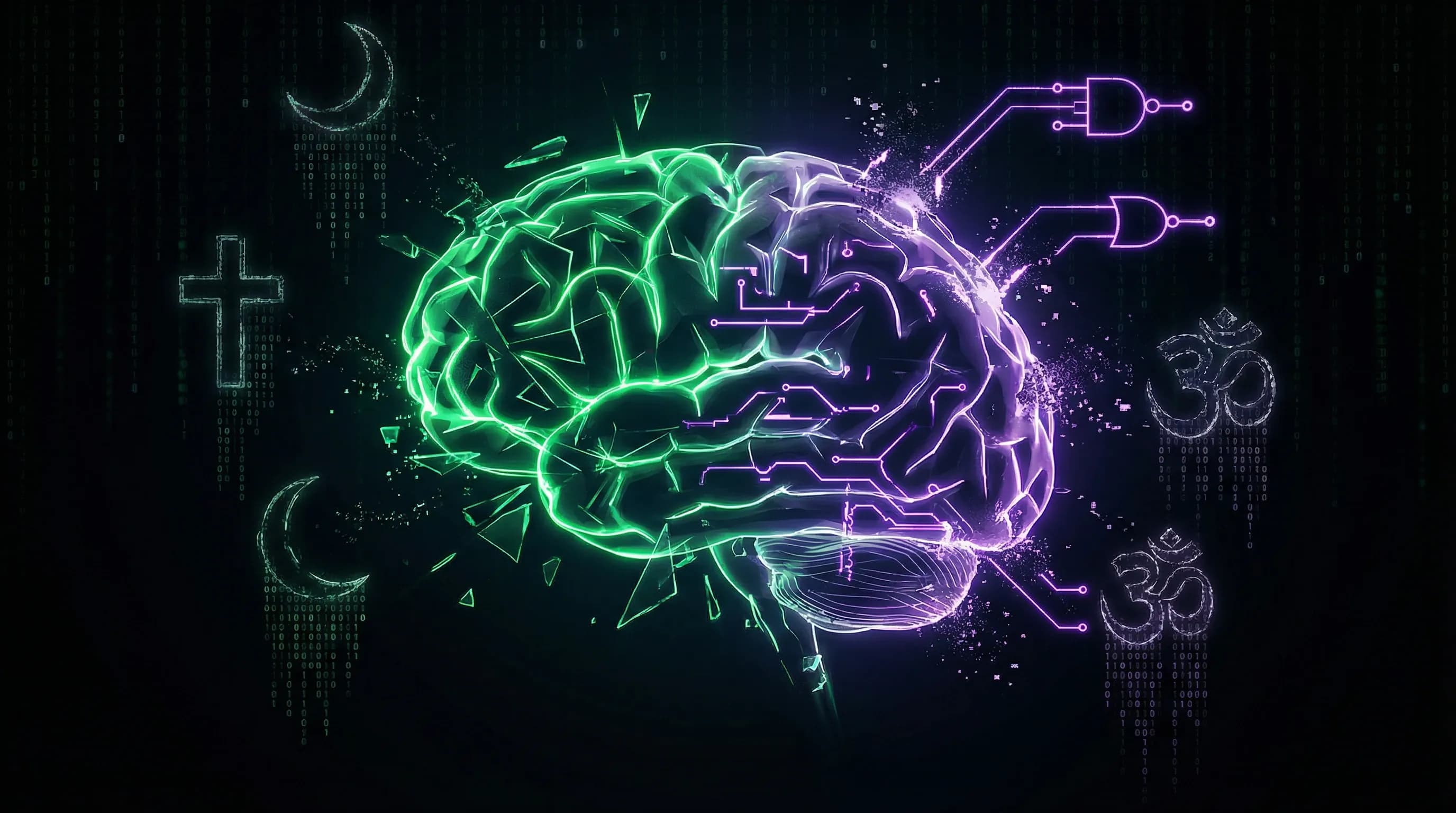
What is a Logical Fallacy in Religious Context: Epistemological Boundaries of Faith and Reason
A logical fallacy is a systematic error in reasoning that renders an argument invalid regardless of the truth of its premises. In religious contexts, these fallacies take on a particular form: religious thinking operates with categories whose social origins often remain unnoticed (S002).
Before analyzing specific fallacies, we need to understand why religious argumentation is so resistant to criticism. The answer lies in epistemology—in the very foundations of what we consider knowledge. More details in the section Ethnic Traditions.
🧩 Durkheimian Epistemology: Social Roots of Categories
Émile Durkheim advanced an argument that remains "the most important and most misunderstood" in the history of epistemology: categories of understanding (time, space, causality, classification) have social origins (S002). What we consider "logical" is itself a product of social organization.
Religious systems create alternative categorical structures that seem as natural to their adherents as scientific logic seems natural to scientists. But this is not relativism.
Key distinction: scientific logic is built on the principle of falsifiability and the law of excluded middle—a statement is either true or false. Religious logic systematically violates this principle, allowing simultaneous truth of contradictory statements through appeals to "mystery" or "paradox of faith" (S003).
⚠️ Three Levels of Logical Fallacies
- Formal Fallacies
- Violate rules of deductive logic. Example: "If God exists, the world is ordered; the world is ordered, therefore God exists" (affirming the consequent).
- Informal Fallacies
- Related to argument content, not structure: appeal to authority, appeal to antiquity, appeal to emotion.
- Epistemological Fallacies
- Concern the very foundations of knowledge: what counts as evidence, which sources are reliable, how contradictions are resolved (S008).
Religious argumentation often operates on all three levels simultaneously. An apologist uses a formally correct syllogism while relying on the authority of sacred text and assuming that revelation is a legitimate source of knowledge. Criticism at any level meets defense at others.
🔎 Religious Experience vs. Religious Argument
Religious experience (subjective encounter with the transcendent) lies outside the sphere of logical analysis—no one can refute someone's personal experience. Religious argument (attempt to rationally justify religious claims) makes claims to objective truth and is therefore subject to logical evaluation (S005).
| Aspect | Religious Experience | Religious Argument |
|---|---|---|
| Status | Subjective experience | Claim to objectivity |
| Verifiability | Not subject to logical criticism | Subject to logical evaluation |
| Trap | None | Using experience as proof |
The problem arises when religious thinkers use subjective experience as objective proof. This is a category error: the move from "I experienced X" to "X objectively exists" requires additional premises about the reliability of subjective experience as a source of knowledge. These premises are rarely made explicit and almost never justified (S008).
Defense of critical thinking begins with distinguishing these levels. Respect for others' experience does not require accepting logically flawed arguments built upon it. Faith and evidence operate by different rules—and this needs to be understood explicitly.
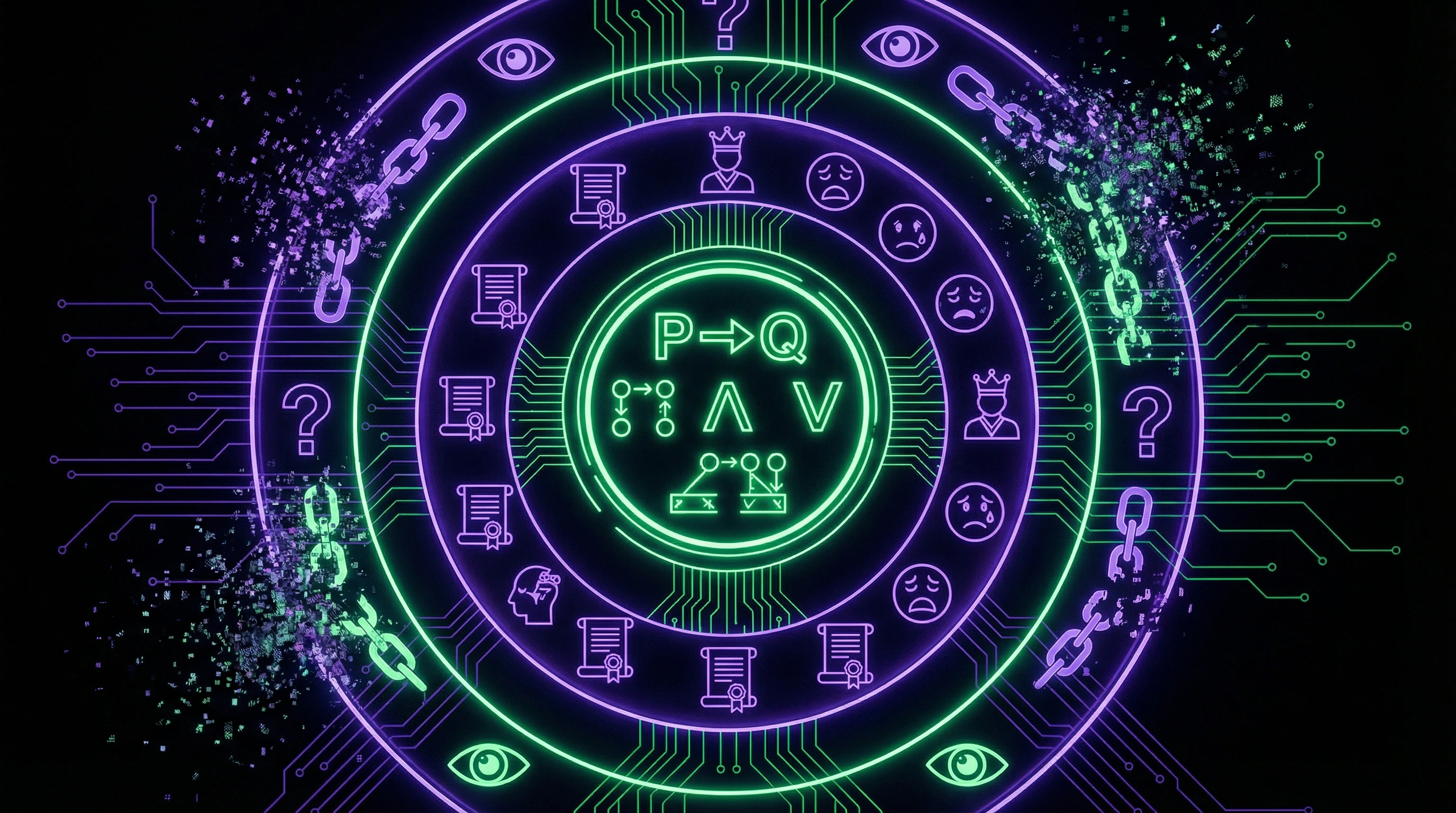
The Steel Man of Religious Argumentation: Seven Strongest Arguments for Faith as a Source of Knowledge
Intellectual honesty requires examining the strongest versions of religious arguments, not their caricatured simplifications. The "steel man" principle (opposite of "straw man") involves reconstructing an opponent's position in its most convincing form. Below are seven arguments that religious thinkers consider most compelling in defense of faith as a legitimate source of knowledge. More details in the Judaism section.
🔷 The Argument from Universality of Religious Experience
Religious experience is present in all known human cultures and historical periods. This universality, apologists argue, indicates that religious knowledge reflects some objective reality rather than being a cultural artifact. If religious experiences were illusions, it would be unlikely they would arise independently in such diverse contexts (S005).
A strengthened version of this argument points to the structural similarity of mystical experiences across different traditions: descriptions of unity with the absolute, transcendence of ego, ineffability of experience are strikingly similar among Christian mystics, Sufis, Buddhist meditators, and shamans. This similarity, it is argued, cannot be coincidental and points to a common object of knowledge.
🔷 The Argument from Explanatory Power of Theism
The existence of God (or transcendent reality) provides a simple and elegant explanation for fundamental questions: why something exists rather than nothing; why the laws of nature are as they are; why the universe permits the existence of consciousness. Alternative explanations (multiverse, anthropic principle, emergence) either multiply entities unnecessarily or simply transfer the question to another level (S008).
Philosophers of religion point out that theistic explanation has the advantage of simplicity (Occam's razor): one entity (God) explains multiple phenomena. Moreover, theism provides a foundation for the rationality of science itself: if the universe is created by an intelligent creator, it is logical to expect it to be ordered and knowable.
🔷 The Argument from Moral Intuition and Objective Values
People possess deep moral intuitions that seem objective rather than merely cultural conventions. We believe genocide would be evil even if all of society approved it. This objectivity of moral truths, religious thinkers argue, requires a transcendent foundation. Without God, morality becomes subjective, which contradicts our deep sense of moral realism (S010).
A strengthened version points to the evolutionary paradox of altruism: why would natural selection, which should favor selfishness, produce beings capable of self-sacrifice for strangers? The religious explanation (we are created in the image of a moral God) provides a more direct answer than complex evolutionary scenarios of group selection.
🔷 The Argument from Historical Reliability of Religious Testimony
Major religious traditions rest on historical events witnessed by multiple sources. Christianity, for example, is based on the claim of Jesus's resurrection, which, according to apologists, is confirmed by early texts, multiple witnesses, and the willingness of early Christians to die for their faith. Mass hallucination or deliberate deception does not explain these facts as well as the reality of the event (S008).
This argument is strengthened by pointing out that religious texts contain details that would not have been included if they were fabricated: inconvenient facts contradicting the authors' theological purposes, cultural details confirmed by archaeology, predictions that allegedly came true. The totality of this evidence, it is argued, makes religious claims historically plausible.
🔷 The Argument from Transformative Power of Religious Practice
Religious practices (prayer, meditation, rituals) produce measurable psychological and even physiological effects: reduced anxiety, improved health, increased prosocial behavior. Moreover, religious faith often leads to radical personal transformation: alcoholics become sober, criminals reform, the despairing find meaning. This practical effectiveness, apologists argue, indicates that religion touches something real (S005).
William James's pragmatic argument strengthens this position: if religious faith produces positive results in believers' lives, then in some sense it is "true," even if its metaphysical claims cannot be empirically verified. Truth is what works, and religion works for billions of people.
🔷 The Argument from Limitations of the Scientific Method
Science is by definition limited to studying the material, measurable, and repeatable. But many crucial aspects of human experience—consciousness, qualia, free will, meaning—do not yield to scientific analysis or are reduced by it beyond recognition. Religion provides a way of knowing these aspects of reality that complements rather than contradicts science (S001, S007).
Modern theories of democracy, as David Uzlaner notes, assume that religion can make a "substantive contribution" to public discourse on par with science, since both have their spheres of competence (S001, S007). Religious knowledge concerns questions of value, meaning, and purpose that lie outside the competence of empirical science. Demanding scientific proof from religion is a category error, like demanding empirical verification from mathematics.
🔷 The Argument from Intellectual Tradition and Cumulative Knowledge
Religious traditions represent millennia-long intellectual projects involving humanity's greatest minds. The theological systems of Augustine, Thomas Aquinas, Maimonides, Al-Ghazali are sophisticated philosophical constructions that cannot be dismissed as primitive superstitions. These thinkers were familiar with the logic, philosophy, and science of their time and created systems that have withstood centuries of critical analysis (S008).
Moreover, religious tradition has a cumulative character: each generation of theologians builds on the work of predecessors, refining doctrines, answering objections, integrating new knowledge. This resembles scientific progress and suggests that religious knowledge is not static but evolving. To dismiss this tradition means ignoring an enormous body of intellectual work.
Evidence-Based Analysis: What Research Says About the Logical Structure of Religious Arguments
Moving from steelmanning to critical analysis, it's necessary to examine what empirical research and philosophical analysis reveal about the logical validity of religious arguments. More details in the Indigenous Beliefs section.
📊 Empirical Data on the Logical Structure of Religious Thinking
Research in cognitive science of religion shows that religious thinking systematically differs from scientific thinking across several parameters. First, religious beliefs demonstrate high resistance to counterexamples: believers tend to interpret contradictory evidence in ways that confirm their original belief (confirmation bias in extreme form) (S005).
Second, religious argumentation often violates the law of excluded middle, allowing simultaneous truth of contradictory statements. As noted in the analysis of conspiracy theories (which share structural similarities with religious thinking), "conspiracy theories contain a logical structure distinct from rational thinking and corresponding to mythological thought: the law of excluded middle is not observed" (S003). Religious doctrines often contain explicit logical contradictions (e.g., the problem of evil, paradoxes of omnipotence), which are resolved not logically but through appeals to "mystery" or "paradox."
🧪 Analysis of Specific Logical Fallacies in Religious Argumentation
- Appeal to antiquity (argumentum ad antiquitatem) — one of the most common fallacies in religious discourse. The argument takes the form: "This belief has existed for thousands of years, therefore it is true." The logical problem is obvious: the age of a belief does not correlate with its truth.
- Appeal to tradition (argumentum ad traditionem) — a related fallacy: "Our ancestors believed this, therefore it is true." This fallacy is particularly insidious because tradition does have epistemic value in some contexts (e.g., traditional medical practices may contain empirically effective methods). However, tradition itself is not evidence for metaphysical claims.
- Appeal to authority (argumentum ad verecundiam) in religious contexts takes the form: "Sacred text/prophet/saint asserts X, therefore X is true." The problem is that the authority of the source itself requires justification. This is usually justified circularly: the text is authoritative because it is sacred; it is sacred because tradition says so; tradition is right because the text says so (S008).
- Appeal to emotion (argumentum ad passiones) — using fear, hope, guilt to persuade instead of logical arguments. Religious preaching is often built on emotional impact: fear of hell, hope for heaven, guilt over sins. These emotions may be psychologically powerful, but they don't make statements true.
- Affirming the consequent fallacy — a formal logical error often found in teleological arguments: "If God exists, the universe is ordered; the universe is ordered; therefore, God exists." The truth of the consequent does not imply the truth of the antecedent. The orderliness of the universe may have other explanations.
🧾 Epistemological Analysis: Why Religious Arguments Seem Convincing
The key question: if religious arguments contain such obvious logical fallacies, why do they convince billions of people? The answer lies in Durkheimian epistemology: categories of understanding have social origins (S002). What counts as "evidence" or "rational argument" is determined by social context.
In religious communities, alternative epistemic norms form: revelation is recognized as a legitimate source of knowledge, personal experience is considered sufficient proof, the authority of tradition supersedes empirical verification. These norms are not "irrational" in the psychological sense — they are rational within their own frame of reference. The problem is that this frame of reference is incompatible with scientific epistemology.
Religious arguments appeal to deep psychological needs: the need for meaning, for consolation in the face of death, for moral certainty, for belonging to a community. People are willing to accept logically weak arguments if they satisfy these needs. This doesn't make the arguments true, but it explains their psychological power.
🔎 The Demarcation Problem: Where Religion Ends and Pseudoscience Begins
Contemporary discussion about the dialogue between science and religion often runs into the demarcation problem: how to distinguish religious claims that lie outside the sphere of scientific verification (e.g., "God is love") from pseudoscientific claims that pretend to empirical truth but don't meet scientific standards (e.g., claims about miraculous healing) (S001), (S007).
Religion can make substantive contributions to public discourse if it acknowledges its epistemic limitations and doesn't claim scientific authority on empirical questions. However, in practice this boundary is constantly violated: religious organizations make claims about the origin of the universe, evolution, medicine that directly contradict scientific data.
The problem is compounded by religious thinkers often using scientific terminology and rhetoric to give their arguments an appearance of scientificity. Clear demarcation is necessary not to "exile" religion from the public sphere, but to prevent epistemic contamination and protect information quality in society. For more on mechanisms for verifying extraordinary claims, see the miracle assessment protocol.
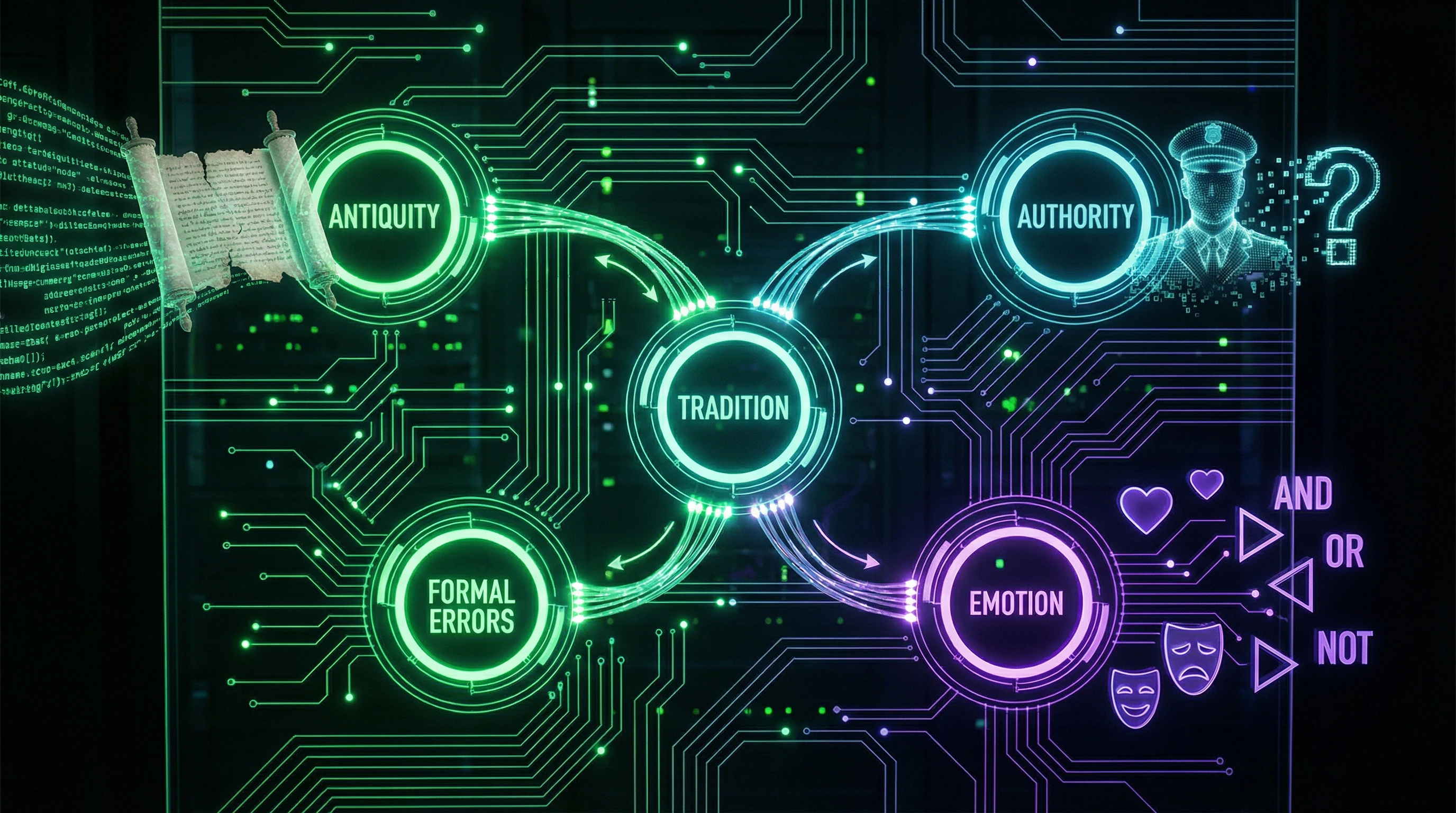
Cognitive Mechanisms: Why the Mind Is Vulnerable to Religious Arguments
Knowing logical fallacies doesn't protect against them. The human mind is systematically vulnerable to certain types of arguments even when aware of their invalidity. Cognitive science of religion has identified mechanisms that make religious arguments psychologically persuasive. More details in the Sources and Evidence section.
🧬 Agency and Hyperactive Pattern Detection
The brain evolved to detect agency — intentional action in the environment. It was adaptive to mistakenly attribute rustling in bushes to a predator rather than miss a real threat. This tendency leads to hyperactive agency detection (HADD): we see intentions where none exist (S005).
Religious arguments exploit this mechanism. Teleological arguments ("the universe looks designed, therefore there is a designer") appeal to the innate tendency to see design. Intellectually we understand that complexity emerges from simple rules, but intuitively it seems there must be an intelligent creator.
Motivated reasoning is not a logical error but a defensive mechanism: the brain actively seeks arguments supporting the desired conclusion and ignores contradictory data (S001).
🔁 Cognitive Dissonance and Motivated Reasoning
Cognitive dissonance — discomfort from contradictory beliefs — motivates resolving contradictions. When a person encounters a fact contradicting a religious belief, they don't revise the belief but reinterpret the fact or find a counterargument.
Research shows: people with high reflectiveness better recognize logical errors in neutral tasks, but worse when the conclusion contradicts their values (S002). This is not intellectual weakness but motivated reasoning at work.
- Encountering contradictory information activates defensive mechanisms
- The brain seeks arguments supporting the desired conclusion
- Contradictory data is reinterpreted or rejected
- Dissonance is resolved, belief is strengthened
📊 Social Confirmation and Group Identity
Religious arguments rarely operate in a vacuum. They are embedded in social structure: family, community, tradition. Accepting an argument means belonging to the group; rejecting it means social exclusion.
The brain processes social exclusion as physical pain. Group identity activates the same neural networks as personal safety. Therefore, criticism of a religious argument is perceived as a threat not only to belief but to social status.
| Mechanism | How It Works | Why Religious Arguments Are Effective |
|---|---|---|
| HADD | We see intention in randomness | Teleology seems intuitive |
| Motivated reasoning | We seek arguments for desired conclusion | Belief is protected from criticism |
| Social confirmation | Group validates belief | Rejection = social threat |
🛡️ Why Critical Thinking Isn't Enough
High IQ and logical training don't protect against these mechanisms. People with developed critical thinking simply find better arguments supporting their position (S001). This is called "intellectual defense of beliefs."
Protection requires not logic but metacognitive discipline: awareness of one's own motives, willingness to accept social discomfort, systematic testing of alternative hypotheses. This is harder than simply knowing logical fallacies. It requires restructuring one's relationship with uncertainty and social belonging.
Critical thinking without metacognitive discipline is simply more sophisticated manipulation of one's own mind.
To defend against religious arguments, one must understand not only their logical structure but also what cognitive and social mechanisms they activate. Only then can one develop a strategy that works against evolutionary instincts and social pressures.