Indigenous Beliefs: Fundamental Spiritual Systems of World Peoplesλ
An exploration of traditional spiritual practices, their interaction with world religions, and contemporary relevance in the context of cultural identity and philosophical understanding of reality
Overview
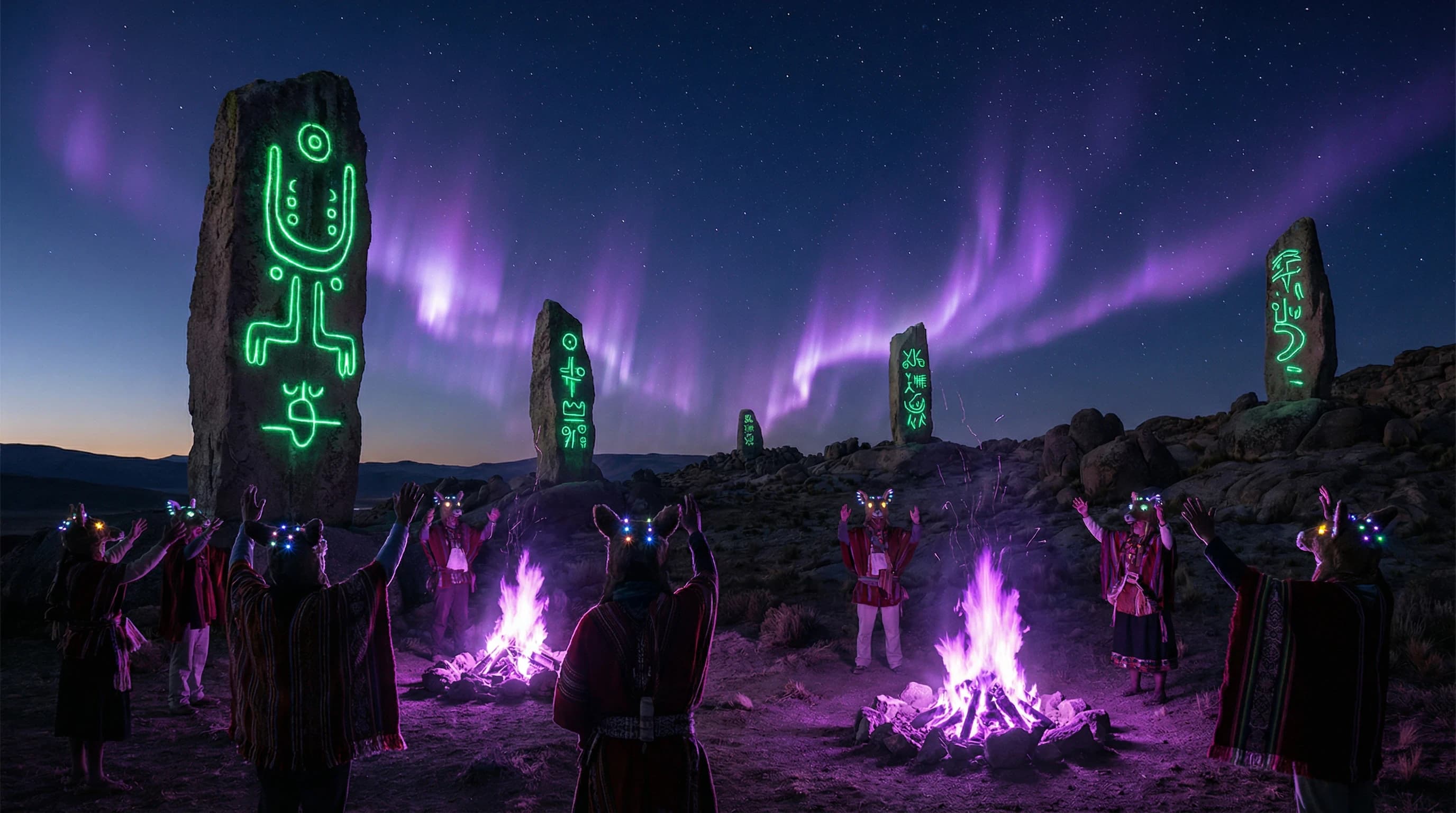
Indigenous beliefs represent fundamental spiritual systems that emerged in specific cultural and geographical contexts long before the spread of world religions. These traditions are characterized by animism, ancestor veneration, and shamanic practices, forming the deep worldview foundations of entire peoples. Despite centuries of pressure from dominant religions, indigenous beliefs demonstrate remarkable resilience, often coexisting with world religions in syncretic forms. Contemporary research shows that these systems represent not "primitive" remnants of the past, but complex philosophical and spiritual structures that continue to influence cultural identity and perception of reality.
🛡️ Laplace Protocol: Indigenous beliefs are studied as living spiritual traditions with respect for their cultural context, avoiding romanticization and cultural appropriation, while recognizing their philosophical depth and contemporary relevance.
Reference Protocol
Scientific Foundation
Evidence-based framework for critical analysis
Protocol: Evaluation
Test Yourself
Quizzes on this topic coming soon
⚡
Deep Dive
Indigenous Beliefs: Foundation of Cultural Identity Beyond Organized Religions
Indigenous beliefs are complex spiritual systems that emerged in specific cultural and geographical contexts long before the appearance of world religions. Transmitted orally, they are based on direct experience and deeply rooted in local natural environments.
Academic research demonstrates that indigenous beliefs cannot be completely eradicated even after centuries of suppression by dominant religions. They exhibit remarkable resilience and adaptability.
Animism and the Spiritualization of Nature
A central element of most indigenous beliefs is animism: the attribution of spiritual essence to natural phenomena, objects, and living beings. This is not a primitive delusion from the colonial era, but a holistic philosophical system where boundaries between the material and spiritual remain permeable.
In the animistic worldview, rivers, mountains, trees, and animals possess their own will, consciousness, and ability to enter into relationships with humans.
This worldview forms an ecological ethic based on reciprocity and respect for natural forces—highly relevant in the context of the modern environmental crisis.
Ancestor Veneration and Shamanism
Ancestor worship is the second fundamental characteristic of indigenous beliefs. Ancestors are perceived not as abstract historical figures, but as active participants in community life, capable of influencing the fates of descendants, protecting them, or punishing violations of tradition.
- Shamanism
- The practice of mediation between human and spiritual worlds. A shaman is not a priest in the Western sense, but a specialist in navigating invisible dimensions of reality, using altered states of consciousness for diagnosis, healing, and communication with spirits.
Distinctions from Organized Religions
Indigenous beliefs differ fundamentally from world religions in structure and purpose.
| Parameter | Indigenous Beliefs | Organized Religions |
|---|---|---|
| Founder and Canon | Absent; oral transmission | Single founder; written canon |
| Structure | Decentralized, without universal hierarchy | Centralized hierarchy |
| Priority | Orthopraxy (correct practice) | Orthodoxy (correct doctrine) |
| Territoriality | Deep connection to specific territory and ethnicity | Claims to universality |
| Expansion | Typically no proselytizing | Active proselytism |
The locality of indigenous traditions does not imply isolation. Research shows active interaction and exchange between different traditions, but always with preservation of cultural specificity.
Philosophical Foundations of Fundamental Beliefs
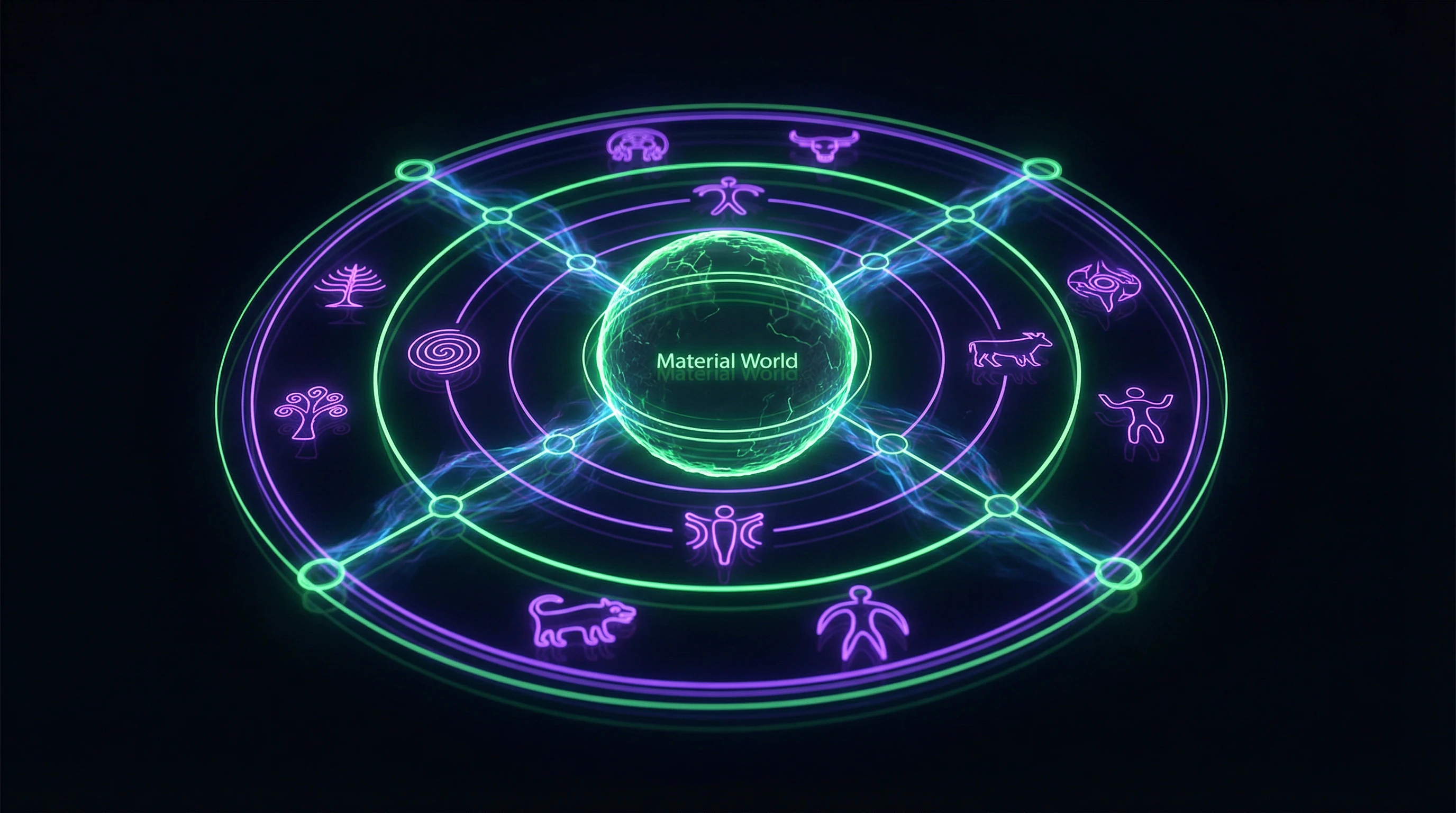
Spanish philosopher José Ortega y Gasset developed a concept of fundamental beliefs that allows us to understand the epistemological status of indigenous traditions beyond simplified "rational-irrational" oppositions. According to Ortega, fundamental beliefs are not what we think, but what we think from.
They are so deeply embedded in our perception that they become inseparable from reality itself. These beliefs "support and animate all other convictions," forming an invisible foundation upon which the entire system of knowledge and practices is built.
Ortega y Gasset's Concept of Vital Reason
Ortega contrasts fundamental beliefs with ideas: while we consciously formulate, discuss, and can change ideas, beliefs constitute the pre-reflective layer of our being-in-the-world. Applied to indigenous traditions, this means that animism or ancestor worship are not "theories" about the world that can be refuted by scientific arguments—they represent a way of existing in the world that structures experience itself.
Rationality does not oppose tradition, but is always rooted in a specific life context with its historical and cultural presuppositions.
This explains why indigenous beliefs persist even among educated culture bearers—they function at a level that precedes rational reflection.
Beliefs as the Foundation of Perceived Reality
Fundamental beliefs shape what phenomenologists call the "lifeworld"—the pre-reflective horizon of meanings in which human experience unfolds. For a bearer of indigenous tradition, spirits are not hypothetical entities requiring proof of existence—they constitute part of directly lived reality.
- Attempts to "rationally refute" such beliefs are doomed to fail because they address a different level of consciousness.
- Changing fundamental beliefs requires not logical arguments, but transformation of a person's entire lifeworld.
- This explains the traumatic nature of forced Christianization or modernization of traditional societies.
Epistemological Aspects of Traditional Knowledge
Contemporary epistemology recognizes multiple forms of knowledge, moving beyond narrow scientism. Traditional ecological knowledge of indigenous peoples, based on centuries of observation and transmitted through myths and rituals, demonstrates practical effectiveness in natural resource management.
This knowledge is not formulated as abstract laws, but embodied in narratives, practices, and bodily skills—it is embodied and situated. Philosophical anthropology shows that this form of knowledge is no less "rational" than scientific knowledge, but uses a different logic—the logic of analogy, metaphor, and participation instead of causality and abstraction.
Interaction with World Religions
The history of encounters between indigenous beliefs and world religions refutes the simplified model of "replacement" of traditions by universal doctrines. Research demonstrates complex patterns of syncretism, resistance, and adaptation, resulting in hybrid forms of religiosity.
This process is not unidirectional—world religions are also transformed by local contexts, acquiring unique regional characteristics.
World religions do not displace indigenous beliefs but integrate with them, creating resilient hybrid systems that persist even after centuries of political pressure.
Syncretism of Buddhism and Shamanism in Buryatia
Tibetan Buddhism, which spread to Buryatia from the 17th century, did not displace traditional shamanism but integrated with it. Buddhist lamas adapted local cults of nature spirit-masters, incorporating them into Buddhist cosmology as lower deities requiring appeasement.
Shamanic practices of venerating oboo (sacred sites) were reinterpreted in Buddhist terms but retained their structure and functions. Even after decades of Soviet anti-religious policy, both traditions revived in the post-Soviet period, with many Buryats practicing elements of both systems without experiencing contradiction.
| Integration Level | Buddhism | Shamanism |
|---|---|---|
| Cosmology | Lower deities | Nature spirit-masters |
| Practice | Ritual appeasement | Oboo veneration |
| Identity | Compatible | Compatible |
Christianization and Preservation of Traditions
Christian missionary activity among indigenous peoples demonstrates diverse strategies—from violent suppression to accommodation of local practices. In the Slavic context, Christianization led to the formation of "dual faith," where Christian saints were superimposed on pagan deities and church holidays merged with agrarian rituals.
Archaeological and ethnographic data show that elements of pre-Christian beliefs persisted in folk culture for centuries after official baptism. Contemporary neo-pagan movements appeal to this heritage, though their reconstructions are often modern inventions rather than direct continuations of tradition.
Patterns of Adaptation and Resistance
Comparative analysis reveals universal mechanisms of interaction: selective borrowing of elements, reinterpretation in one's own categories, creation of syncretic forms, and preservation of "secret" practices parallel to official religion.
- Intensity of missionary pressure
- Political support for traditions
- Presence of written documentation of beliefs
- Degree of institutionalization of practices
Even in cases of apparent complete conversion, deep structures of worldview often persist, manifesting in specific interpretations of the new religion. This explains the phenomenon of "multiple religious belonging," widespread in Asia and Africa, where people identify simultaneously as Christians or Buddhists and as bearers of traditional beliefs.
Contemporary State and Revival of Indigenous Traditions
The late 20th and early 21st centuries witnessed a surge of interest in indigenous beliefs—through neo-pagan movements, academic research, and political initiatives. This is not a return to the past, but rather a reconstruction and adaptation of traditional practices to contemporary contexts.
Globalization has paradoxically contributed both to cultural homogenization and to strengthened efforts to preserve unique identities. This created an environment for renewed interest in autochthonous spiritual traditions.
Neo-Pagan Movements and Their Characteristics
Neo-paganism encompasses attempts to reconstruct pre-Christian beliefs of Slavic, Germanic, Celtic, and other European peoples. Slavic neo-paganism in Eastern Europe combines elements of reconstructed mythology, environmental movements, and in some cases, nationalist ideologies.
Critical problem: the absence of continuous knowledge transmission traditions. Practitioners rely on fragmentary historical sources, archaeological data, and contemporary interpretations, creating the risk of "invented traditions" that satisfy modern spiritual needs but bear little resemblance to historical practices.
Role in Interfaith Dialogue
Indigenous beliefs are gaining recognition in the global interfaith space—their representation in organizations like Religions for Peace reflects an understanding that spiritual diversity is not limited to world religions.
However, inclusion in interfaith dialogue faces methodological difficulties: many systems lack centralized institutions, official representatives, or codified doctrines.
| Challenge | Cause | Consequence |
|---|---|---|
| Legitimacy of representation | Decentralized tradition | Unclear who speaks for the community |
| Doctrine codification | Oral tradition transmission | Difficulty formalizing for dialogue |
| Institutional formalization | Absence of centralized structures | Difficulty achieving official recognition |
Indigenous Beliefs in Global Context
Globalization has created new forms of interaction: "spiritual tourism," commercialization of traditional practices, transnational networks of practitioners. The internet and social media have radically transformed traditional knowledge transmission, creating virtual communities that transcend geographical boundaries.
Simultaneously, a risk emerges: practices become detached from their cultural and geographical contexts, losing their rootedness in specific communities and landscapes.
The ecological crisis has given new relevance to indigenous beliefs, many of which are founded on harmony with nature and sustainable interaction with the environment. Traditions long marginalized as "primitive" are now viewed as sources of wisdom for addressing contemporary environmental challenges.

Myths and Realities of Indigenous Traditions
The perception of indigenous beliefs in modern society is distorted by stereotypes, romanticization, and political manipulation. Critical analysis of common myths is necessary to separate historical realities from projections of contemporary ideological needs.
Deconstructing myths does not devalue indigenous traditions — on the contrary, it allows us to see their genuine complexity.
Debunking Stereotypes of Primitiveness
Indigenous beliefs are often portrayed as "primitive" forms of religiosity that should have been superseded by world religions. This evolutionary perspective, inherited from the colonial era, ignores the complexity of philosophical concepts, ritual systems, and cosmological representations.
Modern research shows: systems based on animism and shamanism are not a lack of abstract thinking, but alternative epistemologies based on a relational understanding of reality.
| Colonial View | Contemporary Understanding |
|---|---|
| Primitive, underdeveloped | Alternative epistemology |
| Knowledge in doctrines | Knowledge in practice, ritual, experience |
| Substantive understanding | Relational understanding of reality |
The concept of "fundamental beliefs" is particularly applicable to indigenous traditions: the deepest convictions are not explicitly formulated but constitute the very structure of perceiving reality.
Problems of Romanticization and Appropriation
The opposite extreme is the idealization of indigenous beliefs as a source of authenticity and spiritual purity lost to modern civilization. This romanticization projects contemporary anxieties onto traditional cultures, ignoring their historical complexity and capacity for change.
Cultural appropriation — the use of elements of indigenous traditions outside their context, often for commercial purposes — represents a serious ethical problem. Practices extracted from living traditions are commercialized by representatives of the dominant culture, while the tradition bearers themselves face marginalization.
Political Use of Traditional Beliefs
Indigenous beliefs have repeatedly become objects of political manipulation for constructing nationalist identities and mobilizing ethnic movements. In the context of Slavic neopaganism, researchers note connections between some groups and ultranationalist ideologies that use reconstructed "traditions" to justify ethnic exclusivity.
The distinction is critical: legitimate efforts by indigenous peoples to preserve spiritual traditions as part of cultural sovereignty — versus instrumental use of "tradition" by groups without organic connection to these practices.
Critical analysis must consider the context of power: who constructs "tradition," in whose interests, and with what consequences for actual culture bearers. Ethnic and indigenous identity requires distinguishing between authentic cultural sovereignty and political manipulation.
Research Methodology and Ethical Considerations
The study of indigenous beliefs requires a special methodological approach that accounts for the specificity of oral tradition, sacred knowledge, and cultural sensitivity. Traditional academic methods developed for analyzing text-based religions with codified doctrines often prove inadequate for understanding systems where knowledge is embodied in practice, ritual, and direct experience.
Ethical questions in research become particularly acute when dealing with sacred knowledge, access to which in traditional societies is regulated by strict rules and restrictions.
Interdisciplinary Approaches to Study
Adequate research into indigenous beliefs requires integration of methods from theology, anthropology, history, philosophy, archaeology, and linguistics. The theological approach allows analysis of indigenous beliefs as complete religious systems comparable to world religions, avoiding reductionist interpretations.
Anthropological methods, especially ethnography and participant observation, provide access to living practices and their cultural context, though they face challenges of objectivity and observer influence. Philosophical analysis enables investigation of the structure of fundamental beliefs and their role in constituting reality for tradition bearers.
| Discipline | Contribution to Research | Limitations |
|---|---|---|
| Theology | Analysis as complete religious system | Risk of imposing foreign categories |
| Anthropology | Living practices and context | Observer influence, objectivity |
| Philosophy | Structure of beliefs and constitution of reality | Abstractness, detachment from practice |
| History, archaeology, linguistics | Depth, origins, language of transmission | Fragmentary sources |
Respect for Sacred Knowledge
Many aspects of indigenous beliefs are considered sacred and not intended for public dissemination or academic analysis. Researchers face an ethical dilemma between the academic imperative to publish knowledge and the obligation to respect cultural norms and community wishes.
The concept of "cultural property" suggests that certain forms of knowledge belong to specific communities and cannot be freely appropriated or disseminated without their consent.
This requires development of new research protocols: informed community consent, collaborative definition of research questions, and community control over use of obtained data.
Centering Voices of Tradition Bearers
A critical decolonial perspective demands shifting focus from external interpretations to the self-understanding and self-representation of tradition bearers. This means recognizing tradition bearers not merely as informants or research subjects, but as full producers of knowledge about their own spiritual systems.
Methodologically, this implies prioritizing emic (internal) categories over etic (external analytical) ones, using collaborative research designs, and creating platforms for direct voices of tradition representatives in academic discourse.
However, this approach faces challenges: who has the right to represent a tradition, how to resolve internal disagreements in interpretation, and how to avoid essentialization that fixes living traditions in static forms?

Knowledge Access Protocol
FAQ
Frequently Asked Questions
Indigenous beliefs are traditional spiritual systems that emerged in specific cultural and geographical contexts. They are characterized by animism, ancestor veneration, and shamanic practices, transmitted orally and distinguished from organized world religions by their local nature. These beliefs form the fundamental worldview and cultural identity of peoples.
Animism attributes spiritual essence to natural phenomena, animals, plants, and even inanimate objects. Unlike monotheistic religions, it does not identify a single supreme deity but recognizes a multiplicity of spiritual forces. This creates a distinctive relationship with nature as a living, spiritually animated world.
No, this is a common myth. Indigenous beliefs represent complex philosophical and spiritual systems adapted to specific cultural conditions. They contain profound epistemological concepts and practices that are no less sophisticated than world religions, but expressed in a different form.
In Buryatia, a unique syncretism of Buddhism and shamanism has formed. Traditional beliefs did not disappear after Buddhism's arrival but integrated with it, creating hybrid practices. Research shows that indigenous beliefs cannot be completely eradicated even after centuries of another religion's dominance.
According to philosopher Ortega y Gasset, fundamental beliefs are convictions so deep that they are inseparable from reality itself. They "sustain and animate all other beliefs," forming the basic perception of the world. Indigenous beliefs often function precisely at this fundamental level of cultural consciousness.
No, they persisted in various forms. Despite centuries of missionary activity and suppression, traditional beliefs continue to exist, often in syncretic forms. Many elements integrated into folk Christianity or survived in hidden form, transmitted through generations.
Start with ethnographic museums and academic publications about your region. Consult works by local anthropologists and folklorists, examine archival materials. It's important to observe ethical principles: respect living traditions, avoid appropriation, and consult with culture bearers when possible.
Neopaganism is a contemporary movement to revive pre-Christian traditions. It seeks to reconstruct or reinterpret indigenous beliefs in a modern context. However, it's important to distinguish between authentic traditions and contemporary interpretations, which may differ significantly from historical practices.
Shamanism is a key practice where the shaman acts as intermediary between human and spiritual worlds. Shamans conduct healing rituals, divination, and communication with ancestral spirits. This practice persists in many cultures and continues to play an important social and spiritual role.
Yes, recognition of their significance is growing. Representatives of indigenous traditions participate in global religious forums, including the Religions for Peace movement. This reflects a changing attitude toward traditional beliefs as legitimate spiritual systems deserving respect and dialogue.
Yes, many people successfully integrate traditional beliefs with modern life. Practices adapt to urban conditions while preserving their spiritual essence. It's important to distinguish between cultural belonging and appropriation: culture bearers have a natural right to their traditions, whereas outsiders require a respectful approach.
No, this is a misconception. There exists tremendous diversity of traditions depending on geography, history, and culture. While common structural elements can be identified (animism, ancestor veneration), specific practices, mythologies, and rituals vary significantly between peoples.
An interdisciplinary approach is applied: anthropological field research, theological analysis, philosophical interpretation, and comparative religious studies. Contemporary methodology emphasizes the importance of ethical principles, respect for culture bearers, and avoiding colonial patterns in research.
Romanticization creates an idealized image that ignores the complexity and real challenges of traditional societies. This can lead to cultural appropriation, distortion of practices, and exploitation of spiritual traditions. Balance is essential between respect and realistic understanding that acknowledges both the value and contextuality of traditions.
Traditional beliefs often become instruments of political mobilization and construction of national identity. This can serve both the protection of cultural rights and manipulation to achieve political goals. Critical analysis of such uses is necessary for understanding the contemporary role of indigenous traditions.
Syncretism is the fusion of elements from different religious systems into a unified practice. Indigenous beliefs often coexist with world religions, creating hybrid forms. For example, Buddhist-shamanic syncretism in Buryatia demonstrates how traditions adapt and mutually enrich each other while maintaining viability.