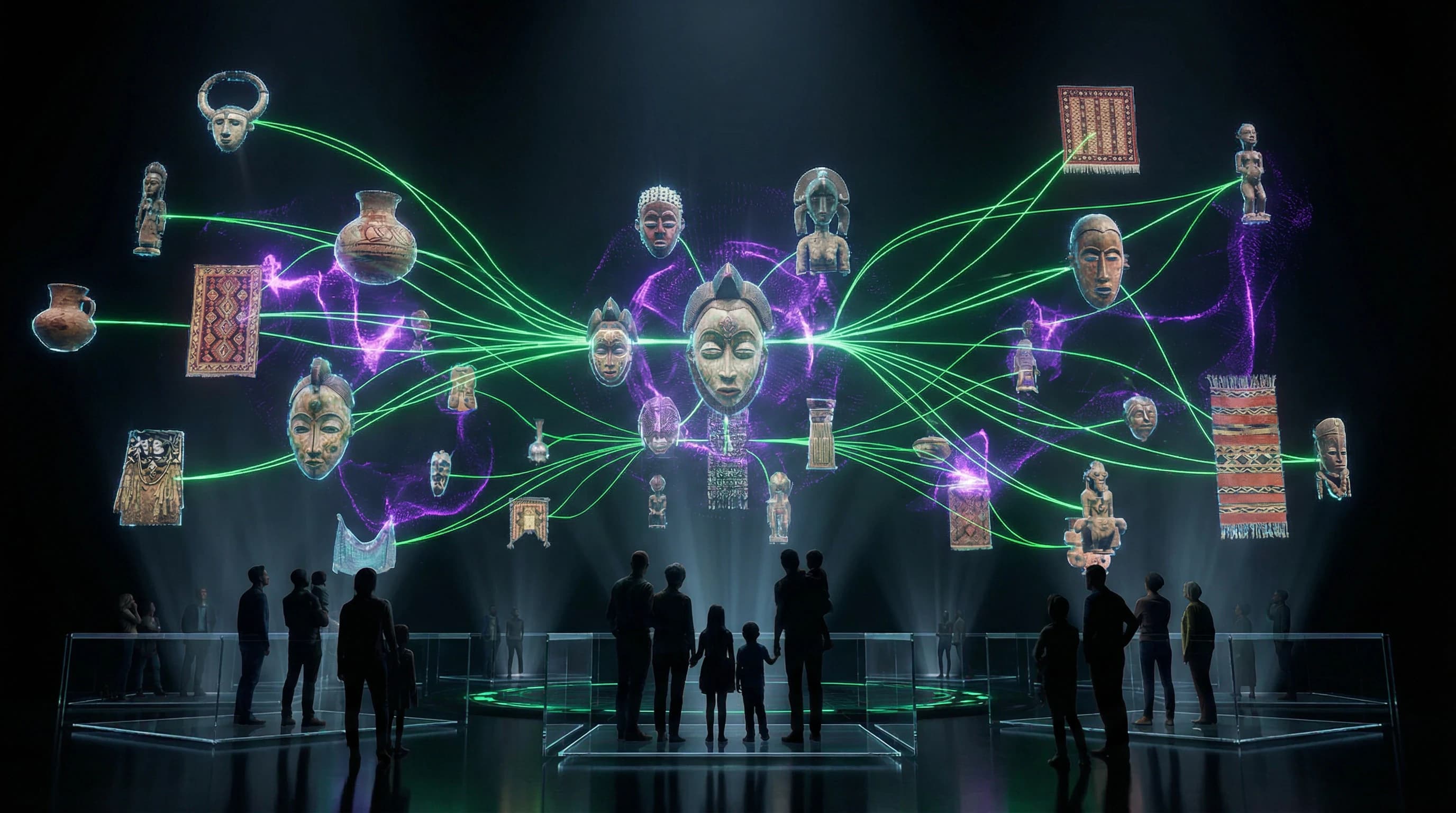
Ethnic Traditions: Mechanisms of Cultural Experience Transfer Across Generationsλ
An exploration of ethnic traditions as multidimensional systems preserving historical experience through folklore, crafts, art, and social practices in contemporary communication spaces.
Overview
Ethnic traditions aren't museum exhibits—they're living systems of experience transmission: folklore, crafts, rituals adapt under pressure from modernity, 🧬 preserving the core of identity. Mechanisms regulating behavior, forming group belonging, fueling creativity—a bridge between generations, working here and now.
🛡️
Laplace Protocol: Ethnic traditions are analyzed as dynamic systems of cultural transmission, uniting archetypal images, social stereotypes, and communicative practices into a unified network of intergenerational knowledge.
Reference Protocol
Scientific Foundation
Evidence-based framework for critical analysis
Protocol: Evaluation
Test Yourself
Quizzes on this topic coming soon
⚡
Deep Dive
Теоретические основы этнических традиций: от архаики до современности
Этнические традиции — многоуровневая система сохранения и передачи коллективного опыта через историю, фольклор, ремёсла и устойчивые культурные практики. Они функционируют как базовые формы коллективного опыта, воспроизводящиеся из поколения в поколение и формирующие фундаментальные национальные ценности.
Механизмы этой трансмиссии присутствуют с самых ранних этапов развития духовной культуры и составляют основу культурных матриц, на которых строится идентичность сообществ.
Традиции действуют одновременно в материальной, духовной и поведенческой сферах культуры — это не просто наследие, а живая система адаптации коллективного знания к новым условиям.
Определения и концептуальные подходы
Три основных дисциплинарных угла зрения на этнические традиции дают разные срезы одного явления:
- Культурологический подход
- Рассматривает этнические традиции как базовые национальные ценности, конституирующие культурные основания общества. Фокус на смыслах и символах.
- Этнографическая перспектива
- Сосредоточена на материальной культуре, фольклоре и повседневных поведенческих практиках как носителях традиционного знания. Фокус на наблюдаемых формах.
- Социологический фреймворк
- Изучает традиции как механизмы социальной регуляции и инструменты социализации молодёжи, подчёркивая их активную роль в формировании современных идентичностей. Фокус на функциях.
Культурологические и этнографические перспективы
Исследования демонстрируют консенсус: этнические традиции служат первичными механизмами передачи культурных ценностей и знаний между поколениями. Они функционируют как мосты между прошлым и настоящим, поддерживая культурную непрерывность при адаптации к современным контекстам.
В коммуникативных пространствах традиции выступают инструментами культурного диалога и выражения идентичности через национальные песни, музыку, танец, спорт, кухню и сохранение культурных практик.
| Сфера проявления | Примеры | Функция |
|---|---|---|
| Искусство и перформанс | Песни, танец, музыка | Выражение идентичности, эмоциональная связь с прошлым |
| Материальная культура | Ремёсла, архитектура, одежда | Передача технического знания, визуальная идентификация |
| Социальные практики | Ритуалы, праздники, спорт | Социализация, укрепление групповых связей |
| Пищевая культура | Рецепты, способы приготовления | Трансмиссия знаний, символическое единство |
Динамика традиций в современности
Ключевой момент: традиции не статичны. Феномен этнического неотрадиционализма показывает, как они возвращаются в модифицированных формах, отвечая на вызовы глобализации и современных социальных условий.
Это означает, что этническая и коренная идентичность постоянно переосмысляется в диалоге с современностью, сохраняя при этом связь с коренными верованиями и культурными корнями.

Multidimensionality of Traditional Systems: Dismantling the Myth of Uniformity
A common misconception presents ethnic traditions as homogeneous and unchanging structures within ethnic groups. Reality is significantly more complex: traditions manifest differently depending on domain (art, daily life, communication) and adapt to specific social contexts.
Traditions function as practical mechanisms of social regulation, influencing everyday behavior, social organization, and interpersonal relationships. This refutes the notion of them as exclusively ritual or ceremonial elements of culture.
- Material culture: crafts, architecture, costume, household items, production technologies
- Spiritual practices: religious beliefs, mythological systems, ritual complexes, folkloric narratives
- Behavioral norms: kinship systems, age gradations, gender roles, status hierarchies
- Everyday behavior: historically formed norms of interaction in various situations
Material Culture and Spiritual Practices
Material culture is transmitted through practical training and master-apprentice relationships. Spiritual practices encode worldview orientations and ethical norms.
Both spheres interpenetrate: material objects carry symbolic meaning, while spiritual practices require material embodiment through ritual objects and spaces.
Research reveals insufficient study of everyday behavior as a carrier of ethnic traditions, despite its significance in expressing historically formed norms.
Behavioral Norms and Social Organization
Ethnic traditions structure social organization through kinship systems, age gradations, gender roles, and status hierarchies. Behavioral norms regulate interaction within the group and with external actors, defining boundaries of permissible and prescribed behavior.
| Mechanism | Description |
|---|---|
| Contextual variability | Norms adapt to participants' age, degree of situational formality, and social status |
| Interpretive flexibility | Traditions demonstrate a range of permissible variations rather than rigid prescriptions |
| Socializing function | Transmission of norms occurs through observation, imitation, and direct instruction |
Contemporary research indicates the need for deeper understanding of how traditions influence youth socialization processes in conditions of digitalization and global communication technologies.
Ethnic Traditions in Art and Form-Making: From Archetypes to Innovation
In the artistic sphere, ethnic traditions manifest at formal and substantive levels, concentrating historical and cultural elements. They serve as sources of form-making—stable visual, sonic, and kinetic patterns recognized as ethnically marked.
Archetypal images develop within cultural contexts, transforming from generation to generation while preserving a recognizable core of symbolic meanings. This refutes the myth that traditions concern only the past: they actively function in contemporary cultural production.
Archetypal Images in Artistic Expression
Archetypes in ethnic art are universal symbolic structures filled with specific cultural content. They manifest in ornamental motifs, mythological characters, cosmogonic schemes, and rhythmic structures of music and dance.
| Level | Manifestation | Function |
|---|---|---|
| Visual | Ornamental motifs, color palette | Composition, recognizability |
| Narrative | Mythological characters, cosmogonic schemes | Semantic framework |
| Kinetic | Rhythmic structures of music and dance | Temporal organization |
Archetypal images are not mechanically copied—each generation of artists rethinks them through the lens of contemporary experience, creating dialogue between tradition and innovation.
Traditional Motifs in Contemporary Creative Work
Contemporary artists, designers, and performers turn to ethnic traditions as a resource for creating culturally rooted yet relevant works. This is not simple stylization, but deep investigation of the semantics of traditional forms and their reinterpretation in new media and genres.
The phenomenon of ethnic neotraditionalism demonstrates how traditions return in modified forms, often acquiring new significance in globalized contexts as markers of cultural authenticity and difference.
Mechanisms of Intergenerational Transmission: How Traditions Survive Centuries
Folklore and Oral Tradition as Archives of Collective Memory
Folklore is one of the oldest mechanisms for transmitting ethnic traditions, functioning as a living archive of collective experience. National songs, epic narratives, proverbs, and ritual texts concentrate historically formed behavioral norms, value orientations, and worldview frameworks.
Folkloric transmission operates through variability: each new performance adapts the tradition to the current context while preserving archetypal structures and semantic core.
Folklore doesn't simply store information—it reproduces it through the living body of communication, adapting to each generation without loss of meaning.
Oral tradition remains active even in societies with developed written culture, fulfilling functions inaccessible to written sources: emotional engagement, ritual experience, and direct connection with carriers.
Youth Socialization Through Traditional Practices
Ethnic traditions function as socialization tools through which younger generations absorb cultural codes, behavioral patterns, and identification markers of their ethnic group.
Traditional practices—participation in rituals and celebrations, mastery of crafts and culinary techniques—create spaces for transmitting tacit knowledge impossible in formal education.
| Transmission Channel | Transfer Mechanism | Socialization Outcome |
|---|---|---|
| Rituals and celebrations | Ritual codes, social roles | Sense of belonging, cultural competence |
| Crafts and techniques | Practical skills, aesthetic norms | Mastery within cultural context |
| Music and dance | Embodied memory, emotional patterns | Stable ethnic identity |
Youth engaged in traditional forms of activity demonstrate more stable ethnic identity and capacity for cultural dialogue.
A research gap remains: how exactly traditions influence socialization under conditions of digitalization and global cultural convergence.

Ethnic Neotraditionalism and Modernity: The Return of Traditions in New Forms
Adaptation of Traditions in a Globalized World
Ethnic neotraditionalism challenges the myth that globalization leads to the disappearance of traditions. Research documents an active return of traditions in modified forms, where they become markers of cultural authenticity and tools of distinction in homogenized spaces.
Traditions are not mechanically reproduced but undergo selective reinterpretation: communities choose elements that resonate with contemporary identity needs, combining them with global cultural forms. This process is particularly visible in urbanized multiethnic environments, where traditional practices become means of cultural self-presentation.
Tradition in neotraditionalism is not preservation of the past, but strategic reworking of cultural material for current identification tasks.
Traditions in Digital Communication Spaces
Digital technologies radically transform how ethnic traditions exist. Social networks, video platforms, and messaging apps become spaces where traditional practices are documented, discussed, and reinterpreted, reaching audiences unavailable in offline contexts.
Digitization allows diaspora communities to maintain connections with ethnic traditions, creating virtual spaces of cultural memory. However, researchers note a significant gap: exactly how digital mediation affects the semantics and functions of traditions, which aspects of traditional experience are lost or transformed in the process of digital translation.
| Transmission Channel | Mechanism | Critical Point |
|---|---|---|
| Offline Practice | Direct transmission, embodied experience | Disruption through migration, urbanization |
| Digital Documentation | Archiving, accessibility, reinterpretation | Loss of context, aestheticization, fragmentation |
| Hybrid Formats | Synthesis of offline and online, new communities | Blurring of authenticity, commodification |
Traditions as Tools of Identity and Social Regulation
Formation of Ethnic Identity Through Traditional Practices
Ethnic traditions are a fundamental mechanism for constructing ethnic identity. They provide symbolic resources for self-definition and group belonging.
Participation in traditional practices creates embodied and emotional experiences of belonging that cannot be replaced by abstract knowledge about culture.
Traditions are especially critical in situations of cultural contact and migration, where they serve as anchors of identity under conditions of cultural uncertainty.
Celebration of ethnic holidays, use of traditional cuisine, national costumes, music, dance—all become visible markers of ethnic belonging in public space.
Cultural Dialogue in Multiethnic Societies
In multiethnic societies, traditions perform a dual function: they mark boundaries between groups while simultaneously creating opportunities for intercultural dialogue.
| Type of Interaction | Mechanism | Outcome |
|---|---|---|
| Authentic Exchange | Mutual participation with respect for context | Dialogue, minimal conflict |
| Commercialization | Tradition becomes commodity | Loss of meaning, alienation |
| Superficial Borrowing | Cultural appropriation without understanding | Conflict instead of dialogue |
Traditional practices become objects of cultural exchange when members of different ethnic groups participate in festivals, learn crafts, or culinary techniques from one another. This process requires a delicate balance between openness and preservation of context.
The lack of systematic research makes it difficult to understand how traditions of various ethnic groups interact in shared social space and what factors contribute to constructive cultural exchange.

Knowledge Access Protocol
FAQ
Frequently Asked Questions
Ethnic traditions are the preservation of past experiences of peoples through history, folklore, crafts, and cultural practices. They represent socially organized stereotypes passed down from generation to generation, forming the foundation of a people's cultural matrix. They manifest in material culture, spiritual practices, and behavioral norms.
Traditions serve as the foundation for building and maintaining ethnic identity through national songs, dances, cuisine, and cultural practices. They function as means of communication, allowing people to recognize their belonging to a particular ethnic group. Research confirms their key role in self-identification.
No, this is a common myth. Traditions constantly adapt and transform in response to contemporary conditions. The phenomenon of ethnic neotraditionalism demonstrates how traditions return in modified forms, maintaining cultural continuity while changing context.
The primary mechanisms of transmission are folklore, oral tradition, family upbringing, and socialization of youth through traditional practices. Knowledge and cultural values are conveyed in daily life, rituals, celebrations, and through participation in cultural events. This process ensures the historical continuity of culture.
Ethnic traditions serve as a source of form-making in artistic expression at the level of both form and content. Archetypal images develop within cultural contexts, influencing visual and performing arts. Traditional motifs are actively used in contemporary creativity, creating a connection between past and present.
No, this is a misconception. Research shows that traditions do not disappear but rather transform and often gain new meaning in a globalized world. Ethnic neotraditionalism confirms the resilience of traditions, which adapt to contemporary conditions while preserving cultural identity.
Practice traditional rituals, prepare national dishes, tell children folk tales and family stories. Participate in ethnic celebrations, teach traditional crafts and language. Create family rituals based on cultural heritage to ensure natural transmission of traditions to the next generation.
This is the phenomenon of traditions returning in modified forms adapted to contemporary context. Neotraditionalism shows how cultural practices transform while maintaining connection to historical roots but responding to current societal needs. It is a dynamic process of cultural renewal.
Traditions function as tools of cultural dialogue, allowing different ethnic groups to maintain identity while interacting. They create space for mutual understanding and exchange of cultural values. In multiethnic societies, traditions contribute to social regulation and peaceful coexistence.
Yes, studying the traditions of other peoples enriches cultural understanding and promotes interethnic dialogue. It's important to approach with respect, avoiding cultural appropriation and stereotypes. Academic research and cultural exchange help appreciate diversity and find common human values in different traditions.
Ethnic traditions function as mechanisms of social regulation, defining behavioral norms, interpersonal relationships, and social organization. They manifest in etiquette, hospitality, family roles, and daily rituals. Traditions form cultural codes that people unconsciously apply in everyday life.
No, traditions manifest differently depending on region, social context, and sphere of life. Within a single ethnicity, there exist local variations of rituals, dialects, and cultural practices. Traditions adapt to specific conditions, creating internal cultural diversity.
Digital communication spaces create new opportunities for preserving and disseminating traditions through online archives, social networks, and virtual events. Technologies help younger generations engage with cultural heritage in familiar formats. However, maintaining authenticity during digital adaptation of traditional practices remains essential.
These are universal symbols and motifs that develop within a specific culture and are transmitted across generations through art, folklore, and rituals. Archetypes concentrate the historical and cultural experience of a people, manifesting in ornaments, fairy tale narratives, and artistic forms. They serve as the foundation for cultural self-expression.
No, this is an oversimplified view. Ethnic traditions have practical significance, influencing social organization, economic practices, and everyday behavior. They function as actual mechanisms of social regulation, not merely as cultural symbols. Traditions actively shape material and social reality.
Material culture is a crucial manifestation of ethnic traditions through crafts, architecture, costumes, and household objects. Traditional technologies and aesthetic principles are transmitted through the creation of material objects. Studying material culture enables understanding of values, worldview, and historical development of a people.