 ✝️ Christianity
Christianity: Global Religion and Its Influence on Civilizationλ
The world's largest religion with 33% of the global population, a foundational force in Western science and culture, undergoing a global transformation from a European to a worldwide phenomenon.
Overview
Christianity — the world's largest religious system: 2.4 billion followers, all continents, dramatic shift from European core to growth centers in Africa, Asia, and Latin America. Foundational factor of Western science 🧬: philosophical foundations of the scientific method, culture, law. The 21st-century paradox — status as the largest religion combined with the highest level of persecution (75% of all documented cases).
🛡️
Laplace Protocol: Analysis based on verified academic sources, including peer-reviewed research, demographic data from international organizations, and historical documents. Interdisciplinary approach ensures objective assessment of Christianity's impact on science, culture, and society, avoiding confessional bias.
Reference Protocol
Scientific Foundation
Evidence-based framework for critical analysis
Protocol: Evaluation
Test Yourself
Quizzes on this topic coming soon
Sector L1
Articles
Research materials, essays, and deep dives into critical thinking mechanisms.
✝️ Christianity⚡
Deep Dive
Global Demographics and Geographic Transformation of Christianity
From the Mediterranean to Global Presence
Christianity has undergone three major geographic transformations over two millennia. In the first millennium, the religion was concentrated in the Mediterranean region within the context of Greco-Roman civilization.
The second millennium was marked by European dominance, when Christianity became a system-forming factor of medieval European civilization.
The transition from Mediterranean to European Christianity was accompanied by a transformation of theological emphases, liturgical practices, and institutional structures. The current shift to the Global South creates new dynamics, where traditional European interpretations encounter African, Asian, and Latin American theological perspectives.
The contemporary period is characterized by global distribution with powerful growth centers in Africa, Asia, and Latin America.
Contemporary Distribution and Growth Centers
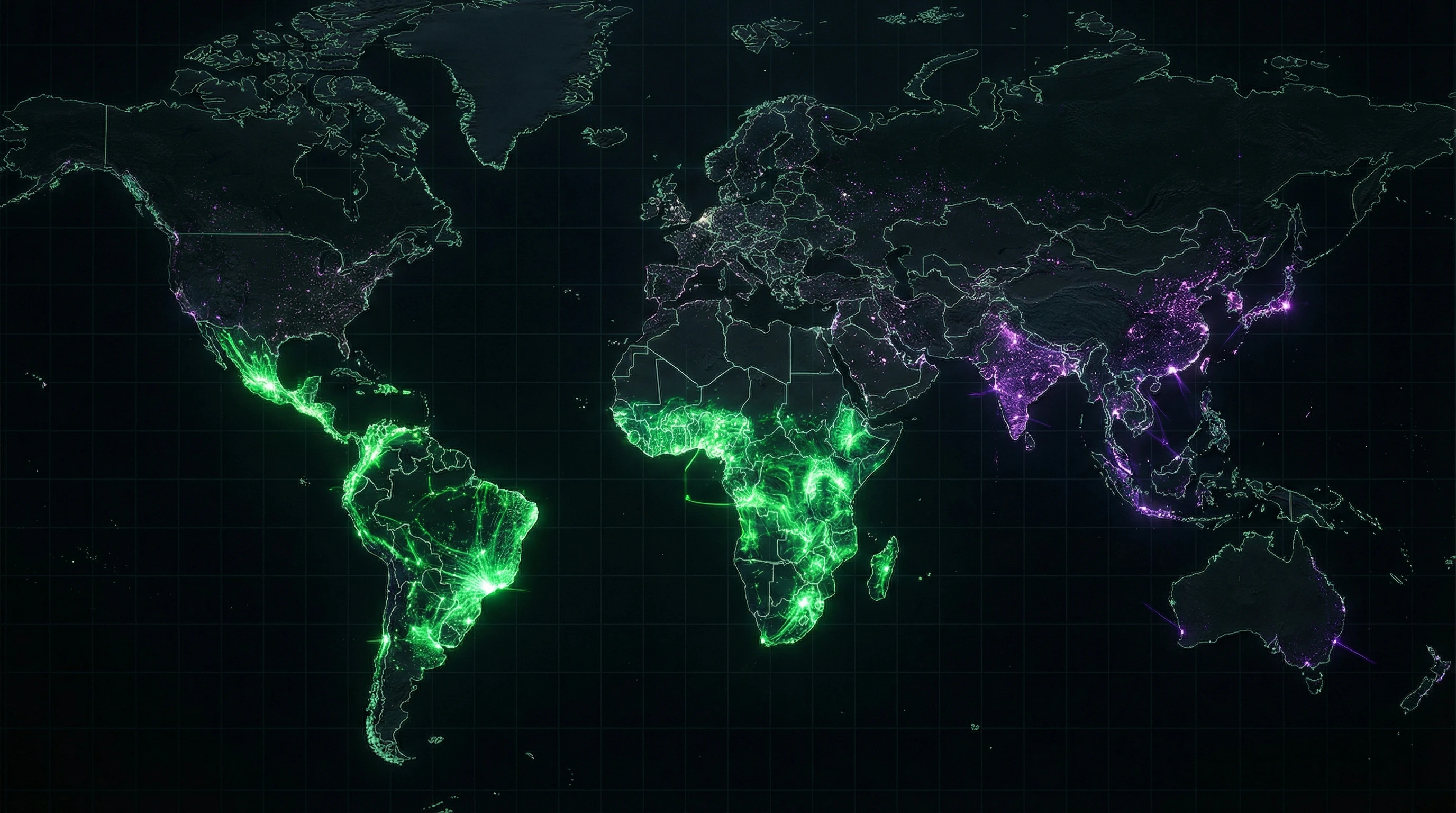
Christianity remains the world's largest religion, encompassing approximately 33% of the global population—about 2.4 billion people. Contrary to the myth of global decline, the religion demonstrates significant growth in certain regions, offsetting decreases in traditionally Christian European countries.
| Region | Dynamics | Characteristics |
|---|---|---|
| Africa | Maximum growth | From ~10 million (1900) to >600 million (present) |
| Asia | Sustained growth | Minority, but dynamic in China and South Korea |
| Latin America | Diversification | Growth of Pentecostal and evangelical movements |
| Europe | Decline | Traditionally Christian region losing numbers |
The center of gravity of Christianity has shifted from the Northern Hemisphere to the Southern, where the most dynamic and numerically growing communities are concentrated.
- Reformatting of Global Christianity
- This shift changes not only demographics, but also theological priorities, social agendas, and institutional structures. African and Asian Christianity brings different emphases on issues of justice, healing, and interaction with traditional beliefs than European Protestant or Catholic tradition.
Christianity and the Birth of Science: Historical Connections
Philosophical Foundations of the Scientific Method
The Christian concept of a rational Creator who established an ordered universe governed by constant laws provided the intellectual foundation for systematic study of nature. This idea contrasted with ancient notions of capricious deities and cyclical time.
Medieval scholasticism developed logical tools and methods of argumentation that became the foundation of scientific discourse. Universities of the 12th–13th centuries institutionalized systematic study of nature and created social structures for knowledge transmission.
- Christian doctrine of humans as made in God's image endowed human reason with dignity and the capacity to understand creation—a key psychological stimulus for scientific activity.
- Linear versus cyclical time: the Christian understanding of history as progress from creation to salvation created conceptual space for the idea of accumulating knowledge.
Historical Evidence of Influence on Scientific Development
Monasteries of medieval Europe functioned as centers for preserving and copying ancient texts, including scientific treatises that would otherwise have been lost. The Church funded observatories, supported mathematical research for calendar calculations, and sponsored botanical gardens for studying medicinal plants.
Copernicus was a canon, Kepler a Protestant theologian, Newton devoted more time to theology than physics. Their faith motivated scientific inquiry rather than hindering it.
The conflict model of science-religion relations, popularized in the 19th century, finds no support in historical sources and is rejected by modern historians of science.
Christian culture created a unique combination of rationality, empiricism, and faith in the knowability of the world that proved exceptionally fruitful for scientific development.
Patristics and Classical Heritage: Bridge Between Eras
Eastern and Western Church Fathers
Patristics—the study of early Christian writers and theologians—shaped Christian doctrine through synthesis of biblical revelation and philosophical thought. Eastern fathers (Origen, Basil the Great, Gregory of Nazianzus, John Chrysostom) worked in the Greek tradition, developing apophatic theology and mystical contemplation.
Western patristics (Tertullian, Ambrose, Jerome, Augustine) built the Latin theological tradition through juridical categories and psychological analysis. These differences were not merely linguistic but intellectual priorities that later defined the split between Orthodoxy and Catholicism.
- Apophaticism (East)
- Theology through negation: God is known not through affirmations but through negation of all human categories. Mechanism: mystical contemplation as path to deification.
- Doctrinal Precision (West)
- Theology through definition: faith requires logical consistency and juridical clarity. Mechanism: institutional authority relies on precise formulations.
- Consequence
- Two theological traditions with different mechanisms for legitimating authority and knowledge—foundation of future schism.
Role in Preserving Classical Culture
Christian monasteries and scriptoria became the sole channel through which ancient literature, philosophy, and science survived the collapse of the Roman Empire. Monks copied not only sacred texts but also Plato, Aristotle, Cicero—not from piety but practical necessity: education required knowledge of the classics.
Without monastic work copying texts, a significant portion of Western intellectual tradition would have been irretrievably lost.
Church fathers actively transformed ancient philosophy into Christian context. Augustine in "Confessions" demonstrates deep knowledge of Neoplatonism and rhetoric, translating their language into Christian semantics.
This synthesis mechanism ensured continuity: medieval Europe inherited not only faith but the wealth of classical culture through the filter of patristic reinterpretation.
Persecution of Christians in the Modern World: The Statistics Being Ignored
The Global Picture of Religious Persecution
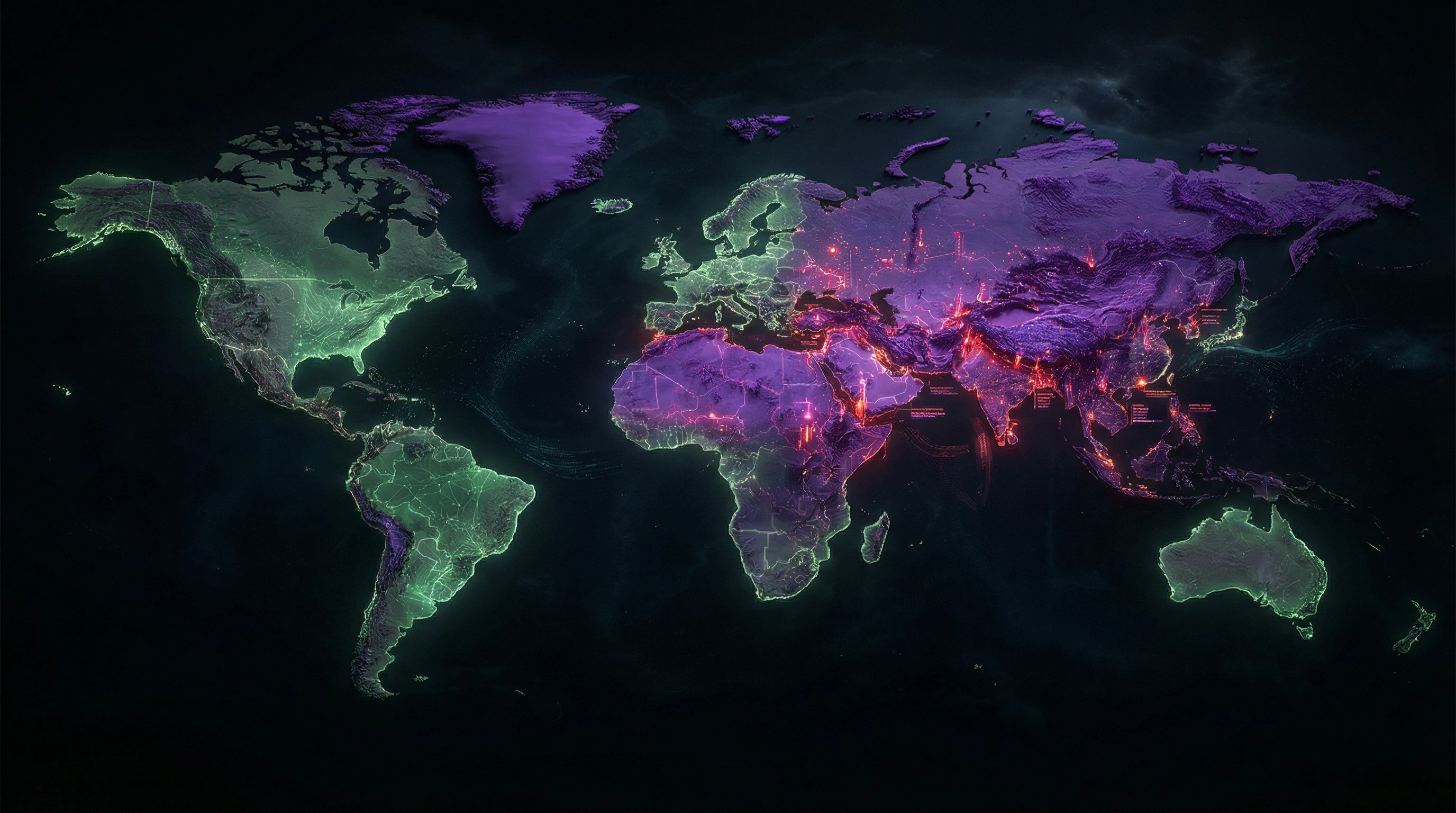
Christianity is the world's largest religion and simultaneously the most persecuted. Human rights organizations document that approximately 75% of all cases of religious persecution worldwide are directed against Christians.
This contrasts sharply with the perception of persecution as exclusively a historical phenomenon. The scale encompasses dozens of countries across all continents—from North Africa to Southeast Asia.
Counting methodology includes physical violence, legal restrictions, social discrimination, and economic pressure. Intensity ranges from legislative restrictions on religious freedom to systematic physical extermination of minorities.
Particularly alarming is the rise of violence in regions with unstable political situations, where Christians become targets of both state and non-state actors.
Geographic Distribution and Typology of Persecution
The most intense persecution is documented in countries of the Middle East, North Africa, and specific regions of Asia, where Christians constitute a religious minority. Communities face church destruction, bans on public worship, and targeted violence.
The paradox: in the historical birthplace of Christianity—the Middle East—Christian presence has declined most dramatically over the past century.
| Type of Persecution | Mechanism | Geographic Focus |
|---|---|---|
| State Atheism and Secular Restrictions | Legal discrimination through blasphemy laws, restrictions on missionary activity, bans on religious education | Asia, specific regions of Europe |
| Religiously Motivated Violence | Targeted attacks by radical groups, terrorist acts, ethnoreligious conflicts | Middle East, North Africa |
| Social Discrimination | Exclusion from civil service, restricted access to education and economic resources, social stigmatization | Widespread in minority regions |
Sociological research demonstrates that persecution correlates not only with the religious composition of the population, but also with levels of political stability, rule of law, and the degree of religious freedom in society.
Psychoanalytic Interpretations of Christianity: From Freud to Kristeva
Freud's, Lacan's, and Kristeva's Approaches to Religious Phenomena
The psychoanalytic tradition has offered radically new interpretations of Christianity as a cultural and psychological phenomenon. Sigmund Freud examined Christianity through the lens of collective neurosis and projection of the paternal figure, interpreting religious practices as sublimation of fundamental psychic conflicts.
Jacques Lacan developed this line of inquiry, analyzing Christian symbolism through the concepts of the Real, the Symbolic, and the Imaginary, paying particular attention to the figure of Christ as an object of desire and identification. Julia Kristeva proposed a semiotic analysis of Christian imagery, exploring maternal archetypes in the cult of the Virgin Mary and the role of abjection in forming religious subjectivity.
These approaches share an understanding of religion not as an illusion requiring exposure, but as a complex symbolic system structuring individual and collective psyche.
Psychoanalytic interpretation enables investigation of how Christian narratives about sin, redemption, and salvation resonate with universal psychic structures. Of particular interest is the analysis of the Christian concept of love (agape) as transformation of libidinal energy and a mechanism for forming social bonds.
Religion as Cultural Phenomenon and System of Meaning
Contemporary psychoanalytic theory views Christianity as a cultural system of meaning production, organizing individual and collective experience. Religious symbols function as signifiers structuring subjectivity and providing psychic integration in the face of existential anxiety.
- Baptism
- Marker of entry into the symbolic order, initiating the subject into the cultural system.
- Eucharist
- Ritual reproduction of identification with the body of Christ, regulating libidinal ties with the community.
- Confession
- Verbalization of unconscious conflict and its integration through acknowledgment before an authority figure.
- Prayer
- Regulation of libidinal energy through address to the Other, structuring internal dialogue.
This perspective enables understanding of the persistence of religious forms even in secular societies, where they continue to perform psychological functions of structuring experience and managing anxiety.
Christianity's Systemic Role in Shaping Civilization
Impact on Medieval Europe and the Birth of Science
Christianity provided the intellectual, legal, and institutional foundation of medieval European civilization. Christian theology created the philosophical prerequisites for the emergence of modern science: the rationality of divine creation, the knowability of nature, linear time, the idea of progress, and universal laws of nature.
Monasteries functioned as centers for preserving knowledge, where ancient texts were copied and practical sciences from agronomy to medicine were developed. The universities of the 12th–13th centuries were Christian institutions where theology was considered the "queen of sciences," yet they cultivated systematic study of nature.
The scholastic method, with its emphasis on logical argumentation and resolution of contradictions, laid the foundations of scientific methodology.
Modern Cultural Legacy and Secular Transformations
Christianity's cultural legacy shapes Western societies even under conditions of secularization. Concepts of human rights, personal dignity, and social justice have roots in Christian anthropology and ethics.
Modern secular ideologies—liberalism, socialism—often represent transformed Christian narratives of salvation, translated into the language of politics. Even atheistic humanism inherits Christianity's faith in the universal value of human life.
| Cultural Sphere | Christian Source | Modern Form |
|---|---|---|
| Social Policy | Care for the poor and justice | Welfare state institutions |
| Psychology | Personal transformation and reflection | Psychotherapy and self-improvement culture |
| Literature | Inner experience and confession | Autobiographical genre and cult of subjectivity |
Understanding this legacy is critically important for comprehending modern culture, even when it explicitly distances itself from religious roots.

Knowledge Access Protocol
FAQ
Frequently Asked Questions
Christianity is the world's largest religion, encompassing approximately 33% of the global population. The geography of Christianity has shifted significantly: from a Mediterranean center in the first millennium through European dominance to an increasingly global distribution with active growth in Africa, Asia, and Latin America.
Scientific research confirms that Christianity became a crucial factor in the birth of modern science. The Christian worldview created philosophical foundations for the scientific method, including the concept of a rationally ordered universe and the possibility of understanding it through human reason.
Patristics is the study of the writings of early Christian theologians (Church Fathers) from both Eastern and Western traditions. These texts not only shaped Christian theology but also played a key role in preserving and transmitting the classical cultural heritage to medieval Europe.
No, this is a common myth. While some Western regions show decline, Christianity is actively growing in Global South countries. The overall number of Christians continues to increase, maintaining Christianity's status as the world's largest religion.
This misconception is not supported by academic research. Historical analysis shows that Christianity provided conceptual foundations for the development of scientific thinking. Many outstanding scientists were devout Christians, and monasteries served for centuries as centers of education and scholarship.
Yes, contemporary research documents that Christians face the highest level of religious persecution in the world. Approximately 75% of all cases of religious persecution are directed against Christians in various regions of the planet.
Start by reading the New Testament, then move on to major patristic texts and works by classical theologians. It's important to combine primary sources with contemporary research on Christian history, using an interdisciplinary approach that includes history, philosophy, and cultural studies.
Researchers employ diverse methodologies: sociological surveys and demographic analysis, historical-critical methods for studying ancient texts, comparative religious studies. Psychoanalytic approaches (Freud, Lacan, Kristeva) and cultural-civilizational analysis are also utilized.
Comprehensive understanding requires working with several types of sources: biblical texts, patristic literature, works by classical and contemporary theologians. It's also necessary to study historical research and works on philosophy of religion to obtain a complete picture of the development of Christian thought.
Christianity served as a system-forming factor in medieval European civilization. It defined cultural, legal, educational, and social institutions, creating the foundation for the development of European culture and exerting long-term influence on contemporary cultural heritage.
No, this is a misconception. Christianity originated in the Middle East, and contemporary Christianity is increasingly non-European. The primary centers of growth are located in Africa, Asia, and Latin America, reflecting the religion's global and cross-cultural character.
No, this is an oversimplified approach. Comprehensive understanding requires studying patristic texts, theological works, historical research, and contemporary scholarship. Christian tradition has been shaped over centuries through the interpretation and reflection on sacred texts by numerous thinkers.
Psychoanalytic approaches by Freud, Lacan, and Kristeva examine Christianity as a complex cultural phenomenon. These interpretations analyze religious symbols, rituals, and beliefs through the lens of the unconscious, linguistic structures, and the formation of subjectivity within cultural contexts.
The most dynamic growth of Christianity is observed in sub-Saharan African countries, certain Asian regions, and Latin America. This geographical shift is transforming the global face of Christianity, making it an increasingly multicultural and diverse phenomenon.
Christians face the greatest risks of persecution in the Middle East, certain African countries, and specific Asian regions. Forms of persecution range from social discrimination to physical violence, as confirmed by data from international human rights organizations.
Ancient Christianity played a crucial role in preserving Greco-Roman cultural heritage. Early Christian thinkers adapted and reinterpreted classical philosophy, literature, and science, ensuring their transmission to medieval Europe through monastic libraries and educational centers.