 💧 Water Memory
Water Memory: Scientific Analysis of a Controversial Hypothesisλ
A critical examination of the hypothesis that water can retain information about dissolved substances after extreme dilution
Overview
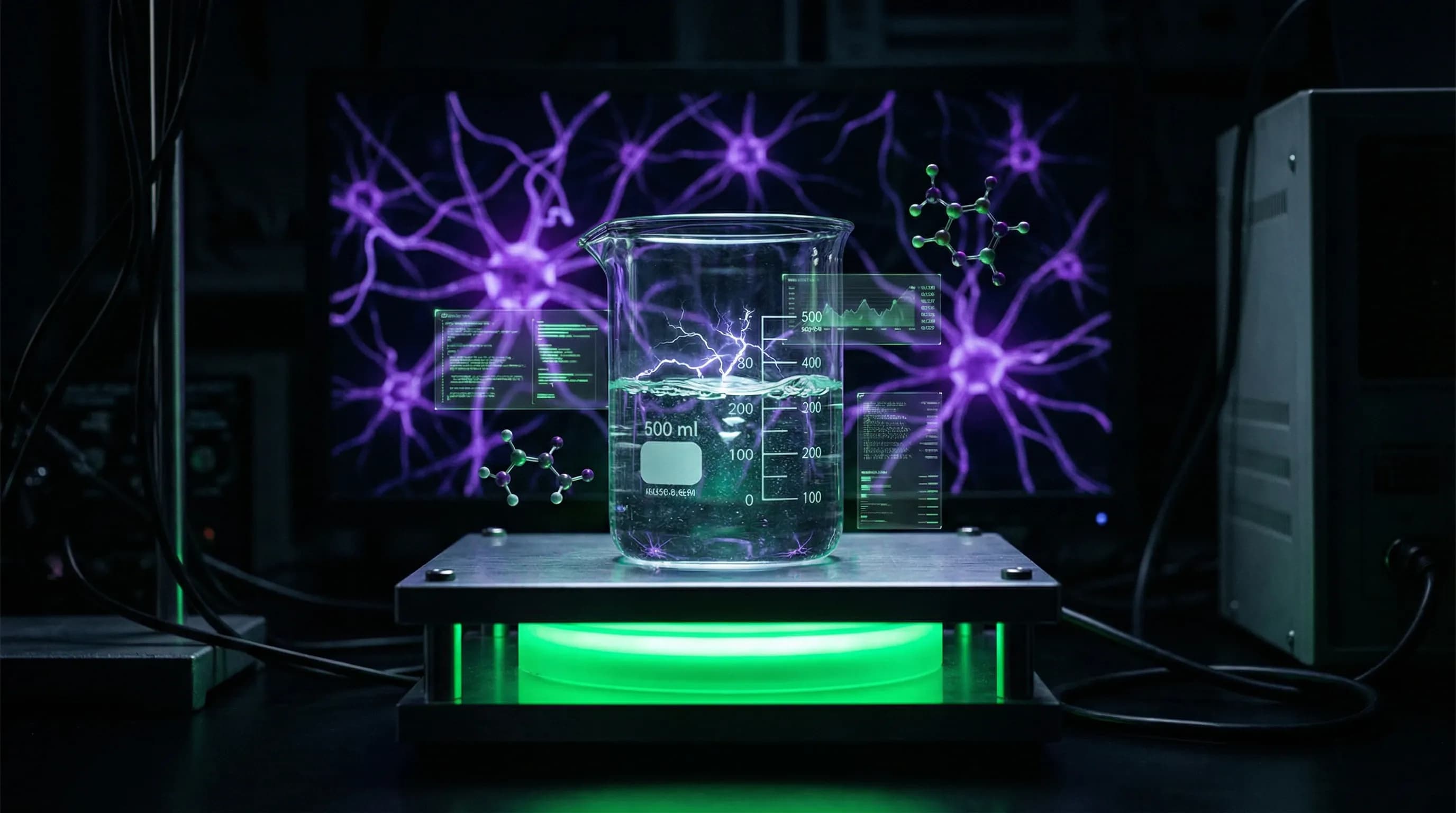
Water doesn't remember. The "water memory" hypothesis — an attempt to explain homeopathic effects through H₂O's alleged ability to retain an "imprint" of dissolved substances 🧬 even after dilution to zero molecules. Jacques Benveniste published experiments in 1988, but no one has been able to reproduce the results — neither under blind conditions nor through 35 years of repeated attempts.
🛡️
Laplace Protocol: When evaluating water memory claims, demand independent replication, double-blind controls, statistical rigor, and publication in high-tier peer-reviewed journals. Absence of reproducible results is a key indicator of hypothesis unreliability.
Reference Protocol
Scientific Foundation
Evidence-based framework for critical analysis
Protocol: Evaluation
Test Yourself
Quizzes on this topic coming soon
Sector L1
Articles
Research materials, essays, and deep dives into critical thinking mechanisms.
💧 Water Memory⚡
Deep Dive
Origin of the Concept and Benveniste's Experiments: How One Publication Split the Scientific Community
Initial 1988 Research and Nature Publication
In 1988, French immunologist Jacques Benveniste published an article in the prestigious journal Nature claiming that water could retain "memory" of substances dissolved in it even after dilution to concentrations where not a single molecule of the original substance remained.
The experiments showed that ultra-high dilutions of antibodies to immunoglobulin E caused basophil degranulation—a reaction that should have required the presence of actual antibody molecules. Nature's editorial team made the unprecedented decision to publish the article with a caveat about the need for independent verification of the results.
The publication immediately attracted attention as a potential scientific basis for homeopathy—a practice founded on the principle of extreme dilutions. This created an expectation: if water truly "remembers," then the entire foundation of homeopathy gains a physical explanation.
Nature's Investigation and Replication Failure Under Controlled Conditions
Immediately after publication, Nature organized an independent investigation, sending a team to Benveniste's laboratory that included a physicist, a scientific fraud specialist, and illusionist James Randi.
When experiments were conducted under double-blind conditions—where neither experimenters nor observers knew which samples contained diluted substances—the positive results completely disappeared.
- Identified Methodological Flaws
- Lack of proper blinding allowed researchers to unconsciously influence interpretation of results.
- Subjective assessment of basophil degranulation created room for observer bias.
- Statistical errors in data analysis inflated the significance of random fluctuations.
Subsequent attempts by independent laboratories to reproduce Benveniste's experiments consistently failed. This became a key factor in discrediting the water memory hypothesis in the eyes of the scientific community.

Theoretical Foundations of the Water Memory Hypothesis: The Search for a Physical Mechanism
Benveniste's Electromagnetic Theory and Digital Biology
After the failure of his initial experiments, Benveniste modified the hypothesis, proposing an electromagnetic nature of water memory. Molecules supposedly leave not a structural but an electromagnetic "imprint" that can be recorded on digital media and transmitted by phone or internet.
Benveniste claimed to have developed devices for detecting and reproducing these signals—"digital biology." None of them passed independent verification, and the proposed mechanism contradicted fundamental principles of electromagnetism and quantum mechanics.
| Theory | Mechanism | Problem |
|---|---|---|
| Electromagnetic (Benveniste) | EM imprint of molecules, network transmission | Failed independent verification, contradicts physics |
| Dissipative structures (Elia, 2007) | Self-organization of clusters under external perturbation | No reproducible evidence at equilibrium |
Elia's Dissipative Structures Theory and Alternative Explanations
In 2007, Italian researcher Elia proposed viewing water as a "multi-parameter complex system" capable of forming dissipative structures under the influence of external perturbations. The work received 167 citations and relied on thermodynamics of non-equilibrium systems and self-organization theory.
Proponents pointed to hydrogen bonds and water molecule clusters as potential information carriers. However, even this more sophisticated theoretical framework failed to provide reproducible evidence of long-term information retention in water, especially under conditions of thermodynamic equilibrium.
Both theories—electromagnetic and dissipative structures—attempted to find a physical mechanism but faced the same problem: the absence of experimental evidence that could be independently reproduced.
Scientific Criticism and Mainstream Position: Why the Concept Fails Scrutiny
Contradiction of Thermodynamic Laws and Molecular Dynamics
Water molecules exist in constant chaotic motion, forming and breaking hydrogen bonds at frequencies on the order of picoseconds—trillionths of a second. Any ordered structure that could theoretically form as a result of a dissolved substance's presence would have to disintegrate almost instantaneously after its removal.
Preserving "memory" on macroscopic time scales would require a mechanism capable of resisting entropy and thermal motion. This contradicts the second law of thermodynamics—none of the proposed mechanisms explain how water could maintain a stable informational structure under room temperature conditions.
- Hydrogen bonds break within picoseconds
- Thermal molecular motion destroys any ordering
- System entropy increases—structure cannot be preserved
- No physical mechanism exists for information stabilization
Absence of Reproducible Results and Failure of Meta-Analyses
Multiple independent studies conducted in various laboratories using rigorous double-blind protocols have consistently failed to detect effects attributable to water memory. Meta-analyses of homeopathic research published in authoritative journals, including The Lancet, have shown that the effects of homeopathic preparations are indistinguishable from placebo.
The scientific community has reached consensus: convincing evidence for the existence of water memory has not been established. The lack of reproducibility is not a matter of insufficient funding or bias, but an indication that the effect does not exist.
Sociologist Kaufmann in 1994 analyzed the "water memory affair" as an example of scientific controversy, demonstrating how conflicting interpretations spread through various information channels. However, this did not change the scientific verdict on the absence of an evidence base—divergence in interpretations does not compensate for the lack of experimental facts.
Connection to Homeopathy and Meta-Analyses: Why Dilutions Don't Work
Homeopathic Dilutions and Avogadro's Number
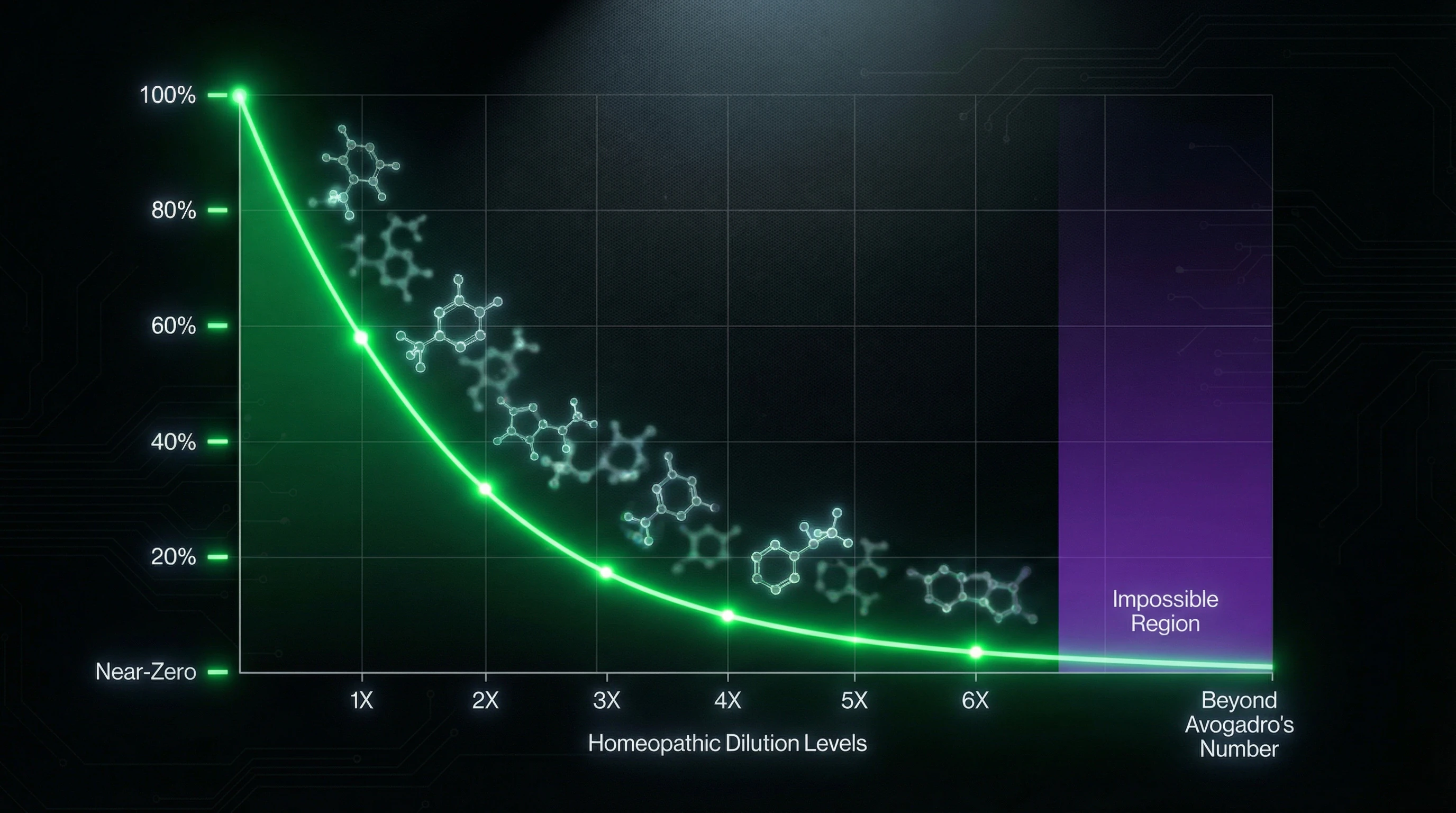
The water memory hypothesis emerged as an attempt to explain the action of homeopathic preparations diluted to a degree where not a single molecule of the original substance remains. Avogadro's number (6.022 × 10²³) defines the number of molecules in a mole: at dilutions of 30C or 200C, the probability of even one molecule of active substance being present approaches zero.
Water cannot retain "information" about a dissolved substance after extreme dilutions—this contradicts established principles of chemistry and thermodynamics.
Later, Benveniste proposed the electromagnetic signature theory, claiming that water's "memory" has an electromagnetic nature that can be detected and transmitted. This hypothesis also failed to receive experimental confirmation.
Critical Meta-Analyses in The Lancet
Comprehensive meta-analyses of homeopathic research published in The Lancet and other authoritative journals have systematically found no evidence of efficacy beyond placebo effect.
- A 2005 meta-analysis compared 110 homeopathic and 110 conventional medical studies
- Conclusion: clinical effects of homeopathy are placebo effects
- Attempts to reproduce Benveniste's original experiments under controlled conditions have systematically failed
Even proponents of the concept acknowledge that the mechanism remains speculative and unproven. The scientific consensus is based not on a lack of research, but on the systematic failure to demonstrate reproducible effects under rigorous control.
Methodological Problems in Research: Critical Evaluation Checklist
Double-Blind Control as Minimum Standard
Evaluating claims about water memory requires: independent replication in multiple laboratories, double-blind control, adequate negative controls, statistical significance with power analysis.
Benveniste's experiments were discredited by Nature precisely because blinding was absent — experimenter expectations influenced results. Publication in peer-reviewed journals with high impact factors, open access to data, and honest acknowledgment of limitations — these are quality indicators absent in most work supporting water memory.
- Independent replication in at least 3 laboratories
- Double-blind protocol (neither experimenter nor evaluator knows conditions)
- Negative controls (placebo, inert substances)
- Power analysis before study initiation
- Open access to raw data
- Disclosure of funding sources and conflicts of interest
Red Flags in Water Memory Research
Claims about "electromagnetic signatures" without physical measurements, absence of independent replication, publication only in alternative medicine journals, lack of blinding — all these signal low quality.
Extraordinary claims require extraordinary evidence. Water memory research is often characterized by selective citation of only supporting literature and failure to disclose conflicts of interest.
The myth of research suppression is refuted by fact: the concept has been widely studied and published. Lack of recognition is linked to systematic failure to reproduce effects under controlled conditions.
Elia and colleagues (2007) proposed considering water as a "multivariable complex system" subject to perturbations. The work received 167 citations but remains controversial and has not changed scientific consensus.

Sociological and Cultural Context: From Scientific Controversy to Literature
Analysis of Scientific Communication and Contradictions
Sociologist Kaufmann in 1994 examined the "water memory affair" from a sociological perspective: how the same data generate radically different interpretations depending on institutional context and prior beliefs.
His analysis showed that scientific disputes are resolved not only by empirical data — social, institutional, and communicative factors shape consensus. However, this explanation doesn't change the main point: reproducible experimental evidence for water memory has never been obtained.
- Contradictory interpretations spread through different information channels
- Institutional position influences perception of the same results
- Social factors participate in forming scientific consensus
- Lack of reproducibility remains the decisive criterion
Impact on Popular Culture and Literature
"Memory of water" moved beyond science and became a metaphor in literature — Finnish writer Emmi Itäranta used this term in a 2014 eco-dystopian novel about water scarcity and hydropolitics.
Scientific ideas, even unproven ones, influence public imagination and become symbols of broader themes: ecological memory, interconnectedness of natural systems. Popularization in alternative medicine and mass culture created a gap between scientific consensus and public perception.
This gap underscores a critical necessity: scientific literacy and the ability to test extraordinary claims by one standard of evidence, regardless of their cultural resonance.
The scientific community is unanimous: water memory is not an established phenomenon. Claims about its existence require the same level of evidence as any other extraordinary hypothesis.
Knowledge Access Protocol
FAQ
Frequently Asked Questions
Water memory is a controversial hypothesis claiming that water can retain information about substances that were dissolved in it, even after complete removal of those substance molecules. The concept emerged from Jacques Benveniste's experiments in 1988 and is used to explain homeopathy's mechanism. The scientific community does not recognize this hypothesis due to lack of reproducible evidence.
The concept of water memory was proposed by French immunologist Jacques Benveniste in 1988 following publication in Nature journal. His experiments showed biological activity of highly diluted antibody solutions. However, Nature's investigation revealed methodological errors, and the results could not be reproduced under controlled conditions.
No, water memory is not scientifically proven. Multiple attempts at independent replication of Benveniste's experiments failed when double-blind controls were implemented. Meta-analyses found no convincing evidence for this phenomenon's existence, and the concept contradicts established laws of chemistry and thermodynamics.
Scientists reject water memory due to absence of reproducible experimental confirmation and contradiction of fundamental physics laws. The hypothesis violates principles of thermodynamics and molecular interactions. All attempts at independent verification under strictly controlled conditions yielded negative results, indicating artifacts in the original experiments.
Water memory is proposed as an explanation for how homeopathic remedies work when diluted beyond Avogadro's number. At such dilutions, no molecules of the original substance remain, so homeopaths cite water's ability to 'remember' information. Critical meta-analyses in The Lancet found no evidence that homeopathy works better than placebo.
Nature journal sent an expert commission to verify Benveniste's experiments, including illusionist James Randi. The investigation revealed serious methodological flaws: lack of proper blinding, statistical errors, and potential experimenter bias. When experiments were repeated with proper controls, the effect disappeared.
Quality research must include double-blind controls, independent replication across multiple laboratories, and rigorous statistical analysis. Adequate negative controls and disclosure of conflicts of interest are necessary. Results must be published in high-impact peer-reviewed journals and propose a testable physical mechanism for the phenomenon.
Warning signs include claims about 'electromagnetic signatures' without physical measurements, publications only in alternative journals, and absence of independent replication. Also suspicious are extraordinary claims without corresponding evidence, selective citation, and lack of blinding procedures. Quality research always undergoes rigorous peer review in mainstream publications.
Vittorio Elia proposed in 2007 an alternative theory viewing water as a multi-parameter complex system capable of changing under perturbations. This concept received 167 citations but remains controversial. The theory attempts to explain water memory through physicochemical structural changes, but hasn't gained wide acceptance due to insufficient experimental confirmation.
Benveniste claimed in later work that water memory has an electromagnetic nature and can be transmitted remotely. These experiments were not reproduced by independent researchers and are considered invalid by the scientific community. There is no physical mechanism explaining how water could store and transmit such information.
No, this is a common myth. The water memory concept was thoroughly investigated and published in leading journals, including Nature. The lack of recognition stems from the inability to obtain reproducible results under controlled conditions, not from suppression. The scientific method requires reliable evidence, which has never been provided.
Even homeopathy proponents acknowledge that the mechanism remains speculative and unproven. Observed effects of homeopathic remedies are typically explained by the placebo effect, natural disease progression, and regression to the mean. Water memory cannot explain clinical outcomes because the phenomenon itself has not been experimentally confirmed.
Avogadro's number (6.022×10²³) defines the number of molecules in a mole of substance. In homeopathic dilutions above 12C (dilution of 10⁻²⁴), statistically not a single molecule of the original substance remains. This is precisely why homeopaths invoke water memory—without it, there's no way to explain the supposed action of such preparations.
Large meta-analyses published in The Lancet systematically evaluated clinical trials of homeopathy. Results showed no effects beyond placebo when accounting for study quality. These studies are critically important because they demonstrate that even if water memory exists, it does not lead to clinically significant outcomes.
Water structure constantly changes due to thermal molecular motion, and any ordered configurations exist for picoseconds. Hydrogen bonds between water molecules break and form trillions of times per second. Thermodynamics excludes the possibility of long-term preservation of structural information without an external energy source, making the water memory hypothesis physically implausible.
The water memory concept has penetrated mass culture, spawning numerous pseudoscientific practices and commercial products. It's used in alternative medicine, esotericism, and even fiction as a symbol of nature's hidden properties. Sociological analysis shows how scientific controversies transform into cultural phenomena despite lacking scientific foundation.