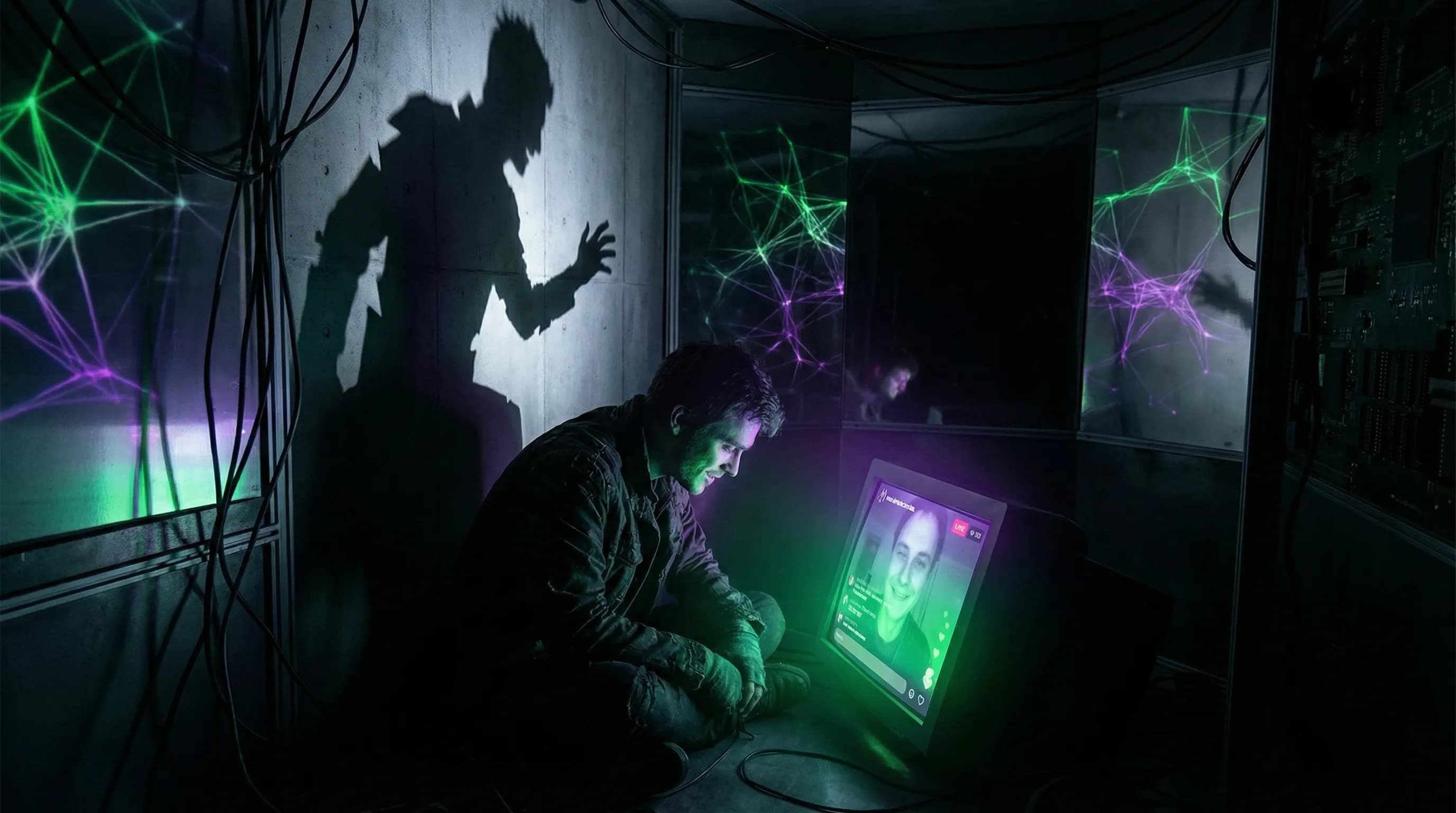
Parasociality as a Neurocognitive Phenomenon: What Happens When the Screen Becomes Your Conversation Partner
Parasocial relationships (PSR) are one-sided emotional bonds that viewers form with media personalities without the possibility of receiving reciprocal response (S003). The term was introduced by Horton and Wohl in 1956 for television hosts, but the concept flourished in the era of streaming and podcasts.
Key distinction from fan attachment: the brain processes parasocial relationships as real social contacts, activating the same neural patterns as when interacting with friends or relatives (S003).
🧠 The Neuromechanics of Reciprocity Illusion: Why the Brain Mistakes Monologue for Dialogue
Parasocial relationships are "emotionally charged one-sided relationships that individuals establish with on-screen characters" (S003). The brain applies social cognition heuristics developed for small hunter-gatherer groups to the mass media context.
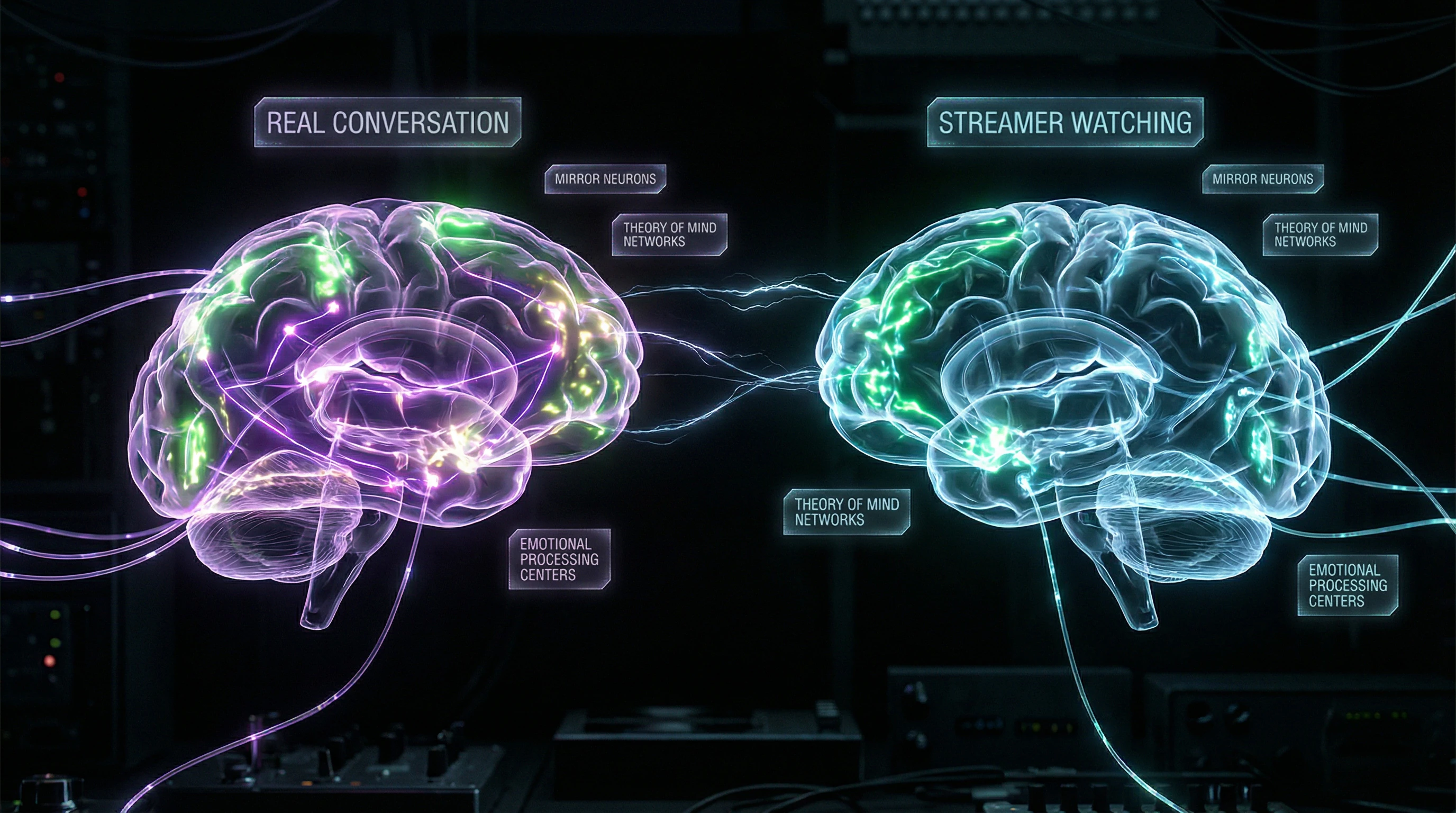
When a streamer addresses the camera using the pronoun "you" and pauses that mimic dialogue, mirror neurons activate just as they would in real conversation. The effect is amplified by contact regularity: daily streams create an illusion of stable relationships that the brain interprets as a sign of close friendship. More details in the section Torsion Fields and Bioenergy.
The brain doesn't distinguish between real dialogue and a well-engineered illusion of reciprocity. This isn't a perceptual error—it's the normal functioning of evolutionarily ancient social cognition mechanisms in a novel environment.
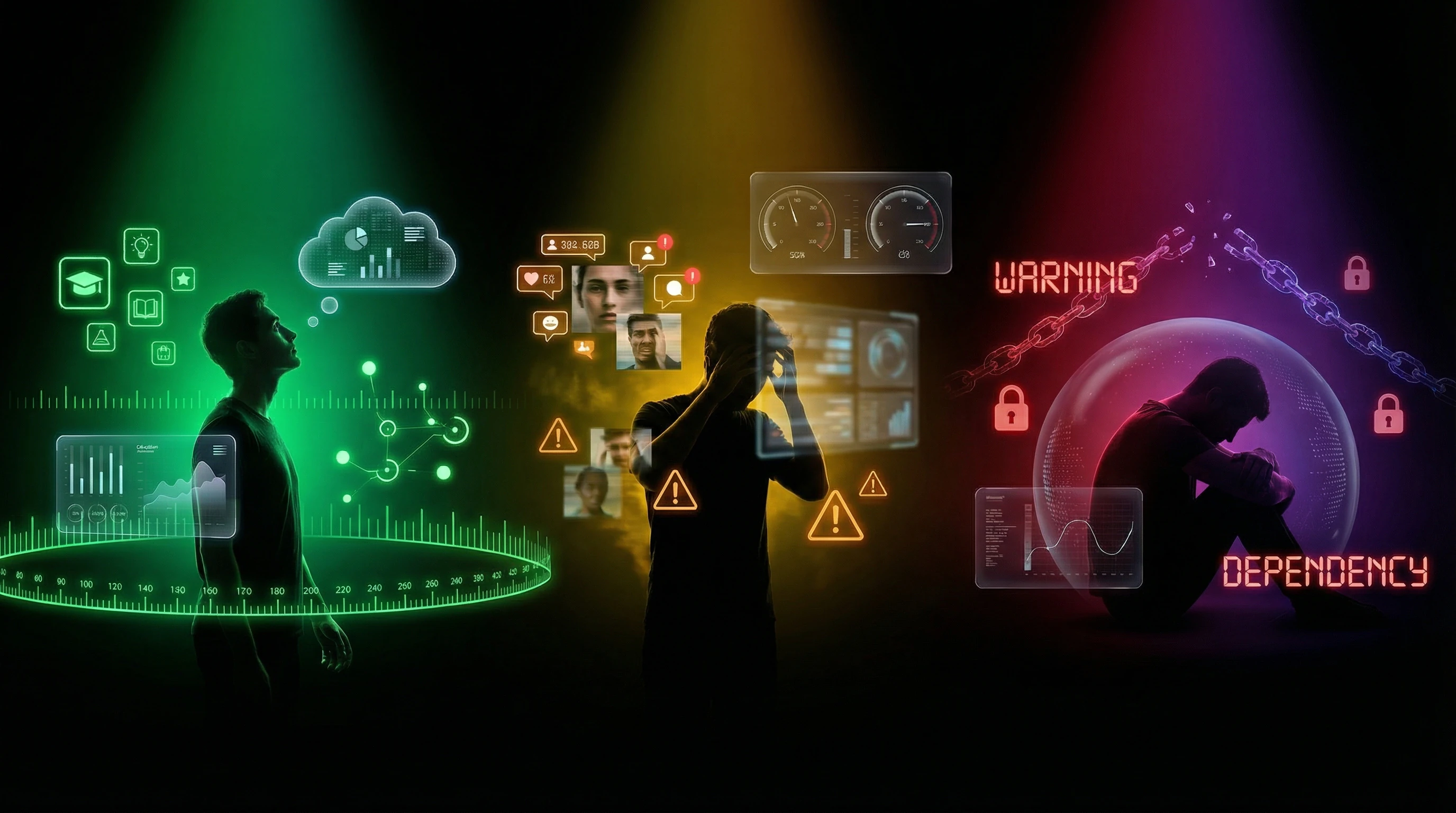
⚙️ Three Levels of Parasocial Engagement
- Parasocial Interaction (PSI)
- Short-term emotional response during content viewing. Emerges and disappears with the broadcast turning on/off.
- Parasocial Relationships (PSR)
- Long-term attachment persisting between viewing sessions. The viewer thinks about the streamer outside the viewing context, takes interest in their life.
- Parasocial Dependency
- A state where absence of contact with the media personality triggers anxiety, and real social connections are replaced by one-sided ones (S002). This is the level where problems begin.
Research among middle-aged women showed: engagement in parasocial relationships is not directly linked to interpersonal relationship disharmony, but correlates with subjective feelings of loneliness (S002).
🔁 Parasociality vs. Fandom: Where the Boundary Lies
A fan recognizes the one-sided nature of the connection and doesn't expect reciprocity. A person in a parasocial relationship processes the media personality at a cognitive level as part of their social circle.
| Feature | Fandom | Parasocial Relationships |
|---|---|---|
| Awareness of one-sidedness | Yes, explicit | Cognitive denial |
| Expectation of reciprocity | No | Yes, at subconscious level |
| Reaction to "betrayal" | Disappointment in content | Experience of personal offense |
| Attribution of intentions | To character/persona | To real person as friend |
Attribution research showed: viewers apply the same behavioral explanation schemas to media personalities as they do to real acquaintances, including fundamental attribution error (S011).
Five Arguments in Defense of Parasocial Bonds: When One-Sided Relationships Work in Your Favor
📚 Educational Potential: How Parasociality Enhances Learning Engagement
Parasocial relationships with online instructors improve material comprehension and learning engagement (S003). Students who form such connections demonstrate higher motivation to complete courses and better information retention.
The mechanism is simple: emotional attachment to the "face" of the course reduces cognitive load and creates a sense of personal accountability to a "familiar" instructor. This works even when the instructor is unaware of the specific student's existence. More details in the Memory of Water section.
- Emotional attachment reduces cognitive strain when processing complex material
- The sense of personal connection increases motivation to complete tasks
- Predictability of a "familiar" voice and style facilitates concentration
🛡️ Compensatory Function During Social Isolation: Parasociality as a Loneliness Buffer
Parasocial relationships serve a protective function during periods of forced isolation (S004). During the COVID-19 pandemic, they partially compensated for the deficit of live interaction, especially for people with limited social networks.
Accessibility, predictability, and illusory control—you can "meet" with a media persona anytime, without risking rejection or conflict (S002).
This isn't a replacement for real relationships, but a buffer against acute loneliness. For people with social phobia or limited mobility, such a mechanism may be the only accessible source of regular social contact.
🎯 Safe Environment for Developing Social Skills: Empathy Training Without Risk
For people with social anxiety or autism spectrum disorders, parasocial relationships serve as a "training ground" for developing social cognition skills (S003). Observing a streamer's emotional reactions, attempting to predict their behavior, forming theory of mind—all of this occurs in a safe environment where mistakes carry no social consequences.
- Theory of Mind Through the Screen
- The viewer learns to interpret emotions, motives, and intentions by analyzing the media persona's reactions to events. This develops cognitive skills necessary for real interactions.
- Zero Social Risk
- Misinterpreting a streamer's behavior doesn't lead to conflict or rejection—the media persona is unaware of the viewer's error.
- Clinical Potential
- Some therapists use this effect when working with adolescents, suggesting they analyze media personas' behavior as preparation for real interactions.
💡 Motivational Function: Parasocial Relationships as a Driver of Personal Growth
Parasocial connections with media personas who demonstrate desired qualities or achievements stimulate self-improvement. The social comparison mechanism works even in one-sided relationships: the viewer uses the streamer as a reference point for evaluating their own progress.
Research shows a correlation between parasocial relationships with educational content creators and increased academic motivation (S001). Critical factor: perceived attainability—if the viewer believes they can replicate the media persona's path, the effect intensifies.
| Condition | Effect on Motivation |
|---|---|
| Streamer demonstrates attainable results | High—viewer sees themselves in the streamer's role |
| Streamer is unattainable or alienated | Low or negative—frustration emerges |
| Streamer shows process, not just results | High—viewer understands how to begin |
🌐 Community Formation: From Individual Connection to Collective Identity
Parasocial relationships often serve as the foundation for forming real social connections within fan communities. Shared attachment to a streamer creates ground for interaction between viewers who might otherwise find no common ground.
Audiences forming strong parasocial relationships more frequently participate in online discussions and offline fan meetups, transforming one-sided connections into multidirectional social networks (S007). However, it's important to distinguish healthy fan activity from pathological identification—the boundary lies where the community begins demanding members abandon their own judgment.
Evidence Base 2024–2025: What the Numbers Say About the Scale and Consequences of Parasociality
📊 Epidemiology of Parasocial Relationships: Who Is Most Vulnerable
A study of parasocial relationship engagement among middle-aged women (mean age 38 years, sample size 80) revealed a paradox: parasocial bonds are not associated with interpersonal relationship dysfunction, yet correlate with subjective feelings of loneliness (S002).
Parasociality is not a compensatory mechanism for the socially isolated. It coexists with normal social connections, yet may intensify internal experiences of loneliness without reflecting objective social isolation.
This refutes the simplified notion of parasociality as exclusively a protective mechanism. The picture is more complex: a person can be socially active yet experience profound feelings of misunderstanding or emotional distance in real relationships—and this creates the foundation for parasocial bonds (S002).
🧪 Experimental Data: Parasociality in Educational Contexts
Research on the role of parasocial relationships in digital learning showed that bonds formed with on-screen characters or instructors improve material comprehension and engagement (S003). Students with stronger parasocial connections to online instructors demonstrated higher course completion rates and satisfaction.
However, the authors note: positive engagement effects are accompanied by negative consequences requiring further study (S003). The mechanism works both ways—emotional attachment to an instructor's image can both motivate and create dependence on their presence.
⚠️ Warning Signs: Cases of AI Chatbot Dependency
Emerging reports of harm caused to children and adults by parasocial bonds with AI chatbots indicate an urgent need for protective measures (S010). A 2025 study documents intense parasocial relationships with AI conversational agents, particularly among adolescents and young adults.
| Risk Factor | Mechanism | Vulnerable Group |
|---|---|---|
| Conversation privacy | Parasocial cues emerge gradually without social oversight | Adolescents, people with social anxiety |
| Response personalization | AI adapts to user preferences, creating illusion of understanding | People with history of emotional neglect |
| Absence of boundaries | Chatbot is always available, never tires, never refuses | People with addictive behaviors |
Effective methods for mitigating these risks do not yet exist (S010). Preliminary data suggest that AI chaperones—systems that monitor and limit interaction intensity—may be a viable solution (S010).
🔍 Methodological Limitations of Current Research
Despite sociological and marketing research, psychologists are not conducting large-scale studies of this phenomenon (S002). Most available work has small samples and exploratory character: the study among middle-aged women included only 80 participants, limiting generalization of results.
- Correlation without causation
- Most studies focus on associations between variables without establishing what causes what. Loneliness may precede parasocial relationships, or conversely—parasociality may intensify feelings of loneliness.
- Absence of longitudinal data
- Studies tracking the development of parasocial relationships and their long-term consequences are virtually nonexistent. We don't know how parasocial bonds affect quality of life over 1–5 years.
- Gender and age bias
- Most samples consist of middle-aged women or young people interested in video games. Data on men, elderly people, neurodivergent individuals remain fragmentary.
This means the current evidence base allows us to describe the phenomenon but not fully explain it. We see correlations but not mechanisms. We know parasociality exists, but don't know whom it truly harms and under what conditions. More details in the Alternative History section.
Neurobiological Mechanisms: Why Evolution Didn't Prepare Us for One-Sided Relationships in the Digital Age
🧠 Evolutionary Mismatch: The Social Brain in a Mass Media World
The human brain evolved in small group settings (150–200 people according to Dunbar's number), where all social connections were reciprocal and verifiable. Neural systems of social cognition—mirror neurons, theory of mind networks, emotional resonance systems—lack built-in mechanisms to distinguish between a real conversation partner and a media persona. Learn more in the Statistics and Probability Theory section.
When a streamer looks into the camera and says "hey, friends," ancient brain structures interpret this as direct address, activating the same patterns as meeting an acquaintance (S003). The evolutionary lag between the pace of technological change and neurobiological adaptation creates vulnerability to forming parasocial bonds.
The brain doesn't distinguish between a real conversation partner and a media persona—both activate the same ancient social cognition systems.
🔁 Dopamine Loops and Predictability: Why Parasocial Relationships Can Be More "Comfortable" Than Real Ones
Parasocial relationships possess a key advantage over real ones: predictability and control (S002). The viewer can "meet" with the streamer at any convenient time, pause, rewind an unpleasant moment.
This illusion of control activates dopamine reward systems more consistently than unpredictable real interactions. Stream regularity (daily at the same time) creates a ritual that the brain interprets as a sign of stable close relationships. The absence of rejection or conflict risk reduces amygdala activation (the anxiety center), making parasocial interactions less stressful than real social contacts.
| Parameter | Real Relationships | Parasocial Relationships |
|---|---|---|
| Predictability | Low (conflicts, surprises) | High (schedule, script) |
| Viewer Control | Limited (two-way process) | Complete (pause, rewind, exit) |
| Rejection Risk | Real | Zero |
| Stress Activation | High | Low |
⚙️ Intention Attribution: How the Brain Constructs a Media Persona's Personality
Viewers apply the same behavioral explanation schemas to media personas as they do to real acquaintances (S001). The brain automatically constructs a "complete personality" of the streamer based on limited information, using the same cognitive heuristics as when forming impressions of real people.
- Fundamental Attribution Error
- Overestimating personal factors and underestimating situational ones. If a streamer is irritated, the viewer blames their character rather than fatigue or technical problems.
- Halo Effect
- Extending a positive evaluation of one trait to the entire personality. A charismatic streamer is perceived as intelligent, kind, and honest, even without evidence.
- Illusion of Asymmetric Insight
- The conviction that "I know them better than they think." The viewer feels they understand the streamer more deeply than the streamer understands themselves, even though information flows one way.
🕳️ Substitution vs. Supplementation: When Parasociality Displaces Real Connections
Do parasocial relationships supplement or substitute for real social connections? The data is contradictory. On one hand, parasocial relationships can substitute for real social contacts, which is linked to their accessibility, predictability, and illusory control (S002).
On the other hand, engagement in parasocial relationships is not associated with interpersonal relationship disharmony (S002). A possible explanation: parasociality works as a supplement for people with normal social networks, but as a substitute for those who experience difficulty forming real connections.
Threshold effect: up to a certain level of engagement, parasocial relationships are harmless or even beneficial, but after exceeding the threshold they begin to displace real communication.
The substitution mechanism is especially dangerous for people already experiencing social isolation or narcissistic abuse in real relationships. Parasocial connections offer a safe outlet, but can reinforce avoidance of real contacts, exacerbating social deficit.
Data Conflicts and Zones of Uncertainty: Where Scientific Consensus Has Not Yet Been Reached
🧩 The Loneliness Paradox: Correlation Without Causation
Parasocial engagement correlates with subjective loneliness, but not with objective disharmony in interpersonal relationships (S002). This creates an interpretational trap: do parasocial relationships cause loneliness (by replacing real connections), or do lonely people form them more often (a compensatory mechanism)?
Correlational data does not establish the direction of causality. Longitudinal studies are needed to track the dynamics of social networks and parasocial engagement over time. More details in the Cognitive Biases section.
The direction of causality is not just a methodological question. The entire intervention strategy depends on the answer: should we treat loneliness or limit screen time?
🔬 Positive vs. Negative Effects: The Balance of Benefits and Harms
Research has identified both poles: improved comprehension of material, increased motivation, reduced isolation during periods of distancing (S003) — and simultaneously replacement of real contacts, formation of dependency, distortion of social norms.
Critical gap: most studies focus on either benefits or harms, without assessing the ratio. Data on threshold conditions are absent — at what intensity of engagement, type of content, and individual viewer characteristics does the balance shift toward harm.
| Effect | Mechanism | Consensus Status |
|---|---|---|
| Educational gain | Increased attention through identification | Confirmed in samples |
| Reduced isolation | Compensatory replacement of contacts | Correlation, causality unclear |
| Content dependency | Variable reinforcement (likes, chats) | Described, scale unknown |
| Norm distortion | Asymmetric information about streamer | Hypothesis, not tested |
📊 The Problem of Small Samples and Cultural Blindness
Most studies work with samples of <100 participants. Research among middle-aged women included 80 people (S002) — insufficient for reliable statistical conclusions and generalization to other demographic groups.
Even more critical: nearly all data is collected in Western countries (USA, Europe). The cultural specificity of parasocial relationships remains a black box. In collectivist cultures, the mechanisms of formation and consequences of parasocial bonds may fundamentally differ from individualistic societies.
- Selection bias
- Researchers often recruit participants from university communities or online panels — this does not represent the population as a whole, especially older age groups and regions with low internet penetration.
- Cultural parochialism
- Western models of parasociality (individual identification, personal attachment) may not work in contexts where the streamer is perceived as a group representative or authority figure, rather than as a friend.
- Time horizon
- Most studies are cross-sectional. Long-term effects of parasociality on mental health, social skills, and career remain unknown.
🔍 Where Consensus Has Been Reached, and Where It Has Not
Consensus exists: parasocial relationships are a real psychological phenomenon, activating the same neural networks as real relationships (S001). They can be both adaptive and maladaptive depending on context.
No consensus exists: on the mechanisms of switching between adaptation and maladaptation, on the role of individual differences (neuroticism, extraversion, trauma history), on long-term consequences for the development of social skills in adolescents. Here begins the territory where science has not yet built a map.
Cognitive Anatomy of Parasociality: What Mental Traps the Streaming Industry Exploits
⚠️ Illusion of Reciprocity: How Direct Address Techniques Create a False Sense of Dialogue
Streamers use a set of techniques that exploit evolutionary heuristics of social cognition. Direct eye contact with the camera activates neural networks responsible for processing eye contact — one of the strongest signals of social attention in primates. More details in the section Tarot and Cartomancy.
Using the pronoun "you" and simulating pauses for viewer "responses" creates the illusion of dialogue. Reading chat comments and reacting to donations while mentioning the viewer's name reinforces the sensation of personal attention.
The brain interprets these signals as signs of mutual relationships, not accounting for the fact that the streamer is simultaneously "communicating" with thousands of viewers (S003).
🕳️ Mere Exposure Effect: Regularity as a Surrogate for Intimacy
The mere exposure effect is one of the most reliable phenomena in social psychology: repeated contact with an object increases positive attitudes toward it. Streamers who go live daily at the same time exploit this mechanism.
Regularity creates a ritual that the brain interprets as a sign of stable close relationships. Research on parasocial relationships has shown that frequency of contact is one of the strongest predictors of parasocial bond intensity (S001).
- Critical Point
- The effect works independently of content quality — what matters is the regularity of presence.
🧩 Information Asymmetry: The Illusion of Knowing the Person
The viewer receives an enormous amount of information about the streamer (appearance, voice, mannerisms, opinions, emotional reactions), while the streamer knows nothing about the viewer. This asymmetry creates an illusion of intimacy: the brain uses the quantity of known information as a proxy for the degree of relationship closeness.
In real relationships, knowing details of someone's life correlates with mutuality and closeness; in parasocial relationships, this correlation breaks down. Viewers are convinced of their deep understanding of the media personality, though they see only a carefully edited or performed version (S002).
🔁 The Dopamine Trap of Predictability: Why Parasocial Relationships Are "Easier" Than Real Ones
Real social relationships are unpredictable and require emotional investments with uncertain outcomes. Parasocial relationships offer a surrogate for social contact without risks: no possibility of rejection, conflict, or betrayal.
| Parameter | Real Relationships | Parasocial Relationships |
|---|---|---|
| Predictability | Low — partner can surprise, hurt, leave | High — streamer goes live on schedule, behavior is stable |
| Emotional Risk | High — conflicts and breakups possible | Zero — viewer cannot be rejected |
| Required Investment | Mutual — both participants invest time and emotions | One-sided — viewer invests, streamer doesn't |
| Dopamine Profile | Variable reinforcement (unpredictable but powerful) | Fixed schedule (predictable but stable) |
Dopamine is released not only upon receiving a reward, but also in anticipation of it. Parasocial relationships offer a stable reinforcement schedule: the viewer knows when the streamer will go live and can plan around this event. This creates a habit that is neurobiologically close to addiction (S004).
💬 Selective Disclosure: How Streamer Vulnerability Becomes a Trap for the Viewer
Streamers often share personal problems, mental health struggles, family conflicts. This creates an illusion of deep intimacy: the viewer sees the "real" person, not a public image. However, this disclosure remains one-sided — the streamer doesn't know about the viewer's problems and cannot offer support.
Streamer vulnerability activates care and protection mechanisms in the viewer that are evolutionarily designed for close relationships. The viewer begins to feel responsible for the streamer's wellbeing, despite having no influence over it (S008).
🎯 Personalization Through Technology: When Algorithms Imitate Attention
Recommendation systems, stream start notifications, personalized chat greetings (often automated) create the impression that the platform and streamer remember the viewer. Algorithms are trained to maximize time spent on the platform, which aligns with the streamer's interest in growing their audience.
- The algorithm sends a notification at the moment when the viewer is most likely to open the app
- The viewer interprets this as "the platform remembers me"
- The viewer joins the stream, feeling expected
- Watch time increases, the algorithm receives a positive signal
- The cycle repeats, strengthening the parasocial bond
Technology here works as an amplifier of natural cognitive traps, not as their source (S005).
🔐 When the Trap Becomes a System: Monetizing Parasociality
The streaming industry is built on monetizing parasocial relationships. Donations, subscriptions, exclusive content for subscribers — all of this converts emotional attachment into financial flow. The viewer pays not for content (often available for free), but for the feeling of closeness and recognition.
Streamers, in turn, are motivated to deepen parasocial relationships because it directly affects income. The system creates perverse incentives: the stronger the parasocial bond, the higher the monetization, the more incentives to deepen it (S006).
This isn't a conspiracy — it's the natural result of economic incentives meeting the cognitive vulnerabilities of the human brain.