Anatomy of the myth: what exactly the starseed concept claims and where its boundaries lie
The "starseed" concept is an esoteric belief system according to which certain people possess souls of extraterrestrial origin, incarnated on Earth with a special mission. Proponents claim that starseeds arrived from various star systems (Pleiades, Sirius, Arcturus, Andromeda) to assist humanity in "spiritual evolution" or "ascension." More details in the section Quantum mysticism.
Key self-identification markers: chronic sense of "wrongness" about earthly life, intense nostalgia for a "home" beyond Earth, heightened sensitivity to energies, interest in space and UFOs, sense of special mission.
🧩 Historical genealogy: from theosophy to online communities
The roots of the idea trace back to the theosophical movement of the late 19th century, which popularized reincarnation, cosmic hierarchy of spiritual beings, and evolution of consciousness. In the 1970s, New Age reworked these ideas, integrating Eastern philosophy, Western occultism, and ufology.
The term "starseed" spread through authors like Brad Steiger ("Gods of Aquarius," 1976) and channelers claiming contact with extraterrestrial civilizations. The modern version actively spreads through YouTube, TikTok, Reddit, and specialized forums, where closed communities form.
- Theosophy (19th century)
- Reincarnation, cosmic hierarchy, evolution of consciousness
- New Age (1970s)
- Synthesis of Eastern philosophy, occultism, ufology
- Digital era (2010s+)
- Viral spread through social media and closed communities
🔎 Typology of "origins": classification without empirical foundation
Within the community exists an elaborate typology, each supposedly conferring specific characteristics. "Pleiadians" — empathic, creative, harmony-oriented; "Sirians" — technologically advanced, logical; "Arcturians" — spiritual teachers and healers; "Andromedans" — freedom fighters and reformers.
This classification functions like astrological types or Myers-Briggs: provides ready-made identity templates with sufficient flexibility for subjective interpretation. Critically: no category has operational definitions for independent verification. All "diagnostic markers" are based exclusively on subjective self-reports.
The psychological reality of an experience does not prove the truth of the metaphysical explanation of that experience.
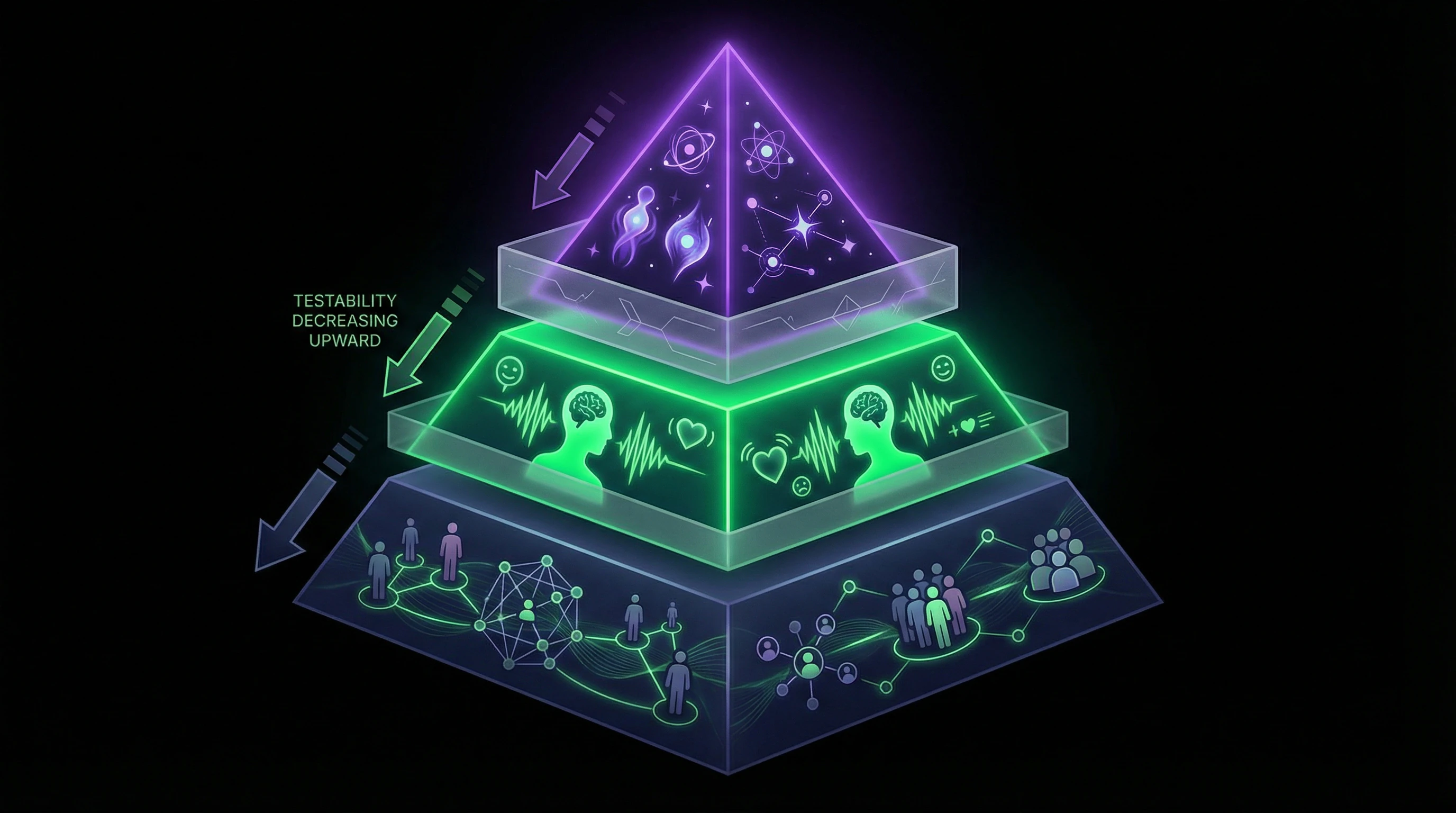
⚙️ Boundaries of claims: levels of assertions and their testability
The concept makes claims of varying degrees of testability. At the metaphysical level: existence of an immaterial soul capable of interstellar travel and reincarnation — claims beyond scientific verification.
| Claim level | Content | Testability status |
|---|---|---|
| Metaphysical | Immaterial soul, interstellar travel, reincarnation | Beyond scientific verification |
| Psychological | Set of personality characteristics indicates extraterrestrial origin | Theoretically testable, requires causal connection |
| Social | Explanation of alienation and special identity | Analyzable independently of metaphysical claims |
At the psychological level, it is claimed that a certain set of characteristics indicates extraterrestrial origin — theoretically testable, but requires demonstration of causal connection, not merely correlation. At the social level, the concept offers an explanation for feelings of alienation and special identity — a function analyzable independently of the truth of metaphysical claims.
Steel Man: Seven Most Compelling Arguments for the Reality of the Starseed Phenomenon
Before analyzing the weaknesses of the concept, it's necessary to present it in its strongest form—the "steel man" principle, opposite to the logical fallacy of the "straw man." The following arguments represent the most rationally formulated versions of starseed proponents' claims. More details in the Pseudopsychology section.
💎 Argument from Universality of Experience: Cross-Cultural Prevalence of Cosmic Origin Feelings
The feeling of "non-earthly origin" or connection to the cosmos appears across various cultures and historical periods, independent of contact between them. From shamanic traditions describing soul journeys to the stars to modern spontaneous experiences of cosmic identity—this universality allegedly points to a real phenomenon rather than a culturally conditioned construct.
Many people report these experiences before encountering the terminology or starseed community, which rules out simple cultural contagion of the idea.
🧬 Argument from Specificity of Characteristics: Statistically Significant Cluster of Personality Traits
People identifying as starseeds demonstrate a statistically significant cluster of characteristics: high sensitivity to sensory stimuli (possibly correlating with Elaine Aron's highly sensitive persons), specific dream patterns with cosmic themes, unusual childhood memories of "another home," and certain cognitive styles.
If such a cluster were empirically confirmed, it would require explanation, even if that explanation doesn't include literal extraterrestrial origin.
🔬 Argument from Anomalous Memories: Phenomenon of Childhood "Memories" of Other Worlds
Some people report childhood "memories" of places, technologies, or beings that don't correspond to earthly experience and appear spontaneously, without prior exposure to science fiction or esoteric literature.
Proponents draw parallels with Ian Stevenson's research on children allegedly remembering past lives, where in some cases specific details were verified. If reincarnation is accepted as a working hypothesis, then logically there's no reason to limit it only to earthly incarnations.
- Spontaneous memories without prior cultural exposure
- Specific details unknown to the child from available sources
- Consistency of such memories between independent individuals
- Persistence of the experience throughout life
🧠 Argument from Therapeutic Effectiveness: Psychological Benefits of Adopting the Identity
Regardless of the metaphysical truth of the concept, adopting a starseed identity produces measurable therapeutic effects for some people: reduction of isolation feelings through finding community, transformation of negative self-perception into positive, finding meaning and purpose.
From the perspective of William James's pragmatic epistemology, a belief that "works" in a person's life possesses a certain form of truth, even if it doesn't correspond to scientific realism.
📊 Argument from Convergence of Independent Sources: Consistency of Channeled Messages
Various channelers, working independently of each other and often unfamiliar with each other's work, report consistent details regarding extraterrestrial civilizations, their characteristics, and messages to humanity.
This convergence allegedly cannot be explained by simple cultural contagion, especially in cases where channelers worked before widespread information dissemination through the internet. Independent witnesses of a historical event give consistent testimony, which increases their credibility.
🧷 Argument from Explanatory Power: The Concept as a Unifying Theory of Diverse Phenomena
The starseed concept provides a single explanatory framework for a wide spectrum of phenomena: unexplained childhood memories, feelings of cosmic nostalgia, specific patterns of synchronicities, unusual abilities or knowledge appearing without training, deep sense of mission.
- Occam's Razor Principle (Inverse Form)
- Sometimes one complex explanation is better than many simple ones—the starseed concept allegedly possesses theoretical elegance, uniting diverse experiences into a coherent narrative.
- Unification of Heterogeneous Data
- Instead of separate explanations for each phenomenon, a single meta-structure is proposed.
🕳️ Argument from Limitations of Materialist Paradigm: Pointing to Gaps in Scientific Worldview
Materialist science by definition cannot investigate phenomena of consciousness, soul, or non-material dimensions of reality, and therefore the absence of scientific evidence for starseeds is not evidence of their absence.
This argument points to real problems in studying consciousness (David Chalmers's hard problem of consciousness), quantum phenomena challenging classical realism, and the history of science where many now-accepted ideas were initially rejected as impossible. The starseed concept may represent a phenomenon for which science has not yet developed adequate methods of study.
Evidential Void: Systematic Analysis of Empirical Claims and Their Inadequacy
After presenting the strongest arguments, rigorous empirical analysis is necessary. Available sources contain no direct scientific research on the "starseed" phenomenon—a significant fact indicating the concept's absence from academic discourse. More details in the Geometry and Vibrations section.
The analysis draws on relevant fields: psychology of beliefs, cognitive science of identity formation, sociology of esoteric movements, and neurobiology of unusual experiences.
📊 Absence of Controlled Studies: Failure of Basic Scientific Standards
Not a single peer-reviewed study has applied controlled methodology to test the central claims of the starseed concept.
There are no case-control studies comparing people identifying as starseeds with control groups on objective psychological or physiological parameters. No longitudinal studies tracking the development of this identity over time, no cross-cultural studies with standardized instruments, no neuroimaging studies of brain activity during "cosmic memory" experiences.
This absence is not the result of scientific conspiracy or limitations of the materialist paradigm—many subjective phenomena (religious experiences, meditative states, synesthesia) are successfully studied using scientific methods.
The absence of research indicates that the concept does not generate testable hypotheses that could distinguish it from alternative explanations.
🧾 The Operationalization Problem: Impossibility of Defining Membership Criteria
A fundamental problem with the starseed concept is the absence of operational definitions. No objective criteria exist that would allow an independent observer to determine whether someone is a starseed.
All "diagnostic signs" are based on subjective self-reports and permit multiple interpretations. A feeling of "wrongness" about earthly life could manifest depression, social anxiety, autism spectrum disorder, existential crisis, or normal variation in human experience. Interest in space may reflect intellectual curiosity, science fiction influence, or compensatory fantasy.
- Operationalization
- The process of transforming an abstract concept into measurable, testable variables. Without it, a concept becomes unfalsifiable—cannot be disproven, which by Karl Popper's criterion places it outside scientific discourse into the realm of metaphysical speculation.
🔁 The Barnum Effect: Universality of "Specific" Characteristics
The Barnum effect (Forer effect) is the tendency for people to accept vague, general personality descriptions as accurately describing their individuality. Bertram Forer's classic 1949 experiment showed that students rated supposedly personalized psychological profiles as highly accurate, though everyone received identical text from astrological descriptions.
Characteristics attributed to starseeds demonstrate the same structure: "you feel out of place" (universal experience during adolescence and life transitions), "you possess heightened empathy" (most people consider themselves more empathic than average), "you feel a special mission" (characteristic of people with high need for meaning).
- People are especially inclined to accept such descriptions when they are formulated positively
- Contain an element of flattery
- Presented by an authoritative source
- Offered during moments of emotional vulnerability
🧬 Alternative Explanations for the Characteristic Cluster: From HSP to Neurodiversity
The cluster of characteristics attributed to starseeds has well-studied psychological and neurobiological explanations that do not require the hypothesis of extraterrestrial origin.
| Concept | Key Characteristics | Scientific Basis |
|---|---|---|
| Highly Sensitive Person (HSP) | Heightened sensory processing sensitivity, depth of emotional reactions, tendency toward overstimulation | Elaine Aron; 15–20% of population |
| Autism Spectrum Disorders | Alienation from social norms, intense special interests, sensory sensitivity, feeling of observing from outside | Neurobiology; often missed in women |
| High Openness to Experience | Interest in unusual ideas, spiritual seeking, absorption (immersion in imaginary worlds) | Big Five; genetic correlates |
These explanations have the advantage of being based on measurable characteristics, having known genetic and neurobiological correlates, and not requiring the postulation of untestable metaphysical entities.
🧠 Neurobiology of "Cosmic Memories": Confabulation and Source Monitoring
The phenomenon of "memories" of other worlds or past extraterrestrial lives is explained through mechanisms of confabulation and source monitoring failures.
Confabulation is the unintentional creation of false memories without intent to deceive, well-studied in neuropsychology. Source monitoring is the cognitive process that allows us to distinguish the sources of memories (actual event vs. dream vs. imagination vs. heard story).
This process is subject to systematic errors, especially for early childhood events, emotionally charged experiences, and information repeatedly imagined or discussed.
Vivid childhood fantasies, dreams, fragments of watched films or read books can be mistakenly encoded as real memories, especially if they emotionally resonate with current identity needs. The phenomenon of false memories of alien abduction, studied by Susan Clancy and Richard McNally, demonstrates how a combination of sleep paralysis, cultural narratives, and therapeutic suggestion creates convincing but false memories of impossible events.
⚠️ The Problem of Channeling Message Convergence: Cultural Contagion and Archetypal Patterns
The apparent convergence of independent channeling sources is explained not by access to real information, but by common cultural sources and archetypal patterns.
Analysis of channeling message content shows they systematically reflect the cultural context of their time: 1950s messages focused on nuclear threat and technological progress, 1970s on ecology and spiritual transformation, contemporary ones on quantum physics and consciousness. This indicates that the information source is the channeler's subconscious, processing culturally available information.
- The "independence" of sources is illusory: even before the internet, books, conferences, and New Age magazines existed, creating a common pool of ideas
- Archetypal patterns (wise alien teacher, cosmic hierarchy, mission to save humanity) are universal structures of human imagination, described by Carl Jung
- Their appearance in various sources does not require explanation through actual contact with extraterrestrial civilizations
The Psychological Mechanics of Belief: How Ordinary Alienation Transforms into Cosmic Identity
Understanding the appeal of the starseed concept requires analyzing the mechanisms of belief formation and the functions this identity fulfills. This is not a question of intellectual deficiency — the mechanisms that make the concept attractive are universal cognitive processes that serve adaptive purposes in other contexts. For more details, see the section on Logical Fallacies.
🧩 The Need for Unique Identity: Narcissistic Satisfaction Through Cosmic Exceptionalism
The starseed concept provides powerful satisfaction of the need for unique identity. In modern society, traditional sources of identity (religion, class, profession) have weakened, and people experience what sociologist Charles Taylor calls a "crisis of authenticity" — the need to find and express one's unique essence.
Starseed identity solves this problem radically: it doesn't just make a person special, but cosmically special, belonging to a chosen group with an important mission. Psychologists call this the "need for uniqueness," but here it's satisfied without real achievements — it's enough to recognize one's "true nature."
Critically important: this identity is unverifiable and unfalsifiable, which protects it from the threat of exposure. Any doubt is interpreted as "forgetfulness" or the "low vibration" of the skeptic.
🔄 Alienation as Fertile Ground: Social Isolation and the Search for Belonging
Most people who adopt starseed identity report experiences of deep alienation: a feeling that they are "not of this world," that they're misunderstood by those around them, that they're radically different from the majority. This alienation may result from neurodivergence, social anxiety, trauma, or simply a mismatch of interests with one's peer group.
The starseed community provides an immediate solution: an explanation for alienation (you're not strange, you're cosmic), validation of experience (your feelings are memories of other worlds), and belonging (you're among your own). This is especially powerful for adolescents and young adults, whose need for belonging is at its peak.
- Alienation is interpreted as a sign of cosmic origin
- The community provides immediate validation and belonging
- Any doubt about identity is perceived as betrayal of the group
- Social connections reinforce belief through repeated confirmation
💫 Narrative Coherence: How Life's Chaos Becomes Cosmic Mission
The human brain is a machine for creating narratives. We instinctively seek meaning, causality, and coherence in the events of our lives. For someone whose life seems chaotic, unsuccessful, or meaningless, starseed identity provides a powerful narrative that reframes all experience.
Failures become "mission trials," strange interests become "memories of other civilizations," social isolation becomes "a sign of higher consciousness." This narrative doesn't just explain the past — it provides direction for the future: you're here with purpose, your life has cosmic significance. This transforms existential vacuum into existential meaning.
Narrative coherence is not a thinking error, it's a fundamental need. The problem isn't the search for meaning, but that the proposed meaning is unverifiable and protected from criticism.
🔐 Protection Against Cognitive Dissonance: The Architecture of Unfalsifiability
When a person has adopted starseed identity, any information that contradicts this belief creates cognitive dissonance. The starseed belief system has built-in mechanisms to protect against this dissonance.
Absence of evidence is interpreted as evidence: "The government is hiding the truth," "Aliens don't want to be discovered," "You're not awakened enough yet." Criticism is perceived not as information, but as attack: the skeptic either works for the control system or hasn't awakened themselves. This creates a closed system in which any external objection only strengthens the belief.
| External Information | Interpretation Within Belief System | Result |
|---|---|---|
| Absence of scientific evidence | Science is controlled by the system | Belief strengthens |
| Criticism from loved ones | They haven't awakened or work for control | Social isolation, group reinforcement |
| Personal failures | Mission trials, karma, low vibration environment | Responsibility shifts to external factors |
💰 Monetization of Belief: Economic Incentives for Propagation
Starseed identity doesn't exist in a vacuum — it's embedded in an ecosystem that extracts economic value from belief. Coaches, authors, content creators, sellers of crystals and energy devices have a financial interest in keeping the belief alive and spreading.
This creates a perverse incentive: the more extreme and unfalsifiable the belief, the more loyal and active the community becomes, the more content and services it consumes. Critical thinking is the enemy of this ecosystem, so it's actively discredited as "low vibration" or "work of the control system." For more on monetization mechanisms, see the monetization category.
🌀 Social Confirmation and Group Polarization
When a person joins the starseed community, they enter an environment where their belief is constantly confirmed and amplified. This phenomenon is called "group polarization" — when people with similar views gather together, their beliefs become more extreme.
In online communities, this effect is amplified by algorithms that show content confirming existing beliefs. A person sees hundreds of posts from other starseeds, each confirming the reality of the phenomenon, and this creates an illusion of consensus. Critical voices are either invisible or actively excluded from the community.
Social confirmation is not proof of truth. It's proof that people with similar cognitive biases have found each other and are amplifying those biases.
The mechanisms described above work not because people are stupid or mentally ill. They work because they exploit universal cognitive processes — the search for identity, the need for belonging, narrative coherence, protection from dissonance — which in other contexts serve adaptive purposes. The problem isn't the mechanisms, but that they can be captured by belief systems that are protected from criticism and embedded in economic incentives for propagation.