 🛸 Ufology and Contactees
Ufology and Contactees: Between Science and Pseudoscienceλ
Critical analysis of the contactee phenomenon with extraterrestrial civilizations: psychological research, social patterns, and distinguishing scientific approach from mystifications
Overview
Contactees — individuals claiming communication with extraterrestrial civilizations — demonstrate consistent psychological patterns: 🧩 elevated dissociativity, fantasy proneness, paranoid disorders. Academic research documents how cultural context shapes "UFO sightings," while social media amplifies conspiratorial narratives through self-proclaimed experts. We examine the mechanisms — without mystification or labels.
🛡️
Laplace Protocol: This section is based on peer-reviewed psychological and sociological research on the contactee phenomenon. We distinguish between scientific study of psychological profiles of individuals reporting contact and validation of the extraterrestrial encounter claims themselves. Special attention is given to regional hoaxes and methods for debunking them.
Reference Protocol
Scientific Foundation
Evidence-based framework for critical analysis
Protocol: Evaluation
Test Yourself
Quizzes on this topic coming soon
Sector L1
Articles
Research materials, essays, and deep dives into critical thinking mechanisms.
🛸 Ufology and Contactees 🛸 Ufology and Contactees
 🛸 Ufology and Contactees
⚡
Deep Dive
Psychological Profile of Contactees: What Clinical Research Shows
Academic research over the past two decades has identified consistent psychological characteristics among individuals claiming contact with extraterrestrial civilizations. These data explain the mechanisms of belief formation, but do not confirm the reality of contact.
Dissociativity and Absorption as Predictors of Contact Experience
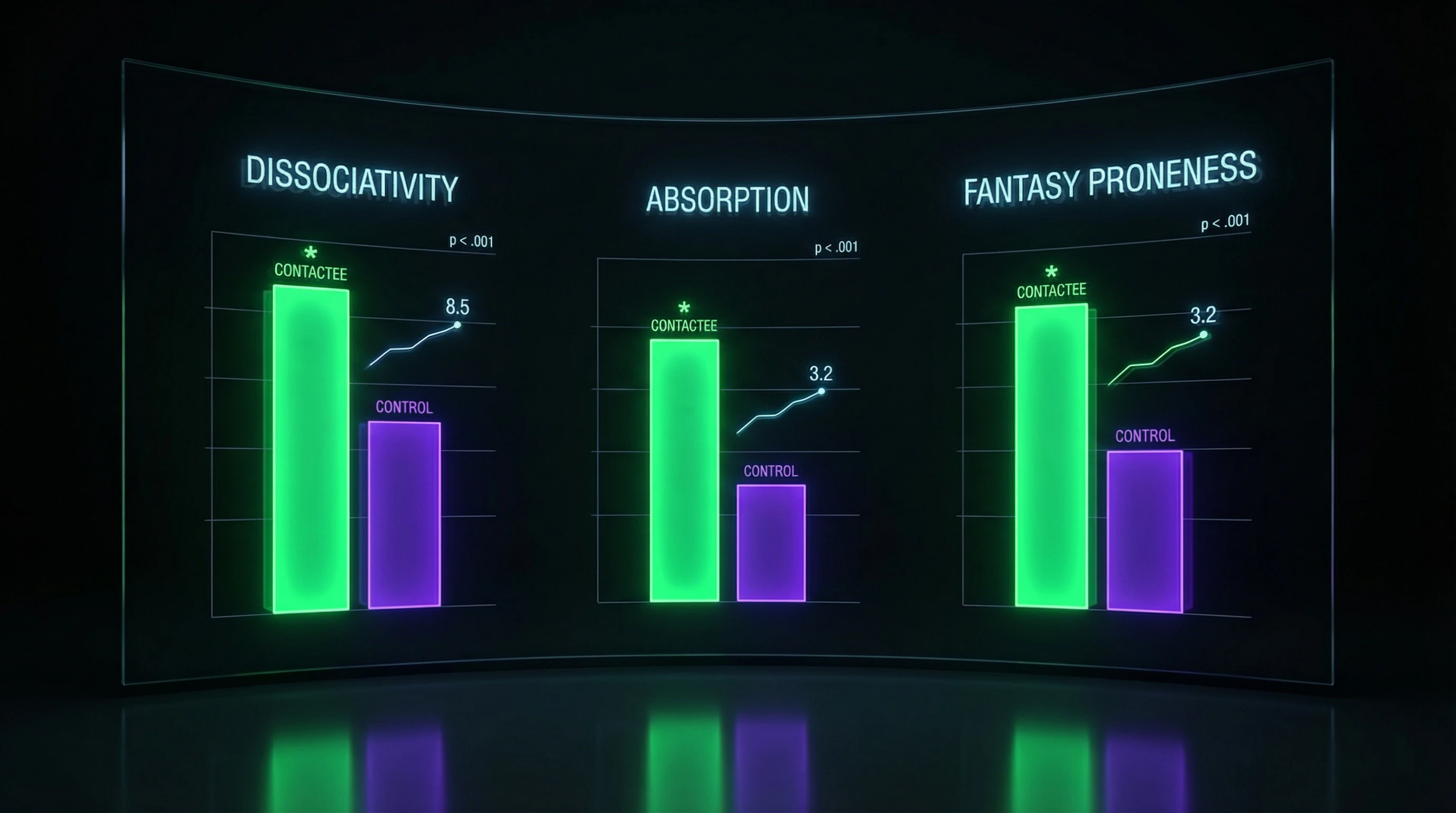
Research by French et al. (2008) established that contactees demonstrate statistically significantly higher levels of dissociativity—the ability to separate parts of conscious experience from the main stream of perception. Absorption (tendency toward complete immersion in sensory or imagined experiences) also significantly exceeds average levels in control groups.
| Characteristic | Contactees | Control Group | Consequence |
|---|---|---|---|
| Dissociativity | Above average | Normal | Separation of experience parts from main stream |
| Absorption | Above average | Normal | Complete immersion in imagined experiences |
| Fantasy proneness | Elevated | Normal | Interpretation of ordinary as extraordinary |
High absorption is not pathology, but a normal variation in cognitive style. However, combined with certain social conditions and informational environment, it facilitates the formation of persistent beliefs about contact.
Many contactees function normally in daily life, but demonstrate specific information processing patterns in the context of anomalous experiences.
Psychiatric Disorders and Paranoid Delusion
Psychiatric literature documents cases where contactee beliefs are linked to clinical disorders, especially paranoid delusion. Claims of contact become part of a broader delusional system.
- Paranoid Delusion in Ufological Context
- Includes ideas of persecution, special mission, or chosen status. Ufologists are at elevated risk of losing sense of reality with prolonged immersion in the subculture.
- Critical Distinction
- Psychological predictors of contactee experience do not mean automatic pathologization of all contactees, but indicate the need for critical analysis of evidence.
Clinical practice shows that some contactees require psychiatric care, while others simply demonstrate specific cognitive styles without impaired adaptation.
Social Patterns of UFO Phenomena: From Cultural Codes to Media Experts
Sociological analysis of ufology reveals that UFO sightings and contactee claims follow identifiable social and cultural patterns rather than random distribution. This indicates social construction of the phenomenon, regardless of the possible physical reality of individual observations.
Cultural Patterns of UFO Sightings
The frequency, nature, and interpretation of UFO sightings correlate with observers' cultural context. In Western countries, descriptions of technological objects and "gray" humanoids dominate, while in other cultures the same phenomena are interpreted through the lens of local mythological systems.
Temporal dynamics are revealing: peaks in UFO reports coincide with periods of social anxiety, technological breakthroughs, or media campaigns. Chilean ufology demonstrates diverse approaches to evidence evaluation, reflecting local scientific traditions and social expectations.
- Western pattern: technological objects, humanoids, engineering logic in descriptions
- Local patterns: integration with mythology, spiritual systems, historical narratives
- Media trigger: social instability → spike in reports → media attention → normalization
Standards of "convincingness" in ufology are socially constructed, not universal. Scientific ufology implicitly challenges assumed boundaries between rational and mystical thinking, creating a hybrid research space.
Role of Expert Figures in Social Media
Social media significantly amplifies the role of self-proclaimed experts in spreading UFO conspiracy theories. These figures employ rhetorical legitimation strategies: pseudoscientific terminology, selective citation, creation of illusory consensus.
Platform recommendation algorithms inadvertently facilitate the formation of echo chambers where contactee narratives are amplified and normalized. The mechanism is simple: algorithms maximize engagement, and pseudoscientific content generates high activity due to emotional charge and group identification.
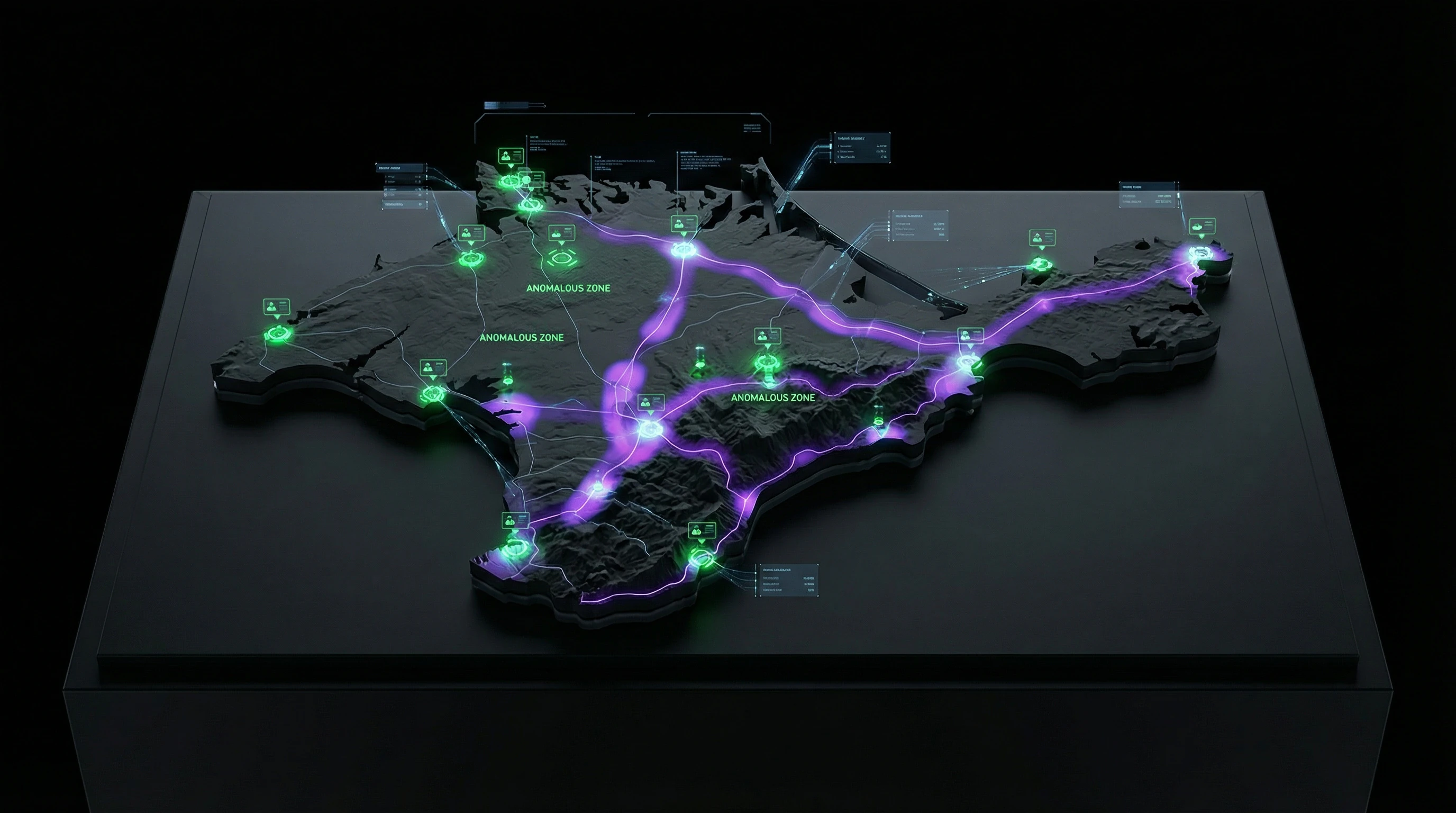
The Crimean context illustrates exploitation of geographical features: Russian and Ukrainian ufologists periodically visit the region, claiming "discovery" of alien contact sites. Kara-Dag and other geological formations are systematically presented as linked to extraterrestrial activity, despite documented geological origins.
Local historians and bloggers actively counter pseudoscientific tourism, but their efforts often fail to reach the target audience of UFO narratives. The reason: they compete in different information ecosystems with different verification rules and different incentives for dissemination.
Methodological Problems in Research: Between Testimony and Evidence
Scientific study of ufological phenomena faces fundamental methodological challenges related to the nature of available data and verification standards. These problems explain the historical mutual distrust between the scientific community and ufological researchers.
Reliability of Eyewitness Testimony in Extreme Close Encounters
Eyewitness testimony about extreme close encounters demonstrates significant variability in reliability. Psychological research on memory shows that recollections of unusual events are particularly susceptible to distortions, confabulations, and the influence of subsequent information.
Stress characteristic of claimed contacts can both enhance memory of central details and impair accuracy of peripheral information. The problem is compounded by the absence of standardized evidence collection protocols in ufology.
- Different researchers apply incomparable interviewing methods, making systematic data analysis impossible.
- The time gap between the event and its documentation often spans months or years.
- During this period, memory undergoes reconstruction under the influence of cultural narratives and expectations.
Standards of Evidence in Ufology and the Scientific Community
The scientific method requires reproducibility, falsifiability of hypotheses, and convergence of independent lines of evidence. Ufology often relies on singular testimonies and anecdotal data.
This discrepancy creates an insurmountable barrier to integrating ufological research into mainstream science.
Criteria for pseudoscience include claims of "secret knowledge," absence of falsifiable hypotheses, and rejection of scientific consensus without evidence. Commercial exploitation of mystical narratives and conflation of geological or archaeological features with extraterrestrial activity are typical markers of an unscientific approach.
Expedition reports from 2008 systematically document investigation of claimed anomalous sites in Crimea, demonstrating methodology for distinguishing facts from ufological fiction. Educational materials emphasize the necessity of differentiating geological and archaeological facts from pseudoscientific interpretations.
Regional Hoaxes: How Crimea Became a Testing Ground for Ufological Speculation
Fake Discoveries and Anomalous Zone Tourism
Russian and Ukrainian ufologists periodically visit Crimea, claiming "discovery" or "activation" of extraterrestrial contact sites. These visits are accompanied by fabrication of stories about dinosaur eggs, secret chambers, and alien artifacts, exploiting the region's geographical uniqueness.
Expedition reports from 2008 systematically document verification of claimed anomalous sites, demonstrating the absence of empirical confirmation for most assertions. Local historians and bloggers actively counter pseudoscientific tourism by publishing debunking materials and educational content.
The pattern works simply: geographical mystery + tourist demand + absence of scientific oversight = commercial incentive for hoaxing.
Exploitation of Geological Formations
Kara-Dag and other Crimean geological formations are systematically distorted in ufological narratives, where natural volcanic structures are presented as traces of extraterrestrial activity.
This conflation of geological and archaeological features with extraterrestrial hypotheses is a classic example of pseudoscientific methodology, ignoring established scientific explanations.
- Geological fact: volcanic origin, dating, mineral composition.
- Speculative layer: "unusual shape" → "alien origin."
- Commercial layer: tours, books, lectures based on unreliable information.
Educational initiatives emphasize the necessity of distinguishing factual geological processes from speculative interpretations based on paranormal beliefs. Commercial exploitation of mystical narratives creates economic incentive for continued dissemination of unreliable information about the region.
Distinguishing Science from Pseudoscience: Criteria for Evaluating UFO Claims
Criteria for Scientific Ufology
Scientific ufology relies on empirical methods, falsifiable hypotheses, and transparent methodology that permits independent verification. High-reliability sources include peer-reviewed publications in indexed journals with clear references to established literature and institutional support.
Research by French et al. (2008) demonstrates the correct approach: studying psychological characteristics of contactees without making claims about the reality of extraterrestrial contact. Sociological work analyzes social patterns of UFO sightings and the role of expert figures in conspiracy theories while maintaining methodological rigor.
Red Flags of Pseudoscientific Claims
- Claims of "secret knowledge" unavailable for verification.
- Absence of falsifiable hypotheses—impossible to propose conditions under which the theory would be proven false.
- Rejection of scientific consensus without evidentiary basis.
- Commercial exploitation of mystical narratives.
- Conflation of geological or archaeological features with extraterrestrial activity without systematic methodology.
- Absence of peer review process and anecdotal nature of evidence.
- Reliance on personal beliefs instead of reproducible data.
Contactees and ufologists face heightened risk of losing their sense of reality—this requires critical evaluation of their claims regardless of sincerity of intentions.
Verification Standards for Researchers
Verification of UFO claims begins with prioritizing primary sources—direct research publications in indexed journals with transparent description of methods. Reproducibility of results and citation patterns referencing established scientific literature serve as reliability criteria.
Institutional affiliation with academic organizations increases source credibility, though it doesn't guarantee quality of individual publications. It's critically important to distinguish psychological research on contactee experiences from claims about the reality of extraterrestrial contact—this is the foundation of scientific rigor in ufology.
Historical Mistrust Between Science and Ufology: Causes and Prospects
Causes of Mutual Skepticism
The scientific establishment perceived ufology as a threat to rational worldview, while ufologists accused scientists of dogmatism and information suppression. This methodological opposition is rooted in epistemological conflicts: scientific ufology implicitly challenges boundaries between rational and mystical thinking.
Variability in reliability of close encounter testimonies and absence of standardized protocols for evidence evaluation exacerbate the gap between disciplines.
- Scientific consensus requires reproducibility and controlled observation conditions.
- UFO data is based on individual testimonies and retrospective reports.
- Absence of common language for describing and classifying anomalous phenomena.
- Institutional incentives in science don't encourage research into marginal topics.
Prospects for Legitimate Study of Anomalous Phenomena
Legitimate study of anomalous phenomena requires integration of rigorous scientific methods with openness to phenomena that don't fit existing paradigms. Chilean ufology demonstrates diverse approaches to evidence evaluation that can serve as a model for methodological pluralism.
Psychological research on contactees shows the productivity of studying subjective experience without needing to confirm the ontological status of claimed phenomena. Sociological analysis of UFO sighting patterns and the role of social media opens prospects for interdisciplinary research.
The path to mutual recognition lies through separating questions: what happened (phenomenology), why people interpret it in certain ways (psychology and sociology), and what it means ontologically (metaphysics). Each level permits its own methods and standards of evidence.
Knowledge Access Protocol
FAQ
Frequently Asked Questions
Ufology is the study of UFOs and related phenomena; contactees are individuals claiming contact with extraterrestrials. Scientific ufology employs empirical methods, while pseudoscientific approaches rely on unverifiable claims. Contactees are divided into voluntary (alleged contactees) and abducted (abductees) (S1, S2).
Research by French et al. (2008) revealed elevated levels of dissociativity, absorption, fantasy proneness, and paranormal belief. Some contactees exhibit psychiatric disorders, including paranoid delusions. Ufologists risk losing their sense of reality through prolonged immersion in the subject (S1, S3).
Close encounter testimonies vary significantly in reliability due to psychological factors. Memory is susceptible to distortion, especially during stressful events and over time. Academic sources emphasize the necessity of critical evaluation for each case (S2, S4).
Scientific ufology applies empirical methods, publishes in peer-reviewed journals, and allows for falsifiable hypotheses. Pseudoscience ignores contradictory data, uses unverifiable claims, and exploits emotions. Verify the presence of peer review and research citations (S5, S6).
Russian and Ukrainian ufologists regularly "discover" alien contact sites in Crimea, particularly at Kara-Dag. Stories about dinosaur eggs, secret chambers, and artifacts are fabricated. Local historians systematically debunk these claims, explaining the geological nature of the formations (S7, S8).
Historical mutual distrust arose from methodological differences and sensational claims without evidence (Geppert, 2012). The scientific community demands reproducible data, which ufology often fails to provide. However, legitimate study of anomalous phenomena is possible when scientific standards are maintained (S6, S9).
Yes, research by LaViolette (2025) identified social and cultural patterns in UFO reports. Sighting surges correlate with media events, cultural trends, and local narratives. This indicates a significant role of sociological factors in the phenomenon (S2, S10).
Demand documentary evidence: photos, videos, physical artifacts with independent analysis. Check for narrative consistency over time and presence of witnesses. Consult psychologists to assess the claimant's mental state (S2, S4).
Social media amplify the influence of self-proclaimed experts in UFO conspiracy theories (Lipińska et al., 2025). Algorithms create echo chambers where pseudoscientific ideas circulate without critical scrutiny. This makes distinguishing credible information from hoaxes difficult (S2, S11).
To date, there is no scientifically confirmed evidence of contact with extraterrestrial civilizations. All claimed artifacts have either been explained by natural causes or failed independent analysis. Academic consensus requires extraordinary evidence for extraordinary claims (S1, S5).
A practice where ufologists periodically visit regions (e.g., Arizona), claiming to have 'discovered' alien contact sites. The goal is attracting attention and commercialization through tours and publications. 2008 expeditions systematically debunked such claims (S7, S8).
Yes, research shows that some contactees have psychiatric diagnoses, particularly paranoid delusional disorder. However, not all contactees are mentally ill—many simply demonstrate heightened fantasy proneness. Individual psychological assessment is necessary (S1, S3).
Unusual natural formations (rocks, caves) are reinterpreted as traces of extraterrestrial activity. Sedona in Arizona is a typical example of exploiting volcanic formations. Geologists explain all features through natural processes, but mystifiers ignore scientific data (S7, S8).
A psychological trait characterizing the ability to become fully immersed in imagined experiences and altered states of consciousness. Contactees demonstrate heightened absorption, which explains the vividness of their 'memories' of contact. This is not deception, but a peculiarity of reality perception (S1, S3).
Yes, when adhering to scientific methodology: empirical data, peer review, falsifiable hypotheses. Zeller (2021) notes that scientific ufology challenges boundaries between the rational and mystical. The key is separating systematic investigation from speculation (S5, S6).
Absence of peer-reviewed publications, ignoring contradictory data, appealing to emotions instead of facts, commercialization of 'discoveries'. Also suspicious are claims of 'secret knowledge' and refusal of independent expertise. Verify sources through academic databases (S5, S12).