What is Kirlian Photography: From Electrical Curiosity to "Visualization of the Soul"
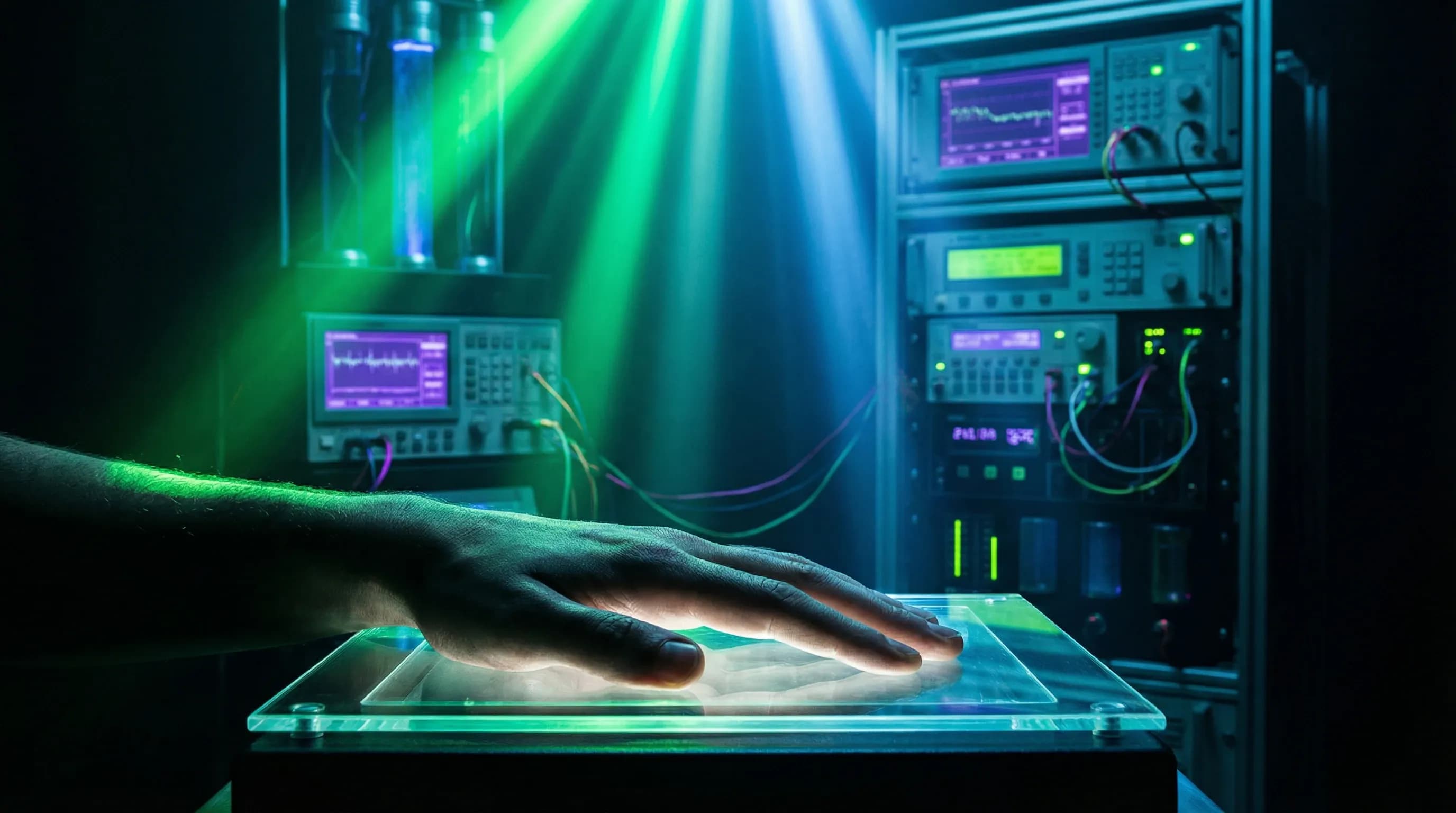
Kirlian photography is a method of recording corona discharge around objects in a high-frequency electric field (20–40 kV, 50–200 kHz). The image is formed not by reflected light, but by the glow of ionized air around conductive areas (S001).
Discovered by Soviet electrical engineer Semyon Kirlian and his wife Valentina in 1939. It gained widespread recognition in the 1970s when Western parapsychologists interpreted the glow as visualization of the "aura" or "biofield" (S001).
🔎 Technical Essence: What Actually Glows
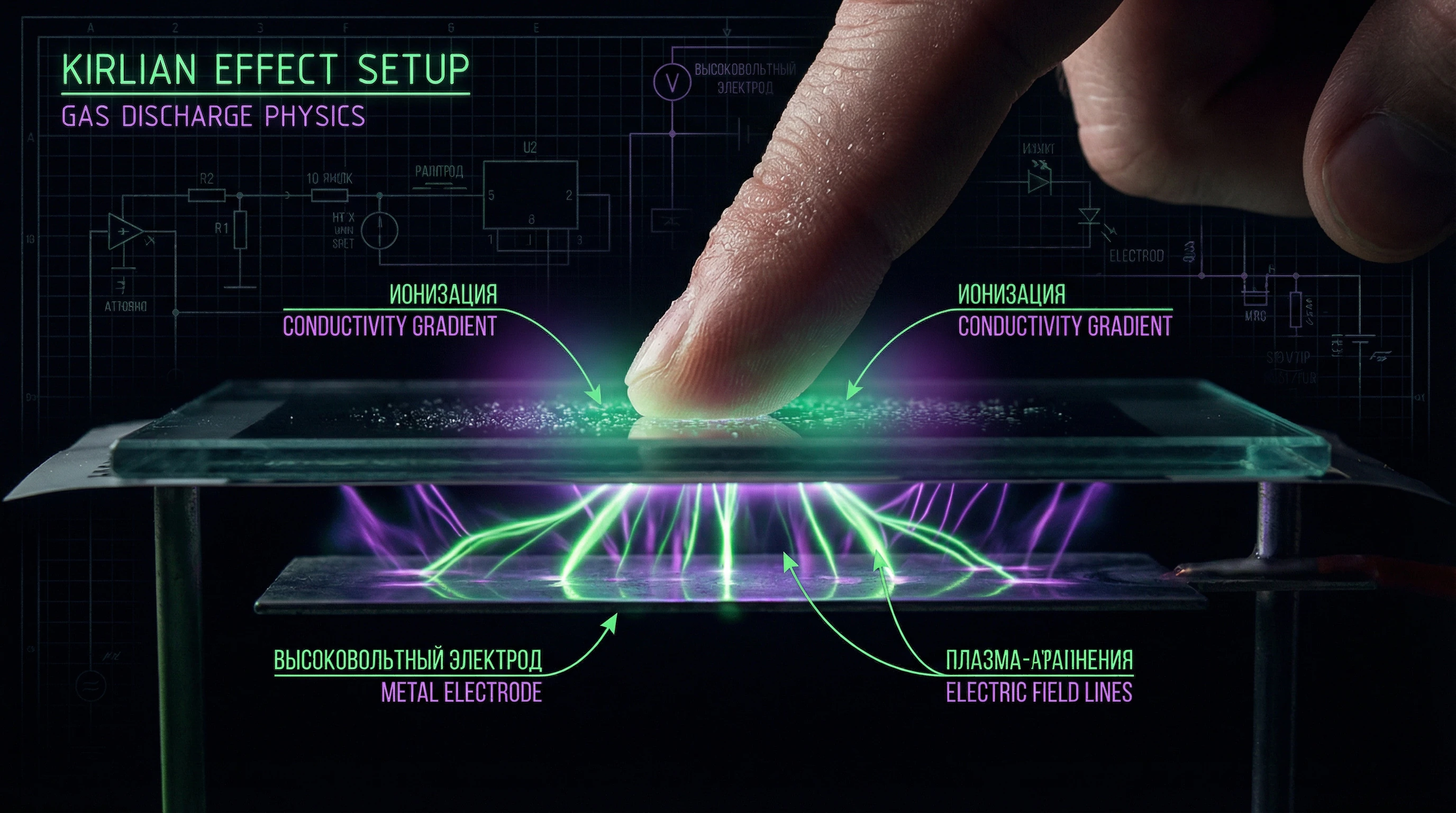
Corona discharge is partial ionization of gas near a conductor under the influence of a strong electric field. When an object is placed on a photographic plate on a high-voltage electrode, micro-discharges occur around contact points (S007).
| Parameter | Effect on Glow Intensity |
|---|---|
| Object conductivity | Higher conductivity → more intense discharge |
| Surface moisture | Higher moisture → brighter glow |
| Contact pressure | Greater pressure → altered halo shape |
| Temperature | Affects gas ionization |
| Field parameters | Voltage and frequency determine discharge characteristics |
No "biofield" is required to explain the glow—this is pure electrodynamics (S007).
⚠️ How the "Aura" Migrated from Physics to Esotericism
The term "aura" in the context of Kirlian photography appeared not in scientific literature, but in popular 1970s books such as "The Living Aura" by Kendall Johnson (S001). Authors claimed the glow reflected "life energy," "emotional state," or "spiritual health."
Systematic research has not confirmed any of these hypotheses: changes in Kirlian images correlate with physical parameters (skin moisture, pressure) but not with psychological or medical indicators (S007).
Nevertheless, the term became entrenched in mass consciousness and formed the basis for commercial "diagnostic" systems. This is a classic example of how the brain creates an illusion of understanding where none exists.
🧩 Operational Problem: What Counts as "Aura Photography"
The modern industry uses heterogeneous technologies: from classic Kirlian setups to digital systems allegedly measuring "biofields" through skin conductivity sensors and generating colored images algorithmically (S002).
- Operational Definition
- There is no consensus on what counts as "aura photography" or what constitutes "complementary and alternative medicine" (CAIM) in general.
- Methodological Chaos
- Studies of "biofields" may arbitrarily include or exclude Kirlian photography, making meta-analysis impossible (S002).
- Consequence
- Each new study starts from scratch without building on previous results. This freezes the development of an evidence base.
The only published operational definition of CAIM dates to 2011 and did not use systematic methods to compile the list of therapies (S002).
Steelman Arguments: Five Strongest Cases for "Biofields" — and Why They Require Scrutiny
Before examining evidence against interpreting the Kirlian effect as "aura visualization," we must honestly present the most compelling arguments from proponents of this hypothesis. The steelman approach requires formulating the opponent's position in its strongest form — not a caricature, but actual research programs that attempted to find connections between Kirlian images and biological processes. More details in the Pseudopsychology section.
🔬 Argument 1: The "Phantom Leaf Effect" as Evidence of an Energetic Template
One of the most famous phenomena associated with Kirlian photography is the "phantom leaf effect": it's claimed that if you cut off part of a plant leaf and photograph the remaining fragment using the Kirlian method, the image sometimes shows luminescence in the area of the missing part (S001). Biofield hypothesis proponents interpret this as proof of an "energetic template" that persists after physical removal of tissue.
However, systematic attempts to reproduce the effect yielded contradictory results: under controlled conditions the "phantom" didn't appear, and in cases where it was observed, it was explained by residual moisture on the photographic plate or exposure artifacts (S007).
🧪 Argument 2: Correlation Between Luminescence Changes and Emotional State
Several studies from the 1970s-1980s reported correlations between changes in Kirlian images of fingers and subjects' self-reports of emotional state (S001). For example, it was claimed that stress or relaxation altered the brightness and shape of the "aura."
Emotional arousal does indeed affect perspiration and skin conductivity, which directly changes corona discharge. The correlation is explained not by a "biofield," but by known physiological mechanisms mediated by the autonomic nervous system.
The problem with these studies is the lack of control for physiological variables (S007). Without separating electrophysiological factors from supposed energetic ones, any correlation remains uninterpretable.
📊 Argument 3: Use in Traditional Chinese Medicine and Ayurveda
Some integrative medicine practitioners claim that Kirlian photography can visualize "meridians" (traditional Chinese medicine) or "chakras" (Ayurveda), and use it to diagnose imbalances (S005). The argument here appeals to the authority of ancient medical systems and the fact that millions of people trust these practices.
However, the operational definition of "integrative medicine" itself is problematic: it's dynamic and depends on cultural context, and many traditional systems lack an empirical foundation meeting evidence-based medicine standards (S002). Use of a method within tradition doesn't make it a valid diagnostic tool.
- Traditional systems may be useful for generating hypotheses, but not for validating them.
- The authority of antiquity doesn't replace controlled research.
- Popularity of a practice correlates with marketing, not effectiveness.
🧬 Argument 4: Systematic Reviews of "Biofield" Visualization
There exist systematic reviews analyzing "biofield" images using image processing methods and machine learning (S007). Authors of such reviews claim that patterns in Kirlian images can be classified and linked to various organismal states.
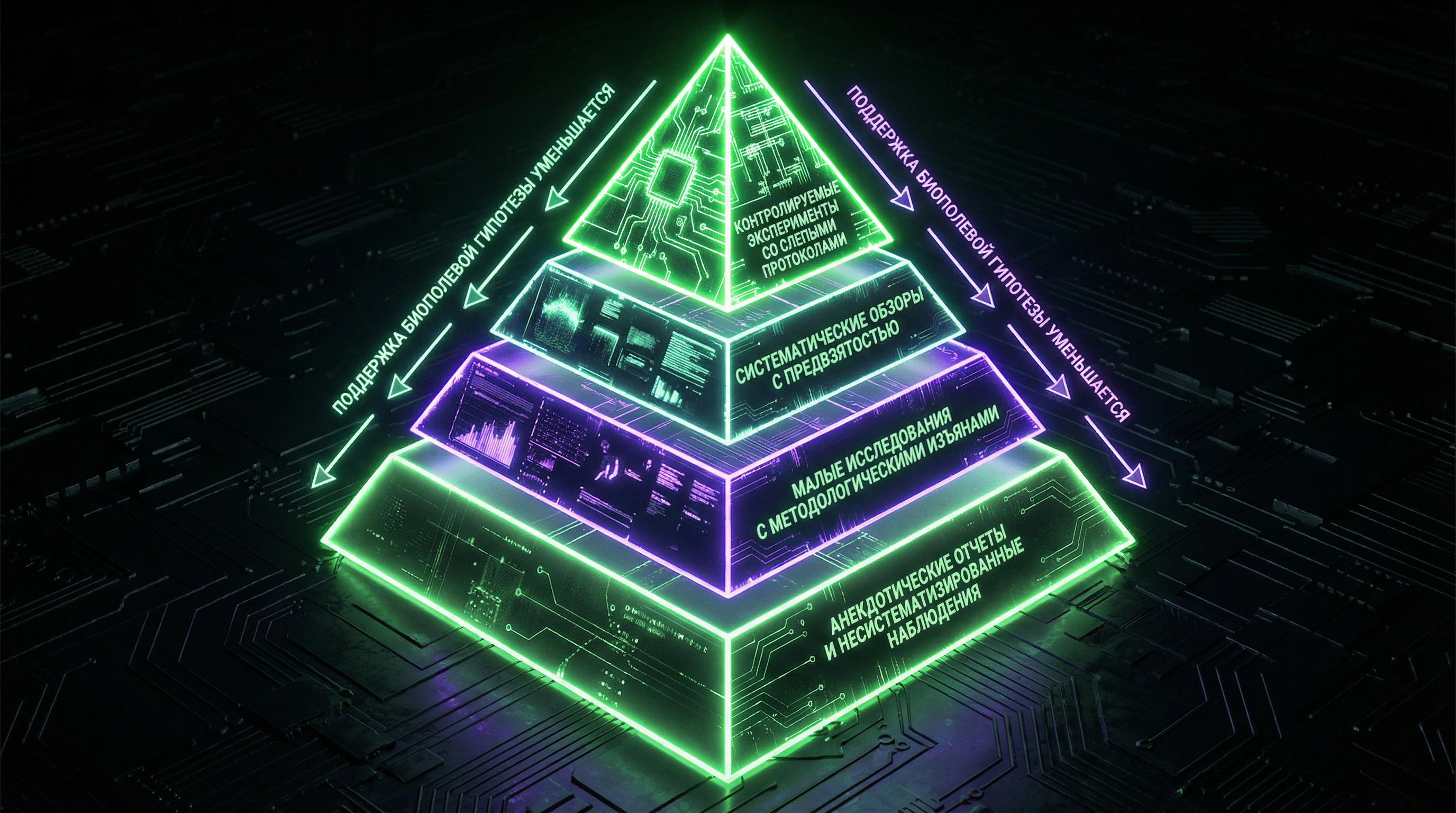
Critical analysis of these works reveals they suffer from methodological problems, including absence of blind controls, small samples, and publication bias (S002). None of these reviews provided a reproducible protocol that would allow independent researchers to validate results.
| Methodological Defect | Consequence for Interpretation |
|---|---|
| Absence of blind controls | Experimenter can unconsciously influence pattern classification |
| Small samples (n < 50) | Results are unstable and don't generalize to the population |
| Publication bias | Negative results remain unpublished, creating an illusion of effect |
| Absence of reproducible protocol | Impossible to independently verify results |
⚙️ Argument 5: Commercial Success and Mass Adoption
The "aura photography" industry thrives: devices are sold in dozens of countries, used in wellness centers, at festivals, and in alternative medicine clinics (S001). Proponents argue that mass adoption and commercial success demonstrate the method's practical value.
This is a classic ad populum argument: popularity is not a criterion of truth. Medical history is full of examples of widespread practices (bloodletting, lobotomy) that were later recognized as ineffective or harmful. Commercial success is explained not by the method's validity, but by consumer cognitive biases and marketing strategies.
When a method doesn't require objective verification and appeals to subjective experience ("you'll feel the results"), commercial success becomes inevitable regardless of actual effectiveness.
Evidence Base: What Controlled Studies Show About the Kirlian Effect
Systematic analysis of scientific literature on Kirlian photography reveals a clear pattern: the stricter the research methodology, the weaker the support for the "biofield" hypothesis. Early work from the 1970s, conducted during the Cold War and parapsychological boom, often suffered from lack of controls and confirmation bias (S001). Modern studies using blind protocols and physical measurements consistently demonstrate that all observed effects are explained by known physical and physiological variables (S007).
📊 Controlled Experiments: Humidity, Pressure, and Temperature
A series of experiments conducted in the 1980s–2000s systematically varied physical parameters during Kirlian photography: skin moisture, finger contact pressure with the electrode, object temperature, and electrical field parameters (S007). The results are unambiguous: changing any of these parameters radically alters the shape and intensity of the glow.
A 10% increase in skin moisture can double the area of the "aura," while a 20% change in pressure can transform its shape from circular to elliptical. These effects are fully explained by changes in conductivity and contact area, without invoking the "biofield" hypothesis (S007).
If a Kirlian image parameter changes with humidity or pressure variations but doesn't change with health status — it's not a diagnostic tool, it's a sensor of physical conditions.
🧪 Absence of Correlation with Medical Indicators
No systematic study has confirmed a link between Kirlian image parameters and objective medical indicators: blood glucose levels, blood pressure, inflammation markers, or presence of pathologies (S007). Attempts to use the method for diagnosing diseases (cancer, diabetes, cardiovascular conditions) have not yielded reproducible results.
This is a critical failure for any diagnostic technology: if a method doesn't correlate with the parameter being measured, it has no clinical value. Systematic reviews of "biofield" diagnostics acknowledge the absence of evidence base and methodological problems in research (S002).
| Claimed Application | Required Correlation | Controlled Study Results |
|---|---|---|
| Cancer diagnosis | Aura parameters ↔ tumor presence | Not found |
| Immune assessment | Aura parameters ↔ white blood cell count | Not found |
| Stress monitoring | Aura parameters ↔ cortisol, heart rate | Not found |
| Energy balance assessment | Aura parameters ↔ physiological markers | Not found |
🔎 The Phantom Leaf Reproducibility Problem
The "phantom leaf effect," one of the pillars of biofield proponents' arguments, has not been reproduced under controlled conditions (S007). Studies in which experimenters were blinded to which leaves were cut and which were intact found no statistically significant differences in the frequency of "phantom" appearances.
In cases where the effect was observed, it was explained by technical artifacts: residual moisture on the photographic plate, double exposure, or electrical field non-uniformity (S007). This is a classic example of how a phenomenon observed under uncontrolled conditions disappears when strict protocols are introduced.
📉 Publication Bias and Methodological Problems in Reviews
Systematic reviews of "biofield" and Kirlian photography research suffer from serious methodological problems. First, they often don't use systematic literature search methods, leading to missed relevant studies and distorted conclusions (S002).
Second, many reviews include studies with small samples (n < 30), absence of control groups, and non-blind protocols. Third, there's clear publication bias: studies with positive results are published more often than those with negative results, distorting the overall evidence picture (S003).
- Publication Bias
- Systematic skew toward publishing studies with positive results. For Kirlian photography, this means work that found no biofield connection remains in file drawers, while method proponents see only "confirming" studies.
- Blind Protocol
- The experimenter doesn't know which sample they're analyzing (healthy or sick, cut leaf or whole). This prevents unconscious result distortion in favor of the hypothesis.
- Reproducibility
- The ability of independent researchers to obtain identical results when repeating an experiment. For Kirlian photography, reproducibility of positive results remains zero when controls are introduced.
Modern meta-analysis methods allow correction of these distortions, but they haven't yet been applied to Kirlian photography literature. This creates an information vacuum filled by popular interpretations disconnected from the evidence base. For comparison, see systematic reviews as a tool against academic noise.
The Mechanism of the Effect: Why Corona Discharge Doesn't Need "Life Energy"
The physical explanation of the Kirlian effect requires no new entities or unknown forms of energy. All observed phenomena are described by classical electrodynamics and physiology. More details in the section DNA Energy and Quantum Mechanics.
Once it becomes clear that the "aura" is a visualization of conductivity and moisture, the mystical halo disappears. Understanding the mechanism is critically important for demystifying the method.
⚡ Corona Discharge: The Physics of Glow in Strong Electric Fields
Corona discharge occurs when the electric field strength near a conductor exceeds the ionization threshold of the surrounding gas (for air under normal conditions—approximately 3 MV/m).
In a Kirlian setup, the object is placed on a photographic plate above a high-voltage electrode (20–40 kV, 50–200 kHz). At points of maximum conductivity (skin pores, moist areas), the field strength reaches critical values, and air ionization begins (S007).
Ions and electrons, accelerating in the field, collide with gas molecules, exciting them and causing luminescence. This glow is recorded on the photographic plate as an "aura."
💧 The Role of Skin Moisture: Why the "Aura" Changes with Sweat
Skin moisture is the key factor determining the shape and intensity of Kirlian images (S007). Water is a good conductor, and its presence dramatically increases the effective contact area with the electrode.
Perspiration is regulated by the autonomic nervous system and depends on temperature, emotional state, physical activity, and hormonal balance. This is precisely why Kirlian images change during stress or relaxation—not because the "biofield" changes, but because perspiration changes (S007).
Observed correlations with emotional state are explained by the physiology of perspiration, without invoking mystical concepts.
🔁 Contact Pressure and Conductive Surface Area
The pressure with which a finger is pressed against the electrode critically affects the image (S007). Increased pressure increases the contact area and deforms the skin, squeezing moisture from the pores.
This explains why the "aura" looks different even for the same person in repeated sessions: it's impossible to ensure absolutely identical pressure across different sessions. Commercial "aura cameras" attempt to standardize this parameter, but complete standardization is unattainable, making the method unreliable for diagnostics.
🧬 Physiological Variables: From Hormones to Microcirculation
Skin conductivity depends on moisture, microcirculation status, skin temperature, and electrolyte concentration in sweat. All these variables are regulated by known biological mechanisms (S007).
- Skin Temperature
- A 1°C change can alter conductivity by 2–3%, which will be reflected in the Kirlian image.
- Hormonal Changes
- Adrenaline release during stress affects perspiration and vascular tone, changing conductivity.
- Sweat Electrolytes
- The concentration of sodium, potassium, and chloride ions determines the electrical conductivity of fluid on the skin.
Any observed changes in the "aura" have a prosaic physiological explanation. Postulating a "biofield" is not required and adds no predictive power to the model.
This distinction between explanation and mystification is a key point for critical analysis of paranormal beliefs. When the mechanism is fully described by known physics, additional entities become a violation of the principle of parsimony (Occam's razor).
Conflicts and Uncertainties: Where Sources Diverge and Why It Matters
Analysis of the literature on Kirlian photography reveals not only consensus (the effect is explained by physics), but also areas where sources diverge. These discrepancies are critical for understanding the boundaries of knowledge and assessing the reliability of conclusions. More details in the section Torsion Fields and Bioenergetics.
🧩 Disagreements in Interpreting the "Phantom Leaf Effect"
Most controlled studies have not reproduced the "phantom leaf effect," but some authors continue to claim the phenomenon is real (S001). The disagreement concerns not facts, but interpretation: biofield proponents explain the lack of reproducibility by the "subtlety" of the phenomenon and insufficient sensitivity of methods, while skeptics point to artifacts and methodological problems in early studies (S007).
Absence of evidence is interpreted not as evidence of absence, but as a call for "more sensitive" methods—a strategy that renders the hypothesis unfalsifiable.
This is a belief-protection mechanism: every negative result becomes grounds for complicating the methodology rather than revising the premises. Such logic is characteristic of pseudoscientific systems, where the criterion of truth shifts from reproducibility to subjective interpretation.
📊 Contradictions in Systematic Reviews of "Biofield" Diagnostics
Systematic reviews of "biofield" research reach contradictory conclusions (S002). Some authors claim promising directions, while others conclude that the evidence base is absent.
| Review Type | Inclusion Criteria | Conclusion |
|---|---|---|
| Low quality standards | Studies with methodological problems included | Optimistic: "promising" |
| Strict criteria | Only RCTs and controlled studies | Negative: "no evidence" |
Contradictions are explained by differences in inclusion criteria, quality assessment methods, and interpretation of results. Reviews applying strict standards reach negative conclusions—this underscores the importance of methodological rigor in evidence synthesis.
🔬 Uncertainty in Defining "Integrative Medicine"
The absence of a consensus operational definition of "complementary, alternative, and integrative medicine" (CAIM) creates problems for classifying Kirlian photography (S002). Is it part of CAIM? On what basis?
- Operational Definition of CAIM (Wieland et al., 2011)
- The only published definition did not use systematic methods and is outdated. The term "integrative medicine" became popular only in the last decade, and its meaning varies depending on context.
- Problem for Analysis
- It's unclear which studies to include in systematic reviews and meta-analyses. This complicates comparison of results and identification of patterns.
When the boundary between categories is blurred, researchers gain freedom of choice—and often choose the interpretation that confirms their hypothesis. This is one of the mechanisms sustaining disinformation in the field of alternative medicine.
Cognitive Anatomy of the Myth: Which Thinking Biases Sustain Belief in "Auras"
The persistence of the Kirlian photography myth is explained not by lack of information, but by systematic cognitive biases exploited by marketers and alternative medicine practitioners. These mechanisms operate independently of education and critical thinking. More details in the Sources and Evidence section.
Understanding perceptual traps is the foundation for developing effective skeptical analysis strategies. This applies not only to auras, but to other paranormal beliefs that rely on the same cognitive errors.
⚠️ Confirmation Bias: Seeing What You Want to See
Confirmation bias is the tendency to seek, interpret, and remember information in ways that confirm existing beliefs. In the context of Kirlian photography, this manifests when people who believe in "auras" interpret any changes in the image as confirmation of their ideas about "biofields," ignoring alternative explanations (humidity, pressure, temperature).
A person sees in the corona discharge exactly what they expect to see. A bright halo around the finger means "strong aura," a dim one means "energy depletion." The physics remains the same; the interpretation changes depending on the observer's beliefs.
Aura photography practitioners amplify this effect by offering interpretive frameworks: red color = anger, blue = calm, green = healing. The client receives a ready-made narrative that's easy to apply to their condition.
Apophenia and Pareidolia: Finding Meaning in Noise
Apophenia is the tendency to see patterns in random data. Pareidolia is a specific case where the brain recognizes familiar images (faces, figures) in unstructured information. Corona discharge is ideal material for both errors: its shape and intensity vary unpredictably, but the brain immediately searches for "meaning" in this variability.
| Cognitive Error | How It Manifests in Kirlian Photography | Exploitation Mechanism |
|---|---|---|
| Apophenia | "I see a pattern in the discharge — therefore it's information about health" | Practitioner offers interpretation; client accepts it |
| Pareidolia | "The halo looks like angel wings — this is spiritual energy" | Visual similarity substitutes for logical analysis |
| Illusion of control | "If I meditate, my aura will become brighter" | Client attributes influence over a random process to themselves |
Research (S001) shows that corona discharge is sensitive to dozens of variables: humidity, pressure, temperature, skin condition, even time of day. But a person expecting to see "a reflection of their state" selects one variable from this noise and declares it significant.
Authority and Social Proof
People tend to trust information if it comes from an authoritative source or is supported by a group. Aura photography is legitimized through several channels: pseudoscientific language, references to research (S002, S007), visual similarity to medical equipment.
Social proof works through communities of practitioners and clients who share "results" and validate each other. This creates a closed loop: the more people believe, the more "real" the practice seems.
Illusion of Control and Magical Thinking
Illusion of control is the overestimation of one's influence on events. In the context of auras, this manifests as the belief that meditation, positive thoughts, or "energy work" will change the image in the next photograph. In reality, changes are caused by physical factors (finger moisture, pressure on the sensor), but the person attributes them to their actions.
Magical thinking is not stupidity. It's an adaptive error: the brain evolved to find causes and effects, even when they don't exist. In conditions of uncertainty, it's better to assume a connection that isn't there than to miss a real threat.
Aura photography practitioners exploit this error by offering clients "methods to improve the aura": crystals, oils, meditations. Each "result" (image change) is interpreted as confirmation of the method's effectiveness, when in reality it's simply variability in the physical process.
Narrative Bias and Meaning-Making
The human brain is a story-making machine. We don't just process information; we construct narratives that explain our experience. Aura photography provides a ready-made narrative: "Your energy reflects your health and emotional state."
This narrative is appealing because it gives a sense of control and understanding. Instead of acknowledging that health is a complex process dependent on genetics, lifestyle, and chance, the client receives a simple model: "If I work with my aura, I'll be healthy." This is psychologically more comfortable than acknowledging uncertainty.
To counter these mechanisms, it's necessary not just to provide facts, but to help people recognize their own cognitive traps and develop critical information analysis skills, especially when it concerns health and well-being.