 🦕 Cryptozoology
Cryptozoology: The Search for Hidden Creatures at the Frontier of Scienceλ
The study of mysterious creatures — from Bigfoot to the chupacabra — balancing between scientific method and pseudoscience, drawing attention to unstudied species.
Overview
Cryptozoology searches for creatures that science doesn't yet recognize — Bigfoot, the chupacabra, the Loch Ness monster. Most scientists consider it a pseudoscience 🧩: evidence is built on eyewitness testimony, folklore, and blurry photographs, rather than reproducible experiments. But sometimes cryptids turn out to be real species — the mountain gorilla and okapi were once "myths" too.
🛡️
Laplace Protocol: Cryptozoology is not recognized as legitimate science due to the absence of reproducible evidence and rigorous methodology. Critical analysis requires distinguishing between the scientific search for new species and pseudoscientific claims about mythological creatures.
Reference Protocol
Scientific Foundation
Evidence-based framework for critical analysis
Protocol: Evaluation
Test Yourself
Quizzes on this topic coming soon
Sector L1
Articles
Research materials, essays, and deep dives into critical thinking mechanisms.
🦕 Cryptozoology⚡
Deep Dive
Cryptozoology: when the search for the unknown becomes pseudoscience
Cryptozoology balances on the edge between scientific curiosity and speculation. The term derives from ancient Greek κρυπτός ("hidden") and zoology — literally "the study of hidden animals."
Unlike classical zoology, which works with confirmed species, cryptozoology focuses on creatures whose existence has not been proven by the scientific community — cryptids.
Most academic sources characterize cryptozoology as pseudoscience or a subculture not recognized by official science.
The discipline deals with the search for mythological and legendary creatures, relying predominantly on isolated observations and eyewitness testimony. The methodology of cryptozoological research differs substantially from the rigorous scientific standards of modern biology.
Origin of the term and basic concepts
Cryptozoology as an organized field formed in the mid-20th century, though interest in mysterious creatures can be traced throughout human history. The primary goal is gathering evidence for the existence of animals that appear in folklore and testimony but lack scientific confirmation.
- Key difference from traditional zoology
- Cryptozoologists begin with the assumption that a specific creature exists based on indirect data, then search for confirmation. Zoologists proceed from observations to conclusions. This methodological inversion is one of the main reasons for criticism from the scientific community.
What are cryptids and their classification
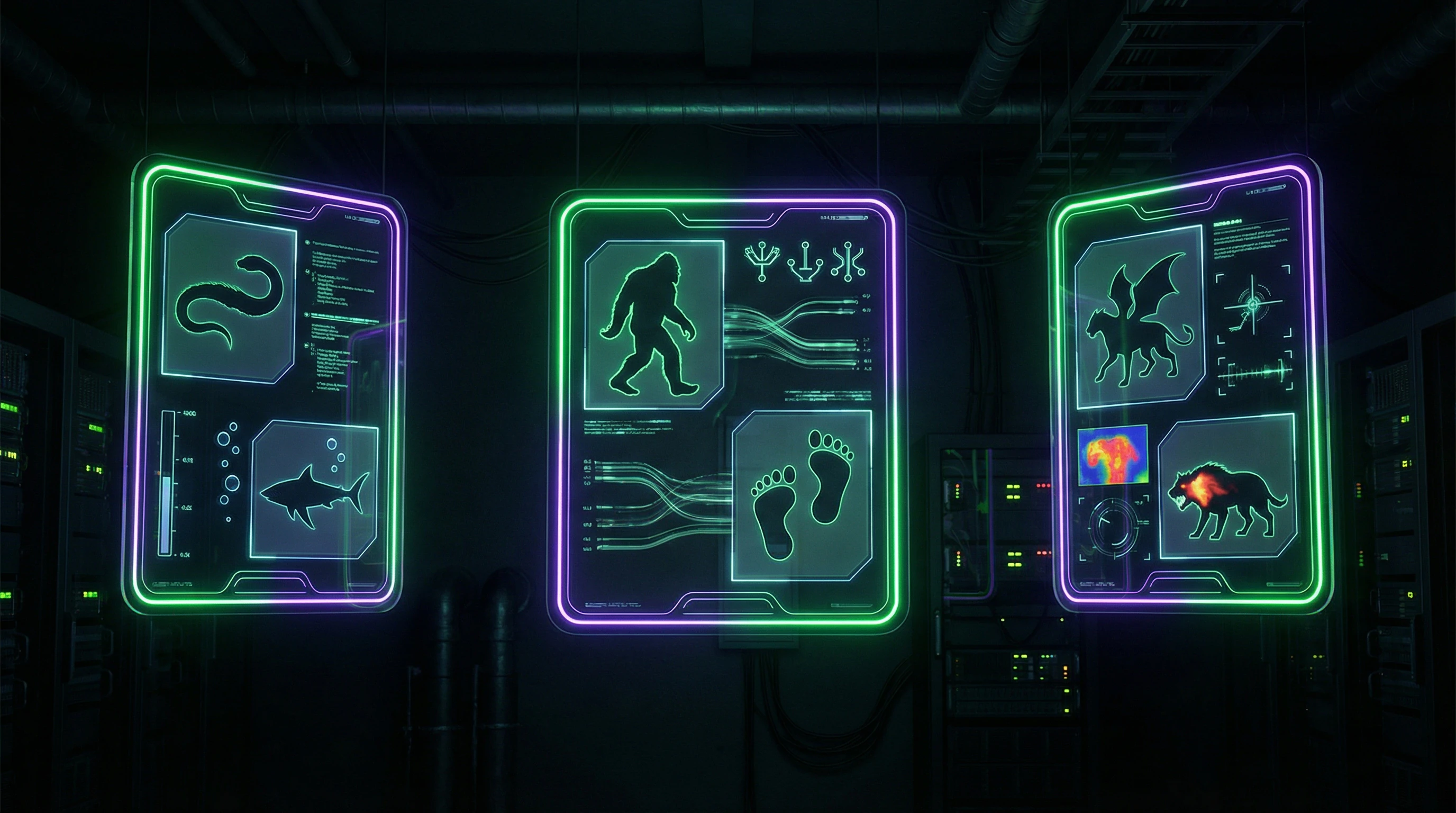
Cryptids are mysterious creatures whose existence is not confirmed by the scientific community, but which appear in eyewitness testimony, folklore, or isolated documentary sources. The most well-known include the yeti, chupacabra, Loch Ness Monster, and Bigfoot.
The "cryptid" category is not homogeneous — it includes both completely fictional creatures and potentially real but unconfirmed species.
| Category | Examples | Status in science |
|---|---|---|
| Relict hominids | Yeti, Bigfoot | Not recognized |
| Aquatic monsters | Loch Ness Monster, Ogopogo | Not recognized |
| Unknown predators | Chupacabra, Mokele-mbembe | Not recognized |
| Extinct species (theory) | Creatures in isolated regions | Speculative |
This classification is not recognized by academic zoology as a scientifically grounded system.
Cryptozoology as Pseudoscience: Why the Scientific Community Rejects the Discipline
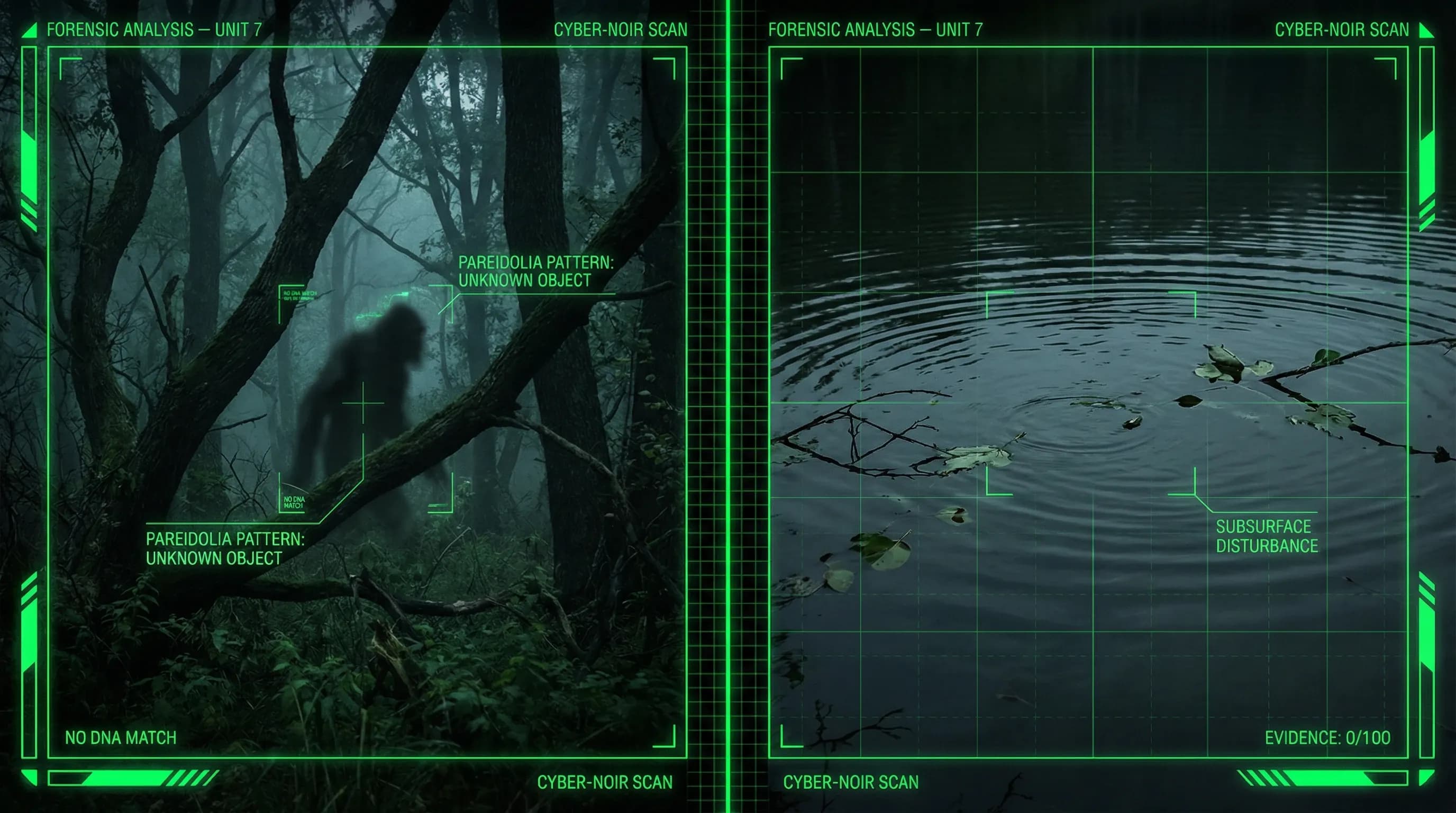
The academic community characterizes cryptozoology as a pseudoscience that fails to meet the criteria of scientific methodology. After decades of research, not a single biological specimen has been obtained that convincingly confirms the existence of even one well-known cryptid.
Cryptozoology violates a fundamental principle of the scientific method: it begins with the desired conclusion (the creature exists) and seeks confirmation, instead of objectively analyzing data. It relies on anecdotal eyewitness testimony that cannot be verified and often contradicts itself.
- Absence of physical evidence: not a single skeleton, skull, or credible DNA sample of large unknown mammalian species.
- Contradiction of ecological principles: a viable population requires a certain population size and territory, making the hidden existence of large animals highly unlikely.
- Methodological deficiencies: absence of control groups, blind experiments, publications in peer-reviewed journals.
- Ignoring alternative explanations: misidentification of known animals and psychological phenomena are rarely considered as primary hypotheses.
Many "proofs" of cryptid existence have subsequently been exposed as hoaxes, optical illusions, or identification errors.
Position of Advocates and Examples of Discovered Species
Proponents of cryptozoology point to historical discoveries of species previously considered mythical: the gorilla (known to Europeans only through stories until the 19th century), okapi, Komodo dragon, coelacanth (believed extinct for millions of years, discovered alive in 1938).
Advocates argue that cryptozoology draws attention to potentially unstudied species and stimulates research in remote regions. Modern methods—molecular genetic analysis, automated camera traps—increase the scientific rigor of the approach.
| Position | Argument | Status in Science |
|---|---|---|
| Critics | Historical discoveries occurred through systematic scientific expeditions and local knowledge, not through cryptozoological methods. These species left physical traces and were found in locations accessible for study. | Dominant |
| Advocates | Consider cryptozoology not as a separate discipline, but as a specific research method aimed at searching for unknown animals based on indirect data. | Marginal |
| Majority of Scientists | Methodological deficiencies remain an insurmountable obstacle to recognizing cryptozoology as a legitimate science. | Consensus |
Cryptozoological Research Methodology: From Eyewitness Accounts to DNA Analysis
Cryptozoological methods differ substantially from classical zoology — this is the primary reason for its criticism. The traditional approach includes collecting eyewitness testimony, analyzing folklore, examining photographs and videos of questionable quality, and conducting field expeditions.
All these methods rely on qualitative rather than quantitative data, making verification and replication difficult. The fundamental problem: the absence of clear scientific hypotheses that could be falsified.
- Molecular genetic analysis of hair samples, excrement, and biological materials
- Automated camera traps with motion sensors
- Drones with thermal imaging and satellite imagery
- Eyewitness interviews and mapping of sighting locations
- Analysis of physical "evidence" (tracks, prints, photographs)
Traditional Evidence Collection Methods
The foundation of cryptozoology consists of collecting and systematizing accounts of cryptid encounters. Researchers conduct interviews, record descriptions, create maps of sighting locations, and attempt to identify patterns. This approach is borrowed from ethnography but applied with the assumption that the described creatures are real.
The second method involves analyzing physical "evidence": tracks, hair, photographs, videos. Cryptozoologists compare them with known animals, searching for anomalies. The problem: most turn out to be hoaxes or have simple explanations — bear tracks mistaken for yeti, blurry photos of known animals.
- Evidence Verification Protocol
- The absence of rigorous protocols for data collection and analysis makes these methods unreliable from a scientific standpoint. There is no unified standard for assessing source reliability, checking for contradictions in testimony, or excluding alternative explanations.
- Cognitive Trap
- Researchers often seek confirmation of their hypothesis rather than its refutation. Evidence that doesn't fit the cryptid narrative is ignored or reinterpreted.
Modern Approaches: DNA Analysis and Technology
Some cryptozoologists employ molecular genetic analysis of biological samples allegedly belonging to cryptids. This method allows precise species identification through DNA in hair, tissue, or excrement.
Studies of samples attributed to yeti or bigfoot have shown: the materials belong to known species — bears, dogs, humans, and other common animals. The result is invariable.
| Technology | Theoretical Potential | Practical Result |
|---|---|---|
| Camera traps with motion sensors | Detection of large animals in habitat areas | Not a single convincing proof after years of deployment |
| Drones with thermal imaging | Detection of warm-blooded creatures | Have not confirmed the presence of cryptids |
| High-resolution satellite imagery | Monitoring of large territories | More likely to refute than confirm hypotheses |
The paradox: the more sophisticated the observation methods, the fewer places remain where large unknown species could hide. Technological advancement works against cryptozoology, not in its favor.
When instruments become more precise and data more objective, cryptids don't appear. This is not coincidence, but pattern.
Famous Cryptids and Their Cultural Significance in the Modern World
Cryptozoology focuses on creatures whose existence is not confirmed by official science, but which occupy a significant place in mass consciousness. These cryptids range from humanoid primates to aquatic monsters and unusual predators.
Despite the absence of scientific evidence, cryptids continue to attract the attention of researchers, enthusiasts, and the general public. Their cultural function is to fill gaps in our understanding of nature and serve as projections of collective fears.
Yeti, Chupacabra, and the Loch Ness Monster as Cultural Icons
The Yeti is a purported humanoid creature in the Himalayas. Legends about it have existed in Tibetan and Nepalese folklore for centuries, and modern expeditions have repeatedly attempted to find physical evidence.
The Chupacabra was first described in the 1990s in Puerto Rico as a creature allegedly attacking livestock. The Loch Ness Monster in the Scottish lake became one of the most famous cryptids thanks to eyewitness accounts and photographs—most subsequently recognized as hoaxes or misidentifications.
The cultural iconization of a cryptid depends not on evidence of its existence, but on its ability to fit into local narrative and media cycles. Yeti, Chupacabra, and Nessie are not so much animals as social constructs, reflecting the era of their popularization.
Regional Cryptids and Their Connection to Local Folklore
Each region of the world has unique cryptids closely tied to local legends and cultural traditions. They reflect not only ecological conditions, but also ways of explaining unusual natural phenomena.
- North America: Bigfoot/Sasquatch, thunderbirds, lake monsters encode encounters with unexplored wilderness.
- Australia: Yowie and bunyip are rooted in Aboriginal mythology and the image of exotic fauna.
- Africa: Mokele-mbembe and mysterious primates symbolize unexplored ecosystems and ancient creatures.
Regional cryptids function as cultural markers: they encode local ecological realities and social anxieties in a form that is more easily transmitted and remembered. The bunyip in Australian mythology is not simply an aquatic creature, but a symbol of the danger of unexplored nature.

Common Myths and Misconceptions About Cryptozoology as a Discipline
The Myth of Scientific Recognition and Academic Status
Cryptozoology is often positioned as a recognized scientific discipline, equal to zoology or biology. The scientific community classifies it as pseudoscience — not out of prejudice, but due to the absence of reproducible evidence and reliance on anecdotal testimony that cannot be verified through standard methods.
Proponents claim that cryptozoology is a method for engaging specialists in the search for unknown species. Critics point to a fundamental gap: real science requires predictability, repeatability, and independent verification. Cryptozoology provides none of these.
Academic status is not granted for enthusiasm or the number of hours spent searching. It requires methodological rigor that distinguishes science from hobby.
Different Categories of Non-Existence and Scientific Discoveries
A common misconception: all cryptids are equally non-existent or the search is completely futile. In reality, different categories exist — from completely fictional creatures to potentially real but unconfirmed species.
The history of zoology contains examples of animals once considered mythical: the mountain gorilla (described in 1902), the giant squid (long a legend), coelacanths (thought extinct for millions of years, discovered in 1938). But here's the key point: all these discoveries were made through rigorous scientific methodology, not cryptozoological methods.
| Animal | Path to Confirmation | Cryptozoological Method? |
|---|---|---|
| Gorilla | Systematic study of anatomical specimens and field observations | No |
| Giant Squid | Physical remains and scientific classification | No |
| Coelacanth | Fishing nets and museum identification | No |
The overwhelming majority of cryptids remain unproven despite decades of searching. This is not coincidence — it's a signal of methodological mismatch between the tool (cryptozoology) and the task (scientific discovery).
Cryptozoology as Subculture and Its Influence on Creative Industries
Psychological Reasons for Sustained Interest in Mysterious Creatures
Interest in cryptids is fueled by the need for mystery and the unexplored in an era when most of the planet has already been mapped. Cryptozoology provides space for romanticizing nature and believing that the world still holds unsolved mysteries.
Belief in cryptids serves a compensatory function: it satisfies the need for wonder and the extraordinary in a rationalized modern world. Cryptozoological communities form identity and a sense of belonging among enthusiasts united by a shared interest in seeking evidence.
| Mechanism | Function |
|---|---|
| Psychological | Compensating for the deficit of the unknown in an explored world |
| Social | Identity formation through shared interest |
| Emotional | Satisfying the need for wonder and the extraordinary |
Cryptozoology's Impact on Popular Culture and Media Industry
Cryptozoology has spawned numerous films, TV shows, books, and documentary programs. Television channels regularly broadcast programs about cryptids that attract millions of viewers despite the absence of scientific rigor.
Cryptozoology has stimulated tourism industry development in regions associated with famous cryptids: Loch Ness in Scotland, the Himalayas for yeti searches, various bigfoot "hotspots" across North America.
The subculture has created an ecosystem of creative industries: souvenir production, expedition organization, specialized literature publishing, museum creation dedicated to cryptids. This demonstrates the significant cultural and economic influence of cryptozoology regardless of its scientific status.

Knowledge Access Protocol
FAQ
Frequently Asked Questions
Cryptozoology is the study of hidden or scientifically unrecognized animals called cryptids (Bigfoot, Chupacabra, Loch Ness Monster). The term comes from the Greek κρυπτός ('hidden') and 'zoology'. Most scientists consider cryptozoology a pseudoscience because it relies on anecdotal evidence without rigorous scientific proof.
No, the mainstream scientific community does not recognize cryptozoology as a science and classifies it as pseudoscience or a subculture. The main reason is the lack of reproducible evidence and the use of unscientific methodology. Cryptozoology relies on anecdotal observations and folklore, which doesn't meet the standards of the scientific method.
Cryptids are mysterious creatures whose existence hasn't been confirmed by science. They include the yeti (abominable snowman), chupacabra, Loch Ness Monster, bigfoot, and numerous regional creatures from folklore around the world. Cryptids fall into categories ranging from purely mythical to potentially real but unconfirmed species.
Cryptozoologists collect eyewitness accounts, analyze folklore sources, and conduct field investigations in areas where cryptids are believed to inhabit. Modern researchers employ molecular genetic analysis and DNA testing of recovered samples. However, critics note that these methods don't compensate for the lack of fundamental scientific rigor in the approach.
Yes, some animals once thought mythical were later discovered by science. Cryptozoology advocates cite such examples as support for the field. However, the number of confirmed discoveries is extremely small compared to thousands of claimed cryptids, which doesn't change the scientific community's overall skeptical stance.
Interest in cryptids stems from psychological factors: the desire for mystery, romanticizing the unknown, and cultural traditions. Cryptozoology has become a subculture with its own communities, media, and creative industries. Folkloric creatures are rooted in local legends, which sustains belief in their reality regardless of scientific evidence.
Scientific zoology studies confirmed animal species using rigorous methodology, reproducible experiments, and physical evidence. Cryptozoology focuses on unverified creatures, relying on eyewitness accounts and folklore. The key difference is that zoological findings can be verified and are recognized by the scientific community.
Cryptozoology isn't a recognized academic field, so there are no official degree programs. Most cryptozoologists are enthusiasts with backgrounds in related areas like biology, anthropology, or journalism. You can build a professional career through content creation, writing books, or working on documentary projects, but not through traditional academic institutions.
Modern cryptozoologists use trail cameras, drones with thermal imaging, sonar for aquatic cryptids, and DNA analysis systems for samples. Satellite imagery and crowdsourcing platforms help collect sighting data. Despite technological advances, no convincing evidence of cryptid existence has been obtained.
Scientists criticize cryptozoology for lacking reproducible evidence, relying on anecdotal testimony, and violating the scientific method. Cryptozoological 'discoveries' don't undergo peer review and aren't published in scientific journals. The discipline ignores Popper's principle of falsifiability, making its claims untestable.
No, this is a common myth — cryptozoology encompasses hundreds of different creatures worldwide. Beyond the yeti, researchers investigate chupacabra, the Loch Ness Monster, Mothman, the Jersey Devil, and numerous regional cryptids. Each culture has its own mysterious creatures, making cryptozoology a global phenomenon.
Yes, but they analyze cryptozoology as a cultural and social phenomenon, not as a scientific discipline. Researchers like Pakhalyuk E.M. examine the question 'Cryptozoology: Science or Absurdity?' from an academic perspective. Such works consider cryptozoology in the context of subcultures, psychology, and creative industries, but do not confirm the existence of cryptids.
DNA analysis is a powerful tool, but so far all tested 'cryptid' samples have turned out to belong to known animals or were contaminated. Molecular genetic methods could confirm a new species if quality biological material were found. To date, no cryptid has been confirmed through DNA testing.
Cryptozoology focuses on unknown terrestrial animals, while ufology studies alleged extraterrestrial phenomena and UFOs. Both are considered pseudosciences but have different research subjects. Cryptozoology is closer to biology and zoology, while ufology relates to astronomy and physics, though both rely on anecdotal evidence.
In North America, the most well-known are Bigfoot (Sasquatch in the Pacific Northwest, Skunk Ape in the Southeast), lake monsters in various bodies of water, and forest creatures from indigenous folklore. Each region has its own legends about mysterious beings. These cryptids are deeply rooted in local culture and continue to attract enthusiast attention.
Cryptozoology significantly influences film, literature, video games, and documentaries, creating an entire entertainment industry. Cryptids have become popular characters in horror movies, adventure series, and games. The cryptozoology subculture is active on social media, forums, and YouTube, forming enthusiast communities and sustaining interest in mysterious creatures.