Anatomy of the myth: what exactly do proponents of the "Great Tartaria" theory claim and what cartographic artifacts form the basis of the narrative
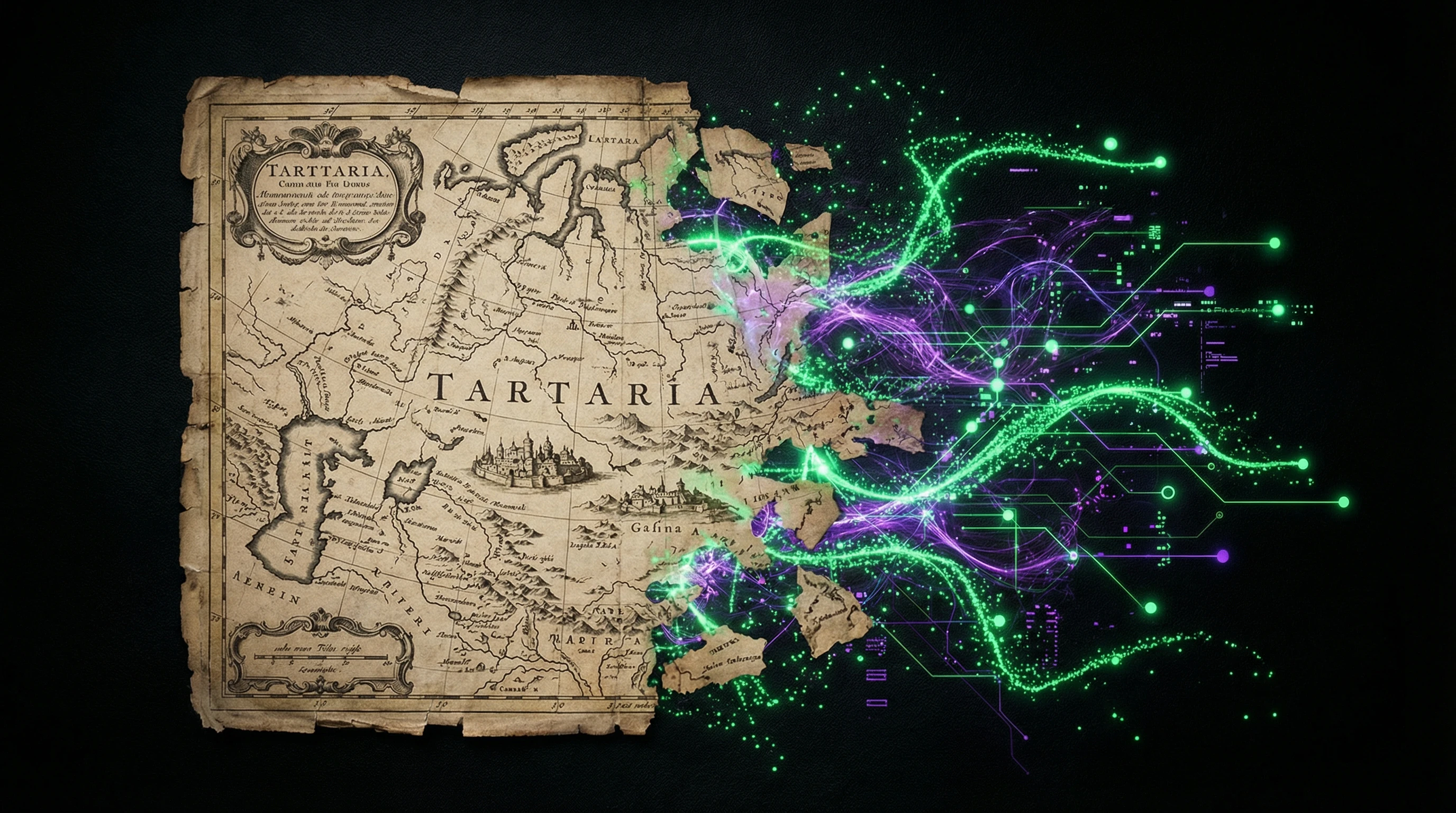
The central claim: a powerful civilization called "Great Tartaria" existed across Eurasia in the 17th–19th centuries, deliberately erased from historical records. Proponents point to European maps from the 17th–18th centuries where Siberia and Central Asia are labeled "Tartaria" or "Grand Tartary". More details in the section Secret Devices.
Cartographic analysis reveals otherwise: these designations were geographical markers for poorly studied regions inhabited by Turkic and Mongolic peoples, not indicators of a unified state entity.
Cartographic nomenclature: from ethnonym to myth
The term "Tartaria" derives from the medieval European designation for nomadic peoples of Central Asia, originating from the Mongolic ethnonym "Tatar". Cartographers of the 16th–18th centuries used it for vast territories with limited information.
| Map variant | What it designated | Classification logic |
|---|---|---|
| Tartaria Magna | Large territories of Central Asia | Geographic size |
| Tartaria Deserta | Desert and steppe regions | Landscape type |
| Tartaria Independens | Territories outside European control | Degree of political dependence |
Multiple variations indicate not political unity, but geographic classification by degree of exploration and population type.
Narrative structure: four interconnected components
- 1. Advanced civilization with superior technology
- Claims of technological superiority allegedly incompatible with the 19th century. Verified through architectural details and engineering solutions.
- 2. Mud flood as catastrophe
- Event in the early 19th century that allegedly destroyed the civilization. Interpreted as cultural layers in historic cities.
- 3. Systematic destruction of evidence
- Alleged conspiracy to erase historical records. Explains the absence of direct proof.
- 4. History rewritten by victors
- Mechanism that allegedly allowed truth to be concealed. Used to interpret any contradictions in sources.
Each element is constructed through selective interpretation of visual artifacts: photographs of buildings with sunken first floors, architectural details, and cultural layers in historic cities.
Chronological and geographic ambiguity as adaptive mechanism
Proponents date "Tartaria" to the period from the 13th century to mid-19th century, placing the "mud flood" in the range of 1780–1850. Geographically, the narrative encompasses Eastern Europe, Siberia, Central Asia, sometimes expanding to North America.
This chronological and geographic ambiguity allows the theory to adapt to any contradictory data by adjusting timeframes or territorial boundaries—a characteristic feature of pseudohistorical constructs.
Such flexibility makes the theory resistant to factual criticism: any new evidence can be reinterpreted as part of the conspiracy or reclassified by time and place.
Steelman Analysis: Seven Most Persuasive Arguments of Theory Proponents and Their Internal Logic
For objective analysis, it's necessary to present the proponents' argumentation in its strongest form, avoiding straw man fallacies. The following seven arguments are the most frequently cited and internally consistent elements of the narrative that create an illusion of evidence for the unprepared observer. More details in the Pseudoscience section.
🧩 First Argument: Mass Presence of Sunken First Floors in Historic Cities
Theory proponents point to the widespread phenomenon of 19th-century buildings with sunken first floors, whose windows are at or below modern sidewalk level. This observation is indeed verifiable in hundreds of cities across Europe, Russia, and North America.
The theory interprets this as evidence of catastrophic soil deposition 6–13 feet thick over a short time period. The logical chain: if buildings were constructed with normal first floors and then became partially buried, this indicates a sudden geological event of global scale.
⚠️ Second Argument: Architectural Complexity of Buildings Allegedly Incompatible with the Era's Technological Level
The second key argument focuses on architectural details of 19th-century buildings: complex stone ornaments, massive domes, precise facade geometry. Proponents claim such craftsmanship is impossible with the technology of that time, especially considering construction speed and the quantity of erected structures.
The argument is reinforced by displaying photographs of late 19th-century construction sites showing primitive wooden scaffolding and manual labor. This creates cognitive dissonance with the result—monumental buildings.
- Observation: complex ornaments and facade geometry
- Premise: primitive tools visible in photographs
- Conclusion: 19th-century technology insufficient for such results
- Alternative: buildings constructed earlier by a more advanced civilization
🔎 Third Argument: Uniformity of Architectural Style Across Vast Territories
The theory emphasizes stylistic similarities in 19th-century architecture across cities separated by thousands of miles: from St. Petersburg to Vladivostok, from Warsaw to Tashkent. Classicism, Empire style, and eclecticism indeed demonstrate recognizable common features regardless of geographic location.
Proponents interpret this as evidence of a unified civilization with centralized architectural standards, rather than as a result of cultural exchange and the spread of architectural schools through educational institutions and specialist migration.
🧩 Fourth Argument: Cultural Layer and Its Interpretation as Evidence of Catastrophe
Archaeological cultural layers in historic cities reach several meters in thickness—a universally recognized fact. The "mud flood" theory offers an alternative interpretation: instead of gradual accumulation over centuries, this layer formed within several years or decades as a result of a catastrophic event.
The argument is strengthened by pointing to the homogeneity of cultural layer composition in some locations and the absence of clear stratification, which allegedly contradicts the gradual formation model.
⚠️ Fifth Argument: "Suspicious" Gaps in Historical Records and Documentation
Theory proponents point to periods in the history of certain regions for which relatively few documents survive or where dating contradictions exist. Special attention is paid to the history of Siberia and Central Asia in the 18th–19th centuries, where documentation gaps indeed exist due to regional remoteness, low population density, and limited literacy.
These gaps are interpreted not as natural consequences of historical conditions, but as results of deliberate destruction of evidence.
🔎 Sixth Argument: Technological Artifacts and "Out-of-Place" Engineering Solutions
The theory draws attention to 19th-century engineering structures demonstrating high levels of technical complexity: water supply and sewage systems, building ventilation systems, precision stone processing. Proponents claim some solutions precede the official chronology of technological development or require knowledge allegedly unavailable in that period.
This argument is often accompanied by demonstrations of details whose function is non-obvious to modern observers, creating an impression of "mysterious technologies."
🧩 Seventh Argument: Cartographic "Anomalies" and Changes in Toponymy
The final argument focuses on changes in geographic names and cartographic designations between the 18th and 20th centuries. The disappearance of the term "Tartaria" from maps, renaming of cities and regions, changes in administrative boundaries are interpreted as a systematic program to erase traces of a previous civilization.
The theory is reinforced by pointing to cases where old names persisted in folk memory longer than in official documents, allegedly indicating the imposed nature of renamings.
- Disappearance of "Tartaria" from 18th–19th century cartography
- Renaming of cities and administrative units
- Border changes without apparent political reasons
- Preservation of old names in local toponyms and folklore
- Absence of official explanations for renamings in archives
Evidence Base: Systematic Analysis of Historical, Archaeological, and Geological Data for Each Claim
Critical analysis requires examination of primary sources and interdisciplinary verification. Systematic reviews and meta-analyses represent the most reliable method of evidence synthesis, as they employ explicit literature search methods and rigorous study quality assessment methodology (S010).
Unlike narrative reviews, which reflect authors' personal judgments, systematic reviews provide objective answers to specific questions through quantitative synthesis of results (S010).
🧪 Cultural Layer: Formation Mechanisms and Accumulation Chronology
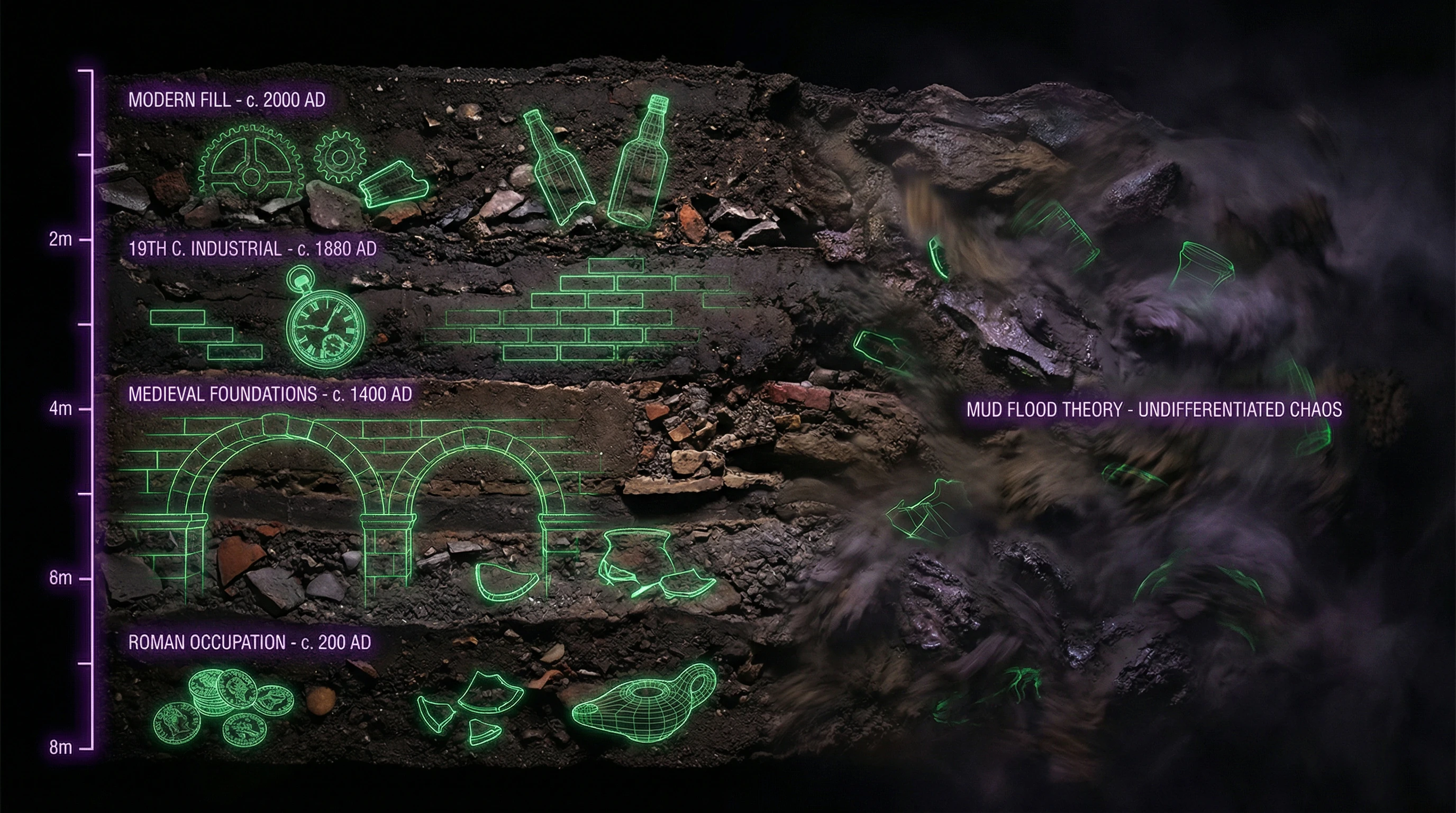
Archaeological investigations of cultural layers in historic cities demonstrate clear stratification with datable artifacts at various levels. Cultural layer formation rates vary from 0.5 to 3 cm per decade depending on intensity of economic activity, type of development, and geological conditions. More details in the Paranormal Abilities section.
A layer 2–3 meters thick in cities with thousand-year histories fully corresponds to these rates and requires no extraordinary explanations.
Cultural layer composition includes construction debris, organic remains, pottery fragments and other artifacts, whose distribution by depth correlates with known historical periods.
🔬 Buried First Floors: Urban Planning Practice and Street Level Elevation
The phenomenon of buried first floors is explained by documented practice of raising street levels in the 19th–20th centuries to improve drainage, install utilities, and combat flooding. City administration archives contain detailed plans for raising pavement levels with dates, soil volumes, and financing specified.
In St. Petersburg, street levels were raised 1–2 meters during the period from the 1830s to 1900s, which is fully documented in city archives. Building owners received compensation or directives for facade adaptation.
📊 19th Century Architectural Technologies: Documented Methods and Tools
The technological level of 19th century construction is thoroughly documented in technical manuals, patents, and educational programs of engineering schools from that period. Development of Portland cement (1824), introduction of steam engines at construction sites (1830s), standardization of measuring instruments, and advancement of descriptive geometry provided the technological foundation for erecting complex architectural structures.
Surviving construction estimates and work logs show realistic construction timelines: major public buildings were erected over 3–7 years with hundreds of workers involved.
🧪 Cartographic Analysis: Evolution of Geographic Nomenclature
Examination of cartographic sources from the 17th–19th centuries shows gradual evolution of geographic nomenclature as knowledge about regions accumulated. The term "Tartaria" on early maps is accompanied by notations "terra incognita," "partes incognitae," or descriptive comments about lack of information.
As geographic expeditions proceeded and diplomatic contacts were established, generalized designations were replaced with specific names of khanates, tribal territories, and administrative units. This process is thoroughly traceable in cartographic series from the same publishers over decades.
🔬 Architectural Uniformity: Mechanisms of Style Dissemination and Educational Institutions
The stylistic unity of 19th century architecture is explained by a centralized system of architectural education and state construction standards. The Imperial Academy of Arts in St. Petersburg, founded in 1757, trained architects according to a unified program, who then worked throughout the Russian Empire.
Albums of standard designs, approved by the Ministry of Internal Affairs, were distributed to provincial cities and ensured architectural uniformity. Similar systems existed in other European states, which explains transnational stylistic similarity.
📊 Geological Data: Absence of Evidence for 19th Century Catastrophic Events
Geological and paleoclimatic studies reveal no signs of a global or even regional catastrophic event during the period 1780–1850. Analysis of ice cores, tree rings, lake sediments, and other paleoarchives shows normal climatic variability without anomalous excursions.
The eruption of Mount Tambora in 1815 did cause a climatic anomaly ("year without a summer" 1816), but this event is well documented and was not accompanied by massive soil deposition. The absence of corresponding markers in the geological record is strong refutation of the catastrophe theory.
🧪 Documentary Sources: Completeness of Historical Record and Archival Data
Claims of systematic destruction of historical documents contradict the volume of preserved 19th century archival materials. The Russian State Historical Archive alone holds over 7 million files from this period, including construction documentation, correspondence, financial reports, and personal diaries.
European archives contain comparable volumes of materials. Gaps in documentation for individual regions are explained by historical circumstances: fires, wars, low levels of bureaucratization in remote territories, rather than deliberate destruction.
Mechanisms of Causality: Why Correlation Between Architectural Features and Conspiracy Theory Does Not Mean Causal Connection
A fundamental error in pseudohistorical narratives is conflating correlation with causation. Sunken first floors correlate with building age, but this does not mean a catastrophe is the cause. Alternative explanations exist, supported by independent evidence. Learn more in the Statistics and Probability Theory section.
Rigorous methodology requires analysis of potential confounders and alternative explanations (S010). This is especially important when working with historical data, where our brains see patterns that aren't there.
🔁 Confounders: Factors Creating False Appearance of Connection
In the case of "Tartaria" theory, key confounders are natural urban development processes, documented urban planning practices, technological evolution, and cultural exchange of specialists.
Each of these factors independently explains observed phenomena without needing to postulate a lost civilization. Ignoring confounders is a characteristic feature of pseudoscientific theories that choose the most dramatic explanation instead of the most probable one.
When an architectural feature can be explained by five independent mechanisms, choosing a sixth (conspiracy) requires not just evidence—it requires excluding all five.
🧠 Reverse Causality and Teleological Errors
The theory demonstrates teleological thinking: an observed result (19th-century architectural heritage) is interpreted as proof of a presumed cause (existence of "Tartaria"). Alternative causal chains are ignored.
This is a classic example of reverse causality, where effect is mistakenly taken for cause. The scientific approach requires building a causal model with testable predictions and seeking independent confirmation of each link in the cause-and-effect chain.
- Formulate a hypothesis about the cause (e.g., "catastrophe occurred in year X")
- Derive testable predictions from it (geological layers, artifact dating, written sources)
- Collect independent data without knowing the hypothesis
- Compare predictions with data
- If there are no matches—hypothesis is rejected
🧬 Multiple Realizability: Different Causes Produce Similar Effects
The same observed result can be a consequence of different causal mechanisms. Sunken first floors arise from street level elevation, original design with basement level, changes in functional purpose of spaces, or local geological processes.
Choosing between these explanations should be based on additional evidence, not on a priori preferences. The "mud flood" theory chooses the most extraordinary explanation, violating Occam's razor principle.
| Observation | Explanation 1 (documented) | Explanation 2 (documented) | Explanation 3 (hypothesis) |
|---|---|---|---|
| Sunken first floor | Street level rise of 3–10 feet over 100–150 years | Basement level in design (cellar, storage) | Global flood |
| Required evidence | Soil layers, paving documents | Archival blueprints, contracts | Geological layers, dating, written sources |
| Status | Confirmed | Confirmed | Not confirmed |
When the first two explanations fully describe the phenomenon and are confirmed by independent data, the third becomes superfluous. This does not mean it is impossible—it means it is not required to explain the facts.
Data Conflicts and Zones of Uncertainty: Where Sources Contradict Each Other and Why This Doesn't Confirm a Conspiracy
Scientific integrity requires acknowledging areas where data is incomplete or contradictory. However, the presence of contradictions in historical sources is the norm, not an anomaly. For more details, see the Sources and Evidence section.
Contradictions are explained by limitations of dating methods, differences in interpretations, and the natural incompleteness of the historical record. This does not indicate falsification.
Contradictions in Dating Architectural Objects
For 19th-century buildings, there are discrepancies between sources—sometimes 10–20 years. Reasons: differences between the date construction began, completion of major work, and official opening; errors in later publications copying inaccurate information.
Theory proponents interpret these discrepancies as evidence of falsification, ignoring that for the overwhelming majority of objects, dates agree between independent sources within a few years.
This is a classic example of data pareidolia—when random or explainable variations are interpreted as systematic proof.
Documentation Gaps for Certain Regions
The history of Siberia and Central Asia in the 18th–19th centuries contains periods with limited documentation. Objective reasons: low population density, limited literacy, remoteness from administrative centers, loss of documents in fires and disasters.
However, the gaps are not complete: there are travelers' notes, diplomatic correspondence, trade documents, ethnographic records. They provide a basic chronological framework.
- Argumentum ad ignorantiam
- Logical fallacy: interpreting data incompleteness as proof of conspiracy. Absence of information ≠ presence of hidden events.
- Why This Is a Trap
- Any historical era contains gaps. This is not an anomaly, but the norm. Conspiracy requires active concealment; documentation incompleteness requires only time and distance.
Discrepancies Between Cartographic Sources
Maps from the 17th–19th centuries of the same region, created by different cartographers, differ substantially: location of settlements, names, boundaries. Reasons: differences in information sources available to cartographers; degree of data updating; cartographic conventions of different schools.
Gradual refinement of maps as geographical knowledge accumulates is a normal scientific process, not evidence of concealing information about "true" geography.
| Type of Discrepancy | Explanation | Sign of Conspiracy? |
|---|---|---|
| Dating ±10–20 years | Different construction phases, copying errors | No |
| Documentation gaps | Low literacy, remoteness, archive loss | No |
| Map discrepancies | Different sources, different methods, different eras | No |
The key distinction: conspiracy requires coordination, resources, and motive. Data incompleteness and contradictions require only time and human error—history's cheapest resources.
Cognitive Anatomy of the Myth: Which Psychological Mechanisms and Cognitive Biases Does the "Tartaria" Narrative Exploit
The success of pseudohistorical theories is explained not by the quality of evidence, but by the effectiveness of exploiting cognitive vulnerabilities. The "Great Tartaria" theory engages a whole complex of psychological mechanisms that make it attractive to certain cognitive profiles regardless of factual validity. More details in the Divination Systems section.
🧩 Clustering Illusion Effect and Pattern-Matching
The human brain is evolutionarily tuned to detect patterns, even where none exist. Randomness is perceived as regularity if it falls within the zone of attention and matches expectations.
In the context of Tartaria, this means: architectural similarities between buildings from different eras and regions are interpreted as proof of a unified civilization, though they're explained by convergent evolution of styles, trade contacts, or simply the limitations of construction technologies.
The brain doesn't ask "is there a pattern?" — it asks "what pattern am I already looking for?" If you're looking for Tartaria, you'll find it in any old building with columns.
⚙️ Apophenia and the Search for Meaning in Noise
Apophenia is the attribution of meaning to random data. Theory supporters see in gaps in historical records not an absence of information, but deliberate concealment.
The more data is missing, the more space for interpretation. This creates a paradox: lack of evidence becomes evidence of conspiracy.
- I observe architectural similarity → interpret it as a unified civilization
- I search for confirmation in maps and documents → find inaccuracies
- I interpret inaccuracies as falsification → conspiracy confirmed
- Absence of direct evidence of conspiracy → proof of its scale
🎭 Narrative Coherence and Emotional Resonance
The Tartaria theory offers a narrative that is coherent, dramatic, and emotionally saturated: ancient civilization, global cataclysm, hidden history. This works better than fragmented historical reality.
The emotional appeal of the narrative amplifies cognitive bias: we believe what moves us, even if the logic is flawed.
A good story beats good data. Not because people are stupid, but because the brain processes narrative as a unified whole, not as a collection of facts.
🔄 Confirmation Bias and Information Filtering
A Tartaria theory supporter actively seeks confirmation and ignores refutations. This isn't malicious intent — it's standard cognitive economy.
Each new "artifact" (old map, architectural detail, geological layer) is interpreted as confirmation, while each refutation is seen as part of the conspiracy. The system becomes hermetically sealed.
- Confirmation Bias
- We seek information that confirms our beliefs and ignore information that refutes them. In the context of Tartaria, this means any new fact can be reinterpreted as confirmation.
- System Hermeticity
- When refutations are interpreted as part of the conspiracy, the system becomes logically invulnerable — but only because it ceases to be falsifiable.
👥 Social Identity and Belonging
Belief in Tartaria is often connected to belonging to a community that sees itself as an "enlightened minority that knows the truth." This creates a social incentive to maintain the belief regardless of evidence.
Leaving such a community means losing identity and social connections. This is a powerful psychological anchor that keeps people within the belief system.
People don't believe in Tartaria. People believe that they are people who know about Tartaria. These are different things.
🛡️ Protection Against Cognitive Vulnerabilities
Awareness of these mechanisms is the first step toward protection. This doesn't mean you're immune to them (no one is immune), but you can track them.
- Ask: "What pattern am I looking for?" — and check whether you're imposing it on the data
- Actively seek refuting evidence, not confirming evidence
- Check whether you're defending the theory because it's part of your identity
- Distinguish between "interesting hypothesis" and "proven fact"