 🏛️ Alternative History
Alternative History: Exploring Humanity's Roads Not Takenλ
A methodology and genre exploring probable worlds through points of historical divergence, revealing the role of chance and human choice in shaping reality
Overview
Alternate history is simultaneously a genre of speculative fiction and a methodological tool for historical analysis. It constructs probable worlds through points of divergence 🧩 — moments where history could have taken a different path. This approach challenges determinism: instead of inevitability, it reveals the role of chance, human choice, and unpredictability in shaping reality.
🛡️
Laplace Protocol: This section is based on academic sources, including peer-reviewed articles on alternate history methodology, and clearly distinguishes legitimate counterfactual research from pseudohistorical theories that deny established facts.
Reference Protocol
Scientific Foundation
Evidence-based framework for critical analysis
Protocol: Evaluation
Test Yourself
Quizzes on this topic coming soon
Sector L1
Articles
Research materials, essays, and deep dives into critical thinking mechanisms.
🏛️ Alternative History 🏛️ Alternative History
 🏛️ Alternative History
 🏛️ Alternative History
⚡
Deep Dive
The Dual Nature of Alternative History: When Fiction Meets Scientific Method
Alternative history exists simultaneously in two dimensions: as a genre of speculative fiction and as a methodological tool for historical research. The artistic version creates probable worlds that diverge from known circumstances after a specific event. The methodological version is a research approach that examines counterfactual scenarios to understand historical causality.
This duality is not a flaw, but a reflection of a fundamental need: to understand the past through the lens of the possible, not only what actually occurred.
| Dimension | Function | Method |
|---|---|---|
| Artistic | Creating probable worlds | Narrative, speculation |
| Methodological | Testing causal relationships | Counterfactual analysis |
Point of Divergence as Narrative Architecture
At the center of any alternative history work lies the "Point of Divergence" (POD)—a critical moment where the alternative timeline separates from actual events. The earlier this point, the more radical the changes can be in the alternative reality.
Fictional alternative history explores scenarios like Napoleon's victory at Waterloo or the preservation of the USSR in 1991. The genre has become a mainstream phenomenon in film, television, and literature.
Counterfactual Analysis as Research Method
Academic alternative history functions as a legitimate tool for understanding historical causality and the role of contingency. This approach expands the arsenal of research methods, focusing on "history as if" scenarios.
Counterfactual analysis allows historians to test hypotheses about causal relationships and understand why events unfolded as they did rather than otherwise.
The concept of "polyhistorical life" suggests that each person's life contains multiple potential histories. Alternative history provides experience outside problematic narratives, opening possibilities for development.
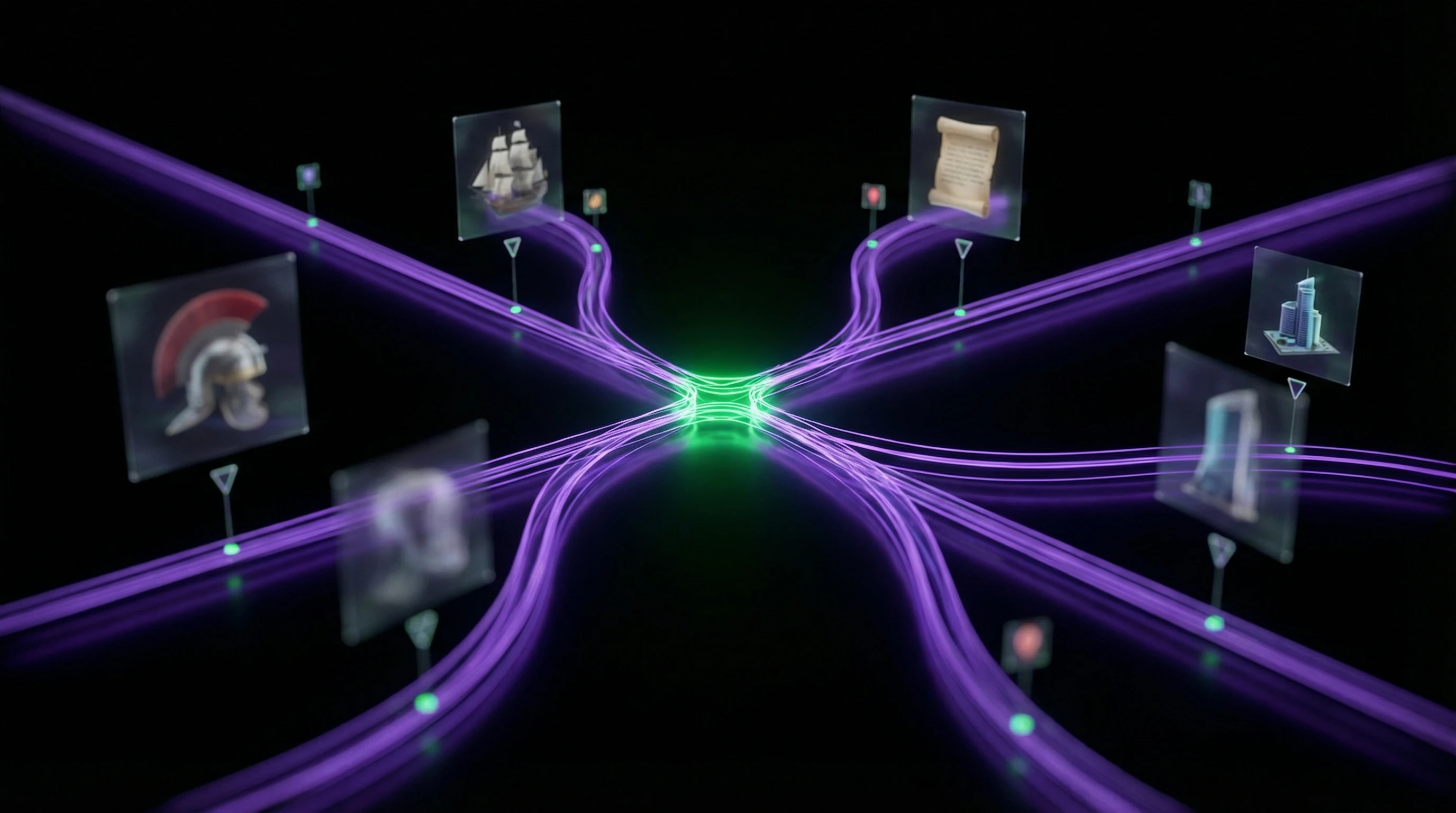
Counterfactual Analysis and Historical Causality: How "What If" Reveals the Mechanisms of the Past
Counterfactual thinking in history is not an intellectual game, but an analytical tool for testing hypotheses and isolating the influence of specific factors. By asking "what if...", researchers reveal hidden mechanisms of historical change that are invisible in linear analysis of events that actually occurred.
Alternative history serves as a tool for critical inquiry: how our actual world is structured and what factors sustain current realities.
The Role of Contingency versus Historical Determinism
Deterministic models of history assume the inevitability of certain outcomes, driven by economic, social, or cultural structures. Counterfactual analysis demonstrates the opposite: many "inevitable" events depended on specific decisions, random coincidences, or the personalities of key figures.
- Determinism
- The belief that history unfolds along a predetermined path. The trap: it obscures the role of human choice and contingency.
- Counterfactual Method
- Isolation of variables through hypothetical scenarios. Restores understanding of history as an open process where the future is shaped through the interaction of structures and agency.
Humanizing Historiography through Human Choice
Traditional historiography often presents the past as a sequence of inevitable events governed by impersonal forces—economic laws, class struggle, geopolitical imperatives. The counterfactual approach returns living people to the center with their dilemmas, mistakes, and choices.
History could have gone differently. This perspective not only increases empathy for historical actors, but also strengthens understanding of contemporaries' own responsibility for shaping the future.
Typology of Alternate History Works: From Realism to Fantastic Worlds
Alternate history works are classified by their degree of deviation from known reality. There is a recognized division into two main types: realistic scenarios with familiar physics and recognizable states, and fantastic deviations with elements impossible within known scientific laws.
This typology reflects not only authors' artistic preferences but also different approaches to exploring historical possibility. Understanding this classification is critically important for evaluating the credibility and analytical value of specific works.
Realistic Scenarios with Recognizable States
Works of the first type are built on minimal changes at the point of divergence and strive for maximum historical plausibility. In such scenarios, known laws of physics, geographical realities, and basic socioeconomic patterns are preserved—only specific historical events and their consequences change.
States remain recognizable, though their borders, political systems, or international standing may differ radically from reality. This approach is closest to academic counterfactual analysis and allows serious investigation of cause-and-effect relationships in history.
- Minimal changes at the point of divergence
- Preservation of known physical laws and geography
- Logical development of the alternate timeline
- Recognizability of states and social structures
Fantastic Deviations from Reality
Alternate history of the second type permits more radical deviations, including elements of fantasy, magic, or alternative physics. These works often blend alternate history with other genres—fantasy, science fiction, steampunk—creating worlds where technological or magical development took a fundamentally different path.
While such works have less analytical value for understanding actual history, they serve an important function in exploring the boundaries of the possible and critically reconsidering fundamental assumptions about the nature of reality.
The boundary between types is not always clear. Many works occupy an intermediate position, combining elements of realism and fantasy, creating a spectrum rather than a binary division.
Alternate History in Popular Culture: From Literature to Blockbusters
Alternate history has become one of the most influential genres in contemporary mass culture, penetrating film, television, literature, and video games. This phenomenon reflects a deep audience need to reconsider the past and explore unrealized possibilities.
The genre's popularity is connected to its ability to make history more accessible and emotionally engaging, transforming abstract historical processes into dramatic narratives about choice and consequences.
Influence on Contemporary Film and Television
Alternate history plots have become the foundation for numerous cinematic and television projects exploring various points of divergence. These works range from serious dramas carefully developed from a historical perspective to entertainment blockbusters using alternate history as a backdrop for adventure plots.
The genre allows creators to explore relevant social and political themes through the lens of "safe" historical distance, making acute questions more accessible to broad audiences.
Literary Traditions and Notable Works
In literature, alternate history has a rich tradition encompassing both realistic scenarios with recognizable states and familiar physics, and more fantastic deviations from reality.
- Works of the first type focus on careful elaboration of historical details and plausible chains of cause and effect.
- The second type often blends alternate history with elements of fantasy, science fiction, or steampunk.
Literary alternate history serves not only as entertainment but also as a tool for investigating historical causality and human choice. The genre continues to evolve, generating new subgenres and hybrid forms that expand the boundaries of traditional historical narrative.
[INFOGRAPHIC: Typology of alternate history works — realism/fantasy axis vs. entertainment/analysis, with examples from film, literature, and games in each quadrant]
Distinguishing from Pseudohistory: Where the Boundary of Legitimacy Lies
The term "alternative history" is often conflated with pseudohistory, which contradicts established facts and scientific consensus. This blurs the boundary between legitimate counterfactual research and conspiratorial fantasies.
Genuine alternative history works with accepted historical facts and explores plausible divergences, rather than denying evidence. This confusion damages both the academic reputation of counterfactual analysis and the perception of the genre as a whole.
Legitimate Counterfactual Research
Academic alternative history is a recognized methodological tool for understanding historical causation and contingency. Counterfactual analysis is used by historians to test hypotheses about causal relationships and to understand why events unfolded as they did rather than otherwise.
This approach emphasizes the role of human choice and agency rather than deterministic narratives. Legitimate research strictly follows principles of historical methodology, relies on documentary sources, and strives for maximum plausibility in alternative scenarios.
- Accepts established facts as a starting point
- Explores changes to specific conditions or decisions
- Relies on documentary sources
- Tests hypotheses about causal relationships
- Strives for maximum plausibility in scenarios
Distinction from Conspiracy Theories
The key difference between alternative history and pseudohistory lies in their relationship to facts and methodology. Legitimate alternative history asks "what if?", while pseudohistory claims "this is what actually happened", ignoring contradictory evidence.
Alternative history explores how events might have unfolded differently under changed conditions. Pseudohistory denies or distorts proven facts, advancing theories without sufficient foundation.
Understanding this distinction is critically important for evaluating any alternative historical claims and protecting against manipulative narratives.
Therapeutic and Psychological Value: Alternative Narratives as a Development Tool
Alternative history possesses therapeutic value that extends beyond entertainment. The concept of "polyhistorical life" suggests that each person contains multiple potential stories—unrealized paths that could have been.
This approach allows for reframing one's own life trajectories, seeing alternative paths, and freeing oneself from the belief in the inevitability of the current situation. Alternative history serves as a tool for critical examination of how the real world is structured and what factors sustain current realities.
Polyhistorical Life and Alternative Narratives
Every biography contains numerous unrealized possibilities and alternative developmental paths. Alternative history, applied to personal experience, helps reveal that the current situation is neither the only possible nor inevitable outcome.
In a therapeutic context, working with alternative narratives allows exploration of alternative interpretations of past events and envisioning different future trajectories—this liberates from feelings of hopelessness and opens new possibilities for personal growth.
Critical Examination of Reality's Structure
Alternative history functions as a tool for analyzing how the world is structured and why it operates as it does. By exploring alternative scenarios, we identify which factors—structural, contingent, or related to human choice—determined the current state of affairs.
- Reveal hidden assumptions normalized as natural
- Recognize power structures perceived as inevitable
- Develop the capacity to imagine alternative futures
- Practice critical thinking through counterfactual analysis
Alternative history serves not only as an intellectual exercise but as a practical tool for developing critical thinking and the capacity to work toward creating alternative futures.
[DIAGRAM: Three levels of alternative history application—macrohistorical (states, civilizations), meso-level (communities, organizations), micro-level (personal biographies)—with examples of questions and methods for each]
Knowledge Access Protocol
FAQ
Frequently Asked Questions
Alternate history is a genre of fiction and research methodology that examines probable worlds that could have emerged after changes to key historical events. In literary works, authors create "what if" scenarios based on points of divergence (POD) from actual history. In academia, it serves as a tool for understanding causality and the role of contingency in the historical process.
Legitimate alternate history is grounded in established historical facts and explores plausible divergences, whereas pseudohistory denies proven events. Alternate history works with counterfactual scenarios without disputing the reality of the past. Confusion arises from similar terminology, but these are fundamentally different approaches to history.
A point of divergence (POD) is a critical moment in history where an alternate timeline branches off from actual events. This could be a different battle outcome, an alternative political decision, or a prevented catastrophe. The POD concept is central to both fictional works and analytical studies of alternate history.
Two main types are distinguished: realistic scenarios with recognizable physics and familiar nations (type 1) and fantastic deviations from reality (type 2). The first type focuses on plausible political and social changes. The second permits more radical transformations of the world and natural laws.
Yes, alternate history is recognized as a legitimate methodological tool for historical research. It helps understand cause-and-effect relationships, the role of contingency, and human choice in history. Counterfactual analysis complements traditional historiography, making it more humanistic and accessible to understanding.
Alternate history emphasizes the role of human decisions and contingency instead of deterministic narratives. It demonstrates that history was not predetermined but shaped by the choices of specific individuals. This makes the historical process more comprehensible and relatable to contemporary readers.
Yes, alternate history serves as a tool for critical examination of our world's structure. It helps pose questions about which factors sustain current reality and what could have been different. This approach develops analytical thinking and understanding of historical contingency.
Begin with thorough study of actual history and select a convincing point of divergence. Analyze what consequences logically follow from the altered event, considering economic, social, and political factors. Maintain internal logic and avoid arbitrary changes without causal connections.
The genre is widely represented in contemporary literature, film, and television, having become a mainstream direction. Alternate history has significantly influenced popular culture, offering audiences compelling "what if" scenarios. Works range from strictly realistic to fantastic interpretations of historical turning points.
Polyhistorical life is a concept whereby each person's life contains multiple potential stories. Alternate history provides experience outside problematic narratives, opening possibilities for development. This has therapeutic value, helping people recognize the variability of life paths.
No, this is a common misconception. While alternate history is popular as a literary genre, it has recognized academic value as a methodological tool. Researchers use counterfactual analysis to understand historical causality and contingency, complementing traditional historiographical methods.
No, although the genre has gained popularity recently, the practice of counterfactual historical thinking has deeper roots. People have asked "what if" questions long before the genre was formalized. Modern alternate history has systematized and developed this tradition in both literature and scholarship.
Alternate history demonstrates the balance between patterns and random factors in the historical process. It shows that many events were not inevitable, but depended on specific decisions and circumstances. This challenges simplified deterministic models of history.
Technically yes, but quality works require deep knowledge of actual history. Without understanding historical context, cause-and-effect relationships, and social mechanisms, scenarios will be unconvincing. It's recommended to thoroughly study the period you plan to alter and consult primary sources.
Yes, authors should approach the depiction of tragic events and genocides in alternate scenarios carefully. It's important to avoid trivializing the suffering of real people and not create works that could be perceived as justifying atrocities. A responsible approach combines creative freedom with respect for historical memory.
Alternate history can deepen understanding of actual historical processes by showing their ambiguity and variability. It stimulates critical thinking about the causes of events and their consequences. However, it's important to clearly distinguish between artistic fiction and historical facts to avoid confusion.