 💭 Psychosomatics Explains Everything
The Myth of Psychosomatic Omnipotence: What Science Actually Saysλ
Popular sources claim that psychosomatics explains all diseases, but scientific consensus shows a different picture: psychological factors matter, but they're not all-powerful.
Overview
The claim "psychosomatics explains everything" has become a mantra of self-help and alternative medicine. Academic research shows otherwise: 🧬 psychosomatic medicine recognizes mind-body connections, but scientific consensus does not support the idea that psychological factors explain all physical illnesses. Diseases have multifactorial origins—genetics, infections, toxins, trauma, nutrition, autoimmune processes, and the psychological component is just one of many factors.
🛡️
Laplace Protocol: Critically evaluate sources claiming psychosomatics is universal. Red flags include absence of references to peer-reviewed research, promises of healing through thought alone, and ignoring organic causes of disease.
Reference Protocol
Scientific Foundation
Evidence-based framework for critical analysis
Protocol: Evaluation
Test Yourself
Quizzes on this topic coming soon
Sector L1
Articles
Research materials, essays, and deep dives into critical thinking mechanisms.
💭 Psychosomatics Explains Everything⚡
Deep Dive
What Psychosomatic Medicine Actually Is — and Why It's Not Magic
Academic Definition and History of the Discipline
Psychosomatic medicine is a recognized medical specialty that studies physical symptoms and diseases influenced by psychological, emotional, or behavioral factors. Psychosomatic symptoms are real physical manifestations, not imaginary conditions or malingering.
Modern terminology uses the concept of "persistent somatic symptoms" (PSS) to describe physical manifestations that cannot be fully explained by organic pathology, but where psychological factors play a role in symptom perception and functional impairments.
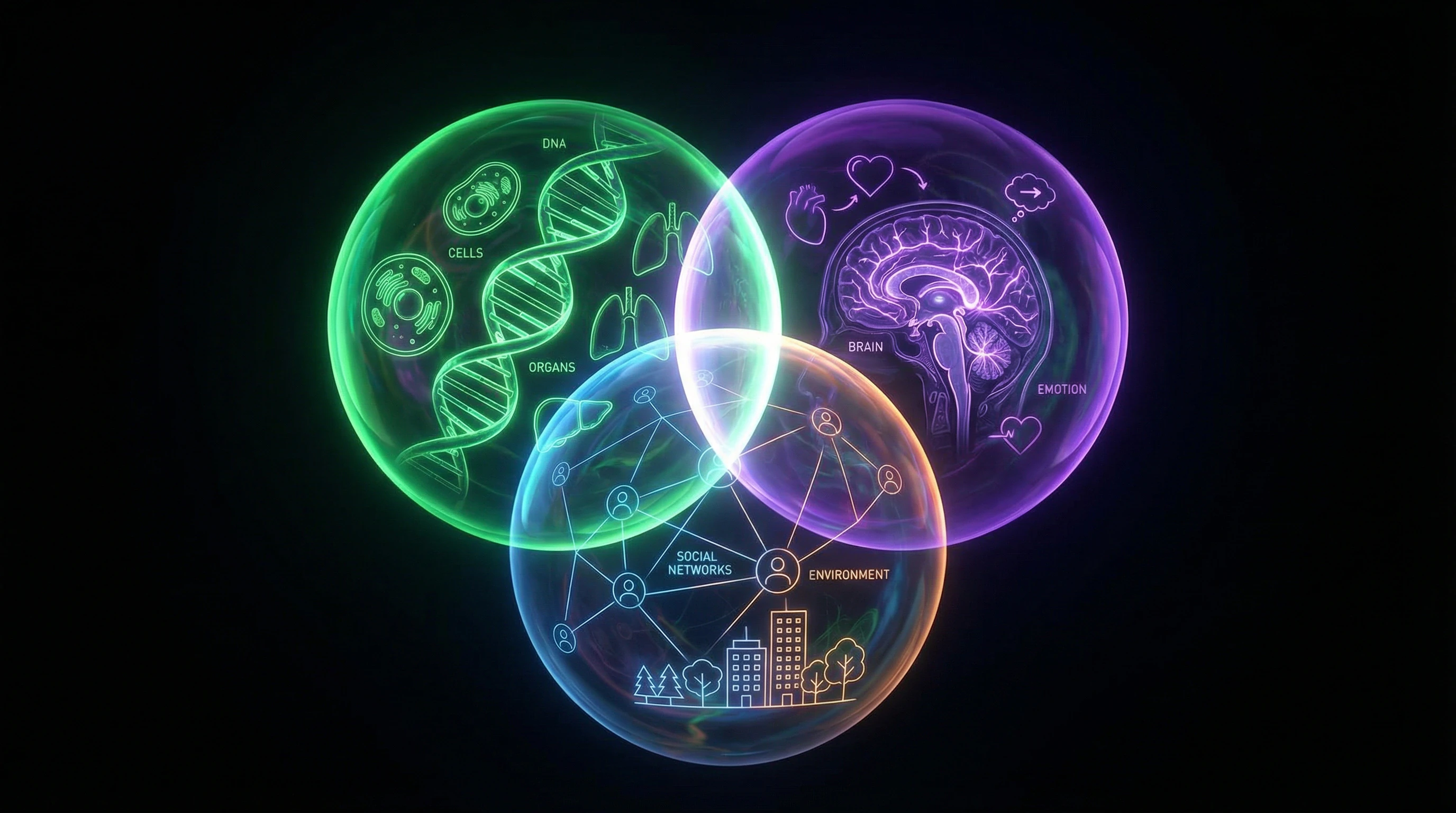
- Biopsychosocial Model
- Recognizes multiple factors in disease development: genetic predispositions, infectious agents, environmental toxins, physical trauma, nutritional factors, autoimmune processes, and psychological components. Psychosomatic medicine is taught in medical schools as part of the standard curriculum, though the quality and scope of training varies across countries.
Distinguishing Scientific Approach from Popular Misconceptions
The term "psychosomatic" is often distorted in media and popular literature. It's used to denote diseases that are supposedly "not important," imaginary conditions, malingering, or signs of mental disorder.
This distortion creates stigma and prevents adequate treatment of patients with real psychosomatic disorders.
The scientific consensus is clear: psychological factors influence physical health significantly, but not comprehensively. Psychosomatic diseases arise in the context of psychoemotional stress, but not as the sole cause.
| Popular Misconception | Scientific Position |
|---|---|
| "Thoughts cause disease" | Psychosomatic disorders are complex interactions between the epigenome, gut microbiota, and psychological factors |
| "If it's psychosomatic, it's not real" | Symptoms are real; psychological factors are one component of a multi-component system |
Five Major Myths About Psychosomatics — and Why They're Dangerous
Myth One: All Illnesses Have a Psychosomatic Origin
The claim that "psychosomatics explains everything" lacks scientific support. Diseases arise from multiple factors: genetic predisposition, infectious agents, environmental toxins, physical trauma, nutritional deficiencies, autoimmune processes.
Psychological factors are one component, not a universal explanation. Bone fractures, infections, genetic disorders, and cancer have organic causes without a psychological component in their etiology.
- Psychological factors influence coping with illness and recovery, but are not causal.
- Spreading the myth of all-encompassing psychosomatics leads to delayed diagnosis of organic diseases.
- Refusing necessary medical treatment in favor of psychological explanations has serious consequences.
Myth Two: Psychosomatic Means Imaginary or Trivial
Research by Stone et al. (2004) documents systematic distortion of the term "psychosomatic" to mean malingering or "all in your head." Psychosomatic symptoms involve real physiological changes: elevated blood pressure, immune system alterations, inflammatory responses, hormonal shifts.
Patients with irritable bowel syndrome, tension migraines, or chronic pain experience genuine physical suffering, not imagined symptoms.
Stigmatizing psychosomatic disorders as "not real" leads to inadequate treatment and diminished quality of life. Wortman et al. (2023) demonstrate the effectiveness of psychosomatic therapy for patients with persistent somatic symptoms: acknowledging the psychological component doesn't deny the reality of physical manifestations, but opens additional therapeutic possibilities.
Myth Three: Positive Thinking Cures Cancer and Other Serious Diseases
The idea that "right thoughts" can cure cancer or other serious diseases is not only scientifically unfounded but ethically problematic. It places blame on patients for their illness and creates false hope, distracting from evidence-based medicine.
Psychological factors may influence quality of life, treatment adherence, and possibly some aspects of prognosis, but don't replace specific therapy. Scientific data show that stress management and psychological support improve well-being in cancer patients, but don't demonstrate direct impact on survival when controlling for other factors.
Spreading the myth of "healing through thoughts" leads to refusal of chemotherapy, surgery, or radiation therapy in favor of "positive attitude," which has fatal consequences.
What Research Actually Shows — The Evidence Base for Psychosomatics
Systematic Reviews on the Role of Psychological Factors
Hüsing et al. (2023) established methodology for analyzing psychological risk factors in medicine. Key finding: psychological factors are correlates and risk factors, not sole causes of disease.
Tatayeva et al. (2022) describe psychosomatic diseases as arising in the context of psycho-emotional stress — stress acts as a contextual factor, not a direct cause. Mostafavi Abdolmaleky et al. (2025) demonstrate complex interactions between epigenetic changes, gut microbiota, and psychological factors.
Psychosomatics is a multi-level system with feedback loops, not a linear chain of "stress → disease."
Mechanisms of Stress Influence on Physical Health
Confirmed mechanisms include immune system modulation through neuroendocrine pathways, hormonal shifts (cortisol, adrenaline under chronic stress), inflammatory responses (pro-inflammatory cytokines), and cardiovascular effects (blood pressure, heart rate). These mechanisms are real and measurable, but their influence is limited.
Maserrat et al. (2025) confirm the effectiveness of hypnotherapy for psychosomatic disorders through altered pain perception, reduced anxiety, and improved self-regulation.
- Irritable bowel syndrome — psychological intervention is effective, but not a universal solution.
- Tension headaches — psychological intervention is effective, but not a universal solution.
- Chronic pain — psychological intervention is effective, but not a universal solution.
- All diseases — psychological methods don't work universally.
The effectiveness of psychological methods is specific to certain conditions and doesn't extend universally to all diseases.
Conditions with Proven Psychosomatic Components
Scientific research confirms the role of psychological factors in the development and course of certain conditions, but this list is limited and specific. Psychosomatic conditions arise against a background of psychoemotional stress, but not as the sole cause.
The distinction between conditions with proven psychosomatic components and speculative claims that "everything is from nerves" is critical for medical literacy.
Functional Gastrointestinal Disorders
Irritable bowel syndrome (IBS) is a classic example of a psychosomatic disorder with a robust evidence base. Stress and anxiety amplify symptoms through the brain-gut axis, altering motility, visceral sensitivity, and inflammatory processes.
However, even with IBS, psychological factors are only one component of pathogenesis alongside genetic predisposition, microbiome changes, and dietary triggers.
| Condition | Psychosomatic Component | Requires Organic Diagnosis |
|---|---|---|
| Functional dyspepsia | Stress, anxiety amplify symptoms | Rule out H. pylori, hiatal hernia |
| GERD | Psychological interventions improve outcomes | Organic causes require treatment regardless of psychological status |
Chronic Pain Syndromes
Tension headaches and migraines have an established connection with psychological factors, especially stress and anxiety. Chronic stress increases muscle tension, alters pain thresholds, and activates neuroinflammatory pathways.
The presence of a psychological component does not mean the pain is "imaginary"—psychosomatic symptoms represent real physiological changes requiring serious medical attention.
Fibromyalgia and chronic nonspecific back pain are conditions where the psychosomatic component is particularly significant. Psychological interventions (including hypnotherapy) modulate pain perception and improve self-regulation, but this does not eliminate the need for a comprehensive approach.
Cardiovascular Conditions
Arterial hypertension and ischemic heart disease have multifactorial etiology, where psychological factors play a proven but limited role. Chronic stress elevates cortisol and catecholamine levels, contributing to endothelial dysfunction, inflammation, and atherosclerosis.
Anxiety disorders and depression increase the risk of cardiovascular events through behavioral mechanisms (smoking, low physical activity) and direct physiological pathways (sympathetic nervous system activation, impaired heart rate variability).
- Rule out organic pathology before psychosomatic interpretation
- Premature psychologization can lead to missing serious conditions.
- Apply the biopsychosocial model
- Simultaneous assessment of biological, psychological, and social factors ensures diagnostic completeness.
Functional cardiac syndromes (noncardiac chest pain, Da Costa syndrome) demonstrate a pronounced psychosomatic component but require thorough differential diagnosis.
Checklist for Evaluating Psychosomatic Claims
Critical assessment of psychosomatic information protects against manipulation and pseudoscientific concepts. Scientific literacy requires the ability to distinguish evidence-based claims from speculation.
Stone et al. (2004) document systematic misuse of the term "psychosomatic" in media, where it's used to denote imaginary illnesses, malingering, or signs of mental disorder.
Red Flags of Unreliable Information
Absolutist statements are the primary indicator of an unscientific approach. Claims like "psychosomatics explains everything," "all diseases come from nerves," "if doctors understood psychosomatics, they'd be healthy" contradict the scientific consensus on the multifactorial nature of disease.
Hüsing et al. (2023) emphasize that psychological factors are "correlates and risk factors," not universal causes of all pathologies.
- Absence of peer-reviewed research citations, reliance on anecdotes. Low source quality; claims cannot be verified.
- Promises of universal healing through psychological work without medical examination. May lead to refusal of necessary treatment for organic diseases.
- Stigmatization of patients: symptoms are "imaginary" or "from character weakness." Contradicts modern understanding of psychosomatic disorders as real physiological conditions.
Green Flags of Evidence-Based Sources
Recognition of disease multifactoriality characterizes quality sources. Tatayeva et al. (2022) describe psychosomatic diseases as arising "against a background of psycho-emotional stress," but don't reduce them to a single psychological cause.
Mostafavi Abdolmaleky et al. (2025) demonstrate integration of epigenetic, microbiological, and psychological factors, reflecting the complexity of actual pathogenetic mechanisms.
The biopsychosocial model instead of psychological reductionism is a marker of a source's scientific maturity. Quality information acknowledges the simultaneous influence of biological (genetics, infections, trauma), psychological (stress, anxiety, depression), and social (economic status, social support, access to healthcare) factors.
References to systematic reviews and meta-analyses from peer-reviewed journals, acknowledgment of limitations of the psychosomatic approach, and integration with conventional medicine (rather than opposition to it) are reliable markers of an evidence-based approach.
Evidence-Based Treatment of Psychosomatic Disorders
Effective treatment of psychosomatic disorders requires integration of psychological and medical approaches. Psychosomatic therapy helps patients with persistent somatic symptoms, but effectiveness is specific to certain conditions and not universal.
It is critically important to avoid both psychological reductionism (ignoring organic causes) and biological reductionism (ignoring psychological factors).
Psychosomatic Therapy and Its Effectiveness
Cognitive-behavioral therapy (CBT) demonstrates the strongest evidence base for functional disorders. It improves functional outcomes and quality of life through changing dysfunctional illness beliefs, reducing catastrophizing, and improving coping strategies.
CBT is effective for irritable bowel syndrome, tension headaches, chronic pain, and functional neurological disorders. Hypnotherapy shows results for conditions with a prominent pain perception component, modulating anterior cingulate cortex activity and altering pain signal processing.
- CBT: restructuring beliefs, reducing catastrophizing → IBS, headaches, chronic pain, functional neurological disorders
- Hypnotherapy: modulation of cortical pain processing, altering emotional response → disorders with prominent pain perception component
- Stress management: reducing sympathetic nervous system activation → psychosomatic disorders with stress triggers
Psychological interventions are effective as a component of comprehensive treatment, but do not replace medical diagnosis and treatment of organic diseases.
Integrative Approach: The Biopsychosocial Model
The biopsychosocial model represents the current standard for understanding and treating psychosomatic disorders. It demonstrates the interaction of epigenetic mechanisms, gut microbiota, and psychological factors.
The integrative approach avoids the false dichotomy of "organic vs psychological," recognizing that most diseases have multiple interacting causes.
Effective treatment requires simultaneous intervention at three levels: biological factors (pharmacological therapy, microbiome correction), psychological (CBT, hypnotherapy, stress management), and social (social support, workplace modifications, economic stability).
Clinical practice requires interdisciplinary collaboration among physicians, psychologists, physical therapists, and social workers. Standardized methods for measuring psychological risk factors and longitudinal studies remain necessary for optimizing treatment outcomes in psychosomatic disorders.

Knowledge Access Protocol
FAQ
Frequently Asked Questions
Psychosomatics is a branch of medicine that studies the influence of psychological factors on physical health. It refers to real bodily symptoms that arise or intensify due to stress, anxiety, or emotional experiences. It's important to understand: psychosomatic illnesses are not imaginary, but they're also not the sole cause of all diseases (Stone et al., 2004).
No, this is a widespread myth without scientific basis. Diseases have multiple causes: genetics, infections, injuries, environment, nutrition, and psychological factors as one component. Research shows that stress affects health, but doesn't explain everything (Hüsing et al., 2023).
Psychosomatic symptoms are absolutely real and not consciously controlled, unlike malingering. The patient genuinely experiences pain, nausea, or other manifestations that can be objectively documented. Confusion arises from incorrect use of the term in media (Stone et al., 2004).
Proven psychosomatic components exist in irritable bowel syndrome, tension migraines, certain cardiovascular conditions, and chronic pain syndromes. This doesn't mean psychology is the only cause, but it significantly affects the course and exacerbations. Treatment requires a comprehensive approach (Tatayeva et al., 2022).
There is no convincing scientific evidence that positive thinking cures oncological diseases. Psychological support improves quality of life and helps cope with treatment, but doesn't replace medical therapy. Claims to the contrary are a dangerous misconception that can lead to refusal of effective treatment.
Chronic stress activates hormonal systems (cortisol, adrenaline), which affects immunity, digestion, the cardiovascular system, and inflammatory processes. Modern research shows connections between stress, epigenetics, and gut microbiota. This is one mechanism of psychosomatic manifestations (Mostafavi Abdolmaleky et al., 2025).
Red flags: claims that "all diseases are from psychology," promises of miraculous healing, absence of research references, calls to abandon doctors. Reliable sources point to the multifactorial nature of diseases, cite peer-reviewed research, and recommend a comprehensive approach (Stone et al., 2004).
This is a modern scientific approach that views health as the result of interaction between biological, psychological, and social factors. The model acknowledges the role of the psyche but doesn't absolutize it, considering genetics, physiology, environment, and lifestyle. This is precisely the approach used in evidence-based medicine (Hüsing et al., 2023).
Yes, psychosomatic therapy shows effectiveness for persistent somatic symptoms. Research confirms that cognitive-behavioral therapy, hypnotherapy, and other methods reduce symptoms and improve quality of life. An integrative approach together with medical treatment is important (Wortman et al., 2023; Maserrat et al., 2025).
Knowledge about psychosomatics doesn't provide immunity to diseases, because illnesses have multiple causes independent of awareness. Doctors are subject to the same genetic, infectious, environmental, and other risk factors as all people. Claims to the contrary are an example of magical thinking.
Absolutely not — psychosomatic symptoms require serious attention and treatment. They cause real suffering and can lead to complications without proper care. Medical evaluation is necessary to rule out organic causes, followed by comprehensive therapy (Wortman et al., 2023).
You cannot distinguish them on your own — medical examination is required. A physician rules out organic causes through lab tests, diagnostic imaging, and evaluates psychological factors. Psychosomatic diagnosis is made only after excluding other causes, not as a substitute for thorough evaluation (Stone et al., 2004).
Research shows a connection between childhood psychological trauma and increased risk of certain diseases in adulthood. Mechanisms include chronic stress, changes in the neuroendocrine system, and behavioral factors. However, this is one of many risk factors, not a fatal predetermination (Hüsing et al., 2023).
This is a modern term for physical symptoms that cannot be fully explained by organic pathology and where psychological factors play a role in their perception. It includes chronic pain, fatigue, and functional disorders. The term replaces outdated labels and reduces stigmatization (Wortman et al., 2023).
Current research reveals connections between psychological state, gut microbiota, and physical health through the gut-brain axis. Stress affects microbiota composition, which can amplify inflammation and symptoms. This is an active research area with promising therapeutic approaches (Mostafavi Abdolmaleky et al., 2025).
Prognosis depends on the specific condition, symptom duration, and comprehensiveness of approach. Many patients achieve significant improvement or complete recovery with a combination of psychotherapy, medication, and lifestyle changes. The key is early diagnosis and adequate therapy (Wortman et al., 2023).