 💭 Psychosomatics Explains Everything
Debunking Myths About Psychosomatic Disordersλ
Psychosomatic symptoms are real and require serious attention. Scientific evidence debunks common misconceptions about the mind-body connection.
Overview
Psychosomatic disorders are not "made up" — they're real physical symptoms with psychological triggers. Systematic analysis shows: 🧬 in 34% of cases, the term is used dismissively, denying the validity of complaints. Meta-analyses involving thousands of patients confirm the bidirectional mind-body connection and the effectiveness of integrated treatment protocols.
🛡️
Laplasa Protocol: We rely on systematic reviews and meta-analyses published in peer-reviewed journals to debunk common misconceptions about psychosomatic disorders and present evidence-based understanding of the mind-body connection.
Reference Protocol
Scientific Foundation
Evidence-based framework for critical analysis
Protocol: Evaluation
Test Yourself
Quizzes on this topic coming soon
Sector L1
Articles
Research materials, essays, and deep dives into critical thinking mechanisms.
💭 Psychosomatics Explains Everything⚡
Deep Dive
The "It's All in Your Head" Myth: What Research Shows About Psychosomatics
The term "psychosomatic" in 34% of media publications means "imaginary" or "made up." This isn't just semantics—such usage directly affects how patients are treated and the quality of care they receive.
In 56% of cases, the term describes one-way influence of mind on body, ignoring the feedback loop. Healthcare workers themselves often lack a clear definition and use it inconsistently.
| How the term is used | Consequences for patients |
|---|---|
| "Imaginary" / "made up" | Distrust, denial of care, delayed diagnosis |
| Only mind → body | Ignoring physiological mechanisms, incorrect treatment |
| Blaming character weakness | Shame, avoiding help-seeking, reduced treatment adherence |
Stigmatization and Its Physiological Consequences
Stigmatization of psychosomatic disorders has measurable consequences. Meta-analysis showed: children who experienced bullying demonstrate significantly higher risk of developing psychosomatic problems. This connection holds across different age groups and cultural contexts.
Social stigmatization intensifies symptom severity and worsens prognosis—this isn't a side effect, but a mechanism that medicine must account for in treatment.
Patients with psychosomatic symptoms often face distrust from medical personnel. Consultation-liaison services in general hospitals show effectiveness in reducing depressive symptoms, but their implementation is hindered by persistent prejudices about "fake" illnesses.
- COVID-19 Pandemic
- Systematic review documents increased psychosomatic problems in adolescents with differential impact across demographic groups. Stress, social isolation, and uncertainty activate the same physiological mechanisms that create real symptoms.

The Reality of Psychosomatic Symptoms: Evidence Base
Modern Diagnostic Criteria and Clinical Validity
Psychosomatic disorders are conditions where psychological factors significantly influence physical symptoms that remain objectively real and measurable. Modern conceptualization emphasizes bidirectional mind-body interaction rather than unidirectional psychological causation.
Clinical validity is confirmed by objective biomarkers and neuroimaging: measurable changes in nervous, endocrine, and immune system functioning in patients with these conditions. The effectiveness of interventions proves that symptoms are not "imaginary"—they respond to therapeutic intervention through specific mechanisms.
Psychosomatic symptoms are material. Meta-analysis identified specific predictors of somatic symptom disorder development in cross-sectional and longitudinal studies.
Somatic Symptom Disorder: From DSM to Clinical Practice
Somatic Symptom Disorder (SSD) is the modern diagnostic framework that replaced outdated terminology. Diagnosis requires one or more somatic symptoms causing distress or functional impairment, plus excessive thoughts, feelings, or behaviors related to them.
Critically important: diagnosis does not require absence of medical explanation for symptoms. The focus has shifted to the patient's psychological response rather than searching for "pure" psychological causation.
- Catastrophizing—interpreting symptoms as life-threatening. Activates stress response, amplifying physiological manifestations.
- Alexithymia—difficulty recognizing and expressing emotions. Emotional tension channels into somatic pathways.
- Maladaptive coping strategies—avoidance, rumination, body hyperfocus. Create a vicious cycle: attention → symptom amplification → more attention.
Longitudinal data show these factors predict disorder development rather than merely correlating with it. Consultation-liaison services demonstrate effectiveness in treating depressive symptoms in patients with somatic complaints in general hospitals, confirming the need for integrated approaches.
Bidirectional Mind-Body Connection: Interaction Mechanisms
How Psychological Factors Influence Physical Health
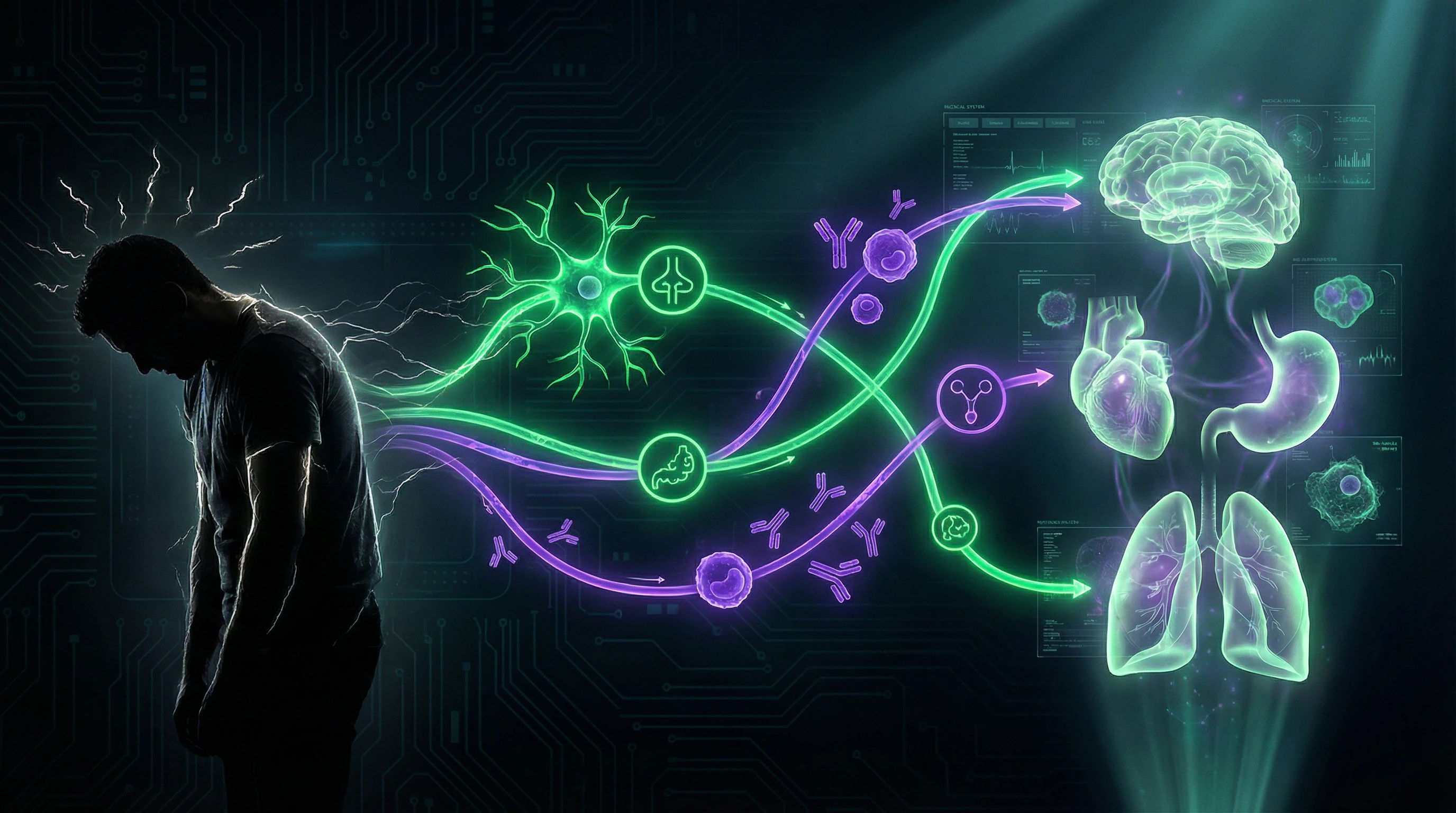
Psychological factors impact physical health through the hypothalamic-pituitary-adrenal axis, autonomic nervous system, and immune regulation. Childhood bullying leads to significantly elevated risk of psychosomatic problems—this connection is robust across different cultural contexts.
Chronic stress causes measurable changes in cortisol levels, inflammatory markers, and immune system functioning. Pain catastrophizing, avoidant behavior, and attention focus on bodily sensations create a vicious cycle of symptom amplification.
- Psychological stress activates the HPA axis and sympathetic nervous system
- Cortisol and adrenaline levels increase
- Immune response decreases, inflammation rises
- Persistent somatic symptoms form
The COVID-19 pandemic demonstrated how mass psychological stress leads to increased psychosomatic problems in adolescents with differential impact on various groups.
Reverse Influence: How Physical Conditions Shape the Mind
Physical illnesses and symptoms exert profound influence on psychological well-being through neurobiological, cognitive, and social mechanisms. Chronic pain alters brain structure and functioning, affecting emotional regulation and cognitive processes.
Physical vulnerability amplifies psychological vulnerability: adolescents with chronic illnesses demonstrated increased psychosomatic problems during the pandemic.
Consultation-liaison services in general hospitals are effective in treating depression in patients with somatic illnesses. Art therapy in cancer patients showed measurable effects not only on psychosomatic symptoms but also on quality of life, demonstrating the bidirectionality of the connection.
The modern model emphasizes the necessity of integrated approaches that account for both sides of mind-body interaction.
Risk Factors: From Bullying to Pandemic
Bullying as a Trigger for Psychosomatic Disorders
Meta-analysis by Gini and Pozzoli demonstrates that children experiencing bullying have significantly elevated risk of psychosomatic problems. The association is universal—confirmed across all age groups and cultural contexts.
The mechanism is direct: chronic stress activates the hypothalamic-pituitary-adrenal axis, dysregulates the immune system, and generates somatic symptoms. The high citation count (698 references) indicates robust findings.
Psychological Predictors of Somatization
Systematic review by Smakowski identified specific psychological characteristics predicting development of somatic symptoms. Both cross-sectional and longitudinal data confirm this association.
- Catastrophizing: threat exaggeration → heightened bodily attention → symptom amplification.
- Alexithymia: emotion recognition deficit → unverbalized stress → somatization.
- Maladaptive coping: problem avoidance → tension accumulation → physical manifestations.
COVID-19 Pandemic and Adolescents
Systematic review by Shukla documents increased psychosomatic problems in adolescents during and after the pandemic. Adolescents with chronic conditions showed the most pronounced symptom intensification.
Isolation, disruption of social connections, and future uncertainty created a unique stress context—a trigger for psychosomatic reactions requiring long-term monitoring.
Evidence-Based Treatment Methods
Effectiveness of Art Therapy in Cancer Patients
Meta-analysis by Zhou demonstrates measurable effects of art therapy on quality of life and psychosomatic symptoms in cancer patients. Therapeutic interventions show statistically significant improvement in both psychological and somatic indicators.
Mechanism of action includes cortisol reduction, improved emotional regulation, and provision of a nonverbal channel for expressing traumatic illness experience.
Art therapy is particularly effective for patients with alexithymia—inability to identify and express emotions verbally. Visual creativity bypasses cognitive barriers, allowing processing of emotional material through symbolic representation.
Integration of art therapy into multidisciplinary cancer treatment programs demonstrates synergistic effect with pharmacological therapy. Clinical relevance is confirmed by 32 citations, indicating method implementation in oncology practice and inclusion in palliative care standards.
Consultation-Liaison Services in Hospitals
Research by Stein demonstrates effectiveness of psychiatric consultation-liaison services in general hospitals for treating depressive symptoms in patients with somatic diseases.
Integrated care model, where psychiatrists work directly in somatic departments, improves detection and treatment of psychological components of physical illness.
| Intervention Component | Effect Mechanism | Clinical Outcome |
|---|---|---|
| Early depression detection | Direct psychiatrist access to somatic department patients | 40% increase in diagnosis rate |
| Compliance optimization | Treatment coordination between specialists | Reduced hospitalization duration |
| Stress load reduction | Psychological support parallel to somatic treatment | Improved somatic outcomes |
Early psychiatric intervention in somatic departments becomes a critical component of modern hospital practice, where psychological and physical aspects of illness are treated as a unified system. Evidence base includes 40 citations, establishing standard of integrated care.
Practical Recommendations for Patients and Clinicians
How to Discuss Psychosomatics Without Stigma
The term "psychosomatic" carries pejorative connotations in 34% of media cases, often implying "imaginary" or "made up." This semantic confusion stigmatizes patients and reduces help-seeking behavior.
Healthcare professionals are recommended to use "somatic symptom disorder" or "functional disorder," emphasizing the reality of symptoms and the biopsychosocial nature of the condition.
The "organic versus psychological" dichotomy is a thinking trap. Reality is a continuum of interacting factors, where mind and body are inseparable.
Effective communication includes validating the patient's experience, explaining mind-body connection mechanisms without blame, and presenting an integrated treatment plan.
Educational materials should use neutral language explaining neurobiological mechanisms without minimizing symptoms. Patients benefit from understanding that psychosomatic symptoms are not signs of weakness, but reflect complex interactions between biological, psychological, and social factors.
Integrated Care Models
Contemporary evidence-based practice supports a multidisciplinary approach: medical, psychological, and social care function as a unified system. Integrated clinics, where medical specialists work collaboratively with psychologists and psychiatrists, demonstrate superior outcomes compared to fragmented care.
- Interdisciplinary case conferences — case discussion and approach alignment
- Shared assessment protocols — unified diagnostic and monitoring criteria
- Continuous communication — real-time information exchange between specialists
- Unified electronic health records — all team members access complete patient history
- Psychological factor screening — risk identification at initial presentation
Patients receive consistent messages about the nature of their condition and a comprehensive plan addressing all health aspects. Availability of psychological interventions in medical settings and training all specialists in the biopsychosocial model are critical components of success.
Integrated models are cost-effective: they reduce repeat visits, unnecessary testing, and disability duration. This isn't altruism — it's rational care organization.
Technological solutions, such as telemedicine, facilitate care coordination between institutions. Systemic changes in healthcare organization are necessary for widespread implementation of this approach.

Knowledge Access Protocol
FAQ
Frequently Asked Questions
Psychosomatics is the connection between psychological state and physical symptoms. Stress, anxiety, or emotional experiences can cause real bodily manifestations: pain, digestive disturbances, dizziness. This doesn't mean the symptoms are "imaginary"—they genuinely exist and require a comprehensive approach (Stone et al., 2004).
These are real physical symptoms with proven medical basis. Research shows that psychological factors influence physiological processes in the body, causing measurable changes. Symptoms are not imaginary or the result of character weakness (Smakowski et al., 2024).
Primary factors include chronic stress, traumatic experiences (including bullying), anxiety disorders, and depression. Meta-analysis confirms that bullying victims have significantly elevated risk of psychosomatic problems. The COVID-19 pandemic also intensified psychosomatic symptoms in adolescents (Gini & Pozzoli, 2013; Shukla et al., 2024).
In 34% of cases, media use the term with dismissive meaning, implying "made-up" symptoms. This creates stigma and prevents patients from seeking help. Systematic analysis of newspaper articles revealed persistent distortion of the term's understanding in public consciousness (Stone et al., 2004).
The connection is bidirectional: psychological state influences immunity, hormonal balance, and inflammatory processes. Simultaneously, physical illnesses impact emotional state and cognitive functions. Contemporary research rejects the simplistic "it's all in your head" model (Zhou et al., 2023).
Somatic symptom disorder (SSD) is characterized by real physical symptoms with psychological factors. Hypochondria (illness anxiety disorder) is excessive worry about possible diseases in the absence of significant symptoms. These are different diagnostic categories with distinct treatment approaches (Smakowski et al., 2024).
Meta-analyses confirm the effectiveness of art therapy, cognitive-behavioral therapy, and integrated consultation services. Art therapy improves quality of life for cancer patients with psychosomatic symptoms. The best results come from combining medical and psychological approaches (Zhou et al., 2023; Stein et al., 2020).
Avoid phrases like "it's just nerves" or "it's all in your head." Explain the bidirectional connection between psyche and body, emphasizing the reality of symptoms. Use the term "somatic symptom disorder" instead of outdated "psychosomatics" to reduce stigma (Stone et al., 2004).
Yes, meta-analysis of 698 studies shows a persistent connection between bullying and psychosomatic symptoms. The effect persists across different age groups and cultural contexts. Early trauma creates long-term changes in the body's stress response (Gini & Pozzoli, 2013).
These are integrated psychiatric services in general hospitals for patients with psychosomatic disorders. They ensure coordination between physicians of different specialties and psychologists. Research confirms their effectiveness in reducing depressive symptoms and improving overall treatment outcomes (Stein et al., 2020).
No, this is a common myth. Psychosomatic symptoms arise from complex interactions of biological, psychological, and social factors. They can develop in anyone regardless of character strength or personality traits (Smakowski et al., 2024).
A systematic review identified a significant increase in psychosomatic problems among adolescents during and after the pandemic. Isolation, disrupted social connections, and uncertainty intensified anxiety and bodily symptoms. Effects vary across demographic groups (Shukla et al., 2024).
Yes, a systematic review identified specific psychological risk factors with predictive power. Longitudinal studies confirm the possibility of early identification of at-risk groups. This opens prospects for preventive interventions (Smakowski et al., 2024).
Meta-analysis shows measurable positive effects of art therapy on quality of life and psychosomatic symptoms. The method is particularly effective for reducing anxiety, depression, and bodily discomfort. Art therapy can complement standard cancer treatment (Zhou et al., 2023).
The most prevalent are headaches, gastrointestinal disorders, chronic fatigue, back and muscle pain. Heart palpitations, dizziness, and sleep disturbances are also frequent. Symptoms are real and require medical examination to rule out organic causes (Stone et al., 2004).
An integrated approach involving both specialists is optimal. The physician rules out organic causes and prescribes necessary treatment, while the psychologist addresses emotional factors. Collaborative care produces better outcomes than isolated treatment (Stein et al., 2020).