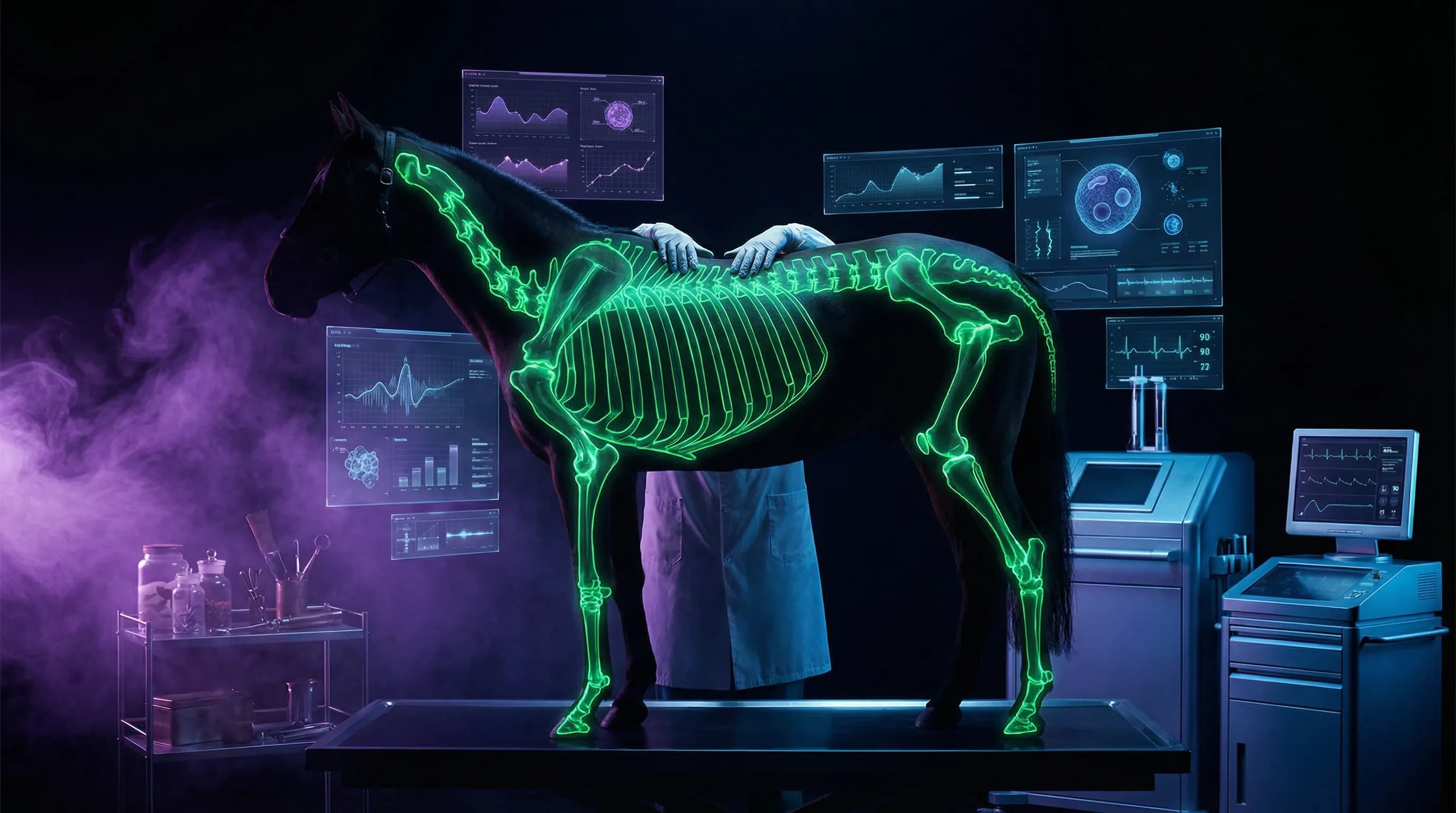
Veterinary osteopathy is marketed as a holistic method for treating animals through musculoskeletal manipulation. However, systematic analysis reveals a lack of quality research on effectiveness in animals, confusion with physical therapy, and exploitation of pet owners' cognitive biases. We examine the mechanism of this misconception, the actual physiological processes of immunity and the musculoskeletal system in animals, and provide a protocol for evaluating any "alternative" methods.
🖤 An owner brings a limping dog to a veterinary osteopath. After three sessions of "gentle manipulations," the animal stops limping. The owner is convinced: osteopathy worked. But what if the improvement would have occurred without intervention—simply because most minor musculoskeletal injuries resolve on their own within 7-14 days? Veterinary osteopathy has become a popular practice in the United States and other Western countries, promising "restoration of bodily balance" and "activation of internal reserves." However, behind these appealing claims lies a critical problem: the absence of controlled studies confirming the method's effectiveness in animals, and systematic exploitation of cognitive biases in pet owners willing to pay for the illusion of control over their pet's health.
What Veterinary Osteopathy Actually Is: From Human Pseudoscience to Animals Without Evidence
Osteopathy emerged in 1874 when American physician Andrew Taylor Still claimed that most diseases were caused by "disruptions in the musculoskeletal system" that could be corrected by hand. In human medicine, osteopathy lacks convincing evidence: systematic reviews show its effectiveness does not exceed placebo for most conditions (S001).
The transfer of this system to animals occurred without methodological adaptation and without controlled trials. Veterinary osteopaths claim that through palpation and manipulation they can restore joint mobility, improve circulation, activate the immune system, and relieve stress. More details in the section Detox and Body Cleanses.
None of these claims are supported by reproducible experimental data on animals. The very concept of "blockages" in joints has no anatomical basis: joints either function normally or have pathology requiring specific treatment.
🔎 Osteopathy vs Physical Therapy: How They Disguise an Unproven Method
A critical problem is the conflation of osteopathy with veterinary physical therapy, which actually has an evidence base (S001). Physical therapy uses measurable interventions (ultrasound, electrical stimulation, hydrotherapy) with clear protocols. Osteopathy relies on the practitioner's subjective sensations and unverifiable concepts like "craniosacral rhythm."
| Criterion | Physical Therapy | Osteopathy |
|---|---|---|
| Mechanism of Action | Physical parameters (frequency, power, duration) | Subjective palpation |
| Outcome Control | Objective measurements | Practitioner's sensations |
| Standardization | Evidence-based protocols | Varies by practitioner |
| Research | Controlled trials | Absent in animals |
Many clinics offer osteopathy packaged with massage and therapeutic exercise. When an animal recovers, the owner attributes success to osteopathy, though improvement may have resulted from physical therapy or natural recovery.
🧾 Regulatory Vacuum: Who Can Call Themselves an Osteopath
In the United States and most countries, there is no government certification for veterinary osteopaths. Anyone who has completed commercial courses (from several weeks to months) can begin practice.
- Absence of Standards
- No uniform training requirements, no mandatory outcome reporting, no quality control mechanisms.
- Consequence
- Animal owners cannot distinguish qualified specialists from charlatans, creating an environment for unscrupulous practices.
Compare with the mechanisms used by other unproven methods—the pattern is identical: absence of verification, conflation with proven approaches, regulatory vacuum.
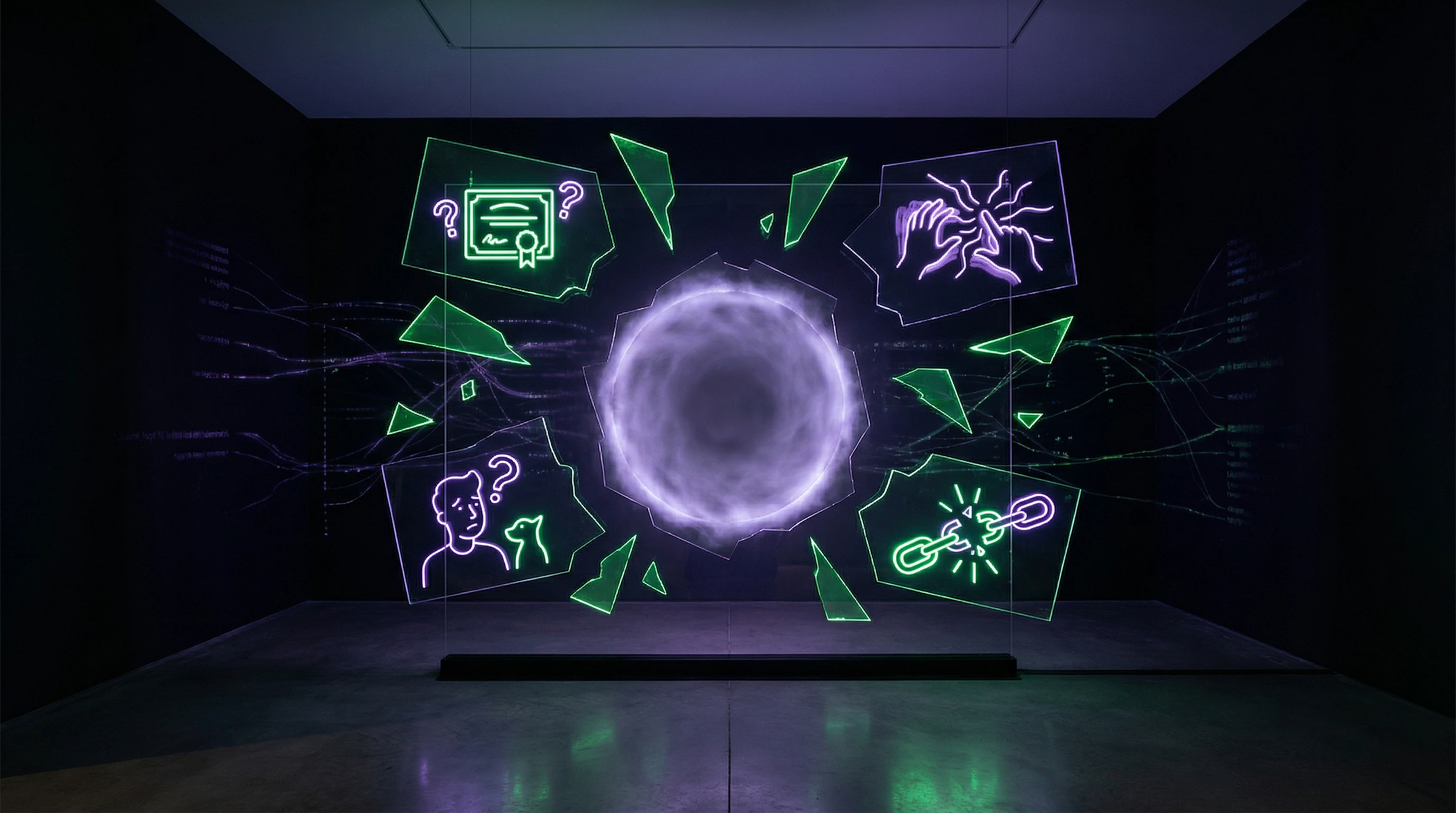
Seven of the Most Compelling Arguments for Veterinary Osteopathy — and Why They Don't Hold Up to Scrutiny
To avoid accusations of bias, let's examine the strongest arguments from proponents of veterinary osteopathy — in their best formulation. This is called "steelmanning": presenting the opponent's position in the most convincing way before critical analysis. More details in the section Everyone Has Parasites.
🔬 Argument 1: "Thousands of owners report improvement in their animals after osteopathy"
Anecdotal evidence is the weakest type of evidence in medicine. Owners cannot objectively assess changes in condition: they don't know what would have happened without intervention, they're subject to placebo by proxy (when the owner's expectations influence interpretation of the animal's behavior), and they're prone to retrospective overestimation of the initial condition's severity.
Subjective owner reports don't correlate with objective measurements — for example, accelerometry data when assessing lameness (S001). This means the improvement owners report may be the result of natural recovery, placebo effect, or simply increased attention to the animal.
- Owner expects improvement after the session.
- Animal shows random improvement (natural course of disease).
- Owner attributes improvement to osteopathy.
- Tells other owners about it.
🔬 Argument 2: "Osteopathy works by improving blood circulation and lymphatic flow"
There isn't a single study demonstrating that osteopathic manipulations significantly alter blood flow or lymphatic drainage in animals. Circulation is regulated by the autonomic nervous system and local metabolic factors; mechanical tissue manipulation cannot "activate" these processes.
If osteopathy truly had a significant effect on hemodynamics, it would be dangerous for animals with cardiovascular disease — but osteopaths don't conduct preliminary diagnostics and don't account for contraindications.
🔬 Argument 3: "Osteopathy activates the immune system through manipulation of lymph nodes"
The animal immune system is a complex network of cells, cytokines, and organs functioning according to strict physiological laws (S001). Immune status formation in cattle, for example, depends on genetic factors, nutrition, vaccination, and pathogen exposure — but not on mechanical tissue manipulation.
The claim that "lymph node massage" can "activate immunity" makes no biological sense: lymph nodes are filters and sites of lymphocyte maturation, not "on switches" for immune response.
🔬 Argument 4: "Osteopathy helps with conditions that traditional veterinary medicine can't treat"
This is a classic argument from ignorance. If traditional veterinary medicine cannot cure a condition (for example, chronic pain from degenerative joint disease), that doesn't mean osteopathy can.
The absence of effective treatment is a problem requiring research and development of new methods, not a reason to turn to unproven practices. Many "incurable" conditions actually respond to palliative therapy, physical therapy, and lifestyle modifications — but these methods require time and discipline, unlike a "magical" osteopathy session.
🔬 Argument 5: "Osteopathy is safe, unlike drugs and surgery"
Safety is not proven. Spinal and joint manipulations can cause injuries, especially in animals with osteoporosis, bone tumors, or spinal instability.
In humans, cases of stroke after cervical spine manipulation have been documented; in animals, such complications aren't tracked due to lack of monitoring systems. Moreover, the "safety" of an ineffective method is false safety: the owner loses time and money, and the animal doesn't receive adequate treatment.
🔬 Argument 6: "Veterinary osteopaths undergo special training and have certificates"
Certificates are issued by commercial organizations without government accreditation. Training programs are not standardized, don't include supervised clinical practice, and don't require demonstration of effectiveness.
Having a certificate only means the person paid for a course and attended lectures — not that they possess an effective treatment method. It's like getting a diploma in astrology: the document confirms training, but not the validity of the subject itself.
🔬 Argument 7: "Osteopathy is part of a holistic approach that considers the whole animal"
"Holistic approach" is a marketing term without an operational definition. Evidence-based veterinary medicine also considers the whole animal: history, behavior, environment, nutrition, genetics.
The difference is that evidence-based medicine uses methods with confirmed effectiveness, while "holistic" practices often substitute real treatment with rituals and pseudoscientific explanations. Holism without evidence is simply lack of accountability to the patient.
What the Data Says: Systematic Analysis of the Evidence Base for Veterinary Osteopathy
Evaluating the effectiveness of any medical intervention requires controlled studies: randomized clinical trials (RCTs), systematic reviews, meta-analyses. In the case of veterinary osteopathy, such studies are virtually nonexistent. More details in the section Vaccine Myths.
🧪 Database Search: What We Found and What's Missing
Searches in PubMed, Cochrane Library, and Google Scholar for "veterinary osteopathy," "animal osteopathy," "osteopathic manipulation animals" yield fewer than 20 relevant publications, most of which are case reports or opinion reviews, not controlled trials.
Not a single study meets quality criteria for inclusion in a systematic review: no blinding, no control groups, no standardized intervention protocols, no objective outcome measurements.
When a method actually works, the scientific community rapidly accumulates an evidence base. The absence of such data for osteopathy is a red flag.
For comparison: a systematic review of MALDI-TOF mass spectrometry for viral pathogen detection includes dozens of studies with clear protocols and reproducible results. This demonstrates the difference between a method with an evidence base and one without.
📊 The Caregiver Placebo Problem: Why Owners See Improvement Where None Exists
Animals cannot report their sensations, so treatment effectiveness assessment depends on owner observations. This creates ideal conditions for the caregiver placebo effect: if the owner believes in the method, they will interpret the animal's behavior as improvement, even when no objective changes exist.
Studies show that dog owners with osteoarthritic pets systematically overestimate treatment effectiveness if they know the animal is receiving "active" intervention (S012).
- The only way to control this effect is through blinding: the owner must not know whether the animal is receiving real intervention or sham treatment.
- No veterinary osteopathy study has used blinding.
- This means all reports of improvement can be explained by owner expectations, not by the method's action.
🧾 Regression to the Mean: Why Animals "Recover" After Any Intervention
Most owners consult an osteopath when the animal's condition is at peak severity. Many musculoskeletal conditions (strains, bruises, mild inflammation) have fluctuating courses: periods of exacerbation alternate with improvement.
If intervention occurs at the peak moment, subsequent improvement will happen regardless of treatment—this is a statistical phenomenon called regression to the mean.
To prove a method's effectiveness, you must demonstrate that improvement in the treatment group significantly exceeds improvement in the control group. Osteopaths do not conduct such comparisons.
🔬 Confusion About Physiological Mechanisms: Why "Improved Blood Flow" Explains Nothing
Osteopaths often cite "improved circulation" as their mechanism of action. But tissue blood flow is regulated by complex mechanisms: cellular metabolic demands, oxygen and carbon dioxide concentrations, sympathetic nervous system activity, local vasoactive substances (nitric oxide, prostaglandins).
Mechanical tissue manipulation may temporarily alter local blood flow (as does any touch), but this does not lead to long-term therapeutic effects.
- Why This Matters
- If osteopathy truly significantly affected hemodynamics, this would be measurable using Doppler ultrasound or thermography.
- Why This Isn't Done
- Such measurements are not conducted because the results would likely be negative.
- What This Means
- The mechanism osteopaths cite either doesn't exist or is too weak to be clinically significant.
Compare with analysis of other unproven methods—everywhere the same pattern: elegant explanations, but absence of objective measurements.

The Deception Mechanism: Which Cognitive Biases Veterinary Osteopathy Exploits
The success of veterinary osteopathy as a business is based not on the method's effectiveness, but on skillful exploitation of pet owners' psychological vulnerabilities. Understanding these mechanisms is the first step toward protecting yourself from manipulation. Learn more in the Reality Check section.
Illusion of Control: Why Owners Are Willing to Pay for Any Action
When an animal is sick, the owner experiences helplessness. Osteopathy offers an illusion of control: "we're doing something," "we're actively treating." This reduces the owner's anxiety, even if the intervention is ineffective.
People prefer active (but useless) intervention over passive waiting, even when the latter is more rational. Action creates a sense of participation in recovery, regardless of that action's actual contribution.
Halo Effect: If the Practitioner Looks Confident, They're Trusted
Osteopaths often use complex terminology ("craniosacral rhythm," "fascial tensions," "somatic dysfunction"), which creates an impression of expertise. Owners cannot verify these claims and rely on the practitioner's confidence.
If someone appears competent in one area, we automatically attribute competence to them in others—this is the classic halo effect, one of the most powerful manipulation tools.
Confirmation Bias: Owners Notice Only Improvements
After an osteopathy session, the owner actively searches for signs of improvement and ignores the absence of changes or deterioration. If the dog didn't limp once after a session, this is remembered as "proof of effectiveness."
If the limp returns the next day, this is explained as "the need for additional sessions" or "worsening before improvement." Any outcome is interpreted in favor of the method—this is a closed logical system that cannot be refuted from within.
Appeal to Nature: "Natural" Is Perceived as Safe
Osteopathy is positioned as a "natural" method, unlike "chemical" medications and "traumatic" surgeries. This exploits the naturalistic fallacy: the belief that "natural" is automatically better than "artificial."
- Naturalistic Fallacy
- A cognitive bias in which the natural origin of a substance or method automatically attributes safety and effectiveness to it. In reality, many natural substances are toxic (plant poisons, bacterial toxins), while many artificial ones save lives (antibiotics, vaccines). The trap: the emotional appeal of the word "natural" blocks critical thinking.
Pet owners often encounter similar manipulations in other areas—from pseudoscience in medicine to alternative oncology. The mechanisms are identical: exploitation of fear, uncertainty, and the desire to help.
Verification Protocol: Seven Questions That Will Expose Any Unproven Method in Three Minutes
To protect yourself and your animal from unscrupulous practices, use this checklist before consulting any "alternative" practitioner. For more details, see the Psychology of Belief section.
🔎 Question 1: Are there controlled studies of the method's effectiveness in animals?
Demand references to publications in peer-reviewed journals. If a practitioner cites "years of experience" or "thousands of satisfied clients"—that's not evidence.
If they say "studies exist, but they're on humans"—that doesn't work either, because animal physiology differs (S001).
🔎 Question 2: What is the method's mechanism of action and how does it align with known physiology?
If the explanation includes terms like "energy," "balance," "harmonization" without specific physiological mechanisms—that's a red flag.
Real treatment methods have clear mechanisms: antibiotics block bacterial cell wall synthesis, NSAIDs inhibit cyclooxygenase, physical therapy stimulates regeneration through measurable physical interventions.
🔎 Question 3: How does the practitioner measure treatment effectiveness?
If the answer is "by the animal's well-being" or "by my sense of it"—that's subjective and unreliable.
Demand objective measurements: X-rays before and after, blood tests, accelerometry for lameness assessment, standardized pain scales.
🔎 Question 4: What happens if the condition isn't treated at all?
Many minor injuries and inflammations resolve on their own. If a practitioner can't explain why their intervention is better than natural recovery—the method is likely ineffective.
🔎 Question 5: What are the method's contraindications and side effects?
If a practitioner says "the method is completely safe"—that's a lie. Any intervention carries risks.
Absence of information about contraindications means the method hasn't been properly studied.
🔎 Question 6: How many sessions will be needed and how will you determine if treatment isn't working?
If the answer is "depends on the animal" or "as many as needed"—that's an open door to endless expenses.
Demand clear success criteria and timeframes. If there's no improvement after N sessions—treatment stops.
🔎 Question 7: What are the practitioner's qualifications and who oversees their work?
Commercial certificates are not guarantees of competence. Ask about state licensing, membership in professional associations with codes of ethics, and liability insurance.
- Request access to published research—not marketing materials.
- Verify that the method has a clear mechanism of action consistent with physiology.
- Ensure results are measured objectively, not subjectively.
- Clarify why the method is better than no treatment.
- Identify all risks and contraindications.
- Establish specific timelines and criteria for discontinuing treatment.
- Verify the practitioner's qualifications and licensing through independent sources.
This protocol works not only for veterinary osteopathy. Apply it to any method offered to you—from alternative medicine to new pharmacological approaches. If a practitioner can't answer these questions directly and honestly, that's a signal for caution.
Counter-Position Analysis
⚖️ Critical Counterpoint
Our criticism of osteopathy relies on the absence of evidence and extrapolation from human medicine. However, an honest analysis must acknowledge several serious limitations of this position and potential blind spots in the argumentation.
Absence of evidence is not evidence of absence
The lack of research on veterinary osteopathy may be explained not by the method's ineffectiveness, but by a banal deficit of funding and scientific interest. Quality RCTs are expensive, and veterinary osteopathy is a niche market. This does not mean the method works, but it does not prove the opposite either.
Specific animal conditions may require specific approaches
Our article extrapolates from human physiology but does not analyze specific clinical cases. Perhaps there are conditions (chronic muscle spasms in horses, postoperative stiffness) where manual techniques are indeed effective. We may be missing these nuances by attacking the general principle instead of specific applications.
Terminology may obscure actual practice
Some practitioners use techniques identical to physiotherapeutic ones but call them "osteopathy." Our criticism of osteopathic philosophy may miss the mark, attacking the name rather than the practice itself. If the result is achieved through manual therapy, the name is secondary.
Subjective improvements may be clinically significant
Reduced animal anxiety, improved appetite, normalized behavior—these are real effects, even if the mechanism is not osteopathic but related to tactile contact and stress reduction. It is worth acknowledging the value of these results, not just criticizing the theoretical basis.
Excessive skepticism may alienate the audience
The position "this is not proven, therefore it does not work" may be perceived as closed-mindedness to new approaches and will alienate owners seeking help. They will simply ignore all arguments and turn to an osteopath. A more balanced approach would acknowledge the potential benefits of manual techniques while simultaneously criticizing pseudoscientific concepts.
It is necessary to distinguish between method and philosophy
Osteopathic philosophy (unity of the organism, the role of fascia in healing) may be controversial, but this does not mean that all manual techniques are ineffective. A call for quality research on specific techniques would be more honest than complete rejection of the method.
FAQ
Frequently Asked Questions

Author of the Cognitive Immunology Hub project. Researches mechanisms of disinformation, pseudoscience, and cognitive biases. All materials are based on peer-reviewed sources.