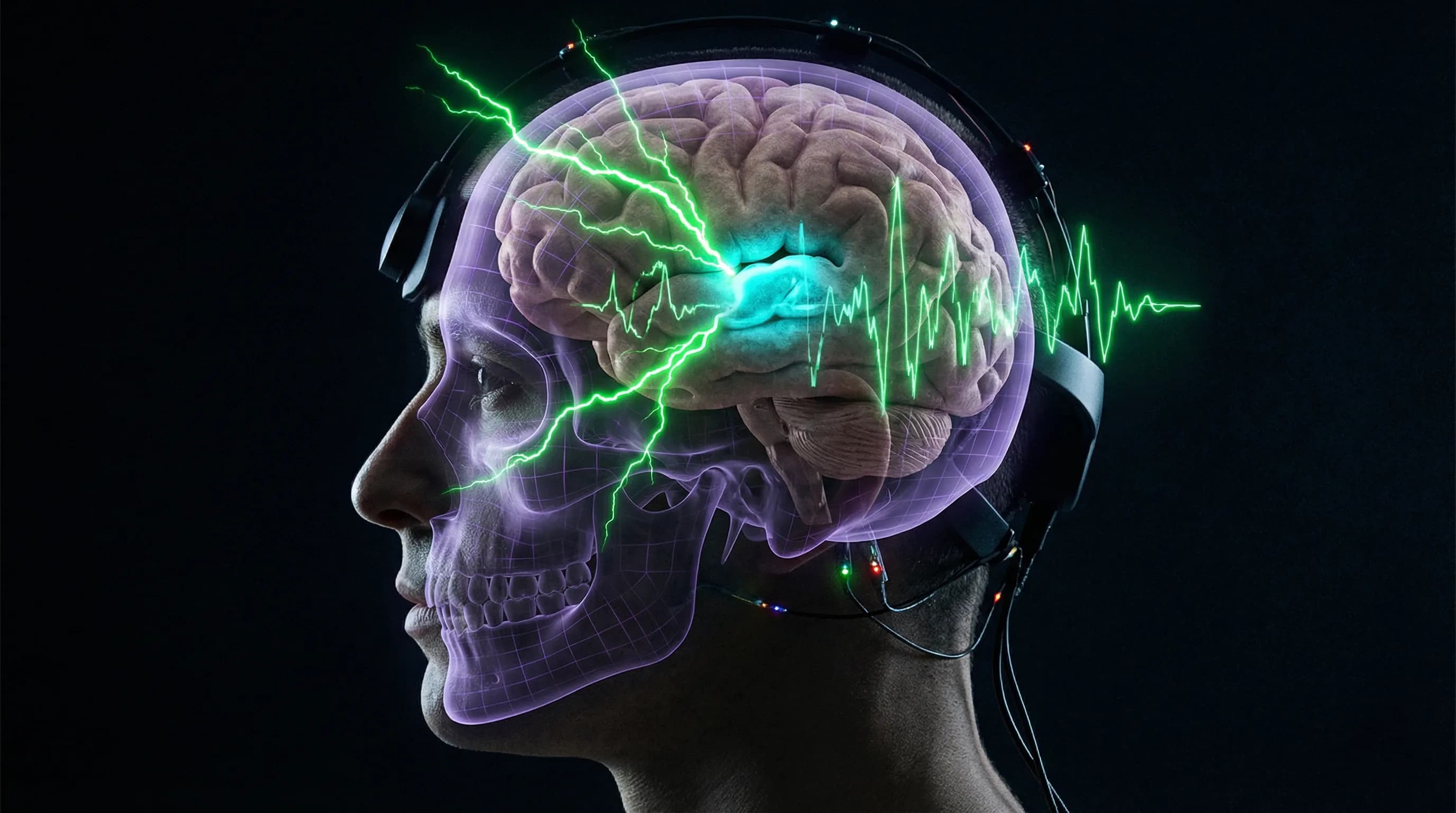
What exactly we call "popping sounds in the head" — and why this isn't a single phenomenon, but an entire spectrum
The term "popping sounds in the head" does not exist in medical literature as a unified nosological entity. Behind this colloquial description lie at least five different phenomena with distinct mechanisms, localizations, and clinical significance. More details in the section Fake Diagnostics.
First — Exploding Head Syndrome (EHS), a parasomnia in which a person hears a loud explosion, pop, or crash at the moment of falling asleep or waking up, without pain and without objective sound stimuli (S001). Second — pulsatile tinnitus, in which internal sounds are synchronized with heartbeat and may indicate vascular abnormalities.
| Phenomenon | Mechanism | Localization |
|---|---|---|
| Exploding Head Syndrome (EHS) | Parasomnia, central origin | "Inside the head," without lateralization |
| Pulsatile tinnitus | Vascular abnormalities | Synchronized with heartbeat |
| Middle ear myoclonus | Involuntary muscle contractions | In the ear, clicking sounds |
| Eustachian tube dysfunction | Pressure disturbance | During swallowing, yawning |
| Neurological phenomena | Epilepsy, migraine, TIA | Variable, often with other symptoms |
🔎 Anatomical geography of internal sounds: where exactly the "popping" occurs
Localization of the sensation has diagnostic significance. Sounds perceived "inside the head" without clear lateralization are more often associated with central mechanisms — activity of the brainstem, reticular formation, or auditory cortex (S004).
Sounds clearly localized in one ear indicate peripheral causes: middle ear pathology, temporomandibular joint issues, vascular malformations in the mastoid region. Sounds felt "at the back of the head" or "at the base of the skull" may be related to the craniovertebral junction, Chiari malformations, or atlantoaxial instability.
Sounds "throughout the body" or "in the chest" require exclusion of cardiological causes — arrhythmias, mitral valve prolapse, aortic regurgitation. This is not a neurotic symptom, but a signal for a cardiologist.
🧱 Temporal patterns: when pops occur and what this means
The chronometry of the phenomenon is a key differential feature. EHS is strictly tied to transitional states of consciousness: falling asleep (hypnagogia) or waking up (hypnopompia). Occurrence of pops at these moments with >90% probability indicates benign parasomnia.
- Pops during physical exertion, bending, coughing, straining
- Suggest increased intracranial pressure or vascular cause. Require exclusion of aneurysm or arteriovenous malformation.
- Pops synchronized with jaw movements, chewing, yawning
- Indicate TMJ dysfunction or myofascial syndrome. Often combined with pain in the joint area.
- Pops with changes in head position
- Characteristic of benign paroxysmal positional vertigo (BPPV) or vestibular migraine (S002).
- Constant, monotonous clicks without provoking factors
- Require exclusion of middle ear myoclonus or palatal myoclonus. May be associated with neurological disorders.
⚙️ Associated symptoms as diagnostic markers
Isolated pops without other symptoms are almost always benign. But combination with certain signs changes the clinical picture.
- Pops + headache + photophobia + nausea = migraine with or without aura (vestibular migraine may manifest with acoustic phenomena).
- Pops + dizziness + nystagmus + coordination impairment = vestibular apparatus or cerebellar lesion.
- Pops + transient aphasia/paresis/numbness = TIA or stroke, requires emergency hospitalization.
- Pops + pulsation in ear + noise = vascular malformation, aneurysm, arteriovenous fistula.
- Pops + hearing loss + congestion = middle ear pathology, otosclerosis, cholesteatoma.
- Pops + myoclonic jerks + impaired consciousness = epilepsy (S003).
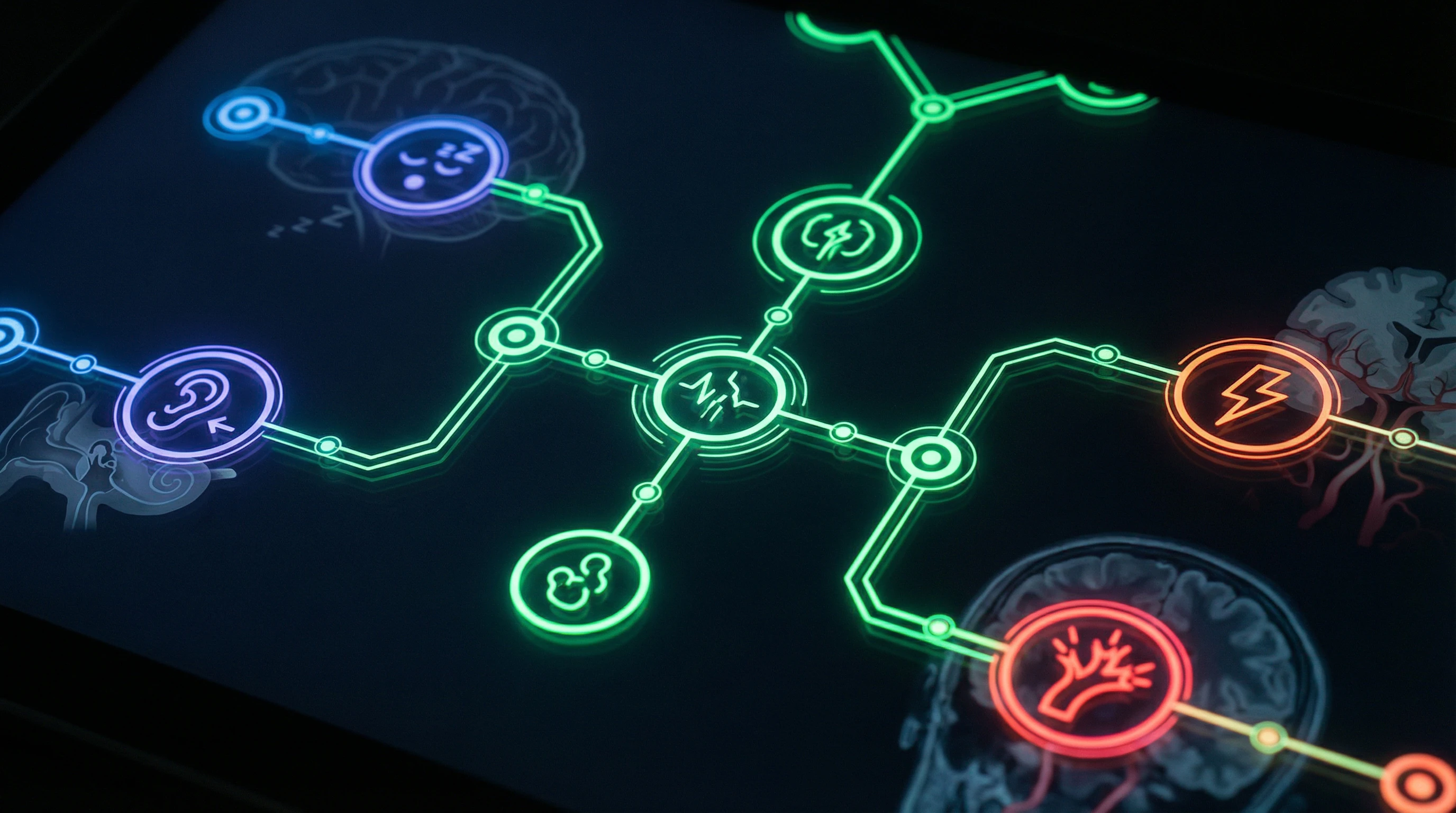
Five Most Compelling Arguments That "Popping Sounds in the Head" Are a Serious Symptom
Before examining the evidence — a steelman version of the argument: the strongest points from those who consider internal sounds a warning signal. This is not a straw man, but a good-faith reconstruction of a position with rational foundations and clinical support. More details in the section Psychosomatics Explains Everything.
🔴 Argument One: Vascular Catastrophes Debut with Acoustic Phenomena
Vessel rupture or dissection, aneurysms, arteriovenous malformations in some cases manifest with unusual auditory sensations before classic neurological symptoms develop.
Pulsatile tinnitus synchronized with heartbeat may be the only early sign of a dural arteriovenous fistula — a condition that without treatment leads to intracranial hemorrhage in 10–15% of cases annually.
A sudden loud pop followed by intense headache ("thunderclap headache") is a classic sign of subarachnoid hemorrhage, which has a mortality rate of 50% even with timely treatment.
🔴 Argument Two: Posterior Fossa Tumors Present with Acoustic Symptoms
Acoustic neuroma, cerebellopontine angle meningiomas, fourth ventricle ependymomas in early stages cause unilateral acoustic symptoms — noise, clicks, sensation of "fluid movement" or "popping" in the ear.
| Tumor Stage | Initial Symptoms | Risk of Complications with Late Detection |
|---|---|---|
| Early (up to 2 cm) | Strange sounds, unilateral hearing loss | Minimal |
| Advanced (2–3 cm) | Balance disorders, facial nerve paresis | Moderate |
| Late (3–4 cm and larger) | Neurological deficit, brainstem compression | High — complications during removal |
Lack of vigilance and timely MRI leads to diagnosis at a stage when radical removal carries high risk of complications.
🔴 Argument Three: Demyelinating Diseases Debut with Sensory Phenomena
Demyelination of auditory system pathways — brainstem, medial geniculate body, auditory radiation — manifests with various acoustic illusions: pops, clicks, sound distortions.
In 5–10% of patients with multiple sclerosis, the first symptom is auditory disturbances, which may precede classic manifestations (optic neuritis, paresis, sensory disturbances) by months or years (S002). Early diagnosis and initiation of immunomodulatory therapy are critically important for prognosis.
🔴 Argument Four: Epilepsy Manifests with Isolated Auditory Auras
Focal epilepsy with focus localized in the temporal lobe, especially in the primary auditory cortex area, manifests with simple auditory hallucinations — clicks, pops, buzzing, ringing.
- Isolated Auras
- Auditory phenomena without seizure generalization; may be the only manifestation of epileptic activity.
- Subclinical Discharges
- Recurring activity without obvious seizures; increases risk of sudden unexpected death in epilepsy (SUDEP) and cognitive decline.
- Diagnostic Trap
- Without EEG monitoring, a patient may remain without antiepileptic therapy for years.
🔴 Argument Five: Idiopathic Intracranial Hypertension Manifests with Pulsatile Noise
Increased intracranial pressure without a mass lesion (pseudotumor cerebri) classically presents with headache, optic disc edema, and pulsatile noise in the ears synchronized with heartbeat.
The mechanism is turbulent blood flow in venous sinuses when compressed by elevated cerebrospinal fluid pressure. Without treatment, this condition leads to irreversible vision loss in 10–25% of patients (S007).
Pulsatile noise may be the only early symptom, and ignoring it delays diagnosis to a stage when visual impairments are already irreversible.
Evidence Base: What Systematic Reviews and Clinical Studies Say About the Nature of Internal Sounds
The level of evidence for this question is rated as 3 (moderate): most data comes from descriptive studies and case series rather than randomized controlled trials, which are impossible for many conditions due to ethical reasons. More details in the Anti-Vaccination Movement section.
🧪 Exploding Head Syndrome: From Case Reports to Systematic Study
EHS was first described in 1876, with systematic study beginning in the 1980s. Prevalence in the general population is 10-15% (survey studies), with clinically significant cases representing less than 1%.
The pathophysiology remains unclear. Leading hypotheses:
- Abnormal activity of reticular formation neurons in the midbrain during transitions between sleep stages
- Sudden shift in auditory neuron activity, analogous to the mechanism of tinnitus
- Transient dysfunction of neuronal calcium channels, leading to synchronous discharge
None of these hypotheses have direct evidence. EHS is not associated with increased risk of neurological diseases, requires no treatment in the absence of distress, and is not a predictor of epilepsy or stroke (cohort studies, follow-up period up to 10 years).
🧪 Pulsatile Tinnitus: When Sound Is Actually a Danger Signal
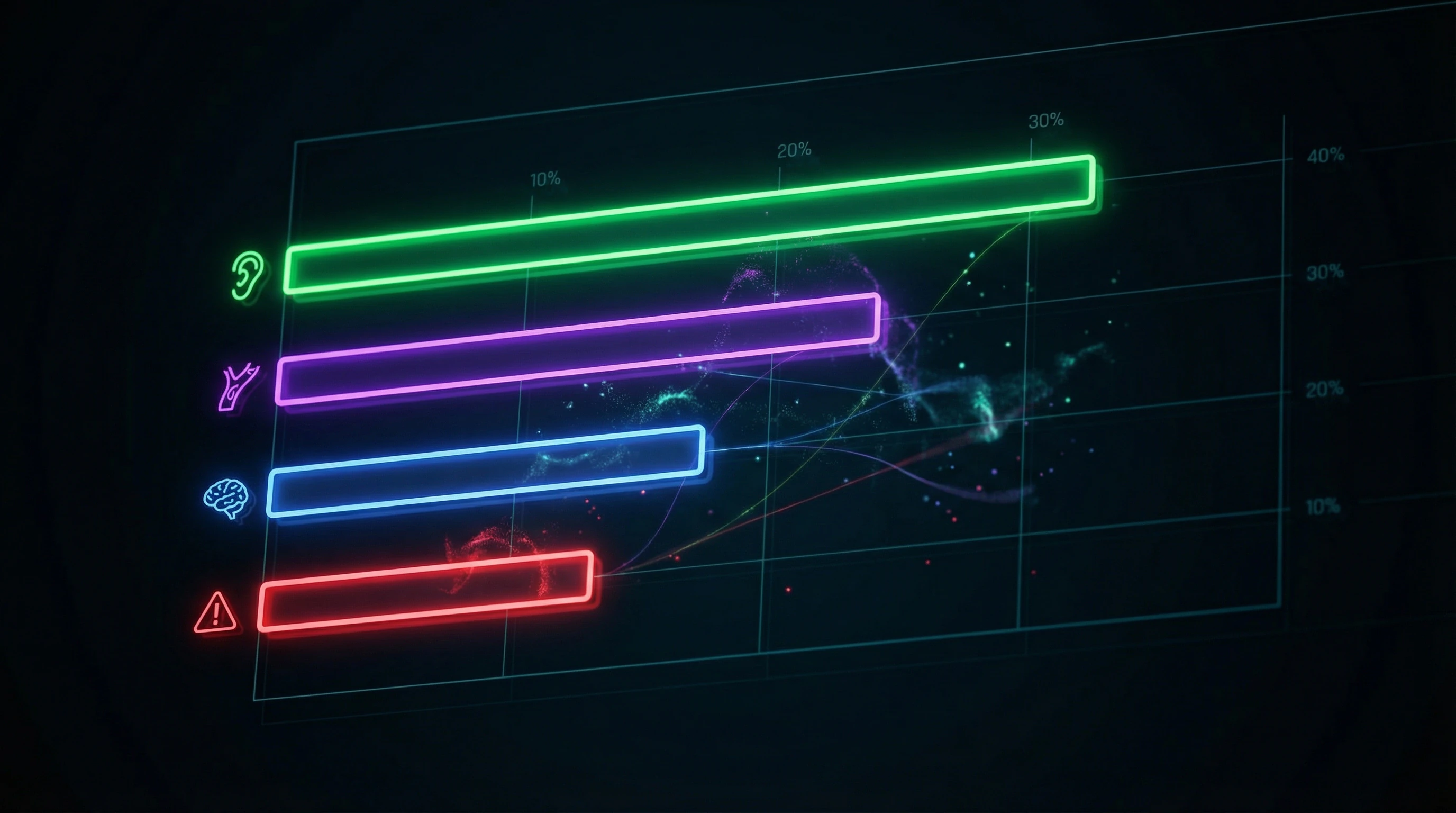
Unlike EHS, pulsatile tinnitus requires mandatory investigation. A 2021 systematic review (1,245 patients) identified a structural cause in 70% of cases.
| Diagnosis | Proportion of Cases |
|---|---|
| Venous anomalies (sigmoid sinus dehiscence, high-riding jugular bulb) | 28% |
| Arteriovenous fistulas | 15% |
| Atherosclerotic carotid artery stenosis | 12% |
| Idiopathic intracranial hypertension | 10% |
| Tumors | 5% |
| Cause not established | 30% |
Unilateral pulsatile tinnitus with objective auscultation (physician hears the sound with a stethoscope over the mastoid process) has a positive predictive value for vascular pathology of 85%. Bilateral variants without objective signs are more often idiopathic or related to anemia or hyperthyroidism.
🧪 Middle Ear Myoclonus: Rare but Verifiable Cause of Clicking
Involuntary contractions of the tensor tympani muscle or stapedius muscle create objective clicks that can be recorded by a microphone in the external auditory canal and are visible during otoscopy as movements of the tympanic membrane. Contraction frequency ranges from 10–240 per minute.
- Idiopathic myoclonus
- 50% of cases; treatment: botulinum toxin in middle ear muscles (70–80% effectiveness), tenotomy if ineffective
- Vascular compression of facial nerve
- 25% of cases; requires contrast-enhanced MRI
- Multiple sclerosis
- 10% of cases; diagnosis: high-resolution tympanometry, otoacoustic emissions
- Cerebellopontine angle tumors
- 5% of cases; MRI mandatory
🧪 Eustachian Tube Dysfunction: The Most Common and Most Underestimated Cause
Dysfunction of the auditory tube—its opening/closing to equalize pressure between the middle ear and nasopharynx—leads to sensations of pops, clicks, and crackling during swallowing, yawning, or altitude changes. Population prevalence is 1–5%, among patients complaining of "strange sounds in the ears"—40%.
Causes: allergic rhinitis, chronic rhinosinusitis, adenoid hypertrophy, anatomical anomalies, neuromuscular dysfunction (post-stroke, in myasthenia gravis). Diagnosis: tympanometry, Valsalva test, nasopharyngeal endoscopy. Treatment: intranasal corticosteroids, antihistamines, balloon dilation of the Eustachian tube (60–70% effectiveness in obstructive dysfunction).
Mechanisms of Origin: Why the Brain Generates Sounds That Aren't There
Understanding the mechanisms is critical for distinguishing benign from pathological phenomena. The auditory system is not a passive receiver but an active constructor of sound reality. More details in the Sources and Evidence section.
The brain constantly generates predictions about what sounds should be present and compares them with the actual signal. Mismatch between prediction and reality can create phantom sounds (S001).
Neurophysiology of Spontaneous Auditory Cortex Activity
Auditory cortex neurons exhibit spontaneous activity even in complete silence. Normally, this activity is chaotic and doesn't reach the threshold of conscious perception.
Under certain conditions—fatigue, stress, sleep deprivation, psychoactive substance use—synchronization of spontaneous discharges across large neuronal populations can occur. This synchronization is perceived as sound.
| Condition | Effect on Synchronization | Subjective Perception |
|---|---|---|
| Fatigue, stress | Increased discharge synchrony | Pop, click |
| Sleep deprivation | Disorganization of inhibitory mechanisms | Hum, buzzing |
| Transitional consciousness states | Transient synchronization (fractions of a second) | Sharp sound during sleep onset/awakening |
The mechanism is analogous to tinnitus, but in EHS the synchronization is transient and linked to transitional consciousness states. Neuroimaging studies (fMRI during EHS episodes) showed activation not only of auditory cortex but also visual, somatosensory, and insular cortices—explaining why some patients describe not just sound but also a flash of light or sensation of impact (S004).
Vascular Mechanisms: When the Sound Is Actually a Sound
In vascular causes of pulsatile tinnitus, the sound is real—it's turbulent blood flow transmitted through bone and soft tissue to inner ear structures. Normal laminar blood flow is silent.
Turbulence occurs with vessel stenosis, abnormally high blood flow velocity, or abnormal proximity of a vessel to ear structures. The sound is synchronized with pulse and intensifies with physical exertion.
Turbulence occurs with: (1) vessel stenosis (atherosclerotic plaque, fibromuscular dysplasia); (2) abnormally high blood flow velocity (arteriovenous fistula, hyperkinetic states—anemia, thyrotoxicosis, pregnancy); (3) abnormal vessel proximity to ear structures (sigmoid sinus dehiscence, aberrant internal carotid artery).
The sound is synchronized with pulse, intensifies with physical exertion, bending forward, or jugular vein compression in the neck (Queckenstedt's test). Objectification: Doppler ultrasound, MR angiography, digital subtraction angiography (S007).
Myogenic Mechanisms: When Muscle Creates a Click
Middle ear muscles (tensor tympani, stapedius) normally contract reflexively in response to loud sounds or during swallowing and yawning. Pathological myoclonus consists of spontaneous, rhythmic or irregular contractions without external stimulus.
- Primary Dysfunction
- Brainstem motor neuron dysfunction (facial and trigeminal nerve nuclei), leading to spontaneous discharges.
- Secondary Dysfunction
- Nerve compression by vessel (neurovascular conflict), demyelination (MS), tumor—mechanical or inflammatory causes.
- Result
- Each contraction creates mechanical movement of the ossicular chain, perceived as a click. Frequency can reach 200–240 per minute, subjectively perceived as buzzing or crackling.
Diagnosis: video-otoscopy (visualization of tympanic membrane movements), high-resolution tympanometry, EMG of middle ear muscles.
Mechanisms in Eustachian Tube Dysfunction
The Eustachian tube opens with contraction of soft palate muscles (m. tensor veli palatini, m. levator veli palatini) during swallowing and yawning. Opening equalizes pressure between the middle ear and atmosphere.
With tube obstruction (mucosal edema, mechanical blockage), middle ear pressure becomes negative and the tympanic membrane retracts. Subsequent sudden tube opening creates a pop due to rapid pressure equalization and membrane return to normal position.
- Tube obstruction → negative middle ear pressure
- Tympanic membrane retracts
- Sudden tube opening → rapid pressure equalization
- Membrane return to normal position → pop
With patulous (constantly open) tube, the patient hears their own breathing, voice resonance, and clicks with each respiratory movement due to pressure fluctuations. Patulous mechanism: adipose tissue atrophy around the tube (rapid weight loss, aging), neuromuscular dysfunction, anatomical anomalies.
Conflicts in the Data and Zones of Uncertainty: Where Evidence Contradicts Itself
Honest analysis requires acknowledgment: there is no consensus on many aspects of internal sounds. Different studies yield contradictory results, clinical guidelines rely more on expert opinion than on rigorous evidence. More details in the Scientific Method section.
This doesn't mean the data is useless. It means we need to see the boundaries of each approach and understand exactly where the risk zone begins—both for the patient and for the physician.
First Contradiction: Is Neuroimaging Necessary for Isolated EHS?
Neurologists often insist on brain MRI for all patients with EHS—to rule out structural pathology. The argument: isolated cases have been described where EHS was the first manifestation of a temporal lobe tumor or vascular malformation (S002).
Sleep specialists object: with a typical clinical picture (episodes only during sleep onset/awakening, absence of other symptoms, normal neurological status), neuroimaging is excessive. The yield of structural pathology in cohort studies is less than 1%.
| Position | Logic | Risk of Approach |
|---|---|---|
| "MRI for everyone" | Don't miss rare pathology | Overinvestment in diagnostics, incidental findings, patient anxiety |
| "MRI by indication" | Resource conservation, reduced anxiety | Rare tumor case may be missed at early stage |
Second Contradiction: Role of Auditory Cortex in Sound Generation
Some studies (S004) show activation of the primary auditory cortex during EHS. Others find no such activation or find it inconsistently. The question remains open: does the cortex generate the sound itself, or does it merely register a signal arriving from other structures?
If the cortex isn't always active during EHS, then the sound may be generated at the level of the midbrain, thalamus, or even peripheral structures—and the cortex simply "hears" it.
This distinction is critical for understanding the mechanism. If the sound is generated peripherally, then a pharmacological approach (for example, blocking neurotransmitters in the cortex) may be ineffective.
Third Contradiction: Association with Migraine and Neurological Disorders
Some authors report high comorbidity between EHS and migraine (up to 40–60% of patients). Other studies don't confirm this association or find it weak. Possible explanations: different patient selection criteria, different definitions of EHS, sample bias (patients with migraine more often consult neurologists).
- Hypothesis 1: Common Mechanism
- Migraine and EHS are manifestations of a single neurobiological process (for example, dysfunction of diencephalic structures (S002)). Then they should frequently coexist.
- Hypothesis 2: Independent Phenomena
- EHS and migraine are different disorders that simply occur frequently in the same population. Comorbidity is a sampling artifact.
- Hypothesis 3: Causal Relationship
- Migraine may trigger EHS through altered cortical or thalamic excitability. Or conversely: chronic EHS increases migraine risk through sensory overload.
Fourth Contradiction: Treatment Efficacy and Placebo
Clinical reports describe success with tricyclic antidepressants, topiramate, melatonin. But controlled studies are almost nonexistent. How do we distinguish real effect from placebo when the physician's attention itself and the patient's expectation can modulate sound perception?
Two problems intersect here: (1) complexity of study design (how do you blind a patient when they themselves evaluate a subjective sound?), (2) high placebo responsiveness in functional disorders (S003).
Fifth Contradiction: Classification—Symptom or Disorder?
EHS is classified as a sleep disorder (DSM-5, ICD-11). But some authors propose considering it a symptom of an underlying neurological or psychiatric condition. If it's a symptom, then we need to treat the underlying disease, not the sound itself.
Classification determines treatment strategy. If EHS is a primary disorder, we look for a specific mechanism. If it's a symptom, we look for a hidden cause.
The data doesn't provide a clear answer. Perhaps EHS is a heterogeneous phenomenon: primary in some cases, secondary in others.
Where to Look for Answers
Conflicts in the data aren't a sign of scientific weakness, but a sign of its honesty. They point to the boundaries of current knowledge and the need for new research with clear design, standardized criteria, and adequate sample size.
Until there's consensus, physician and patient must act under conditions of uncertainty: gather history, rule out dangerous causes, try safe interventions, and evaluate results. It's not ideal, but it's the reality of modern medicine for rare and poorly studied phenomena.