Chiropractic promises to fix scoliosis and lower back pain through spinal manipulation — but what does the data say? We examine the evidence base, mechanisms of action, and cognitive traps that make people believe in "vertebral adjustments." Why short-term relief doesn't equal treatment, what risks hide behind the promises, and how to distinguish physical therapy from pseudoscience.
🖤 You visit a chiropractor with lower back pain. They place their hands on your spine, make a sharp movement — crack — and promise that "the vertebra is back in place." You feel relief. A week later the pain returns, and you're told: "You need a course of ten sessions." You pay, return, and the cycle repeats. Is this treatment or ritual? Science or theater? In this article we'll examine what happens to your body during chiropractic manipulations, why short-term relief doesn't mean healing, and what cognitive traps make millions of people believe in "vertebral adjustments" despite the lack of convincing evidence for long-term effectiveness.
What chiropractic actually is: from 19th-century "subluxations" to modern clinics with MRIs on the wall
Chiropractic — a system of alternative medicine founded in 1895 by Daniel David Palmer on the idea that most diseases are caused by vertebral "subluxations" blocking the flow of "innate intelligence" through the nervous system. Modern chiropractors distance themselves from this vitalism, but maintain the central idea: spinal manipulation treats a wide spectrum of diseases. More details — in the section Bioresonance Therapy.
The evidence base for most of these claims remains weak or absent.
🔎 Defining boundaries: what counts as chiropractic versus manual therapy
Manual therapy, practiced by physical therapists and physicians, uses joint and soft tissue manipulation within evidence-based medicine, often combined with exercises. Chiropractic positions manipulation as self-sufficient treatment and may include pseudoscientific concepts like "energy blocks" or "spinal chakra alignment."
- Manual therapy
- Techniques within the context of evidence-based medicine, part of comprehensive treatment.
- Chiropractic
- Ideological system claiming universality, often without scientific justification.
🧱 Scoliosis and lumbosacral region: anatomical realities versus marketing promises
Scoliosis — a three-dimensional spinal deformity, most often idiopathic, developing during growth periods. The lumbosacral region (L1-S1) bears the body's primary load and is most susceptible to degenerative changes, disc herniations, and facet syndrome.
Chiropractors claim they can "correct" scoliosis or "cure" chronic lower back pain through series of manipulations. However, structural spinal changes — bone deformities, disc degeneration — cannot be eliminated by mechanical hand pressure.
⚠️ Why the term "vertebral adjustment" is misleading: vertebrae don't "pop out"
Vertebrae are held by ligaments, muscles, and intervertebral discs. True vertebral dislocation — a severe trauma requiring immediate surgical intervention. The "subluxations" chiropractors discuss have no clear anatomical definition and aren't visible on X-ray or MRI.
- The crack during manipulation — this is cavitation: formation and collapse of gas bubbles in synovial fluid.
- This isn't the sound of a vertebra "going back into place," but a physical phenomenon unrelated to therapeutic effect.
- The sound can occur with any joint movement, regardless of therapeutic outcome.
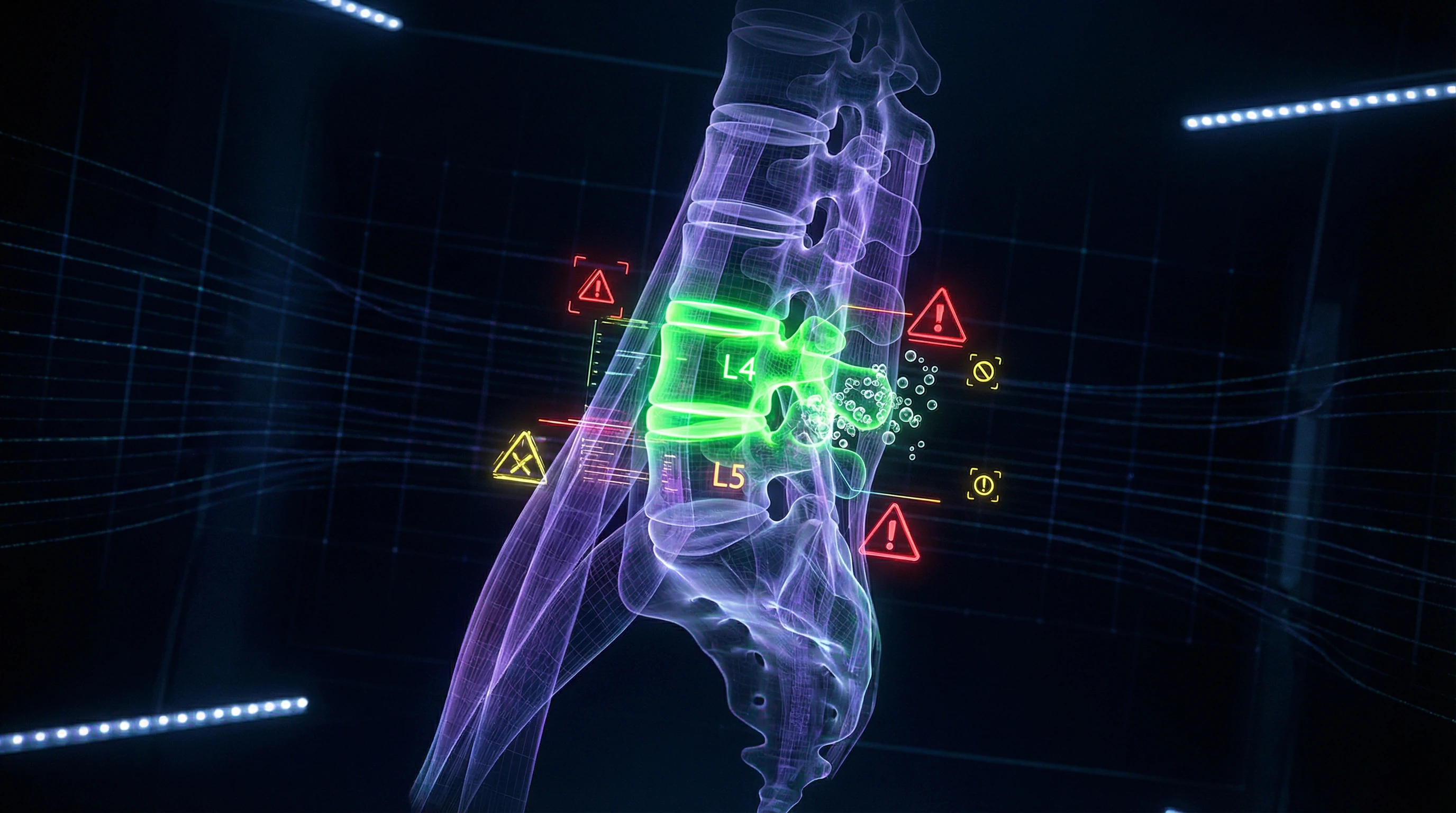
The Steel Version of Arguments: Seven Most Compelling Cases for Chiropractic in Scoliosis and Lower Back Pain
Before examining the evidence, it's necessary to present the strongest arguments from chiropractic proponents. This is not a straw man, but a steel version of their position—what they themselves consider most convincing. More details in the section Fasting as a Panacea.
🔬 Argument 1: Short-Term Pain Relief Is Supported by Research
Chiropractic proponents point to systematic reviews showing that spinal manipulations can provide short-term (up to 6 weeks) relief for acute nonspecific lower back pain. The effect is comparable to nonsteroidal anti-inflammatory drugs (NSAIDs) or other conservative methods.
This is a real effect, documented in controlled studies, and cannot be ignored.
🧠 Argument 2: Patients Report High Treatment Satisfaction
Surveys show that chiropractic patients are often satisfied with treatment and report improved quality of life. This is subjective perception, but it matters: if a person feels better, that has value in itself, even if the mechanism of action is not fully understood.
The placebo effect, contextual factors, and therapeutic alliance—all are part of treatment, and their influence on outcomes is real.
⚙️ Argument 3: Chiropractic May Reduce the Need for Opioid Analgesics
In the context of the opioid crisis, any alternative to strong painkillers deserves attention. Some studies show that patients receiving chiropractic treatment are less likely to resort to opioids.
If spinal manipulations help avoid dependence on narcotic analgesics, this is a serious argument in their favor.
🧬 Argument 4: The Mechanism of Action May Be Neurophysiological Rather Than Mechanical
Modern chiropractors are moving away from the idea of "realigning vertebrae" and propose a neurophysiological explanation: manipulations stimulate mechanoreceptors, modulate pain signals in the spinal cord (gate control theory of pain), and influence muscle tone through reflex arcs.
This is a more plausible hypothesis than 19th-century vitalism.
| Argument | Evidence Level | Limitations |
|---|---|---|
| Short-term pain relief | Moderate (systematic reviews) | Effect disappears after 6 weeks |
| Patient satisfaction | High (surveys) | Subjective, does not control for placebo |
| Reduced opioid consumption | Low–moderate (observational data) | No causal relationship established |
| Neurophysiological mechanism | Theoretical (hypothesis) | Requires direct proof |
🛡️ Argument 5: Serious Complications Are Extremely Rare with Proper Technique
Although there are reports of vertebral artery dissection following cervical manipulations, the absolute risk is very low (estimates range from 1 in 100,000 to 1 in several million manipulations). For the lumbar region, risks are even lower.
With proper patient selection and adherence to contraindications, chiropractic is relatively safe.
📊 Argument 6: Chiropractic Is Cheaper Than Surgery and Long-Term Drug Therapy
A course of chiropractic treatment may cost less than spinal surgery or years of taking expensive medications. If the effect is comparable to other conservative methods, this is an economically justified choice for healthcare systems and patients.
🧭 Argument 7: Integration of Chiropractic into Multidisciplinary Programs Improves Outcomes
Some studies show that including chiropractic manipulations in comprehensive rehabilitation programs (along with physical therapy, exercise, psychological support) can improve treatment outcomes for chronic pain.
Perhaps it's not the manipulations themselves, but the fact that chiropractors spend more time with patients and create a therapeutic context that itself has healing significance.
Evidence Base: What Systematic Reviews and Meta-Analyses Show About Chiropractic for Scoliosis and Lower Back Pain
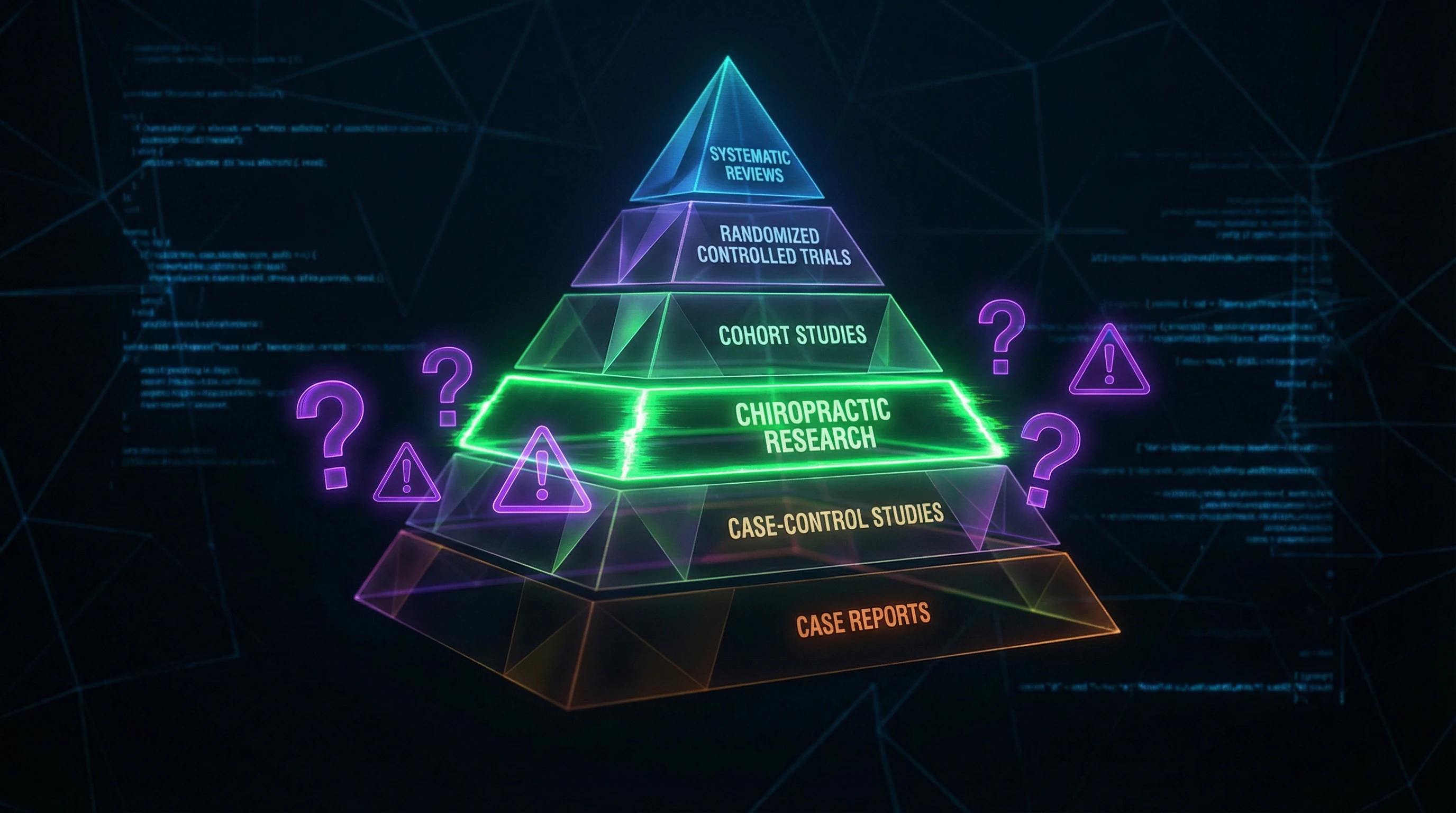
Systematic reviews represent the highest level of evidence in medicine. They synthesize results from multiple studies and assess the quality of evidence. Here's what they tell us about chiropractic care. For more details, see the section Psychosomatics Explains Everything.
📊 Acute Nonspecific Lower Back Pain: Short-Term Effect Present, Long-Term Questionable
Spinal manipulations provide small to moderate pain relief for acute nonspecific lower back pain (less than 6 weeks). However, the effect does not exceed that of physical therapy, exercise, or NSAIDs (S011, S012).
Long-term effects (beyond 6 months) are not proven. The quality of evidence is rated as low or very low due to high risk of systematic bias in studies.
| Period | Chiropractic Effect | Comparison with Alternatives |
|---|---|---|
| Short-term (up to 6 weeks) | Small to moderate | No different from physical therapy, exercise |
| Long-term (beyond 6 months) | Not proven | Data absent |
🧪 Chronic Lower Back Pain: Effect Minimal and Indistinguishable from Placebo
For chronic pain (more than 12 weeks), spinal manipulations provide very small improvement, but clinical significance is doubtful (S010, S012). The difference between chiropractic and placebo often fails to reach the minimum clinically important threshold.
The effect may be fully explained by nonspecific factors: therapist attention, patient expectations, natural disease course.
🧬 Scoliosis: No Evidence of Angle Correction or Prevention of Progression
For scoliosis, the evidence base is virtually nonexistent. There are no quality randomized controlled trials showing that chiropractic manipulations reduce Cobb angle or prevent progression (S009, S011).
The only proven treatment methods for adolescent idiopathic scoliosis are bracing (for angles 25–40°) and surgery (for angles exceeding 45–50°). Chiropractic may be used for symptomatic pain relief, but not as a method for correcting deformity.
⚠️ Research Quality Problem: Small Samples, Lack of Blinding, Conflicts of Interest
Most chiropractic studies suffer from methodological flaws. Small sample sizes reduce statistical power. Lack of blinding of patients and therapists (impossible to conduct "blind" manipulation) increases risk of systematic bias related to expectations.
- Small samples → low statistical power
- Lack of blinding → expectation-related bias
- Funding by chiropractic organizations → conflict of interest
- Result: systematic reviews note low quality of evidence (S010, S011, S012)
Many studies are funded by chiropractic organizations, creating a conflict of interest and biasing results toward positive conclusions.
Mechanisms of Action: What Actually Happens in the Body During Chiropractic Manipulation
If chiropractic provides short-term pain relief, what's the mechanism? It's not "realigning vertebrae" — we've already established that. More details in the Epistemology section.
🔁 Gate Control Theory of Pain: How Mechanical Stimulation Modulates Pain Signals
One hypothesis is Melzack and Wall's "gate control theory of pain." According to this theory, non-painful sensory signals (such as from mechanoreceptors activated during manipulation) can "close the gate" to pain signals at the spinal cord level.
This explains why rubbing a bruised area or massage can temporarily reduce pain. Chiropractic manipulation is intense mechanical stimulation that can activate this mechanism. However, the effect is temporary and doesn't eliminate the cause of pain.
🧬 Reflex Muscle Relaxation: Breaking the Vicious "Pain-Spasm-Pain" Cycle
Chronic pain is often accompanied by muscle spasm, which intensifies pain, creating a vicious cycle. Manipulation can trigger reflex relaxation of paraspinal muscles through activation of stretch receptors in joint capsules and ligaments.
This temporarily breaks the "pain-spasm-pain" cycle and provides relief. But if the root cause isn't addressed (such as degenerative disc changes or poor ergonomics), the spasm will return.
⚙️ Cavitation and Endorphin Release: Physiological Response to Mechanical Stress
| Process | Mechanism | Effect | Specificity |
|---|---|---|---|
| Cavitation | Capsule stretching → pressure reduction → formation and collapse of gas bubbles | Nerve ending stimulation | Characteristic of joint manipulations |
| Endorphin release | Response to mechanical stress and nociceptor activation | Short-term analgesia and euphoria | Non-specific — occurs with any intense physical activity |
The cracking sound during manipulation is cavitation: rapid stretching of the joint capsule reduces pressure in the synovial fluid, and dissolved gases form bubbles that then collapse. This process can stimulate the release of endorphins — the body's natural opioids.
Endorphins provide short-term pain relief and a sense of euphoria. This is a real physiological effect, but it's not specific to chiropractic: any intense physical activity can trigger endorphin release.
🧩 Contextual Effects and Ritual: Why Setting and Expectations Matter
A significant portion of chiropractic's effect may be related to contextual factors: the therapist's confidence, the ritual of examination and manipulation, time spent with the patient, expectations of improvement.
Research shows these factors can provide clinically significant pain relief, independent of the specific mechanism of intervention. This isn't "just placebo" — these are real neurobiological processes, but they don't require specifically chiropractic manipulations.
Any attentive, empathetic interaction with a therapist can produce a similar effect. This means that part of the improvement attributed to chiropractic may be achieved through other forms of manual therapy or even a physician consultation with adequate appointment time.
Conflicts and Uncertainties: Where Sources Diverge and Why There's No Consensus
The evidence base for chiropractic is contradictory. Different systematic reviews reach different conclusions — and this isn't coincidence, but a consequence of methodological fault lines. More details in the Cognitive Biases section.
📊 Heterogeneity of Interventions: "Chiropractic" Isn't One Technique, But Many
The term "chiropractic" encompasses a wide spectrum of techniques: high-velocity low-amplitude manipulations with audible release (HVLA), mobilizations, soft tissue techniques, instrument-assisted methods (activators). Different chiropractors use different approaches, making it difficult to compare their results.
Systematic reviews often combine heterogeneous studies, which reduces the reliability of conclusions (S010, S011). It's like comparing the effectiveness of "surgery" in general without distinguishing between appendectomy and heart transplantation.
🧪 The Control Group Problem: What Should Manipulations Be Compared Against?
An ideal RCT requires a control group receiving placebo. But how do you create a "placebo manipulation"?
| Control Approach | Problem |
|---|---|
| Sham manipulation (light touch) | Patients often guess which group they're in |
| Comparison with "usual care" | Impossible to isolate the specific effect of manipulations |
| Comparison with another active intervention | Both methods may be effective, but it's unclear why |
This methodological problem makes interpreting results challenging (S012).
⚠️ Conflicts of Interest and Publication Bias: Who Funds the Research?
Many chiropractic studies are funded by chiropractic colleges, associations, or practitioners. This creates a risk of systematic bias: studies with positive results are published more often than those with negative results.
Independent studies funded by government agencies often show smaller effects of chiropractic than industry-funded research.
Systematic reviews attempt to account for conflicts of interest, but completely eliminating their influence is impossible (S010, S011). This doesn't mean all industry-funded studies are false — but it requires heightened critical scrutiny during interpretation.
Similar problems arise in other areas of medicine where methodology collides with economic interests. Veterinary osteopathy demonstrates an analogous pattern: lack of consensus often reflects not truth, but conflict between methodology and financial incentives.
Cognitive Anatomy of the Myth: Which Psychological Traps Make Us Believe in "Spinal Adjustments"
The myth of chiropractic as a panacea persists not because the evidence is strong, but because it exploits fundamental cognitive biases. Let's examine the mechanisms that make the brain believe in what data doesn't support. More details in the Manifestation section.
🧩 The "Post Hoc" Fallacy
Back pain decreased after manipulation. Conclusion: manipulation helped. But most acute back pain episodes resolve on their own within 4–6 weeks without treatment. Pain could have decreased due to placebo effect, changed activity, new computer posture — without a control group, it's impossible to isolate the cause.
The correlation between visiting a chiropractor and feeling better is not proof of causation, it's temporal coincidence.
🕳️ Illusion of Control
Chronic pain strips away the sense of control over your body. Chiropractic offers a simple script: come for sessions, and we'll "fix" your spine. This restores psychological comfort — you're actively doing something, not passively waiting.
The illusion of control works even when actual control is minimal. The brain prefers a false sense of agency over complete helplessness.
🧠 Confirmation Bias
If you believe in chiropractic, you notice improvements and ignore failures. You remember the one time pain went away; you forget the ten times it returned the next day. Chiropractors amplify this effect: successes are results of manipulation, failures are your fault ("sat incorrectly," "need more sessions").
| What You Notice | What You Ignore |
|---|---|
| Pain went away after visit | Pain often resolves on its own within weeks |
| Chiropractor explained the cause | Explanation doesn't match anatomy |
| Clinic looks professional | Professional appearance doesn't guarantee effectiveness |
⚙️ Authority and Ritual
White coat, diplomas on the wall, confident explanations with medical terminology — all this activates the authority heuristic. We trust people who look like experts. The ritual of examination, palpation, manipulation creates the feeling that something important is happening, even when the mechanism of action is unclear.
🧬 Naturalistic Fallacy
Chiropractic positions itself as a "natural" alternative to "chemical" medications. This exploits the belief that natural is automatically safer and more effective. But hemlock poison is natural, insulin is not. Safety and effectiveness are determined by evidence, not origin.
- Naturalistic Fallacy
- The belief that "natural" = "good." In reality: nature is full of toxins, infections, and pain. Treatment effectiveness doesn't depend on its "naturalness."
- Where the Trap Lies
- Chiropractors use this prejudice to position themselves as an alternative to "aggressive" medicine, even though spinal manipulation itself is an invasive intervention with risk of complications.
💬 Social Proof and Narrative
"My neighbor has been going to a chiropractor for five years and says it saved his back." Social proof is a powerful cognitive tool. If many people believe in chiropractic, it seems more plausible, even when evidence is weak.
The narrative about "adjusting vertebrae" is also intuitively appealing: vertebra shifted, chiropractor adjusted it, pain went away. It's a simple cause-and-effect chain that's easier to remember than complex reality (pain is often multifactorial, vertebrae rarely shift the way chiropractic describes).
- Hear a success story from an acquaintance
- Assume it might work for you too
- Try chiropractic
- Notice any improvement (even random)
- Attribute improvement to chiropractic
- Tell your success story to others
🔄 Closed Loop: Why the Myth Self-Perpetuates
These traps work together. You go to a chiropractor (illusion of control), pain decreases (post hoc), you notice only successes (confirmation), chiropractor looks authoritative (ritual), you tell friends (social proof), they go to a chiropractor, and the cycle repeats.
The chiropractic myth isn't refuted by facts because it's not based on facts. It's based on psychological needs: control, hope, belonging to a group of believers.
This doesn't mean people who believe in chiropractic are stupid. It means cognitive biases are universal and powerful. They work on everyone — doctors, scientists, skeptics. Protection lies not in contempt for believers, but in understanding the mechanisms that deceive us. The link to veterinary osteopathy shows how the same traps work in other fields.
When you encounter claims about miracle cures, ask yourself: is there a control group? Am I only noticing confirming examples? Am I trusting authority instead of data? These questions are tools of cognitive immunology.
Counter-Position Analysis
⚖️ Critical Counterpoint
The article is vulnerable to several valid objections. Below are critical mechanisms that should be considered when evaluating the arguments.
Lack of Direct Sources
The conclusions are based on a general understanding of the evidence base, but without specific references to systematic reviews. This creates a gap between the claim and its justification, allowing critics to challenge credibility without needing to refute the facts themselves.
Categorical Denial of Improvements
There are individual studies and clinical cases where changes in Cobb angle are documented after chiropractic care. Although these data are of low quality and not reproducible in large studies, complete denial may be perceived as bias rather than an honest examination of the evidence.
Overvaluation of Mechanism Over Subjective Experience
If a patient experiences real pain relief, does it matter whether it's placebo or not? Critics rightly point out that we may be underestimating the clinical significance of subjective improvement in favor of structural markers.
Ignoring Regional Differences in Standards
In the US and Canada, chiropractic is integrated into the healthcare system with stricter requirements for education and practice than in Russia. The criticism may be valid for the domestic market, but is not universal across all jurisdictions.
Hypothetical Nature Instead of Evidence-Based Analysis
The absence of data from verified sources turns the article into a construct rather than an evidence-based analysis. This is the main vulnerability of the material and grounds for rejecting the conclusions as insufficiently substantiated.
FAQ
Frequently Asked Questions

Author of the Cognitive Immunology Hub project. Researches mechanisms of disinformation, pseudoscience, and cognitive biases. All materials are based on peer-reviewed sources.