What exactly is being discussed: separating two clinical questions that have been conflated into one debate for decades
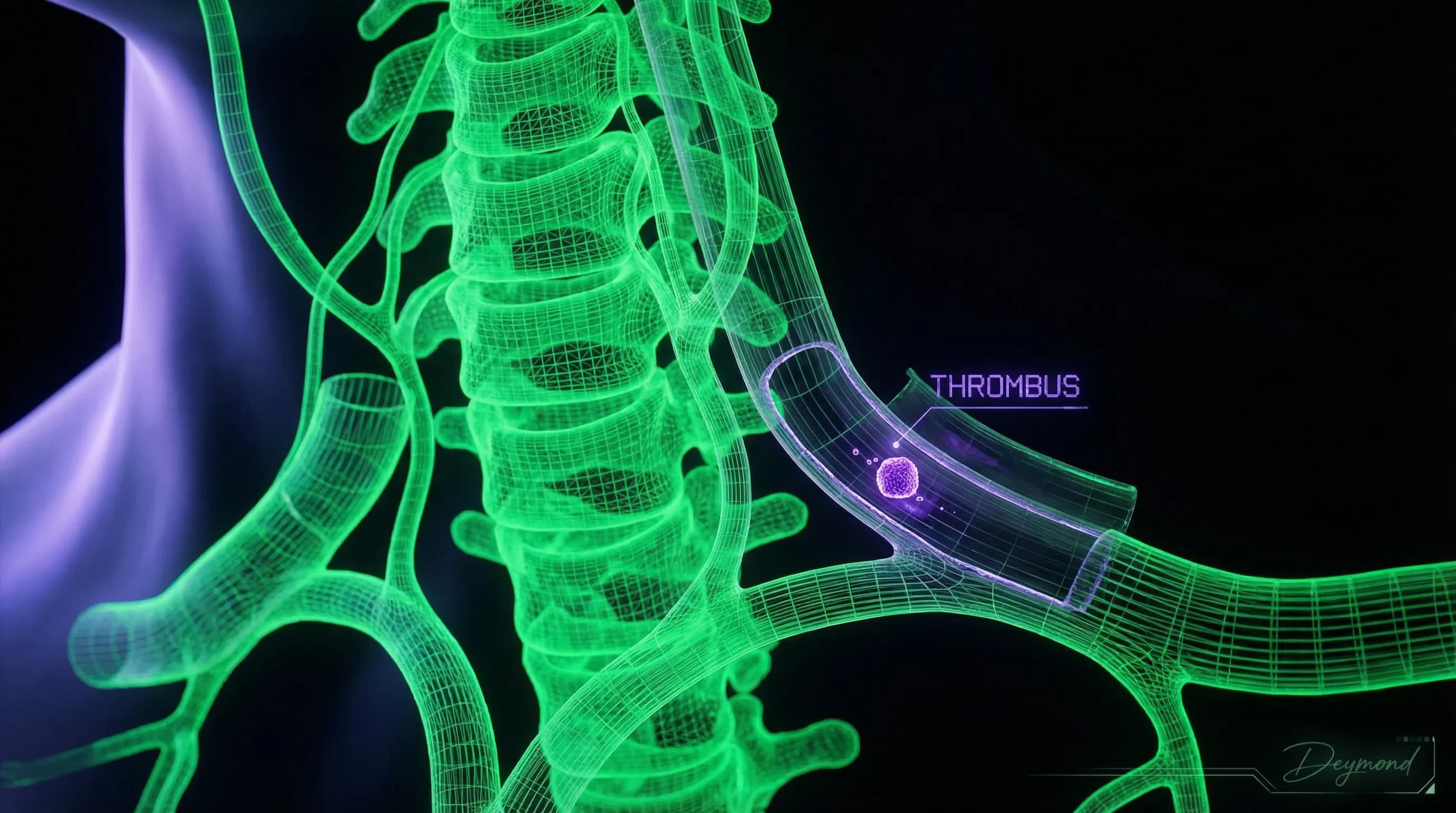
The central confusion in debates about the safety of cervical spine manipulation (CSM) arises from conflating two different causal chains. The first question: can the mechanical force of CSM itself create a dissection in the wall of the carotid or vertebral artery (cervical artery dissection, CeAD)? The second question: if dissection already exists (spontaneous or traumatic), can manipulation dislodge a thrombus from the dissection site and cause immediate ischemic stroke? (S001)
If the absence of a causal link between CSM and the occurrence of CeAD is proven, this does not exclude stroke risk. A patient may present with an already existing but asymptomatic dissection — and manipulation becomes not the cause of dissection, but the trigger for thromboembolic complication.
The 2024 study specifically focuses on the second question, but notes that most reviews and clinical guidelines discuss only the first (S001). This creates an illusion of comprehensive analysis, though the logical error is obvious.
- Cervical artery dissection (CeAD)
- A tear in the inner lining of the arterial wall, where blood penetrates between layers, forming an intramural hematoma and often a thrombus at the injury site (S001).
- Thromboembolic stroke
- A fragment of thrombus breaks away from the dissection site and migrates to cerebral arteries, causing occlusion and ischemia.
- "Immediate" stroke
- An event occurring within minutes or hours after manipulation, which excludes delayed mechanisms and indicates direct mechanical causation.
The review (S001) explicitly limits its scope: to evaluate evidence that CSM can dislodge a thrombus from an already existing CeAD. Questions about the frequency of spontaneous CeAD, whether CSM can cause dissection in a healthy person, and long-term risks remain outside the primary analysis.
The goal of the analysis is not to defend or condemn manual therapy, but to identify a specific clinical scenario requiring a special protocol for informed consent and physician referral.
The Steel Version of the Argument: Seven Strongest Arguments Against a Causal Link Between CSM and Stroke
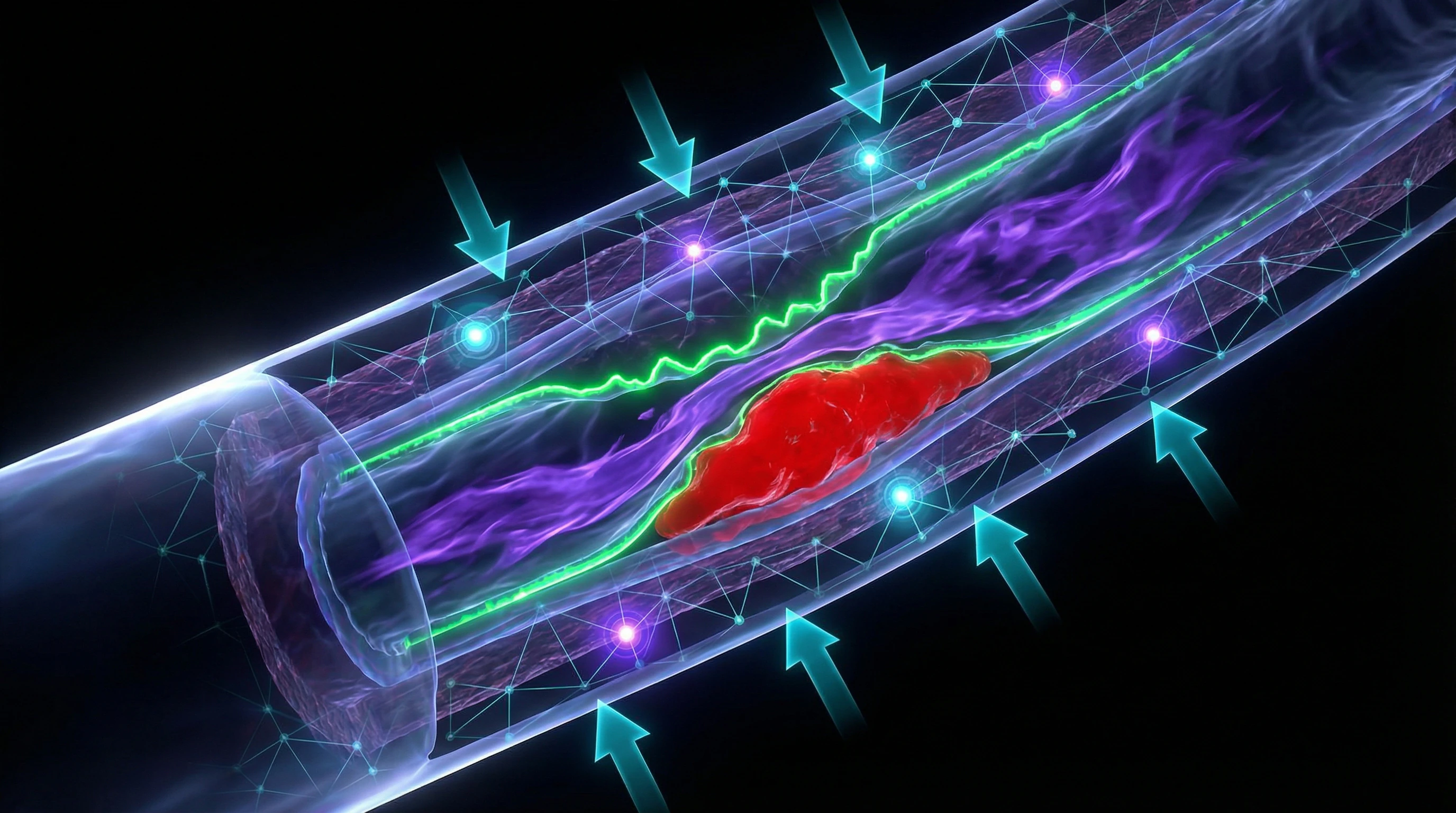
Before examining the evidence of risk, it's necessary to present the most compelling version of the opposing position — that CSM is not a cause of stroke. This is the "steelman" principle: strengthen the opponent's arguments to their most logical and evidence-based form, then test whether they withstand critical analysis. More details in the section Anti-Vaccination Movement.
🧾 Argument 1: Epidemiological studies show no statistically significant association in the general population
Large epidemiological studies analyzing insurance claims and hospitalization databases have found no statistically significant increase in stroke risk after visiting a chiropractor compared to visiting a general practitioner. If CSM were a real cause of stroke, the signal would be visible at the population level.
However, the review (S001) points to critical limitations: small numbers of stroke cases in samples, absence of analysis in immediate time windows, and inapplicability of results to the highest-risk group — patients under 45 years old, in whom CeAD occurs more frequently.
| Study Limitation | Why This Matters |
|---|---|
| Small number of stroke cases in sample | Rare events require large samples for statistical power |
| Absence of analysis in immediate time windows | Stroke may occur within hours after manipulation, not days |
| Exclusion of young patients from analysis | CeAD occurs more frequently in ages 35–50, where the signal may be |
🧾 Argument 2: Clinical guidelines from major professional organizations contain no absolute contraindications
Practice guidelines, such as "Best-Practice Recommendations for Chiropractic Management of Patients With Neck Pain," do not include the presence of CeAD or suspicion of it in the list of absolute contraindications to CSM (S001). The professional community, based on the totality of evidence, does not consider the risk clinically significant.
The authors of (S001) note a problem substitution: these recommendations focus on the question "can CSM cause CeAD," rather than "can CSM dislodge a thrombus in existing CeAD." These are two different mechanisms with different risk profiles.
🧾 Argument 3: Experimental animal studies do not reproduce the mechanism of arterial injury
Studies on animal models have failed to reproduce arterial dissection when simulating cervical spine manipulations. The mechanical forces applied during CSM are insufficient to damage a healthy arterial wall.
However, these studies do not model the situation where the artery is already damaged, and do not assess the risk of thrombus dislodgement — they do not answer the key question (S001).
🧾 Argument 4: Temporal association does not prove causality — patients with CeAD seek care more frequently
Patients with developing arterial dissection experience neck pain and headache, which prompts them to seek chiropractic care. The temporal relationship between the visit and stroke may be the result of reverse causality: not that manipulation caused dissection, but that dissection led to the visit.
This argument is logically sound and is acknowledged by the authors of (S001), but they emphasize: even if CSM does not cause dissection, it may aggravate already existing damage by dislodging a thrombus.
🧾 Argument 5: The absolute number of stroke cases after CSM is extremely small
The absolute number of documented stroke cases directly following CSM remains very low — single or tens of cases per millions of manipulations. From a population risk perspective, this makes CSM one of the safest medical procedures.
- Authors' objection (S001)
- For a patient with existing CeAD, the risk is not population-based — it is individual and may reach critical levels. This requires a special screening protocol and informed consent.
🧾 Argument 6: Many stroke cases after CSM may be spontaneous coincidences
Spontaneous CeAD occurs at a rate of approximately 2–3 cases per 100,000 people per year, and a significant portion of these occur in young people without obvious precipitating factors. It is statistically inevitable that some of these cases will occur within a few days of a chiropractic visit simply by chance.
This argument requires rigorous epidemiological analysis with control groups, but as noted in (S001), existing studies have methodological limitations that prevent definitively separating causality from coincidence.
🧾 Argument 7: Randomized controlled trials show no increase in serious adverse events
In several RCTs comparing CSM with other interventions, no stroke cases were recorded in the CSM groups. This proves the safety of the procedure.
- RCT samples are too small to detect events with a frequency of 1 in 100,000 (S001)
- Study design excludes high-risk patients
- Results are not applicable to real clinical practice, where patients with CeAD are encountered
- RCTs are not the "gold standard" for assessing rare adverse events
Evidence Base: What Systematic Source Analysis Shows About the Mechanism of Thromboembolism in Existing Dissection
Moving from arguments to facts, it's necessary to examine in detail what data exists about the mechanism of immediate stroke after CSM when arterial dissection is already present. The review (S001) is the first study to explicitly formulate this question and analyze relevant sources.
📊 Main Conclusion of the Review: Separating Questions About Dissection Causality and Thromboembolic Risk
The authors of (S001) conclude: "We conclude there is no convincing evidence that CSM can cause CeAD, but when signs and symptoms of CeAD are present, the patient must be informed and referred to medical emergency because in that clinical setting, there is a risk that CSM may dislodge a thrombus and cause thromboembolic stroke." This statement is based on analysis of three types of sources: practice guidelines, epidemiological studies, and experimental research.
Key point: the absence of evidence that CSM *creates* dissection does not eliminate the risk that CSM *exacerbates* existing dissection by dislodging a thrombus. More details in the section Extreme Diets and Miracle Cures.
The absence of evidence for dissection causality does not exclude thromboembolic risk when manipulating in the context of existing dissection—these are two different clinical questions that have been conflated into one debate for decades.
🧪 Practice Guidelines: What They Address and What They Ignore
The review (S001) critically evaluates guidelines such as "Best-Practice Recommendations for Chiropractic Management of Patients With Neck Pain." These documents discuss evidence linking CSM to the occurrence of CeAD, but do not address the scenario when a patient presents with existing dissection.
The authors note: "Their discussion of studies supporting that CSM cannot cause CeAD is a separate discussion from whether CSM can cause stroke." The guidelines do not contradict the thromboembolic risk hypothesis—they simply do not address this question.
| Question | What Guidelines Say | What Remains Unanswered |
|---|---|---|
| Can CSM *create* dissection? | No convincing evidence | — |
| Can CSM *exacerbate* existing dissection? | Not discussed | Risk of thrombus dislodgement and stroke |
| How to detect dissection before manipulation? | Screening protocols proposed | Sensitivity and specificity not established |
📊 Epidemiological Studies: Why Population Risk Doesn't Detect Individual Risk
Three major epidemiological studies cited in the debate have critical methodological limitations identified in (S001): small numbers of stroke cases in samples (reducing statistical power), absence of analysis of immediate time windows after manipulation, and inapplicability to the highest-risk population—patients under 45 years old, who have higher CeAD incidence.
These limitations mean that even if population risk is low, individual risk for a patient with existing CeAD may be high and will not be visible in aggregated data.
- Small stroke sample
- Reduces statistical power; rare events require large cohorts for detection. Consequence: absence of significance does not mean absence of risk.
- Absence of immediate window analysis
- Studies did not isolate strokes occurring within hours of manipulation. Consequence: thromboembolic events may be mixed with background incidence.
- Age selection bias
- Patients under 45 (high-risk CeAD group) are underrepresented in samples. Consequence: risk for young patients remains invisible.
🧬 Animal Experimental Data: Why They Don't Answer the Key Question
One study cited by CSM safety proponents was conducted on animals and could not reproduce arterial dissection when simulating manipulations. The authors of (S001) point to a fundamental problem: this study models impact on a healthy artery, not on an artery with existing dissection and thrombus.
Thus, it cannot answer whether mechanical force can dislodge a thrombus from an intramural hematoma. Moreover, the study design did not include assessment of thromboembolic risk, making it irrelevant to the mechanism under discussion.
An experimental model on a healthy artery cannot answer the question about risk in existing dissection—these are different biomechanical scenarios.
🔬 Clinical Cases of Immediate Stroke: Patterns That Cannot Be Explained by Coincidence Alone
Although the absolute number of documented cases is small, there are descriptions of patients who developed stroke within minutes or hours after CSM, with temporal association so tight that it excludes alternative explanations. The review (S001) references source (S003)—a narrative review that systematizes such cases and analyzes biomechanical mechanisms.
Key pattern: many patients had prodromal symptoms (neck pain, headache) indicating possible existing dissection, but these symptoms were not recognized as contraindications to manipulation.
🧾 Independent Risk Factor: How to Interpret Contradictory Formulations
The text (S001) contains the statement: "Spinal manipulative therapy is an independent risk factor for vertebral artery dissection." This is a formulation from one of the cited sources, and it appears to contradict the review's main conclusion.
However, the authors of (S001) interpret it in the context of reverse causality: patients with incipient dissection more often seek manual therapy due to pain, creating a statistical association but not necessarily a causal relationship.
- Patient experiences neck pain (possible sign of incipient dissection)
- Patient seeks manual therapy
- An association appears in the data: CSM ↔ CeAD
- But causality may be reversed: pain → CSM, not CSM → dissection
- Nevertheless, the question remains: can manipulation exacerbate existing dissection?
- To this question, the authors of (S001) give an affirmative answer based on biomechanical plausibility
The distinction between "CSM causes dissection" and "CSM may exacerbate dissection" is critical for clinical practice. The first statement is not supported; the second remains biomechanically plausible and requires clinical caution.
Mechanism of Causality: How Mechanical Force Can Dislodge a Thrombus and Cause Cerebral Artery Occlusion
Understanding the mechanism is critically important for assessing the plausibility of the hypothesis. If there is no biologically plausible pathway from manipulation to stroke, even a temporal association may be coincidental. More details in the section Bioresonance Therapy.
But if the mechanism is plausible and supported by anatomical and biomechanical data, this strengthens the evidence base.
🧬 Anatomy of Dissection: Why Thrombus Forms at the Site of Intimal Injury
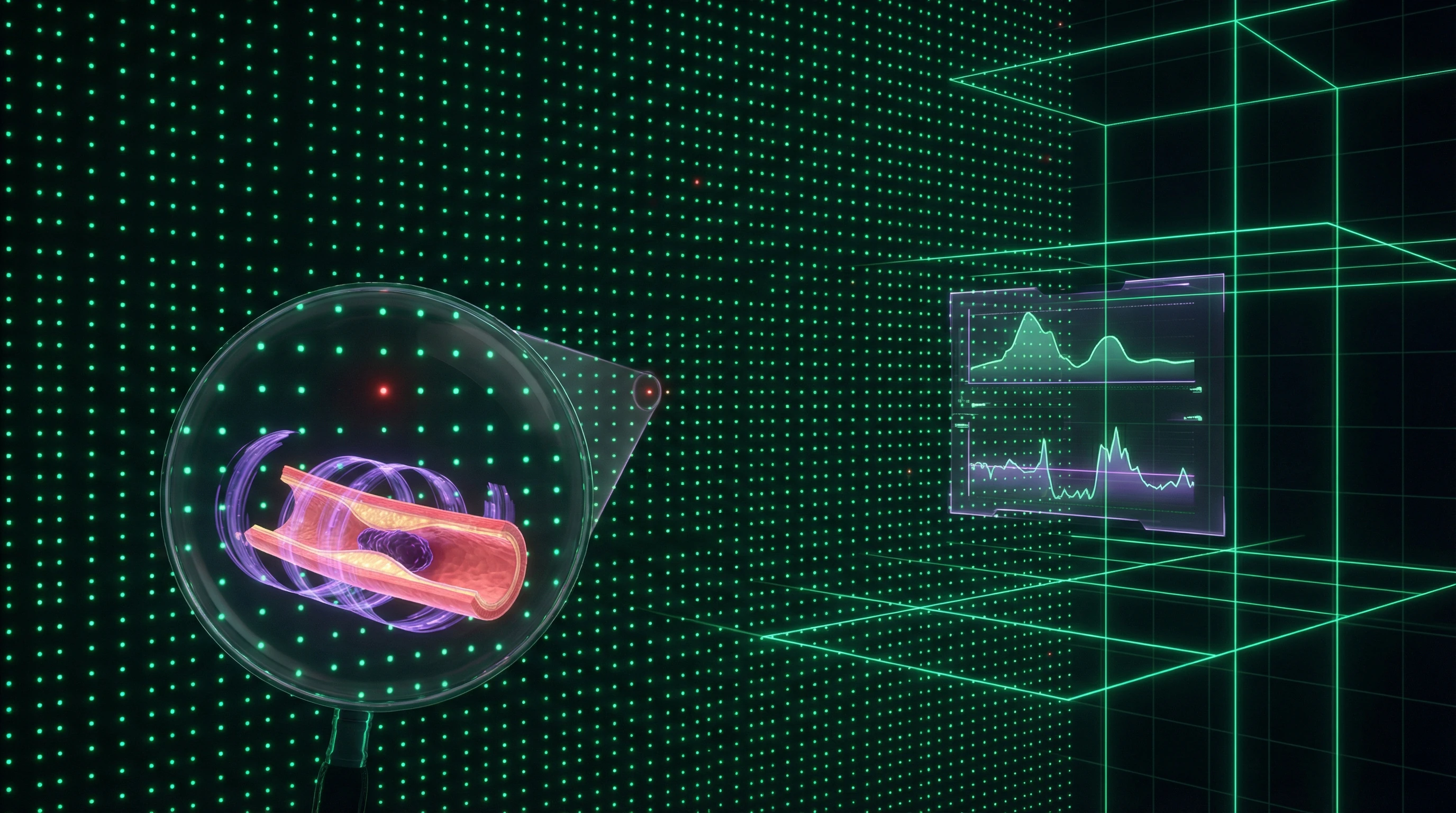
Cervical artery dissection begins with a tear in the inner lining (intima) of the arterial wall. Blood under pressure penetrates between the layers of the wall, forming an intramural hematoma.
At the site of intimal tear, subendothelial collagen is exposed, which activates the coagulation cascade and forms a thrombus (S001, S003). This thrombus may be partially attached to the wall, but part of its mass is located in the lumen of the hematoma and is potentially mobile—it is this part that presents an embolic risk.
🔁 Biomechanics of Manipulation: What Forces Are Applied to the Cervical Spine
Cervical spine manipulation involves rapid rotational movement with force applied to the vertebrae. This creates mechanical stress not only in the joints, but also in surrounding soft tissues, including arteries passing through the transverse processes of cervical vertebrae (vertebral arteries) and along the neck (carotid arteries).
If an artery is already damaged and contains a thrombus, sudden changes in geometry and pressure can create shear forces sufficient to dislodge a fragment of the thrombus (S001, S003).
Dislodging an existing thrombus requires far less energy than creating a dissection from scratch—it's sufficient to change the vessel geometry or create a local pressure change.
🧷 Hydrodynamic Mechanism: How Changes in Pressure and Blood Flow Can Dislodge a Thrombus
In addition to direct mechanical impact on the arterial wall, manipulation can alter hemodynamics at the dissection site. Sudden changes in arterial angle or temporary compression create turbulent flow and pressure changes, which increase shear stress on the thrombus surface.
If the thrombus is insufficiently organized (characteristic of fresh dissections), it can fragment, and emboli migrate to distal portions of the arterial tree, including cerebral arteries (S003).
- Fresh thrombus: loose structure, high fragmentation risk
- Organized thrombus (weeks): fibrosed mass, firmly attached
- Chronic thrombus (months): fully integrated into wall, minimal embolic risk
⚙️ Time Window: Why Risk Is Highest in the First Days After Dissection Formation
Thrombus at the dissection site undergoes stages of organization: from a fresh, loose clot to a fibrosed, firmly attached mass. In the first days after dissection, the thrombus is most vulnerable to mechanical dislodgement.
This explains why cases of immediate stroke after CSM often occur in patients with prodromal symptoms (neck pain, headache) that indicate recent dissection (S001, S003). If manipulation were performed several weeks after dissection, when the thrombus is already organized, embolic risk would be lower.
🧠 Why This Mechanism Doesn't Contradict the Lack of Evidence That CSM Causes Dissection
The key distinction: creating a dissection from scratch requires significant mechanical energy, sufficient to rupture a healthy arterial intima. Epidemiological and experimental data do not confirm that forces applied during CSM reach this threshold (S001).
Thus, the mechanism of thromboembolism with existing dissection is biomechanically plausible, even if the mechanism of creating dissection is not confirmed. This means that two clinical hypotheses—"CSM causes dissection" and "CSM can trigger embolism with pre-existing dissection"—require different levels of evidence and should not be conflated in the same debate.
Conflicts and Uncertainties: Where Sources Diverge and Which Questions Remain Unanswered
No area of medicine is free from contradictions. The debate about CSM and stroke is a classic example: data are ambiguous, interpretations diverge, research is fragmented. More details in the section Statistics and Probability Theory.
🧩 Population Risk vs Individual Risk
Epidemiological studies show the rarity of stroke after manipulation (S001, S007). But rarity at the population level does not exclude mechanism at the individual level.
The paradox: if arterial dissection has already begun, mechanical displacement of a thrombus becomes a local trigger, not a statistical anomaly. Population data remain silent about subgroups with pre-existing pathology.
- Low event frequency in a cohort ≠ absence of causal relationship in high-risk subgroup
- Dissection may be asymptomatic until the moment of manipulation
- Temporal proximity of event to procedure does not prove, but does not exclude causality
Diagnostic Uncertainty: When Dissection Remains Invisible
Arterial dissection is often diagnosed post-factum, after stroke (S003). Before the event, neither patient nor physician knows of its presence.
Absence of diagnosis before manipulation is not proof of absence of dissection. It is proof of absence of diagnostics.
The question remains open: how many patients with subclinical dissection undergo manipulation without consequences, and why do some develop stroke while others do not?
Mechanism vs Association: What Requires Proof
| Level of Evidence | What Is Known | What Is Unknown |
|---|---|---|
| In vitro mechanism | Thrombus can be displaced under mechanical force | Minimum force required for displacement in vivo |
| Animal models | Manipulation causes endothelial injury | Direct translation to human artery |
| Clinical observations | Strokes occur after manipulation | Why they do not occur in most cases |
Sources (S002, S005) document cases but do not explain the selectivity of risk. This is not criticism—it is recognition of the boundaries of current data.
Conflict of Interest in Interpretation
Proponents of CSM safety often rely on population data and event rarity. Critics point to mechanism and cases but cannot predict who is at risk.
- Problem for Safety Proponents
- Event rarity is interpreted as absence of risk, though rarity may mean rarity of diagnosis or rarity of trigger meeting vulnerability
- Problem for Critics
- Mechanism and cases are interpreted as proof of causality, though they prove only possibility, not probability
Both positions ignore the main point: prospective studies with arterial imaging before and after manipulation in patients with risk factors are needed (S006).
What Remains Unanswered
Which patients are at risk? Which manipulations are more dangerous than others? What interval between dissection and stroke is critical? These questions require not opinions, but data.
Until then, the debate will cycle: one side will say "rare," the other will respond "but possible," and both will be right and wrong simultaneously.