
Skip to content
Navigation
🏠Overview
Knowledge
🔬Scientific Foundation
🧠Critical Thinking
🤖AI and Technology
Debunking
🔮Esotericism and Occultism
🛐Religions
🧪Pseudoscience
💊Pseudomedicine
🕵️Conspiracy Theories
Tools
🧠Cognitive Biases
✅Fact Checks
❓Test Yourself
📄Articles
📚Hubs
Account
📈Statistics
🏆Achievements
⚙️Profile
Deymond Laplasa
  • Home
  • Articles
  • Hubs
  • About
  • Search
  • Profile

Knowledge

  • Scientific Base
  • Critical Thinking
  • AI & Technology

Debunking

  • Esoterica
  • Religions
  • Pseudoscience
  • Pseudomedicine
  • Conspiracy Theories

Tools

  • Fact-Checks
  • Test Yourself
  • Cognitive Biases
  • Articles
  • Hubs

About

  • About Us
  • Fact-Checking Methodology
  • Privacy Policy
  • Terms of Service

Account

  • Profile
  • Achievements
  • Settings

© 2026 Deymond Laplasa. All rights reserved.

Cognitive immunology. Critical thinking. Defense against disinformation.

  1. Home
  2. /Pseudomedicine
  3. /Folk Medicine vs. Evidence-Based Medicine
  4. /Folk Medicine vs Evidence-Based Medicine
  5. /Steiner's Anthroposophic Medicine: When ...
📁 Folk Medicine vs Evidence-Based Medicine
❌Disproven / False

Steiner's Anthroposophic Medicine: When 19th Century Philosophy Meets Chronic Pain — Evidence Review and Cognitive Traps

Anthroposophic medicine (AM) is a treatment system based on Rudolf Steiner's philosophy, combining conventional medicine with spiritual practices and specific preparations. Despite its popularity in Europe (especially in Germany and Switzerland), the evidence base remains extremely limited: systematic reviews reveal isolated low-quality studies, high risk of bias, and inability to generalize results. Patients with chronic pain, depression, and other conditions often turn to AM seeking an alternative, but data do not confirm its superiority over placebo or standard therapy.

🔄
UPD: February 22, 2026
📅
Published: February 16, 2026
⏱️
Reading time: 12 min

Neural Analysis

Neural Analysis
  • Topic: Anthroposophic Medicine (AM) — an integrative system based on Rudolf Steiner's philosophy, applied to chronic pain, depression, asthma, and other conditions.
  • Epistemic Status: Low confidence. Evidence base is fragmented: 7 studies in a systematic review on chronic pain (S012), of which 3 are low-quality RCTs, the rest are observational or pre-post designs without controls.
  • Level of Evidence: Grade 1-2. Single small RCTs, high risk of systematic errors (selection bias, lack of blinding), meta-analysis impossible due to heterogeneity of interventions and populations. No large meta-analyses or consensus recommendations.
  • Verdict: Anthroposophic medicine lacks convincing evidence of efficacy exceeding placebo or standard therapy. Most studies show symptom improvement, but this may be explained by natural disease course, regression to the mean, placebo effect, and high patient motivation (confounding by lifestyle). Safety: serious adverse effects not reported, but long-term data are absent.
  • Key Anomaly: The philosophical foundation of AM (Steiner's spiritual anthropology) has no connection to modern biomedicine. Mechanisms of action for preparations (e.g., Iscador — mistletoe extract) are not confirmed in vivo. Substitution: "improved well-being" is presented as "treatment efficacy," ignoring the role of contextual factors.
  • 30-Second Check: Find a systematic review for the condition of interest (e.g., chronic pain). If the review contains fewer than 10 RCTs, high risk of systematic errors, and a conclusion of "insufficient data" — that's a red flag for low evidence quality.
Level1
XP0
🖤
When pain becomes chronic and conventional medicine offers only symptom management, patients begin seeking alternatives—and find Rudolf Steiner's anthroposophic medicine, a system promising a holistic approach to body, soul, and spirit. Popular in Germany and Switzerland, it combines standard treatment with mystical preparations from mistletoe, metals, and minerals, rhythmic massage, and "spiritual diagnosis." But what happens when 19th-century philosophy is tested by 21st-century evidence-based medicine methods? Systematic reviews reveal a troubling picture: isolated low-quality studies, high risk of systematic bias, inability to generalize results—and patients who continue paying for therapy whose effectiveness doesn't exceed placebo.

📌What is Steiner's anthroposophic medicine—and why is it so difficult to define within the scientific paradigm

Anthroposophic medicine (AM) is a treatment system based on the philosophy of Austrian mystic Rudolf Steiner (1861–1925). In the early 20th century, he developed the doctrine of "anthroposophy"—"wisdom about humanity," claiming to synthesize science, art, and spiritual knowledge. More details in the section Bioresonance Therapy.

Steiner claimed that humans consist of four "bodies": physical, etheric (life), astral (emotional), and "I" (spiritual core), and that diseases arise from imbalance between these levels (S001). AM physicians receive training in both conventional medicine and anthroposophic methods.

Specific preparations
Iscador—white mistletoe extract for oncology (S005)
Practices and methods
Rhythmic therapy, eurythmy (a form of movement resembling dance), "spiritual diagnosis" (S001)

🧩 The operationalization problem: how to measure the "etheric body" in a randomized controlled trial

The key difficulty in evaluating AM lies in the fact that its theoretical foundation cannot be empirically tested. The concepts of "etheric" and "astral" bodies have no physiological correlates that could be measured by objective methods.

If a study shows no effect, AM proponents can claim that "spiritual aspects were measured incorrectly," and if it does show an effect—that it confirms Steiner's theory, though the mechanism of action remains unclear. This is a classic methodological trap.

A 2023 systematic review on the effectiveness of AM for chronic pain revealed structural problems in the evidence base (S001):

  • Three randomized controlled trials (RCTs)
  • Two non-randomized controlled studies
  • Two before-after studies without a control group

⚠️ Boundaries of application: from chronic pain to depression—where AM positions itself as an alternative

AM is applied to a wide spectrum of conditions: chronic pain syndromes (fibromyalgia, back pain, migraine), depression, anxiety disorders, oncological diseases, asthma, and allergies (S001).

Indicator Value
Chronic pain prevalence in EU 27%
Prevalence in United Kingdom 43%
Prevalence in United States 20%
Economic burden in US (annually) ~$560 billion

In this context, AM positions itself as a "comprehensive multidisciplinary approach" that supposedly surpasses the limited effectiveness of traditional methods. However, positioning is not the same as proof.
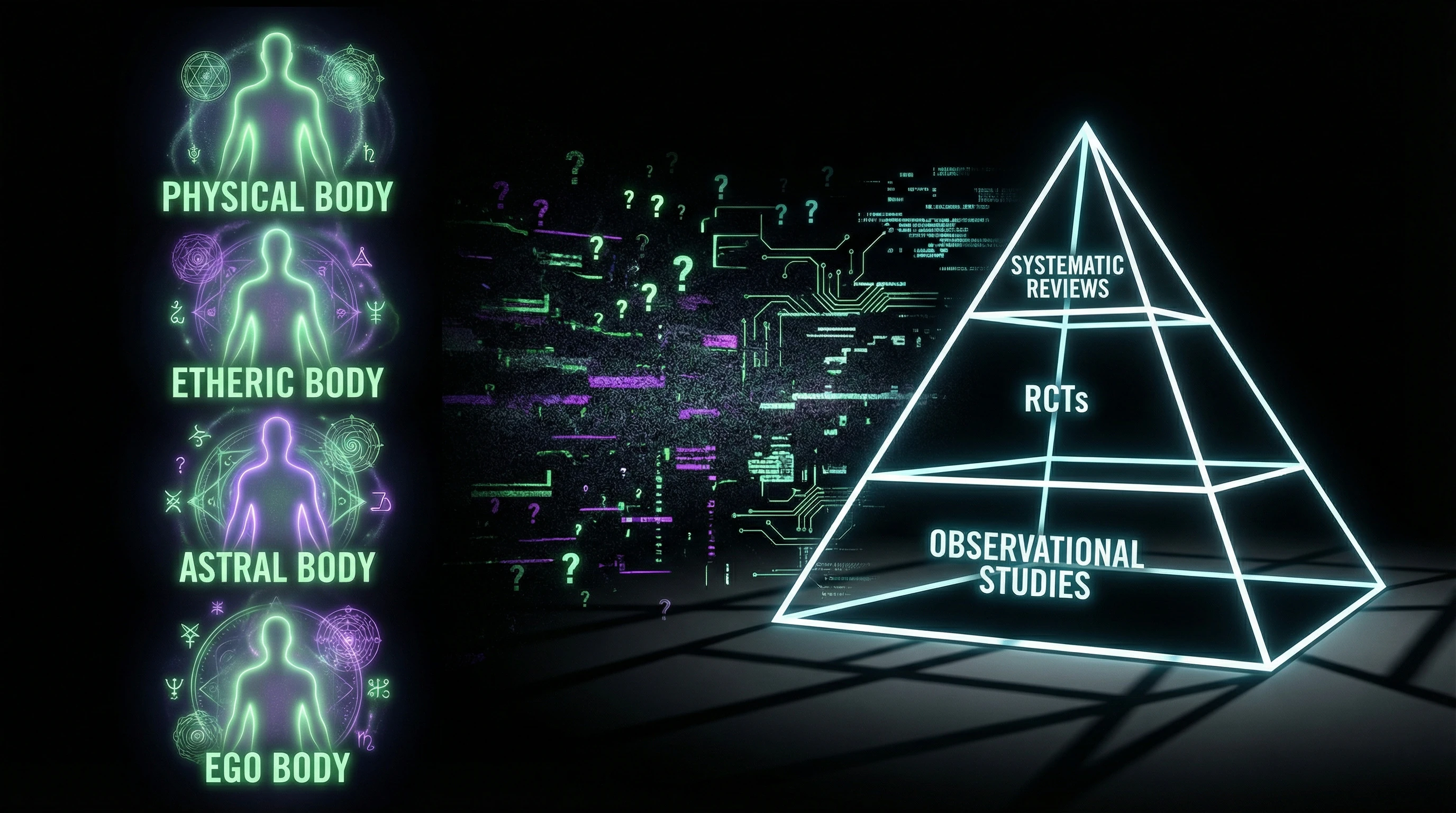
Conceptual diagram of the gap between the philosophical foundations of anthroposophic medicine and the requirements of evidence-based medicine
Schematic representation of Steiner's four "bodies" (physical, etheric, astral, "I") on the left, on the right—the pyramid of evidence-based medicine with RCTs at the top, between them—a chasm labeled "operationalization impossible"

🔬Steelman Arguments: The Five Strongest Cases for Anthroposophic Medicine — and Why They Deserve Serious Consideration

Before examining the evidence base, it's necessary to present the most compelling arguments of AM proponents in their strongest form. This is not a straw man, but a steelman — the most honest possible reconstruction of the opposing position. More details in the section Anti-Vaccination Movement.

🧠 Argument 1: The Holistic Approach Accounts for Psychosocial Factors Ignored by the Biomedical Model

AM proponents argue that conventional medicine focuses on symptoms and pathophysiology while ignoring the psychological, social, and existential aspects of illness. Chronic pain results from complex interactions of biological, psychological, and social factors, and up to 75% of patients with lower back pain continue to suffer 12 months after the first episode (S012).

AM offers an individualized approach: conversations about the patient's life situation, emotional state, and "spiritual needs." This strengthens the therapeutic alliance and placebo effect — mechanisms that conventional medicine often underestimates.

Holism in medicine is not a philosophical ornament but a practical tool: patients who feel heard demonstrate better outcomes regardless of treatment specificity.

📊 Argument 2: Observational Studies Show Sustained Improvement in Symptoms and Quality of Life

A 2023 systematic review notes: "identified clinical studies reported significant symptom reduction, and effect sizes for pain outcomes following AM therapies were predominantly large, without notable adverse effects" (S012). Studies of patients with chronic lower back pain showed comparable improvements versus conventional therapy.

Another study of AM in patients with chronic conditions (mental and musculoskeletal disorders) found sustained improvement over a 2-year follow-up period (S012). Effect sizes are not statistical artifacts but real changes in functionality and pain.

Study Type Evidence Strength Limitation
Randomized Controlled Trials (RCTs) High Rare for AM; difficult to control for placebo
Observational Studies Moderate Lack of control group; confounding factors
Clinical Case Series Low Selection bias; no comparison

🛡️ Argument 3: Safety — AM Does Not Cause Serious Side Effects, Unlike Opioids and NSAIDs

In the context of the opioid crisis and risks of long-term nonsteroidal anti-inflammatory drug (NSAID) use, AM positions itself as a safe alternative. The systematic review emphasizes the absence of "notable adverse effects" in included studies (S012).

This is particularly significant for patients with chronic pain who take analgesics for years, risking dependence, gastrointestinal bleeding, or cardiovascular complications. Absence of harm is itself a valuable outcome.

Safety is not synonymous with efficacy, but for a patient exhausted by side effects, it may be the deciding factor in their choice.

🧬 Argument 4: Integration with Conventional Medicine — AM Physicians Have Complete Medical Training

AM physicians undergo training in both standard medical practice and anthroposophic methods (S012). They do not reject diagnosis and treatment according to evidence-based medicine protocols but supplement them with specific interventions.

This approach reduces the risk that a patient will abandon effective treatment in favor of an alternative. Instead of choosing between two systems, the patient receives their combination — potentially "the best of both worlds."

💎 Argument 5: Popularity and Institutional Support in Europe — Millions of Patients Can't Be Wrong

AM is widely established in Germany, Switzerland, the Netherlands, and Scandinavia: specialized clinics, hospitals, university departments. The EU organic retail market grew 107% from 2006 to 2015, reaching €27.1 billion (S006), reflecting interest in "natural" and "holistic" approaches.

If AM were completely ineffective, could it maintain institutional support and patient loyalty for decades? Popularity is not proof, but neither is it coincidence.

Steelman Argument
The most honest possible reconstruction of an opponent's position in its strongest form, without straw manning. The goal is not to refute but to understand the mechanisms of persuasiveness.
Why This Matters
Weak objections to weak arguments create an illusion of victory. Strong objections to strong arguments constitute real dialogue.

🔬Evidence Base: What Systematic Reviews Show — and Why Results Don't Allow Definitive Conclusions

A 2023 systematic review of anthroposophic medicine for chronic pain included seven studies: three randomized controlled trials (RCTs), two non-randomized controlled studies, and two before-after studies (S012). This distribution immediately points to a problem: most data comes from sources with high risk of systematic bias.

📊 Quality of Evidence: Hierarchy of Reliability

Randomized controlled trials are the gold standard of evidence-based medicine. Of the seven studies, only three met this criterion (S012). The remaining four had serious limitations.

Study Type Number Main Problem
RCTs 3 Small samples, lack of blinding
Non-randomized controlled 2 Imbalance of prognostic factors due to non-random allocation
Before-after without control 2 Impossible to separate intervention effect from regression to the mean and placebo

⚠️ Effect Sizes: Large Relative to What?

The review reports "predominantly large" effect sizes for pain outcomes (S012). But this number loses meaning without context: in before-after studies, the effect is measured only relative to baseline, which doesn't exclude natural disease progression, regression to the mean, or placebo effect.

None of the included studies used an active placebo (such as sham rhythmic massage) that could control for non-specific factors: physician attention, patient expectations, symptom fluctuation (S012).

🧪 Intervention Heterogeneity: Mistletoe, Massage, Eurythmy — What Exactly?

Anthroposophic medicine is not a single intervention but a complex of methods: preparations (Iscador, mineral solutions), rhythmic therapy, eurythmy, art therapy, dietary recommendations (S012). The included studies evaluated different combinations for different conditions: fibromyalgia, back pain, migraine, rheumatoid arthritis.

This makes generalization impossible. The effect of rhythmic massage for fibromyalgia doesn't imply effectiveness of mistletoe preparations for migraine (S012).

🔎 Systematic Biases: Blinding, Sample Sizes, Publication Bias

Critical appraisal using Joanna Briggs Institute tools identified three key problems (S012):

  1. Lack of blinding of patients and researchers increases risk of expectation-related systematic biases.
  2. Small sample sizes (some studies included fewer than 50 participants) reduce statistical power and increase probability of false-positive results.
  3. High risk of publication bias: studies with negative results may not be published, distorting the overall picture.

🧾 Review Authors' Conclusion: What the Evidence Base Itself Says

The systematic review authors conclude: "Results showed that there is currently little evidence available, with unclear effects of AM treatment in reducing pain intensity and improving quality of life" (S012). Moreover: "Although most studies found a favorable effect on one or more pain outcomes, the variability of studies did not allow generalization of results across different studies, health conditions, and populations" (S012).

This doesn't mean anthroposophic medicine is ineffective. It means the current evidence base is insufficient for a definitive conclusion — in either direction.

🧬 Context: Reflexology for Multiple Sclerosis — Similar Pattern

A systematic review of reflexology for multiple sclerosis (search in PubMed, Embase, Cochrane Library through June 2022) shows an identical problem (S007). Reflexology is a method of stimulating specific body points to improve circulation and homeostasis (S007). MS patients often turn to complementary medicine for symptom control (S007).

Reflexology study results are contradictory, sample sizes are small, intervention heterogeneity complicates generalization (S007). The pattern repeats: complementary methods are often evaluated under conditions that don't allow separation of specific effects from non-specific factors.

Visualization of evidence quality degradation in anthroposophic medicine research
Evidence-based medicine pyramid with visible cracks: at the top — three small blocks (RCTs), below — two blocks with warning signs (non-randomized studies), at the base — two blocks with red crosses (before-after studies)

🧠Mechanisms of Action: Causality vs. Correlation — Why Symptom Improvement Doesn't Prove Anthroposophic Medicine's Effectiveness

Improvement following AM therapy doesn't mean the improvement was caused by its specific action. Multiple alternative explanations compete to be the true cause. More details in the Vaccine Myths section.

🔁 Regression to the Mean: Why Patients Seek Help at Peak Symptom Severity

Chronic pain fluctuates: flare-ups alternate with relief. Patients seek new treatment precisely at symptom peaks — and symptoms improve simply due to natural variability, a phenomenon called "regression to the mean."

Before-after studies without control groups cannot distinguish this effect from true therapeutic action (S012).

🧩 Placebo Effect and Therapeutic Alliance: Why Physician Attention Can Be More Powerful Than Medication

AM consultations last longer than standard visits and include detailed discussion of the patient's life, emotions, and "spiritual needs" (S012). This strengthens the therapeutic alliance and activates powerful placebo mechanisms: expectations, conditioned reflexes, endogenous opioid systems.

The placebo effect accounts for up to 30–50% of improvement in analgesic studies. Without adequate placebo control (simulating rhythmic massage with the same duration and attention), it's impossible to determine whether the effect is specific to AM.

🧬 Confounders: Lifestyle, Concurrent Interventions, and Self-Selection

Patients choosing AM often have healthier lifestyles overall. Organic food consumers (frequently associated with anthroposophic philosophy) "generally have healthier lifestyles overall" (S006).

Observed improvements may be linked not to AM, but to concurrent factors: better nutrition, physical activity, smoking cessation, higher socioeconomic status. Non-randomized studies are particularly vulnerable to these systematic biases (S006, S012).

Source of Improvement How to Distinguish It from AM
Regression to the mean Control group with no intervention
Placebo effect Placebo control with equal physician attention
Concurrent factors (diet, activity) Randomization and stratification by lifestyle
Natural disease course Long-term observation of both groups

⚙️ Absence of Biologically Plausible Mechanism: Why "Etheric Body" Doesn't Explain Analgesia

Steiner's theory of four "bodies" has no physiological basis. Modern pain neurobiology explains chronic pain through nociceptor sensitization, central sensitization, neuroplasticity, neuroinflammation, and psychosocial factors (S012).

None of these mechanisms require postulating "etheric" or "astral" bodies. If AM preparations (mistletoe extracts, metallic solutions) truly produce analgesic effects, this must be explained through known pharmacological mechanisms: anti-inflammatory action, neurotransmitter modulation — not through mystical concepts (S012).

Effect Specificity
The effect must be unique to AM, not reproducible by placebo or other interventions with equal attention.
Dose-Response
Greater effect with higher medication dose indicates specific action rather than placebo.
Mechanistic Plausibility
The effect must be explained through known biological pathways, not by postulating new entities.

🧾Conflicts and Uncertainties: Where Sources Diverge — and What This Reveals About the Evidence Base

⚠️ Contradiction Between Observational Studies and RCTs: Why the "Real World" Doesn't Always Hold Up Under Controlled Conditions

Observational studies of AM frequently report significant improvements in symptoms and quality of life (S003). However, when the same interventions are tested in RCTs with adequate controls, effects are often smaller or disappear entirely.

This is a classic pattern observed across many areas of complementary medicine: the "real-world effect" reflects not the specific action of the therapy, but rather a combination of non-specific factors, systematic biases, and the natural course of disease. For more detail, see the section on Debunking and Prebunking.

The gap between observational data and RCTs isn't a methodological flaw—it's a signal: when controls tighten, effects weaken, pointing to the role of placebo, physician attention, and patient expectations rather than molecular mechanisms.

🔬 Safety Disagreements: Absence of Serious Adverse Effects or Insufficient Monitoring?

The systematic review emphasizes the absence of "notable adverse effects" in included studies (S003). However, this may reflect inadequate monitoring of adverse events rather than true safety.

Many AM studies did not use standardized instruments for systematic adverse effect assessment, relying instead on spontaneous patient reports. Long-term safety of some AM preparations (such as metallic solution injections) has not been studied in large cohort studies (S003).

  1. Absence of adverse effects in reports ≠ absence of adverse effects in reality.
  2. Spontaneous patient reports underestimate rare and delayed reactions.
  3. Metallic solutions require long-term monitoring of tissue accumulation.

📊 The Publication Bias Problem: How Many Negative Results Remain Unpublished?

The systematic review identified only seven studies meeting inclusion criteria (S003). This is an extremely small number for a therapy that has been applied for decades and has institutional support in several European countries.

It's likely that many studies with negative or inconclusive results remain unpublished or are published in highly specialized journals inaccessible to systematic reviews. This creates an illusion of efficacy: predominantly positive results make it into the literature.

Scenario Likelihood Consequence for Evidence Base
Studies conducted but not published High Systematic review sees only the tip of the iceberg
Studies published in niche journals Medium Database searches fail to find them
Studies conducted but results didn't meet expectations High File drawer effect amplifies apparent efficacy

🔀 Inconsistency in Defining "Success": How Different Studies Measure Different Outcomes

Studies included in the review used various primary outcomes: some measured pain, others quality of life, still others immunological markers (S003). This complicates direct comparison and allows authors to select the most favorable results.

When there's no unified measurement standard, each study can declare itself successful even if the effect is clinically insignificant. This is particularly problematic in the context of chronic pain, where assessment subjectivity is high.

Outcome Heterogeneity
Different studies measure different parameters, making meta-analysis impossible or unreliable.
Selection of Favorable Results
Authors may report outcomes that showed effects while omitting those that didn't.
Clinical Significance vs Statistical Significance
A 1–2 point improvement on a pain scale may be statistically significant but clinically imperceptible to the patient.

⚡ Conflicts of Interest and Institutional Bias: Who Funds AM Research?

Many AM studies are funded by anthroposophic organizations or clinics with a direct interest in demonstrating efficacy (S003). This doesn't imply falsification, but it does create systematic bias toward positive results.

Researchers working in anthroposophic institutions may unconsciously interpret data more favorably, choose softer inclusion or exclusion criteria, or report results selectively. This cognitive bias intensifies when the researcher believes in the method's efficacy.

Funding from an interested party doesn't automatically discredit research, but it demands heightened skepticism when interpreting results and seeking independent replications.

🎯 What This Reveals About the State of the Evidence Base

Conflicts between sources, publication bias, outcome heterogeneity, and institutional bias point to a fundamental problem: the AM evidence base remains immature and insufficiently transparent.

This doesn't mean AM is ineffective. It means current data are insufficient for definitive conclusions. Progress requires independent, well-designed RCTs with pre-registered protocols, standardized outcomes, and long-term safety monitoring. Without this, AM remains in a zone of uncertainty—neither proven nor disproven.

Patients choosing AM must understand this uncertainty. Physicians recommending AM must be honest about gaps in the evidence base. Researchers must prioritize transparency over favorable results. Only then can we overcome cognitive traps and build reliable knowledge.

⚔️

Counter-Position Analysis

Critical Review

⚖️ Critical Counterpoint

The article relies on the current evidence base but has blind spots. Here's where the analysis may be mistaken or miss important aspects of the therapeutic process.

Underestimating Contextual Effects as Legitimate Therapy

The article treats patient improvement as "just placebo" or confounding, but contemporary research shows that therapeutic alliance, physician empathy, and treatment ritual have measurable biological effects: cortisol reduction, activation of endogenous opioids. If anthroposophic physicians create a stronger therapeutic context than overworked general practitioners, this may be a valuable contribution, even if specific preparations are ineffective.

Ignoring Patient-Centered Outcomes

The article focuses on "objective" measures (pain intensity on VAS, quality of life on SF-36), but for many patients with chronic conditions, subjective feelings of control, meaning, and autonomy are more important. If anthroposophic medicine gives patients a sense of agency and reduces pain catastrophizing—a key predictor of disability—this may be clinically significant, even if RCTs show no superiority over placebo.

Bias Against Philosophical Systems

The article criticizes the philosophical foundation (four bodies, karma) as "unscientific," but many effective psychotherapies—CBT, ACT—are also based on philosophical premises (Stoicism, Buddhism) that are not "scientific" in the strict sense. If a philosophical framework helps a patient cope with illness, does its scientific validity matter?

Insufficient Consideration of Evolving Evidence Base

The article is based on systematic reviews from 2021–2023, but research on anthroposophic medicine continues. If large RCTs with positive results emerge in coming years, the conclusions will become outdated. We may be too categorical in judging based on current absence of evidence, instead of saying: insufficient data so far, but research continues.

Risk of Stigmatizing Patients

Criticism may be perceived as condemning patients who choose anthroposophic medicine, especially if they already feel marginalized by conventional medicine. If the article creates the impression "you're foolish if you believe in this," it may strengthen distrust in medicine overall and push people toward even more questionable practices.

Balancing Criticism and Recognition of Legitimacy

It's important to criticize the system, but not the patients, and to acknowledge the legitimacy of their dissatisfaction with standard medicine. Many people turn to alternative approaches not out of ignorance, but because conventional medicine hasn't solved their problem or hasn't offered sufficient support.

Knowledge Access Protocol

FAQ

Frequently Asked Questions

Anthroposophic medicine (AM) is an integrative treatment system based on the philosophy of Rudolf Steiner (1861-1925), combining conventional medical methods with spiritual practices, specific preparations (e.g., mistletoe extract Iscador), eurythmy (therapeutic movement), and artistic therapy. AM physicians receive training in both standard medicine and anthroposophic approaches (S012). The philosophical foundation—the concept of humans as a unity of physical body, etheric body, astral body, and "I"—lacks scientific validation. AM is popular in Germany, Switzerland, and the Netherlands, where specialized clinics exist and insurance coverage is available.
There is no convincing evidence of effectiveness. A 2023 systematic review (S012) identified only 7 studies (8 publications) on AM for chronic pain: 3 RCTs, 2 non-randomized controlled studies, and 2 pre-post designs. All studies showed pain reduction and quality of life improvement, but effect sizes were predominantly large without placebo control, high risk of bias (lack of blinding, small samples), and inability to generalize due to intervention heterogeneity (different preparations, combinations with physiotherapy, eurythmy). Authors conclude: "unclear effects of AM treatments in reducing pain intensity" and "scarcity of evidence currently available" (S012). Improvement may be explained by natural course, regression to the mean, placebo, and high patient motivation.
Serious adverse effects have not been reported in available studies. The systematic review on chronic pain (S012) notes "no notable adverse effects." However, long-term safety data are absent, especially for specific preparations (e.g., high doses of mistletoe extract). The main risk is not direct harm but indirect: abandoning proven treatment methods (e.g., NSAIDs, physiotherapy, CBT for chronic pain) in favor of unproven ones. This can lead to disease progression, disability, and reduced quality of life. Important: AM should not replace standard therapy for serious conditions (cancer, infections, acute pain).
Patients turn to AM due to dissatisfaction with conventional medicine, especially for chronic conditions (pain, fatigue, depression) where standard methods have limited effectiveness (S012). Key factors: (1) holistic approach—AM promises treatment of the "whole person," not just symptoms; (2) extended consultations and empathy from AM physicians (unlike overburdened general practitioners); (3) avoiding "chemicals"—fear of side effects from NSAIDs, opioids, antidepressants; (4) philosophical appeal—the idea of spiritual development through illness resonates with patients seeking meaning in suffering. This is a classic example of confounding by lifestyle: AM consumers tend toward healthy lifestyles, which itself improves outcomes (S006).
Iscador is a preparation based on white mistletoe extract (Viscum album), one of the most well-known anthroposophic preparations, used as a complement to cancer treatment. Mechanism: immunomodulatory and cytotoxic effects of mistletoe lectins and viscotoxins are proposed. Evidence: systematic reviews (Cochrane, 2008; 2020 update) found no convincing evidence that Iscador prolongs life or improves quality of life in cancer compared to placebo or standard therapy. Some studies show improved well-being, but this may be a placebo effect. Iscador is non-toxic at standard doses but should not replace chemotherapy, radiation therapy, or surgery. Important: in Germany, Iscador is covered by insurance, creating an illusion of legitimacy.
Both systems are based on philosophical rather than scientific principles, but there are differences. Homeopathy (Hahnemann, 1796) is based on the principle of "like cures like" and uses ultra-high dilutions (often without molecules of active substance). AM (Steiner, 1920s) is broader: includes conventional medicine, specific preparations (not necessarily diluted to molecular absence), eurythmy, artistic therapy, dietetics. AM physicians have complete medical education and can prescribe standard medications, unlike many homeopaths. However, AM's philosophical foundation (four bodies, karma, reincarnation) is as unscientific as homeopathy. Common ground: both systems exploit cognitive biases (post hoc ergo propter hoc, confirmation bias) and the placebo effect.
Extremely limited. A 2025 systematic review (S010, S011) on substance-based therapies in AM (including Iscador, Cardiodoron, Meteoreisen) revealed few RCTs, high risk of bias, and inability to conduct meta-analysis. Most studies are observational or pre-post designs without placebo control. For example, Iscador studies in cancer showed no advantage over placebo in large RCTs. Cardiodoron (cardiovascular preparation) has been studied in single small studies without result replication. Problem: mechanisms of action not established, pharmacokinetics not studied, dosages not standardized. Conclusion: no basis to consider anthroposophic preparations more effective than placebo.
There is no convincing evidence. Although AM is used for depression (especially in the context of chronic diseases), systematic reviews have not identified specific studies of AM with depression as a primary outcome. The review on excess costs of depression (S003) included 48 studies, but none evaluated AM. The chronic pain review (S012) notes that many pain patients have comorbid depression, and AM may improve mood as part of a comprehensive approach, but this does not prove a specific antidepressant effect. Mechanism: improvement may be related to physician empathy, social support, physical activity (eurythmy), not preparations. For clinical depression, the standard remains antidepressants (SSRIs) and CBT, which have proven effectiveness.
Historical and cultural factors. Rudolf Steiner founded the first anthroposophic clinic in Arlesheim (Switzerland) in 1921. In Germany and Switzerland, there are strong traditions of naturopathy (Naturheilkunde), skepticism toward "chemical" medications, and high patient autonomy in treatment choice. Legislation: in Germany, AM preparations can obtain registration without evidence of effectiveness (through a special procedure for "traditional" medicines). Insurance partially covers AM treatment, creating an illusion of legitimacy. Social capital: Waldorf schools (founded by Steiner) are popular among the educated middle class, fostering loyalty to anthroposophy. This is an example of institutionalization of pseudoscience through cultural and economic mechanisms.
Use a checklist: (1) Design—RCT with placebo control and blinding? If not—high risk of bias. (2) Sample size—fewer than 100 participants? Low power, high risk of false positives. (3) Funding source—sponsor is AM preparation manufacturer or anthroposophic organization? Conflict of interest. (4) Publication—peer-reviewed journal with impact factor >2? If preprint or unknown journal—low quality. (5) Replication—results confirmed by independent groups? If not—single study does not prove effectiveness. (6) Systematic review—what do Cochrane or major meta-analyses say? If conclusion is "insufficient evidence"—too early to trust. Example: review S012 on chronic pain includes 7 studies, all with high risk of bias—this is Grade 2 (low evidence quality).
Eurythmy is a form of therapeutic movement developed by Steiner, where patients perform specific gestures and movements corresponding to speech sounds or musical tones. Philosophy: movements are supposed to harmonize the "etheric body" and stimulate self-healing. Evidence: no RCTs comparing eurythmy to placebo or other forms of physical activity (yoga, tai chi). Observational studies show improved well-being, but this can be explained by general effects of physical activity (improved circulation, stress reduction, social support). Problem: eurythmy is often applied in combination with other AM methods, making it impossible to isolate its specific contribution. Conclusion: no basis to consider eurythmy more effective than standard therapeutic exercise.
No, absolutely not for serious conditions. AM has no evidence of effectiveness exceeding standard therapy for cancer, infections, acute conditions (heart attack, stroke, trauma), mental disorders (schizophrenia, bipolar disorder). Refusing proven methods (chemotherapy, antibiotics, antidepressants) in favor of AM can lead to death or disability. Example: patients refusing chemotherapy in favor of Iscador have worse outcomes. For chronic conditions (pain, fatigue), AM may be used as a complement (not replacement!) to standard therapy, if the patient is informed about low evidence and risks. Important: physicians must warn about the unproven nature of AM and obtain informed consent.
AM uses several powerful cognitive traps: (1) Post hoc ergo propter hoc — "after this, therefore because of this." Patient takes AM remedy, pain decreases (natural course or regression to the mean), they attribute improvement to the remedy. (2) Confirmation bias — patients believing in AM notice improvements and ignore lack of effect or deterioration. (3) Appeal to nature fallacy — "natural = safe and effective." Mistletoe extract is perceived as "natural," though many poisons are also natural. (4) Authority bias — Steiner presented as "genius" and "visionary," his philosophy accepted without criticism. (5) Sunk cost fallacy — patients who spent time and money on AM don't want to admit it was useless. (6) Placebo + therapeutic alliance — physician empathy and treatment ritual create powerful contextual effects, mistakenly attributed to the remedy.
Evidence-based medicine (EBM) doesn't deny the importance of holistic approach (considering psychological, social, spiritual factors), but requires that any intervention have proven effectiveness. AM problem: holism is used as justification for absence of evidence. "We treat the whole person, not the disease" — sounds nice, but doesn't eliminate the need for RCTs. Modern medicine is moving toward a biopsychosocial model (Engel, 1977), which integrates biological, psychological and social factors, but based on evidence. For example, CBT for chronic pain is a holistic approach (working with thoughts, emotions, behavior), but with proven effectiveness (Grade A). AM offers holism without evidence — this is substitution.
The connection exists, but isn't absolute. Waldorf schools (based on Steiner's philosophy) historically have low vaccination rates, leading to measles outbreaks in Germany, USA, Netherlands. Philosophy: Steiner believed childhood infections (measles, rubella) contribute to spiritual development, and vaccination interferes with this process. However, modern AM physicians aren't united: many support vaccination but recommend individualized schedules (delays, separating vaccines), which lacks scientific basis and increases infection risk. Problem: AM's philosophical foundation (karma, reincarnation, spiritual development through illness) creates ideological ground for anti-vaccination sentiment, even if a specific physician doesn't advocate refusing vaccines. This is an example of how unscientific philosophy can have dangerous consequences for public health.
Deymond Laplasa
Deymond Laplasa
Cognitive Security Researcher

Author of the Cognitive Immunology Hub project. Researches mechanisms of disinformation, pseudoscience, and cognitive biases. All materials are based on peer-reviewed sources.

★★★★★
Author Profile
Deymond Laplasa
Deymond Laplasa
Cognitive Security Researcher

Author of the Cognitive Immunology Hub project. Researches mechanisms of disinformation, pseudoscience, and cognitive biases. All materials are based on peer-reviewed sources.

★★★★★
Author Profile
// SOURCES
[01] Rudolf Steiner—Inventor of Anthroposophical Medicine[02] Anthroposophic health care – different and home‐like[03] Overview of the Publications from the Anthroposophic Medicine Outcomes Study (AMOS): A Whole System Evaluation Study[04] Exposure to Environmental Microorganisms and Childhood Asthma[05] European and Oriental mistletoe: From mythology to contemporary integrative cancer care[06] Mistletoe in Conventional Oncological Practice: Exemplary Cases[07] Anthroposophy in the antipodes : a lived spirituality in New Zealand 1902-1960s : a thesis presented in partial fulfilment of the requirements for the degree of Master of Arts in Religious Studies at Massey University, Manawatu, New Zealand[08] How Web 2.0 is changing medicine

💬Comments(0)

💭

No comments yet