 ⏰ Fasting as a Panacea
Intermittent Fasting: Universal Remedy or Just Calorie Restriction?λ
Scientific analysis of evidence on intermittent fasting effectiveness for health, metabolism, and longevity compared to traditional calorie restriction
Overview
Intermittent fasting promises metabolic reset, neuroprotection, and longevity — but does it work better than regular calorie restriction? Systematic reviews document 🧬 weight loss of 6–11 lbs over 10 weeks and improved health markers, yet effects are nearly identical to traditional calorie restriction. Long-term data are absent, mechanisms remain disputed, and the method's popularity outpaces its evidence base.
🛡️
Laplace Protocol: Evidence quality assessment shows that most IF benefits are linked to overall calorie deficit rather than unique metabolic effects of fasting. Individual responses vary significantly, and characterizing fasting as a "panacea" is not supported by current scientific data.
Reference Protocol
Scientific Foundation
Evidence-based framework for critical analysis
Protocol: Evaluation
Test Yourself
Quizzes on this topic coming soon
Sector L1
Articles
Research materials, essays, and deep dives into critical thinking mechanisms.
⏰ Fasting as a Panacea⚡
Deep Dive
Intermittent Fasting: From Ancient Practices to Modern Protocols
Intermittent fasting (IF) is not a single methodology, but a spectrum of eating patterns that cyclically alternate between periods of food consumption and abstinence. Unlike traditional caloric restriction (reducing by 20–40% daily), IF focuses on the temporal window of consumption, without requiring direct calorie counting.
Contemporary research identifies several main protocols, each with its own evidence base and physiological effects.
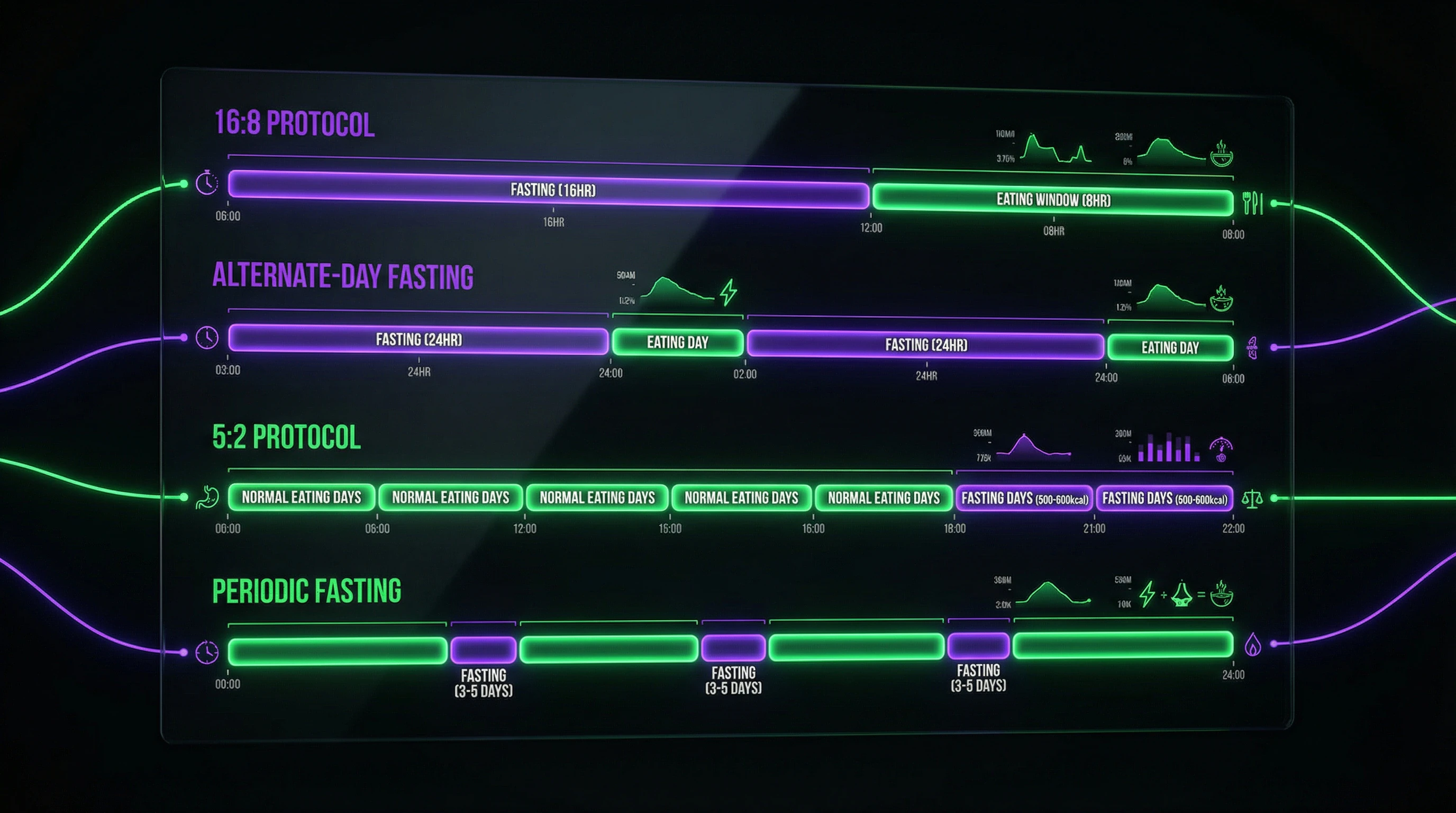
Main Intermittent Fasting Protocols
| Protocol | Pattern | Characteristics | Practicality |
|---|---|---|---|
| 16:8 (time-restricted eating) | 8 hours eating / 16 hours fasting | Daily restriction of eating window | High — easily integrates into daily life |
| Alternate-day fasting (ADF) | Alternating: normal eating / 500 kcal or complete abstinence | More pronounced metabolic effects | Moderate — requires discipline |
| 5:2 | 5 days normal eating / 2 days at 500–600 kcal | Compromise between efficacy and adherence | Moderate — balanced approach |
| Periodic fasting | 24 hours — several days with intervals of weeks/months | Historically linked to religious practices (Ramadan) | Low — requires preparation |
Each protocol activates specific cellular pathways of stress adaptation. The degree of their uniqueness compared to simple caloric deficit remains a subject of scientific debate.
Intermittent Fasting versus Continuous Caloric Restriction
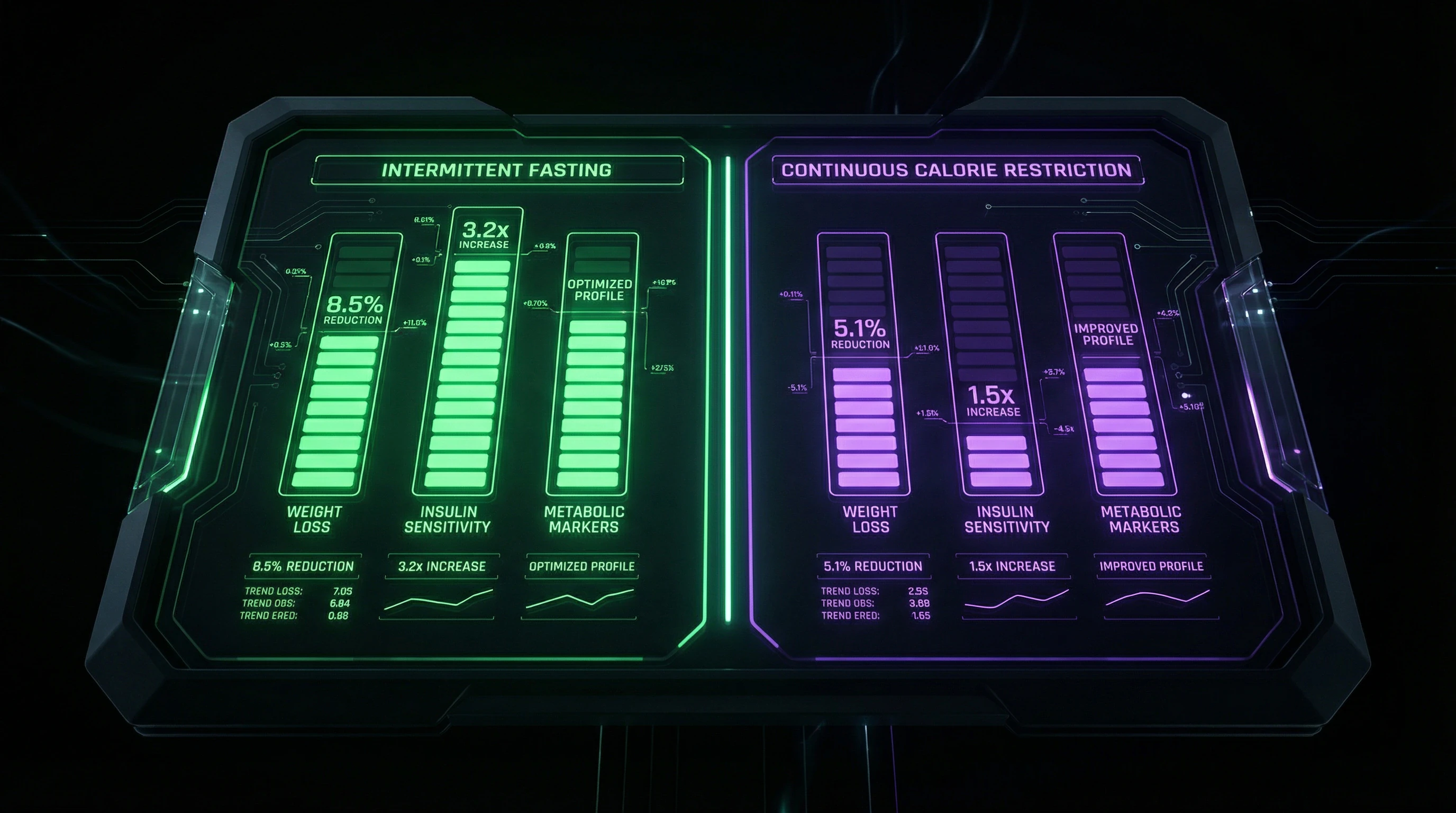
A systematic review by Seimon and colleagues (2015) established that intermittent fasting produces similar effects to continuous energy restriction regarding weight loss and improvement of metabolic markers.
A significant portion of the observed benefits of IF may be explained by overall caloric deficit, rather than specific effects of fasting per se.
Some studies indicate activation of cellular stress-resistance pathways with IF — enhanced autophagy and metabolic switching to ketone bodies — which may differ from simple caloric restriction.
- Practical Adherence
- IF may be safer and easier to maintain compared to daily calorie counting, providing better long-term compliance (Fallows, 2021).
- Psychological Factor
- "Permitted" eating periods without strict restrictions reduce the sense of deprivation characteristic of traditional diets with constant deficit.
- Diet Quality
- Studies demonstrating IF benefits typically include participants adhering to healthy diets. This makes it difficult to isolate the effect of temporal pattern from the effect of diet quality.
Metabolic Transformations: From Weight Loss to Insulin Sensitivity
Systematic Data on Weight Loss Effectiveness
Meta-analysis of 40 studies showed body weight reduction of 3–5 kg over 10 weeks of intermittent fasting — results comparable to traditional low-calorie diets. Effect depends on baseline metabolic status, age, and sex.
Most studies span weeks to months; long-term effects (years) remain insufficiently studied. This limits conclusions about result sustainability.
- Short-term effect (10 weeks): 3–5 kg
- Comparability with continuous calorie restriction: confirmed
- Individual variability: high
- Long-term data (>1 year): insufficient
Impact on Insulin Sensitivity and Glycemic Control
Intermittent fasting improves insulin sensitivity independently of weight loss. Mechanism: enhanced expression of GLUT4 glucose transporters in muscles and reduction of hepatic insulin resistance through AMPK pathway activation during glycogen depletion.
Clinically significant changes include reduction in postprandial glycemia and decreased amplitude of glucose fluctuations throughout the day — critical for prevention of microvascular diabetes complications.
Individuals taking hypoglycemic medications (insulin, sulfonylureas) require medical supervision: risk of hypoglycemic episodes with IF is substantial. Personalized approach is mandatory.
Body Composition Changes and Muscle Mass Preservation
Intermittent fasting reduces fat mass but may also decrease lean mass (muscle), especially without adequate protein and resistance training. Aggressive alternate-day fasting regimens cause greater muscle tissue loss than the 16:8 method.
- Critical Factor for Muscle Preservation
- Protein intake of 1.6–2.2 g/kg body weight during eating periods + resistance exercise (activates mTOR pathway, counteracts catabolism)
- Optimal Eating Window
- Including post-workout period for muscle protein synthesis and recovery
- High-Risk Groups for Sarcopenia
- Postmenopausal women and elderly individuals — require special attention to protein status and physical activity
With proper nutrition and training planning, IF can maintain muscle mass and even promote its growth, although anabolic potential may be lower than with even protein distribution throughout the day.
Cardiovascular Effects: From Blood Pressure to Endothelial Function
Impact on Blood Pressure and Lipid Profile
Systematic reviews demonstrate moderate but statistically significant reductions in systolic and diastolic blood pressure across various intermittent fasting protocols, with effect sizes comparable to first-line lifestyle modifications for hypertension.
Mechanisms include improved endothelial function through increased nitric oxide bioavailability, reduced sympathetic activity, and decreased oxidative stress in the vascular wall.
| Parameter | Change | Clinical Significance |
|---|---|---|
| Total Cholesterol | Decrease | Reduced atherosclerosis risk |
| LDL Cholesterol | Decrease | Reduction in oxidized lipids |
| Triglycerides | Decrease | Improved metabolic profile |
| HDL Cholesterol | Stable or ↑ | Preservation of protective effect |
Religious Fasting and Cardiometabolic Risk Factors
A meta-analysis by Gholampoor and colleagues (2024), encompassing studies of religious fasting, predominantly Ramadan, revealed consistent improvements in cardiometabolic risk factors: weight reduction, improved glycemic control, and favorable changes in lipid profile.
The uniqueness of this model lies in its mass scale and cultural embeddedness, allowing for the study of long-term effects at the population level with high ecological validity.
Research by Horne and colleagues (2022) found an association between periodic fasting and lower risk of hospitalization and mortality from COVID-19, which may reflect immunomodulatory effects of fasting, though causality requires further confirmation.
Inflammatory Markers and Endothelial Function
Intermittent fasting demonstrates anti-inflammatory effects: levels of C-reactive protein, interleukin-6, and tumor necrosis factor-alpha decrease, explaining part of the cardioprotective action independent of weight loss.
Improvement in endothelial function, assessed by flow-mediated dilation of the brachial artery, is observed within weeks of practice and correlates with activation of sirtuins and the AMPK pathway, which regulate cellular energy metabolism and stress resistance.
These molecular mechanisms may represent specific effects of fasting that extend beyond simple caloric deficit, though distinguishing the contribution of various factors remains a methodologically complex challenge.
Neuroprotection and Cognitive Function: From Cellular Resilience to Therapeutic Potential
Mechanisms of Cellular Stress Resistance During Fasting
Intermittent fasting activates adaptive cellular programs that switch neuronal metabolism from growth mode to survival and protection mode. At the molecular level, this manifests through induction of neurotrophic factors, especially BDNF (brain-derived neurotrophic factor), whose concentration increases by 50–400% in the hippocampus and cerebral cortex during caloric restriction.
Activation of AMPK and sirtuin signaling pathways under conditions of energetic stress triggers a cascade of protective responses: enhanced mitochondrial biogenesis, increased antioxidant defense through the Nrf2 pathway, stimulation of autophagy to remove damaged organelles.
Moderate fasting stress increases neuronal resistance to subsequent more severe damage—ischemia, oxidative stress, and excitotoxicity. This phenomenon is called hormesis.
Evidence in Traumatic Brain Injury
A systematic review by Xu et al. (2022) demonstrated that caloric restriction and intermittent fasting significantly improve outcomes in experimental models of traumatic brain injury. Animals subjected to pre-fasting before trauma induction showed smaller volumes of brain tissue damage (30–60% reduction by MRI morphometry) and faster recovery of cognitive function in spatial memory tests.
Neuroinflammatory response was reduced with less microglial activation. Mechanistically, these effects are linked to pre-activation of neuroprotective genes, increased levels of ketone bodies as an alternative energy substrate for damaged neurons, and modulation of glutamatergic transmission.
- Most data obtained from rodents
- Direct extrapolation to humans requires caution
- Physiological mechanisms are largely conserved across species
Potential for Neurodegenerative Diseases
Theoretical rationale for applying fasting to Alzheimer's disease, Parkinson's disease, and other neurodegenerative conditions is based on the ability of intermittent fasting to stimulate autophagy—a process critically important for removing aggregated proteins (beta-amyloid, tau protein, alpha-synuclein), whose accumulation is characteristic of these diseases.
Epidemiological data show correlation between intermittent fasting practice and reduced risk of cognitive decline in older age, though causation has not been established.
| Evidence Level | Research Status | Limitation |
|---|---|---|
| Preclinical (animal) | Numerous, positive results | Does not guarantee human effect |
| Clinical pilot studies | Small trials, protocol acceptability | Low quality of evidence |
| Long-term interventional | Virtually absent | Multi-year studies required |
The main obstacle—the lengthy development of neurodegenerative processes requires multi-year interventional studies to assess true preventive or therapeutic effect.

Immune System and Infectious Diseases: Modulation of the Body's Defense Responses
Intermittent Fasting and COVID-19 Risk
An observational study by Horne et al. (2022) identified an association between intermittent fasting practice and a 39% reduction in the risk of hospitalization and mortality from COVID-19 after adjusting for covariates. In a cohort of 205 patients who regularly practiced monthly 24-hour fasting (primarily for religious reasons), severe infection outcomes were observed significantly less frequently compared to the control group.
Mechanistically, this may be explained by modulation of the inflammatory response: fasting reduces levels of pro-inflammatory cytokines (IL-6, TNF-α), which play a key role in the development of cytokine storm in severe COVID-19. The metabolic shift to ketone bodies may exert direct anti-inflammatory effects through inhibition of the NLRP3 inflammasome.
Critical limitation: this observational study cannot prove causality. People who practice fasting may differ in other lifestyle factors that affect COVID-19 outcomes.
Immune Response Modulation Through Metabolic Reprogramming
Fasting induces profound changes in immune cell function through metabolic reprogramming. Lymphocytes and macrophages under glucose-deficient conditions switch from glycolysis to oxidative phosphorylation, which alters their functional phenotype.
- Pro-inflammatory M1 macrophages shift toward an anti-inflammatory M2 phenotype
- T cells demonstrate enhanced capacity for memory cell formation
- Cycles of fasting and refeeding stimulate immune system regeneration
Studies in mice have shown that 2-4 day fasting triggers hematopoiesis with renewal of leukocyte populations and increased resistance to chemotherapeutic agents. In humans, short-term fasting (12-72 hours) reduces circulating leukocyte counts with subsequent recovery, which is interpreted as an adaptive response aimed at conserving energy and protecting immune cells from damage.
Autophagy and Cellular Renewal as the Foundation of Immune Competence
Autophagy — the process of degradation and recycling of intracellular components — is critically important for maintaining immune cell functionality. Fasting is a powerful inducer of this process.
- Role of Autophagy in Immunity
- Participates in antigen presentation, elimination of intracellular pathogens, regulation of inflammatory signals, and prevention of autoimmune reactions through removal of autoreactive cellular components.
- Autophagy Defects
- Associated with increased susceptibility to infections and autoimmune diseases, underscoring the critical importance of this mechanism.
Intermittent fasting, by activating autophagy through mTOR inhibition and AMPK activation, could theoretically contribute to immune system "rejuvenation." However, direct evidence of this effect in humans is limited to short-term studies with surrogate markers.
Myths, Reality, and Long-Term Perspective: A Critical Look at the Panacea
Comparison with Continuous Caloric Restriction: Uniqueness in Question
A systematic review by Seimon et al. (2015) showed that intermittent fasting produces similar effects to continuous caloric restriction across key parameters: body weight reduction, improved insulin sensitivity, and lipid profile. A meta-analysis of 40 studies confirmed that weight loss with IF (3–5 kg over 10 weeks) is statistically indistinguishable from traditional low-calorie diets with equivalent deficits.
This challenges claims about fundamentally unique IF mechanisms unrelated to simple energy restriction. However, some studies point to potential differences in muscle mass preservation, hormone dynamics (insulin, ghrelin, leptin), and adherence: subjectively, many find IF a more sustainable approach than daily caloric restriction.
IF's uniqueness lies not in mechanisms, but in psychological adherence. For some, this is an advantage; for others, an illusion.
Individual Response Variability: Not for Everyone, Not Always
Response to intermittent fasting depends on age, sex, baseline metabolic status, and genetics. Postmenopausal women demonstrate less pronounced metabolic improvements than men or younger women, related to hormonal differences.
People with insulin resistance and metabolic syndrome often show more pronounced responses, while metabolically healthy individuals may not gain significant benefits. Diet quality during eating periods is critically important: highly processed foods and excessive calories in "eating windows" negate potential advantages.
| Group | IF Response | Side Effects |
|---|---|---|
| Insulin-resistant | Pronounced | Rare |
| Metabolically healthy | Minimal | Rare |
| Postmenopausal women | Weak | Common (10–40%) |
Side effects—headaches, irritability, concentration difficulties, sleep disturbances—occur in 10–40% of practitioners, especially during initial adaptation phases.
Gaps in Long-Term Research and Safety
The vast majority of IF studies last from several weeks to 6–12 months—insufficient to assess long-term health effects and lifespan. Data on safety of multi-year practice in humans is virtually absent, except for observational studies of religious fasting with substantial methodological limitations.
Potential risks include micronutrient deficiencies with inadequate planning, eating disorders in predisposed individuals, muscle mass loss with aggressive protocols. Special caution is required for diabetes (hypoglycemia risk), history of eating disorders, pregnancy and lactation, childhood and adolescence.
- Assess baseline metabolic status and presence of contraindications
- Start with gentle protocols (14:10) instead of extreme ones (20:4)
- Monitor diet quality during eating periods
- Track side effects and adaptation over 4–6 weeks
- Consult with a physician if chronic conditions are present
Large-scale randomized controlled trials lasting 5–10 years are needed for definitive conclusions about the benefit-risk ratio of IF as a long-term health strategy.
Knowledge Access Protocol
FAQ
Frequently Asked Questions
Intermittent fasting (IF) is an eating pattern that alternates between periods of eating and abstaining from food. Unlike continuous calorie restriction, IF focuses on when you eat rather than just how much you eat. Popular methods include 16:8 (16 hours fasting, 8 hours eating), 5:2 (5 days normal eating, 2 days restriction), and alternate-day fasting.
Systematic reviews show that IF leads to weight loss of 6-11 pounds over 10 weeks, which is comparable to continuous calorie restriction. Meta-analyses indicate similar or slightly greater effectiveness for IF. The main advantage may be better adherence to the regimen, though data are mixed (Seimon et al., 2015).
Several IF protocols exist: the 16:8 method (daily 16-hour fast), alternate-day fasting (alternating days), the 5:2 diet (2 days of restriction per week), and periodic fasting (regular but infrequent periods). Religious fasting, such as Ramadan (dawn to sunset for about 30 days), is also studied. Protocol choice depends on lifestyle and goals.
No, this is a myth. While IF shows promising results across various health domains, calling it a universal remedy is scientifically unfounded. Effects depend on context, individual characteristics, and baseline health status. Research confirms benefits, but not comprehensive efficacy for all conditions.
No, diet quality matters. Studies demonstrating IF benefits typically include overall healthy eating during feeding periods. Consuming high-calorie unhealthy foods can negate metabolic advantages. A balanced diet enhances the positive effects of fasting.
IF improves insulin sensitivity and reduces fasting glucose levels according to multiple studies. These metabolic improvements are documented in systematic reviews. Effects are particularly pronounced in people with prediabetes or metabolic syndrome, making IF a potentially useful tool for type 2 diabetes prevention.
Research shows reduction in fat mass, but loss of lean mass (including muscle) is possible. To minimize muscle loss, adequate protein intake, resistance training, and proper protocol selection are important. Effects on body composition vary individually and depend on overall approach to nutrition and physical activity.
Begin with a gentle protocol, such as 12:12, gradually increasing the fasting window to 16:8. Consult with a physician, especially if you have chronic conditions, diabetes, or take medications. Drink adequate water, monitor how you feel, and adjust the regimen as needed. Don't force adaptation—your body needs time.
There is no scientific consensus on the "best" protocol. Effectiveness depends on individual factors: lifestyle, goals, health status, and adherence. The 16:8 method is popular due to its balance of effectiveness and convenience. More important is choosing a protocol you can maintain long-term.
Religious and intermittent fasting improve cardiometabolic risk factors, including blood pressure and lipid profile (Gholampoor et al., 2024). Positive effects on inflammatory markers and endothelial function are documented. Systematic reviews confirm benefits for cardiovascular health when properly applied.
Emerging evidence suggests neuroprotective effects, particularly in traumatic brain injury (Xu et al., 2022). IF activates cellular stress resistance pathways that promote cell survival. Potential for neurodegenerative diseases is being explored, but long-term effects on cognitive function require additional research.
Periodic fasting modulates immune response and stimulates autophagy—a cellular renewal process. Some studies link IF to reduced infection risk, including COVID-19. Mechanisms include improved metabolic health and anti-inflammatory effects, but evidence is still accumulating.
No, individual factors significantly influence outcomes. Age, sex, baseline health status, and metabolic profile determine effectiveness. Studies on postmenopausal women and other specific groups show variable responses. Personalizing the approach is important for optimal results.
Most studies are short-term (weeks to months); long-term effects (years) are insufficiently studied. Available data suggest IF may be safer and easier to maintain than continuous calorie restriction (Fallows, 2021). Extended observations are needed for definitive safety conclusions.
Religious fasting (e.g., Ramadan) involves abstaining from dawn to sunset for approximately 30 days, tied to spiritual practices. Research shows similar cardiometabolic improvements to other IF forms (Gholampoor et al., 2024). The main difference lies in motivation and cultural context, but physiological mechanisms overlap.
This is a contentious question in the scientific community. Many studies suggest a significant portion of IF benefits stem from overall calorie reduction. However, IF may activate specific metabolic pathways and be easier to adhere to. Clear differentiation between IF effects and calorie restriction remains subject to debate.