What exactly bioresonance promises—and why definitions are deliberately vague
Bioresonance therapy (BRT) positions itself as a diagnostic and treatment method based on registering and correcting the body's "electromagnetic oscillations." The core claim: every cell, organ, and pathogen emits unique frequencies that can be measured, then "harmonized" or "inverted" to restore health. More details in the Pseudomedicine section.
The problem starts with the fact that different sources describe "bioresonance" through incompatible physical models—from quantum entanglement to acoustic waves.
- First version
- Devices register "electromagnetic oscillations" ranging from fractions of hertz to megahertz through skin electrodes.
- Second version
- References "torsion fields" and "information matrices" supposedly existing outside the electromagnetic spectrum.
- Third version
- Describes the process as "quantum resonance" at the level of atomic electron shells.
None of these models provides measurable parameters that could be independently verified.
The absence of a clear physical model allows explanations to adapt to any objection. If a critic points out the lack of electromagnetic radiation of sufficient power from cells, proponents switch to the "information level." If asked to demonstrate quantum effects at room temperature, they cite "biological specificity."
This strategy is called "moving the goalposts" and makes the method immune to falsification—the main criterion of scientific validity according to Popper.
| What's measured | What's claimed | Why this is a problem |
|---|---|---|
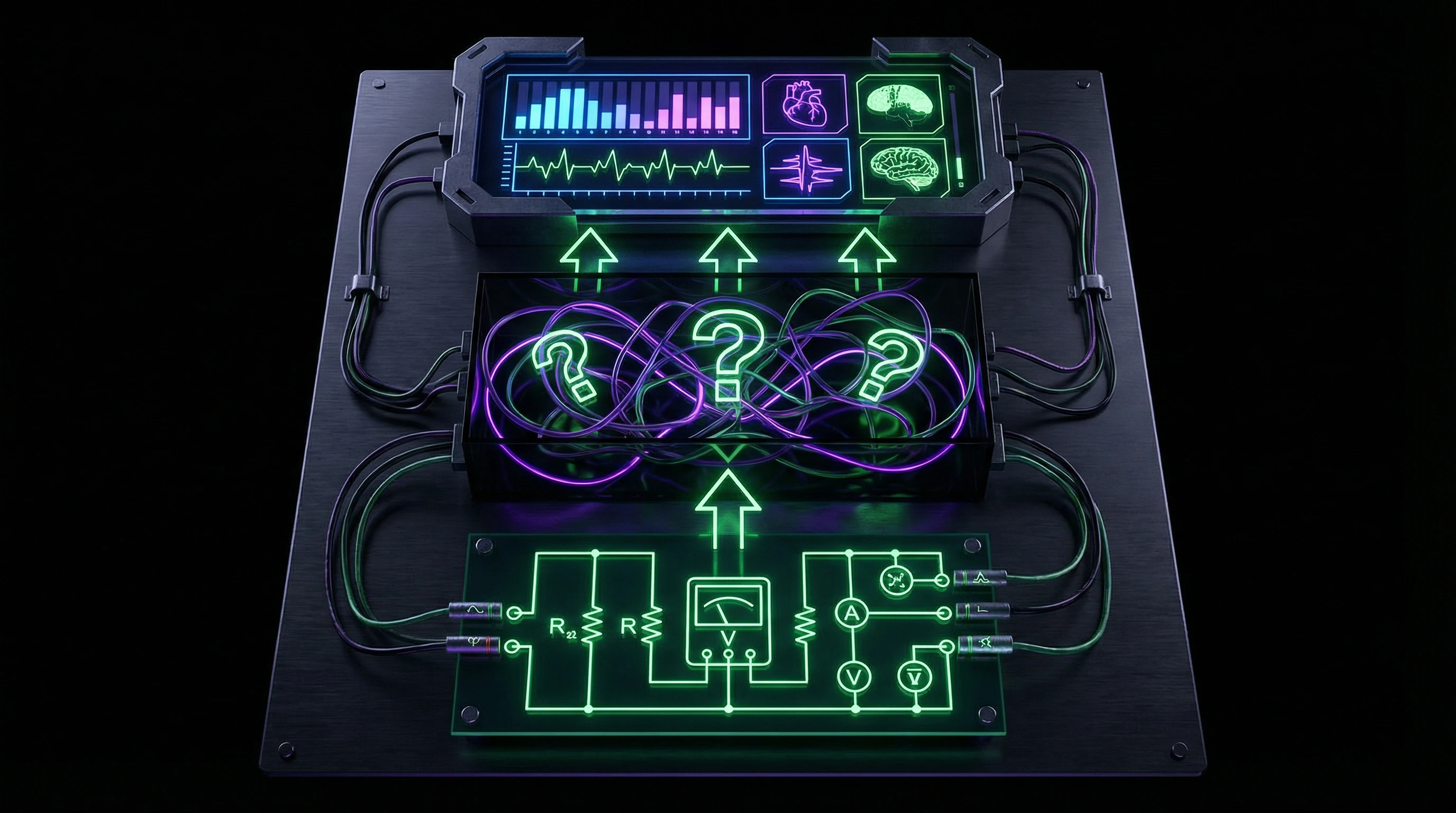
| Galvanic skin response (GSR)—changes in skin conductivity | "Resonance with pathogen frequencies" | GSR depends on sweat, temperature, emotions, not disease. The algorithm converting GSR to diagnosis is never published. |
BRT devices do register electrical signals—but this is galvanic skin response, known since the 19th century. The leap occurs at the interpretation stage: instead of acknowledging that ordinary skin resistance is being measured, the data is declared a diagnostic conclusion.
No manufacturer publishes algorithms for converting GSR into clinical findings. This makes the method untestable and, by definition, unscientific.
Seven Most Powerful Arguments from Proponents — and Why They Pass Superficial Scrutiny
To understand bioresonance's resistance to criticism, we need to examine arguments that convince even skeptics. These arguments work not because they're true, but because they exploit gaps in scientific literacy and cognitive biases. More details in the Detox Myths section.
⚠️ Argument 1: "Devices Register Real Electrical Signals"
Signal registration doesn't equal correct interpretation. An electrocardiograph also registers electrical signals, but diagnosis requires decades of research correlating ECG patterns with pathologies, confirmed through autopsies and other methods.
BRT devices skip the validation stage: no one has proven that a specific GSR pattern corresponds reproducibly to a specific disease.
⚠️ Argument 2: "The Method Has Been Used in Clinics for 40 Years"
Longevity of practice doesn't prove effectiveness. Bloodletting was practiced for 2,000 years and killed more people than it saved. Homeopathy has existed for 200 years, but systematic reviews show only placebo effects (S001), (S005).
The criterion isn't duration of use, but the presence of controlled, blinded studies with reproducible results.
⚠️ Argument 3: "Patients Report Improvement"
Subjective reports are subject to multiple distortions: placebo effect (30–40% improvement with any intervention), natural disease progression, regression to the mean, cognitive dissonance after paying for an expensive procedure.
- Placebo effect — the brain finds improvements after investing money
- Natural recovery — most acute conditions resolve on their own
- Regression to the mean — extreme symptom values tend toward normal
- Confirmation bias — improvements are remembered, deteriorations ignored
This is precisely why double-blind placebo-controlled studies are required. Not a single such study on BRT with positive results has been published in peer-reviewed journals with an impact factor above 2.
🧩 Argument 4: "Quantum Physics Has Proven Non-Local Connections"
Quantum entanglement does exist, but only works at temperatures near absolute zero and in isolated systems. At room temperature, decoherence occurs within femtoseconds (10⁻¹⁵ seconds).
The human body is a hot, wet, noisy environment where quantum effects at the macro level are impossible. References to quantum physics in BRT exploit the scientific authority of the term without understanding the physics (S002), (S004).
🧩 Argument 5: "Mainstream Medicine Doesn't Recognize It Because It's Unprofitable"
Conspiracy theory — a classic defense against falsification. If BRT worked, pharmaceutical companies would be first to patent and monetize it — as they did with antibiotics, vaccines, and MRI.
Methods with proven effectiveness are rapidly integrated into standards because they save healthcare systems money. Statins reduced heart attack mortality by 30% and became standard within 10 years of research publication (S001).
⚠️ Argument 6: "There Are Certificates and Device Registrations"
Medical device registration in most countries requires only proof of safety, not effectiveness. A device can be registered as "electrical stimulation apparatus" without diagnostic claims.
| What the Manufacturer Claims | What the Regulator Requires | Result |
|---|---|---|
| "Diagnoses all diseases" | Safety only | Device approved, marketing promises miracles |
| "Cures cancer" | Proof of effectiveness | FDA/EMA denial |
Verification: not a single BRT device has FDA (USA) or EMA (EU) approval for diagnosing specific diseases.
🧩 Argument 7: "Physicians with Medical Degrees Use the Method"
Having a diploma doesn't protect against cognitive biases. Physicians are subject to the same thinking errors: confirmation bias (remembering improvements, ignoring deteriorations), illusion of control, conflicts of interest.
Medical education in some countries doesn't include sufficient training in statistics and research methodology (S007). A diploma confirms knowledge of anatomy but doesn't protect against errors in data interpretation.
Cognitive biases are universal — education doesn't eliminate them, it only translates them to a more sophisticated level.
What Systematic Reviews Show — and Why There Are So Few
A systematic review is a study of studies that gathers all available data on a question, evaluates their quality, and draws a weighted conclusion. This is the gold standard of evidence-based medicine, because individual studies can be random outliers (S001, S005, S007).
For bioresonance therapy, systematic reviews are critically scarce — and that itself is a red flag.
📊 Why the Absence of Reviews Is Not a Neutral Fact
Systematic reviews are published on methods that have sufficient primary research for analysis. If a method has existed for 40 years but has no quality reviews in Cochrane Library or PubMed, it means one of two things: either there are too few primary studies, or their quality is so low they don't meet inclusion criteria. More details in the Alkaline Diet section.
For comparison: acupuncture (another controversial method) has over 50 published systematic reviews, most showing effects no better than placebo (S001, S003).
🧪 Individual Studies: Design Problems
Studies cited by bioresonance therapy proponents have critical methodological flaws:
- No control group — impossible to distinguish effect from natural dynamics.
- No blinding — patients and doctors know who receives treatment, amplifying placebo.
- Small samples (10–30 people), where random fluctuations masquerade as effects.
- No pre-registration of protocol — allows analysis manipulation to fit desired results.
- Publication in journals without peer review or with conflicts of interest.
None of these studies have been reproduced by independent groups (S001, S007).
🔎 Meta-Analysis as a Pattern Detection Tool
Meta-analysis combines data from multiple studies to increase statistical power. If an effect is real, meta-analysis amplifies it; if the effect is an artifact of small samples, meta-analysis reveals lack of significance.
| Scenario | What Meta-Analysis Shows | Conclusion |
|---|---|---|
| Effect is real and reproducible | Consistent signal amplification | Method works |
| Effect is artifact of small samples | Scattered results, no significance when combined | Method doesn't work |
| For bioresonance therapy | Meta-analysis not conducted | Studies too heterogeneous |
Heterogeneity — different devices, different protocols, different diseases, different evaluation criteria — is not coincidental, but a consequence of lacking a standardized theoretical model (S003, S005).
🧾 The Publication Bias Problem
Studies with negative results are published less often than studies with positive results — a known problem across all science. But for bioresonance therapy, the situation is extreme: virtually all publications come from device manufacturers, clinics using them, or researchers with financial ties.
Independent studies conducted by skeptical groups are either unfunded or show no effect and remain unpublished due to journal disinterest. This mechanism creates an illusion of consensus favoring the method (S001, S007).
The result: a market growing based on data that hasn't passed independent expert scrutiny. This isn't science — it's marketing with scientific packaging.
The Impossibility Mechanism: Why Bioresonance Contradicts Basic Laws of Physics
Even ignoring the absence of clinical evidence, bioresonance therapy faces fundamental physical limitations that make its claimed mechanism impossible under our current understanding of nature. More details in the section Debunking and Prebunking.
⚙️ The Energy Threshold Problem
Electromagnetic radiation from human body cells does exist—it's infrared radiation (heat) with a wavelength of about 10 micrometers. The power of this radiation is approximately 100 watts for the entire body, corresponding to a temperature of 98.6°F according to the Stefan-Boltzmann law.
For this radiation to carry specific information about the state of individual cells, modulations at the level of milliwatts per square centimeter would be necessary—but such signals are drowned in thermal noise within millimeters. BRT devices claim to register signals through electrodes on the skin, meaning through 1–2 millimeters of epidermis, where the signal-to-noise ratio is physically insufficient for information extraction (S002), (S004).
🔁 The Frequency Specificity Problem
BRT proponents claim that each pathogen (bacteria, virus, fungus) has a unique "resonant frequency" that can be used for diagnosis and destruction. Molecular biology shows: bacteria of the same species are 99.9% genetically identical, and their metabolic processes depend on the environment, not the species.
Molecular vibration frequencies lie in the terahertz and infrared ranges (10¹²–10¹⁴ Hz), while BRT devices operate in the 1–10⁶ Hz range—a million-fold difference (S002), (S006).
It's like trying to tune an FM radio to an X-ray frequency.
🧠 The Biological Amplification Problem
To alter biochemical processes requires energy sufficient to break or form chemical bonds—at minimum 1 electron volt (1.6×10⁻¹⁹ joules). A photon at 1 MHz frequency (the upper limit for BRT) carries energy of 4×10⁻²⁸ joules—a billion times less.
For such a signal to affect a cell would require a biological amplification mechanism that could amplify the signal a billion-fold without losing specificity. No such mechanism has been discovered in any biological system (S002), (S004), (S006).
| Parameter | Required Value | Actual Value of BRT Devices | Conclusion |
|---|---|---|---|
| Photon energy to break bond | 1 eV (1.6×10⁻¹⁹ J) | 4×10⁻²⁸ J (1 MHz frequency) | Insufficient by 10⁹ times |
| Molecular vibration frequency | 10¹²–10¹⁴ Hz | 1–10⁶ Hz | Mismatch by 10⁶ times |
| Signal-to-noise ratio at skin | Sufficient for information extraction | Drowned in thermal noise | Physically impossible |
🧷 The Measurement Reproducibility Problem
If a device truly measures a physical parameter, repeated measurements of the same object under identical conditions should yield identical results. Experiments with BRT devices show: rescanning the same person after 5 minutes produces different "diagnoses."
Moreover, scanning a glass of water or a piece of meat sometimes produces "diagnoses" of diseases. This proves the device doesn't measure an objective parameter, but generates random or operator-dependent results (S007).
Lack of reproducibility isn't a device flaw—it's evidence that it measures nothing real.
Anatomy of a Cognitive Trap: Why Smart People Believe in Bioresonance
Understanding the mechanism of delusion is more important than simple refutation. People believe in BRT not because they are stupid, but because the method exploits universal features of human thinking. More details in the section Media Literacy.
⚠️ Trap 1: Illusion of Understanding Through Complexity
The more complex an explanation appears, the more scientific it seems. BRT devices are surrounded by terminology from quantum physics, biochemistry, electronics—this creates a sense of depth.
But complexity of explanation does not correlate with its truth. Real science strives for simplicity: the theory of relativity is described by one equation E=mc², all of chemistry—by the periodic table. BRT uses the opposite strategy: piling up terms without operational definitions creates the illusion that "this is too complex for me to verify" (S001).
🧩 Trap 2: Confirmation Bias in Action
After a BRT procedure, the patient is motivated to seek confirmation of the effect—this is confirmation bias. If symptoms decreased (for any reason, including placebo), this is remembered as proof.
If symptoms didn't change, this is explained by "the need for repeat sessions." If they worsened—"exacerbation before improvement" or "toxin release." Such a system of explanations is unfalsifiable: it cannot be refuted by experience.
This places the method outside the bounds of science (S005), (S007).
⚠️ Trap 3: Halo Effect from Technology
In 2025, digital interfaces, graphs, 3D models of organs on screen create a sense of scientific validity automatically. This is the halo effect: positive evaluation of one aspect (modern design) transfers to others (data reliability).
Research shows that people rate information as more credible if it's presented in a graph, even if the graph contains no new data (S001). BRT manufacturers exploit this by creating impressive visualizations from random or trivial data.
🧠 Trap 4: Doctor's Authority as Cognitive Anchor
If the method is applied by someone in a white coat with a diploma on the wall, critical thinking shuts down. This is an evolutionarily embedded heuristic: in conditions of uncertainty (illness) we rely on authority.
- Problem
- This heuristic worked in an environment where authorities underwent rigorous natural selection. In the modern world, diplomas can be bought, and financial motivation (selling procedures) creates a conflict of interest that the patient doesn't account for (S007).
🧩 Trap 5: Narrative Fallacy and Success Stories
The human brain remembers stories better than statistics. One vivid story of "how BRT saved my life" outweighs hundreds of cases with no effect.
This is the narrative fallacy: we overestimate the probability of events about which we've heard a specific story. BRT manufacturers actively use testimonials, but never publish complete statistics: how many patients underwent treatment, how many had an effect, how many had none, how many had deterioration (S001), (S005).
Without the denominator (total number of cases), the numerator (success stories) is meaningless.
More about the mechanisms of delusion with alternative treatment methods can be found in the article on bioresonance therapy for depression and logic and probability.
30-Second Verification Protocol: Seven Questions That Expose Pseudoscience
Instead of analyzing physics and biology, use this universal checklist for any questionable method. These questions reveal red flags based on scientific method principles. Learn more in the Abiogenesis section.
✅ Question 1: Is There an Operational Definition?
An operational definition describes a phenomenon through measurement procedure. For example, "temperature is the thermometer reading when in contact with an object." Ask: "What exactly does the device measure, in what units, with what margin of error?"
If the answer contains "energy," "vibrations," "information" without specific units (joules, hertz, bits) — red flag (S002). Real science operates with measurable quantities.
✅ Question 2: Can the Result Be Independently Reproduced?
Reproducibility is the cornerstone of science. If results are obtained only by one researcher, in one laboratory, under one set of conditions — this is not science, but an artifact or coincidence.
Pseudoscience often requires "belief" or "proper mindset" to work. A real effect works regardless of the operator's beliefs.
✅ Question 3: Is There a Control Group and Placebo?
Without control, it's impossible to distinguish the method's effect from placebo effect, natural recovery, or regression to the mean. Ask: "Were results compared with a group that received a placebo?"
If a study showed improvement but without a control group — this is not proof (S003).
✅ Question 4: Does the Method Contradict Established Laws of Physics?
If the mechanism requires violating the law of conservation of energy, the second law of thermodynamics, or electromagnetic theory — it's physically impossible, regardless of the number of testimonials.
| Red Flag | Why This Is Impossible |
|---|---|
| "Device emits information at the cellular level" | Information is not a physical entity, cannot be emitted as a wave |
| "Frequency is individually tuned for your body" | Cells don't have resonant frequencies in the range where devices operate |
| "Effect works at a distance without physical contact" | Requires violating the inverse square law for electromagnetic fields |
✅ Question 5: Who Funds the Research?
If research is funded by the company selling the method — conflict of interest is obvious. Ask: "Have independent studies been conducted?" If not — this is a sign that results don't withstand external verification.
✅ Question 6: Is There a Mechanism Explaining the Effect?
The mechanism must be specific and testable, not vague. "Harmonizes energy" is not a mechanism. "Activates TRPV1 receptors through ion channel modulation" is a mechanism that can be tested.
If the explanation sounds like poetry rather than biochemistry — this is a red flag (S004).
✅ Question 7: Why Isn't the Method Used in Mainstream Medicine?
If a method truly works, hospitals and clinics would adopt it. The answer "doctors are hiding the truth" is not an explanation, but conspiracy theory. Mainstream medicine is interested in effective methods because they deliver results and reputation.
Absence from major medical center protocols is not a conspiracy, but the result of the method failing verification.
If the answer to most questions is "no" or evasive — you're facing pseudoscience. This protocol works for bioresonance, homeopathy, quantum medicine, and any other method that promises miracles without evidence.