
What are bioresonance therapy and atopic dermatitis: definitions without mysticism and marketing
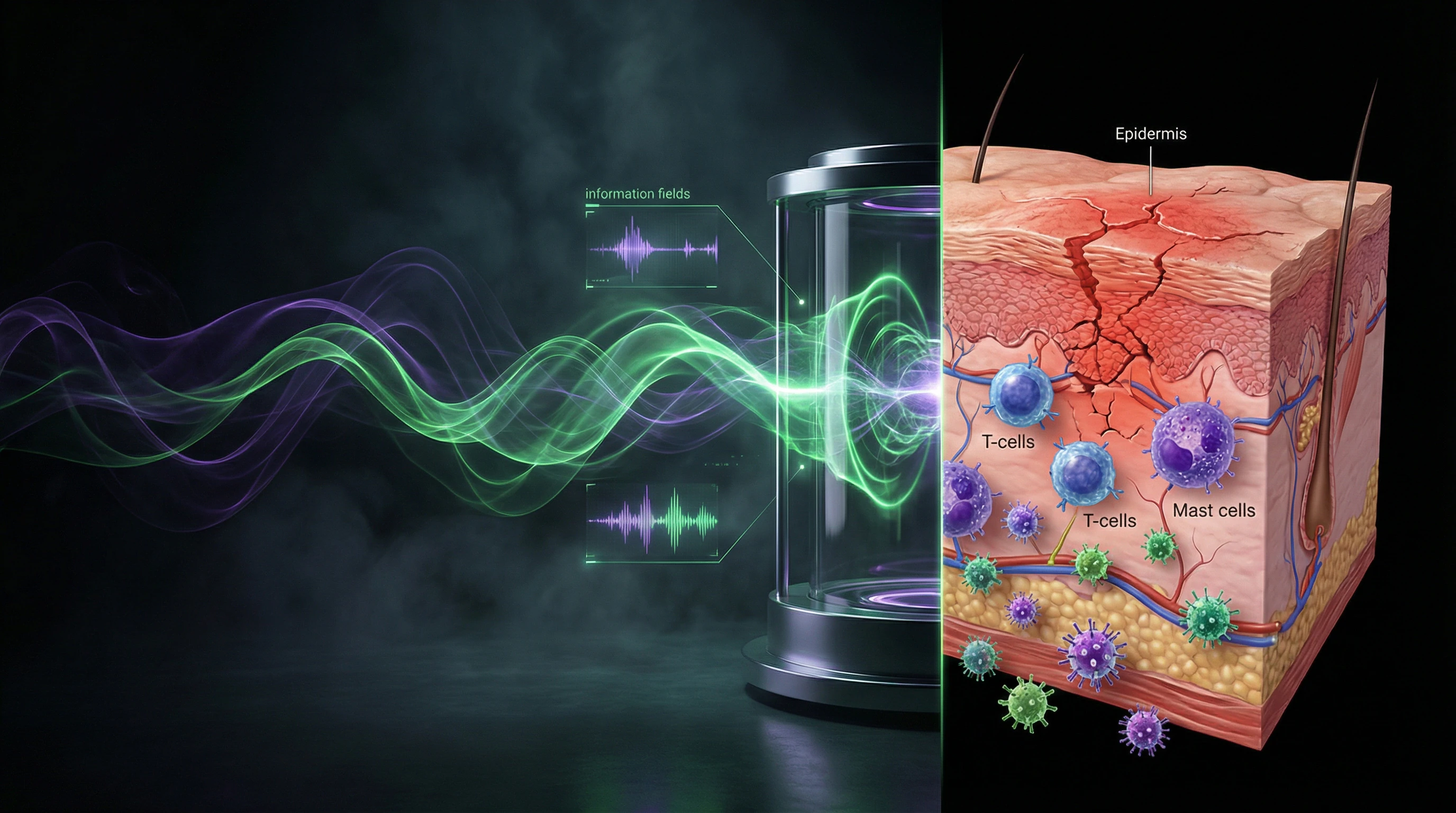
Bioresonance therapy (BRT) is an alternative medicine method built on the claim that the body emits electromagnetic waves at specific frequencies, and that diseases can be diagnosed and treated by affecting these frequencies with special devices. Proponents claim that BRT devices can "read" pathological oscillations, invert them, and return "healthy" frequencies to the patient, restoring balance in the body. For more details—see the section Alkaline Diet.
The method is positioned as non-invasive, safe, and effective for a wide range of conditions—from allergies to cancer. However, physicists detect neither the waves themselves nor the mechanism of their action.
- Atopic dermatitis (AD)
- A chronic inflammatory skin disease with genetic predisposition, impaired skin barrier function, and dysregulated immune response (S001). Characterized by itching, dryness, redness, and lichenification (skin thickening). Diagnosis is based on clinical criteria, but subjective assessment of severity creates risk of errors—even experienced dermatologists may disagree in their evaluations (S002). The condition can resemble psoriasis, complicating accurate diagnosis.
- Functional gastrointestinal disorders
- A group of conditions in which the patient experiences pain, discomfort, bloating, or bowel disturbances, but endoscopy, biopsy, and laboratory tests reveal no organic damage. Associated with motility disorders, visceral hypersensitivity, and psychosocial factors. It's precisely such conditions—where there's no clear biomarker and where placebo effect can be significant—that become fertile ground for alternative methods.
BRT manufacturers promise to diagnose allergens without traditional skin tests, "harmonize" the body's electromagnetic oscillations, and treat atopic dermatitis, asthma, and functional GI disorders without medication. These claims are not accompanied by publications in peer-reviewed journals with high impact factors and are not confirmed by independent studies (S003).
The trap here is twofold: first, AD and functional GI disorders are indeed complex to treat and often require long-term therapy. Second, both conditions have a pronounced psychosomatic component, making them particularly susceptible to placebo effect.
To understand the mechanisms of persuasion, see thinking tools and how digital packaging turns physical impossibility into a billion-dollar market.
Steel Man: Seven Most Convincing Arguments for Bioresonance Therapy — and Why They Work at the Level of Persuasion
Before examining the evidence against BRT, it's necessary to honestly present the strongest arguments of its proponents. This is not a straw man, but a "steel man" — the most convincing version of the opponent's position. More details in the section Alternative Oncology.
Only this way can we understand why the method continues to attract patients and practitioners, despite the absence of quality evidence.
⚡ Argument 1: The Body Does Emit Electromagnetic Waves
Any biological tissue generates weak electromagnetic fields — a consequence of ionic currents, nerve cell activity, cardiac activity (ECG), and brain activity (EEG). Modern biophysics studies these processes.
This fact creates an illusion of scientific validity: if fields exist, then they can be measured and corrected. But the presence of fields does not mean that their "correction" by an external device will lead to a therapeutic effect — this is a logical leap without experimental confirmation.
🧬 Argument 2: Patients Report Improvement
Many patients note subjective improvement: reduced itching in atopic dermatitis, decreased frequency of allergy flare-ups, improved digestion. These testimonials are real and sincere.
However, subjective improvement may result from the placebo effect, natural fluctuation of chronic disease symptoms, regression to the mean, or concurrent lifestyle changes. Without controlled blinded studies, it's impossible to separate the method's specific effect from these factors.
🛡️ Argument 3: The Method Is Non-Invasive and Safe
BRT is positioned as an alternative to pharmacotherapy, which can have side effects: topical corticosteroids with prolonged use cause skin atrophy, systemic antihistamines cause drowsiness. For parents of children with atopic dermatitis, the idea of "treatment without chemicals" is especially attractive.
| Proponents' Position | Logical Fallacy |
|---|---|
| Safety of the method | Safety does not prove effectiveness |
| Absence of side effects | Refusing proven methods can lead to disease progression |
🔬 Argument 4: Conventional Medicine Cannot Cure Atopic Dermatitis
This is true: atopic dermatitis is a chronic disease, and modern medicine offers control of flare-ups and maintenance of remission (S001), not a cure. This limitation creates space for alternative methods promising to "eliminate the cause."
Patients frustrated by the need for constant application of emollients and anti-inflammatory agents seek a "radical solution." BRT offers exactly such a narrative — but without evidence that the promise is fulfilled.
🧪 Argument 5: Studies Exist Showing BRT Effectiveness
Proponents of the method cite publications with positive results of BRT application (S001, S002). However, a systematic review by HTA Austria found no studies of high methodological quality: most studies had small samples, lack of adequate controls, high risk of systematic errors, and conflicts of interest (S004).
The existence of publications does not equal the existence of evidence — their methodological rigor matters.
🧷 Argument 6: The Method Works at a Level Science Doesn't Yet Understand
A classic argument from ignorance: if science cannot explain the mechanism, that doesn't mean there is no mechanism. BRT proponents appeal to "information fields," "quantum effects," and "subtle energies," supposedly inaccessible to traditional measurement methods.
- The Problem with This Argument
- Any physical intervention capable of changing a biological system must be measurable — otherwise it cannot transfer energy or information.
- Verification Criterion
- If the effect exists, it must be reproducible under controlled conditions. This has not yet been demonstrated.
🕳️ Argument 7: Reputable Doctors and Clinics Offer BRT
BRT is offered in some private clinics where licensed physicians work. This creates an illusion of legitimacy. However, the medical education of a practicing specialist does not guarantee the scientific validity of the method.
Doctors may sincerely believe in BRT's effectiveness (cognitive dissonance, confirmation bias) or offer it for commercial reasons. A clinic's authority does not replace evidence from randomized controlled trials.
- Check: Does the method have publications in peer-reviewed journals with high impact factors?
- Check: Are the results reproducible by independent researchers?
- Check: Are there conflicts of interest among authors and funding organizations?
- Check: Does the study methodology meet evidence-based medicine standards?
Evidence Base: What the HTA Austria Systematic Review Shows and Why It Matters More Than a Thousand Testimonials
The HTA Austria systematic review is the most comprehensive and methodologically rigorous analysis of evidence for bioresonance therapy effectiveness in allergies, atopic dermatitis, functional gastrointestinal disorders, pain, and rheumatic diseases (S001). The review included searches across all major medical databases, assessment of methodological quality of studies, and analysis of systematic error risk.
Review Methodology: How Evidence Was Sought
HTA Austria researchers conducted a systematic search for randomized controlled trials (RCTs), cohort studies, and systematic reviews. Inclusion criteria: human studies, application of bioresonance therapy for specified conditions, presence of control group, measurable clinical outcomes. For more details, see the section Folk Medicine vs. Evidence-Based Medicine.
Quality was assessed using standard scales (Cochrane Risk of Bias tool). Studies with high risk of systematic errors, small samples (fewer than 30 participants per group), lack of blinding, or inadequate controls were excluded from final analysis (S003).
The HTA Austria systematic review found no high-quality methodological studies demonstrating statistically significant superiority of bioresonance therapy over placebo or standard therapy for allergies and atopic dermatitis.
Results: What Was Found and What Wasn't
Most identified studies had critical methodological flaws: lack of randomization, lack of blinding of participants and researchers, small samples, short observation periods, absence of validated outcome assessment tools, high participant dropout rates.
Conflict of interest is a standard problem: studies were funded by bioresonance device manufacturers. This doesn't mean falsification, but creates systematic bias toward positive results.
| Quality Criterion | Evidence-Based Medicine Requirement | Status in Bioresonance Studies |
|---|---|---|
| Randomization | Mandatory | Absent in most |
| Double blinding | Standard for pharmacotherapy | Rarely feasible, often absent |
| Sample size | ≥30 per group (minimum) | Often <30 |
| Validated scales | SCORAD, EASI, DLQI | Subjective assessments or non-standard |
| Observation period | ≥12 weeks | Often 2–4 weeks |
Absence of Evidence vs. Absence of Research
The systematic review doesn't claim bioresonance studies don't exist. Studies exist, but they don't meet evidence-based medicine standards. This isn't a question of insufficient funding or academic science bias.
If a method is truly effective, this should be reproducible under double-blind placebo-controlled study conditions. Until this is demonstrated, effectiveness claims remain unproven (S003).
- Placebo Effect in Bioresonance Therapy
- Patient pays money, expects results, receives physician attention, sees "complex equipment." All placebo components are present. Without a control group, it's impossible to separate real effect from expectation.
- Natural Disease Course
- Allergies and dermatitis often have wave-like progression. Improvement may coincide with treatment by chance. This is called regression to the mean.
- Confounders (Confounding Variables)
- Patient simultaneously changes diet, moisturizes skin, avoids triggers. Which factor worked is unclear without controls.
Comparison with Proven Methods
The effectiveness of topical corticosteroids, calcineurin inhibitors (tacrolimus, pimecrolimus), emollients, and biological therapy (dupilumab) is confirmed by numerous high-quality RCTs, meta-analyses, and included in international clinical guidelines (S001).
These methods have understandable mechanisms of action: inflammation suppression, restoration of skin barrier function, immune response modulation. Their effectiveness is measurable by objective scales (SCORAD, EASI), and safety is assessed in long-term studies. This is the standard any new therapy should strive for.
For deeper understanding of fallacy mechanisms in alternative medicine, see thinking tools and analysis of bioresonance therapy's digital packaging.

Mechanism or Myth: Why Correlation Between "Treatment" and Improvement Doesn't Prove Causation
One of the most common cognitive errors in evaluating the effectiveness of any intervention is conflating correlation with causation. A patient completes a course of BRT, and two weeks later their atopic dermatitis symptoms decrease. For more details, see the Scientific Method section.
Does this mean BRT caused the improvement? Not necessarily. There are numerous alternative explanations that must be ruled out before concluding a causal relationship exists.
Correlation between events does not equal causation. Proving a causal relationship requires a control group, elimination of alternative explanations, and reproducible mechanisms of action.
Natural Fluctuation of Chronic Disease Symptoms
Atopic dermatitis is a condition with a cyclical course: periods of flare-ups alternate with periods of remission. Patients most often seek help at the peak of their symptoms.
Any intervention begun at this moment will coincide with natural improvement (regression to the mean). Without comparing symptom progression to a control group receiving placebo or standard therapy, it's impossible to determine whether improvement resulted from BRT or the natural course of the disease (S003).
The Placebo Effect: Powerful, Measurable, and Requiring No "Real" Mechanism
The placebo effect is not "deception" or "self-suggestion" in the colloquial sense. It's a real change in subjective and, in some cases, objective health indicators in response to an intervention that has no specific pharmacological or physiological action.
Placebo is especially effective for conditions with a pronounced subjective component (pain, itching, nausea) and for diseases influenced by stress and psychological state. The ritual of treatment, practitioner attention, expectation of improvement—all of these activate neurobiological mechanisms capable of temporarily reducing symptoms.
- BRT as the Ideal Placebo Generator
- Complex devices, lengthy sessions, and "scientific" terminology create conditions for a powerful placebo effect. The patient receives the sensation of active, technological treatment, which amplifies the expectation of improvement.
Concurrent Changes: Diet, Stress, Seasonality
Patients beginning a course of BRT often simultaneously make lifestyle changes: eliminating potential allergens from their diet, starting to use hypoallergenic cosmetics, reducing stress levels.
Atopic dermatitis is sensitive to these factors. Additionally, AD symptoms can depend on season (worsening in winter due to dry air, improving in summer). Without controlling for these variables, it's impossible to isolate the effect of BRT.
| Factor | Impact on AD | Controlled in BRT Studies? |
|---|---|---|
| Diet (allergen elimination) | Significant improvement | Rarely |
| Stress and psychological state | Flare-up or remission | Rarely |
| Seasonal fluctuations in humidity and temperature | Cyclical course | Rarely |
| Use of hypoallergenic cosmetics | Skin condition improvement | Rarely |
Absence of Objective Biomarkers: How to Measure "Frequency Correction"?
BRT proponents claim the method affects "electromagnetic oscillations of the body," but provide no reproducible protocols for measuring these oscillations before and after treatment.
Which specific frequencies are being measured? With what instruments? What are the reference values for "healthy" and "pathological" frequencies? How do these frequencies correlate with clinical symptoms and objective inflammation markers (IgE levels, eosinophils, cytokines)?
- Determine which electromagnetic parameters the BRT device allegedly measures
- Verify whether independent studies exist confirming these measurements
- Compare claimed "pathological frequencies" with objective inflammation biomarkers
- Ensure the measurement protocol is reproducible and operator-independent
- Assess whether changes in "frequencies" correlate with clinical improvement or are independent events
Without answers to these questions, claims about the mechanism of action remain unprovable and unfalsifiable—and therefore unscientific. For more on how digital packaging transforms physical impossibility into a marketable product, see the analysis of bioresonance therapy in 2025.
Conflicts and Uncertainties: Where Sources Diverge and Why That's Normal for Science
Unlike pseudoscience, which offers absolute answers and tolerates no doubt, real science acknowledges areas of uncertainty and actively investigates them. In the case of atopic dermatitis, there are zones where data are incomplete or contradictory — but this concerns evidence-based methods, not BRT. For more details, see the Epistemology section.
Subjectivity in Assessing Atopic Dermatitis Severity
Even experienced dermatologists assess the severity of skin lesions differently using SCORAD or EASI scales (S002). This creates variability in data and makes it difficult to compare results across different studies.
To address this problem, automated assessment systems based on machine learning and computer vision are being developed, which can provide more objective and reproducible evaluation (S002). However, this uncertainty concerns outcome measurement, not the actual effectiveness of evidence-based treatment methods.
Differences in Clinical Trial Design
In pediatric atopic dermatitis studies, where participant recruitment is challenging, complex statistical methods are used: Bayesian dynamic borrowing and synthetic control methods. These methods allow the use of historical control group data but have different characteristics in terms of power and error rates.
The choice of method depends on specific study conditions — this is an example of methodological discussion within evidence-based medicine, but it does not question the necessity of controlled studies as such.
Pathophysiology of Atopic Dermatitis: A Spectrum of Mechanisms
Atopic dermatitis is not a single disease but a spectrum of conditions with common clinical manifestations yet different pathophysiological mechanisms. In some patients, Th2-mediated inflammation predominates; in others, impaired skin barrier function due to filaggrin gene mutations; in still others, skin microbiota dysbiosis (S001).
This heterogeneity explains why the same treatment method may be effective in one patient and ineffective in another. However, this does not mean that "any method can work" — it means that more precise patient selection criteria and personalized approaches are needed.
| Source of Uncertainty | How Science Addresses It | Impact on BRT |
|---|---|---|
| Subjectivity in symptom assessment | Automated systems, objective biomarkers | Does not solve the problem of absent mechanism |
| Variability in treatment response | Patient stratification, genetic markers | Does not explain why waves would work |
| Multiple pathophysiological pathways | Molecular diagnostics, targeted therapy | Contradicts claims of "universal resonance" |
Why Conflicts in Science Are Not Chaos, But a Mechanism
When two studies yield different results, it does not mean that science "knows nothing." It means that differences need to be examined: in patient population, in drug dosage, in observation duration, in inclusion criteria.
BRT, by contrast, has no mechanism for analysis. There are no physical waves, no biochemical targets, no explanation for why one frequency works and another does not. The absence of a mechanism is not "uncertainty" — it is the absence of a scientific hypothesis.
- Uncertainty in Science
- There are competing hypotheses, there are data, there is methodology to test them. Example: which inflammatory mechanism predominates in AD in a specific patient.
- Absence of Mechanism in BRT
- There is no hypothesis that can be tested. There are no physical waves that can be measured. There is no biochemical pathway that can be blocked or activated.
Science moves forward precisely because it is honest about its gaps. But honesty about gaps is not the same as accepting any explanation that fills them.
For a deeper understanding of how thinking tools work when analyzing contradictory data, see the section on logic and probability. For how digital packaging transforms physical impossibility into a market, see the analysis of bioresonance therapy in 2025.