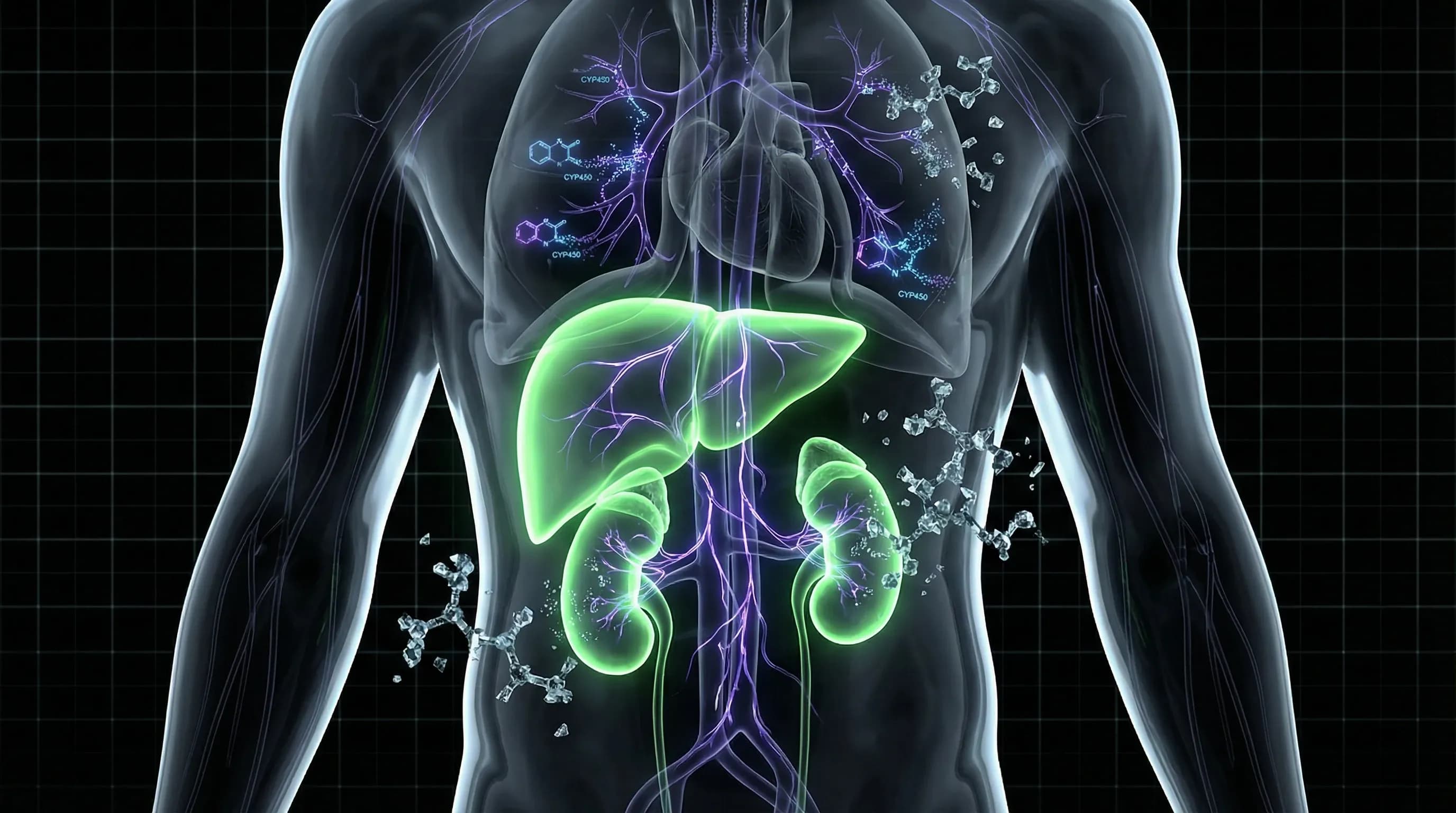
What the Detox Industry Sells: From "Cleansing" to "Body Reset" — Anatomy of a Commercial Myth
The term "detox" in a commercial context has no clear medical definition. In clinical toxicology, detoxification is the process of eliminating specific poisons (alcohol, drugs, heavy metals) under medical supervision. More details in the Pseudomedicine section.
In wellness industry marketing, "detox" has become a vague promise to "cleanse the body of toxins," without specifying which substances or by what mechanism. This semantic substitution is key to commercial success: the more undefined the threat, the broader the audience that will feel at risk.
- Detoxification (medical)
- Elimination of a specific toxin under physician supervision with measurable results. Requires diagnosis.
- Detox (marketing)
- Promise to cleanse the body of unnamed "harmful substances." Works without diagnosis or evidence.
⚠️ Three Pillars of Detox Mythology: Toxins, Accumulation, and the Need for External Intervention
Commercial detox is built on three interconnected claims. First: the body accumulates "waste" or "toxins" from food, air, and water. Second: natural elimination systems (liver, kidneys, intestines) can't handle modern loads.
Third: special intervention is required — juices, fasting, supplements, enemas — to "help" the body. None of these claims is supported by the physiology of healthy individuals, but all three create a perfect sales funnel: problem (toxins) + body inadequacy + paid solution.
The term's vagueness protects the myth from falsification: you can't disprove what isn't defined.
🧩 Why "Toxins" Remain Nameless: A Linguistic Trap
Ask any detox product manufacturer to name the specific chemical compounds their product eliminates, and you'll get an evasive answer: "harmful substances," "metabolic byproducts," "environmental pollutants."
This vagueness is no accident. If we were talking about specific toxins (for example, lead, mercury, benzene), laboratory tests would be required before and after "detox" to prove effectiveness. But then it would become clear that in healthy people, these substances are either absent or eliminated naturally.
| What the industry promises | What's required to verify | Why they don't do it |
|---|---|---|
| Eliminate "toxins" | Name the substance, measure levels before/after | Substance unnamed, levels not elevated |
| Help the liver | Show liver dysfunction, improvement after treatment | In healthy people, liver functions normally |
| Cleanse the intestines | Prove accumulation of harmful substances in intestines | Intestines self-clean, "waste buildup" is a myth |
🔎 The Line Between Medicine and Marketing: When Detoxification Is Real and When It's a Product
Medical detoxification exists and saves lives. Hemodialysis for kidney failure, antidotes for poisoning, chelation therapy for heavy metal intoxication — these are evidence-based procedures with clear indications, protocols, and measurable results.
Commercial detox borrows medical terminology but applies it to healthy people without diagnosed intoxications. It's like selling crutches to marathon runners on the premise that "legs get tired." The boundary lies where specific pathology ends and abstract "health care" begins.
- Medical detoxification: diagnosis → protocol → measurable result → recovery.
- Marketing detox: fear → product → subjective feeling → repeat purchase.
Steel Version of the Argument: Seven Most Convincing Arguments for Commercial Detox — and Why They Seem Logical
To understand the persistence of the detox myth, we must acknowledge: its arguments appeal to real concerns and observations. The steel version (steelman) is the strongest possible formulation of an opponent's position, stripped of weak points. More details in the section Miracle Supplements and Dietary Aids.
The seven arguments below make detox appealing to millions of people. Each rests on grains of truth — and that's what makes them dangerous.
🧩 Argument 1: "The Modern Environment Is More Toxic Than Our Evolutionary Adaptation"
The human liver evolved in conditions without pesticides, microplastics, exhaust fumes, or synthetic food additives. Modern humans encounter thousands of artificial compounds that didn't exist 100 years ago.
The logic sounds plausible: if the detoxification system isn't "trained" to handle these substances, it might not cope. The problem is that the liver isn't a narrowly specialized organ. Its enzymes (cytochrome P450 and others) work by structural recognition, not by "memory" of specific molecules.
🧩 Argument 2: "Subjective Improvement After Detox Proves Effectiveness"
Many people report feeling better after a detox program: more energy, clearer skin, easier digestion. If thousands of testimonials describe similar effects, doesn't that prove "something works"?
Personal experience is a powerful persuasive factor. People don't lie about their sensations. The question is what caused the improvement: elimination of "toxins" or giving up alcohol and sugar, increased water intake, placebo effect, changed sleep patterns.
🧩 Argument 3: "The Liver and Kidneys Are Overloaded in Most People Due to Unhealthy Lifestyles"
Detox advocates acknowledge: in healthy people, organs cope fine. But how many people are truly healthy? Excess weight, alcohol, fast food, sleep deprivation, stress — all burden the liver.
This argument exploits a real problem: indeed, many people's livers function suboptimally. The question isn't whether it's overloaded, but whether detox juices help or if other measures are needed — weight loss, quitting alcohol, treating fatty liver disease.
🧩 Argument 4: "Some Substances Really Do Accumulate in Tissues"
Lead deposits in bones, mercury in fatty tissue and brain, dioxins and PCBs (polychlorinated biphenyls) have half-lives of years and decades (S005). If the body can't quickly eliminate these substances, isn't it logical to help it with special agents?
The argument rests on real toxicology. The problem is that commercial detox products haven't proven capable of accelerating elimination of these specific compounds (S001).
🧩 Argument 5: "Traditional Cultures Have Practiced Body Cleansing for Thousands of Years"
Fasting, herbal remedies, enemas, saunas — "cleansing" practices exist in Ayurveda, traditional Chinese medicine, European folk medicine. If millions of people have used these methods for centuries, doesn't that indicate their value?
| Practice | Age of Tradition | Status in Modern Medicine |
|---|---|---|
| Bloodletting | 2500+ years | Rejected (except rare indications) |
| Skull trepanation | 10000+ years | Rejected as treatment |
| Mercury for syphilis | 500+ years | Rejected (replaced by antibiotics) |
The argument from tradition is psychologically powerful: antiquity is perceived as a guarantee of wisdom. But traditional cultures also practiced methods we now know to be ineffective or harmful.
🧩 Argument 6: "Medicine Uses Detoxification in Critical Cases"
Hemodialysis, plasmapheresis, antidote administration — these are all forms of medical detoxification. If doctors apply these methods for poisoning and kidney failure, then the idea of "helping the body eliminate harmful substances" is scientifically grounded.
The argument exploits a logical fallacy: extrapolating emergency medicine to healthy states. It's like claiming that since a defibrillator saves lives during cardiac arrest, everyone should prophylactically shock themselves.
🧩 Argument 7: "Absence of Evidence of Harm Means It's Worth Trying"
Many detox programs (juices, herbal teas, short-term fasting) haven't shown serious harm in studies. If the risk is minimal and potential benefit is possible, why not try?
- Logical Fallacy
- Absence of proven harm ≠ proven benefit. These are different claims.
- Hidden Cost
- Financial expenses, time, missed alternatives (e.g., physical activity instead of detox juice), psychological reinforcement of belief in myths.
- Trap
- If someone feels improvement (even from placebo), they'll attribute it to detox and strengthen the belief that "it works".
All seven arguments contain elements of truth. That's precisely why they're convincing. But convincing ≠ correct. The myth of body toxification persists not because people are foolish, but because it's built on real observations, incorrectly interpreted.
How Real Detoxification Works: Two-Phase Liver System, Kidney Filtration, and Intestinal Elimination — Physiology Without Mysticism
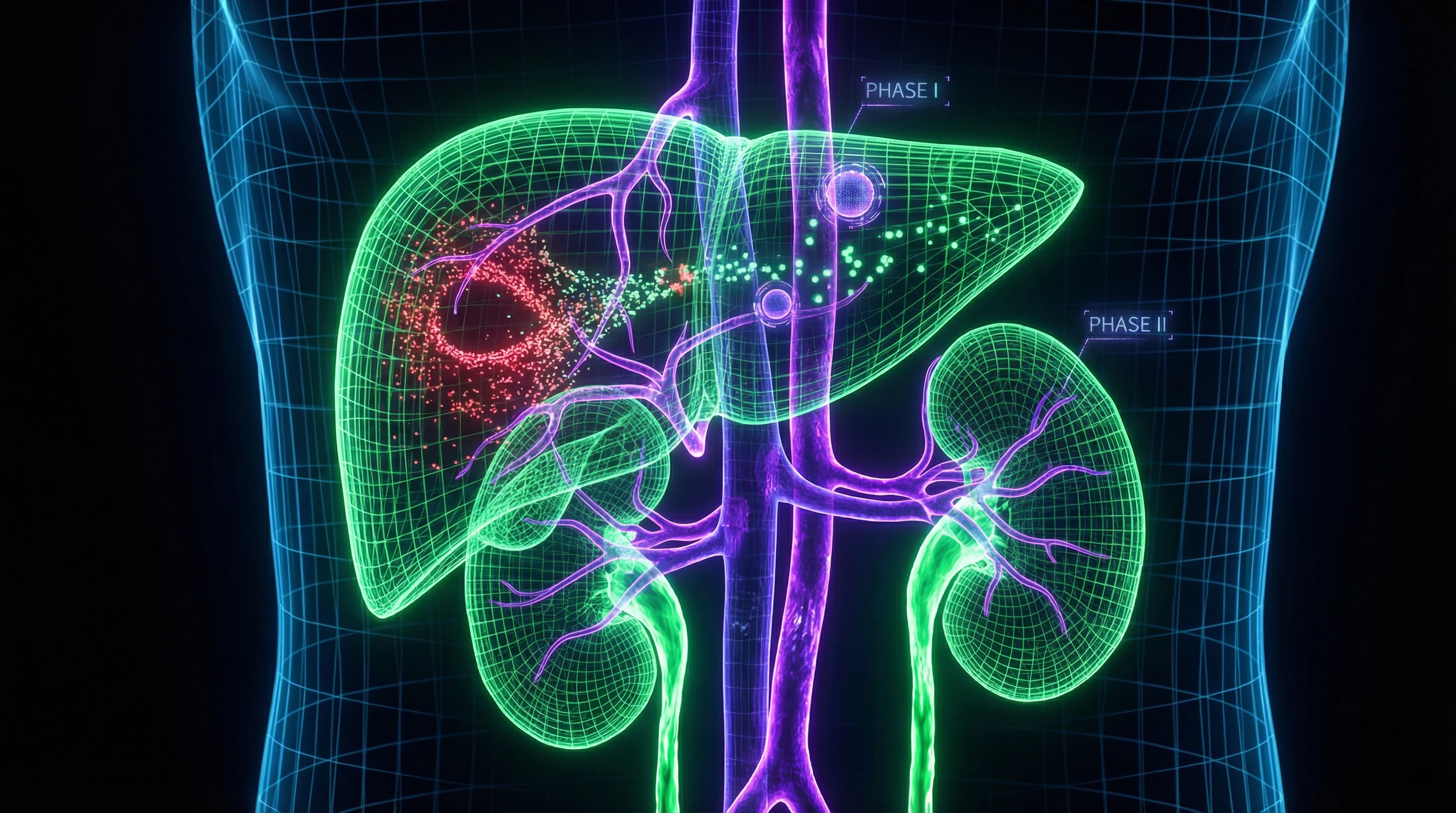
The body processes potentially harmful substances through specific biochemical processes that can be measured and verified. The liver, kidneys, and intestines work as a multi-stage filter, converting fat-soluble toxins into water-soluble compounds that are excreted in urine and feces. More details in the Psychosomatic Myths section.
🧬 Phase I Detoxification: Cytochrome P450 and Oxidative Transformation
The liver contains a family of cytochrome P450 enzymes (over 50 isoforms) that catalyze the oxidation, reduction, and hydrolysis of fat-soluble molecules. Alcohol, medications, pesticides, polycyclic aromatic hydrocarbons from fried foods — all are substrates for P450.
Phase I reactions add functional groups (hydroxyl, carboxyl) to molecules, making them more polar. Side effect: reactive intermediate metabolites form, sometimes more toxic than the original substance. That's why Phase I always works in tandem with Phase II.
P450 activity is genetically variable: different people can metabolize the same substance at rates that differ by several fold, explaining individual sensitivity to drugs and toxins.
🧬 Phase II Detoxification: Conjugation and Conversion to Safe Compounds
After oxidation, molecules undergo conjugation — attachment of large polar groups (glucuronic acid, sulfate, glutathione, acetyl, methyl). These reactions are catalyzed by transferases: UDP-glucuronosyltransferases (UGT), sulfotransferases (SULT), glutathione-S-transferases (GST).
Conjugation dramatically increases water solubility and reduces toxicity. Acetaminophen at therapeutic doses is conjugated with glucuronic acid and sulfate, becoming safe; in overdose, these pathways become saturated and toxic metabolite NAPQI forms, damaging the liver.
- Glutathione
- Key Phase II antioxidant; its deficiency (in chronic alcoholism, malnutrition) reduces detoxification capacity. In healthy individuals, glutathione is synthesized from amino acids (cysteine, glutamate, glycine) obtained from regular food; supplements with "glutathione precursors" have shown no advantages over a balanced diet.
🧬 Kidney Filtration: 180 Liters of Primary Urine Per Day
The kidneys filter all the body's blood approximately 60 times per day. In the glomeruli of nephrons, about 180 liters of primary urine form daily, of which 99% is reabsorbed back into the blood, and 1–2 liters are excreted as final urine.
Water-soluble detoxification products (conjugates from Phase II), urea, creatinine, and excess salts pass through the filter and are eliminated. The kidneys also actively secrete certain substances through special transporters in the tubules.
| Indicator | Normal Range | Clinical Significance |
|---|---|---|
| Glomerular Filtration Rate (GFR) | 90–120 mL/min | Assesses kidney function; GFR < 60 mL/min indicates chronic kidney disease |
| Plasma Creatinine | 0.7–1.3 mg/dL | Marker of filtration capacity; elevation indicates reduced function |
| Urea | 2.5–7.1 mmol/L | Product of protein metabolism; excreted by kidneys |
With GFR below 60 mL/min, medical detoxification (dialysis) is genuinely needed. But in healthy individuals, the kidneys handle the load without external help; "kidney cleansing" with detox teas doesn't increase GFR or improve function.
🧬 Intestinal Elimination and the Role of Microbiota
Some conjugated toxins from the liver are excreted with bile into the intestine and leave the body in feces. Certain intestinal bacteria possess enzymes (β-glucuronidases) that break down conjugates, releasing the original substance; it can be reabsorbed back into the blood (enterohepatic circulation).
Dietary fiber binds bile acids and toxins, accelerating their elimination and interrupting circulation. Healthy microbiota also metabolizes some toxins (for example, breaks down nitrosamines).
Dysbiosis can theoretically reduce intestinal detoxification capacity, but this is corrected with probiotics and fiber, not detox juices. Fasting or liquid diets, conversely, deprive the microbiota of substrate, which can impair its function.
📊 Measurable Detoxification Markers: Why Detox Products Fail the Test
If a detox product genuinely improves toxin elimination, this should be reflected in measurable biomarkers: liver enzyme levels (ALT, AST, GGT), bilirubin, creatinine, urea, concentrations of specific toxins in blood and urine.
- No large controlled study has shown that commercial detox programs improve these indicators in healthy people (S001).
- Short-term fasting can temporarily raise uric acid levels (from purine breakdown) and ketone bodies, which is mistakenly interpreted as "toxins leaving."
- This is simply a metabolic shift, not improved detoxification.
- The absence of objective efficacy markers is the main reason detox remains in the wellness zone rather than evidence-based medicine.
The body's detoxification system works constantly and requires no commercial interventions. Its effectiveness depends on genetics, nutrition (adequate protein, fiber, micronutrients), hydration, and absence of chronic diseases — factors controlled by lifestyle, not detox programs.
Evidence Base: What Systematic Reviews and Randomized Studies Show About Detox Diets, Juices, and Supplements
Systematic reviews are the gold standard for evaluating intervention effectiveness. They compile all available research on a topic, assess quality, and draw conclusions based on the totality of evidence. For more details, see the Sources and Evidence section.
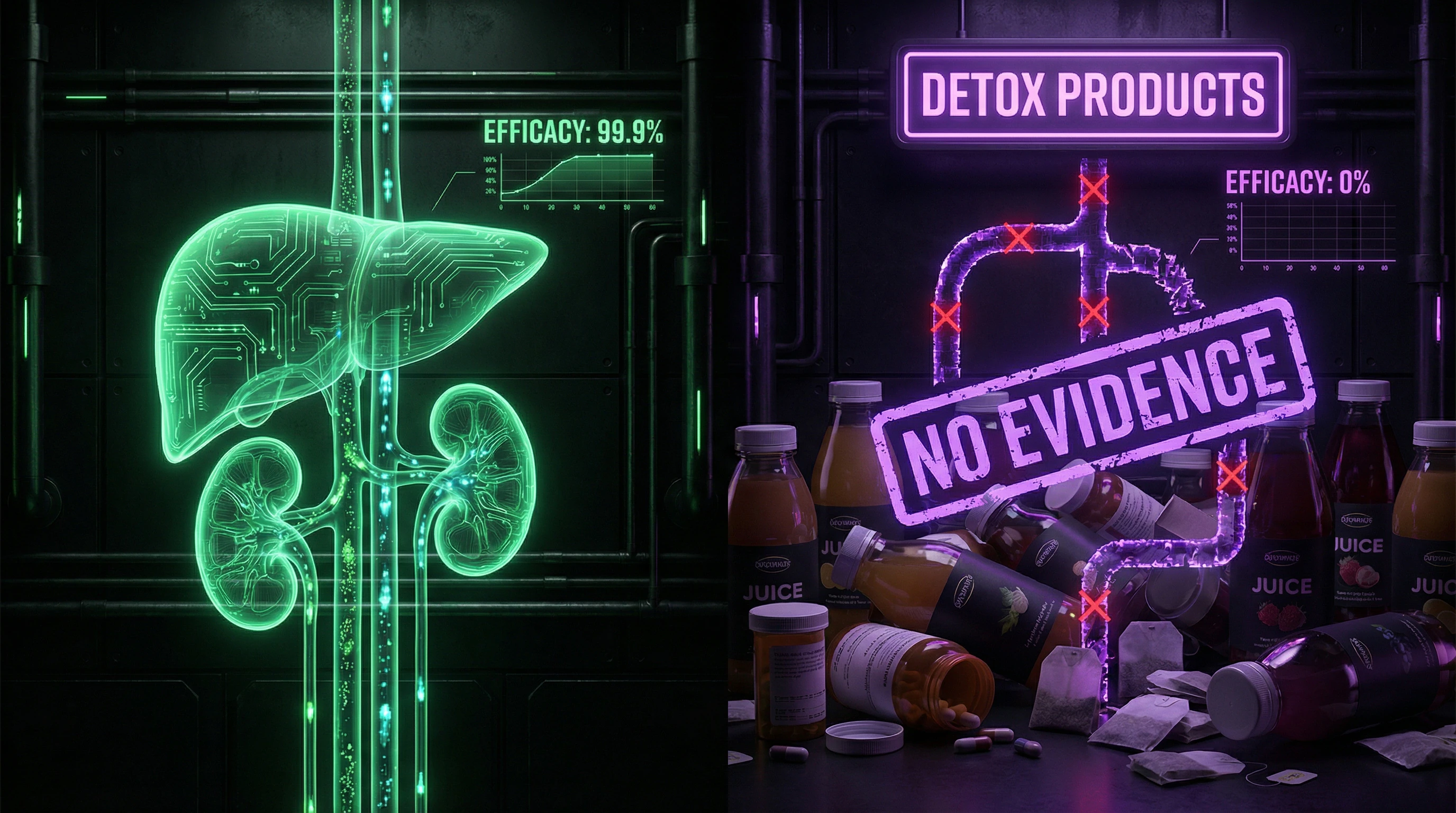
Several reviews have analyzed commercial detox programs. The results are unanimous: there is no evidence of benefit, study methodology is weak, and manufacturer claims are unsubstantiated.
Systematic Review by Klein & Kiat (2015)
A review in the Journal of Human Nutrition and Dietetics analyzed all available research on detox diets. The authors found very few randomized controlled trials; most studies were of low quality (small samples, lack of control groups, conflicts of interest).
No study demonstrated that detox diets eliminate specific toxins from the body. Weight loss and improved well-being were explained by calorie restriction and elimination of processed foods, not by "detoxification."
The authors' conclusion: "At present, there is no compelling evidence to support the use of detox diets for weight management or toxin elimination. Given the limited nature and low quality of available studies, definitive conclusions cannot be drawn."
Position of the British Dietetic Association
The British Dietetic Association regularly includes detox diets on its list of "worst dietary trends of the year." Official BDA statement: "The idea that you need to 'detoxify' your body is nonsense."
- Built-in Detoxification System
- Liver, kidneys, skin, lungs. If these organs are healthy, they handle waste elimination without expensive juices or supplements.
- The Problem with the Term "Detox"
- Manufacturers use it so broadly and inconsistently that it has lost all meaning. There is no standard definition, no regulation, no evidence.
Activated Charcoal: A Popular Ingredient Without Effect
Activated charcoal is used in medicine for acute poisoning to bind toxins in the stomach. In the detox industry, it's added to juices, capsules, ice cream, promising "body cleansing."
The problem: charcoal only works in the GI tract and only with substances that haven't yet been absorbed. It cannot "pull" toxins from blood or tissues.
| Mechanism | Reality |
|---|---|
| Selectivity | Charcoal is non-selective: it binds vitamins, minerals, medications, not just "toxins" |
| Side Effects | Nutrient deficiencies, reduced medication effectiveness, constipation, nausea |
| Effect in Healthy People | No benefits; black stool is mistakenly interpreted as "toxins leaving" |
Juice Diets: Water and Glycogen Instead of Fat
Juice detox programs promise a "reset" in 3-7 days. Meta-analysis of low-calorie liquid diets showed: participants lose weight (2-4 lbs per week), but this is predominantly water and glycogen, not fat.
After returning to normal eating, weight is quickly regained. Long-term studies (beyond 3 months) are virtually nonexistent.
- Side effects: fatigue, headaches, irritability (low calorie and protein intake)
- Blood sugar spikes (juices contain fructose without fiber)
- No study has shown improvement in detoxification markers (liver enzymes, toxin levels) compared to regular healthy eating
Placebo Effect and Ritual Behavior
Subjective improvement in well-being after detox is a real phenomenon, but its mechanism is unrelated to toxin elimination. Placebo studies show: if a person believes a procedure is beneficial, the brain activates endogenous opioids and dopamine.
This improves mood, reduces pain perception, normalizes digestion. But physiologically nothing has changed—toxins haven't been eliminated, the liver hasn't been "cleansed." The effect disappears when the ritual stops.
Calorie restriction (often accompanying detox) can indeed improve well-being through activation of autophagy and reduction of inflammation. But this effect is achieved through regular healthy eating, without the toxin myth and without overpaying for special programs.
Additional reading: see the myth about body "slagging" and liver and kidney detox.