
Unproven Cancer Treatments: Digital Misinformation and Financial Harmλ
How social media and internet platforms amplify the spread of alternative cancer treatments without scientific evidence, creating risks for patients' health and financial well-being
Overview
Alternative oncology represents cancer treatment methods offered without proven efficacy or safety through rigorous scientific research. Unlike complementary medicine, which is used alongside conventional treatment to support patients, alternative methods are promoted as replacements for conventional oncology. Research shows that using such methods is associated with catastrophic healthcare expenditures and delays in effective treatment.
Digital platforms, especially Meta (Facebook/Instagram) and Google, significantly amplify the spread of unproven cancer treatments through advertising and review manipulation. These platforms often fail to enforce policies against medical misinformation, allowing alternative clinics to create false legitimacy. Patients face financial burden, refusal of effective treatment, and direct toxicity from unregulated substances.
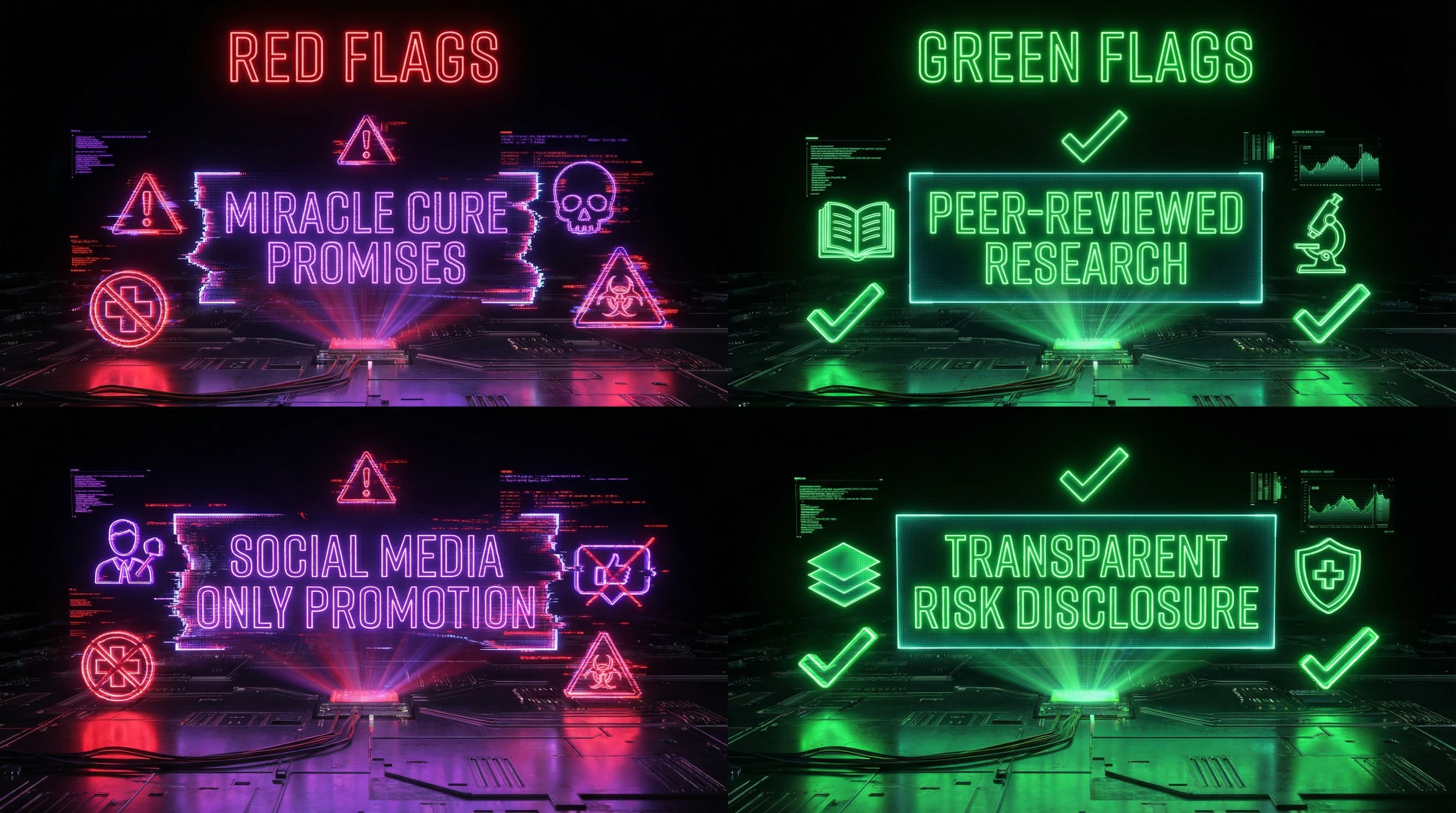
🛡️ Laplace Protocol: Critical evaluation of oncological information requires verification of randomized controlled trials, transparency about risks and side effects, and absence of pressure for rapid decision-making. Warning signs include promises of "miracle cures," promotion exclusively through social media, and publications only in obscure journals.
Reference Protocol
Scientific Foundation
Evidence-based framework for critical analysis
Protocol: Evaluation
Test Yourself
Quizzes on this topic coming soon
⚡
Deep Dive
What lies behind the term "alternative oncology" and why it's not simply a patient's choice
Distinction between complementary and alternative medicine
Complementary medicine — evidence-based supportive therapies used alongside conventional cancer treatment. Acupuncture for nausea control, meditation for stress reduction.
Alternative oncology offers methods without proven anticancer efficacy or safety, positioning them as replacements for standard therapy. This substitution of concepts creates a dangerous illusion of choice where survival is at stake.
The term "alternative oncology" masks the absence of an evidence base under the guise of pluralism of approaches, exploiting the vulnerability of cancer patients.
Characteristics of unproven treatment methods
Alternative cancer treatments possess specific features that distinguish them from legitimate medical practice.
- Absence of evidence base
- Systematically lack data from randomized controlled trials demonstrating efficacy.
- Digital distribution without oversight
- Promotion through platforms with minimal regulatory control, using misleading efficacy claims.
- Positioning as replacement, not supplement
- Marketed as superior to or replacing conventional oncology, which is critically dangerous for patients.
- False scientific legitimacy
- Published in predatory journals without proper peer review, creating the appearance of scientific justification.

Digital Proliferation and the Role of Social Platforms in the Medical Misinformation Epidemic
Meta and Facebook Advertising as Primary Promotion Channel
Systematic analysis of Meta platforms (Facebook and Instagram) revealed massive presence of alternative cancer treatment advertising. The internet and social media have become primary channels for spreading alternative oncology, bypassing traditional regulatory barriers.
Targeted advertising mechanisms enable precise targeting of vulnerable groups: newly diagnosed patients, people with advanced disease stages, those searching for information about chemotherapy side effects. Platforms systematically fail to enforce their own policies against medical misinformation.
| Vulnerable Group | Targeting Trigger | Impact Mechanism |
|---|---|---|
| Newly diagnosed | Search queries about diagnosis | Offering "natural" treatment path |
| Patients with side effects | Content about chemotherapy toxicity | Positioning as "safe alternative" |
| People with advanced disease | Desperation and search for last hope | Promise of miracle cure outside the system |
Google Business Review Manipulation
Alternative oncology clinics exploit Google Business listings and review systems to create false legitimacy. Anecdotal testimonials in reviews may represent placebo effects, natural disease variation, misattributed improvements from concurrent conventional treatment, or completely fabricated stories.
Google's search algorithms inadvertently legitimize these clinics by placing them at the top of search results alongside accredited medical facilities. A five-star review from a patient who was simultaneously receiving chemotherapy becomes proof of effectiveness in the algorithm's eyes.
Platform Policy Gaps and Regulatory Vacuum
Existing digital platform policies demonstrate critical gaps in countering the spread of medical misinformation in oncology. Despite declared standards, platforms fail to provide effective moderation of content related to alternative cancer treatments.
- Cross-border nature of digital advertising: clinics in jurisdictions with weak oversight freely advertise services to patients in countries with stricter regulation
- Lack of coordination between platforms, healthcare regulators, and medical associations
- Systemic vulnerability exploited by promoters of unproven pseudomedicine methods
Financial Harm and Catastrophic Expenditures as the Hidden Cost of "Alternative Choice"
Use of alternative oncology methods is a direct risk factor for financial catastrophe. Rivera et al. (2022) study documents correlation between use of unproven therapies and financial toxicity, when medical expenses exceed 40% of household income.
Unproven methods are not covered by insurance policies. The full financial burden falls on patients and families.
Patterns of alternative medicine use among cancer patients in Latin America demonstrate particular vulnerability in regions with limited access to conventional care, where financial burden is compounded by absence of social protection.
Cascading Effect of Financial Toxicity
Harm extends beyond direct expenses. Patients deplete savings, sell property, take high-interest loans to pay for unproven therapies.
- Exhaustion of savings and asset liquidation
- High-interest debt obligations
- Refusal of effective conventional treatment due to lack of funds
- Increased psychological stress and degradation of quality of life
Patients with advanced cancer stages are especially vulnerable. In desperation, they are willing to spend their last resources on any therapy promising hope, regardless of evidence base.
Alternative methods often require lengthy courses and repeat payments, creating financial dependence on ineffective treatment.
Predatory Journals and False Legitimacy of Scientific Publications
Publications Without Proper Peer Review
Predatory journals publish articles without rigorous scientific peer review, creating an illusion of academic legitimacy for unproven cancer treatments. Exploiting the open-access model, they charge authors fees but fail to provide quality expert evaluation.
Articles about alternative oncology in such publications contain methodological errors, exaggerated conclusions, and lack control groups. Promoters of unproven methods use these publications as "scientific proof," misleading patients and healthcare professionals.
- Journal accepts article without peer review or with sham review
- Author pays for publication (typically $500–$5,000)
- Article receives DOI and appears as legitimate scientific work
- Promoters cite it on clinic websites and social media
- Patient sees "scientific confirmation" and loses critical judgment
Creating the Appearance of Scientific Validity
The phenomenon of predatory journals is particularly dangerous in oncology: patients desperately search for treatment options and often lack skills for critical literature evaluation. The absence of rigorous standards allows dissemination of information about methods that have never undergone randomized controlled trials.
Pseudoscientific publications are then cited on alternative clinic websites, social media, and promotional materials, creating a closed loop of misinformation.
Promoters systematically use elements of scientific discourse: they employ medical terminology, reference in vitro or animal studies (which don't prove efficacy in humans), selectively cite works while ignoring context and limitations. Alternative clinic websites are designed in the style of academic institutions—white coats, laboratory equipment, charts in marketing materials.
| Legitimate Journal Indicator | Predatory Journal Indicator |
|---|---|
| Peer review before publication (2–4 months) | Publication within days or weeks |
| Editorial board rejects 60–80% of submissions | Accepts almost anything that brings money |
| No publication fee or minimal charge | $500–$5,000 per article |
| Indexed in PubMed, Web of Science | Absent from authoritative databases |
| Editor is known scientist with affiliation | Editor is unknown or fictitious |
Social networks and search engines inadvertently amplify the effect of false legitimacy: their algorithms don't distinguish between quality scientific publications and materials from predatory journals. Patients searching for cancer treatment information find articles about alternative methods that look like genuine scientific works but haven't undergone proper verification.
Meta and Google platforms often don't apply policies against medical misinformation to content formally published in "scientific journals," even if these journals are predatory. This creates an information ecosystem where pseudomedicine competes on equal footing with evidence-based medicine for the attention of vulnerable patients.

Common Myths and Misconceptions About Alternative Cancer Treatment
The Myth of "Natural" Remedy Safety
The belief that plant-based remedies are automatically safe is one of the most dangerous misconceptions. Many natural substances possess high toxicity, and the absence of industrial processing means lack of dosage standardization and quality control.
Herbal preparations interact with chemotherapy, reducing its effectiveness or amplifying side effects. Regulatory agencies do not require manufacturers of "natural" cancer remedies to provide safety evidence to the same degree as pharmaceutical companies.
- Some "natural" remedies contain heavy metals, toxic alkaloids, or synthetic substances added to create the appearance of effect
- Lack of standardization means composition varies between batches of the same product
- Patients don't inform oncologists about taking alternative preparations, considering them harmless supplements, which prevents identification of drug interactions
- Side effects may be underestimated or attributed to the underlying disease
Patient Testimonials as Pseudo-Evidence
Personal recovery stories form the foundation of alternative oncology marketing, but are not scientific evidence. Anecdotal testimonials don't account for multiple factors: natural variability in cancer progression, concurrent conventional treatment, spontaneous remissions, and the placebo effect.
Promoters of alternative methods systematically employ survivorship bias (only successes are published, failures are silenced) and confirmation bias (patients attribute improvement to the alternative method, ignoring the role of standard treatment). Social media amplifies influence through emotional impact of videos and photos, creating an illusion of widespread success.
Distinction Between Anecdotes and Clinical Data
Scientific medicine requires systematic data from controlled studies where effects are compared with placebo or standard therapy. Randomized controlled trials use statistical methods to determine whether an effect results from intervention or chance.
| Anecdotal Testimonials | Clinical Data |
|---|---|
| Individual observations without control group | Systematic data with variable control |
| Without standardization of conditions | Minimization of systematic errors |
| Without statistical analysis | Statistical methods for determining significance |
| Focus on short-term subjective improvements | Monitoring of side effects and long-term outcomes |
Patients often don't recognize the fundamental distinction between these types of evidence, especially when emotionally invested. Alternative oncology promoters exploit this misunderstanding, presenting collections of testimonials as equivalent to clinical studies and using terms like "clinical experience" to describe uncontrolled observations.
The hierarchy of evidence in medicine is clear: systematic reviews of randomized studies are at the top, anecdotal testimonials at the very bottom of the reliability pyramid. Understanding this distinction is critically important for making informed decisions about cancer treatment.
Practical Recommendations for Patients and Medical Professionals
Red Flags of Unreliable Information
Promises of "miraculous healing," "100% effectiveness," or "treatment for all types of cancer" with a single method contradict the biological reality of cancer heterogeneity. Claims about "secret" or "suppressed" methods, conspiracy theories about pharmaceutical companies, and appeals to "ancient wisdom" instead of scientific data are typical markers of pseudoscience.
Absence of mentions about risks and side effects, pressure for immediate decisions, and demands for prepayment for extended treatment courses indicate unscrupulous practices. Use of only anecdotal testimonials instead of peer-reviewed research, publications only in predatory journals or complete absence of scientific publications, refusal to collaborate with conventional oncologists—these are additional danger signals.
- Emotionally manipulative content: stories about "hopeless" patients whom "doctors refused to treat"
- Rhetoric of "natural" versus "toxic" without scientific justification
- Absence of licenses, accreditations from recognized medical organizations
- Operating in jurisdictions with weak regulation of medical practice
Green Flags of Reliable Sources
Credible information transparently presents scientific evidence, including limitations and uncertainties. Reliable sources reference publications in peer-reviewed journals with high impact factors and clearly distinguish between established facts, preliminary data, and hypotheses.
Information from national cancer institutes, academic medical centers, and professional oncology societies undergoes expert review and is regularly updated. These sources openly discuss both benefits and risks of treatment, provide statistical data on efficacy rates, and honestly acknowledge cases where evidence is insufficient.
| Criterion | Reliable Source | Unreliable Source |
|---|---|---|
| Authorship | Verifiable professional qualifications, affiliation with recognized institutions | Anonymous authors or individuals without medical education |
| Conflicts of Interest | Transparency about funding and potential conflicts | Hidden financial ties, direct sale of products |
| Treatment Approach | Integration with conventional treatment, encouragement of second opinions | Positioning alternative against standard medicine |
| Mechanism Explanation | Cellular and molecular level, cancer biology | Vague concepts: "boosting immunity," "detoxification" |
Communication Strategies with Patients
Medical professionals should proactively discuss alternative oncology, creating a safe space for open dialogue without judgment. Acknowledging emotional needs—desire for control, hope for cure, fear of side effects—helps understand patient motivation.
Instead of categorically rejecting all complementary approaches, oncologists can discuss evidence-based complementary medicine (acupuncture for nausea control, meditation for stress reduction) that is safely used alongside standard treatment.
Explaining differences between complementary and alternative medicine helps patients understand that supportive measures should not replace effective anti-cancer treatment. Effective communication requires teaching critical evaluation of medical information: hierarchy of evidence, randomized trials, distinction between correlation and causation.
Oncologists should be prepared to discuss specific alternative methods patients are considering, providing objective information about available evidence and potential risks, including interactions with chemotherapy. Documenting patients' use of any complementary agents in medical records and regularly reviewing this information is critical, as patients may start or stop taking supplements without notifying the medical team.
Building trusting relationships where patients feel their concerns are heard and taken seriously reduces the likelihood that they will conceal use of alternative methods or completely abandon conventional treatment in favor of unproven approaches.
Knowledge Access Protocol
FAQ
Frequently Asked Questions
Alternative cancer treatment refers to unproven methods offered instead of evidence-based therapy. These methods have not undergone rigorous clinical trials and lack confirmed efficacy against cancer (Delgado-López & Corrales-García, 2018). They are often promoted through the internet and social media with misleading claims.
Complementary medicine is used alongside conventional treatment to relieve symptoms, while alternative medicine is used instead of it. Complementary methods (acupuncture, meditation) have an evidence base for supportive care. Alternative methods are offered as replacements for chemotherapy or surgery without scientific proof of efficacy.
They distract patients from effective treatment, wasting critical time for therapy. Use of alternative methods is associated with catastrophic financial expenditures and worsened prognosis (Rivera et al., 2022). Refusing evidence-based oncology significantly reduces survival chances.
Meta platforms (Facebook, Instagram) and Google are actively used to advertise unproven cancer treatments. Research shows systematic gaps in moderation policies that allow medical misinformation to spread (Zenone et al., 2023, 2024). Clinics manipulate reviews and ratings to create false legitimacy.
Alternative cancer treatment is a significant risk factor for catastrophic healthcare expenditures. Patients spend enormous sums on ineffective methods, exacerbating the financial toxicity of illness (Rivera et al., 2022). This is especially dangerous for families with limited resources.
These are low-quality publications that publish articles about unproven methods without proper peer review. They create an appearance of scientific validity for alternative cancer treatments. Such publications are used to mislead patients about the effectiveness of methods.
No, this is a common myth. "Natural" does not mean safe—many poisons are naturally occurring. Unproven "natural" remedies can interact with treatment, cause toxicity, and lack proven anti-cancer efficacy (Delgado-López & Corrales-García, 2018).
Testimonials are anecdotal evidence, not clinical proof. Research shows that clinics manipulate online reviews to create false reputations (Zenone et al., 2024). Treatment efficacy must be confirmed by randomized controlled trials, not stories.
Red flags: promises of 100% cure, claims of "miracle cures," criticism of conventional medicine, demands for upfront payment. Also be wary of references to "secret" methods, absence of publications in peer-reviewed journals, and pressure for quick decisions. Verify information through authoritative medical sources.
Green flags: official cancer centers, publications in peer-reviewed journals, recommendations from professional medical associations. Trust sources that openly discuss risks and limitations of treatment and provide references to research. Consult with board-certified oncologists.
Open, non-judgmental dialogue is essential so patients feel comfortable sharing their intentions. Explain the differences between evidence-based and alternative medicine, discuss risks of interactions and missed opportunities. Offer evidence-based complementary methods for supportive care.
Main reasons include: fear of side effects from conventional treatment, desire for control, distrust of the medical system. Aggressive social media marketing, financial barriers to evidence-based medicine, and cultural factors also play roles (Murillo et al., 2023). Patient vulnerability is exploited by unscrupulous sellers.
No documented cases exist of cancer being cured exclusively by alternative methods in controlled studies. Apparent successes are typically explained by spontaneous remission, effects of prior conventional treatment, or misdiagnosis. Anecdotal stories do not substitute for clinical evidence (Delgado-López & Corrales-García, 2018).
Research reveals systematic gaps in enforcing policies against medical misinformation. Despite stated rules, alternative cancer treatment advertising continues to spread actively (Zenone et al., 2023, 2024). Moderation mechanisms are insufficiently effective to protect vulnerable patients.
Regulators must strengthen oversight of medical service advertising and require proof of efficacy. Loopholes allowing promotion of unproven methods through digital platforms must be closed. Coordination between health authorities and internet platform regulators is essential for patient protection.
No, unproven methods remain ineffective regardless of conventional medicine availability. In resource-limited regions, the priority is expanding access to evidence-based oncology, not promoting alternatives. Alternative methods worsen inequality by diverting resources from effective treatment (Murillo et al., 2023).