
Alternative Oncology: Critical Analysis of Non-Traditional Cancer Treatmentsλ
An evidence-based examination of alternative approaches to cancer treatment, their risks, and how they differ from proven medical care
Overview
Alternative oncology encompasses cancer treatment methods outside evidence-based medicine: herbal preparations, unverified biological protocols, physiotherapeutic approaches. Research documents 🧬 a doubling of mortality risk when standard therapy is replaced with alternative treatments. It is critical to distinguish between treatment replacement (alternative oncology) and supplementation of proven methods with supportive therapy (integrative oncology).
🛡️
Laplace Protocol: Critical evaluation of alternative cancer treatment methods requires analysis of the hierarchy of evidence, prioritization of patient safety, and differentiation between supportive therapy and claims of curative effect.
Reference Protocol
Scientific Foundation
Evidence-based framework for critical analysis
Protocol: Evaluation
Test Yourself
Quizzes on this topic coming soon
⚡
Deep Dive
What lies behind the term "alternative oncology" and why it's important to know
Alternative oncology — a collection of cancer treatment methods existing outside evidence-based medicine and not validated through rigorous randomized controlled trials. Includes herbal preparations, unverified biological methods, and physical therapy techniques positioned as replacements for standard treatment.
It's critically important to distinguish alternative oncology (rejection of conventional therapy) from integrative oncology (maintaining adherence to evidence-based standards).
Herbal and natural remedies
Plant-based substances constitute a significant portion of alternative offerings: from herbal extracts to specialized diets. Proponents claim absence of chemotherapy toxicity, but lack of standardization in composition and dosing creates unpredictable risks.
- Interactions with conventional medications alter their metabolism and effectiveness
- Particularly dangerous when used concurrently with chemotherapeutic agents
- Some plant compounds are studied in pharmacological research, but their uncontrolled use lacks scientific justification
Unverified biological methods
These include immunomodulators, enzyme preparations, and metabolic therapies that haven't undergone necessary phases of clinical trials. Often based on oversimplified representations of cancer biology, ignoring current understanding of molecular mechanisms of carcinogenesis.
Absence of randomized controlled trials means efficacy and safety remain unknown. Application is based exclusively on anecdotal evidence, not validated data.
The multiplicity of theories about cancer's nature is used to justify diverse approaches, however scientific consensus forms based on validated research, not theoretical pluralism.
Physical therapy approaches and hyperthermia
Physical therapy methods include hyperthermia, various forms of radiation, and manual techniques positioned as independent anti-tumor interventions. Hyperthermia is indeed studied as an adjunct to standard therapy, but its application as monotherapy lacks an evidence base.
- Illusion of active treatment
- Physical methods create temporary improvement in well-being, which delays seeking effective medical care
- Integration is only possible
- Within comprehensive treatment under oncologist supervision, not as an alternative to surgery, chemotherapy, and radiation therapy
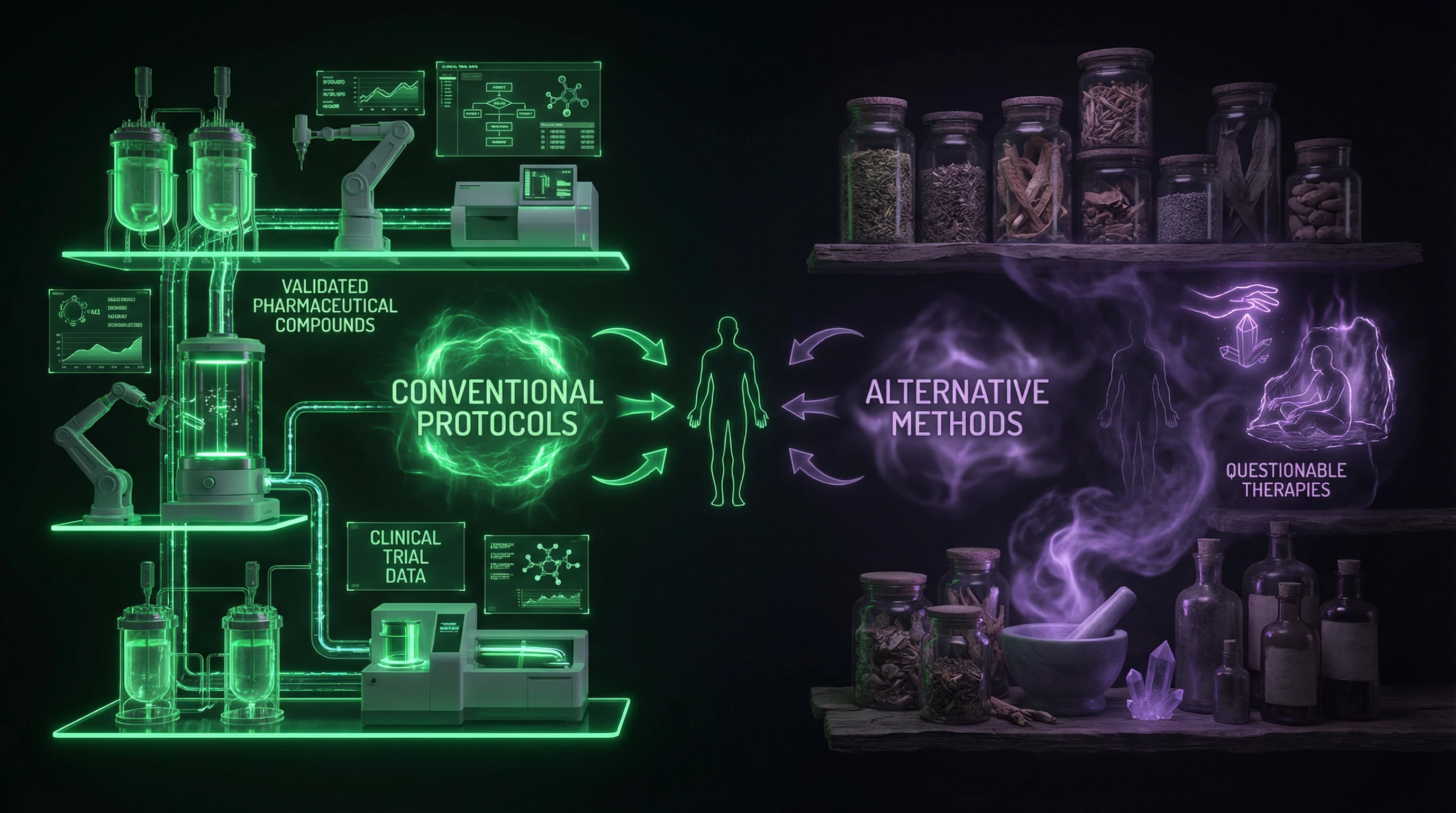
Scientific Evidence on Risks of Alternative Cancer Treatments
Empirical research consistently demonstrates serious risks associated with using alternative oncology instead of or in addition to standard treatment. Cohort studies show measurable increases in mortality among patients choosing alternative approaches.
The absence of regulatory oversight means patients are exposed to unknown risks without the ability to objectively assess the benefit-harm ratio.
| Risk Factor | Mechanism | Consequence |
|---|---|---|
| Delay of effective therapy | Time spent on ineffective method | Tumor progression |
| Refusal of part of protocol | Incomplete standard treatment | Insufficient disease control |
| Drug interactions | Alternative agents reduce chemotherapy effectiveness | Weakened anti-tumor effect |
Doubling of Mortality Risk When Refusing Standard Treatment
Documented evidence indicates that using alternative medicine instead of conventional therapy doubles the risk of death from cancer compared to patients receiving conventional treatment. Particularly high risks are observed with curable forms of cancer, where timely standard treatment ensures high survival rates, but delay critically reduces chances of cure.
Patients often underestimate mortality risks, focusing on perceived side effects of conventional therapy and overestimating the safety of "natural" alternatives.
Absence of Randomized Controlled Trials
The gold standard of evidence-based medicine is randomized controlled trials, which are virtually absent for most alternative oncology methods. Without such an evidence base, it is impossible to separate real therapeutic effect from placebo, spontaneous remission, or natural disease course.
- Anecdotal evidence is subject to patient selection (survivors are those who got lucky)
- Retrospective interpretation distorts causal relationships
- Publication bias conceals unsuccessful cases
- The hierarchy of evidence exists for a reason — it minimizes systematic errors
Historical Lessons from Ineffective Alternative Methods
Medical history contains numerous examples of alternative cancer treatments that gained widespread adoption but were subsequently disproven by scientific research. These cases reveal the mechanisms of unproven method dissemination and their consequences for patients.
The Case of Laetrile (Amygdalin) in the 1970s
Laetrile, also known as amygdalin or "vitamin B17," became one of the most notorious examples of ineffective alternative cancer treatment, popularized by Ernst Krebs Jr. in the 1970s. The substance, derived from apricot pits and other plants, was marketed as a natural anti-tumor agent capable of selectively destroying cancer cells.
Clinical trials by the National Cancer Institute found no anti-tumor activity of laetrile. Cases of cyanide poisoning from amygdalin metabolism were documented. Despite scientific refutation, laetrile continues to be sold in some jurisdictions, demonstrating the resistance of alternative methods to scientific evidence.
Recurring Patterns in Alternative Oncology
Historical analysis reveals a persistent structure that repeats from method to method:
- Promise of "miraculous healing" without side effects
- Appeal to "naturalness" and supposedly inherent safety
- Conspiracy narratives about suppression of effective methods by mainstream medicine
- Use of individual patient testimonials instead of systematic data
- Exploitation of regulatory differences between countries to promote in jurisdictions with less stringent oversight
These patterns work because they exploit a real vulnerability: cancer patients' fear of standard treatment side effects and desire to maintain control over the situation. Conspiracy theories offer simple answers to complex questions.
Critical evaluation of any treatment method should include questions about the existence of randomized trials, publication in peer-reviewed journals, and approval by regulatory agencies, rather than relying on theoretical justifications or individual success stories.
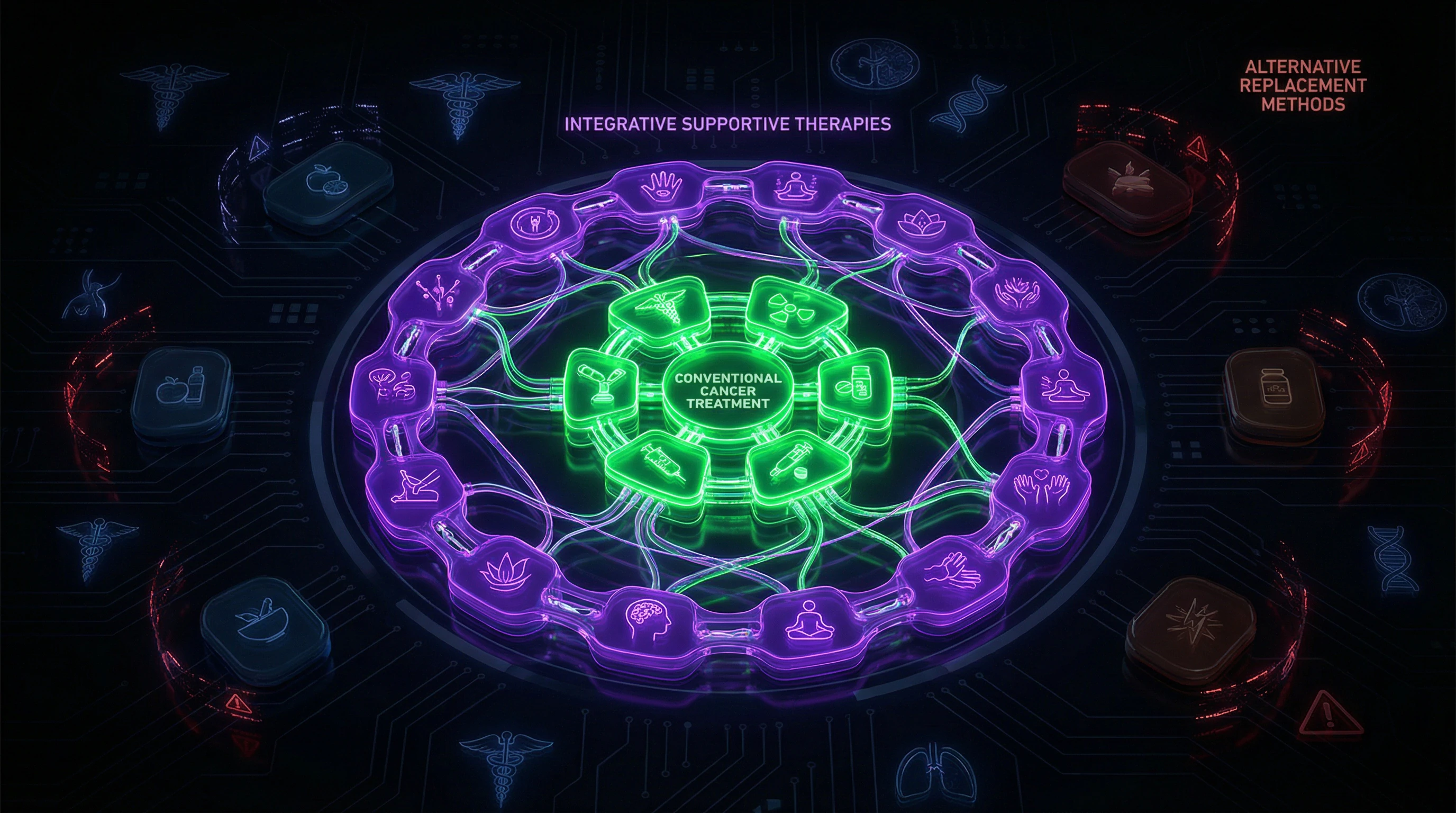
Integrative Oncology as an Evidence-Based Approach to Patient Support
Integrative oncology combines conventional cancer treatment with evidence-based supportive care methods, without replacing surgery, chemotherapy, and radiation therapy. Major cancer centers worldwide implement such programs as a complement to primary treatment, not as its replacement.
Alternative oncology proposes abandoning standard treatment in favor of unproven methods. The integrative approach focuses on improving quality of life, managing side effects, and psychological support within evidence-based practice.
Differences Between Alternative and Integrative Oncology
The key difference lies in the relationship to evidence base and the role of conventional treatment. Alternative oncology offers methods instead of standard therapy, often based on anecdotal evidence without randomized controlled trials.
Integrative oncology uses only those complementary methods that have passed scientific verification and do not contradict primary treatment, always maintaining conventional therapy as the foundation. For example, hyperthermia in clinical settings may be considered part of an integrative approach if conducted under medical supervision and in combination with standard treatment.
| Parameter | Alternative Oncology | Integrative Oncology |
|---|---|---|
| Role of Standard Treatment | Replacement with unproven methods | Foundation; complement with supportive methods |
| Evidence Base | Anecdotal evidence, theory | Randomized controlled trials |
| Claims | Miraculous healing | Outcome optimization, toxicity reduction |
Proven Supportive Care Methods
Physical activity reduces fatigue and improves prognosis in certain cancer types. Nutritional support helps maintain body weight and treatment tolerance. Stress management techniques, such as mindfulness meditation, reduce anxiety and depression.
Acupuncture has demonstrated effectiveness in controlling chemotherapy-induced nausea in randomized studies, leading to its inclusion in clinical guidelines at some cancer centers. These methods do not directly treat cancer but improve quality of life and help patients better tolerate necessary conventional treatment.
- Discuss any herbal supplements or biologically active substances with your oncologist before starting use
- Check for potential interactions with chemotherapy
- Ensure the complementary method does not affect drug metabolism
- Confirm that supportive therapy complements rather than replaces standard treatment
Critical Evaluation of Claims and Identifying Fraudulent Schemes in Oncology
Cancer patients are particularly vulnerable to fraud: fear, desperation, and willingness to try anything create an ideal environment for exploitation. Commercial interests in alternative medicine generate powerful incentives to promote unproven methods, especially where regulatory oversight is weak.
Critical evaluation requires a systematic approach: the ability to recognize red flags, ask the right questions, and distinguish scientifically validated methods from manipulation.
Red Flags in Alternative Treatment Methods
Several signs indicate potential fraud or ineffectiveness:
- Claims of "miracle cures" or "the most effective treatment" allegedly hidden by mainstream medicine — exploitation of conspiratorial thinking.
- Absence of publications in peer-reviewed journals; reliance solely on individual patient testimonials; refusal to conduct randomized controlled trials.
- Pressure for immediate decisions, fearmongering about side effects of standard treatment, demands for complete abandonment of conventional therapy.
- Discouraging consultation with an oncologist or demanding secrecy — a direct sign of fraud.
Laetrile (amygdalin), actively promoted in the 1970s as a cancer cure, was later recognized as ineffective and potentially toxic. History repeats itself: the mechanism remains unchanged — patient desperation + lack of evidence + commercial interest.
Questions to Discuss with Your Oncologist
Open dialogue with your treating oncologist about any alternative or complementary methods is critical for safety. Ask direct questions:
- Are there randomized controlled trials of this method?
- Have results been published in peer-reviewed journals?
- Is the method approved by regulatory agencies?
- Could it interact with current treatment?
- Is it offered as a complement or as a replacement for standard treatment?
Replacing standard treatment with an alternative method doubles the risk of death from cancer. This is not an opinion — this is data.
Oncologists practicing evidence-based medicine do not dismiss patient questions, but help assess safety and benefit based on scientific evidence. If an alternative method provider obstructs such dialogue — this is a serious danger signal.
Patient Safety and Informed Decision-Making in Oncology
Safety in oncology depends on timely initiation of effective treatment and avoiding interventions that may interfere with standard therapy or delay it. Informed decision-making requires understanding not only the potential benefits but also the risks of any method, including alternative approaches.
Patients have the right to complete information about diagnosis, prognosis, and treatment options. Regulatory differences between countries mean that methods available in one jurisdiction may be prohibited in another due to safety concerns or lack of evidence of effectiveness.
The right to information comes with the responsibility for critical evaluation of sources—especially when life and death are at stake.
Interactions Between Natural Substances and Chemotherapy
The misconception that "natural" substances are inherently safe can lead to serious consequences during cancer treatment. Many herbal supplements interact with liver enzymes that metabolize chemotherapeutic drugs, potentially reducing their effectiveness or increasing toxicity.
| Substance/Supplement | Interaction Mechanism | Risk to Patient |
|---|---|---|
| St. John's Wort | Induces cytochrome P450 3A4 | Accelerated drug metabolism, reduced therapeutic effect |
| Antioxidant supplements (high doses) | Protection from oxidative stress | Potential protection of cancer cells from chemotherapy and radiation therapy effects |
| Non-standardized herbal preparations | Variability in composition and concentration | Unpredictable interactions and side effects |
The lack of standardization and regulatory oversight of herbal supplements means their composition can vary significantly between manufacturers, creating additional risks.
Risks of Delayed Diagnosis and Treatment
One of the most serious consequences of turning to alternative oncology is the delay in starting effective treatment, which can critically affect prognosis. Many types of cancer have a window of opportunity for cure that closes as the disease progresses and metastases develop.
Patients using alternative medicine instead of standard treatment have twice the risk of death from cancer compared to those receiving conventional therapy.
Even a short delay of several months can mean the difference between a curable and incurable stage in aggressive forms of cancer. Time is a critical factor in oncology—the decision to try alternative methods before starting standard treatment can have irreversible consequences for survival.
- Clarify with your oncologist the exact diagnosis, stage, and prognosis without alternative interpretations
- Request information about all available standard treatment methods and their effectiveness at your stage
- Discuss with your doctor any supplements or methods you are considering, including potential interactions
- Get a second opinion from an independent oncologist if you have doubts about the recommendations
- Document all recommendations and decisions in writing
An integrative approach is possible, but only after starting standard treatment and under the supervision of an oncologist who knows about every method you are using.

Knowledge Access Protocol
FAQ
Frequently Asked Questions
Alternative oncology refers to cancer treatment methods that exist outside evidence-based medicine, including herbal remedies, unproven biological preparations, and non-standard physiotherapeutic approaches. These methods have not undergone randomized controlled trials and are often offered as replacements for conventional treatment. It's important to distinguish them from integrative oncology, which complements but does not replace standard therapy.
Using alternative medicine instead of conventional therapy doubles the risk of death from cancer. Refusing surgery, chemotherapy, or radiation therapy leads to disease progression and missed opportunities for effective treatment. Even when adding alternative methods to standard treatment, risks increase significantly due to possible interactions and side effects.
Integrative oncology combines proven conventional treatment methods with scientifically validated supportive practices such as proper nutrition, physical exercise, and stress management. Alternative oncology proposes replacing standard treatment with unproven methods lacking scientific foundation. The integrative approach is always coordinated with an oncologist and does not contradict the primary treatment protocol.
Laetrile (amygdalin) is a substance derived from apricot pits, popularized in the 1970s as a cancer "miracle cure." Clinical studies have not confirmed its effectiveness, and in some cases revealed toxicity due to cyanide release. This case has become a classic example of the dangers of unproven alternative cancer treatment methods.
Yes, many herbal preparations and supplements can dangerously interact with chemotherapy, reducing its effectiveness or increasing toxicity. For example, St. John's wort accelerates the metabolism of many anticancer drugs, rendering them ineffective. Always inform your oncologist about all supplements and herbal remedies you're taking before starting treatment.
Key signs of fraud include: promises of "miraculous healing," claims of a conspiracy by conventional medicine, absence of publications in peer-reviewed journals, and demands for prepayment for "secret" treatments. References to "ancient knowledge" without scientific evidence and aggressive advertising with testimonials lacking medical documentation should also raise concerns. Legitimate methods always have open research protocols.
Yes, scientifically validated methods include balanced nutrition, moderate physical activity, psychological support, and stress management techniques (meditation, yoga). These approaches improve quality of life, help manage treatment side effects, and may improve prognosis. Importantly, they complement rather than replace standard therapy and should be coordinated with your treating physician.
Be open and honest: compile a list of all methods you're interested in and bring information about them to your appointment. Ask about scientific evidence, possible risks, and interactions with primary treatment. A good oncologist won't judge your interest but will help you understand the safety and appropriateness of each method for your specific case.
Randomized controlled trials (RCTs) are the gold standard of evidence-based medicine, allowing objective assessment of a method's effectiveness and safety. Without RCTs, it's impossible to distinguish real effects from placebo or spontaneous improvement. Alternative methods without such studies are based on anecdotal cases that cannot guarantee safety and results for other patients.
Hyperthermia (tissue heating) is being studied in clinical settings as an adjunct to chemotherapy and radiation therapy, but not as a standalone method. In some protocols, it has shown moderate effectiveness for certain tumor types. However, using hyperthermia outside clinical trials and without oncologist supervision can be dangerous and ineffective.
No, this is a common myth used to promote unproven methods. Oncologists are invested in curing patients and actively implement any proven effective methods, regardless of their origin. If an alternative method actually worked, it would undergo clinical trials and become part of standard treatment protocols.
After treatment completion, some supportive practices may be helpful for recovery, but they should be discussed with your oncologist. It's important to avoid methods that could interfere with detecting recurrence or interact with maintenance therapy. Regular monitoring and following your doctor's recommendations remain the priority even during remission.
Ask about scientific publications on the method, availability of clinical studies, the practitioner's qualifications, and possible side effects. Clarify the cost, duration of treatment, and criteria for evaluating effectiveness. Be sure to find out how the method will combine with your primary treatment and whether there are independent reviews from medical organizations.
Balanced nutrition supports the body during treatment, helps manage side effects, and speeds recovery, but does not treat cancer itself. Special "anti-cancer diets" without scientific evidence can lead to malnutrition and worsening condition. Consultation with an oncology dietitian will help create an individualized nutrition plan appropriate for your type of treatment.
Try to arrange a joint consultation with an oncologist, where the specialist can explain the risks and benefits of different approaches based on scientific evidence. Suggest reviewing reliable information sources together and discussing specific concerns. It's important to show empathy for your family member's fears, but insist on prioritizing proven treatment methods.
In palliative care, some complementary methods (massage, aromatherapy, music therapy) may improve quality of life and relieve symptoms, but do not extend life. It's important to focus on patient comfort and avoid aggressive unproven methods that could worsen their condition. The palliative care team will help select safe supportive practices.