Witchcraft: From Medieval Persecution to Modern Spiritual Practiceλ
An exploration of the historical evolution of witchcraft from early medieval European folklore through the witch-hunt era to contemporary healing practices and academic reinterpretation.
Overview
Witchcraft is not a monolith, but a cultural construct that shifted form from folkloric practices of the 10th–11th centuries to mass persecutions of the early modern period. As early as 1584, Reginald Scot in "Discoverie of Witchcraft" exposed charlatans and criticized witch hunters 🧩: the first skeptical protocol against moral panic. Today archaeologists (Chris Gosden, Oxford), anthropologists, and historians of religion study the mechanisms—how fear of "foreign knowledge" triggered social purges, and why Wiccan healing practices are once again in demand in an era of institutional trust crisis.
🛡️
Laplace Protocol: This material is based on historical sources, academic research, and documented cultural practices. Both skeptical and practical approaches to the study of witchcraft are presented for an objective understanding of the phenomenon.
Reference Protocol
Scientific Foundation
Evidence-based framework for critical analysis
Protocol: Evaluation
Test Yourself
Quizzes on this topic coming soon
⚡
Deep Dive
Historical Roots and Early Medieval Folklore: Where the Witch Image Came From
Witchcraft in 10th-11th Century Documents
The first written references to witchcraft in the European tradition date to the early Middle Ages — the 10th-11th centuries. In church documents, court records, and folklore texts, witches appear as figures with supernatural abilities and connections to otherworldly forces.
Conceptions of witchcraft formed at the intersection of three sources: pagan beliefs, Christian demonology, and folk medicine. This hybridity explains why the witch image was simultaneously local and universal.
- Pagan Beliefs
- Fertility cults, veneration of natural forces, healing practices passed orally from generation to generation.
- Christian Demonology
- Interpretation of any magic as a pact with the devil; reframing of pagan gods as demons.
- Folk Medicine
- Healing practices, herbalism, ritual healing that the church perceived as a threat.
The Witch Image in European Tradition
In European folklore, the witch is a destructive figure: casting curses on crops and livestock, causing illness, influencing weather, harming neighbors through magical rituals. Christian theology reinforced this interpretation, declaring magic a pact with the devil.
The witch image was not monolithic. Different regions of Europe had local variations: in some cultures witches were perceived as healers with ambivalent reputations (helping and harming), in others — exclusively as embodiments of evil.
This regional differentiation explains why witch hunts later took different forms in different countries and why folk magic survived in some places and was completely displaced in others.
The Witch Hunt Era and the Skeptical Movement: When Debunking Began
Reginald Scot and the Exposure of Imposters
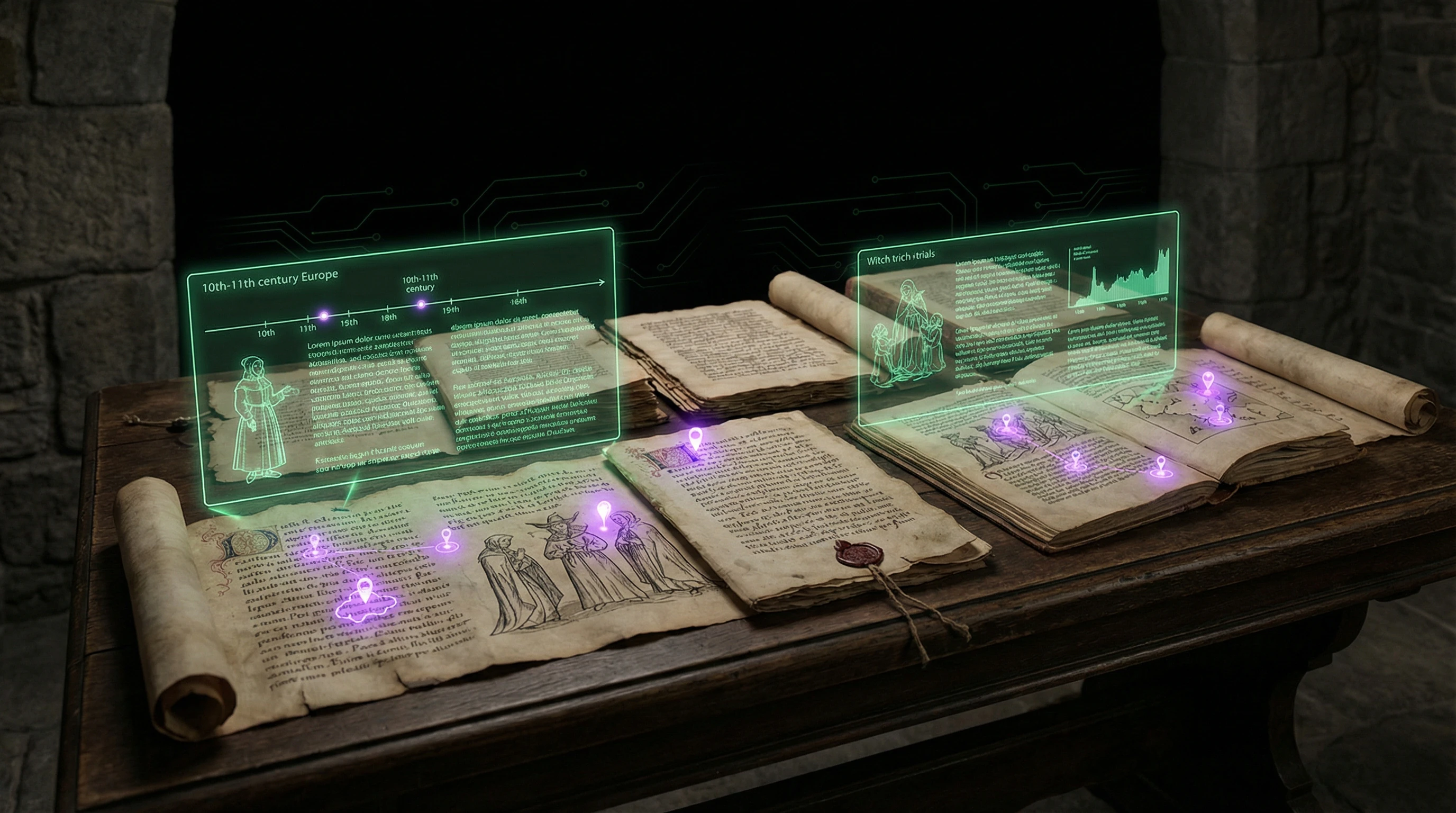
In the 16th century, English aristocrat Reginald Scot published "The Discoverie of Witchcraft" — a systematic examination of accusations of magic, demonstrating the mechanisms of deception: how "evidence" of magical abilities was built on tricks, superstitions, and psychological manipulation.
His 292-page work became one of the first skeptical investigations of mass delusions. Scot divided the accused into three categories: victims of false accusations, people with mental disorders, and frauds exploiting popular fears.
| Category of Accused | Mechanism | Social Effect |
|---|---|---|
| Victims of false accusations | Rumors, envy, neighbor conflicts | Elimination of inconvenient people |
| People with mental disorders | Hallucinations, delusions interpreted as possession | Medicalization disguised as demonology |
| Professional frauds | Tricks, herbs, theatrical effects | Profiting from fear |
Social and Religious Causes of Persecution
The witch hunts of the 15th-17th centuries intensified during periods of crisis: epidemics, crop failures, religious conflicts. Society sought scapegoats to explain calamities, while church and secular authorities used witchcraft accusations as instruments of social control.
Victims were predominantly elderly women, widows, healers — marginalized groups that didn't conform to patriarchal norms. The gendered and social nature of the persecutions indicates that witchcraft served as a mechanism for eliminating inconvenient members of society under the guise of fighting magic.
- Social crisis (epidemic, famine, war) → search for someone to blame
- Authorities identify a marginalized group (elderly women, healers)
- Witchcraft accusation legitimizes repression
- Elimination of the "threat" restores illusion of control
Archaeological and Anthropological Perspective: The Science of Magic and Witchcraft
Chris Gosden's Research
Chris Gosden reconstructs the evolution of magic from pagan shamanism through medieval alchemy to witchcraft, drawing on archaeological findings, anthropological data, and historical sources.
The material culture of magical practices—amulets, ritual objects, burials—provides objective data about the perception and use of magic in the past.
The archaeological approach studies not beliefs about magic, but its material traces—what people actually did and left behind.
Magic and witchcraft constantly transformed under the influence of social, technological, and religious changes.
From Pagan Shamanism to Medieval Alchemy
Research reveals a continuous line of succession between ancient shamanic practices and medieval magic.
- Pagan shamans used altered states of consciousness, ritual objects, and knowledge of plants for healing and divination.
- During the transition to Christian culture, shamanic practices were reinterpreted as witchcraft.
- Medieval alchemy synthesized ancient philosophy, Arabic science, and magical traditions.
- Renaissance magic sought to transform matter and spirit through symbolic operations.
This evolution demonstrates that witchcraft was not an isolated phenomenon, but part of a broader history of human attempts to understand and control natural and supernatural forces.
Margaret Murray's Theories and the New Age Movement: How Feminism Reimagined Witchcraft
Margaret Murray, a British anthropologist of the early 20th century, proposed a hypothesis: medieval witchcraft was not a diabolical cult, but remnants of a pre-Christian pagan religion. Her works from the 1920s claimed that those accused of witchcraft were practicing members of an ancient fertility religion with organized structure and rituals.
The academic community later rejected many of Murray's conclusions as insufficiently substantiated. However, her ideas had enormous influence on the New Age movement and modern neopaganism, providing an intellectual foundation for rehabilitating the image of the witch.
Murray's theory functioned as a cognitive tool: it allowed the witch to be reframed from enemy to victim of history, and then into a symbol of alternative knowledge.
Women in Modern Witchcraft
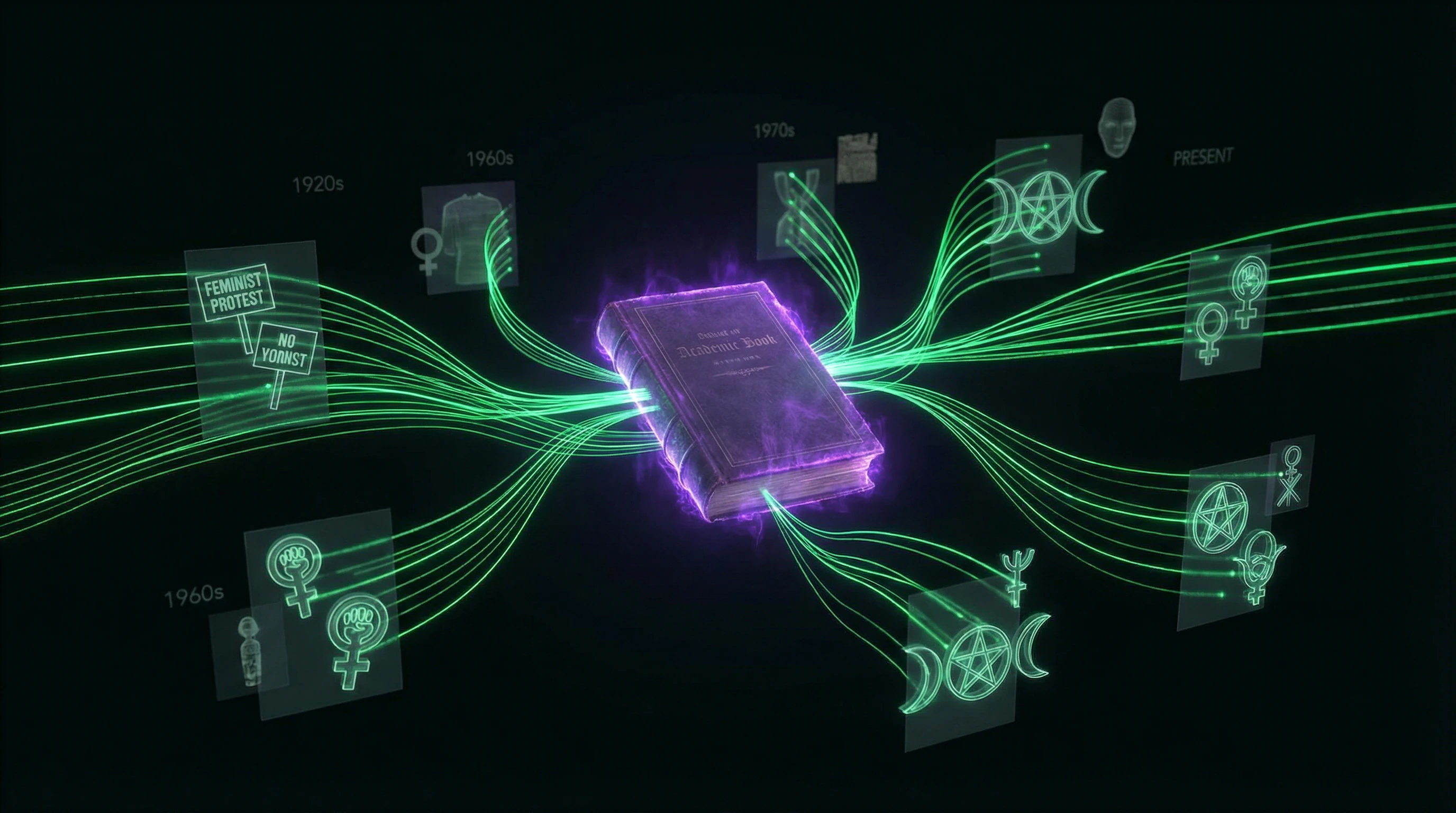
In the second half of the 20th century, feminist movements began reimagining historical witches as symbols of female power and resistance to patriarchy. The witch transformed in the cultural imagination: from victim of gender violence to bearer of alternative knowledge and symbol of female autonomy.
This reinterpretation allowed women to claim the witch identity as a form of spiritual and political self-expression. Academic research analyzes this transformation of the image—from negative character in medieval texts to multifaceted figure in contemporary culture.
- Witch as victim: reinterpreting witch hunts through the lens of gender violence and systematic suppression of women's knowledge.
- Witch as knowledge: claiming practices of herbalism, healing, alternative medicine as forms of legitimate experience.
- Witch as politics: using the image in feminist activism and critique of patriarchal power structures.
- Witch as identity: voluntary adoption of the status as spiritual practice and means of self-definition.
Wiccan Traditions and Their Origins
Wicca, founded by Gerald Gardner in the 1950s, is a modern pagan religion that synthesized Murray's ideas, ritual magic, folklore, and Eastern spiritual practices. Wiccan traditions emphasize harmony with nature, veneration of divine feminine and masculine principles, use of rituals connected to lunar cycles and seasonal festivals.
Wiccan healing is described as a practice of self-help through magic: herbalism, meditation, energy work, ritual healing. Wicca became one of the most popular forms of modern witchcraft, attracting people seeking a spiritual alternative to traditional religions and personal transformation through magical practices.
| Element | Wiccan Interpretation | Function in Practice |
|---|---|---|
| Moon | Divine feminine principle, fertility cycles | Synchronizing rituals with lunar phases |
| Nature | Living system, source of energy and knowledge | Foundation for herbalism and energy work |
| Ritual | Tool for transforming consciousness and reality | Practical application of magic in daily life |
| Community | Coven as support and learning structure | Knowledge transmission and identity reinforcement |
Modern Healing and Self-Help Practices: Witchcraft as a Therapeutic Tool
Witchcraft as Spiritual Practice
Modern witchcraft functions as a spiritual practice oriented toward personal transformation, healing, and establishing connection with natural cycles. Unlike historical perceptions as malevolent magic, contemporary practitioners view it as a path of self-discovery.
The toolkit includes meditation, energy work, symbols, and rituals for achieving psychological well-being. Crystals, herbs, tarot, and astrology serve as focal points for intention and meditative states.
- Holistic approach: interconnection of body, mind, and spirit as a unified system
- Personal transformation: practices oriented toward the practitioner themselves, not influencing others
- Attention anchors: tools (crystals, herbs, tarot) function as focal points for concentrating intention
Patti Wigington and Body Care
Patti Wigington in her work on Wiccan healing emphasizes the importance of caring for the physical body as an integral part of magical practice. Her approach integrates traditional Wiccan methods with modern concepts of holistic health.
Self-help magic begins with recognizing the sacredness of one's own body and responsibility for its well-being through conscious practices of nutrition, movement, and rest.
Tools include using herbs for healing, energy healing, creating protective amulets, and rituals for emotional release. This approach resonates with modern mindfulness movements, offering a spiritual framework for practices that in secular contexts are called wellness or self-care.
Academic Reconceptualization and Cultural Representations: From Folklore to Scientific Analysis
Contemporary Research at HSE
Russian universities, including HSE, study witchcraft as an object of interdisciplinary analysis. Dissertation works examine the image of the witch through historical, gender, literary, and anthropological lenses.
Researchers track the transformation of the image from medieval texts to contemporary mass culture. The witch functions as a mirror of social fears, gender stereotypes, and changing conceptions of female power and autonomy.
- Historical perspective — transformation of the witch image across different eras
- Gender analysis — female subjectivity, resistance, power
- Cultural context — reflection of current discussions about power and identity
Literary Images in Historical Fantasy
Contemporary literature uses the witch image to explore historical and modern themes. Alexis Henderson's novel "The Year of the Witching" presents dark historical fantasy about conflict between witches and the Church.
Literary representations of witchcraft allow authors to explore themes of power, gender, religious persecution, and resistance through the metaphorical lens of magic and the supernatural.
Chris Gosden in his research traces the evolution of magic from pagan shamanism through medieval alchemy to modern witchcraft, demonstrating the continuity of magical thinking in human culture.
Cultural representations not only reflect historical realities but actively shape contemporary understanding of witchcraft. They create space for reconsidering traditional narratives about magic, power, and female subjectivity.
Knowledge Access Protocol
FAQ
Frequently Asked Questions
Witchcraft is a complex of magical practices and beliefs mentioned in European documents from the 10th-11th centuries. Historically, witches were portrayed as negative folklore characters associated with dark magic and destructive forces. Modern research examines witchcraft as a cultural and social phenomenon with multiple interpretations.
Reginald Scot was an English gentleman, author of "The Discoverie of Witchcraft," who exposed fraudulent magicians and witch hunters. His work became one of the first skeptical investigations criticizing mass persecutions and false accusations. The work was translated by Alex Arkhipov and published by Veligor in 2025, spanning 292 pages.
Yes, witch hunts are a historically documented phenomenon that peaked in 15th-17th century Europe. Thousands of people, predominantly women, were accused of witchcraft and executed based on false denunciations and superstitions. Scot and other researchers proved that most accusations were unfounded and served social and religious purposes.
Chris Gosden traced the evolution of magic from pagan shamanism through medieval alchemy to modern witchcraft from archaeological and anthropological perspectives. His comprehensive research demonstrates the continuity of magical traditions in human culture. The work offers a scientific view of the historical development of magical practices.
Margaret Murray was an anthropologist whose theories about pre-Christian roots of witchcraft influenced the New Age movement and modern Wicca. She proposed that medieval witches were followers of an ancient pagan religion. Though her theories are controversial, they inspired a revival of interest in witchcraft as a spiritual practice among women.
Wicca is a modern pagan religion founded in the mid-20th century, incorporating elements of ancient magical traditions and nature worship. It represents one form of contemporary witchcraft with emphasis on harmony with nature and magical rituals. Patti Wigington describes Wiccan practices of healing and self-help through magic.
Modern academic science studies witchcraft as a cultural, historical, and social phenomenon, not as actual magic. Research from HSE and other institutions examines witches from multiple perspectives—anthropological, literary, and gender-based. The scientific approach focuses on understanding the role of witchcraft in society rather than testing magical abilities.
Yes, numerous modern guides and communities exist for beginning practitioners. Patti Wigington's books on Wiccan healing and self-help offer practical methods. It's important to distinguish between historical witchcraft, modern spiritual practices, and literary representations when choosing a direction of study.
The gender aspect of witch hunts is connected to patriarchal structures and control over female autonomy. Women who possessed knowledge of herbs, midwifery, or lived independently often became targets of accusations. The modern New Age movement reinterprets witchcraft as a form of feminine spirituality and power.
Healing witchcraft is a contemporary practice using magical rituals, herbs, and energy work for physical and spiritual healing. Patti Wigington describes Wiccan methods of body care through magic and self-help. This direction focuses on a holistic approach to health and well-being.
No, this is a myth spread by the Inquisition to justify persecution. Reginald Scot and modern researchers have proven that accusations of devil worship were false constructions. Many of the accused practiced folk medicine or adhered to pre-Christian traditions unrelated to the Christian concept of the devil.
Contemporary literature offers diverse representations—from dark historical fantasy to positive heroines. <em>The Year of the Witching</em> by Alexis Henderson depicts the conflict between witches and the Church in a grim historical setting. Academic studies from leading universities analyze the evolution of literary representations from negative stereotypes to multifaceted characters.
No scientific evidence of supernatural abilities exists. Historical "evidence" resulted from torture, superstition, and mass hysteria, as Reginald Scot demonstrated. Modern witchcraft is viewed by practitioners as a spiritual system and psychological tool, not a source of literal supernatural powers.
A combination of historical research (Scot, Gosden), academic works (university studies), and modern practical guides (Wigington) is recommended. It's important to distinguish between skeptical exposés, scholarly analysis, and practitioner manuals. A critical approach to sources helps separate historical facts from myths and contemporary interpretations.
Yes, research by Chris Gosden shows connections between pagan shamanism and later forms of witchcraft. Both traditions involve working with spirits, altered states of consciousness, and healing practices. However, European witchcraft developed in a specific cultural context distinct from Siberian or Native American shamanism.
Yes, modern witchcraft as a spiritual practice is legal, and English-language communities and resources for beginners exist. It's important to understand the distinction between historical persecution, religious practices, and cultural traditions. Publishers like Llewellyn release translations of classic and contemporary works on the subject for English-speaking audiences.