What is a ritual in the scientific sense — and why the definition matters more than it seems
The first problem in studying rituals is terminological confusion. In everyday language, "ritual" gets mixed up with "rite," "ceremony," "tradition," and even "habit." For scientific analysis, it's critically important to separate these concepts, since they describe different levels of behavioral organization and engage different cognitive mechanisms. More details in the Esoterica and Occultism section.
🔎 Operational definition: four mandatory features of ritual
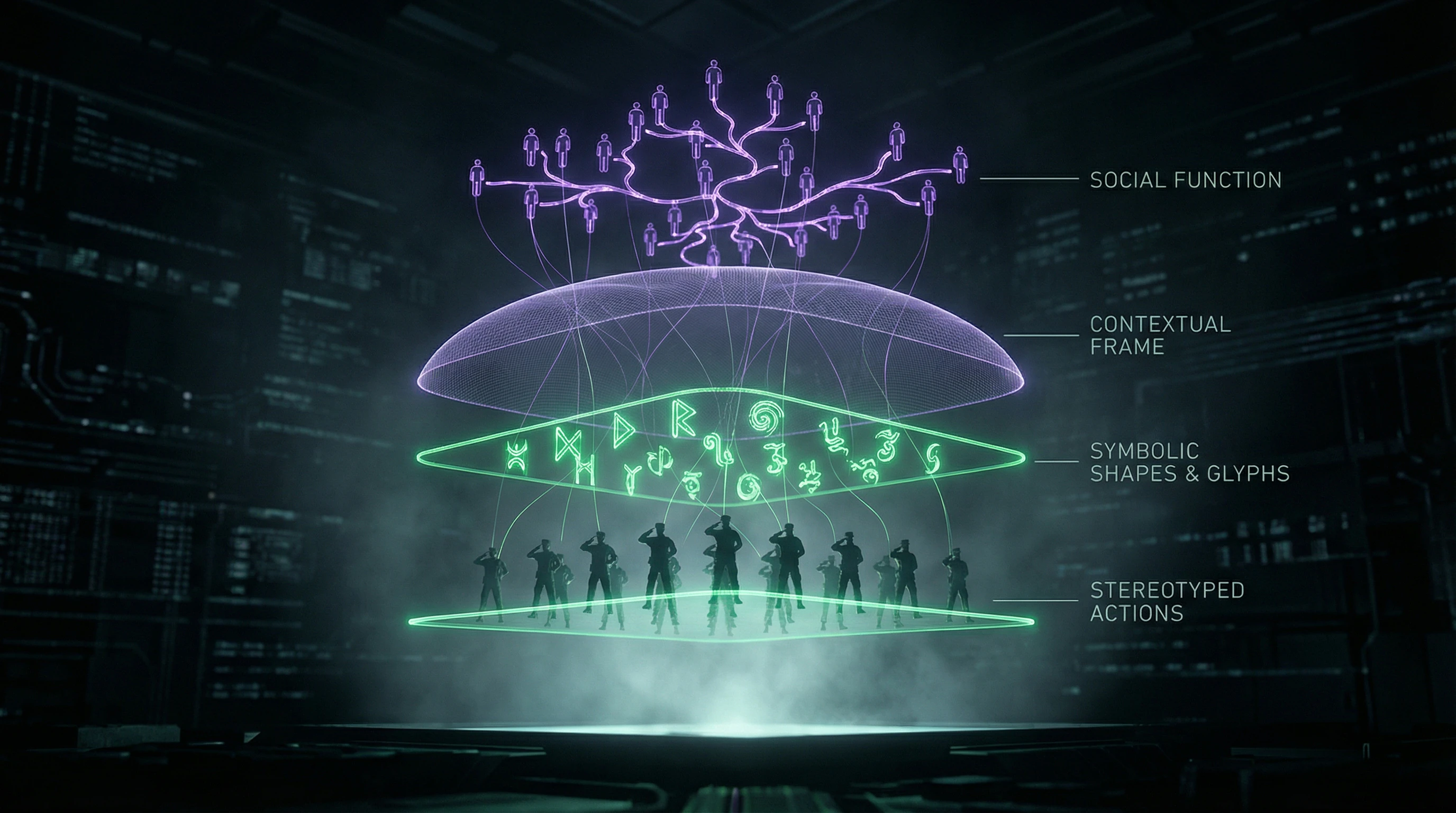
Modern cognitive anthropology defines ritual through a set of formal characteristics.
- Stereotyped form
- The order and form of execution matter more than the immediate practical result. Deviation from the sequence disrupts the ritual function.
- Symbolic component
- Actions refer to meanings that extend beyond physical reality. This distinguishes ritual from utilitarian procedure.
- Specific context
- Ritual is performed under conditions that mark a transition from ordinary state to a "special" mode of perception.
- Social function
- Ritual either creates or confirms group membership of participants. This distinguishes it from individual habit.
These criteria allow us to distinguish ritual from simple habit (brushing teeth is not a ritual, though it is stereotyped) and from utilitarian procedure (surgical operation follows protocol, but is not a ritual without symbolic dimension).
⚙️ Rite vs ritual: hierarchy of cultural practices
In English-speaking tradition, "rite" is often used as a synonym for ritual, but a more precise differentiation suggests: a rite is a culturally codified form of ritual, established in the tradition of a specific community. Rite = ritual + cultural specificity.
Initiation ritual is universal across human societies, but the warrior initiation rite among the Maasai and the confirmation rite in the Catholic Church are different cultural realizations of the same ritual pattern.
This distinction explains why rituals are so persistent: the basic ritual structure is rooted in universal features of human psychology, while specific ritual forms vary and adapt to changing social conditions. Studies of regional onomastics demonstrate how cultural practices, including naming rites, maintain stability across generations despite social transformations (S002).
🧱 Boundaries of the phenomenon: where ritual ends and pathology begins
A critical question for scientific analysis is the boundary between functional ritual and obsessive-compulsive disorder (OCD). Both phenomena include stereotyped, repetitive actions that are subjectively perceived as necessary.
| Parameter | Ritual | Compulsion (OCD) |
|---|---|---|
| Social dimension | Shared by group, has culturally recognized meaning | Isolates individual, lacks commonly recognized significance |
| Adaptiveness | Promotes social integration | Maladaptive, reduces functionality |
| Flexibility | Permits variations in context | Requires exact repetition, causes anxiety when deviated from |
However, this boundary is blurred. Some religious practices (multi-hour prayer cycles, extreme forms of asceticism) may meet clinical criteria for OCD, but within the context of a religious community are perceived as normal. Assessment of ritual "normality" depends on the cultural context of the observer — this creates a methodological problem for diagnosis and research.
Why People Believe in the Power of Rituals: Seven Arguments That Cannot Be Ignored
Before examining the scientific data, it's necessary to honestly present the most compelling arguments in favor of the real effectiveness of rituals. This is not a straw man, but a position shared by billions of people and one that has certain empirical foundations. More details in the section Metaphysics and Laws of the Universe.
⚡ First Argument: Subjective Experience of Altered States of Consciousness
Ritual participants regularly report experiences radically different from ordinary perception: a sense of unity with the group, dissolution of ego boundaries, feeling the presence of a transcendent force, altered perception of time. These states are phenomenologically real — people genuinely experience them, and they are reproducible under controlled conditions.
Neuroimaging studies show specific patterns of brain activation during ritual practices, distinct from normal waking states. Literary-psychological analysis demonstrates how altered states influence narrative identity (S005).
🔁 Second Argument: Reproducibility of Anxiety-Reduction Effects
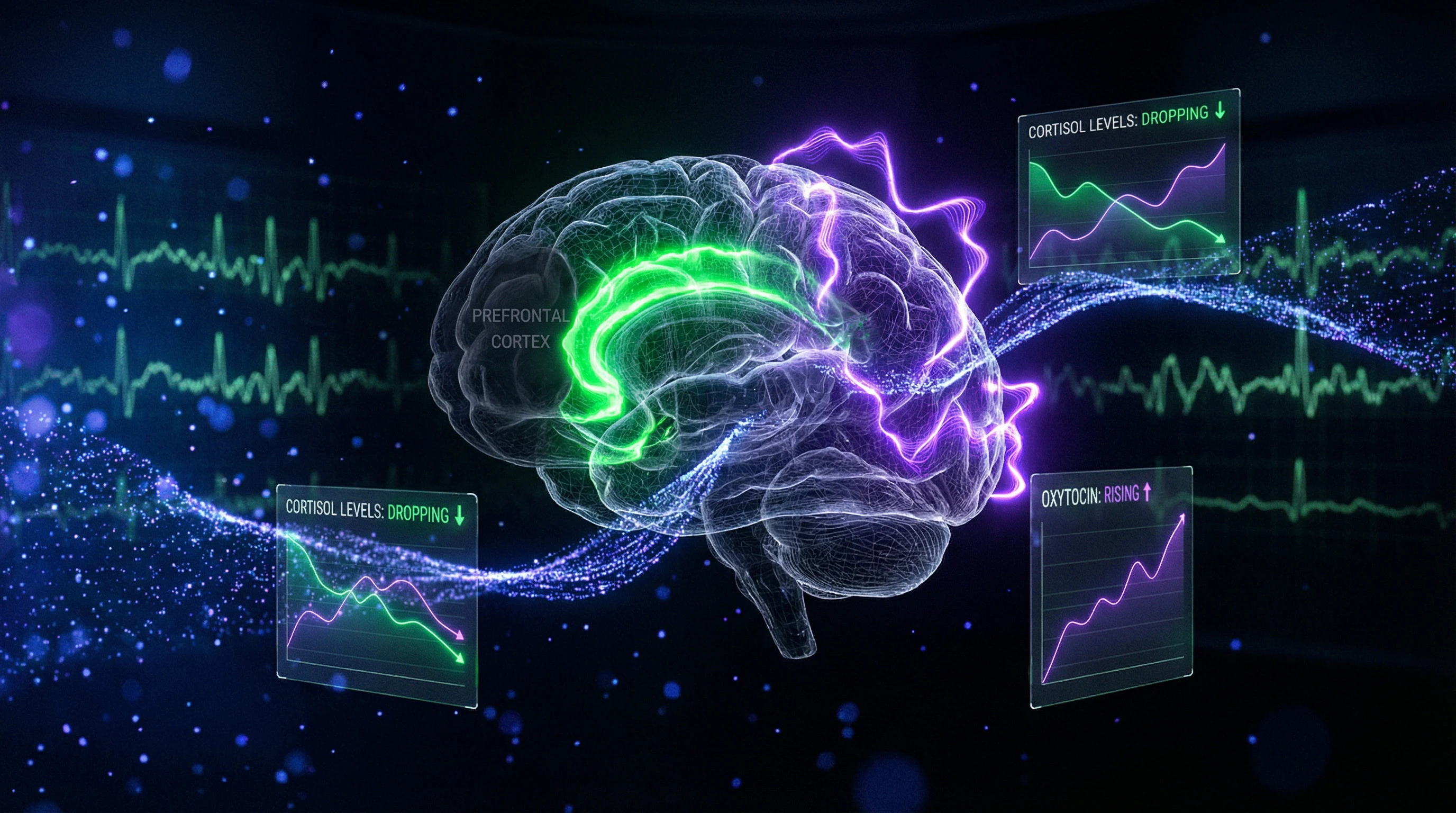
Multiple studies document correlations between performing rituals and reduced cortisol levels, decreased subjective anxiety, and improved stress resilience. The effect is observed for both religious rituals (prayer, meditation) and secular ones (pre-game sports rituals, exam superstitions).
Even skeptics performing ritual actions "for form's sake" demonstrate physiological changes. This indicates that the mechanism of ritual action is not reducible to the placebo effect in the narrow sense, but engages deeper psychophysiological processes.
- Cortisol reduction — measurable in saliva and blood
- Subjective anxiety reduction — reproducible in questionnaires
- Improved stress resilience — documented in behavioral tests
- Effect is independent of belief in the supernatural
🧬 Third Argument: Evolutionary Antiquity and Universality
Ritual behavior is found in all known human cultures, including isolated communities without contact with civilization. Archaeological data indicate the existence of ritual practices among Neanderthals (burial rites). Some forms of ritualized behavior are observed in higher primates.
Such universality and evolutionary antiquity suggest that ritual behavior is not a cultural artifact, but an adaptive trait established by natural selection. If rituals did not provide real advantages for survival and reproduction, they would not have been preserved to such an extent. Archaeological-linguistic studies of ancient naming practices show how naming rituals are connected to social structure and status transmission (S007).
Ritual behavior discovered in Neanderthals and modern primates indicates that this is not a cultural invention, but a biological adaptation that has been tested by millions of years of evolution.
🛡️ Fourth Argument: Group Cohesion and Coordination
Rituals create synchronization of behavior and emotional states among participants. Collective singing, dancing, and synchronized movements activate mechanisms of social bonding at the neurobiological level (oxytocin release, mirror neuron activation).
Groups practicing collective rituals demonstrate higher levels of cooperation, trust, and readiness for altruistic behavior. This effect has direct adaptive significance: groups with strong internal cohesion compete more effectively for resources, defend more successfully against external threats, and provide better care for offspring.
📡 Fifth Argument: Transmission of Cultural Code Across Generations
Rituals serve as a mechanism for transmitting cultural information that does not require verbal explanation. A child participating in family or community rituals absorbs complex social roles, value orientations, and behavioral patterns through direct participation, bypassing the stage of rational understanding.
This method of information transmission possesses high reliability: rituals are reproduced with minimal distortion over centuries, whereas verbal instructions are subject to interpretation and forgetting. Rituals encode cultural information in a form resistant to distortion.
- Bodily Memory
- Information encoded in movements and actions is retained better than verbal instruction. A child memorizes rituals through repetition, not through explanation.
- Minimal Interpretation
- Ritual form is more rigid than text. Variability is limited, which prevents the accumulation of errors in transmission between generations.
- Built-in Motivation
- Participation in rituals creates emotional reward, which motivates reproduction and transmission to the next generation.
🎯 Sixth Argument: Marking Social Transitions and Statuses
Rites of passage (initiations, weddings, funerals) perform the function of publicly fixing changes in social status. Without ritual formalization, transitions remain ambiguous, creating social uncertainty and conflicts.
Rituals make status changes visible, indisputable, and irreversible for all community members. Initiation rituals don't simply "mark" coming of age — they constitute an adult member of the community, conferring rights and obligations. Without ritual formalization, social structure becomes amorphous and conflict-ridden.
💊 Seventh Argument: Psychotherapeutic Effect of Structuring Chaos
In situations of uncertainty and uncontrollability (illness, death of loved ones, natural disasters), rituals provide a structure of actions that restores a sense of control and predictability. Even if rituals objectively don't influence the outcome of a situation, they reduce psychological stress, preventing maladaptive reactions.
Funeral rituals don't bring back the deceased, but they structure the grieving process, preventing pathological forms of mourning. Rituals create temporal frameworks, sequences of actions, and social support necessary for psychological adaptation to irreplaceable loss. Research on mechanisms that transform coincidences into mysticism shows how structured action counters cognitive chaos.
Rituals don't need to change objective reality to be effective. Their function is to structure subjective experience and prevent psychological disintegration under conditions of uncertainty.
What the Data Says: Neurobiology, Anthropology, and the Limits of Evidence
The study of rituals faces a fundamental problem: it's impossible to conduct double-blind randomized controlled trials for most ritual practices. You can't "blind" a participant to whether they're participating in a real ritual or a placebo ritual. More details in the Runes and Symbols section.
You can't randomly assign people to cultures with different ritual traditions. This means the evidence base for rituals fundamentally differs from pharmaceutical standards.
🧪 Neuroimaging Studies: What Happens in the Brain During Ritual
Functional magnetic resonance imaging (fMRI) and positron emission tomography (PET) show specific patterns of brain activity during meditation and other ritual practices: decreased activity in the dorsolateral prefrontal cortex (analytical thinking), increased activity in the anterior cingulate cortex (emotional regulation), and changes in parietal regions (body schema).
These changes aren't simply the brain "shutting down." This is a specific reconfiguration of neural networks that may have adaptive significance. Decreased prefrontal cortex activity correlates with reduced rumination (obsessive cycling of anxious thoughts), which explains the anxiolytic effect of rituals (S009).
However, systematic reviews indicate high variability in results depending on ritual type and individual participant characteristics. The same ritual can produce opposite neurophysiological effects in different people.
📊 Endocrine Markers: Cortisol, Oxytocin, and Social Bonding
Measuring hormone levels before and after ritual practices provides objective biomarkers. Multiple studies document decreased cortisol levels (stress hormone) after religious services, meditation, group dancing, and other ritual activities—an effect comparable to anxiolytic medications.
Group rituals involving synchronized movements and tactile contact increase oxytocin levels—a neuropeptide associated with social attachment and trust. This explains why collective rituals strengthen group cohesion: they literally alter brain neurochemistry toward prosocial behavior.
- The Oxytocin Paradox
- Oxytocin enhances not only in-group loyalty but also hostility toward outsiders. Rituals can strengthen cohesion at the expense of intergroup conflict—this isn't a side effect but a built-in mechanism.
- Why This Matters
- The neurochemical effect of ritual is neutral regarding its social consequences. The same hormonal shift can serve both cooperation and conflict.
🧬 Evolutionary Psychology: Adaptive Functions of Ritual Behavior
Rituals became established in the human behavioral repertoire because they increased our ancestors' fitness. The "costly signaling" hypothesis argues that rituals serve as a way to demonstrate commitment to the group: participation in lengthy, painful, or resource-intensive rituals signals willingness to sacrifice personal interests for the collective.
The "social glue" hypothesis focuses on the synchronizing effect of rituals: joint performance of stereotyped actions activates mechanisms of imitation and emotional contagion, creating a sense of unity. The "cognitive optimum" hypothesis suggests that rituals reduce cognitive load in stressful situations by providing a ready-made action script instead of requiring decision-making under uncertainty.
| Hypothesis | Mechanism | Adaptive Function |
|---|---|---|
| Costly Signaling | Resource sacrifice demonstrates reliability | Selection of reliable partners for cooperation |
| Social Glue | Synchronization of movements and emotions | Strengthening group identity |
| Cognitive Optimum | Ready-made script instead of choice | Rapid action in crisis without paralysis |
Archaeological-linguistic data on ancient rituals support the idea of their adaptive function in social organization (S007).
🔍 Anthropological Data: Cross-Cultural Patterns and Variations
Comparative analysis of ritual practices across cultures reveals universal patterns: rites of passage (birth, coming of age, marriage, death), integration rituals (festivals, communal meals), purification rituals (ablutions, confession), and rituals addressing the transcendent (prayer, sacrifice). These categories are found in cultures with no historical contact.
However, specific forms of implementation differ radically. An initiation ritual may include circumcision, tattooing, pain trials, isolation, instruction in secret knowledge, or public demonstration of skills—depending on cultural context. This indicates that the basic psychological function of ritual can be realized through multiple different behavioral forms (S002).
⚖️ The Causality Problem: Rituals as Cause or Consequence
A critical methodological question: are observed effects the result of ritual, or does ritual simply mark pre-existing differences between groups? Religious communities practicing regular rituals show better mental health indicators. But this may be explained not by the rituals themselves, but by the fact that such communities initially attract people with certain psychological characteristics, or that these communities provide social support independent of the ritual component.
Establishing causality requires longitudinal studies tracking changes in the same individuals before and after beginning ritual practice, with a control group not practicing rituals but receiving comparable social support. Such studies are extremely rare, and their results are ambiguous.
Systematic reviews of interdisciplinary research emphasize the complexity of establishing causal relationships in social sciences (S011).
📉 Placebo Effect and Expectations: How Much Does Ritual "Work by Itself"
Part of the observed effects of rituals may be explained by the placebo effect—improvement due to expectation of improvement. If a person believes a ritual will help manage anxiety, that expectation itself can activate endogenous stress regulation mechanisms. This doesn't mean the effect is "fake"—the placebo effect involves real physiological changes.
But this raises the question of ritual specificity: can a traditional ritual be replaced with any other practice if you instill belief in its effectiveness? Some studies show that rituals work even in skeptics who don't believe in their effectiveness, indicating mechanisms independent of conscious expectations.
- The effect in believers is significantly larger than in skeptics
- Effect size correlates with intensity of belief in the ritual
- But even skeptics show some physiological shifts
- This indicates a layering of specific and nonspecific mechanisms
Medical systematic reviews demonstrate the complexity of separating specific and nonspecific effects in behavioral interventions (S012). To understand how the brain transforms coincidences into mysticism, both levels must be considered: neurobiological and psychological.
I need the complete HTML content to translate and localize it. The input was cut off mid-sentence at "how ritual programs the brain and". Please provide the full HTML chunk you want me to translate, including all closing tags and complete content.