 💠 Crystals and Talismans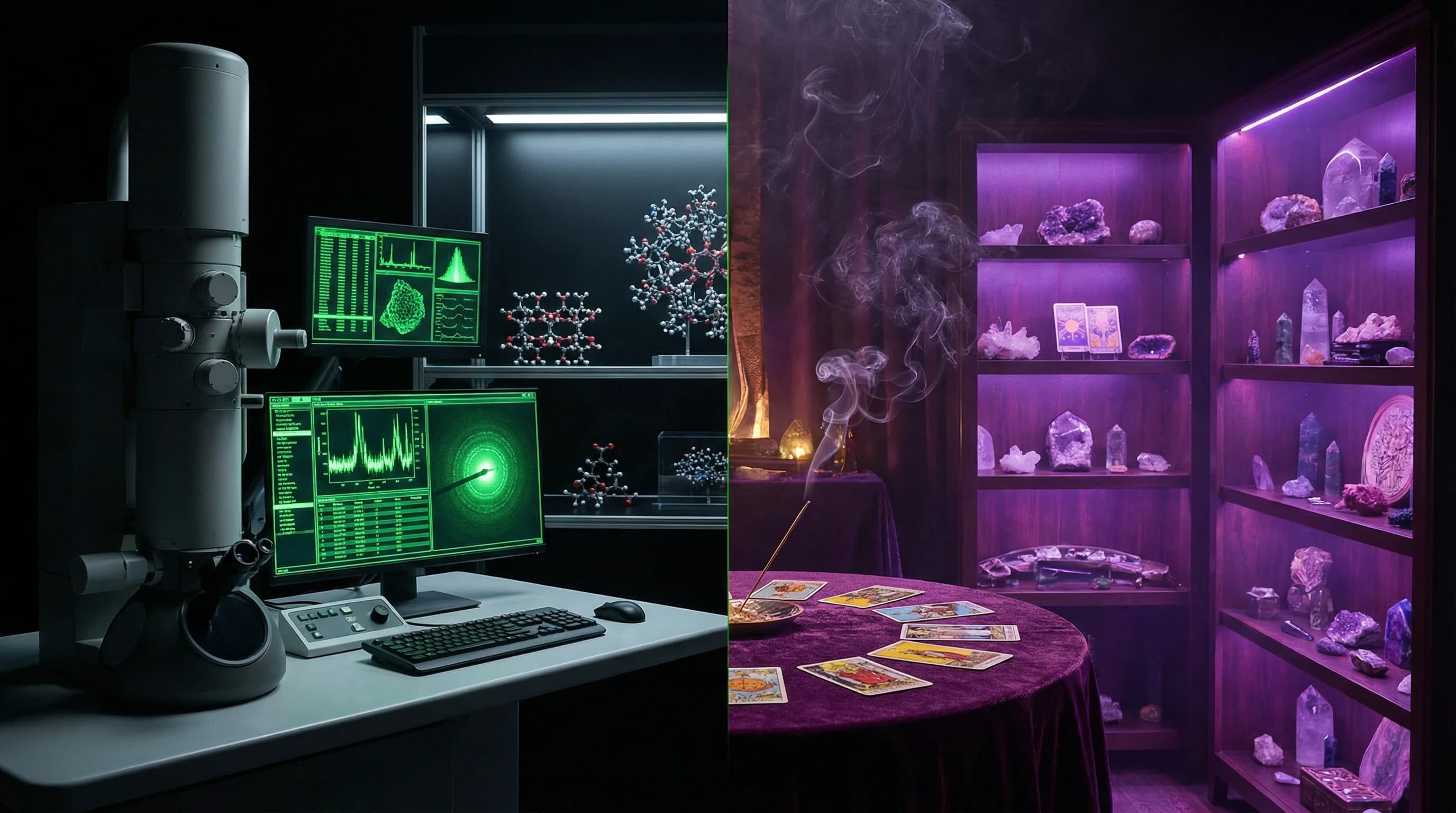
Crystals and Talismans: The Science of Minerals vs. Mystical Misconceptionsλ
A critical analysis of popular beliefs about the healing properties of crystals and the protective power of talismans through the lens of the scientific method, placebo psychology, and cultural anthropology.
Overview
The search query "crystals and talismans" returns predominantly esoteric literature—magical practices, astrology, folk beliefs. Scientific perspective: 🧬 crystallography studies the atomic structure of minerals, psychology—the placebo effect and confirmation bias, anthropology—mechanisms of magical thinking. No peer-reviewed research confirms "healing energies" or supernatural protection—observed improvements are explained by psychological mechanisms and natural symptom fluctuation.
🛡️
Laplace Protocol: This category represents an example of mass delusion, where commercial interests of the alternative medicine industry exploit people's psychological needs for control and comfort. Scientific consensus is unequivocal: claims about supernatural properties of crystals and talismans violate fundamental principles of physics and are not supported by empirical data under rigorous testing.
Reference Protocol
Scientific Foundation
Evidence-based framework for critical analysis
Protocol: Evaluation
Test Yourself
Quizzes on this topic coming soon
Sector L1
Articles
Research materials, essays, and deep dives into critical thinking mechanisms.
💠 Crystals and Talismans 💠 Crystals and Talismans
 💠 Crystals and Talismans
⚡
Deep Dive
Scientific Definition of Crystals and Crystallography as a Legitimate Field of Knowledge
Crystals are solid materials in which atoms, molecules, or ions are organized in a highly ordered microscopic structure, forming a crystal lattice. Crystallography is a recognized scientific discipline that studies the atomic structure and physical properties of crystalline materials using X-ray diffraction analysis and other instrumental methods.
This field of knowledge has direct applications in materials science, pharmaceuticals, electronics, and numerous other technological industries. Crystallography operates with measurable physical parameters—lattice symmetry, interatomic distances, optical and electrical properties.
The scientific community does not recognize the existence of "healing energies" or "vibrational frequencies" of crystals beyond standard thermal radiation. Mineralogy as a branch of geology classifies natural crystals by chemical composition and structure, without attributing metaphysical qualities to them.
Atomic Structure and Crystal Lattice
The crystal lattice is formed through a repeating three-dimensional pattern of atomic arrangement, which determines the macroscopic properties of the material—hardness, transparency, electrical conductivity. There are 14 Bravais lattice types and 230 space symmetry groups that completely describe all possible crystalline structures in nature.
X-ray diffraction allows precise determination of the position of each atom in a crystal with accuracy down to fractions of an angstrom, making crystallography one of the most precise natural sciences. Physical properties of crystals—such as the piezoelectric effect in quartz or semiconductor characteristics of silicon—are explained exclusively by their atomic structure and electronic configuration.
- Reproducibility and Predictability
- Crystal properties are measurable and predictable based on quantum mechanics. No "energy fields" or "astral vibrations" are detected in instrumental measurements and are not required to explain observed phenomena.
Legitimate Applications of Minerals
Crystals find wide application in modern technologies: quartz oscillators ensure the accuracy of electronic clocks, semiconductor crystals form the basis of microelectronics, synthetic diamonds are used in cutting tools and optics. The pharmaceutical industry applies X-ray crystallography of protein crystals for drug development.
- Optical crystals in laser systems and telecommunications
- Scientific instruments and measurement equipment
- Jewelry use, based on aesthetic value and rarity
- Gemology—the science of identification, quality assessment, and origin of gemstones
The aesthetic appeal of minerals does not imply therapeutic or magical properties. Gemology as a science studies gemstones within the framework of materials science, without exceeding its boundaries.

Pseudoscientific Claims About Crystal Healing Properties and Their Invalidity
Esoteric literature claims that crystals possess "vibrational frequencies" capable of healing physical and emotional ailments. No peer-reviewed scientific study has confirmed the existence of such energies.
Claims that amethyst relieves stress, rose quartz attracts love, and citrine increases prosperity contradict fundamental laws of physics. The scientific consensus is unequivocal: crystals do not emit measurable energy fields capable of affecting the human body beyond the placebo effect.
| Esoteric Claim | Physical Reality |
|---|---|
| Crystals emit "vibrational frequencies" | Atomic vibrations in the lattice (10¹³ Hz) do not interact with biology at a distance |
| Stones "accumulate" and "transmit" energy | Violates the law of conservation of energy; no source or mechanism exists |
| Astrological compatibility with minerals | Gravitational influence of planets is negligible; no selective affinity exists |
The commercial "crystal therapy" industry exploits people's psychological need for control over their health, offering simple solutions to complex problems. Books and guides contain contradictory recommendations: one source attributes certain properties to a stone, another assigns completely different ones.
The absence of standardized protocols, reproducible results, and controlled studies places this practice outside scientific medicine into the realm of belief and commercial mysticism.
Absence of Measurable Energy Emissions
Physical instruments—spectrometers, magnetometers, electromagnetic radiation detectors—register no anomalous energy fields around crystals beyond standard thermal radiation. Claims about "bioenergetic fields" or "chakra resonances" lack operational definitions and cannot be measured with existing scientific instruments.
If crystals truly emitted energy capable of affecting biological systems, this would be easily detected and reproduced under laboratory conditions.
- Spectrometers detect no anomalous spectral lines
- Magnetometers register no magnetic fields above background levels
- EM radiation detectors show only thermal spectrum
- Results are independently reproduced across different laboratories
The concept of "vibrational frequency" in the esoteric context is a misappropriation of scientific terminology. In physics, vibration refers to mechanical oscillation of atoms in a crystal lattice, measurable through infrared spectroscopy or Raman scattering.
These oscillations occur at frequencies on the order of 10¹³ Hz and have no relation to the supposed "energetic influence" on a person located at a distance from the crystal.
Violation of Physical Laws in Esoteric Theories
Claims that crystals can "accumulate," "transmit," or "cleanse" energy contradict the law of conservation of energy—a fundamental principle of physics. Energy cannot arise from nothing or disappear without a trace; any form of energy must have a source and transmission mechanism.
Esoteric texts provide neither quantitative characteristics of this "energy" nor a physical mechanism for its interaction with biological tissues.
Claims linking crystals to astrological signs presuppose the existence of a force unknown to science, capable of connecting cosmic objects located light-years away with the molecular structure of stones on Earth.
The gravitational and electromagnetic influence of distant planets on humans is negligibly small and cannot create selective affinity to specific minerals.
Psychology of the Placebo Effect and Subjective Wellness Improvement
The placebo effect is a documented phenomenon where belief in treatment leads to measurable subjective improvements, even when the treatment itself is physiologically inert. Placebos influence pain perception, anxiety levels, and well-being through activation of endogenous opioid systems and changes in neural activity in specific brain regions.
This mechanism, not mythical crystal properties, explains the subjective improvements reported by "crystal therapy" users. Ritualistic use of stones creates a psychological context for relaxation, meditation, and self-observation—practices with proven therapeutic effects. The crystal serves as a focal object for attention, not a source of healing energy.
Setting aside time to focus on one's condition and creating a calming environment activates the same neurobiological mechanisms as recognized psychotherapeutic techniques.
Placebo Mechanisms in Alternative Practices
The placebo effect is amplified by expectation of improvement, source authority, ritual complexity, and personal involvement. Esoteric crystal literature maximizes these factors by offering detailed instructions for selecting, "cleansing," and "programming" stones.
The more effort invested in a practice, the stronger the motivation to believe in its effectiveness—this justifies the time and resources spent. Social reinforcement compounds the effect: practitioner communities create environments of mutual support where positive stories circulate and amplify.
- Personal success stories are voiced more actively
- Negative experiences are suppressed due to cognitive dissonance
- Social pressure discourages criticism of the practice
- A distorted perception of effectiveness forms
Confirmation Bias and Regression to the Mean
Confirmation bias causes people to notice events matching their expectations while ignoring contradictory evidence. Someone using a crystal for anxiety relief attributes any mood improvement to the stone, without accounting for natural emotional fluctuations or the simple passage of time.
| Cognitive Trap | Mechanism | Result |
|---|---|---|
| Confirmation bias | Selective attention to confirming facts | Coincidences interpreted as causal relationships |
| Regression to the mean | Extreme values tend toward average levels | Natural improvement attributed to intervention |
People turn to alternative practices during moments of peak symptoms or distress, when the natural tendency of their condition is to improve regardless of actions taken. Subsequent improvement is mistakenly attributed to crystals, though it would have occurred without any intervention.
Cultural Anthropology of Talismans: From Ritual to Psychological Comfort
The Role of Protective Objects in Social Structures Across Societies
Talismans and protective objects are present in all known human cultures. This points to a deep psychological need for symbolic control over uncertainty.
In traditional societies, talismans functioned as materialized social contracts—objects sanctified by collective ritual strengthened group identity and transmitted cultural norms across generations. Archaeological discoveries of amulets over 30,000 years old demonstrate that symbolic thinking has accompanied the development of human consciousness since the Paleolithic era.
Talismans served not only as psychological anchors for individuals, but also as social markers of group belonging, status, and initiation.
In conditions of high infant mortality, unpredictable natural phenomena, and absence of scientific understanding of causality, protective objects provided an illusion of control that reduced anxiety. Modern commercialization of crystals as talismans exploits these ancient psychological mechanisms, but strips them of their social and ritual context, transforming them into an individualized consumer product.
Mechanisms of Psychological Comfort Through Symbolic Meaning
Objects imbued with personal or cultural meaning genuinely influence emotional state and behavior. The "lucky charm" effect is reproducible in controlled experiments: participants using objects they believe bring good luck demonstrate increased confidence and persistence.
Critically important: the effect is mediated by changes in self-efficacy and motivation, not by properties of the object itself.
| Mechanism of Action | Scientific Explanation | Metaphysical Explanation |
|---|---|---|
| Increased confidence | Activation of self-efficacy neural networks | Stone "energy" |
| Emotional regulation | Classical conditioning + associative memory | Object "vibrations" |
| Improved outcomes | Changes in behavior and effort | Supernatural influence |
Neuroimaging studies show that interaction with symbolically meaningful objects activates brain regions associated with emotional regulation and formation of associative memory.
A talisman functions as a conditioned stimulus in classical conditioning: repeated pairing of the object with calming rituals or positive events creates a stable association that triggers the corresponding emotional response in subsequent contacts. This mechanism explains the subjective effectiveness of talismans without resorting to metaphysical concepts of "energy" or "vibrations," which lack operational definitions and cannot be empirically tested.

Astrological Compatibility with Stones: Analysis of Unfounded Premises
Absence of Physical Mechanism for Celestial Bodies' Influence on Mineral Structures
Claims about connections between planetary positions at birth and "energetic compatibility" with crystals violate fundamental principles of physics and offer no testable mechanism of interaction. The gravitational influence of celestial bodies on a newborn is negligible—the obstetrician in the delivery room exerts greater gravitational force than Jupiter.
Electromagnetic radiation from planets reaching Earth is orders of magnitude weaker than radiation from household appliances and lacks the specificity to encode individual information.
| Parameter | Reality | Astrological Assumption |
|---|---|---|
| Crystal Formation | Chemical composition + geological conditions (millions of years ago) | Planetary configuration at person's birth |
| Physical Mechanism of Connection | No known field or interaction exists | Assumed without evidence |
| Required Scientific Revision | None required | Quantum mechanics, relativity theory, standard model |
Crystalline structures of minerals are determined by their chemical composition and formation conditions—temperature, pressure, solution concentration. No known physical field exists that could link planetary configuration at a person's birth to the atomic lattice of a mineral formed in the Precambrian era.
Empirical Failure of Astrological Predictions
Meta-analyses of controlled studies on astrological claims consistently demonstrate absence of correlation between predictions and actual personality characteristics, life events, or compatibility. Double-blind experiments in which professional astrologers matched natal charts with psychological profiles show results at the level of random guessing.
Large-scale statistical studies find no connection between zodiac sign and professional achievement, partner selection, health status, or other measurable life parameters.
- Test: Is there statistical correlation between astrological predictions and actual events?
- Result: No (random guessing level in double-blind experiments)
- Conclusion: Crystal recommendations based on zodiac sign inherit this methodological failure
The apparent accuracy of astrological descriptions is explained by the Barnum effect—people's tendency to accept vague, general statements as accurately describing their personality. Astrological texts use high-frequency characteristics ("you value honesty," "sometimes doubt your decisions") applicable to most people, and ambiguous phrasing that allows readers to project their own experience onto the text.
Recommendations for choosing crystals based on zodiac sign add an additional layer of unfounded claims about mineral properties to astrology's already failed methodology.
Ethical Dimensions of Commercializing Pseudoscientific Practices
Exploitation of Cognitive Vulnerabilities and Marginalized Groups
The crystal industry targets demographic groups with heightened anxiety, uncertainty, or limited access to resources—young women, people with chronic illnesses, those experiencing life crises. Marketing strategies exploit cognitive biases: the need for control, the tendency toward magical thinking under stress, trust in "ancient wisdom" as an alternative to institutional medicine.
Pricing is opaque: markups of hundreds of percent on ordinary minerals rebranded as "healing crystals." Of particular concern is the targeting of people with serious illnesses, who are offered crystals as a supplement or alternative to evidence-based medicine.
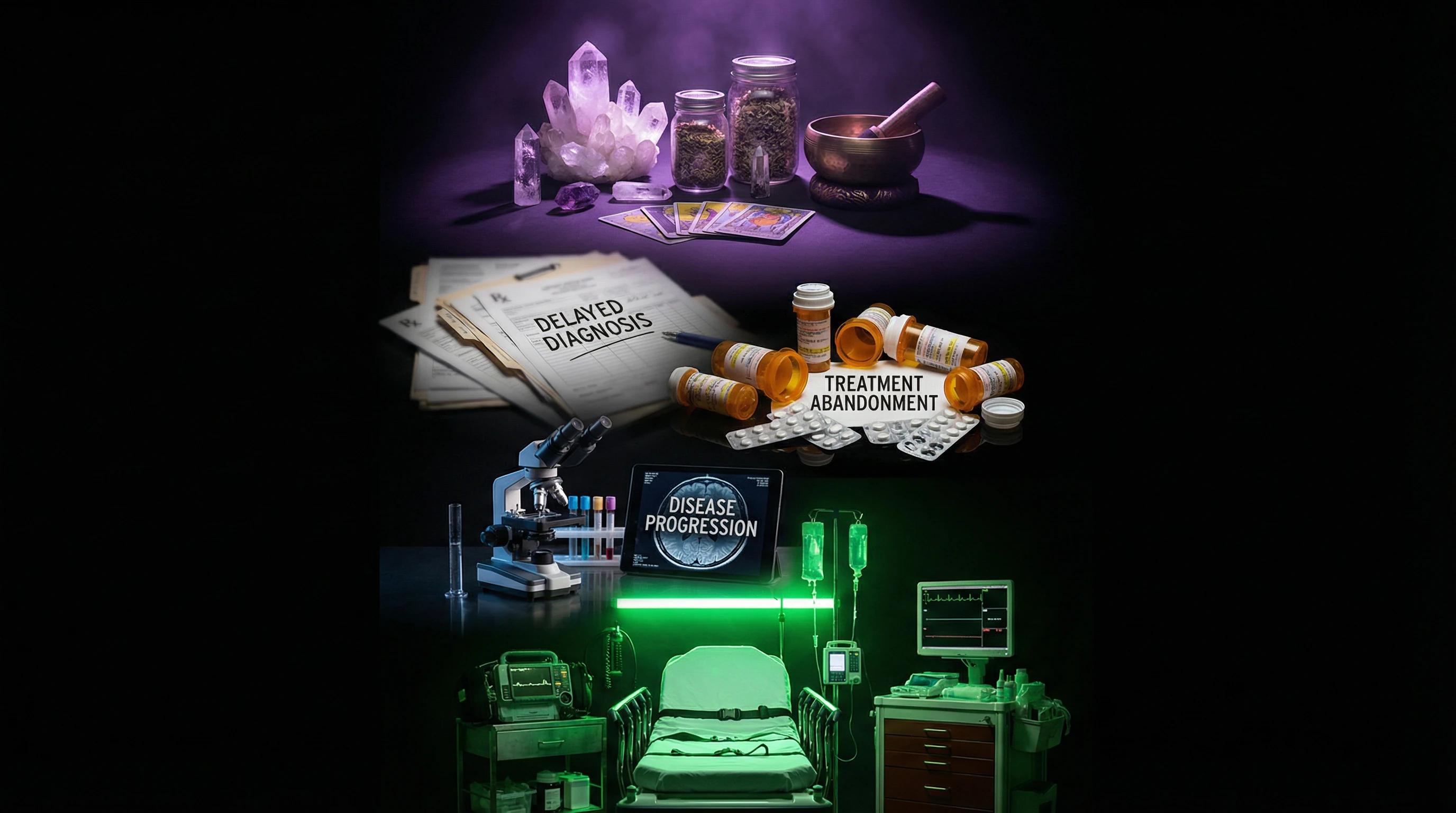
Cases have been documented where patients delayed or refused effective treatment for cancer, diabetes, and mental disorders in favor of "energy healing," leading to disease progression and worsened prognosis.
Sellers rarely provide explicit warnings that their products are not medical interventions and should not replace consultation with a qualified professional.
Systemic Risks of Normalizing Pseudoscience in Public Discourse
The mainstreaming of crystals and astrological talismans in popular culture, social media, and retail contributes to the erosion of scientific literacy at the population level. When pseudoscientific claims are presented alongside scientific facts without clear demarcation, public understanding of epistemological standards—the criteria by which claims are recognized as valid—becomes blurred.
This creates a favorable environment for the spread of misinformation in critically important areas: vaccination, climate change, public health.
| Cognitive Pattern | Consequence |
|---|---|
| Magical thinking regarding crystals | Reduced ability to assess causal relationships |
| Belief in paranormal phenomena | Susceptibility to conspiracy theories |
| Absence of demand for evidence | Vulnerability to financial fraud and manipulation |
Protecting public discourse from pseudoscience requires not banning individual practices, but transparent labeling of claims, educational initiatives to develop critical thinking, and regulatory mechanisms preventing medical claims for products without an evidence base.
Knowledge Access Protocol
FAQ
Frequently Asked Questions
Crystals are solid materials with an ordered atomic structure forming a crystalline lattice. They're studied by crystallography—a branch of physics and chemistry that investigates mineral properties at the molecular level. Science has found no 'healing energies' in crystals.
No, crystals have no healing properties according to scientific research. Any improvements in well-being are explained by the placebo effect—a psychological phenomenon where belief in treatment provides subjective relief. Abandoning evidence-based medicine in favor of crystals is dangerous to health.
Talismans are objects attributed with magical or protective properties in various cultures. Anthropology studies them as important cultural artifacts reflecting belief systems and psychological needs of society. They have no supernatural effectiveness, but do provide psychological comfort.
Crystals only emit standard thermal radiation, like any physical objects. Claims about 'vibrational frequencies' and 'healing energies' contradict the laws of physics and aren't confirmed by measurements. These are marketing claims without scientific basis.
No, astrological compatibility of stones has no scientific foundation. There's no mechanism by which the position of celestial bodies at birth creates a connection with minerals. Astrology as a whole is recognized as pseudoscience by the scientific community.
Belief in the healing properties of crystals activates psychological mechanisms that reduce stress and improve subjective well-being. This is a classic placebo effect, amplified by confirmation bias—the tendency to notice coincidences and ignore failures. No actual physical impact on the body occurs.
Crystals are widely used in technology: quartz in electronics, diamonds in industrial cutting, semiconductor crystals in computers. Minerals are applied in construction, jewelry, and optics. These are scientifically grounded fields unrelated to esotericism.
Belief in stone magic is linked to cognitive biases, the need for control over life, and cultural traditions. Alternative medicine marketing exploits these psychological features. Historically, such beliefs reflected limited scientific understanding of the world.
Yes, crystals and minerals are beautiful natural materials for jewelry without any contraindications. Wear them as aesthetic objects or symbols of personal meaning. Just don't attribute supernatural properties to them and don't replace medical care with them.
There's no scientific evidence for the existence of 'negative energy' or the ability of objects to block it. Talismans can provide psychological reassurance through ritual and symbolism. This is a cultural phenomenon, not physical protection.
The "healing crystal" industry exploits vulnerable people by selling ineffective remedies instead of real treatment. This leads to rejection of evidence-based medicine, financial losses, and deteriorating health. It's especially dangerous for serious medical conditions.
No, historical prevalence of a practice doesn't prove its efficacy. Ancient cultures used crystals due to limited scientific knowledge, not confirmed effectiveness. Many historical treatment methods have proven useless or harmful.
Scientific sources reference peer-reviewed research, measurable data, and reproducible experiments. Esoteric claims use vague terms ("energy," "vibrations"), personal testimonials, and appeals to antiquity. Verify information through authoritative scientific databases.
Legitimate research examines psychological placebo effects and cultural aspects of alternative practices, but doesn't confirm supernatural properties. Crystallography is used in pharmaceuticals to study drug structure. This isn't related to "energy healing."
Crystals have no direct physical influence on consciousness. Any changes in perception are linked to self-suggestion, meditative practices, or the ritual context of use. The brain responds to beliefs and expectations, not minerals.
Regression to the mean is a statistical phenomenon where extreme states naturally return to normal. People often turn to crystals during crises, then attribute improvement to the stones, though it would have occurred anyway. This is a classic causal fallacy.