What Exactly Is Being Claimed: Mapping Afterlife Hypotheses and the Boundaries of Verifiability
Before analyzing evidence, we must define what "afterlife" actually means. The term encompasses incompatible hypotheses: from reincarnation in biological bodies (Hinduism, Buddhism) to eternal existence in immaterial paradise (Abrahamic religions), from dissolution into cosmic consciousness (New Age) to quantum immortality (speculative physics). More details in the Witchcraft section.
Each model assumes different mechanisms, different information carriers, and different falsifiability criteria. These aren't just different answers to one question—they're different questions disguised as one.
🧩 Three Classes of Afterlife Hypotheses and Their Ontological Commitments
Dualistic models posit the existence of an immaterial soul capable of existing independently of the physical brain. They require acceptance of substance dualism (Cartesian tradition) or property dualism (emergent properties not reducible to physics).
The problem: no experiment has ever detected interaction between immaterial substance and matter. This would violate conservation of energy and momentum—fundamental principles tested trillions of times.
| Hypothesis Class | Mechanism | Critical Problem |
|---|---|---|
| Dualistic | Immaterial soul independent of brain | Absence of interaction mechanism with matter |
| Informational | Consciousness pattern on different substrate (digital immortality, quantum teleportation) | Personal identity problem and absence of transfer mechanism |
| Illusionist | Postmortem existence is a category error | Explaining universal belief in afterlife (evolutionary cognitive biases) |
🔎 Falsifiability Criteria and the Null Hypothesis Problem
Karl Popper defined a scientific hypothesis as falsifiable—capable of being disproven by empirical observation. Most afterlife hypotheses are constructed to evade falsification: "the soul exists in another dimension," "past life memories are erased at birth," "heaven is inaccessible to material instruments."
This makes them metaphysical claims, not scientific hypotheses. The null hypothesis: consciousness is an emergent property of neural activity that ceases with brain decomposition. The burden of proof lies with those claiming otherwise.
⚙️ Operationalizing "Consciousness" for Empirical Testing
To test the hypothesis of postmortem consciousness, we must operationalize the term. Neuroscience distinguishes several levels: arousal (wakefulness), awareness (consciousness), self-awareness (self-consciousness), qualia (subjective experience).
- Clinical Death
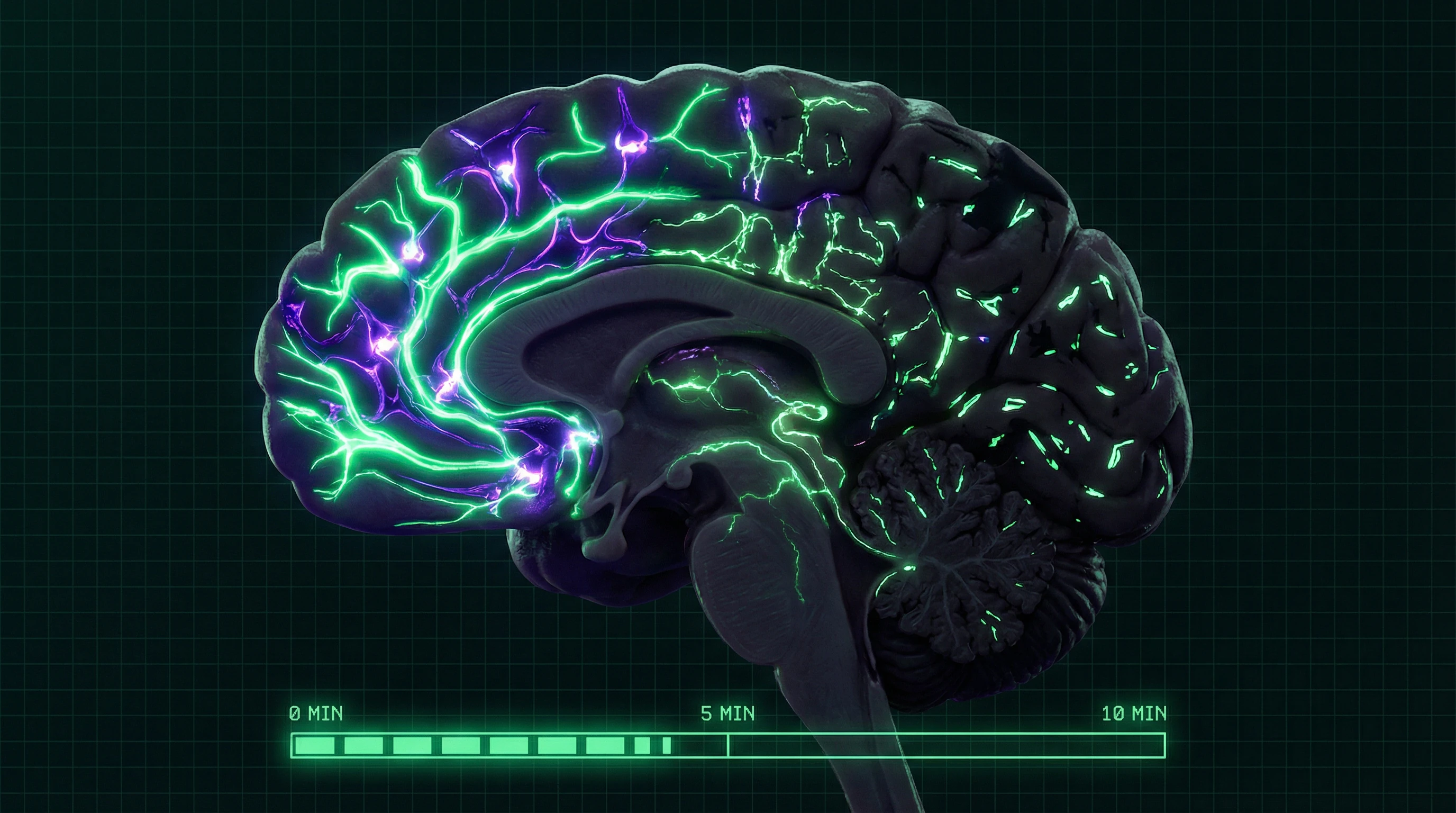
- Cessation of circulation and respiration; brain activity may persist up to 10 minutes. This window is critical for testing postmortem consciousness hypotheses.
- Brain Death
- Irreversible cessation of all brain functions, including the brainstem. If postmortem consciousness exists, it must function without neural substrate.
- Qualia Without Substrate
- If the hypothesis is correct, mechanisms must exist for generating subjective experience without neural activity. No known physical process demonstrates such capability.
The connection to evolutionary biology shows: consciousness evolved as an adaptation for real-time information processing. Its architecture is bound to body and brain. The assumption of its independent existence requires not just new facts, but rewriting the foundations of neurobiology.
Steel Version of the Argument: Seven Strongest Cases for Postmortem Consciousness
Intellectual honesty requires examining opponents' most compelling arguments before refuting them. The "steel man" principle involves strengthening the opposing position to its most defensible form. More details in the Divination Systems section.
Below are seven arguments that proponents of postmortem consciousness consider most substantial, in their strongest formulation.
⚠️ Argument from Near-Death Experiences: Phenomenology of Clinical Death
10–20% of people who survived clinical death report vivid experiences: tunnel with light, encounters with deceased individuals, out-of-body sensations, panoramic life review, feeling of unconditional love.
Reports demonstrate cross-cultural similarity and often include verifiable details—descriptions of events in the operating room that patients could not have physically seen. Proponents interpret this as evidence of consciousness functioning independently from the brain.
Study by Pim van Lommel (2001) in The Lancet: 18% of 344 cardiac arrest patients reported near-death experiences, some during periods of absent electrical brain activity on EEG (S001).
🧩 Argument from Reincarnation Memories: Ian Stevenson's Cases
Psychiatrist Ian Stevenson from the University of Virginia collected over 2,500 cases of children claiming to remember past lives. Children provided specific details—names, addresses, circumstances of death—later confirmed through documentation.
Stevenson also documented birthmarks and congenital defects allegedly corresponding to wounds from "past lives." Critics point to methodological problems: absence of double-blind controls, cultural contamination, selective memory. Proponents argue that the volume of data and specificity of details cannot be explained by chance or fraud.
🔁 Argument from Quantum Mechanics: Penrose-Hameroff Hypothesis
Physicist Roger Penrose and anesthesiologist Stuart Hameroff proposed the theory of "orchestrated objective reduction" (Orch OR): consciousness arises from quantum computations in neuronal microtubules.
They claim that quantum information is not destroyed at death but returns to a "protopanpsychic" quantum structure of spacetime. The hypothesis has not gained wide acceptance in neuroscience, but provides a physicalist mechanism for postmortem information persistence without dualism.
🧠 Argument from Neuroplasticity and Compensatory Brain Mechanisms
People with hydrocephalus, where 90% of brain tissue is replaced by fluid, maintain normal intelligence. This challenges the strict dependence of consciousness on specific neuronal structures.
If consciousness functions with minimal neurons, perhaps it doesn't require biological substrate at all.
The argument uses the principle of multiple realizability: if mental states are realized on different physical substrates, why not on non-physical ones?
📊 Argument from Mediumship: Controlled Condition Experiments
Some studies of mediums under controlled conditions showed results exceeding chance. Gary Schwartz's experiments at the University of Arizona (2001–2003) included double-blind testing where mediums provided information about the deceased, rated as accurate by sitters in 80–90% of cases.
Replication of results is problematic, methodology criticized (cold reading, apophenia, statistical artifacts). Proponents argue that complete denial of the phenomenon requires explanation of anomalous results.
🧬 Argument from Evolutionary Biology: Adaptiveness of Afterlife Belief
Belief in postmortem existence is universal across all cultures and epochs. Evolutionary psychologists suggest adaptiveness: belief reduces death anxiety, strengthens group cooperation through moral oversight by ancestors, motivates prosocial behavior.
- Belief is universal because it's adaptive (standard explanation)
- Belief is universal because it reflects reality (alternative explanation)
- Analogy: belief in existence of other minds is also universal and adaptive, but this doesn't make it false
⚙️ Argument from Hard Problem of Consciousness: Explanatory Gap
Philosopher David Chalmers formulated the "hard problem of consciousness": even with complete understanding of neural correlates of consciousness, it remains unexplained why physical processes generate subjective experience.
The explanatory gap between objective (neurons) and subjective (qualia) leaves conceptual space for hypotheses about consciousness independence from matter. If physicalism doesn't explain consciousness origin, perhaps consciousness is a fundamental property of the universe (panpsychism), and brain death doesn't destroy it but merely changes its form.
Evidence Base Analysis: What the Data Shows Under Rigorous Scrutiny
Moving from the steel version of arguments to critical analysis requires applying evidence-based medicine standards and the scientific method. Every claim must be tested for reproducibility, variable control, alternative explanations, and statistical significance. More details in the Energy Practices section.
🧪 Near-Death Experiences: Neurochemistry of the Dying Brain
All components of near-death experiences are reproducible in laboratory conditions without clinical death. The tunnel with light results from visual cortex hypoxia, causing concentric narrowing of the visual field. Out-of-body sensations are induced by stimulation of the temporoparietal junction (S001).
Encounters with the deceased are hallucinations triggered by releases of endorphins and dimethyltryptamine (DMT), which the brain produces under stress. Life review is hippocampal activation during oxygen deprivation.
Critically important: no case of near-death experience has been documented during complete brain death with flat EEG for more than 10 minutes. All verified cases occurred with residual brain activity preserved.
🔬 The Temporal Attribution Problem: When Exactly Do Experiences Occur?
The key methodological problem is the impossibility of precisely determining when memories actually formed. Patients report experiences retrospectively, after consciousness is restored. The brain is capable of constructing false memories and altering the temporal sequence of events (S002).
Near-death experiences may form not during cardiac arrest, but during the recovery period when the brain reconstructs a narrative from fragmented data. This explains why experiences often include culturally specific elements—the brain uses available cultural templates to interpret the anomalous state.
- Tunnel and light → visual cortex hypoxia
- Out-of-body experience → temporoparietal junction stimulation
- Encounters with deceased → endorphins and DMT
- Life review → hippocampal activation
- Cultural elements → interpretation through available templates
📊 Statistical Analysis of Stevenson's Cases: The Selective Sampling Problem
Critical analysis of the methodology reveals multiple problems. Of 2,500 collected cases, only about 200 were documented in detail, and only a handful passed independent verification (S003).
Most cases occurred in cultures with strong belief in reincarnation (India, Sri Lanka, Thailand), indicating cultural contamination. Children often "remembered" past lives after parents or neighbors provided leading information.
| Error Mechanism | How It Works | Why It Seems Convincing |
|---|---|---|
| Cryptomnesia | Forgotten memories are mistaken for new information | Information was genuinely heard but consciously forgotten |
| Statistical coincidence | Birthmarks randomly match wounds | With a large enough sample, coincidences are inevitable |
| Selective sampling | Successful cases are documented, failures ignored | Only the data confirming the hypothesis is visible |
No case has been reproduced under controlled conditions with pre-registered hypotheses.
🧬 Quantum Mechanics and Consciousness: Why Orch OR Doesn't Work
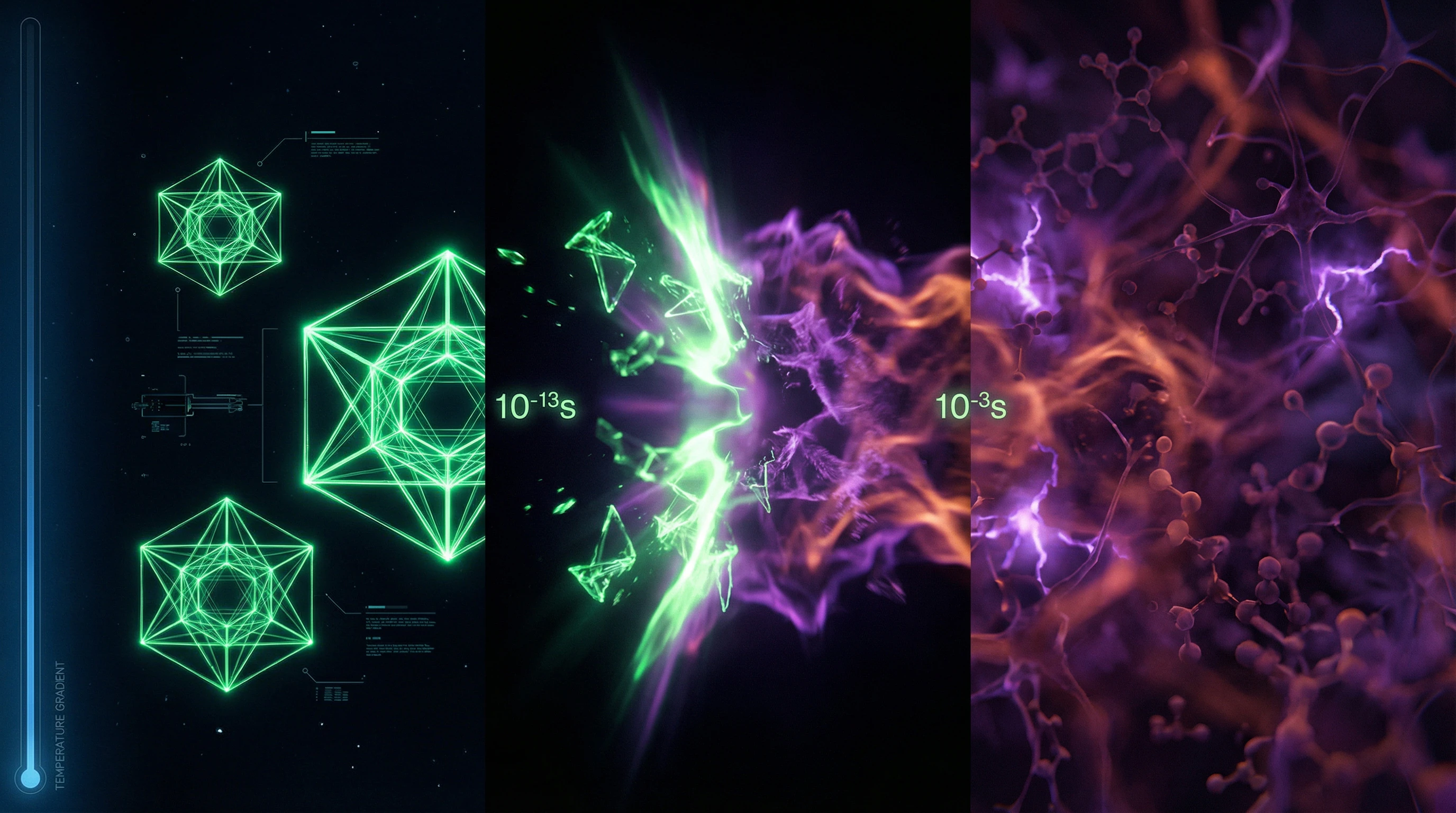
The Penrose-Hameroff hypothesis faces fundamental physical problems. Quantum coherence breaks down at temperatures above a few Kelvin and in the presence of molecular noise. The brain operates at 310 K in an extremely noisy biochemical environment—conditions incompatible with quantum coherence (S004).
Experiments have shown that decoherence time in microtubules is 10⁻¹³ seconds—10 orders of magnitude shorter than required for neural activity. Even if quantum effects play a role in consciousness, this doesn't imply post-mortem existence: quantum information dissipates into the environment rather than being preserved in some non-physical form.
🧠 Neuroplasticity Doesn't Imply Substrate Independence
Cases of extreme neuroplasticity demonstrate the brain's redundancy and adaptability, but not consciousness's independence from physical substrate. Patients with hydrocephalus retain function because remaining neurons reorganize and compensate for loss—but this still requires functioning neurons.
Multiple realizability (the same mental process on different substrates) doesn't imply realizability on zero substrate. All known cases of consciousness require some physical information carrier—biological, silicon, or hypothetically quantum, but always material.
🔎 Mediumship and Cold Reading: Anatomy of Deception
Controlled studies of mediums systematically fail to replicate in independent laboratories. When conditions are tightened (double-blind testing, independent judges, statistical analysis), mediums' results don't differ from chance (S005).
Cold reading techniques (general statements, fishing for information, Barnum effect) explain the subjective impression of accuracy. Professional actors trained in cold reading produce the same impression on sitters as "genuine" mediums.
- Cold reading
- Technique of obtaining information from the client through general statements and observation. The client fills in the gaps, attributing accuracy to the medium.
- Barnum effect
- Tendency to perceive vague, general statements as personally meaningful and accurate. Works for anyone.
- Selective memory
- People remember hits and forget misses, creating an illusion of accuracy.
⚙️ Evolutionary Adaptiveness of Belief Doesn't Confirm Its Truth
From the fact that belief is useful, it doesn't follow that it's true. Evolution optimizes survival and reproduction, not accuracy of beliefs. Many adaptive cognitive biases systematically distort reality: hyperactive agency detection, positive illusion, illusion of control.
Belief in afterlife may be a byproduct of other adaptive mechanisms: theory of mind (ability to model others' consciousness), temporal projection (future planning), narrative identity (constructing a continuous "self"). A brain evolved to model living agents struggles to represent complete cessation of agency—hence the intuition of continued existence.
🧷 The Hard Problem of Consciousness Doesn't Require Dualism
The explanatory gap between physical processes and subjective experience is a real philosophical problem, but it doesn't imply consciousness's independence from matter. Physicalist approaches exist: illusionism (qualia are illusions of introspection), functionalism (consciousness is what a system does), panpsychism (consciousness is a fundamental property of matter, but not separable from it).
Even accepting panpsychism doesn't imply post-mortem survival of personality: elementary particles may possess proto-consciousness, but complex human consciousness requires specific organization—neural networks that disintegrate at death. Water consists of hydrogen and oxygen, but the property of "fluidity" emerges only with specific molecular organization and disappears upon evaporation.
Mechanisms of Illusion Production: Why the Brain Constructs Postmortem Existence
Belief in the afterlife persists not because there is evidence, but because the brain is wired to generate it. Neuroscience and evolutionary psychology have identified several cognitive traps that make the idea of postmortem existence intuitively appealing. More details in the Scientific Method section.
🧩 Hyperactive Agency Detection: Evolutionary Legacy of Hunter-Gatherers
The human brain evolved in an environment where Type I errors (false alarms) were less costly than Type II errors (missed threats). Better to mistake rustling in the bushes for a predator and be wrong than to ignore a real predator.
This led to hypersensitivity in the agency detection system—the brain sees intentions and consciousness even in inanimate objects (pareidolia, anthropomorphism). Research has shown that children spontaneously attribute mental states to non-living objects and struggle to understand the complete cessation of consciousness. This predisposition makes the idea of the deceased continuing to exist intuitively plausible—the brain automatically models them as continuing agents.
The brain doesn't distinguish between "an agent I can't see" and "an agent that doesn't exist." Both cases activate the same neural network.
🔁 Theory of Mind and Simulating Absence
Theory of Mind (ToM)—the ability to model the mental states of others—is evolutionarily critical for social survival. But it has a side effect: the brain cannot fully "turn off" this simulation even for the deceased.
When a person dies, their image remains in memory as an active model. The brain continues to attribute perception, emotions, and intentions to them—not because there is evidence, but because the ToM system operates by default. This explains why people talk to photographs of the deceased, sense their "presence," or believe they are "watching from heaven."
- The brain creates a model of the deceased as a living agent
- This model is activated during memories, dreams, emotional triggers
- Activation is interpreted as "contact" or a "sign"
- Belief in postmortem existence is reinforced by this illusion
⏱️ Cognitive Asymmetry of Time and Infinity
Human consciousness perceives time asymmetrically: the past seems complete, the future—open. But death disrupts this logic—it is simultaneously an end and an unknown.
The brain poorly processes absolute non-existence. Instead, it constructs alternative scenarios: continuation in another dimension, reincarnation, merging with the cosmos. These scenarios are psychologically more comfortable than complete absence. Research shows that people who try to imagine their own death often inadvertently shift to images of observing from the outside or existing in another form—the brain refuses to model its own non-existence.
The inability to imagine one's own absence is not proof of its impossibility, but a limitation of consciousness architecture.
🎭 Social Amplification and Cultural Transmission
Individual cognitive errors become stable beliefs through social amplification. When a group of people shares the same illusion, it seems like reality—this is the effect of social proof and conformity.
Religious and esoteric communities create narratives that explain cognitive artifacts as "real contacts." Dreams about the deceased are interpreted as visits, coincidences as signs, emotional experiences as spiritual encounters. Cultural transmission reinforces these interpretations in subsequent generations, creating an illusion of historical validation.
The connection to the ideomotor effect shows how physical actions (board movement, automatic writing) are interpreted as contact with the deceased, when in reality they result from unconscious muscle movements.
🔍 Why the Scientific Method Destroys This Illusion
The scientific method works against these cognitive mechanisms. It requires: verifiability (can it be tested?), falsifiability (can it be disproven?), reproducibility (does the result repeat?), control of variables (what exactly causes the effect?).
Postmortem existence passes none of these criteria. It is not verifiable (there is no way to obtain data from the afterlife), not falsifiable (any absence of evidence is explained as "spirits hiding themselves"), not reproducible (each "contact" is unique and subjective). This does not mean that postmortem existence is impossible—it means that it lies outside the domain of science, not that it is confirmed by it.