 🎯 Manifestation
Manifestation: A Scientific Look at a Popular Practiceλ
Examining the manifestation phenomenon through the lens of psychology, medicine, and philosophy, separating scientifically validated mechanisms from pseudoscientific misconceptions
Overview
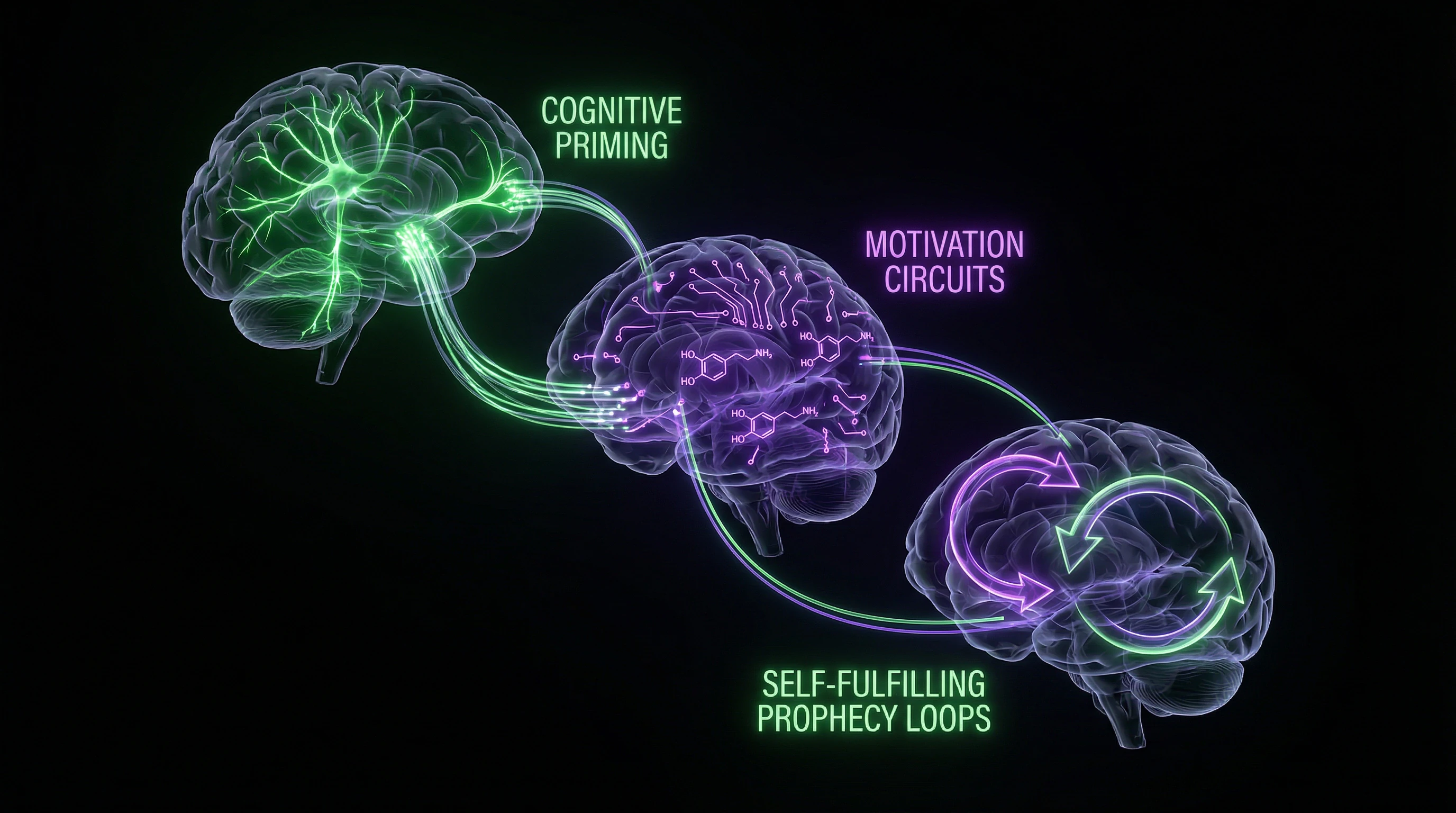
Manifestation promises the materialization of desires through the power of thought — but scientific data does not confirm the ability of consciousness to directly alter physical reality. However, psychology documents real mechanisms: 🧠 cognitive priming, self-fulfilling prophecies, motivational effects. We examine where science ends and magical thinking begins.
🛡️
Laplace Protocol: We distinguish three scientific contexts of manifestation — psychological (visualization practices), medical (clinical manifestation of diseases), and philosophical (existential self-expression). We critically evaluate popular misconceptions about "thought materialization" and the improper use of quantum physics to justify pseudoscientific concepts.
Reference Protocol
Scientific Foundation
Evidence-based framework for critical analysis
Protocol: Evaluation
Test Yourself
Quizzes on this topic coming soon
Sector L1
Articles
Research materials, essays, and deep dives into critical thinking mechanisms.
🎯 Manifestation 🎯 Manifestation
 🎯 Manifestation
 🎯 Manifestation
 🎯 Manifestation
⚡
Deep Dive
Psychological Mechanisms of Manifestation: What Happens in the Brain When We Visualize Desired Outcomes
Manifestation in a psychological context is the practice of materializing desires through focused thinking, visualization, and affirmations. Scientific evidence does not confirm the ability of thought to directly alter physical reality independent of actions.
However, the psychological mechanisms underlying these practices have quite real effects on human behavior and perception.
Cognitive Priming and Selective Attention
Cognitive priming is a mechanism whereby prior activation of certain mental representations influences subsequent information processing. When a person regularly visualizes a specific goal, their brain begins to automatically highlight relevant information from the environment.
This process does not change external reality, but transforms the perception of available opportunities, making them more noticeable to the practitioner.
Neurobiological research shows that repeated visualization activates the same brain regions as actual performance of actions, creating neural patterns that facilitate subsequent behavior.
Motivation and Goal-Directed Behavior
The primary psychological effect of manifestation is the enhancement of motivation and activation of goal-directed behavior. Clear articulation of desires and their regular visualization serve the function of goal clarification, which is critical for initiating action.
- The mechanism works through psychological contrast
- The gap between current state and desired outcome generates internal tension that requires resolution through action.
- Affirmations and visualization cultivate a positive mindset
- This reduces procrastination and increases resilience to obstacles, but the effects are mediated by actual changes in behavior, not direct influence of thought on matter.
Self-Fulfilling Prophecy Effect
A self-fulfilling prophecy is a social-psychological phenomenon in which a person's expectations influence their behavior in such a way that those expectations are ultimately realized. A person convinced of achieving a goal unconsciously adjusts their behavior, communication, and decisions in accordance with that belief.
| Level of Impact | Mechanism | Outcome |
|---|---|---|
| Personal behavior | Modification of actions in accordance with belief | Real steps toward goal |
| Social interaction | Others respond to changed behavior | Favorable conditions for realization |
| Psychological effect | Belief reduces anxiety, increases confidence | Placebo-like benefits |
It is critically important to distinguish psychological effects mediated by changes in behavior and perception from pseudoscientific claims about direct influence of consciousness on physical reality, especially references to quantum mechanics, which represent incorrect application of scientific concepts.
Clinical Manifestation in Medicine: When the Term Gains Scientific Precision
In medical context, "manifestation" refers to the age, symptoms, and pattern of disease presentation. This is a central concept in clinical research studying correlations between disease onset timing and its progression.
Unlike popular psychology usage, clinical manifestation is a well-studied field with extensive evidence base.
Age Patterns of Disease Presentation
Research reveals consistent age patterns of manifestation for multiple sclerosis, type 1 diabetes, primary open-angle glaucoma, and chronic obstructive pulmonary disease. For multiple sclerosis, pediatric and adult forms are clearly differentiated, each with distinct clinical features.
Age of manifestation correlates with progression rate, treatment response, and long-term outcomes. These correlations are not universal—the relationship between early manifestation and disease severity varies depending on the condition and individual patient factors.
- Age of disease onset determines clinical phenotype
- Manifestation pattern influences diagnostic algorithm selection
- Understanding age-related features enables personalized therapy
Prognostic Significance of Manifestation Timing
Timing of clinical manifestation has significant prognostic value for assessing probable disease course. In multiple sclerosis, age of onset correlates with progression pattern and disability accumulation, though this relationship is modified by numerous additional factors.
Prognostic models incorporating age and manifestation characteristics demonstrate improved predictive capability compared to models based solely on current clinical parameters.
Manifestation analysis becomes a critical component of clinical assessment, especially for chronic progressive diseases where early prediction of disease trajectory determines therapeutic strategy.
Multiple Sclerosis and Diabetes Research
Multiple sclerosis is a model disease for studying clinical manifestation. Pediatric manifestation is associated with higher relapse frequency in early stages, but paradoxically slower accumulation of irreversible disability in the long term.
These findings refute the simplified notion that early onset always predicts worse outcomes. The complexity of the relationship between manifestation age and prognosis requires an individualized approach to each patient.
Studies of type 1 diabetes in children have identified age-related manifestation features, including differences in clinical presentation and metabolic parameters depending on onset age. Systematic pattern analysis enables identification of risk groups and optimization of screening programs for early diagnosis.
Early detection is critically important for preventing acute complications such as diabetic ketoacidosis at initial disease presentation.
Existential Manifestation of Identity: The Philosophical Dimension of Self-Expression
Existential manifestation is not a technique for attracting desired outcomes, but a process of expressing the authentic self at an ontological level. The philosophical approach focuses on self-knowledge and identity formation, rooted in phenomenology and existential psychology.
Philosophical Foundations of Self-Expression
Manifestation in the existential sense is the revelation of inner essence through choice, action, and self-expression. A person exists authentically only to the extent that they manifest their unique identity in the world.
This stands in contrast to the instrumental understanding of manifestation as a means of obtaining what is desired. Philosophical manifestation requires reflective self-knowledge, acceptance of responsibility for one's own existence, and the courage to express the authentic self despite social conformism.
The authentic self is not a static entity awaiting discovery, but is dynamically constructed through the continuous process of choice and self-expression.
Identity Formation in Adolescence
Existential manifestation is critical for understanding identity formation during adolescence and young adulthood. During this period, the individual faces the necessity of manifesting their emerging identity through choices, relationships, and self-presentation.
Obstacles to authentic manifestation—excessive social pressure, absence of safe space for experimentation, or traumatic experience—lead to long-term difficulties with self-expression and stable identity.
- Creating safe space for experimentation with identity
- Supporting the adolescent's reflective self-knowledge
- Recognizing the uniqueness of choice and self-expression
- Minimizing social pressure toward conformity
Authenticity and Self-Actualization
Authenticity is the key criterion of successful existential manifestation, distinguishing genuine self-expression from socially conditioned role performances. Authentic manifestation requires congruence between internal values, beliefs, emotions, and external behavior.
Self-actualization in the existential understanding is not the achievement of external markers of success, but the fullness of manifesting the unique potential of the person. Existential manifestation is a continuous process, not a final state, recognizing the fundamental openness of human existence.
Scientific Critique of the "Law of Attraction": Why Popular Manifestation Doesn't Hold Up to Scrutiny
Absence of Empirical Evidence for Direct Thought-to-Reality Influence
The scientific community lacks reliable empirical evidence that visualization or positive thinking can directly alter physical reality independent of concrete actions. Controlled experimental studies do not support claims that focused thought can materialize desired outcomes through mystical mechanisms.
The psychological effects of manifestation operate through changes in behavior, motivation, and cognitive frameworks—not through direct influence of consciousness on the external world. The absence of reproducible results under rigorous scientific conditions indicates that observed "successes" are explained by a combination of cognitive biases, self-fulfilling prophecy effects, and selective attention to confirming cases.
Anecdotal evidence and personal success stories do not meet standards of scientific proof and cannot serve as a basis for valid conclusions about causal relationships.
Misappropriation of Quantum Mechanics to Justify Manifestation
Popular manifestation literature frequently appeals to quantum physics—Schrödinger's experiment and the observer effect—as "scientific proof" that consciousness creates reality. This is a fundamental distortion: the observer effect in quantum experiments refers to the interaction of measurement instruments with quantum systems at the subatomic level, not to the influence of human consciousness on macroscopic reality.
Extrapolating quantum phenomena to everyday life has no scientific basis. Physicists have repeatedly criticized such interpretations as improper conflation of different levels of reality and disregard for the principle of decoherence, according to which quantum effects do not manifest in macroscopic systems.
- Quantum effects operate at the subatomic level, not at the level of macroscopic objects.
- A measurement instrument is a physical device, not human consciousness.
- Decoherence prevents quantum phenomena from extending to everyday scales.
- Using scientific terminology to lend authority to unscientific claims is a classic pseudoscience strategy.
Distinguishing Between Correlation and Causation in Success Research
Critical analysis of manifestation research reveals a systematic error: correlation between positive thinking and goal achievement is mistakenly interpreted as a causal relationship. People who achieve success do indeed often demonstrate optimism, but this may be a consequence of their achievements rather than the cause.
Both factors may result from third variables—socioeconomic advantages, education, or personality traits. Without controlled experiments accounting for confounders, it is impossible to establish the direction of causality.
Survivorship bias systematically distorts perception of manifestation effectiveness: we hear stories from those who "successfully manifested" goals but fail to account for the multitude of people who applied the same techniques without results.
This systematic sampling error creates an illusion of effectiveness that does not withstand statistical scrutiny when the entire population of manifestation practitioners is considered.

Practical Application of Manifestation: Separating Useful Tools from Magical Thinking
Visualization as a Planning and Cognitive Preparation Tool
Goal visualization is a valid psychological tool with proven effectiveness in sports psychology and preparation for complex tasks. Mental rehearsal activates the same neural networks as actual performance of actions.
The key difference from mystical manifestation: effective visualization focuses not only on the desired outcome, but also on specific steps, obstacles, and strategies for overcoming them. Visualizing the process of achieving a goal works better than visualizing only the end result, because it facilitates planning, anticipating difficulties, and developing concrete skills.
Visualization works not through mystical "attraction" of what is desired, but through improved cognitive preparation, increased motivation, and formation of clearer behavioral strategies.
Affirmations and Positive Thinking: Boundaries of Effectiveness
Affirmations can have a moderate positive impact on self-esteem and motivation, but their effectiveness is substantially limited and context-dependent. For people with high self-esteem, they reinforce positive attitudes; for people with low self-esteem, overly positive statements create cognitive dissonance and may worsen self-perception.
The effect of affirmations works through the mechanism of self-affirmation and cognitive priming, not through changing external reality. Positive thinking does not replace concrete actions and does not guarantee results regardless of objective circumstances.
- Excessive emphasis on positive thinking leads to "toxic positivity"—denial of real problems and obstacles.
- This reduces adaptability and capacity for realistic planning.
- A balanced approach combines optimism with critical analysis of the situation and readiness to overcome difficulties.
Combining Mental Practices with Concrete Actions
The most effective approach is integrating elements of manifestation with concrete goal-setting, planning, and consistent actions. Visualization and affirmations serve as auxiliary tools for maintaining motivation and focus, but only in combination with realistic assessment of resources and systematic work toward achieving goals.
The psychological mechanisms underlying the "working" aspects of manifestation—increased motivation, improved focus of attention, activation of goal-directed behavior—are realized precisely through actions, not through passive waiting for results.
| Criterion | Abstract Wish | SMART Goal + Monitoring |
|---|---|---|
| Specificity | Vague, unmeasurable | Clearly defined, measurable |
| Achievability | Unclear | Realistic, time-bound |
| Adaptation | Absent | Continuous monitoring and correction |
| Probability of Success | Low | Significantly higher |
Useful elements of manifestation work not as a standalone practice, but as components of a broader system of self-regulation and goal achievement.

Evaluating Manifestation Research Quality: Navigating Between Science and Pseudoscience
Scientific Validity Criteria in Psychological Practice Research
Scientific evaluation of manifestation requires control groups, randomization, blinding, reproducibility, and publication in peer-reviewed journals. Clinical manifestation of diseases demonstrates these characteristics and receives a reliability rating of 4–5 out of 5, while popular psychological manifestation research often relies on anecdotes and receives 1–2 out of 5.
Systematic reviews and meta-analyses represent the highest level of evidence, but such work on psychological manifestation is virtually nonexistent. It is critically important to distinguish between correlational research, which identifies relationships between variables, and experimental research, which establishes causal relationships. Most manifestation claims are based on correlational data or no data at all.
Signs of Pseudoscientific Manifestation Claims
Mixing scientific concepts with mystical ideas is a classic pseudoscience strategy: creating the appearance of scientific validity without adhering to scientific methodology.
Pseudoscientific manifestation claims are characterized by typical signs: using scientific terminology out of context, appealing to quantum physics without understanding its principles, lack of falsifiability, ignoring contradictory data, and excessive reliance on anecdotes. Claims that manifestation is "proven by science" or "based on quantum physics" are red flags of pseudoscience.
Additional signs: absence of a mechanism of action compatible with established principles, non-reproducibility in independent studies, vague formulations allowing multiple interpretations, and emphasis on personal testimonials instead of systematic data. Critical thinking requires skepticism toward extraordinary claims without extraordinary evidence.
Hierarchy of Evidence in Different Manifestation Contexts
The hierarchy of evidence varies substantially depending on context. In the medical context of clinical disease manifestation, there exists an extensive base of high-quality research with clear methodologies and reproducible results. Studies on the age of manifestation of multiple sclerosis, type 1 diabetes, and other conditions are published in leading medical journals and meet the highest standards of evidence-based medicine.
In the philosophical context of existential manifestation, there are moderate-quality theoretical frameworks based on phenomenology and existential psychology, but with limited empirical validation. Popular psychological manifestation as a "law of attraction" practice sits at the lowest level of the hierarchy, relying predominantly on anecdotes and studies without control groups.
- Medical manifestation: high-quality evidence, reproducibility, practical application
- Philosophical manifestation: theoretical frameworks, limited empirical validation
- Popular psychological manifestation: anecdotes, absence of control groups, low reproducibility
This fundamental difference in evidence quality explains why medical and philosophical use of the term is considered legitimate in the scientific community, while popular psychological manifestation is viewed as pseudoscience. Understanding this hierarchy is critically important for navigating heterogeneous information and making informed decisions about applying related practices.
Knowledge Access Protocol
FAQ
Frequently Asked Questions
Manifestation is the practice of visualizing and focusing thoughts on desired goals to achieve them. In psychology, this relates to motivation and goal-directed behavior, while in medicine the term refers to the emergence of disease symptoms. Scientific evidence shows the effect works through behavioral change, not through direct influence of thoughts on reality.
There is no convincing scientific evidence that thoughts directly alter physical reality. However, research demonstrates psychological mechanisms: visualization strengthens motivation, focuses attention on opportunities, and activates goal-directed behavior. The effect is explained by cognitive priming and self-fulfilling prophecy, not magical influence.
Popular literature improperly uses quantum mechanics to justify manifestation. The observer effect in quantum physics does not apply to the macroscopic world and does not prove the influence of thoughts on reality. This is a pseudoscientific interpretation unrelated to actual quantum phenomena.
Clinical manifestation is the age and nature of the first appearance of disease symptoms. The term is widely used in research on multiple sclerosis, diabetes, and glaucoma to describe patterns of disease onset. The timing of manifestation has prognostic significance and correlates with disease severity.
Effective practice combines visualization with concrete actions: clearly formulate goals, visualize the process of achieving them, and create an action plan. Use affirmations to maintain motivation, but focus on real steps. Research shows visualization works as a planning tool, not a magical ritual.
Manifestation doesn't work like magic—it doesn't directly change reality. The effect depends on subsequent actions, external circumstances, and realistic goals. Passive visualization without concrete steps doesn't produce results, confirming the absence of direct influence of thoughts on the material world.
Manifestation involves purposeful visualization of specific outcomes, while positive thinking is a general optimistic mindset. Manifestation involves active work with images of a desired future and affirmations. Both approaches influence motivation and behavior through psychological mechanisms, but don't magically change reality.
Manifestation works through cognitive priming (tuning attention to relevant opportunities), strengthening motivation, and the self-fulfilling prophecy effect. Visualization activates the same neural networks as actual action, preparing the brain to achieve goals. These mechanisms explain the subjective effectiveness of the practice without resorting to pseudoscience.
In philosophy, manifestation means the expression and realization of the authentic self, not the materialization of desires. It's a process of self-discovery and identity formation, especially important during adolescence. The existential approach views manifestation as a path to genuine self-actualization through self-expression.
Yes, the age of first symptom appearance correlates with prognosis in many diseases. Research on multiple sclerosis and type 1 diabetes shows that early manifestation may indicate more aggressive progression. However, the relationship is not absolute and depends on the specific pathology and individual factors.
There is no scientific evidence that visualization directly cures diseases or alters physiology. However, a positive mindset and stress reduction through mental practices can support immune function and improve well-being. Manifestation does not replace medical treatment but can complement it as psychological support.
Criticism targets unfounded claims about the direct influence of thoughts on reality and pseudoscientific use of quantum physics. There is no reproducible empirical evidence for the "law of attraction." Scientists point to confusion between correlation (visualization + action = result) and causation (thoughts create reality).
Many successful people use visualization and goal-setting, but their success is driven by actions, skills, and circumstances, not the magic of thoughts. This is an example of survivorship bias: we don't see the thousands practicing manifestation without results. Visualization is a useful planning tool but not a guarantee of success.
Check for peer-reviewed research, reproducibility of results, and absence of magical explanations. Scientific sources describe psychological mechanisms without references to "energies" and "vibrations." Credibility criteria include: methodology, sample size, control groups, and publication in recognized journals.
Excessive belief in manifestation can lead to self-blame during failures ("I didn't believe enough") and ignoring real problems. Magical thinking distracts from constructive action and may increase anxiety. A healthy approach is to use visualization as a motivational tool, not a replacement for real effort.
Yes, the concept of manifestation has roots in Eastern philosophies (karma, visualization in Buddhism), but the Western version is commercialized and simplified. Different cultures emphasize different aspects: from spiritual self-improvement to material success. The scientific approach is universal and focuses on psychological mechanisms regardless of cultural context.