 🌙 Astral Projection and Lucid Dreams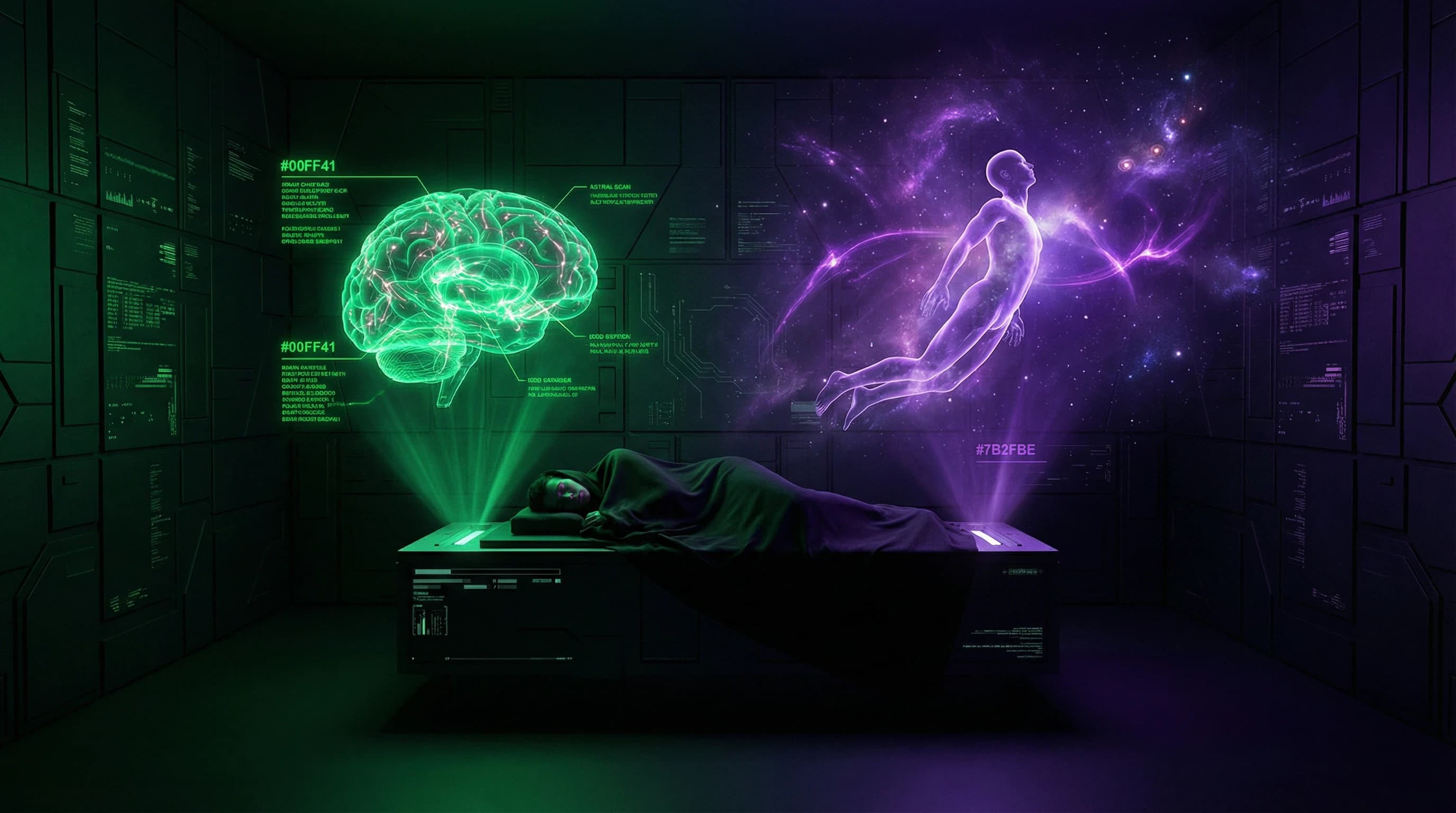
Astral Projection and Lucid Dreaming: Differences and Similaritiesλ
Scientific and esoteric perspectives on altered states of consciousness during sleep: what astral projection and lucid dreaming have in common
Overview
Astral projection and lucid dreaming are two altered states of consciousness that are often confused. Astral projection is described as leaving the body to enter a metaphysical reality, 🧩 while lucid dreaming is a scientifically recognized state in which the sleeper becomes aware they are dreaming. Subjective experiences may be similar, but the theoretical frameworks differ: astral projection belongs to esoteric tradition, lucid dreams are studied by neuroscience.
🛡️
Laplace Protocol: This material distinguishes between scientifically validated facts about lucid dreaming and unverified esoteric claims about astral travel, drawing on analysis of practitioner communities and available research.
Reference Protocol
Scientific Foundation
Evidence-based framework for critical analysis
Protocol: Evaluation
Test Yourself
Quizzes on this topic coming soon
Sector L1
Articles
Research materials, essays, and deep dives into critical thinking mechanisms.
🌙 Astral Projection and Lucid Dreams 🌙 Astral Projection and Lucid Dreams
 🌙 Astral Projection and Lucid Dreams
 🌙 Astral Projection and Lucid Dreams
⚡
Deep Dive
Three Terms, One Experience — Why Confusion Between Astral and Dreams Benefits Practitioners
Astral Projection in Esoteric Tradition
Astral projection is described in esoteric sources as an out-of-body experience in which consciousness allegedly leaves the physical body and travels in a separate reality — the astral plane. The tradition links this to mystical practices and assumes the existence of a dimension independent of the brain.
The key characteristic is the claim of "travel outside consciousness," where the experience occurs in objective space rather than in a subjective mental construct. No scientific evidence has been found for the existence of the astral plane as a separate reality.
Lucid Dreaming as a Scientific Phenomenon
Lucid dreaming is a state in which the sleeper is aware of the fact of dreaming while retaining the ability to reflect and partially control the dream content. This phenomenon is recognized as a legitimate subject of scientific research and is studied within the neuroscience of sleep.
Conceptually, lucid dreams are described as "travel within one's own consciousness," where all experiences are generated by the sleeping brain's activity. This difference in the localization of experience — inside versus outside — constitutes the fundamental theoretical boundary.
| Parameter | Lucid Dream | Astral Projection |
|---|---|---|
| Experience Localization | Within the sleeper's consciousness | In an allegedly independent reality |
| Experience Generator | Brain activity (REM, EEG) | No verification mechanism exists |
| Scientific Status | Studied in neuroscience | Not confirmed under controlled conditions |
The Concept of "Phase" in Practice
The term "phase" was introduced by practitioners as a neutral designation for a general state encompassing both phenomena without mystical connotations. This concept attempts to bypass ideological disagreements between esotericists and skeptics, focusing on practical induction techniques regardless of metaphysical beliefs.
Terminological neutrality can mask the absence of critical analysis of the claimed capabilities of these states — and it is precisely this ambiguity that benefits practitioners who sell techniques without specifying what exactly they promise.
"Phase" is positioned as a pragmatic approach where subjective experience and its application matter, not debates about the nature of the reality being experienced. However, the vagueness of the definition allows simultaneous appeals to scientific credibility (lucid dreams) and mysticism (astral travel) without taking responsibility for specific claims.
- Technique sellers appeal to skeptics as a scientific method, to believers as a mystical practice — one technique, two interpretations.
- The consumer gets an illusion of choice: the result can be interpreted according to one's own beliefs, regardless of what actually occurred.
- The lack of a clear definition allows avoidance of verifiable promises and accountability for results.
Key Differences Between Astral Projection and Lucid Dreams — Where the Boundary of Reality Lies
Localization of Consciousness: Inside or Outside the Body
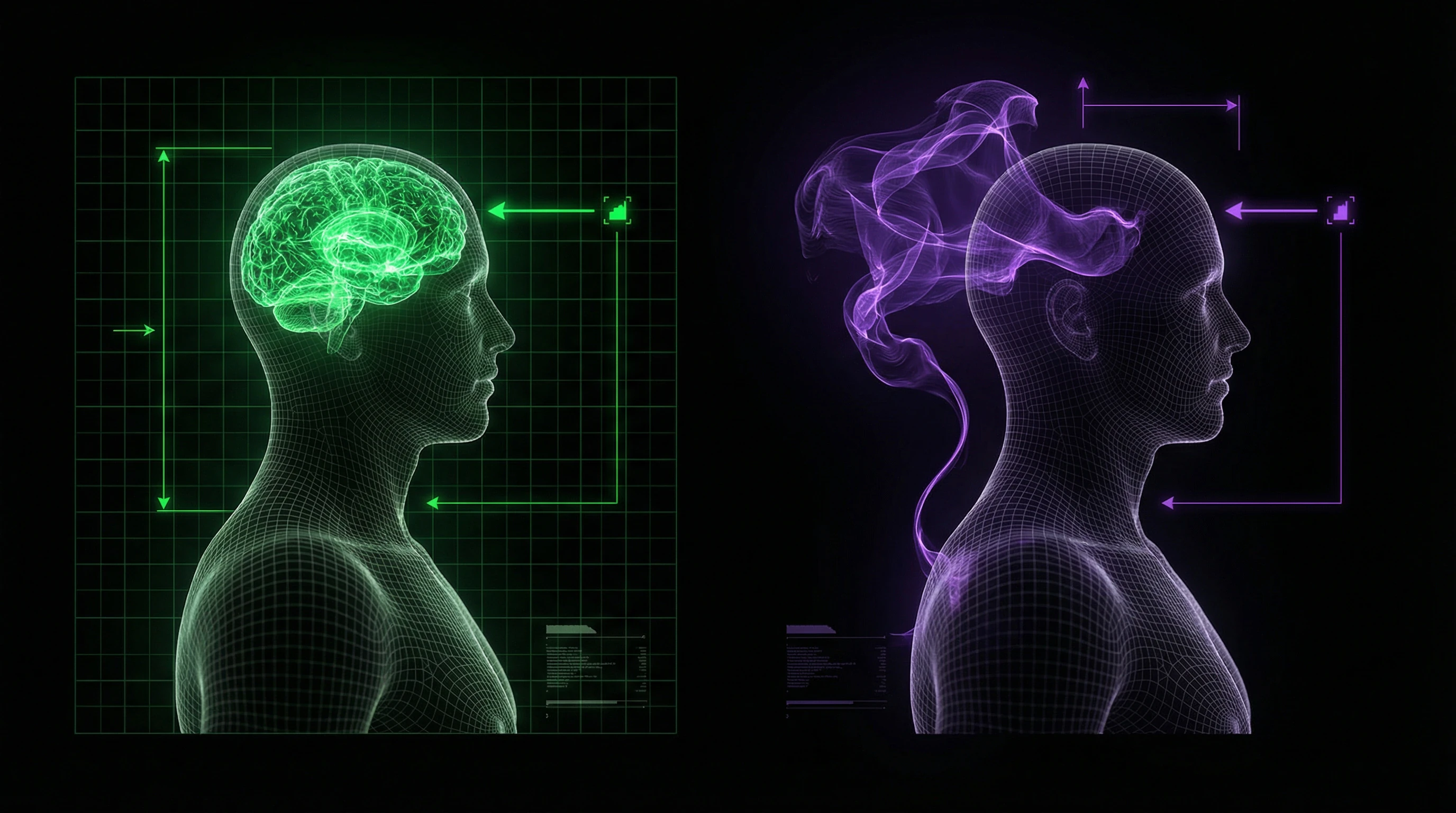
The central difference is the presumed location of consciousness. Astral projection postulates an exit beyond the physical body, while lucid dreaming acknowledges that the entire experience occurs within the neural networks of the sleeping brain.
Astral projection practitioners claim to obtain objective information about the physical world during their journeys. These claims have not been confirmed by controlled experiments.
- Astral Projection
- Consciousness allegedly leaves the body and interacts with external reality. Verifiability: absent under controlled conditions.
- Lucid Dreaming
- Consciousness remains in the brain but gains metacognitive awareness of the sleep process. Verifiability: reproducible in laboratory settings.
- The Conflation Trap
- The subjective intensity of experience is identical in both cases — this creates an illusion of identical mechanisms.
Theoretical Frameworks and Scientific Status
Lucid dreams are studied in academic settings with polysomnography, fMRI, and other objective methods of recording brain activity. Astral projection remains in the realm of esoteric teachings without recognized scientific methodology.
The absence of a falsification mechanism for astral claims makes them untestable in the scientific sense — this explains the gap between the two concepts in academic discourse.
The critical difference is reproducibility. Lucid dreams are induced and studied under laboratory conditions; astral projections do not lend themselves to systematic verification.
The difference in the ontological status of experience determines research methodology and interpretation of results. Where reproducibility ends — there begins the boundary between scientific phenomenon and esoteric teaching.
Similarities in Subjective Experience — Why the Practices Seem Identical
Common Characteristics of Experiences
Practitioners of both approaches report strikingly similar subjective sensations: vividness of perception, sense of presence, ability to move and interact with the environment.
Experienced practitioners note that without prior theoretical framing, it's impossible to distinguish whether you're in the "astral" or in a lucid dream based solely on the quality of the experience.
| Experience Parameter | Lucid Dream | Astral Projection (subjectively) |
|---|---|---|
| Image Vividness | High, controllable | High, controllable |
| Sense of Presence | Present | Present |
| Ability to Move | Complete | Complete |
| Environmental Interaction | Possible | Possible |
This functional similarity points to a common neurophysiological basis, regardless of metaphysical interpretations.
Temporal Patterns and Conditions of Occurrence
Both phenomena most commonly occur in the early morning hours, during REM sleep, when brain activity is closest to wakefulness.
Achieving these states requires systematic practice and mastery of techniques, contrary to the widespread myth of easy access.
Practitioners of both traditions recommend wake-back-to-bed techniques as the optimal window for inducing the desired state.
- Wake up 4–6 hours after falling asleep
- Stay awake 15–30 minutes (reading, reflection)
- Return to sleep with intention for awareness or projection
- Enter the state at the boundary between sleep and wakefulness
The coincidence of temporal patterns and conditions of occurrence strengthens the hypothesis that astral projection and lucid dreaming may be different interpretations of the same neurophysiological phenomenon.
Practical Techniques for Achieving States: From Visualization to Morning Protocols
Visualization Methods and Awareness Training
Practitioners from both traditions use a similar set of induction techniques based on visualizing specific objects or scenarios. One common method involves mentally representing physical objects—a fence, a staircase—with detailed attention to texture and sensations.
Techniques for developing awareness during sleep require systematic training of the ability to notice inconsistencies in surrounding reality.
- Choose 3–4 triggers for reality checks (passing through a doorway, looking at a clock, touching a wall)
- Perform the check each time the trigger occurs
- Maintain balance between awareness for control and relaxation for preserving the sleep state
- Practice daily for a minimum of 2–3 weeks before first results
Practitioner communities transmit techniques through a mentorship system: progressive body relaxation, concentration on hypnagogic imagery (visual phenomena at the boundary between sleep and wakefulness), "anchoring" techniques—creating mental triggers to activate awareness.
Technique effectiveness varies between individuals. What works for one practitioner may prove ineffective for another, requiring a personalized approach.
Morning Practices and Optimal Time Windows
Early morning is the most favorable time for inducing desired states. The WBTB (Wake Back To Bed) technique is considered one of the most effective: the practitioner wakes after 4–6 hours of sleep, remains awake for 20–60 minutes, then returns to sleep with the intention of entering a conscious state.
This method exploits the natural increase in duration and intensity of REM phases during morning hours, when brain activity most closely resembles waking patterns. The neurophysiological rationale relates to elevated levels of acetylcholine—a neurotransmitter critically important for REM sleep and the formation of awareness during sleep.
| Technique | Mechanism | Limitations |
|---|---|---|
| WBTB (4–6 hours + 20–60 minutes awake) | Exploits peak REM activity and acetylcholine | Safe at 2–3 times per week |
| Multiple alarms with short intervals | Creates micro-awakenings that increase awareness during sleep | Risks chronic sleep deprivation with frequent use |
Additional morning techniques include setting multiple alarms with short intervals to create a state of "micro-awakenings," which increase the probability of self-awareness during sleep upon subsequent falling asleep.
Systematic disruption of natural sleep architecture for practice purposes can lead to chronic sleep deprivation and associated cognitive impairments. Experienced practitioners limit intensive morning techniques to 2–3 times per week, allowing the body to recover on remaining days.
| Technique | Timing | Difficulty | Effectiveness |
|---|---|---|---|
| Object Visualization | Before sleep | Medium | Moderate |
| Reality Checks | Throughout the day | Low | High (long-term) |
| WBTB (wake-back-to-bed) | Early morning | Medium | Very high |
| Micro-awakenings | Morning hours | High | High |
Scientific Status of Phenomena: Where Research Ends and Belief Begins
Lucid Dreaming in the Context of Modern Neuroscience
Lucid dreaming is recognized as a legitimate subject of scientific research and is studied in laboratories worldwide using polysomnography, fMRI, and other neuroimaging methods. Research confirms a hybrid state of consciousness: REM sleep with high activity in visual and motor areas plus waking patterns in the prefrontal cortex.
Experimental protocols allow dreamers to send pre-agreed signals through eye movements during lucid dreams—objective confirmation of the phenomenon and the ability to study temporal characteristics of the experience.
Specific neurochemical correlates of lucid dreaming include increased activity in the dorsolateral prefrontal cortex, anterior cingulate cortex, and precuneus—areas associated with self-awareness and metacognitive processes.
Transcranial alternating current stimulation in the gamma range (40 Hz) induces lucid dreams, confirming the neurophysiological basis of the phenomenon. The scientific community views lucid dreaming as a model for studying the nature of consciousness, metacognition, and neural correlates of subjective experience.
Astral Projection: Absence of Scientific Evidence and Methodological Problems
Astral projection as a phenomenon of consciousness traveling outside the physical body has no scientific confirmation and is not recognized by the academic community as objective reality. Searches for peer-reviewed research reveal no studies confirming the existence of a separate "astral plane" or the ability of consciousness to function independently of the brain.
Subjective experiences interpreted as astral projection are explained by known neurophysiological mechanisms: disruptions in the integration of multisensory information in the temporoparietal junction, responsible for forming body schema. "Out-of-body" phenomena are successfully reproduced in laboratory conditions using virtual reality and transcranial magnetic stimulation.
- Neurophysiological markers: lucid dreams are identified and reproducible; astral projection—absent.
- Objective verification: lucid dreams confirmed through eye signals; astral projection not confirmed under controlled conditions.
- Obtaining new information: lucid dreams do not require verification of external data; astral projection claims access to information but does not verify it.
- Status in science: lucid dreams—legitimate research subject; astral projection not recognized.
Critical analysis of claims about obtaining objective information through astral projection reveals no cases that have withstood rigorous scientific testing under controlled conditions. Experiments in which practitioners were asked to "see" randomly placed objects or numbers during supposed astral travel consistently produced results no different from random guessing.
The subjective reality of the experience may be deeply meaningful to the individual, but objective claims about the nature of reality require empirical evidence. The absence of a scientific basis does not devalue the psychological or cultural significance of practices, but requires honesty in distinguishing verifiable facts from metaphysical beliefs.
Myths, Cognitive Traps, and Critical Tools for Analyzing Claims
Common Misconceptions About the Nature and Accessibility of Phenomena
One of the most persistent myths asserts that astral projection and lucid dreaming are absolutely identical phenomena, differing only in terminology. Reality is more nuanced: while subjective experiences may be indistinguishable, the theoretical frameworks differ radically—lucid dreaming is described in terms of neurophysiology and psychology, astral projection in terms of esoteric metaphysics.
The misconception about the ease of achieving these states is widespread in popular literature, whereas practitioner communities emphasize the necessity of systematic practice, often over months, before the first successful experience is achieved.
The myth that these practices are accessible to everyone without exception ignores individual differences in visualization ability, metacognitive sensitivity, and neurophysiological features of sleep architecture.
The misconception about the possibility of "shared dreams" or meetings on the astral plane is mentioned in practitioner communities but has no scientific confirmation and can be explained by coincidences, memory confabulation, and social reinforcement of beliefs within groups.
It is critically important to distinguish between the phenomenology of experience (what a person experiences) and ontological claims (what exists objectively)—the former can be described reliably, the latter requires independent verification.
Unverified Claims and Critical Analysis Tools
Claims about the ability to obtain objective information about the physical world through astral projection (for example, "seeing" distant events or reading closed books) are not confirmed under rigorous testing and belong to the category of extraordinary claims requiring extraordinary evidence.
Claims about the therapeutic effects of these practices are often based on anecdotal evidence and subjective reports, without controlled clinical studies evaluating effectiveness relative to placebo or other interventions.
The commercialization of astral projection and lucid dreaming training creates a conflict of interest, where financial motivation may contribute to exaggerating the ease of achieving results and downplaying the limitations of methods.
- Is the claim based on reproducible observations or isolated cases?
- Are there alternative explanations that don't require assuming new entities or violating established laws of nature?
- Has the claim undergone independent peer review?
- What is the methodology for obtaining data and were possible sources of error controlled?
- Is the claim consistent with the existing body of scientific knowledge or does it require its radical revision?
Applying these criteria allows us to separate well-founded scientific conclusions about lucid dreaming from metaphysical speculations about astral planes, while maintaining respect for the subjective experience of practitioners.
Critical thinking does not deny the value of personal experience, but requires intellectual honesty in distinguishing what we know, what we assume, and what we believe.
✅ Testability: Can the claim be independently verified?
✅ Source: Who is making the claim and what are their qualifications?
✅ Evidence: Is it based on data or anecdotes?
✅ Alternatives: Are there simpler explanations?
✅ Consensus: What does the scientific community say?
✅ Motivation: Is there financial or ideological interest?
Knowledge Access Protocol
FAQ
Frequently Asked Questions
Astral projection is an esoteric concept describing the separation of consciousness from the physical body. Practitioners claim they can travel in an "astral body" through other dimensions or planes of existence. No scientific evidence has been found for the existence of a separate astral plane.
Lucid dreams are a scientifically recognized phenomenon where a person becomes aware they are dreaming while remaining in the dream state. Astral projection presumes consciousness exits "outward," whereas lucid dreaming occurs within one's own consciousness. The former is studied by neuroscience, the latter remains in the realm of esotericism.
"The phase" is a term introduced by Russian-speaking practitioners (particularly Michael Raduga) to describe a general state of altered consciousness. It combines lucid dreams and astral projections without mystical connotations. This is an attempt to create neutral terminology for describing subjective experiences.
Yes, lucid dreaming can be learned through regular practice of specific techniques. Core methods include reality checks throughout the day, keeping a dream journal, and morning practices. Success requires patience and systematic training over several weeks or months.
There is no direct evidence of danger, since astral projections are not scientifically confirmed. However, intensive practices of altered states of consciousness may trigger anxiety or disorientation in predisposed individuals. Those with mental health conditions should consult a specialist before experimenting.
No, scientific evidence for the existence of a separate astral plane of reality has not been found. All research indicates that such experiences are products of brain activity. Lucid dreaming is studied by neuroscience, but astral projection remains an unproven hypothesis.
Visualizing specific objects before falling asleep is effective, such as imagining a fence or staircase. The WILD (Wake Initiated Lucid Dream) method involves maintaining consciousness during the transition to sleep. Practitioners also use mnemonic techniques and affirmations to develop awareness.
Morning hours are associated with REM (rapid eye movement) sleep, when the brain is most active and dreams are more vivid. After waking and falling back asleep, it's easier to maintain partial awareness. This is the optimal time for practices of both lucid dreaming and attempted astral exits.
There is no convincing evidence of obtaining objective information through astral projections. All verifiable cases have failed confirmation under controlled conditions. Subjective experiences may feel real, but they are products of imagination and memory, not access to external information.
Practitioners often report that subjective experiences in both states are virtually identical. Differences lie in interpretation: some consider it an out-of-body experience, others a special type of dream. Objectively separating these states without theoretical assumptions is impossible.
This is an oversimplification: the subjective experience may be similar, but the theoretical frameworks differ fundamentally. Lucid dreaming is a scientifically recognized phenomenon of brain activity, while astral projection is an esoteric concept of a separate reality. Equating them ignores important philosophical and methodological distinctions.
Claims of shared dreaming appear in practitioner communities but lack scientific confirmation. Controlled experiments have not detected any possibility of objective communication through dreams. Coincidences in accounts are explained by common cultural imagery and chance.
Lucid dreams are associated with activation of the prefrontal cortex during REM sleep, which enables metacognitive functions. Research using EEG and fMRI confirms distinct patterns of brain activity. This proves that awareness during sleep is a real neurophysiological state.
No special talent is required, but success depends on regular practice and individual characteristics. Some people are naturally inclined toward vivid dreaming and learn techniques more easily. Most practitioners need weeks of systematic training to achieve stable results.
In English-speaking regions, works by Stephen LaBerge are particularly popular, especially his research-based approach. Robert Waggoner's explorations and practical guides from online communities are also well-known. Platforms like Goodreads list dozens of books on lucid dreaming topics.
Astral projection does not meet the criteria of scientific testability and reproducibility of results. All claims of out-of-body experiences can be explained by known brain mechanisms without invoking the hypothesis of a separate reality. The absence of objective evidence makes this phenomenon a matter of belief rather than science.