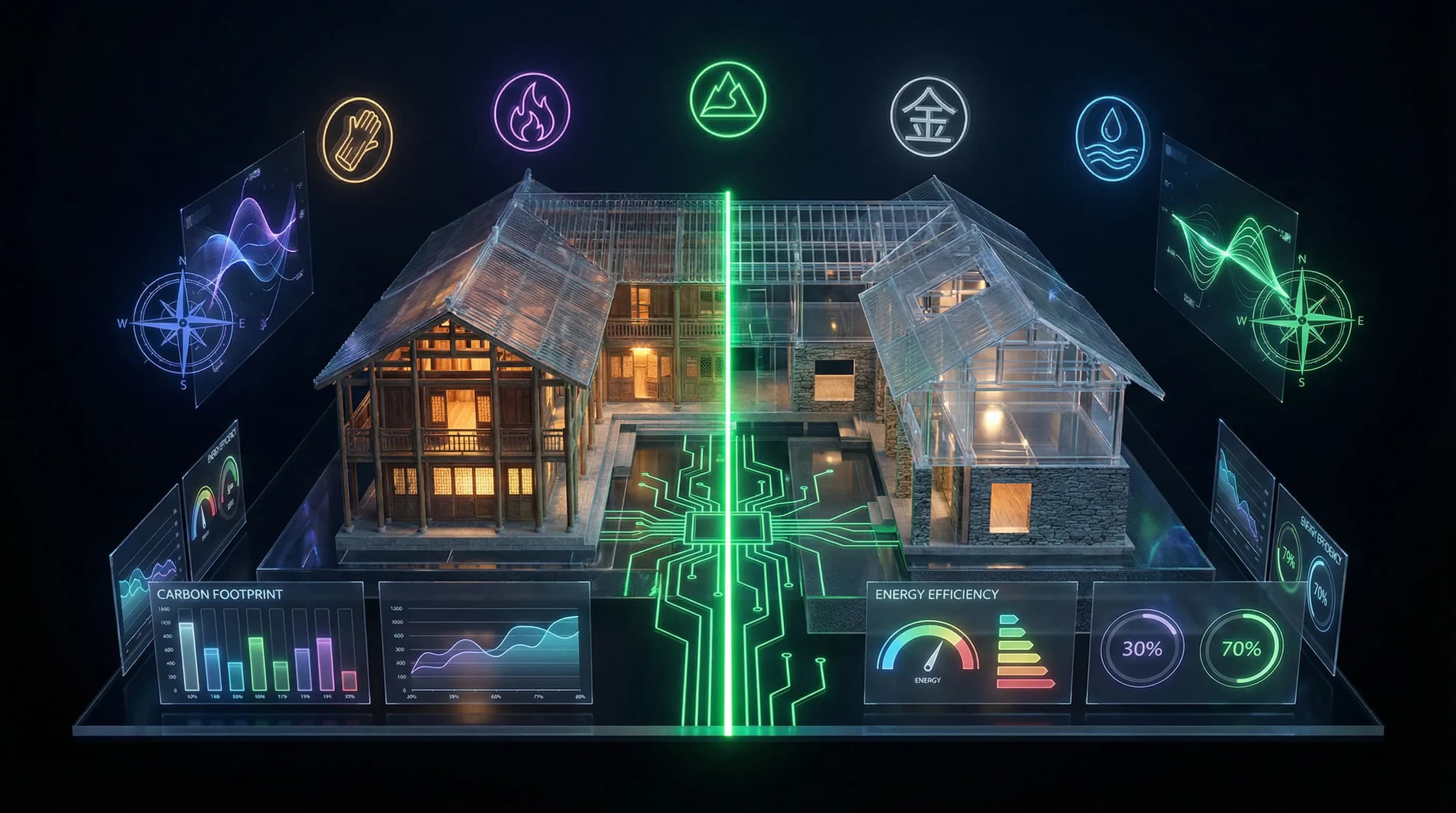
Vastu Shastra and Feng Shui: Defining the Boundaries of Ancient Architectural Systems
Asian countries embedded traditional beliefs into residential construction far more deeply than European ones (S001). Vastu Shastra, Feng Shui, and similar systems are not merely guides for furniture arrangement.
They are comprehensive philosophical approaches to spatial organization, based on concepts of human interaction with natural forces and energy flows. More details in the Witchcraft section.
| System | Origin | Key Concept |
|---|---|---|
| Vastu Shastra | Ancient India | Five elements + cardinal directions |
| Feng Shui | Ancient China | Chi (life energy) + bagua + yin-yang |
Vastu Shastra: Five Elements and Energetic Harmony
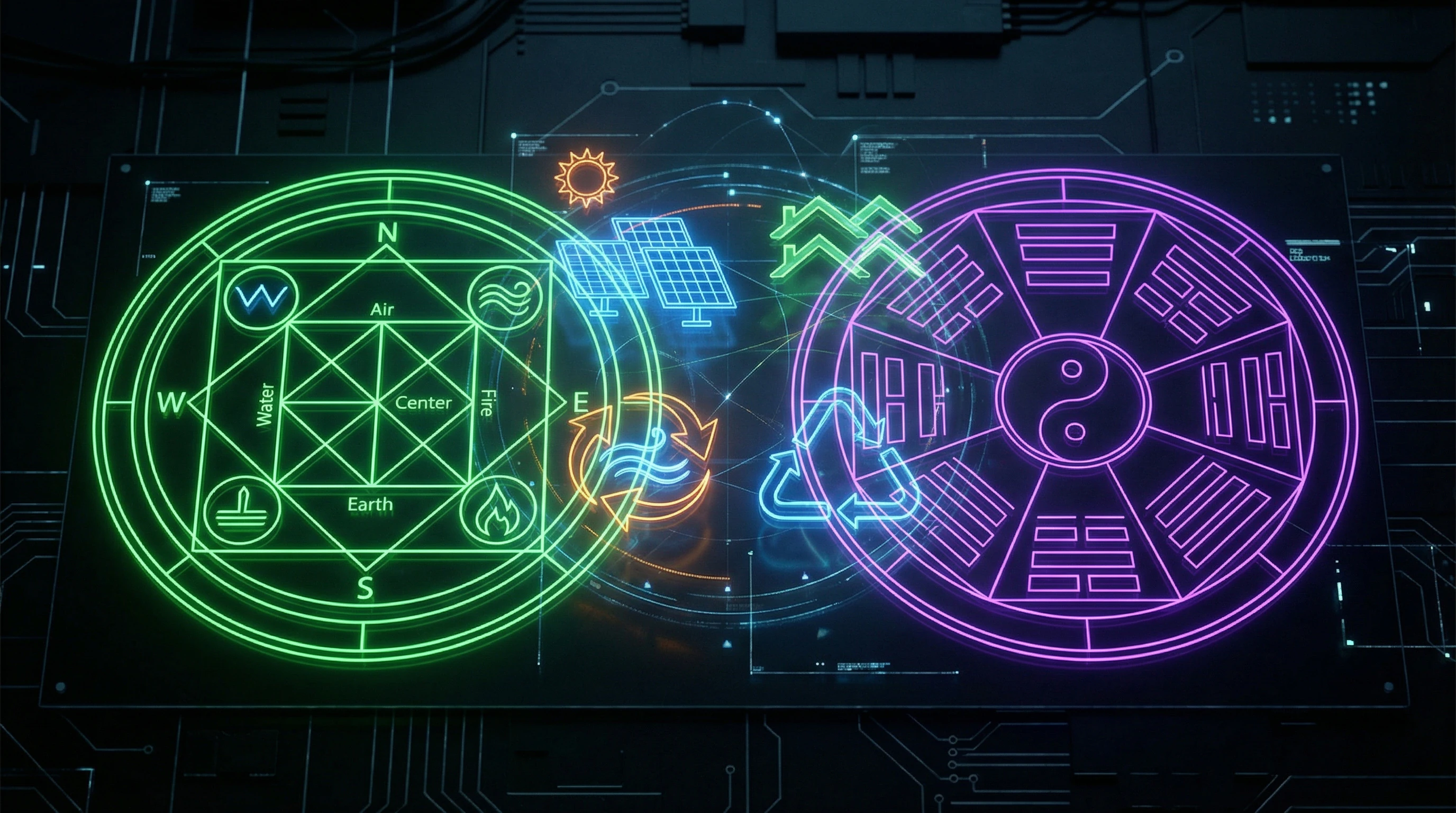
Vastu Shastra uses metaphysics and architectural design to create structures in harmony with nature. Buildings are designed with consideration of five elements—water, air, fire, wind, and earth—to achieve symmetry and balance.
In Vastu Shastra, a home is viewed as a living entity with its own energy vibration. The system is based on cardinal orientation, functional room placement, and the use of natural materials.
Feng Shui: Air, Water, and Managing Chi Flows
Feng means "air," Shui means "water." Feng Shui organizes space based on the concept of chi (life energy) and its movement through the environment.
- Bagua
- An octagonal map of energy zones that determines how each direction influences different aspects of life.
- Yin-Yang
- Balance of opposing forces that must be achieved in space.
- Five Element Cycles
- Wood, fire, earth, metal, water interact in cycles of creation and destruction.
Proper placement of objects, colors, and forms, according to Feng Shui, directs energy flows to improve various aspects of occupants' lives.
Analysis Objective: Ancient Systems and Modern Sustainability
The study compares Vastu Shastra and Feng Shui with modern sustainable architecture across parameters of environmental impact, economic viability, and technological advancement (S001).
- Identify which elements of ancient systems integrate into green building
- Separate cultural traditions from measurable sustainability impact
- Bridge the gap between traditional knowledge and evidence-based architecture
This requires honest examination of mechanisms, not denial or unconditional acceptance.
Strongest Arguments for Ancient Architectural Systems: Why Vastu Shastra and Feng Shui Continue to Influence Modern Construction
For objective analysis, it's necessary to examine the most compelling arguments from proponents of traditional systems. These arguments form the foundation for understanding why millions of people continue to apply Vastu Shastra and Feng Shui principles in contemporary construction. More details in the Divination Systems section.
🌿 Intuitive Understanding of Natural Cycles and Climate Adaptation
Ancient systems developed over millennia of empirical observations of building interactions with the natural environment. Vastu Shastra recommendations for building orientation according to cardinal directions correlate with optimal use of sunlight and natural ventilation in the climatic conditions of the Indian subcontinent.
Feng Shui principles regarding water element placement and protection from northern winds reflect practical knowledge about microclimate in traditional Chinese regions. These systems encoded climatically adapted solutions in the form of religious or philosophical prescriptions, ensuring their transmission across generations.
🏛️ Holistic Approach to Well-being Through Integration of Psychological Factors
Ancient systems view dwellings not merely as physical structures, but as environments influencing the psychological state of inhabitants. Principles of space organization, use of colors, forms, and materials affect perceptions of comfort and safety.
Modern environmental psychology confirms: connection with natural elements, natural lighting, and certain spatial configurations genuinely influence well-being and productivity. Vastu Shastra and Feng Shui intuitively incorporated these principles long before their scientific validation.
- Biophilic Design
- Integration of natural elements into architecture to enhance occupant well-being—a principle that ancient systems applied empirically.
- Passive Microclimate Management
- Use of orientation, materials, and forms for natural regulation of temperature and humidity without mechanical systems.
♻️ Use of Local Natural Materials and Impact Minimization
Both systems traditionally prescribe the use of wood, stone, clay—materials locally available with low carbon footprints compared to industrial alternatives. Vastu Shastra recommends avoiding synthetic materials and chemical coatings, aligning with ecological building principles.
Feng Shui emphasizes the importance of natural textures and organic forms, promoting the use of renewable resources. This aspect of ancient systems can be viewed as a predecessor to the modern concept of sustainable construction with low environmental impact (S001).
🔄 Systemic Approach to Energy Efficiency Through Passive Strategies
Vastu Shastra recommendations regarding window, door, and interior room placement promote natural ventilation and passive cooling, particularly important in India's hot climate. Feng Shui principles about free movement of energy (chi) through space are interpreted as optimization of airflow and prevention of stagnant zones.
These strategies, if effective, reduce dependence on mechanical air conditioning and heating systems, decreasing building energy consumption. Modern passive architecture employs similar principles based on scientific calculations of heat transfer and aerodynamics.
- Building orientation according to cardinal directions for optimal solar heating and shading
- Window and door placement for natural air circulation
- Selection of materials with high thermal mass for temperature stabilization
- Use of vegetation and water elements for evaporative cooling
🧘 Cultural Significance and Social Acceptability
In regions where Vastu Shastra and Feng Shui are deeply rooted in culture, adherence to these principles increases social acceptability of projects and resident satisfaction. Buildings designed according to traditional systems have higher market value and better liquidity in certain communities.
Cultural continuity and respect for traditions are viewed as aspects of social sustainability, complementing ecological and economic dimensions. Ignoring cultural context can lead to rejection of even technically superior architectural solutions.
🌍 Integration of Traditional Knowledge into Modern Practice
Time-tested strategies for building in harmony with nature are often dismissed, hindering understanding of how ancient structures can contribute to modern environmental conservation efforts (S008). Rather than completely abandoning traditional systems, scientific validation should be conducted and rational elements extracted for integration into contemporary architectural practice.
This approach enriches the palette of sustainable solutions and adapts them to local cultural contexts, creating more acceptable and effective green building strategies (S005).
The question is not whether ancient systems are correct in their mystical interpretations, but what practical mechanisms they encoded and how these mechanisms can be reformulated in terms of modern science and engineering.
📈 Economic Efficiency Through Passive Solutions
Application of ancient system principles reduces initial construction costs through use of local materials and simple structural solutions that don't require complex technologies. Passive climate control strategies decrease operational expenses throughout the building's lifecycle.
In developing countries where access to high-tech solutions is limited, adapted traditional approaches represent an economically optimal path to more sustainable construction. This argument is particularly strong in the context of mass housing construction for populations with limited financial resources.
Evidence Base: Systematic Analysis of Scientific Data on the Effectiveness of Vastu Shastra and Feng Shui in the Context of Sustainable Architecture
Moving from proponents' arguments to objective assessment, it's necessary to examine available scientific data on the actual effectiveness of ancient architectural systems. The main research objective is to analyze Vastu Shastra and Feng Shui as distinct ideologies and subsequently compare them with modern sustainable architecture across three parameters: environmental impact, economic viability, and technological achievements (S001), (S002).
📊 Comparative Analysis Methodology: Assessment Parameters and Effectiveness Criteria
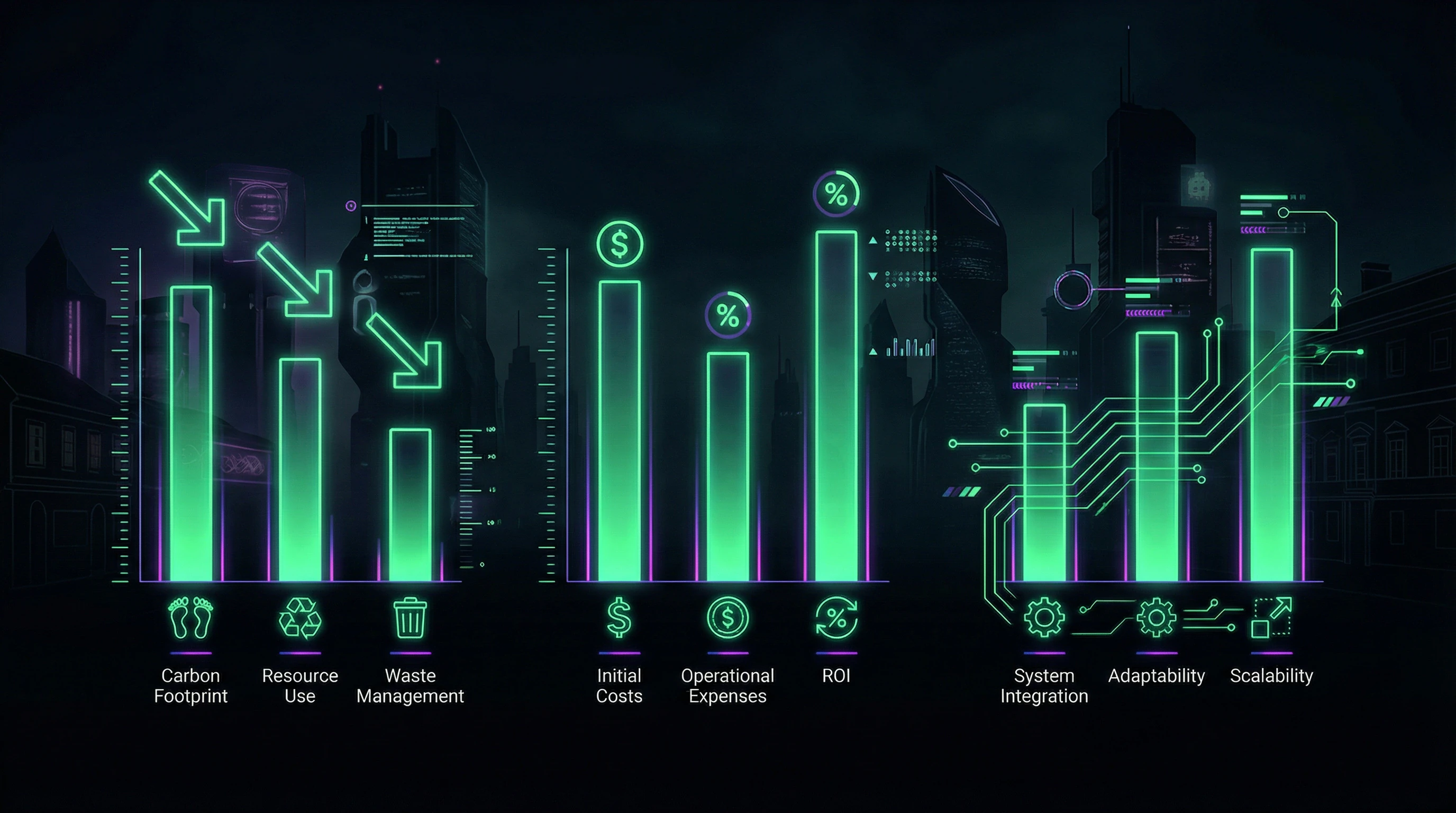
A 2023 study proposes a structured approach to comparing traditional systems with modern sustainable architecture across three key parameters (S001). The first parameter—environmental impact—includes assessment of carbon footprint, resource utilization, biodiversity impact, and waste management.
The second parameter—economic viability—analyzes initial costs, operational expenses, building lifecycle, and return on investment. The third parameter—technological achievements—examines integration of modern systems, adaptability to changing conditions, and scalability of solutions. More details in the Manifestation section.
| Parameter | Traditional Systems | Modern Sustainable Architecture |
|---|---|---|
| Environmental Impact | Qualitative recommendations, tied to local climate | Quantitative Life Cycle Analysis (LCA), global standards |
| Economic Viability | Long-term efficiency, but without ROI calculations | Detailed cost modeling, certification (LEED, BREEAM) |
| Technological Achievements | Passive strategies, climate adaptation | Renewable energy integration, smart systems, energy modeling |
🧪 Empirical Data on Energy Efficiency of Buildings Designed According to Ancient System Principles
Critical analysis reveals an absence of large-scale controlled studies that systematically measure energy consumption of buildings designed strictly according to Vastu Shastra or Feng Shui principles compared to control groups. Existing data is primarily presented in the form of case studies of individual projects or retrospective analyses of traditional architecture.
Some studies of traditional Indian and Chinese buildings do demonstrate effective passive cooling and ventilation strategies, but it's unclear to what extent these characteristics are attributable to specific prescriptions of Vastu Shastra or Feng Shui versus general principles of vernacular architecture that developed in response to climatic conditions.
🌡️ Climate Adaptation: Correlation Between Traditional Prescriptions and Scientifically Validated Strategies
Analysis of specific Vastu Shastra recommendations shows partial alignment with passive solar design principles for the Indian subcontinent climate. For example, the prescription to place main living spaces on the eastern and northern sides may correlate with minimizing exposure to intense western sun in hot climates.
However, these recommendations are not universal and may be suboptimal in other climate zones. Feng Shui, which developed across various regions of China with diverse climatic conditions, demonstrates less climate-specific prescriptions and greater emphasis on symbolic and aesthetic aspects.
- Universalization Trap
- The absence of systematic adaptation of recommendations to specific climatic parameters (latitude, humidity, wind patterns) limits applicability in the context of scientifically validated sustainable design. A recommendation optimal for Delhi may be counterproductive for Mumbai.
🏗️ Material Use: Traditional Prescriptions versus Modern Sustainability Standards
Vastu Shastra does recommend the use of natural materials, which aligns with ecological building principles. However, quantitative criteria for assessing environmental impact of materials used in modern certification systems (LEED, BREEAM, DGNB) are absent.
Traditional systems don't account for the full lifecycle of materials, including extraction, transportation, processing, and disposal. Additionally, some traditional materials may be suboptimal in terms of durability, thermal insulation, or seismic resistance in the modern context.
💧 Water Resource Management: Comparing Traditional and Modern Approaches
Both ancient systems include recommendations regarding the placement of water elements—wells, ponds, fountains. In Vastu Shastra, there are prescriptions about placing water sources in specific sectors of the site; in Feng Shui, water is viewed as a symbol of wealth and should be positioned in favorable zones according to the bagua.
These recommendations are based on symbolic and aesthetic considerations rather than principles of effective water resource management. Modern sustainable architecture employs rainwater harvesting systems, wastewater treatment, drip irrigation, and water-saving fixtures based on hydrological calculations and environmental standards.
The absence of quantitative criteria for water consumption and water quality in traditional systems limits their applicability in the context of contemporary environmental challenges.
🔋 Energy Systems: Integration of Renewable Sources and Traditional Prescriptions
Vastu Shastra and Feng Shui were developed in an era when the only energy sources were sunlight, fire, and muscle power. These systems contain no prescriptions regarding integration of modern renewable energy sources—solar panels, wind turbines, geothermal systems.
- Some proponents attempt to adapt traditional principles to modern technologies, but these interpretations lack historical foundation.
- Modern sustainable architecture is based on detailed energy modeling and optimization of solar panel orientation.
- Integration of energy storage systems and smart grids extends far beyond the capabilities of traditional systems.
Mechanisms of Influence: Causal Relationships, Correlations, and Potential Confounding Factors in Evaluating the Effectiveness of Ancient Systems
To understand the real effectiveness of Vastu Shastra and Feng Shui, it's necessary to distinguish between causal relationships and simple correlations, as well as account for multiple confounding factors that can create an illusion of effectiveness where none exists. More details in the section Fundamentals of Epistemology.
🔁 The Attribution Problem: What Actually Ensures the Effectiveness of Traditional Architecture
When a traditional building demonstrates good energy efficiency or comfort characteristics, an attribution question arises: are these characteristics due to specific prescriptions of Vastu Shastra or Feng Shui, or are they the result of general principles of vernacular architecture that evolved through centuries of empirical adaptation to local conditions?
Many effective solutions in traditional architecture—thick walls for thermal mass, high ceilings for convection, orientation to prevailing winds—are explained by basic physical principles without recourse to metaphysical concepts of five elements or chi flows (S001).
The absence of controlled experiments isolating the influence of specific prescriptions from ancient systems makes it impossible to determine their independent contribution to effectiveness.
🧬 Psychological Mechanisms: Placebo Effect and Subjective Perception of Comfort
A significant portion of the claimed benefits of Vastu Shastra and Feng Shui relates to subjective feelings of well-being, harmony, and comfort among occupants. These effects may be partially due to psychological mechanisms, including the placebo effect, cognitive dissonance, and confirmation bias.
If a person believes their home is designed according to favorable principles, they may interpret their experience more positively, regardless of the building's objective characteristics. Cultural significance and social acceptability also play a role: a home that conforms to traditional norms may be perceived as more "correct" and comfortable within a particular cultural context.
| Mechanism | How It Works | Impact on Evaluation |
|---|---|---|
| Placebo Effect | Expectation of improvement → positive interpretation of experience | Inflates subjective comfort |
| Confirmation Bias | Notice facts confirming belief, ignore contradictory ones | Creates illusion of effectiveness |
| Cultural Norm | Traditional design perceived as "correct" | Increases satisfaction within cultural context |
These psychological effects are real and influence resident satisfaction, but they are not necessarily connected to the building's objective physical characteristics.
⚖️ Confounding Factors: Socioeconomic Status, Construction Quality, and Location
When evaluating the effectiveness of buildings designed according to ancient system principles, multiple confounding factors must be considered. Homes built with consultation from Vastu Shastra or Feng Shui specialists often belong to more affluent owners who can afford higher-quality materials, better construction quality, and more advantageous locations.
These factors alone can provide better building characteristics, independent of adherence to traditional principles (S003). The lack of control for socioeconomic status, construction quality, and site characteristics in most studies makes it impossible to isolate the effect of specific ancient system prescriptions from the influence of these confounding variables.
🌐 The Universality Problem: Climate and Cultural Specificity of Recommendations
Vastu Shastra and Feng Shui developed in specific geographical and climatic contexts—India and East Asia respectively. The recommendations of these systems are often optimized for local conditions: monsoon winds, seasonal temperature fluctuations, humidity levels.
Applying these recommendations in other climate zones can lead to inefficiency or even deterioration of building characteristics (S005). For example, an orientation favorable for natural cooling in hot climates may be suboptimal for heat retention in cold climates. The absence of a mechanism for adapting recommendations to local conditions indicates that the effectiveness of ancient systems may be due not to universal principles, but to local adaptation to specific conditions.
- Correlation vs. Causation
- Traditional buildings are often well-adapted to climate, but this may be the result of centuries of empirical adaptation rather than adherence to metaphysical principles. The distinction is critical for evaluating the universality of recommendations.
- Controlled Experiment
- To determine the independent contribution of ancient systems, it's necessary to compare buildings identical in all parameters except adherence to specific prescriptions. Such studies are rare and often methodologically imperfect.
- Multiple Explanations
- When a building demonstrates good characteristics, alternative explanations are possible: construction quality, location, materials, climate adaptation. Without excluding alternatives, the effect cannot be attributed to ancient systems.
The mechanisms of influence of Vastu Shastra and Feng Shui remain insufficiently studied. The real advantages of traditional architecture may be due to physical principles, psychological effects, or local adaptation, rather than specific prescriptions of ancient systems. Without controlled experiments and accounting for confounding factors, it's impossible to determine where science ends and confirmation bias begins.